How Many Varieties of Grapes Are There? A Grower’s Breakdown
Walk through any produce aisle and you’ll spot a handful of grapes. So how many varieties of grapes are there in total? Far more than most folks expect, and the count depends on how you tally them.
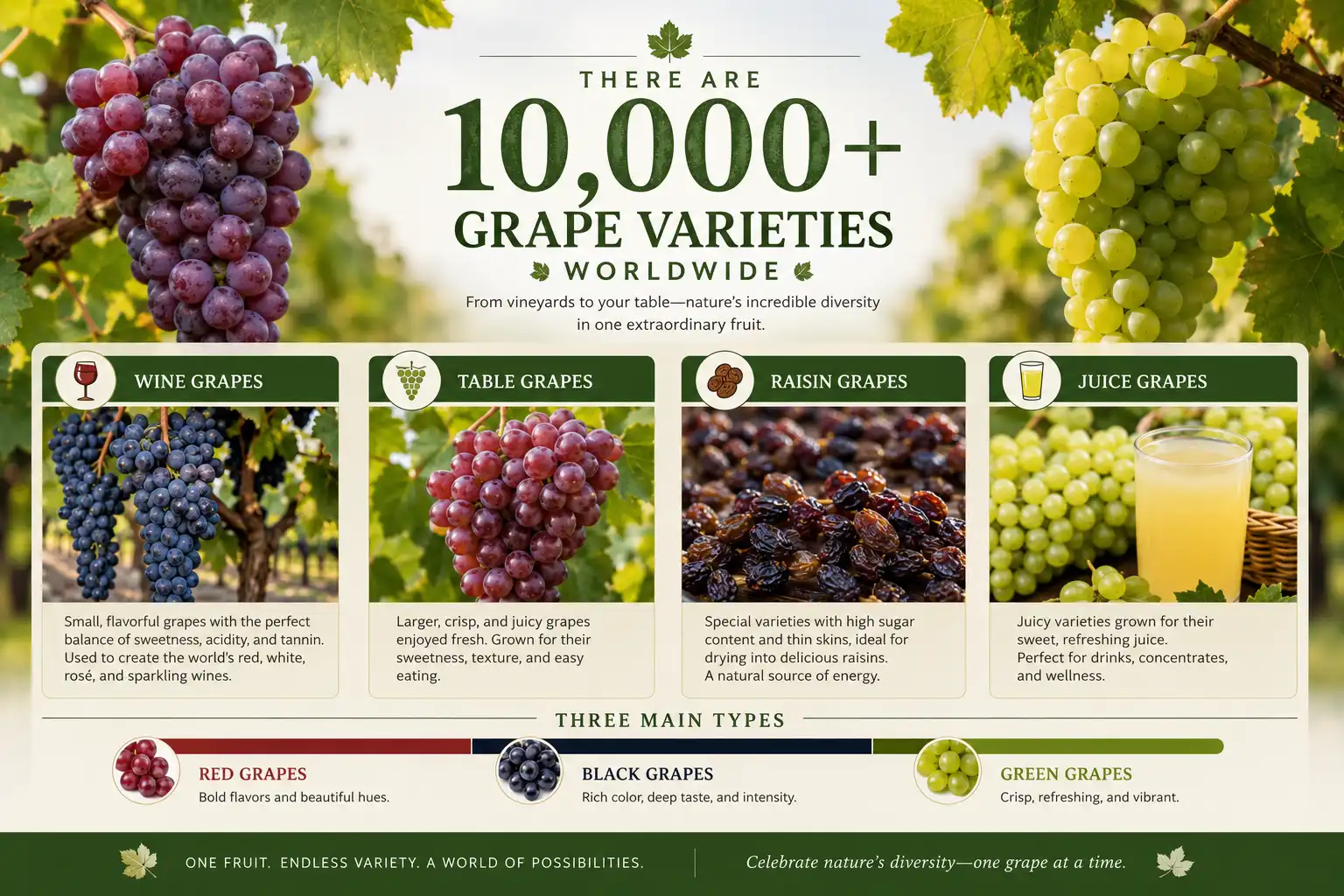
There are roughly 10,000 varieties of grapes worldwide, though estimates run from about 5,000 to over 15,000. Nearly all are cultivars of one species, Vitis vinifera, and only around 1,400 make commercial wine.
How Many Varieties of Grapes Are There Worldwide?
Most experts settle on roughly 10,000 named grape varieties, though honest counts run from about 5,000 to more than 15,000. The wide range comes down to how you count.
The Vitis International Variety Catalogue (VIVC) lists close to 23,000 entries. But that figure includes synonyms, breeding lines, and wild species, so it overstates the number of truly separate varieties.
For a tighter number, look at wine. In her reference book Wine Grapes, Jancis Robinson documented 1,368 varieties that actually make commercial wine. The UC Davis National Grape Registry tracks a similar working set for the United States.
So the honest answer sits in layers. About 10,000 named varieties exist on paper. Roughly 1,400 make wine. And only about 33 cover half the world’s vineyard acres, according to the International Organisation of Vine and Wine. A small group does most of the work.
Why Don’t Sources Agree on the Number?
Sources disagree because one grape can carry dozens of names. A variety grown in France often picks up new local names in Italy, Spain, or California. Each name can then get counted twice.
Take Pinot Noir. It has more than 300 recorded synonyms on its own. Breeders also release new crosses every year, so the total keeps climbing. Then each database draws its line in a different place. That’s why you’ll see 6,000 in one article and 15,000 in the next.
How Many Grape Species Are There?
The genus Vitis holds roughly 60 to 70 species. But only one, Vitis vinifera, gives us most of the grapes we eat and drink. That’s the European wine grape, and nearly every famous variety traces back to it.
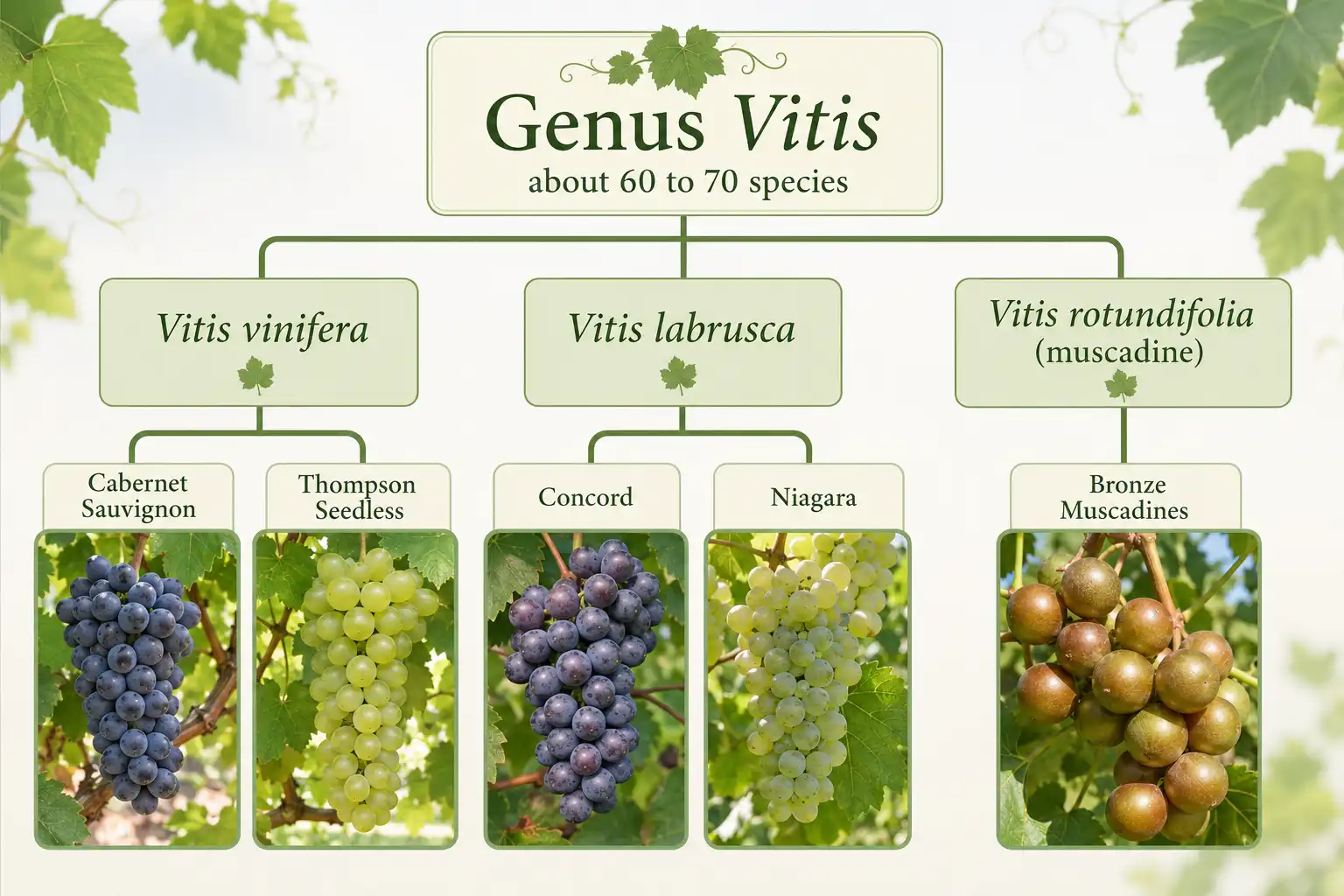
Here’s the difference that trips people up. A species is a wild biological group. A variety, also called a cultivar, is a specific selection growers chose and multiply. Concord is a variety. Vitis labrusca is the species behind it.
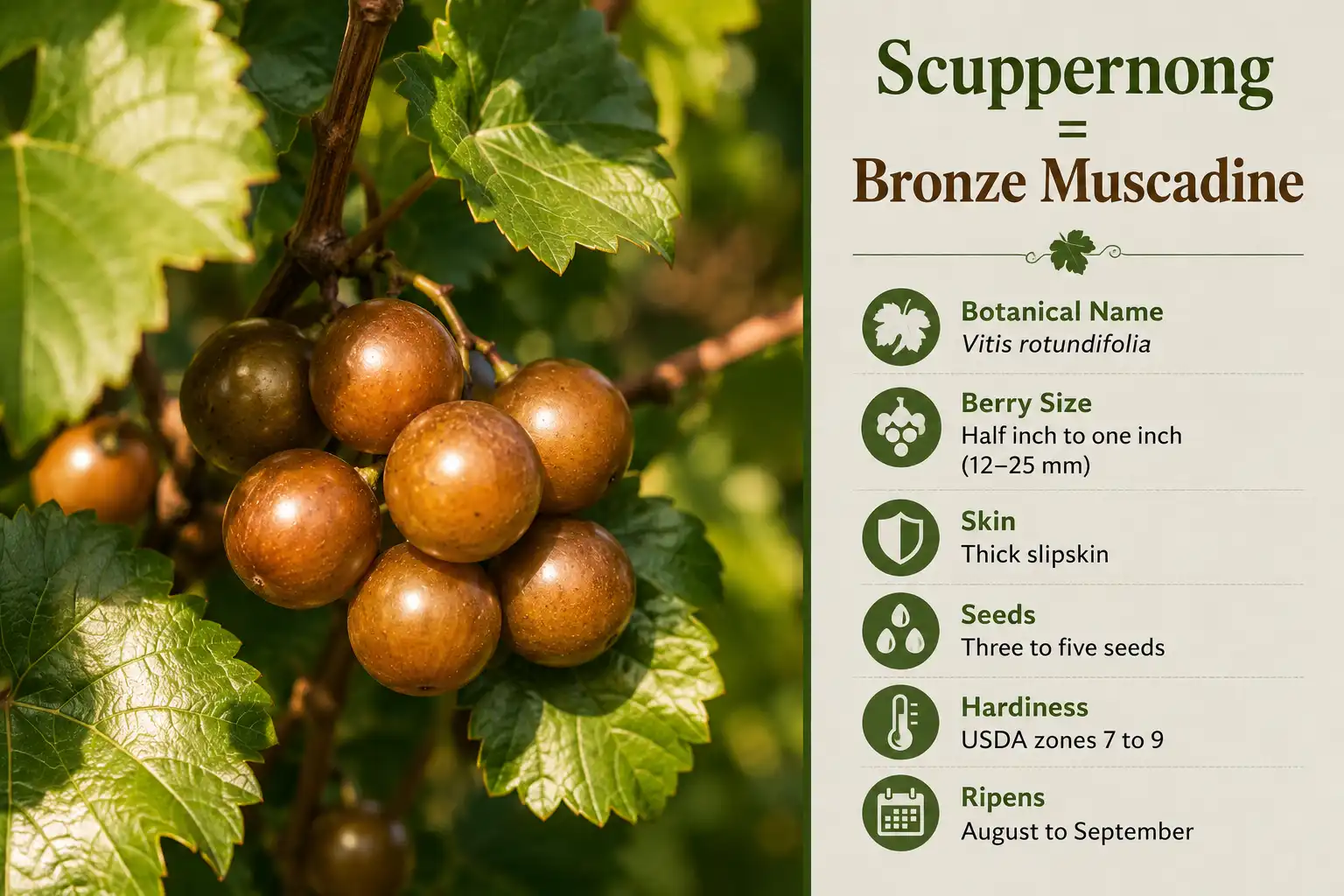
North America carries dozens of its own wild Vitis species. A few shaped how grow grapes. Vitis labrusca is the fox grape behind Concord and Niagara. Vitis riparia is a cold-hardy riverbank grape used for rootstock. Muscadine, or Vitis rotundifolia, is native to the South. Growers usually graft European vinifera vines onto American roots. They do that because of native species shrug off phylloxera. Phylloxera is a root pest that wiped out vineyards in the 1800s.
What Are the Main Types of Grapes?
Grapes split into four working types: wine, table, raisin, and juice. The type depends on the variety’s sugar, skin, size, and seeds.
Wine grapes run small with thick skins and high sugar. Cabernet Sauvignon and Chardonnay lead this group, and Cabernet alone covers about 5% of the world’s vine acres.
Table grapes are the big, firm, often seedless ones you snack on. Thompson Seedless tops the list in the United States, especially out of California.
Raisin grapes are simply table or wine grapes dried down. Thompson Seedless doubles as the main raisin grape, so one variety can wear more than one hat.
Juice grapes, like Concord and Niagara, bring the bold flavor most folks know from grape jelly and bottled juice. Many also work for homemade wine.
How Are Grapes Grouped by Color and Seed?
Beyond use, growers sort grapes two more ways: by color and by seeds. Both matter when you pick a variety for the table or the press.
By color, grapes fall into red and black or green. Red types get their color from pigments in the skin, while green grapes lack them. The wine trade still calls green grapes “white,” though. There’s a real history behind why green grapes get labeled white.
By seeds, you’ve got seeded and seedless. Most modern table grapes are seedless, which takes special breeding because the vine produces no seed to replant. Curious how seedless grapes are produced? Growers use rooted cuttings and a lab method called embryo rescue to keep the line going.
Which Grape Varieties Are Most Common in the U.S.?
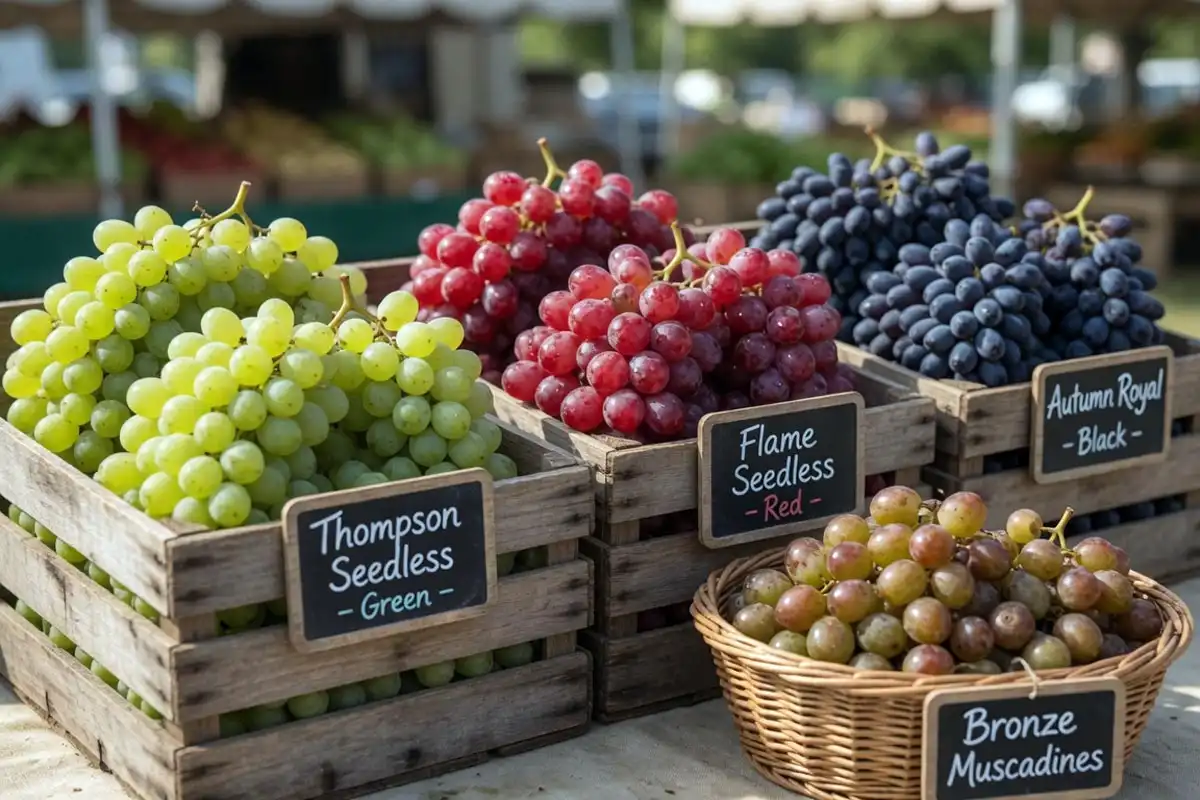
In American stores, a short list of table grapes does almost all the sales. The leaders are Thompson Seedless (green), Flame and Crimson Seedless (red), and Autumn Royal (black). These ship well and hold up on the shelf.
Branded flavor grapes have taken off too. Cotton Candy is a patented seedless type that tastes like spun sugar. But growing Cotton Candy grapes at home runs into patent limits, because the breeder licenses it. Autumn Crisp grapes, a large green seedless, show up late each summer and keep gaining fans.
Outside the table-grape aisle, regional favorites still matter. Concord and Niagara grow across the North and Midwest for juice and jelly. In the South, muscadines carry the load because they handle heat, humidity, and disease far better than vinifera.
Why Can’t You Grow a Named Grape Variety From Its Seed?
You can’t reliably grow a named grape variety from seed because grapes don’t breed true. Plant a Concord seed and you won’t get a Concord. You’ll get a random seedling that rarely matches the parent.
Grape vines carry a mixed set of genes, so each seed turns into something new. That’s why growers multiply varieties by cloning. They root cuttings or graft onto rootstock, which copies the parent exactly. Starting grapes from seed is still worthwhile for breeding or curiosity, but not for getting a known variety.
How Do I Choose a Grape Variety for My Region?
Match the variety to your climate first, then to how you’ll use the fruit. Your USDA hardiness zone sets the outer limits, and your summer heat and humidity narrow it from there.
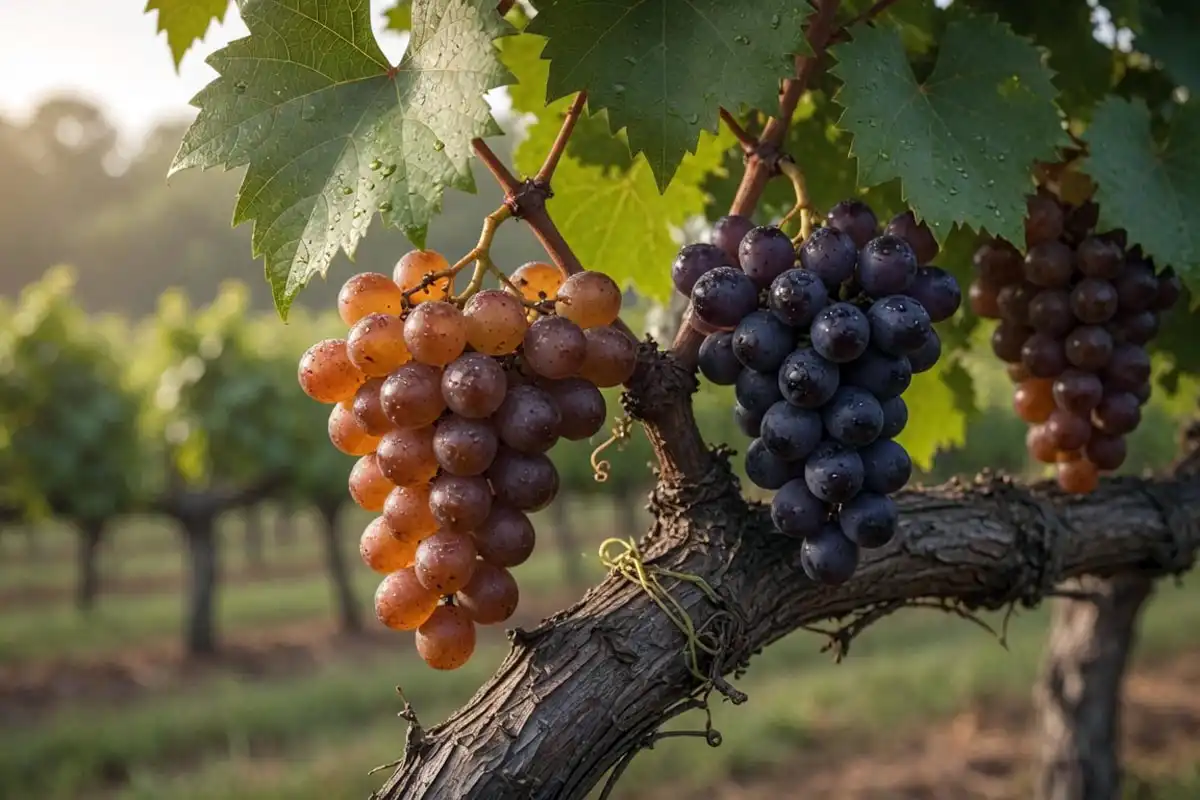
In cold zones across the Great Plains and the North, lean on hardy hybrids and Concord-type labrusca grapes. Cold-tough wine hybrids such as Frontenac and Marquette also hold up. Stick with varieties rated for zone 5 or 6. That way a hard winter doesn’t kill the trunk.
In hot, humid Southern states, muscadines win, and muscadine grape season runs from late summer into fall.
For warm, dry Western valleys, vinifera table and wine grapes thrive. That’s why California grows most of the country’s Thompson Seedless. Decide on fresh eating, juice, or wine, then pick a proven variety for your zone.
Bottom Line for Your Vines
So how many varieties of grapes are there? About 10,000 on the books, but only a handful you’ll ever plant or eat. For your own row, the number that counts is one: the right variety for your zone and your use. Start with a proven, disease-tough pick, get it growing, and worry about the exotic stuff later.