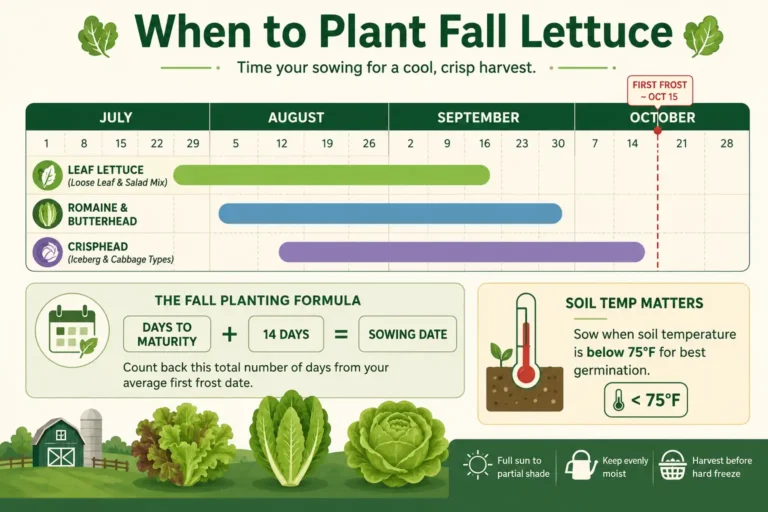
How to Harvest Romaine Lettuce From Garden: Timing, Cuts & Storage
Romaine reaches a clear point where the head feels firm and the ribs turn crisp. Cut too early and you lose size. Wait too long and the leaves turn bitter. Knowing how to harvest romaine lettuce from the garden keeps every head sweet and crunchy at the table.
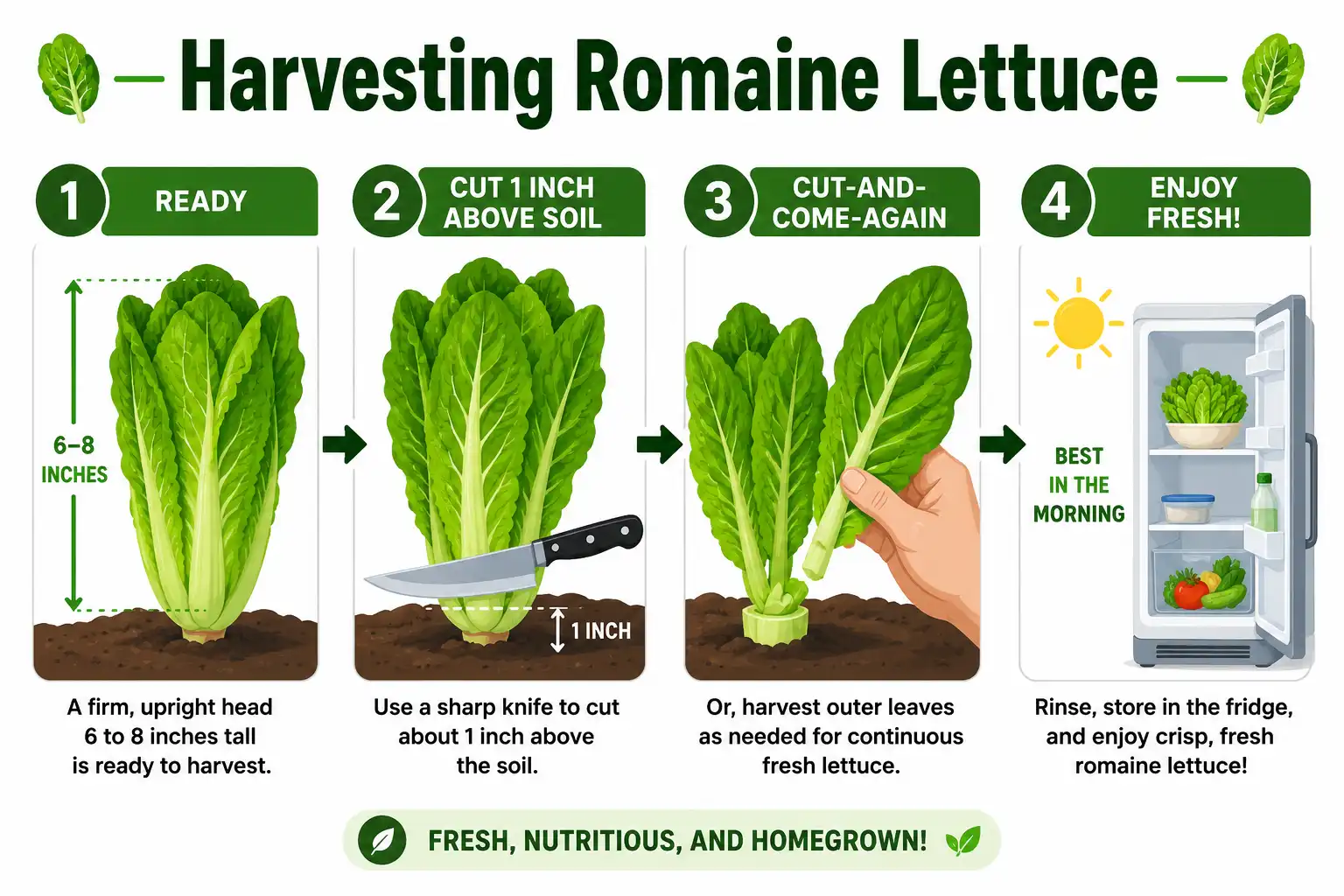
To harvest romaine lettuce from the garden, wait until heads reach 6 to 8 inches and feel firm. Cut the whole head about 1 inch above the soil, leaving the crown for regrowth. Pick early in the morning.
When Is Romaine Lettuce Ready to Harvest?
Romaine is ready when the head stands 6 to 8 inches tall and the ribs feel firm. The leaves should wrap into a tight, upright bundle. Most varieties hit this point 55 to 70 days after seeding. Check the days to maturity on your seed packet first, then watch the plant itself.
A gentle squeeze tells you a lot. A young head feels soft and loose. A ready head feels solid but still gives a little. A rock-hard head has sat too long and may turn bitter soon. University of Georgia Extension uses the same firmness check for head lettuce. A romaine head is ready when it feels firm to the touch.
You do not have to wait for a full head, though. Outer leaves reach a usable 4 to 6 inches well before the center fills in. Pick those early for baby greens and let the rest size up. our guide covers the full set of signs your romaine is mature elsewhere. Still, firmness and height carry most of the call.
Variety matters too. Parris Island Cos grows close to 12 inches at full size, while Little Gem types top out near 6 inches. Know your variety so you never pull heads short.
What’s the Best Time of Day to Harvest Romaine?
Early morning is the best time, before the sun warms the leaves. Overnight the plant refills with water, so the leaves sit crisp and firm at dawn. That water content gives you the loudest crunch and the longest fridge life.
By midday, heat pulls moisture out and the leaves go limp. Cut then, and the heads wilt fast even in a cooler. So if you miss the morning, wait for the cool of evening instead. Either way, get the heads out of direct sun the moment you cut them.
How to Harvest Romaine Lettuce From the Garden (Whole Head)
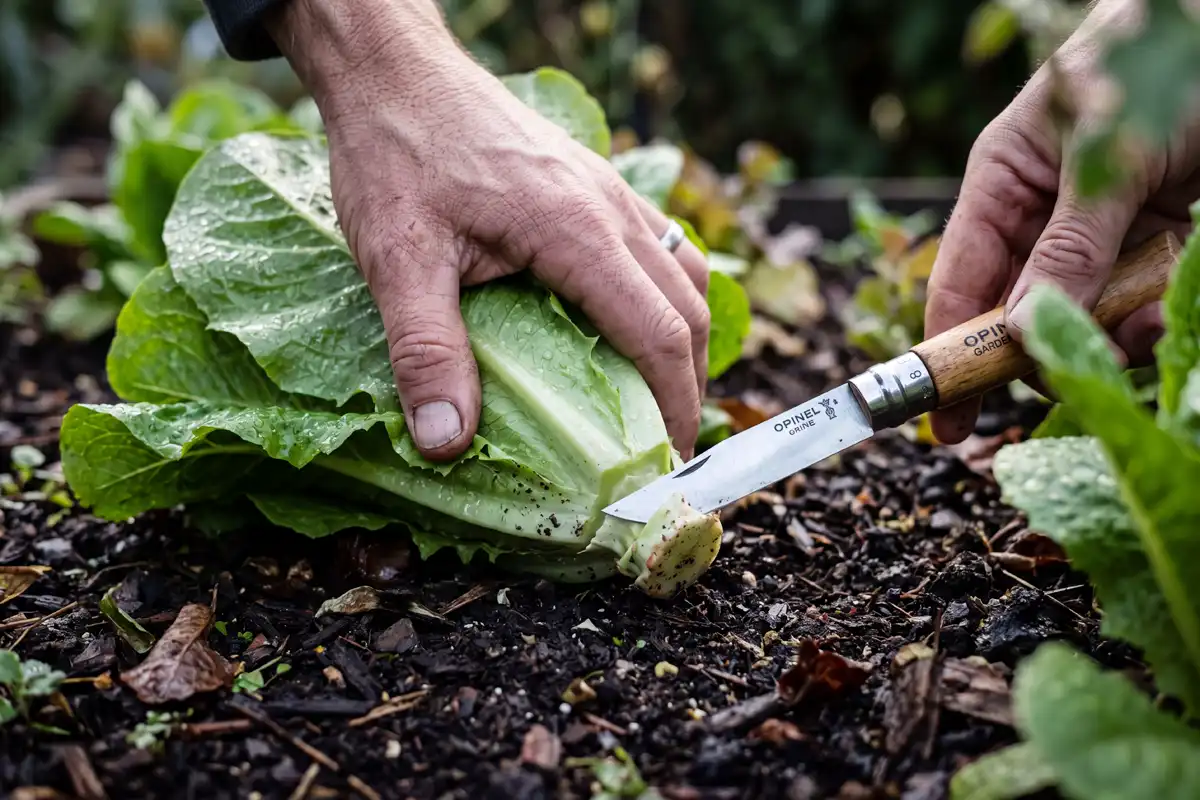
Cutting a whole head takes one clean slice. Here is the method on the beds.
First, grab the head low, near the base, with one hand. Then, with a sharp knife or clean garden scissors, cut straight across about 1 inch above the soil. Aim just above the crown, the tight growing point sitting at the base. Keep the blade off the dirt so you skip grit and rot.
After the cut, peel off any torn or muddy outer leaves and drop them in the compost. What remains should be a clean, tight head. Leave the crown and roots in the ground if you want a second flush of leaves. The same approach works for harvesting lettuce from your beds across most head types, not just romaine.
A couple of quick notes. Wipe your blade between plants if disease has been around. Also cut on a dry morning, since wet leaves bruise and spoil faster.
How to Harvest Romaine Leaf by Leaf for a Longer Supply
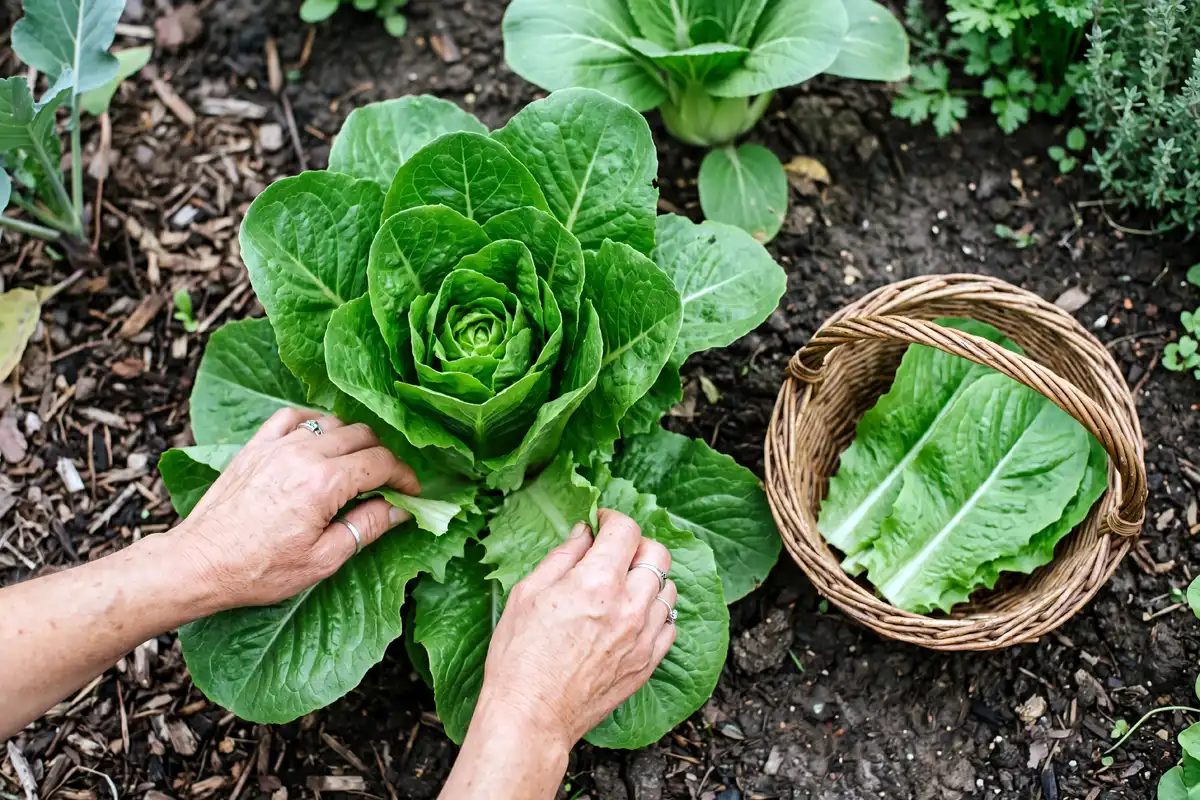
The cut-and-come-again method gives you weeks of leaves from a single plant. Instead of taking the whole head, you pick the outer leaves and leave the center to keep growing.
Start once the plant reaches 4 to 6 inches and carries at least six healthy leaves. Then snap or snip 6 to 8 of the lowest, outer leaves at a time. Cut about an inch up from the base. Never touch the central bud, since that is where new growth comes from. After that, come back every 7 to 10 days for another round.
One planting can feed you for 8 to 12 weeks this way, right up until heat pushes it to bolt. This is also the gentlest way of cutting it so the plant keeps producing without a full restart. In cool spring weather, the leaves bounce back fast. In warmer June days, give it a few extra days between picks.
Will Romaine Grow Back After You Cut It?
Yes, romaine grows back after cutting as long as you leave the crown and roots in the soil. New leaves push from the center within a week or two when the weather stays cool. The trick is protecting that growing point during harvest.
A whole-head cut gives you one main flush back. The regrowth comes in looser and more open than the first head, but it still makes a fine salad. Expect three to four weeks for a usable second cut in good spring conditions. Keep the plant watered, and feed it lightly to push that regrowth.
Leaf-by-leaf picking regrows faster and longer. So it helps to use it when to want a steady supply rather than one big cut.
How Do You Know If Romaine Has Bolted?
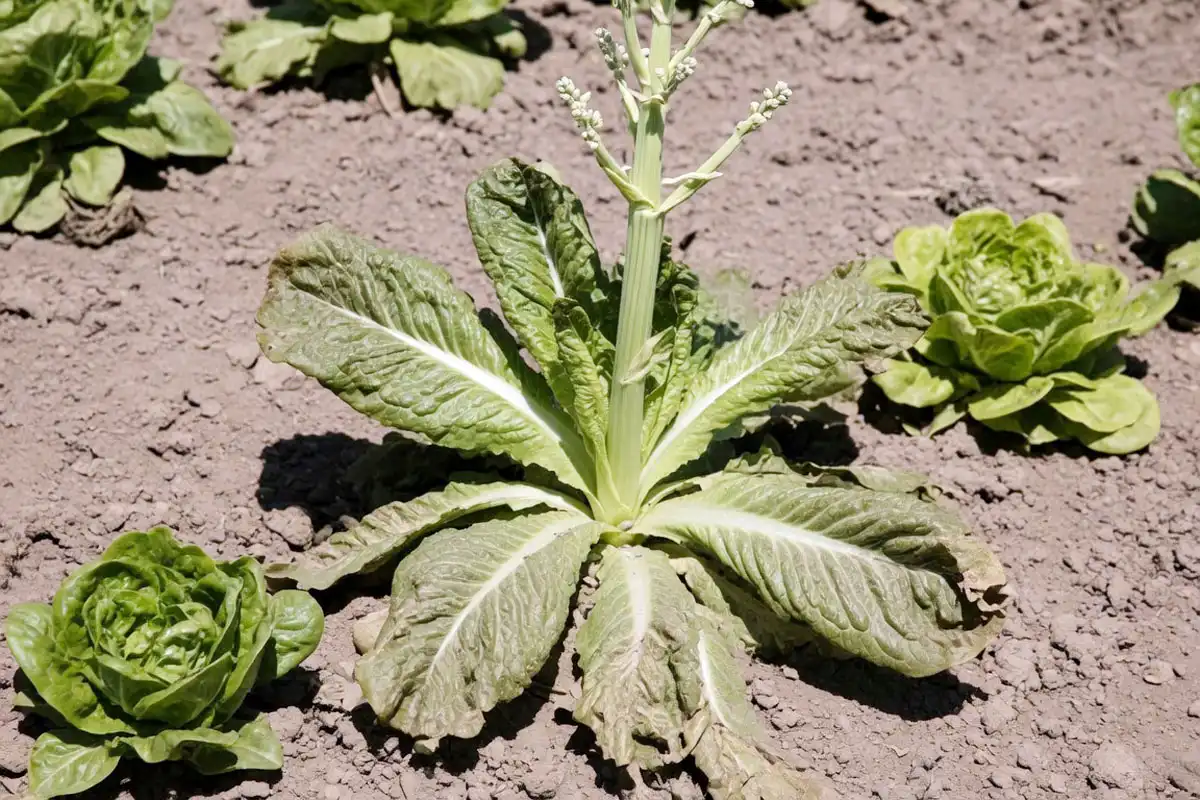
Romaine has bolted when the center stretches up into a tall stalk and the leaves turn bitter. The plant is shifting from leaf growth to making seed. Once that stalk shoots up, eating quality drops fast.
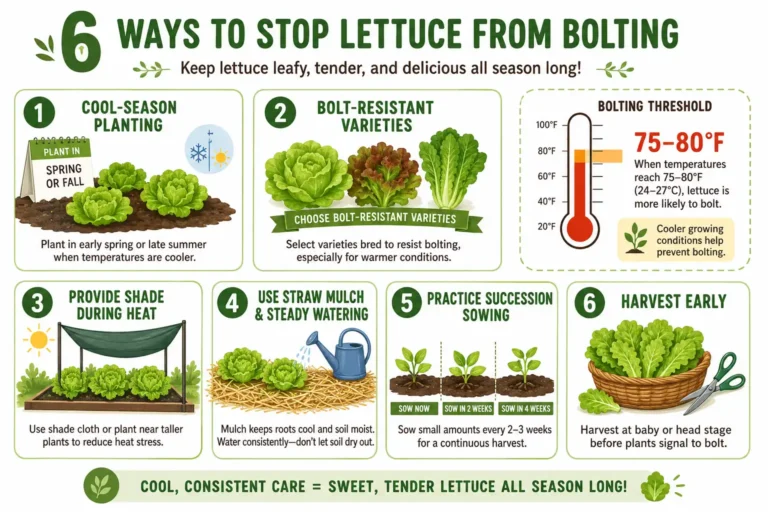
Heat drives it. When temperatures climb past about 80°F, romaine gets stressed and starts to bolt. The leaves also release a milky white sap called lactucarium. That latex is what makes bolted lettuce taste sharp. Tougher, leathery leaves are another sign.
The moment you see the center rising, harvest everything, even smaller heads. Bitterness only gets worse. Heat-tolerant varieties like Jericho hold out longer, which helps in Kansas. In USDA hardiness zone 6a around Topeka, time the spring crop to finish before the late-June heat. A fall crop gives me the cleanest flavor. Raising romaine that resists bolting starts with the right variety and timing, well before harvest day. Push a crop into July, and summer lettuce running to seed in the heat becomes the main risk.
How to Wash, Cool, and Store Romaine After Harvest
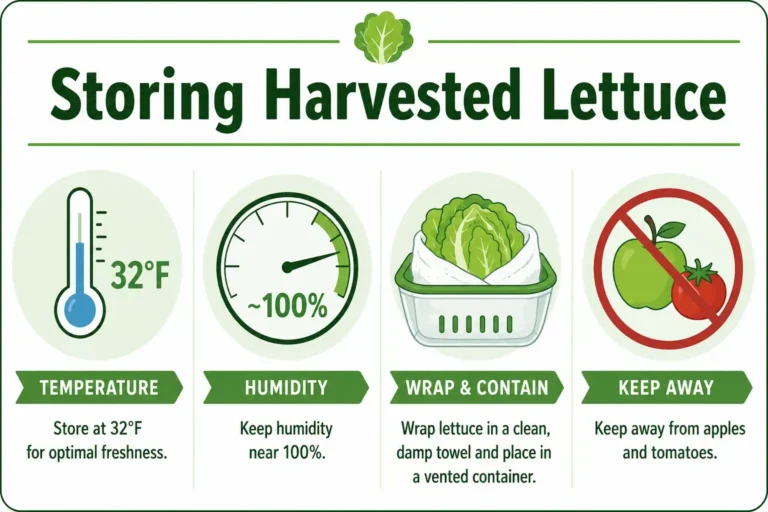
Cooling comes first. Field heat is the biggest enemy of shelf life. So get the heads into shade and a cooler within minutes of cutting. A quick dunk in cold water pulls that heat out and firms the leaves right up. Commercial growers call this step hydro-cooling, and it works the same in a kitchen sink.
Next, do not wash romaine until you plan to use it, or wash it and dry it well. Wet leaves sitting in the fridge rot quickly. A salad spinner or a clean towel handles the drying.
For storage, tuck unwashed heads into a loosely closed or vented bag. Set them in the crisper drawer on high humidity. Whole romaine heads hold for 10 to 20 days that way. Loose leaves keep about a week. Also keep lettuce away from apples, bananas, and tomatoes. It is sensitive to the ethylene gas they give off and browns faster near them.
Got a limp head? Soak the leaves in ice water for about five minutes, then dry and chill. That usually brings the crunch back.
What Harvest Looks Like in the Beds
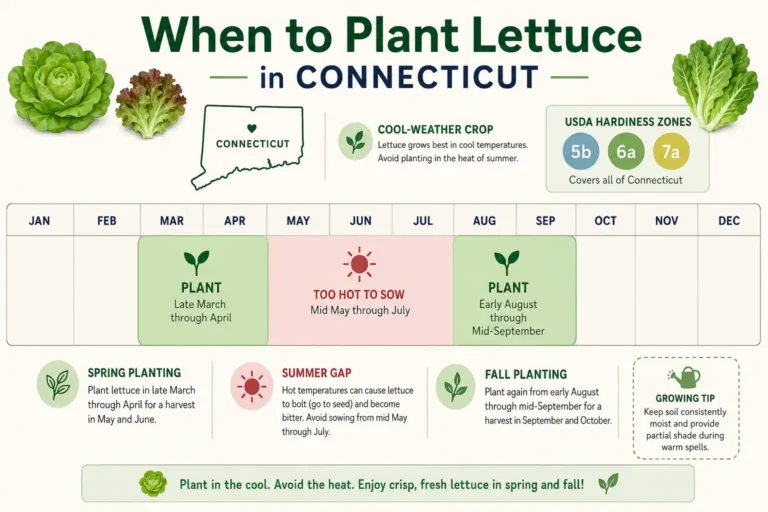
Most romaine comes off in the cool mornings of late May and early June, ahead of the heat. Take whole heads with one clean cut an inch above the crown. Outer leaves can be pulled to keep the row producing. Either way, the heads go straight into shade and cool down fast. Get the timing right, cut clean, and store the leaves dry. Then your romaine stays sweet and crisp from bed to bowl. The fall crop, sweetened by cool nights, is the one most anticipated.