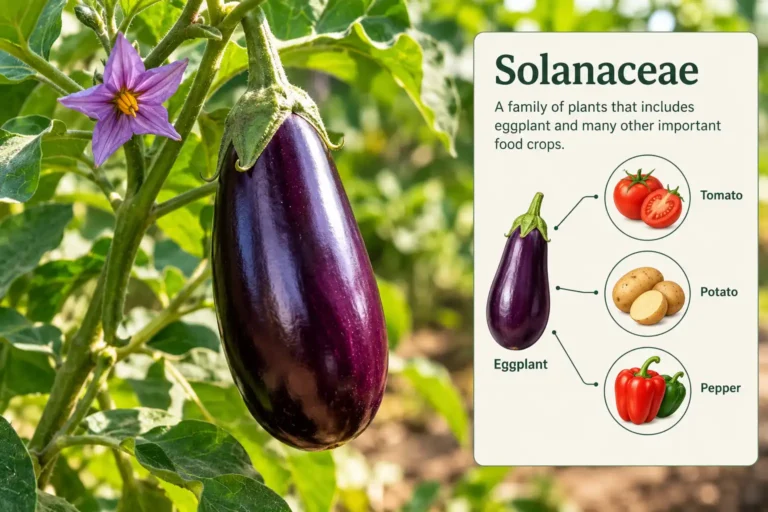
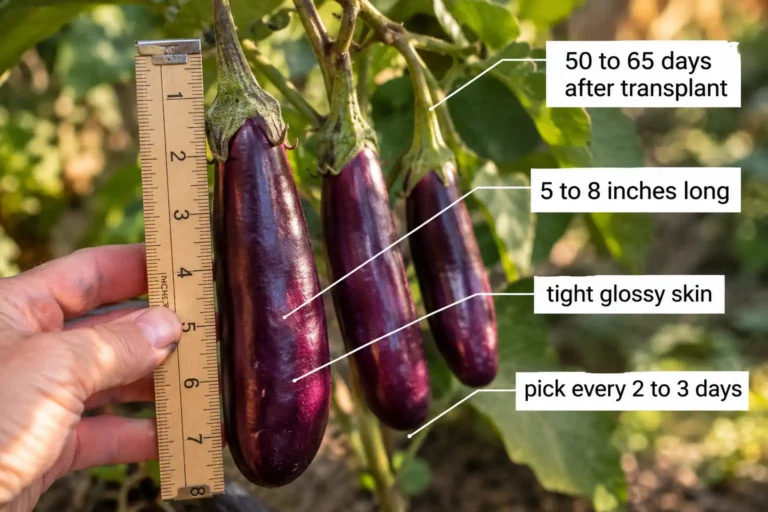
What to Plant With Eggplant: Spacing, Timing, and Traps
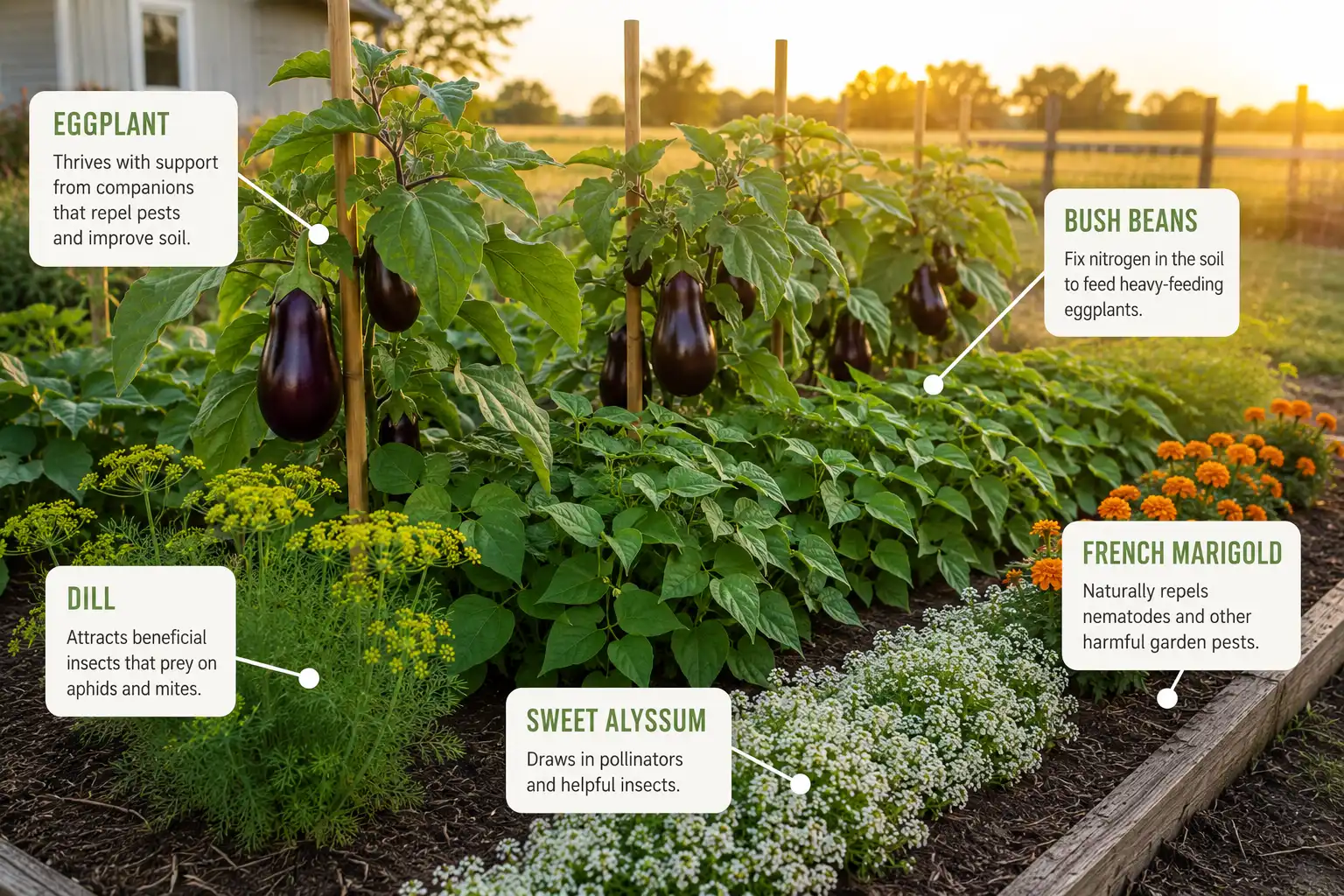
Eggplant pulls flea beetles and potato beetles harder than any crop. Neighbors matter here. Knowing what to plant with eggplant holds beetle damage down. Good companions also shade bare soil and fill row middles that sit empty all spring.
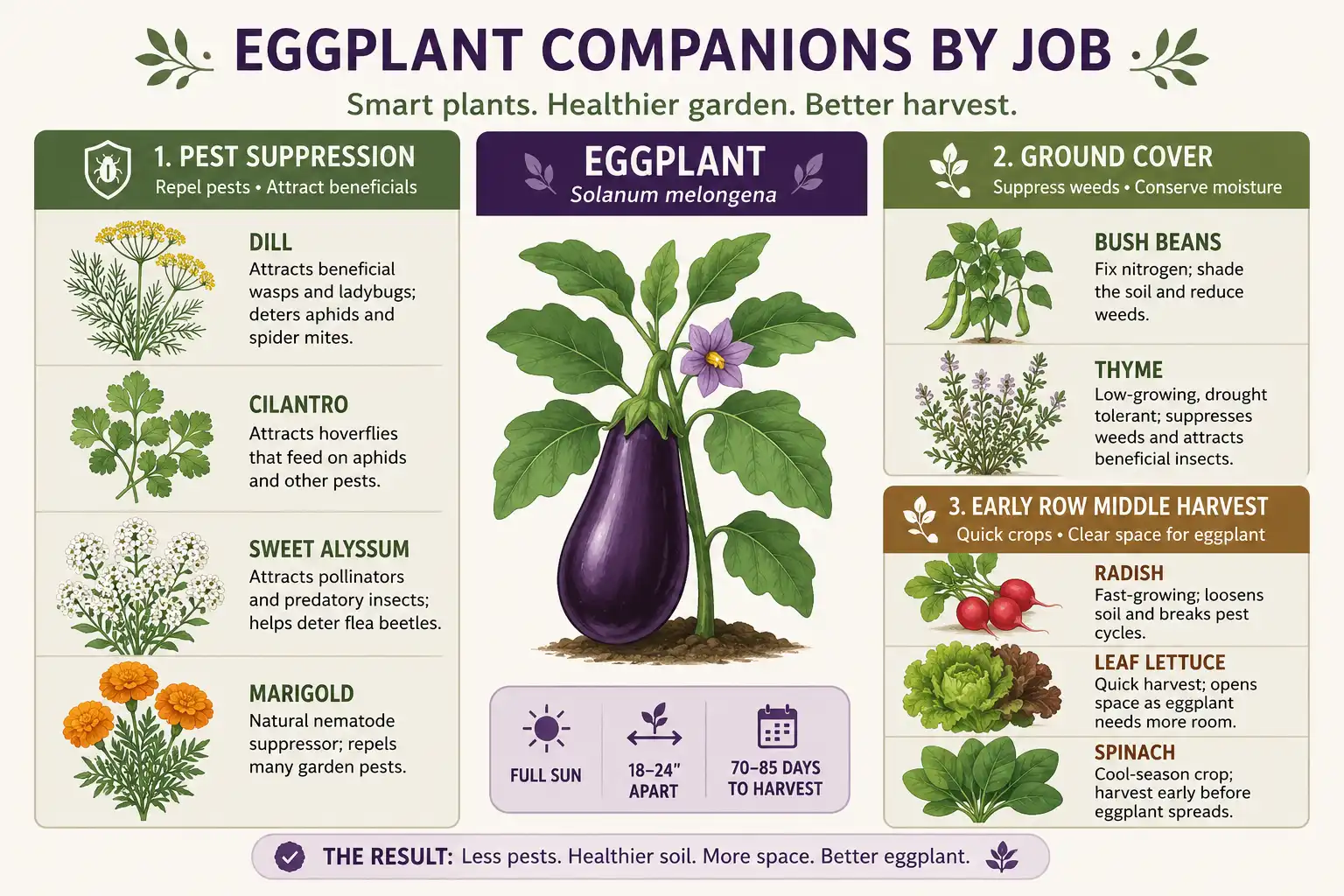
What to plant with eggplant comes down to three jobs: pest suppression, ground cover, and row middle yield. Bush beans, dill, cilantro, sweet alyssum, marigolds, and bunching onions cover all three. Keep potatoes and other nightshades out.
What to Plant With Eggplant in the Same Bed
Plant flowering herbs for predator insects, low legumes for ground cover, and fast greens for early harvest. Then keep the eggplant row itself open for airflow. That combination does more for yields than any single companion ever has.
Here is how to sort the choices.
| Companion | What it does | Where to put it |
|---|---|---|
| Bush beans | Cover bare soil, cut splash, leave residue nitrogen | Row middles, 12 inches off the crown |
| Dill | Feeds lady beetles that eat potato beetle eggs | Two short strips per bed edge |
| Cilantro | Same predator effect, blooms in cooler weather | Bed ends, sown early |
| Sweet alyssum | Draws hoverflies whose larvae eat aphids | Every 6 to 8 feet along the row |
| French marigold | Steady nectar for predators, some whitefly deterrence | Corners and gaps |
| Bunching onions | Break up the solid block of host foliage | Between eggplants in the row |
| Lettuce, spinach, radish | Harvest from row middles before eggplant closes in | Row middles, spring only |
| Bush basil and thyme | Nectar plus low cover, handle the same heat | Bed edges |
Learn more: Best Time to Plant Eggplant
Why Eggplant Needs Careful Neighbors
Eggplant carries three problems that neighbor choice either eases or worsens. Plan the whole bed around them rather than around folklore.
First, flea beetles in the genus Epitrix hit eggplant transplants hardest. They chew shot holes in young leaves, and a heavy flush stalls a plant for weeks.
Second, Colorado potato beetle (Leptinotarsa decemlineata) feeds on eggplant foliage and young fruit. Because the beetle has shrugged off many insecticide classes, predator habitat earns its space.
Third, Verticillium dahliae causes wilt, and eggplant has no real resistance. Microsclerotia can sit in soil for years. So University of Minnesota Extension wants a three to four year break from all Solanaceae. The Pacific Northwest handbooks agree. Cultivars such as Classic and Epic hold yield better on infested ground, though they still get infected.
One more timing note. Eggplant runs less cold hardy than tomato. Until night lows stay above 50°F, transplants sulk and may never set well, which shapes when each companion goes in.
Best Companion Plants for Eggplant and What Each One Does
Bush Beans and Cowpeas
Bush beans and cowpeas cover soil without crowding roots. They stay under 24 inches, so they never shade the eggplant canopy. Their nitrogen mostly shows up for the next crop, not this one, after the residue breaks down. Still, that cover cuts crusting and rain splash on the lower leaves.
Sow them 12 inches off the eggplant crown once the transplants root in. Cowpeas handle Kansas heat better than snap beans through August.
Dill and Cilantro
Dill and cilantro are the strongest companions on this list because the research backs them. Rutgers researchers ran eggplant fields intercropped with two rows of dill or coriander against a flowerless control. Lady beetle counts came out significantly higher in the flowered fields. Dill strips also showed significantly more potato beetle egg masses eaten.
Let a few plants flower. The open umbels put nectar within reach of lady beetles and lacewings, which is the whole point.
Sweet Alyssum
Sweet alyssum (Lobularia maritima) pulls hoverflies, and hoverfly larvae are serious aphid predators. It blooms longer than buckwheat or mustard, which matters across a full eggplant season. Alyssum sits in the mustard family, so it can attract crucifer flea beetles. That species prefers brassicas rather than eggplant, so you can still use it here freely. Near a cabbage planting, though, leave it out.
Marigolds
French marigolds (Tagetes patula) belong in the bed for nectar and some whitefly deterrence, not for nematode control. That correction matters. Marigold suppresses root knot nematodes through alpha terthienyl. That takes a dense stand grown for two to four months. Scattered interplants do nothing. LSU AgCenter says it plainly: marigolds tucked beside a susceptible crop do not stop nematodes from finding those roots.
Marigolds also fail as a potato beetle repellent, and University of Minnesota Extension notes multiple studies showing no effect. Plant them anyway for the flowers, with clear expectations.
Bunching Onions and Garlic
Bunching onions break up the solid block of eggplant foliage that beetles home in on. Utah State University Extension lists green onions, dill, and marigolds among companions used against flea beetles. That masking effect is the reason. Their roots stay shallow and narrow, so they slip between plants without cost. Onions also give me something to pull weekly while the eggplant sizes up.
Fast Greens in the Row Middles
Leaf lettuce, spinach, and radish finish before eggplant closes the canopy. Sow them in early April in zone 6a, then harvest through late May. Radish pulls double duty as a soil loosener. Once eggplant leaves start touching, clear the greens out and mulch, because crowding raises humidity in the canopy.
How Do You Space Eggplant and Its Companions?
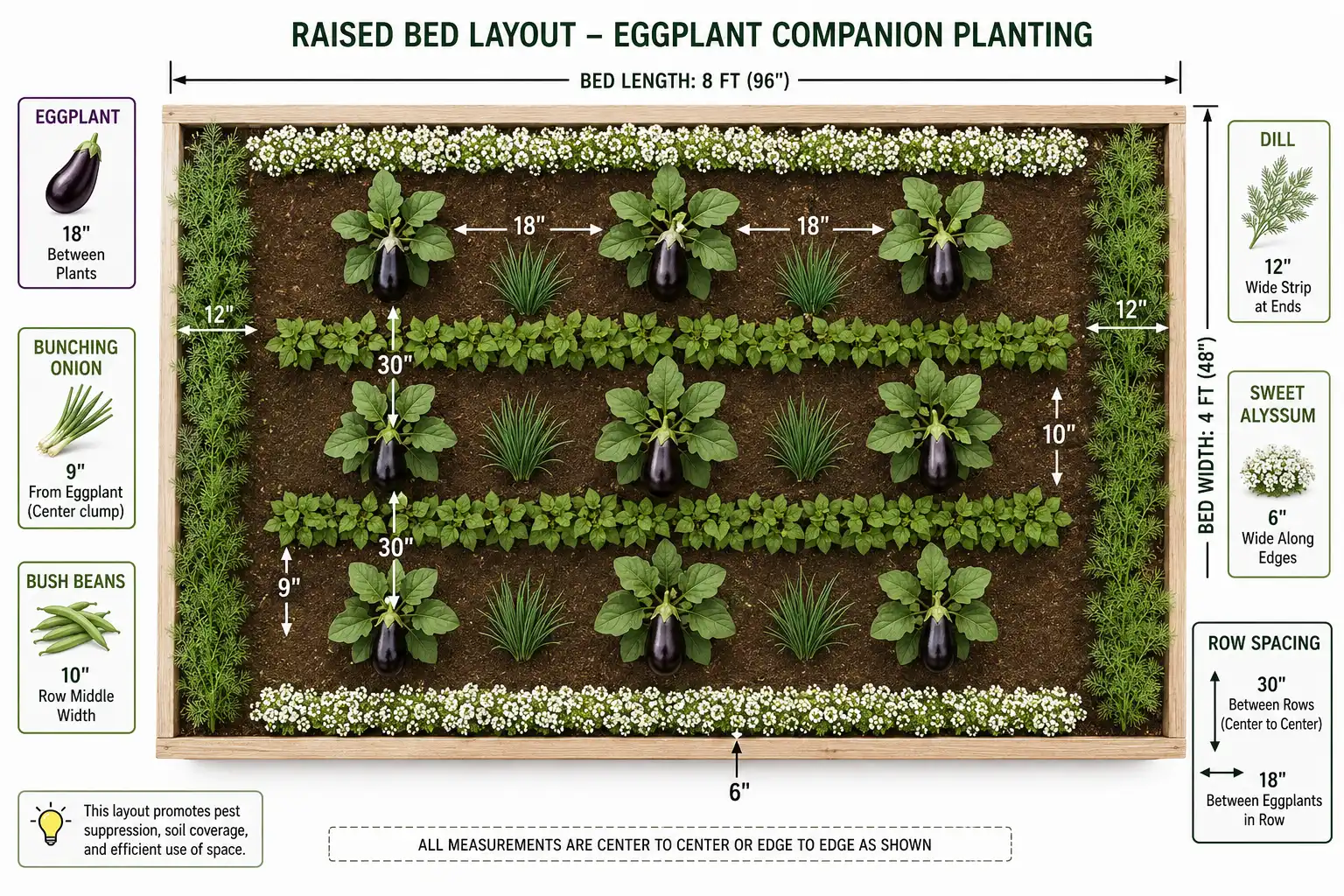
Set eggplant 18 inches apart in rows 30 to 36 inches apart, then fit companions into the leftover space. Those numbers come from University of Minnesota Extension, and they hold up. Anything tighter traps humidity and invites wilt symptoms to show early.
Here is the order:
- Mark eggplant rows 30 to 36 inches apart, and plants 18 inches apart in the row.
- Set the tallest companions on the north side so nothing shades the eggplant.
- Slip bunching onions between eggplants in the row, one clump per gap.
- Sow dill and cilantro in 3 foot strips at both bed ends, plus one strip mid bed.
- Space sweet alyssum every 6 to 8 feet down each row edge.
- Sow bush beans down the row middles, 12 inches from eggplant crowns.
- Leave a clear 12 inch walking lane so you can scout leaf undersides weekly.
That last step is the one growers skip. Scouting beats every companion listed here. General notes on row spacing across crops explain how these gaps are adjusted for heavier soil.
Should You Plant a Trap Crop Row Around Eggplant?
Yes, and a more attractive eggplant variety makes the best trap. Connecticut trap crop trials found eggplant flea beetles preferred the long Italian type Vittoria. They chose it over standard eggplant and tomato varieties. So the trap crop here is eggplant itself, just a tastier version.
Run it this way:
- Transplant the trap row 7 to 10 days before the main crop, all the way around the block.
- Scout the perimeter twice a week once beetles arrive.
- Treat or pull the trap row before beetles spread inward.
- Make a second trap planting, since attractiveness fades as plants age.
Skip Chinese Southern Giant mustard here. That trap works on crucifer flea beetles, which are a different species and rarely touch eggplant.
What Should You Not Plant With Eggplant?
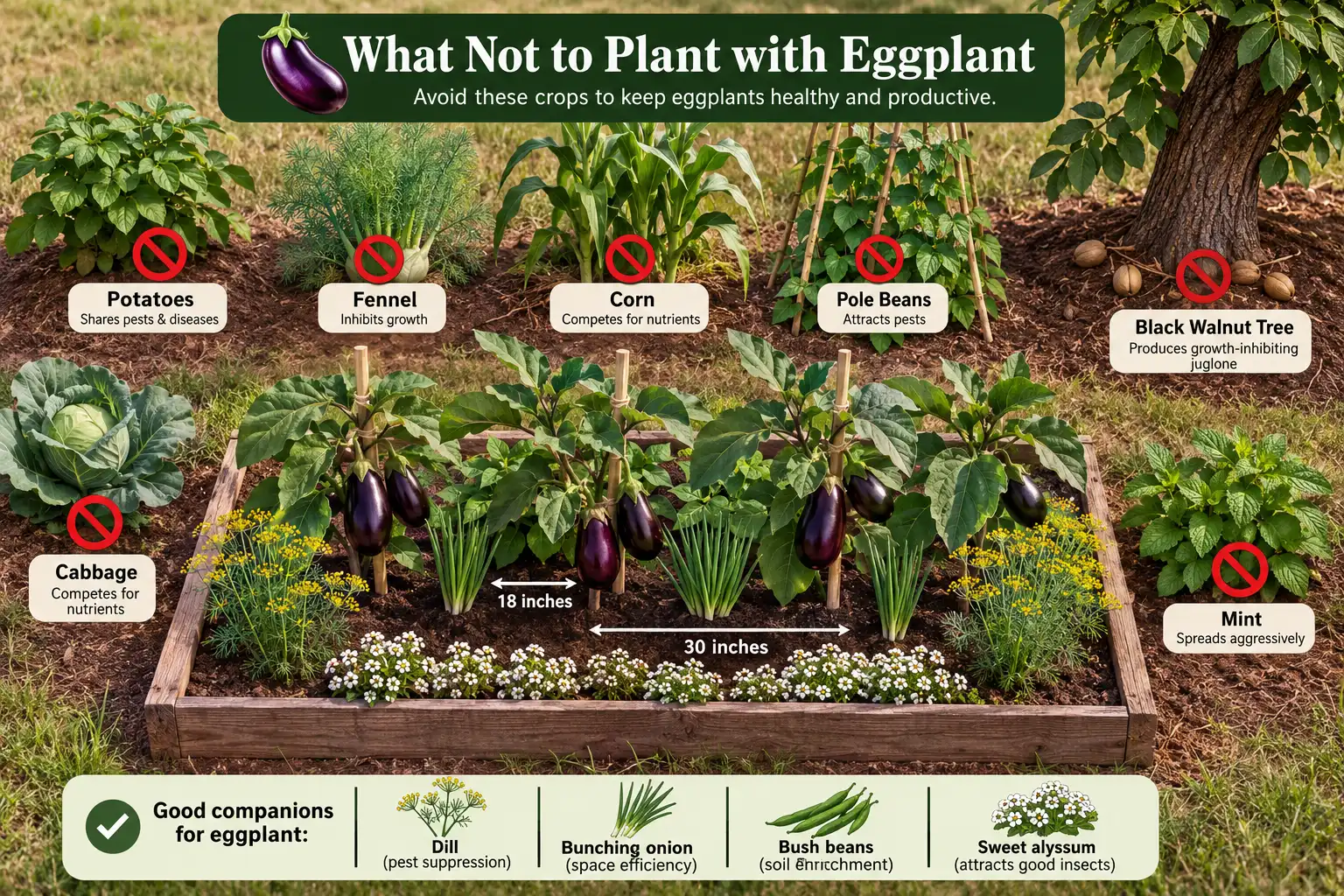
Keep potatoes, other nightshades, deep competitors, and tall shade casters out of the bed. Each one costs yield for a reason you can name.
| Keep away | Reason |
|---|---|
| Potatoes | Share Colorado potato beetle and Verticillium wilt; hilling and digging tear eggplant roots |
| Tomatoes and peppers in the same bed | Same family and same soilborne pathogens, which breaks a Solanaceae rotation |
| Fennel | Roots deep and competes hard, so it belongs in its own corner |
| Corn and sunflowers | Shade eggplant by midsummer and pull heavy nitrogen |
| Pole beans on a tall trellis | Cut light and airflow on the south side |
| Cabbage and broccoli at close spacing | Cool season timing clashes, plus heavy feeding during eggplant’s peak |
| Mint and other runners | Roots take the bed over and block cultivation |
| Any spot inside a black walnut root zone | Eggplant is juglone sensitive and wilts near Juglans nigra |
Potatoes deserve the sharpest line. Whatever tolerance exists for tomatoes next to potato rows shrinks with eggplant. Eggplant draws potato beetles even harder. If you want a nightshade neighbor anyway, our notes on planting eggplant beside tomatoes cover the spacing and rotation tradeoffs.
Do Companion Plants Actually Control Eggplant Pests?
Some do, and some are marketing. The honest split matters if you plan a season around it.
What holds up in field research:
- Flowering dill and coriander strips raise lady beetle numbers and increase potato beetle egg predation in eggplant.
- Sweet alyssum increases hoverflies, and hoverfly larvae eat aphids.
- A more attractive eggplant variety works as a perimeter trap for flea beetles.
- Hairy vetch mulch reduced potato beetle damage in USDA ARS and University of Maryland work.
What does not hold up:
- Marigolds do not repel Colorado potato beetle.
- Interplanted marigolds do not stop root knot nematodes.
- Eggplant transplants used as a potato beetle trap showed no effect in University of Minnesota trials.

So treat companions as one layer. Row covers on hoops still protect transplants best, since covers cannot rest on eggplant foliage directly. Pair that with a three to four year rotation and weekly scouting. Our notes on pest control methods that skip sprays fit alongside this. Bug deterring plants around tomatoes follow the same logic.
When to Plant Each Companion in a Zone 6a Season
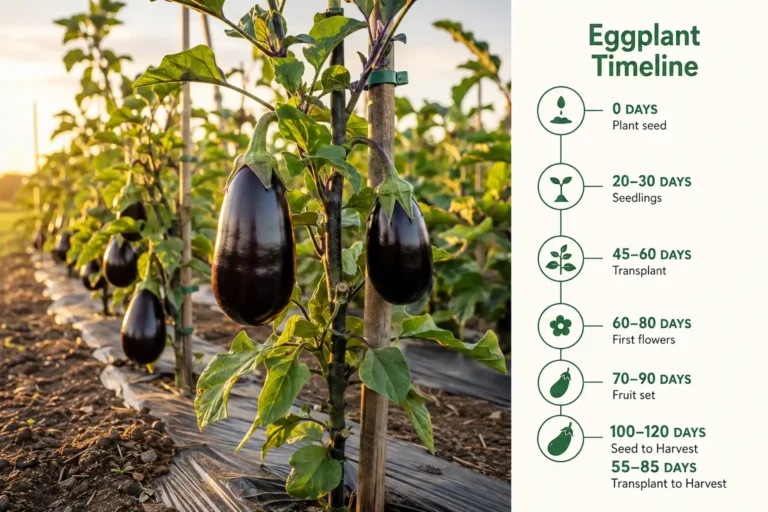
Time companions around the eggplant transplant date, not the calendar. Topeka sits in USDA hardiness zone 6a, and the last frost lands around April 20. Eggplant still waits for warm nights.
| Timing | Task |
|---|---|
| Mid to late February | Start eggplant indoors, soil at 80 to 85°F |
| Early April | Sow radish, leaf lettuce, spinach, and cilantro in row middles |
| Mid April | Sow dill and sweet alyssum, set marigold plugs |
| Late April | Transplant the perimeter trap row |
| Late May | Transplant eggplant once night lows hold above 50°F |
| Early June | Sow bush beans and cowpeas in row middles |
| Late June | Pull spent spring greens, then mulch the middles |
Growers farther south shift the transplant date earlier and add a fall crop. Northern Plains growers push it into June.
How Interplanting Changes Water and Feeding
Interplanted beds need more water and slightly more nitrogen, because every companion draws from the same root zone. Run drip rather than overhead, which keeps eggplant leaves dry and slows wilt symptoms.
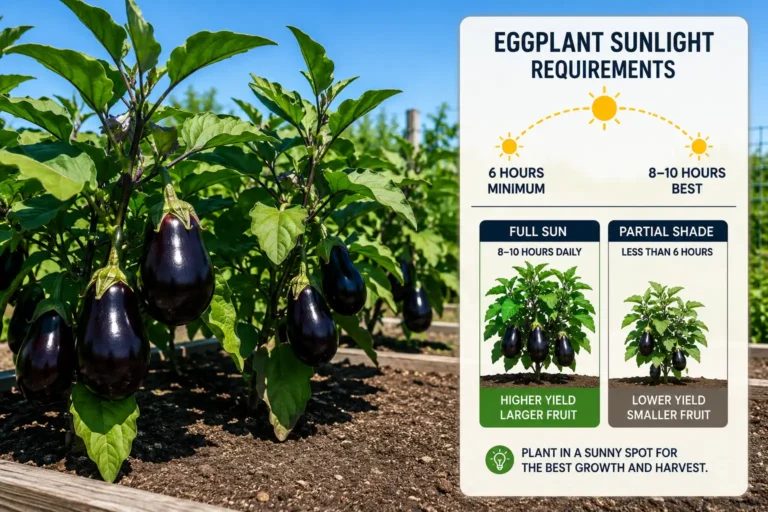
Eggplant wants a soil pH of 6.0 to 7.0 and steady moisture during fruit set. Test before the season, then side dress nitrogen at first fruit. Any balanced fertilizer blend built for tomatoes works on eggplant, since both crops share similar demand curves. Cut the rate when bush beans occupy the middles, because heavy nitrogen pushes bean vine growth over pods.
FAQs on Eggplant Companion Planting
Can you plant eggplant and peppers together?
How many companions fit around one eggplant?
Do cucumbers work next to eggplant?
What works in a container?
Should companions go in before or after transplanting?
To Conclude
Keep eggplant beds simple. Bunching onions go in the row and bush beans in the middles. Dill and alyssum flower at the edges. No potatoes go anywhere near. Flowering strips are the part that should never be dropped, since the predator support is measurable. Everything else is space management. Scout leaf undersides weekly, hold your Solanaceae rotation, and the companions do their share.