When to Plant Eggplant: Soil Temps, Frost Dates, and Zone Windows
Eggplant punishes an early start harder than any warm season crop. Cold soil stalls the plants for weeks, and they rarely catch up. So when to plant eggplant depends on what your soil thermometer says.
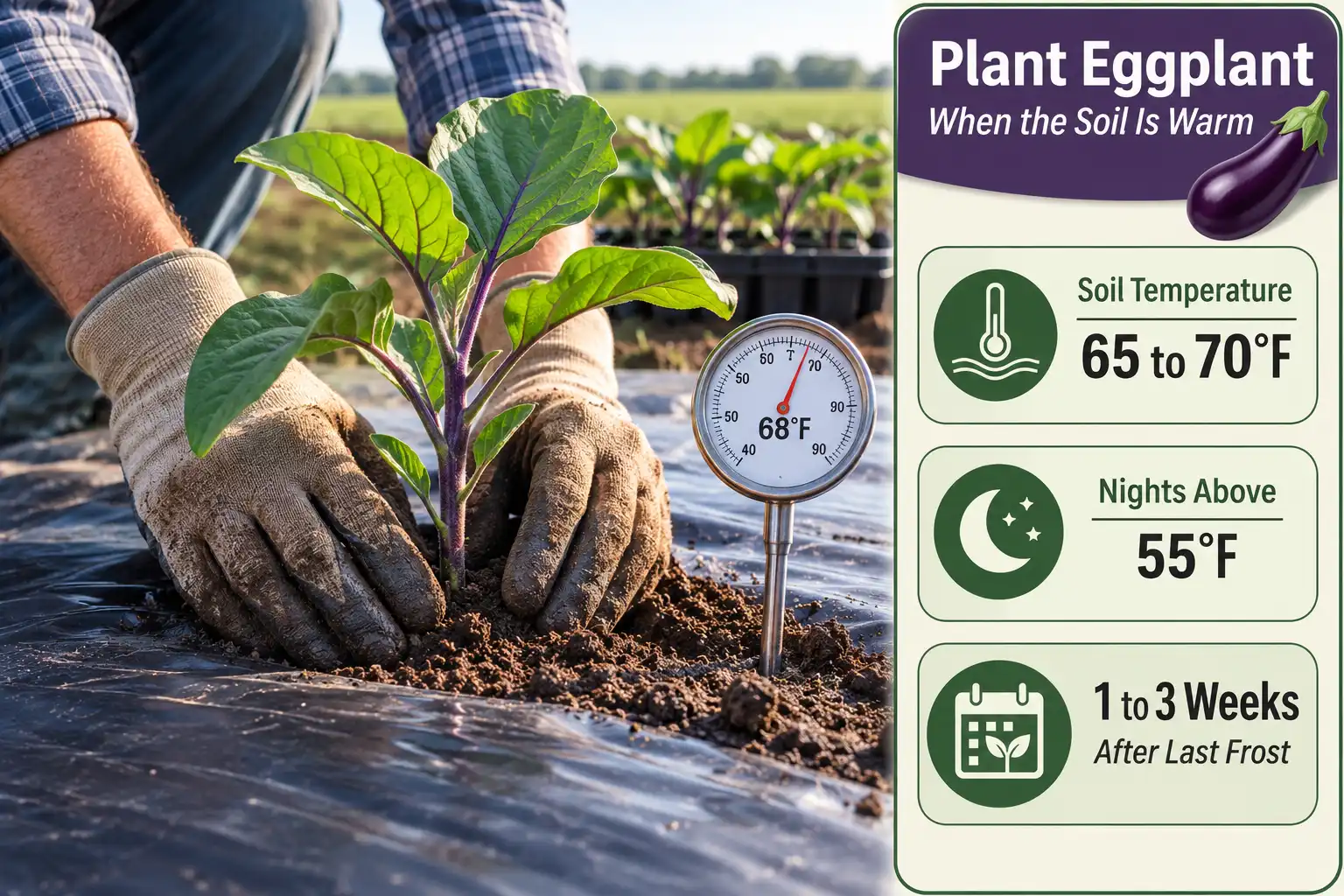
The best time to plant eggplant is 1 to 3 weeks after your last spring frost. Wait until soil at 4 inches holds 65°F and nights stay above 55°F. Start seeds indoors 8 to 10 weeks earlier.
When Is the Right Time to Plant Eggplant Outside?
Plant eggplant outside once two conditions hold together. Soil at 4 inches reads 65°F to 70°F, and overnight lows stay above 55°F. On most ground that lands 1 to 3 weeks after the average last frost.
Eggplant wants more heat than its nightshade cousins. Tomatoes handle 50°F nights without much trouble. Peppers slow down but keep going. Eggplant simply stops. Set eggplant last well after the tomato rows are already in and growing.
The frost date by itself is a weak trigger. A frost free week can still hand you 52°F soil after a wet April. That soil will not push new roots. Instead, treat your frost date as the earliest possible day. Then let temperature pick the actual day.
Two more numbers matter once plants are in. Eggplant sets fruit best between 70°F and 85°F. Above 95°F pollen goes sterile and blossoms drop. So a very late planting in the southern Plains flowers straight into a heat stall. Because of that, timing decides both how fast plants establish and whether the first flush of fruit ever sets.
What Soil Temperature Does Eggplant Need Before Transplanting?
Eggplant needs 65°F soil at a 4 inch depth, and 70°F works better. Below 60°F the roots barely function, no matter how warm the air feels.
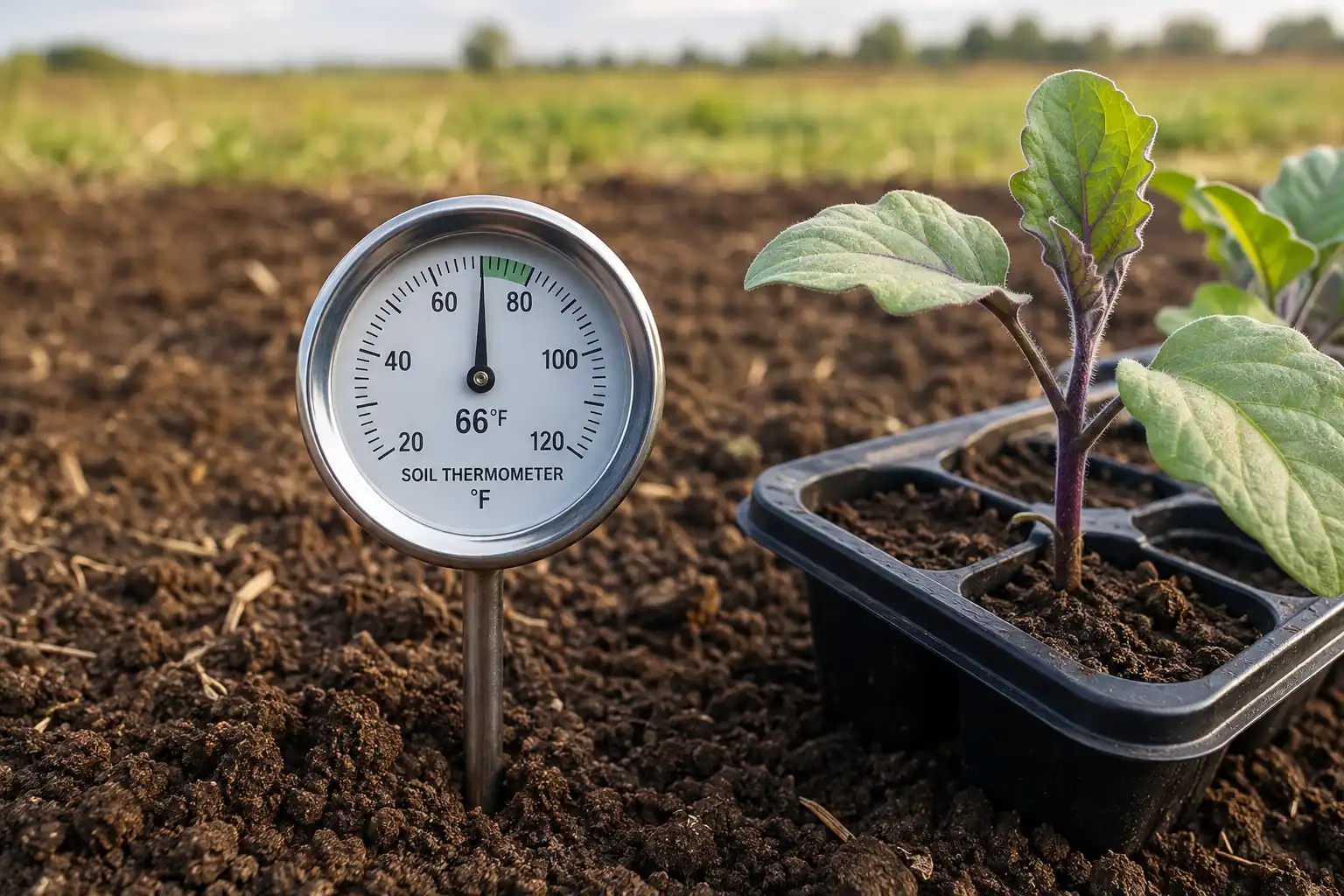
Take your reading in early morning rather than mid afternoon. Afternoon numbers run high and hide the overnight low that actually limits root growth. Check three spots per bed for three straight mornings, then plan around the coldest number. A dependable soil probe thermometer with a 6 inch stem costs less than a flat of transplants. It settles the question in seconds.
| Soil temp at 4 inches | What eggplant does |
|---|---|
| Below 55°F | Roots quit, growth stops, beetle damage compounds |
| 55°F to 59°F | Plants survive but sit unchanged for 2 to 3 weeks |
| 60°F to 64°F | Slow, uneven growth; workable floor only under plastic |
| 65°F to 70°F | Steady rooting, the target range for transplanting |
| 71°F to 85°F | Fast establishment and early flower set |
Black plastic mulch closes part of that gap. Lay it 2 to 3 weeks before planting. It lifts soil temperature roughly 3°F to 5°F in the top few inches. That gain is often enough to move planting up a week in zones 5 and 6. Organic mulch does the opposite early on, so hold straw or chips back until soil hits 75°F.
When Should You Start Eggplant Seeds Indoors?
Start eggplant seeds indoors 8 to 10 weeks before your transplant date. That runs two weeks longer than tomatoes, because eggplant seedlings creep along for the first month.
Work backward from the field, not forward from January:
- Look up the average last frost date for your county.
- Add 14 days to get a realistic transplant target.
- Count back 8 to 10 weeks from that target. That is your sowing date.
- Add 7 to 10 days of hardening off inside that window, not after it.
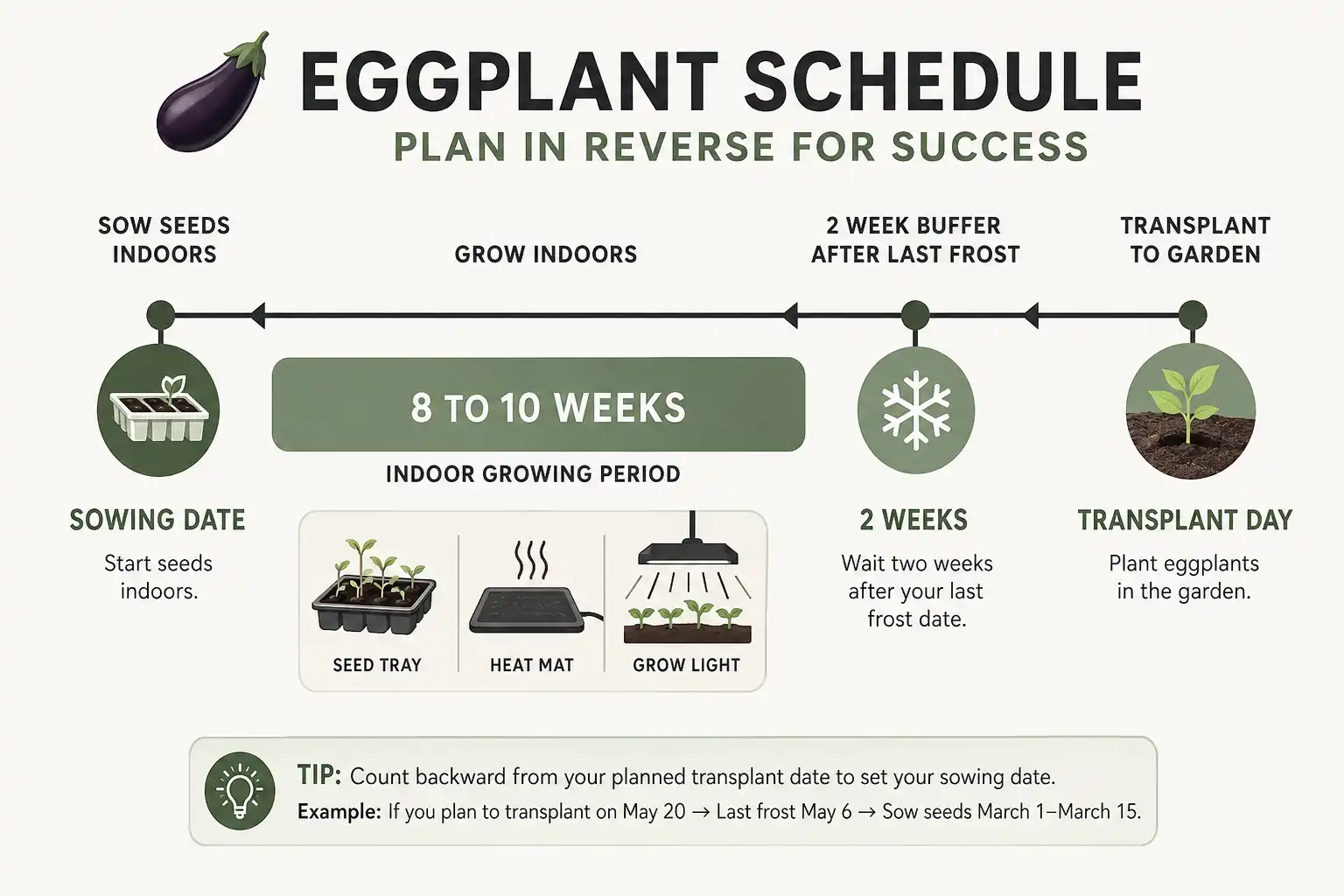
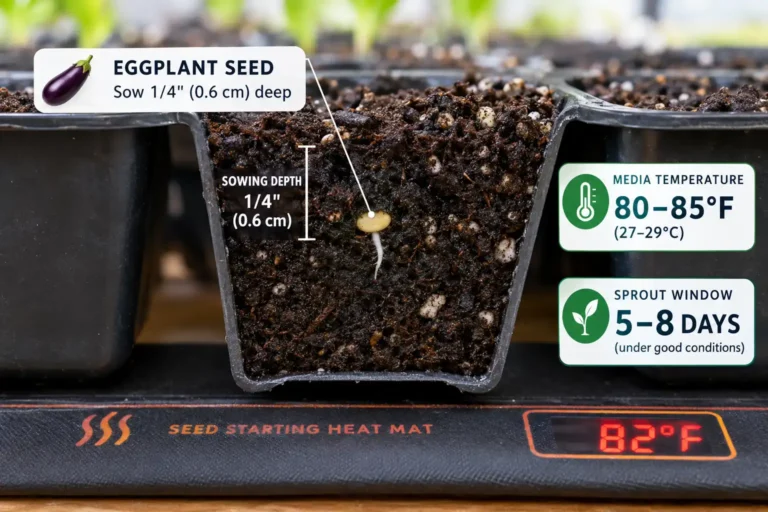
Heat drives germination more than anything else. Keep the media at 80°F to 85°F and seeds break ground in 7 to 10 days. Below 60°F they will not germinate at all, so a heat mat matters more than a bright window early on. A basic seed starting tray and dome setup holds that warmth and moisture without daily fussing.
Once seedlings emerge, drop the temperature to 70°F days and 65°F nights. Then get light on them hard. Run grow lights 2 to 3 inches above the canopy for 14 to 16 hours a day. Weak light produces stretched, floppy plants that sulk for three weeks after transplanting.
The last frost sits near April 20. Target May 12 in the field, so seeds go into trays in the first week of March. Damping off takes more eggplant seedlings than cold does, so keep airflow moving and water in the morning.
When to Plant Eggplant by USDA Hardiness Zone
Transplant windows shift about two weeks per zone. Find your row, then adjust with a thermometer rather than trusting the date alone.
| Zone | Average last frost | Start seeds indoors | Transplant window | Fall crop |
|---|---|---|---|---|
| 3 | Late May to early June | Late March | Mid to late June | No |
| 4 | Mid to late May | Mid March | Early to mid June | No |
| 5 | Early to mid May | Late February to early March | Late May to early June | No |
| 6 | Mid to late April | Late February to early March | Mid to late May | Rarely |
| 7 | Early to mid April | Early February | Late April to mid May | Early July |
| 8 | Mid to late March | Mid January | Early to mid April | Early to mid July |
| 9 | Mid February to early March | Mid December | Mid to late March | Late July to early August |
| 10 | Frost free most years | Early November | Late January to February | August to early September |
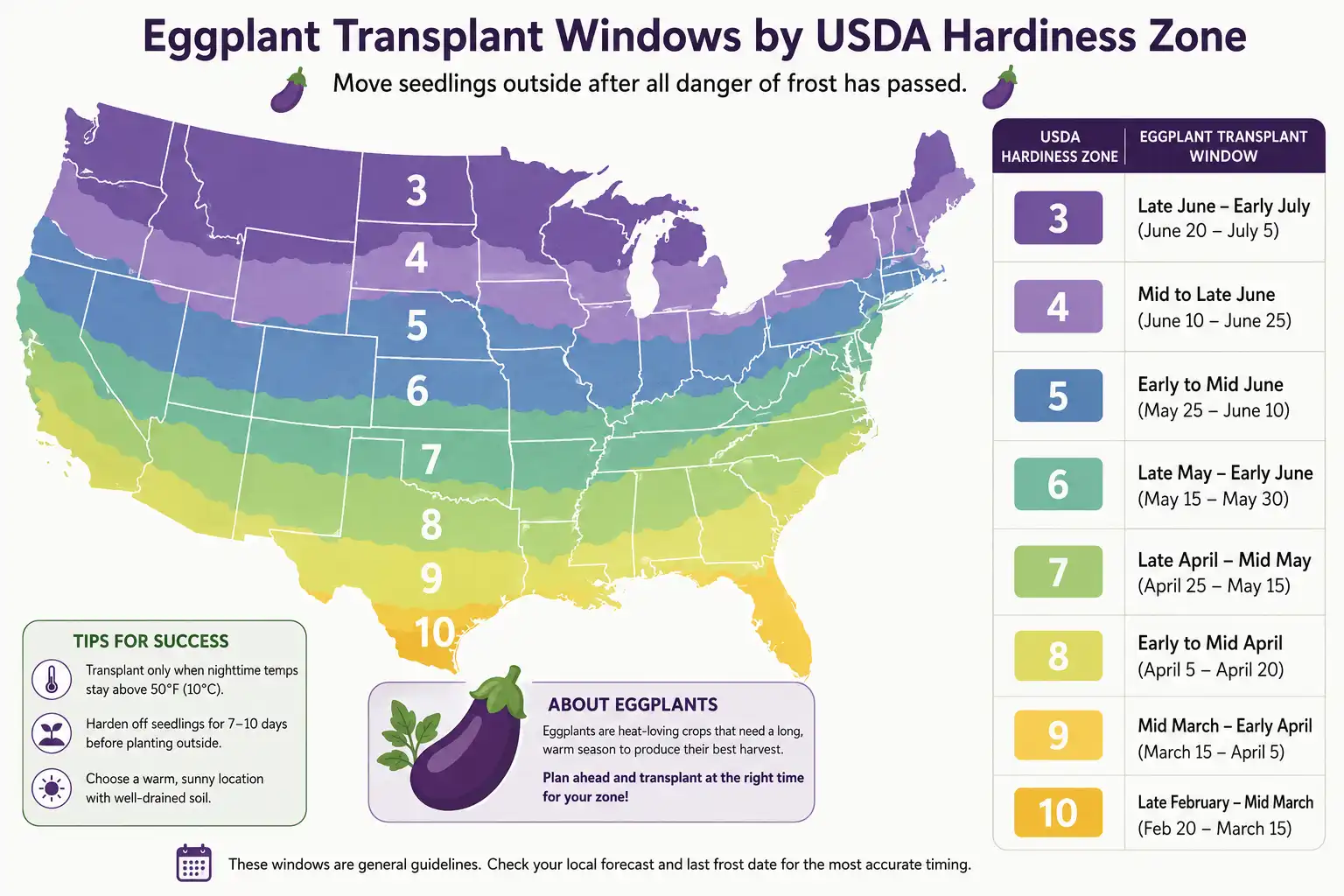
Those windows assume open ground with no plastic and no row cover. Add both and you can move up 7 to 10 days in zones 5 through 7. USDA redrew the hardiness zone map in 2023. Plenty of counties shifted half a zone warmer. So confirm your own zone before you build a schedule. A broader seasonal planting calendar helps you slot eggplant against everything else going in that month.
How Long After the Last Frost Should Eggplant Go In?
Give it 1 to 3 weeks past the last frost date in open ground. Under black plastic with a hooped row cover, 7 to 10 days is enough.
Remember what a published frost date actually means. Most listed dates carry a 50 percent probability, so half of all years bring frost later than that. If you want real safety, use the 10 percent date instead. Your local extension office and the NOAA freeze date tables both list it.
In practice, the 10 day forecast matters more than the calendar date. Rule on the farm is simple. No eggplant goes out unless the coldest low in the next 10 days sits above 50°F. That single filter protects more transplants than a row cover alone.
What Happens If You Plant Eggplant Too Early?
Early planting costs you time instead of buying it. Transplants set into 55°F soil often sit unchanged for two to three weeks. Growth resumes only when the weather turns.
Four things go wrong at once:
- Root growth stops. Cold soil shuts down water and nutrient uptake, so leaves turn dull and pale.
- Flea beetles pile on. The first adult flush hits in late May and early June, exactly when a chilled plant cannot outgrow damage. Plants under 6 inches take the worst of it.
- Flowering runs late. A three week stall pushes first bloom into peak July heat, where pollen fails above 95°F.
- Later plantings pass them. Eggplant set two weeks later in warm soil usually reaches harvest first, and with cleaner leaves.
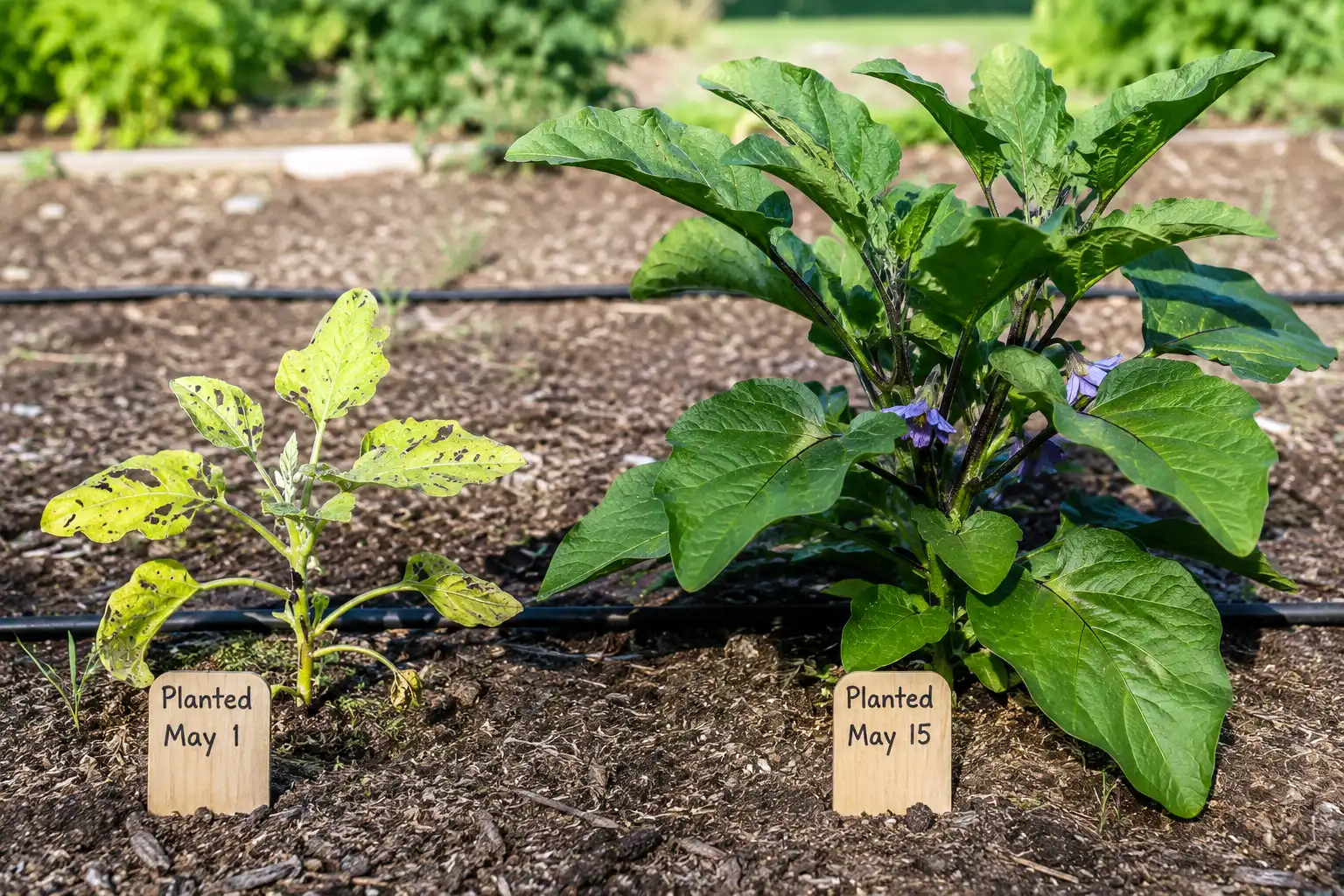
Because young plants are the vulnerable ones, set hoops and fine mesh cover on the same day you transplant. Then pull the cover at first bloom so bees can reach the flowers. Treatment thresholds run low on new transplants. Two beetles per plant justifies action, while a plant over 6 inches tall carries eight.
Can You Plant Eggplant in Summer for a Fall Crop?
Yes, and it works well in zones 7 through 10. Growers across the Gulf Coast and south Texas set fall eggplant transplants from early July into September.
Count backward from your average first fall frost:
- Note the days to maturity on the packet, measured from transplant, not from seed.
- Add 14 days for shorter days and cooling nights.
- Count that total back from your first frost date. That is your transplant deadline.
- Sow seeds 8 weeks before that deadline, usually in May or June.
San Antonio growers set fall plants between July 1 and July 25, which is a fair benchmark for zone 8b. Zone 9 and 10 growers can stretch into late August. North of zone 7, the math rarely works out, since 70 days plus a buffer runs past first frost.
Summer transplanting takes different care than spring. Set plants late in the afternoon, water them in heavily, and shade them for the first week. Keep water steady for two weeks while roots take hold. Because heat rather than cold is the stress here, skip the row cover and use 30 percent shade cloth instead.
How Do You Know Your Transplants Are Ready to Set Out?
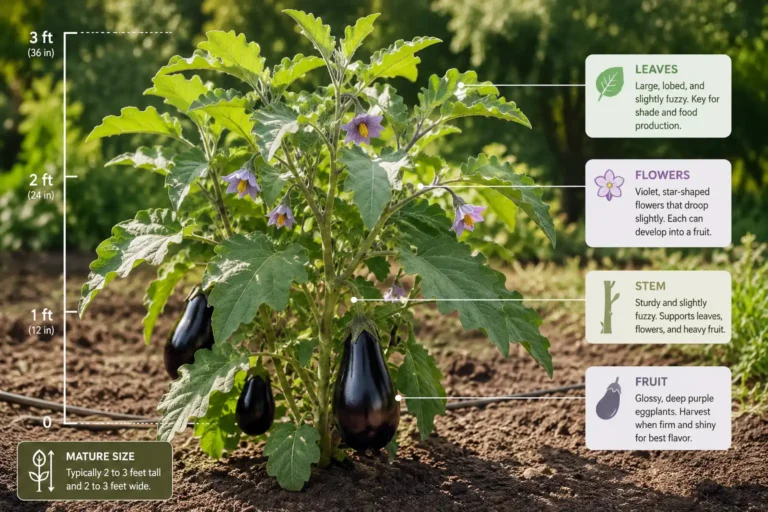
A field ready eggplant transplant stands 6 to 10 inches tall with 6 to 9 true leaves. The stem runs about as thick as a pencil, and the color reads deep green. Roots should hold the plug together when you slide it out.
Check these before anything goes in the ground:
- No open flowers or visible buds. Plants already flowering root slowly and yield poorly, so pinch buds off first.
- Stocky growth, not stretched. Long internodes mean the plants need more light, not more time.
- Hardened off over 7 to 10 days. With eggplant, cut back water rather than dropping temperature, and keep plants above 55°F throughout. The process mirrors how tomato transplants are hardened off, except eggplant should never be exposed to chilling temperatures during the process..
- Clean leaves. Spots or chewing on a transplant only get worse in the field.
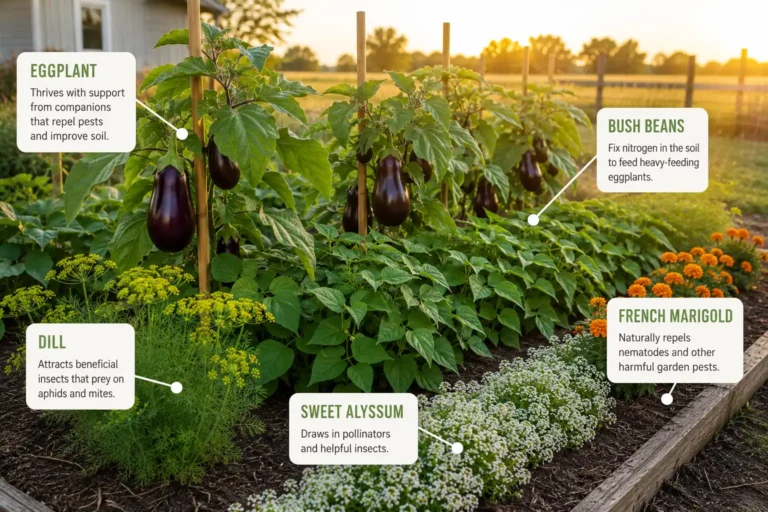
Space plants 18 to 24 inches apart in the row, with 30 to 42 inches between rows. Keep eggplant out of ground that grew potatoes, peppers, or tomatoes in the last three seasons. Verticillium survives in that soil for years. When bed space is tight, setting eggplant beside tomatoes still works. The eggplant just waits for warmer soil than the tomato row needed.
Which Eggplant Varieties Fit a Short Planting Window?
Short season types cut 20 to 30 days off the schedule. In zones 3 through 5, that gap decides whether you get a crop at all.
| Variety | Type | Days from transplant | Best fit |
|---|---|---|---|
| Fairy Tale | Miniature, striped | 49 to 55 | Zones 3 to 5, containers |
| Hansel | Slender cluster | 55 | Short summers, patio beds |
| Millionaire | Japanese hybrid | 55 to 60 | Fall crops in the South |
| Dusky | Early globe hybrid | 60 to 65 | Earliest globe for the Plains |
| Ichiban | Japanese, long slim | 58 to 65 | Zones 5 and 6 |
| Early Black Egg | Small oval | 65 | Cool, short seasons |
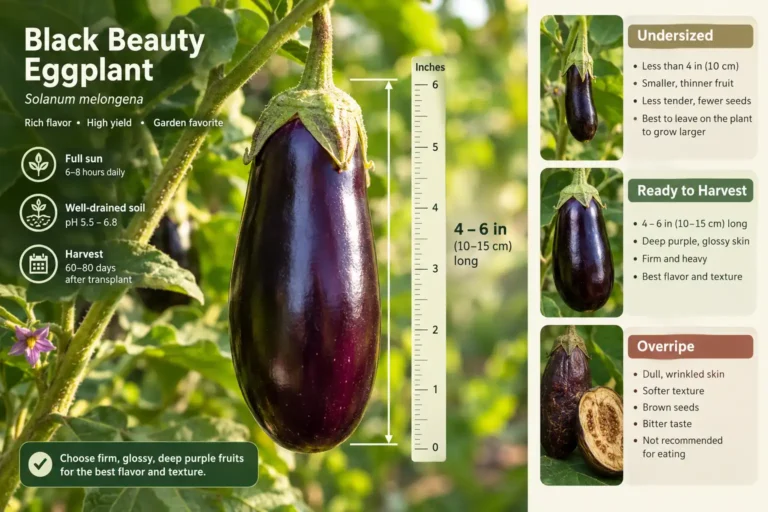
| Black Beauty | Standard globe | 74 to 80 | Zone 6 and warmer |
Days to maturity counts warm days only. A variety listed at 75 days needs 75 days of real growing weather after transplanting. So every week of cold soil pushes harvest back by more than a week.
What to Do the Week Before You Set Eggplant Out
Run through this list in the seven days ahead of planting:
- Lay black plastic over the bed, 2 to 3 weeks ahead when you can manage it.
- Read soil temperature at 4 inches every morning and write it down.
- Pull the 10 day forecast and confirm no overnight low under 50°F.
- Apply nitrogen and phosphorus according to your soil test, then side dress again at first bloom.
- Stage hoops and cover material at the bed so they go on at planting.
- Pinch off flower buds and water trays deeply the evening before.
Plant in late afternoon rather than midday. Water each transplant in with a starter solution, then check them the next morning for wilting.
Final Words on Eggplant Planting Time
Eggplant timing comes down to patience with a number. Sow in early March and watch soil temperature through late April. Plant around May 12, once the 4 inch reading holds 66°F or better. Some years that date slips to May 20, and the crop still outperforms transplants set into cold ground too early. Buy the thermometer, skip the calendar guessing, and let the soil tell you the date.