How to Grow Eggplant in a Pot: Size, Care, and Harvest
A patio, balcony, or sunny deck holds enough room for a productive eggplant. The plant needs heat, root space, and steady moisture more than square footage. Knowing how to grow eggplant in a pot comes down to five decisions you make before the first fruit sets.
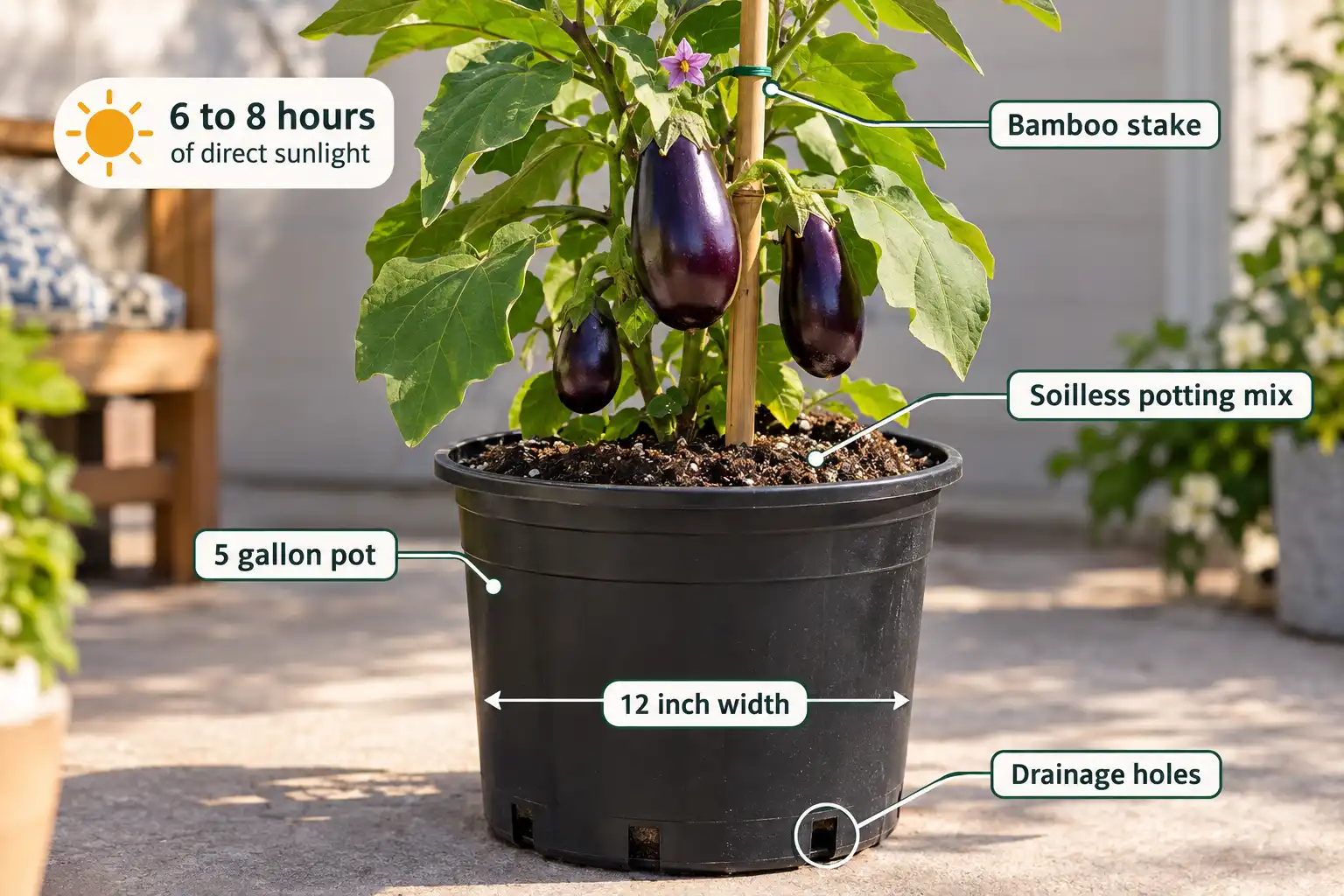
Use a 5 gallon pot at least 12 inches wide, one plant per pot, filled with soilless potting mix. Give it 6 to 8 hours of sun, water when the top 2 inches dry, and feed every 2 weeks.
What Size Pot Does Eggplant Need?
Plan on 5 gallons per plant, with a pot at least 12 inches across and 12 inches deep. Colorado State University Extension lists 2 gallons as the working minimum for eggplant, with one plant per container. That floor suits the smallest cultivars. It leaves almost no buffer.
Volume matters because it buys you time. A 2 gallon pot in July heat can dry out twice a day. A 5 gallon pot holds enough moisture to get through most days on one watering.
Pot size and expected performance:
| Pot size | Width | Best use | Watering load |
|---|---|---|---|
| 2 gallons | 10 inches | Dwarf types only | Twice daily in heat |
| 5 gallons | 12 to 14 inches | Standard single plant | Once daily in heat |
| 7 to 10 gallons | 16 to 18 inches | Full size cultivars | Every 1 to 2 days |
| 15 gallons | 20 inches | Two plants, or one plant plus herbs | Every 2 to 3 days |
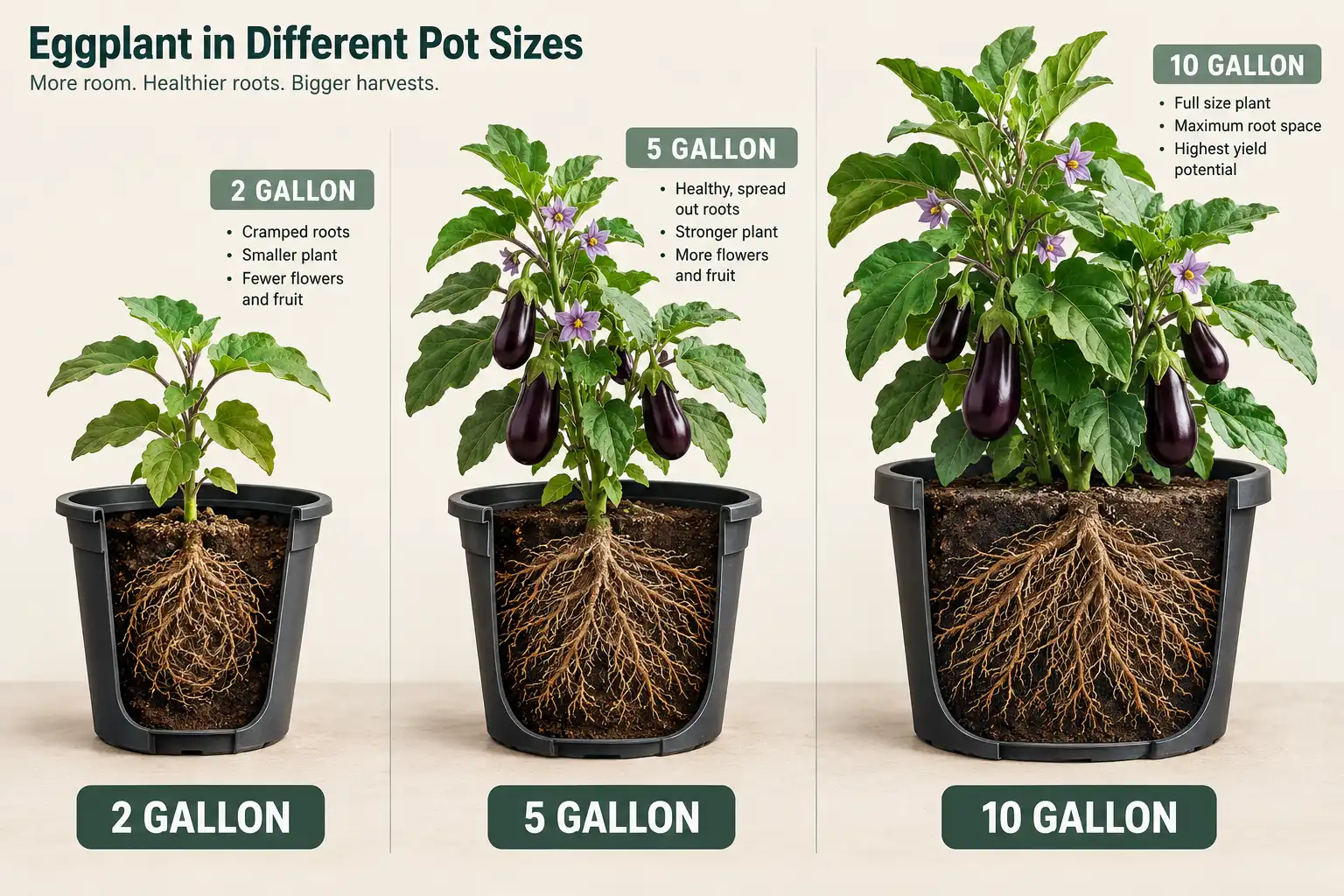
Resist crowding two plants into one pot. Roots compete, airflow drops, and both plants underperform.
Which Eggplant Cultivars Grow Best in Pots?
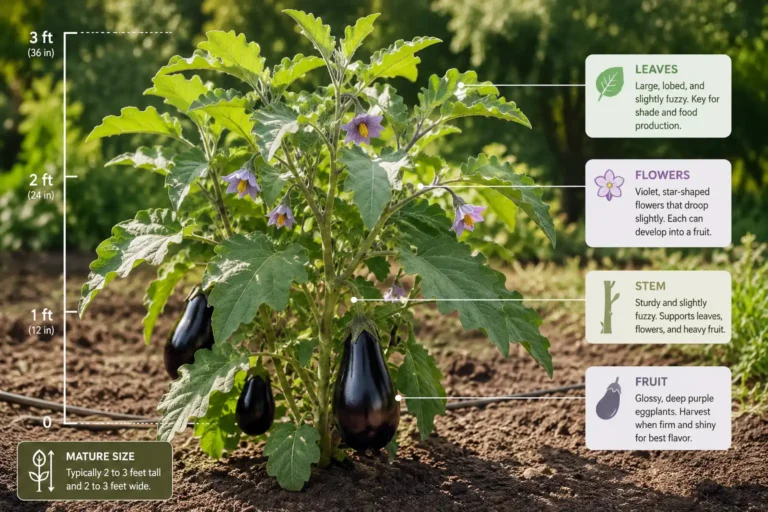
Compact and Asian types outproduce full size globe cultivars in containers. They set fruit earlier, stay under 3 feet, and carry lighter fruit that rarely breaks branches. Colorado State University Extension names Bambino, Black Beauty, and Long Tom among container options.
| Cultivar | Days to harvest | Plant height | Fruit size | Pot size |
|---|---|---|---|---|
| Patio Baby | 45 to 50 | 16 to 20 inches | 2 to 3 inches | 3 to 5 gallons |
| Fairy Tale | 49 to 65 | 18 to 24 inches | 3 to 4 inches | 3 to 5 gallons |
| Hansel and Gretel | 55 | 24 to 30 inches | 4 inches | 5 gallons |
| Bambino | 70 to 75 | 12 to 18 inches | 1 inch | 2 to 3 gallons |
| Ichiban | 58 to 65 | 30 to 36 inches | 8 to 10 inches | 7 gallons |
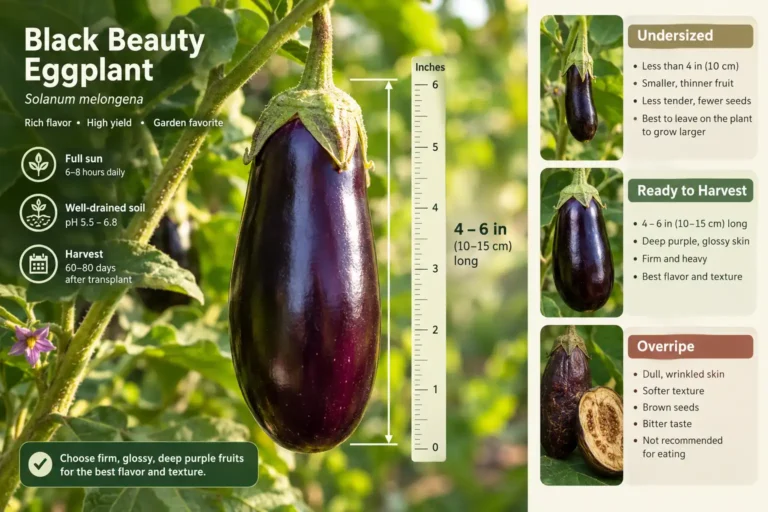
| Black Beauty | 75 to 85 | 30 to 36 inches | 6 to 8 inches | 10 gallons |
Black Beauty produces well in a pot, but only a large one. Its fruit runs heavy, so staking becomes mandatory rather than optional.
What Potting Mix and Pot Type Work Best?
Use a commercial soilless potting mix, never garden soil. Garden soil compacts in a container, drains poorly, and carries soilborne disease. A peat or coir based mix with perlite holds moisture while still letting water pass through.
Drainage decides more outcomes than mix brand. Check for open holes before filling, and drill more if the pot has only one. University of Maryland Extension suggests raising containers on pot feet so water clears the base instead of pooling under it.
Pot material changes your watering rhythm:
- Unglazed terracotta: breathes well, dries fastest, best where humidity runs high
- Glazed ceramic and plastic: holds moisture longest, forgiving if you water on an irregular schedule
- Fabric grow bags: air prune roots, drain freely, dry quickly in wind
- Dark plastic or resin: warms the root zone fastest, useful in cool northern springs
Skip gravel layers at the bottom. Gravel raises the saturated zone rather than improving drainage.
When Should You Move Eggplant Outside?
Wait until night temperatures stay above 60°F and soil in the pot reads 65°F or warmer. South Dakota State University Extension advises transplanting in late May or early June once night lows sit consistently above 60°F. Cold soil stalls eggplant far longer than it stalls tomatoes.
Utah State University Extension reports that eggplant grows best with daytime temperatures of 75°F to 85°F and night temperatures above 60°F to 65°F.
| Condition | Threshold | What happens below it |
|---|---|---|
| Night air | Above 60°F | Growth stalls, leaves purple |
| Potting mix | 65°F or warmer | Roots stop taking up phosphorus |
| Daytime air | 75°F to 85°F | Slow growth, poor fruit set |
| Chilling injury | Below 50°F | Dark greasy leaf patches |
Pots carry one clear edge here. SDSU Extension notes that eggplant often grows better in a container or raised bed because the soil stays warmer. You can also roll a pot into shelter when a late cold front arrives. For state by state windows, check the eggplant planting dates by region.
How to Grow Eggplant in a Pot Step by Step
Start with a warm pot, a sturdy transplant, and a stake already in place. The sequence below takes about 20 minutes per container.
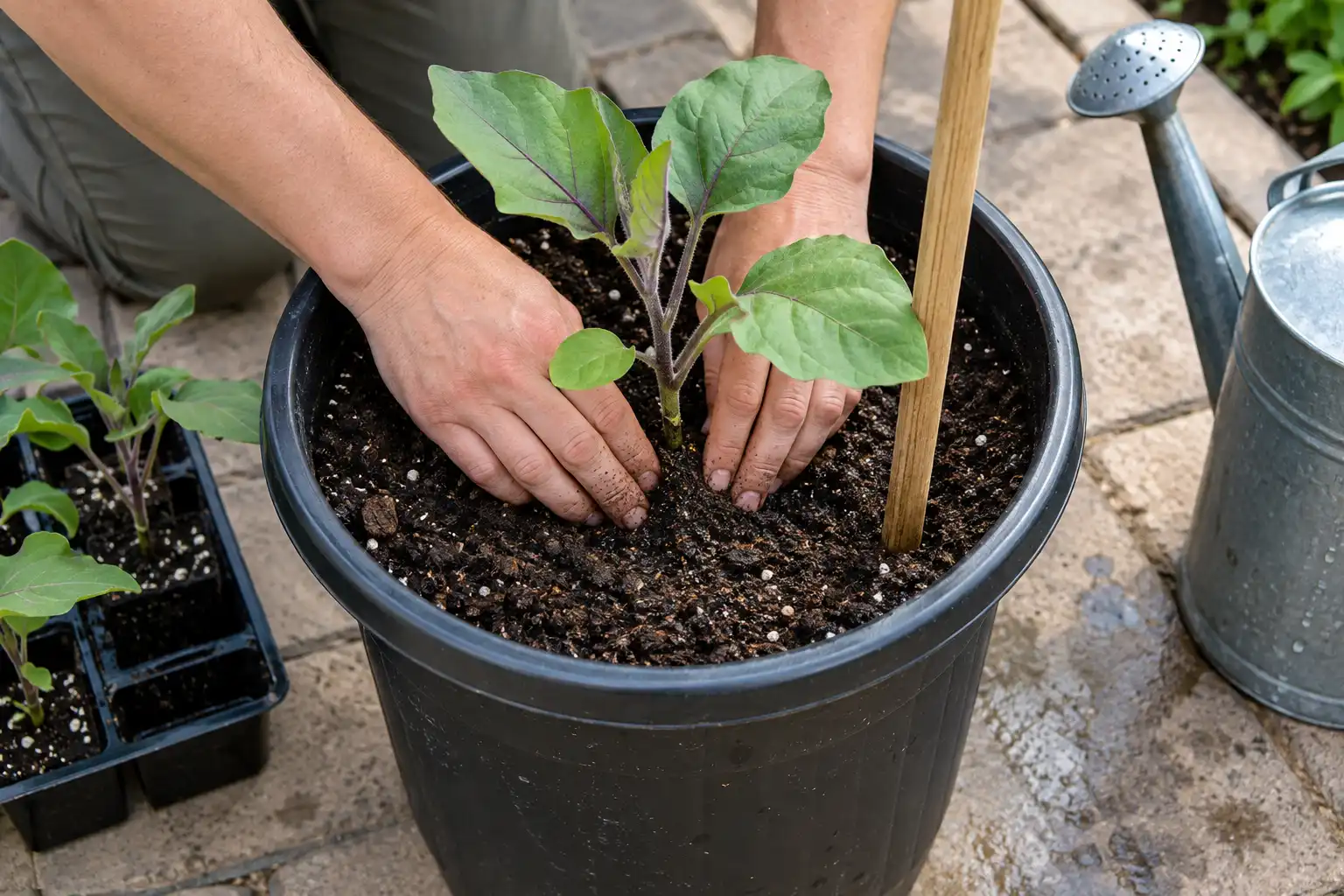
- Fill the pot with moist potting mix to within 2 inches of the rim. Dry mix repels water, so wet it first.
- Set the stake or cage now. Driving a stake later tears roots that have already spread.
- Plant at the same depth the seedling grew in its cell. Eggplant gains nothing from deep planting, unlike tomatoes.
- Firm the mix around the root ball and water until it runs from the drainage holes.
- Pinch off any early flowers on a small transplant. Roots need to establish before fruit pulls energy away.
- Place the pot in full sun, ideally against a south facing wall that radiates stored heat overnight.
- Cover with fine mesh if flea beetles are active locally, then remove it once flowers open.
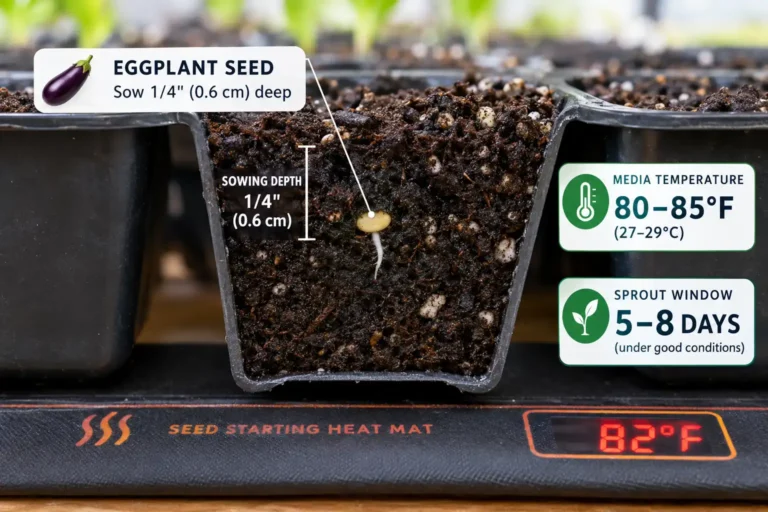
If you are raising your own transplants instead of buying them, the timing rules for growing eggplant seedlings from seed set the calendar backward from your last frost date.
How Much Sun Does a Potted Eggplant Need?
Six hours of direct sun is the floor, and 8 or more produces noticeably better fruit set. Eggplant is a warm season crop with high light demand, so shade cuts yield before it cuts plant size.
Pots give you an advantage that beds cannot match. You can chase the sun through the season as shadows shift. In cool coastal or northern areas, park the container on concrete or brick that stores daytime heat.
Very hot regions flip the problem. Where afternoons run past 95°F, light afternoon shade protects pollen without starving the plant. Deeper detail on light thresholds sits in the notes on eggplant and full sun exposure.
How Often Should You Water Eggplant in a Pot?
Water when the top 1 to 2 inches of mix feel dry, not on a fixed schedule. Iowa State University Extension recommends checking containers daily in summer and watering once the mix is dry at a depth of 1 to 2 inches.
Frequency shifts with pot size and weather:
- Small pots in hot wind: once or twice daily
- 5 gallon pots in summer heat: once daily
- Large pots in mild weather: every 2 to 3 days
Water at the base, not over the leaves. University of Maryland Extension advises base watering to limit foliar disease. Apply until water runs from the drainage holes, then empty any saucer so roots never sit in standing water.
Uneven moisture causes most container failures. Swings between soaked and bone dry produce bitter fruit, blossom end rot, and sudden leaf drop. A 1 inch mulch layer of shredded bark on the mix surface cuts evaporation and steadies the swing.
How Do You Fertilize Eggplant in a Pot?
Feed lightly every 2 weeks once the plant is established. University of Maryland Extension lists eggplant among long season crops that need light feeding every 2 weeks for continuous harvest.
Container feeding differs from bed feeding for one reason. Every watering flushes nutrients out the drainage holes. Iowa State University Extension recommends water soluble fertilizer every 1 to 3 weeks through summer.
A practical approach:
- Mix slow release granules into the potting mix at planting for a 3 to 4 month baseline
- Add a balanced water soluble feed every 2 weeks once flowering starts
- Flush with plain water every month or so to clear salt buildup
Watch the nitrogen. SDSU Extension warns that excess nitrogen pushes leaf growth at the expense of flowers. If your plant looks lush and green but sets nothing, cut nitrogen and shift to a feed higher in phosphorus and potassium. SDSU Extension also notes that plants grown in artificial container media usually need added phosphorus, potassium, and calcium.
Does Potted Eggplant Need Support?
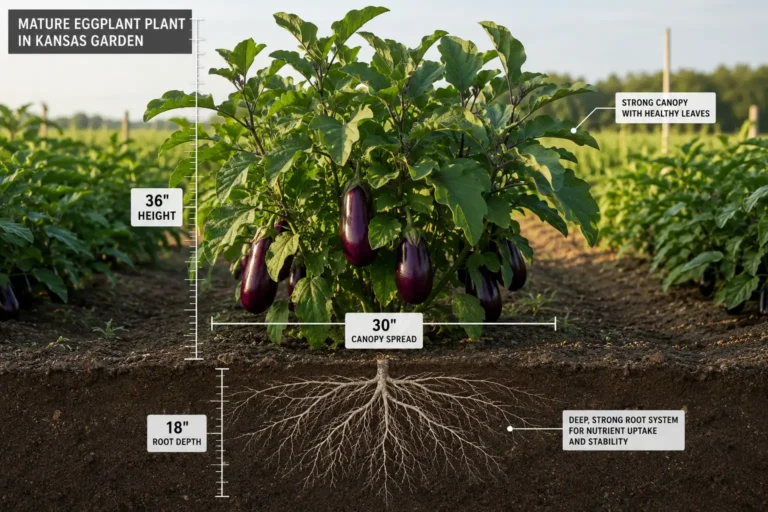
Most container cultivars need a stake or small cage, and full size types always do. Eggplant branches are brittle. They snap cleanly once fruit loads them, and a pot offers no surrounding plants to lean on.
Set a 24 to 36 inch stake at planting and tie loosely with soft ties as the plant grows. Dwarf types like Patio Baby and Bambino often stand on their own, though wind on an exposed balcony changes that fast. A tomato cage works well for Ichiban and Black Beauty. The reasoning behind trellis and staking needs for eggplant applies equally in pots.
Common Problems With Potted Eggplant and How to Fix Them
Most container failures trace to heat, water, or flea beetles. The table below matches symptoms to causes.
| Symptom | Likely cause | Fix |
|---|---|---|
| Flowers drop without fruit | Heat above 95°F or nights below 60°F | Shade in afternoon, hold steady moisture |
| Tiny shot holes in leaves | Flea beetles | Fine mesh cover until flowering, kaolin clay after |
| Leaves stippled and dusty | Spider mites | Rinse undersides, raise humidity, treat with insecticidal soap |
| Lush leaves, no fruit | Excess nitrogen | Switch to lower nitrogen feed |
| Bitter, seedy flesh | Fruit left too long or water stress | Pick at gloss, water evenly |
| Purple leaf undersides | Cold soil, phosphorus lockout | Move pot to warmth, wait for soil above 65°F |
| Sudden wilting after sun | Pot too small, mix dried out | Move up a pot size, mulch the surface |
Utah State University Extension reports that temperatures above 95°F cause flower bud drop and pollen death. That explains the midsummer pause many growers misread as plant failure. Fruit set usually resumes when nights cool.
Flea beetles hit potted eggplant hardest in the first month. University of Maryland Extension recommends keeping row cover on eggplant until plants start to flower, then removing it so pollinators reach the blossoms. Damage looks worse than it is on plants over 6 inches tall, which usually outgrow light feeding.
When and How Do You Harvest Potted Eggplant?
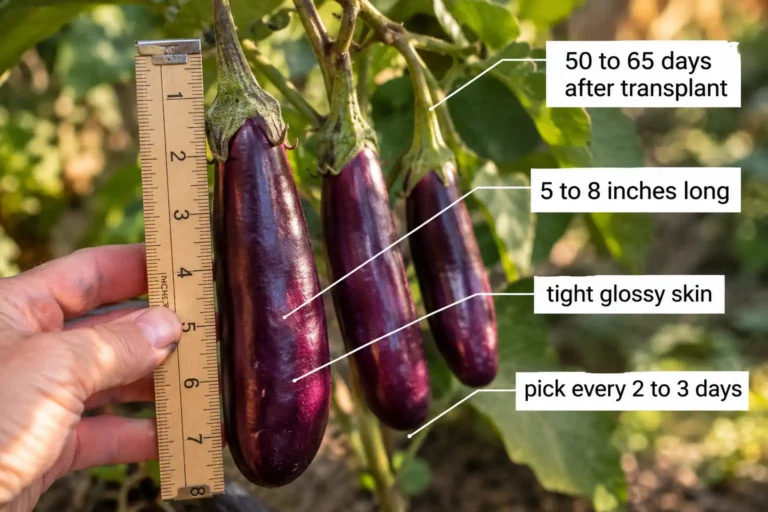
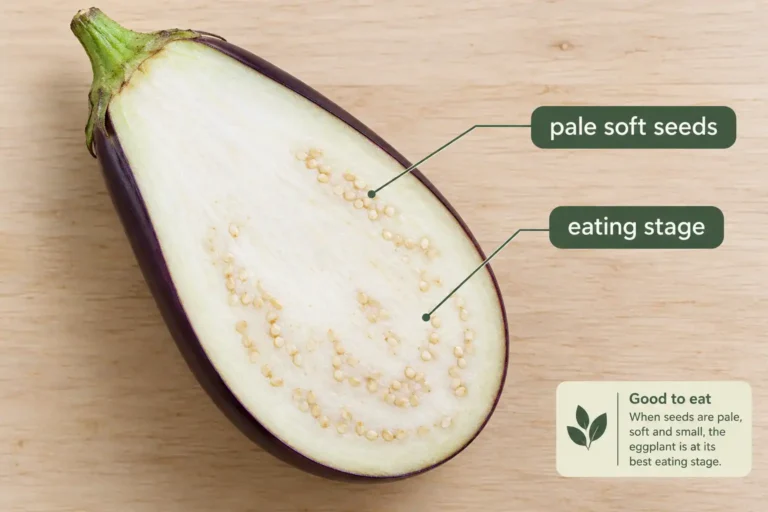
Pick when the skin is glossy and the flesh springs back under light thumb pressure. Dull skin signals overripe fruit with hard seeds and bitter flavor. Oregon State University reports roughly 65 to 85 days from transplant to harvest, though compact cultivars run faster.
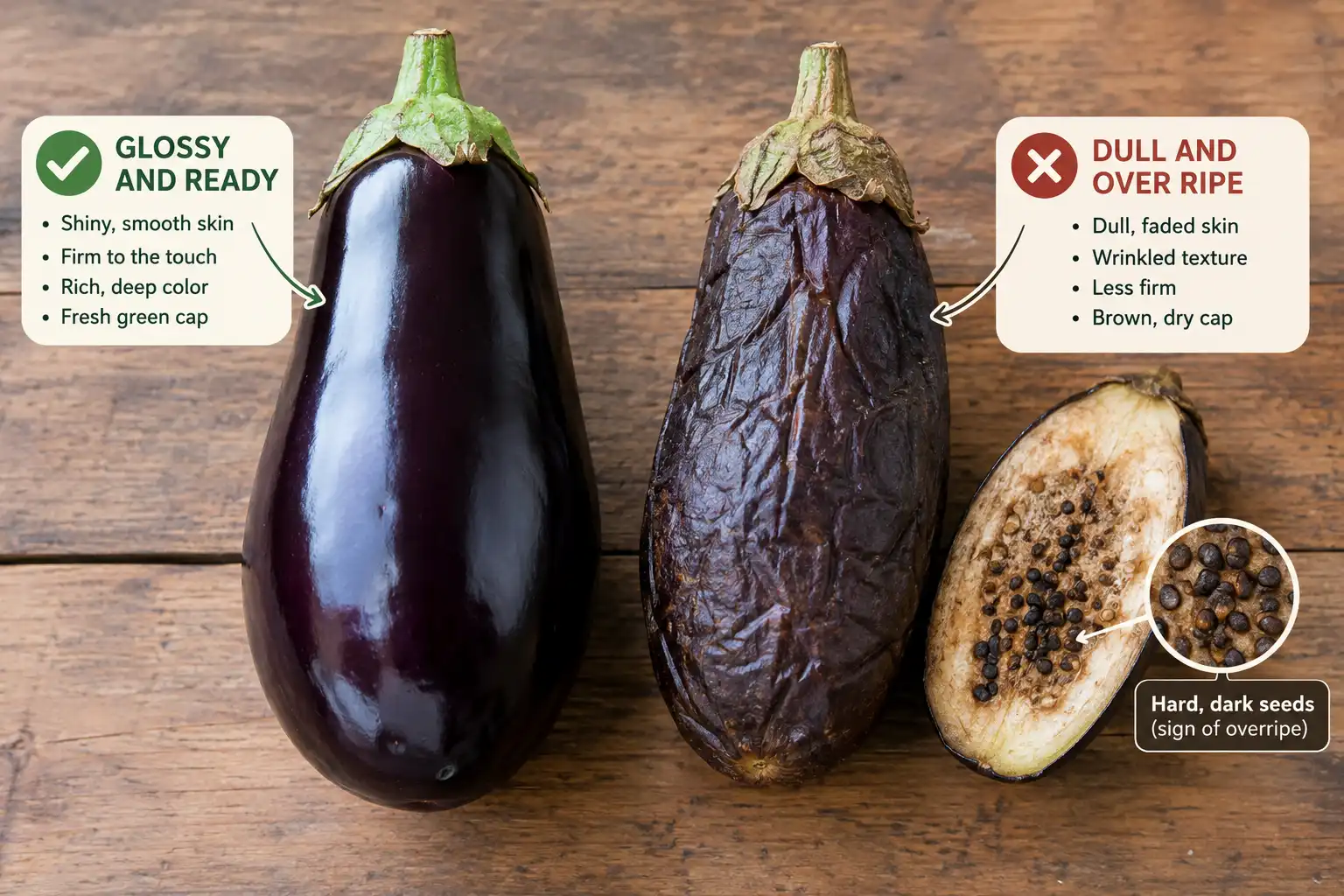
Size varies by type, so gloss beats size as your signal:
- Patio Baby and Bambino: 1 to 3 inches
- Fairy Tale and Hansel: 3 to 4 inches
- Ichiban and Japanese types: 6 to 8 inches
- Black Beauty and globe types: 6 to 8 inches
Cut the stem with pruners rather than pulling. The calyx is stiff and thorny on many cultivars, and tugging can snap a whole branch. Harvest every 2 to 3 days during warm weather. Frequent picking keeps the plant flowering. One oversized fruit left on the plant slows new set noticeably. For ripeness signals across cultivars, see the guide on eggplant harvest timing and skin gloss.
Can You Push a Potted Eggplant Past One Flush?
Yes, and a pot makes it easier than a bed. After the midsummer heat pause, cut spent branches back by about a third and resume feeding. New growth sets a second flush as nights cool.
Frost ends outdoor production, but a container can move. Roll the pot into a garage or bright indoor spot when frost threatens, then bring it back out. Plants rarely fruit well indoors over winter. Many still survive to restart in spring. The full method for regrowing eggplant for a second harvest covers timing and cut height.
FAQs about Growing eggplant in a pot
Can eggplant grow in a 5 gallon bucket?
How many eggplants will one pot produce?
Do potted eggplants need pollinating by hand?
Why are my potted eggplant leaves turning yellow?
Can two eggplants share one pot?
Do eggplants in pots need deeper or wider containers?
What to Get Right Before You Plant
Three choices set your season. Pick a 5 gallon or larger pot, choose a compact cultivar suited to container life, and wait for soil above 65°F before moving the plant outside. Water when the top 2 inches dry, feed every 2 weeks, and pick while the skin still shines.