Can Tomatoes and Potatoes Be Planted Together? 4 Key Facts for Farmers
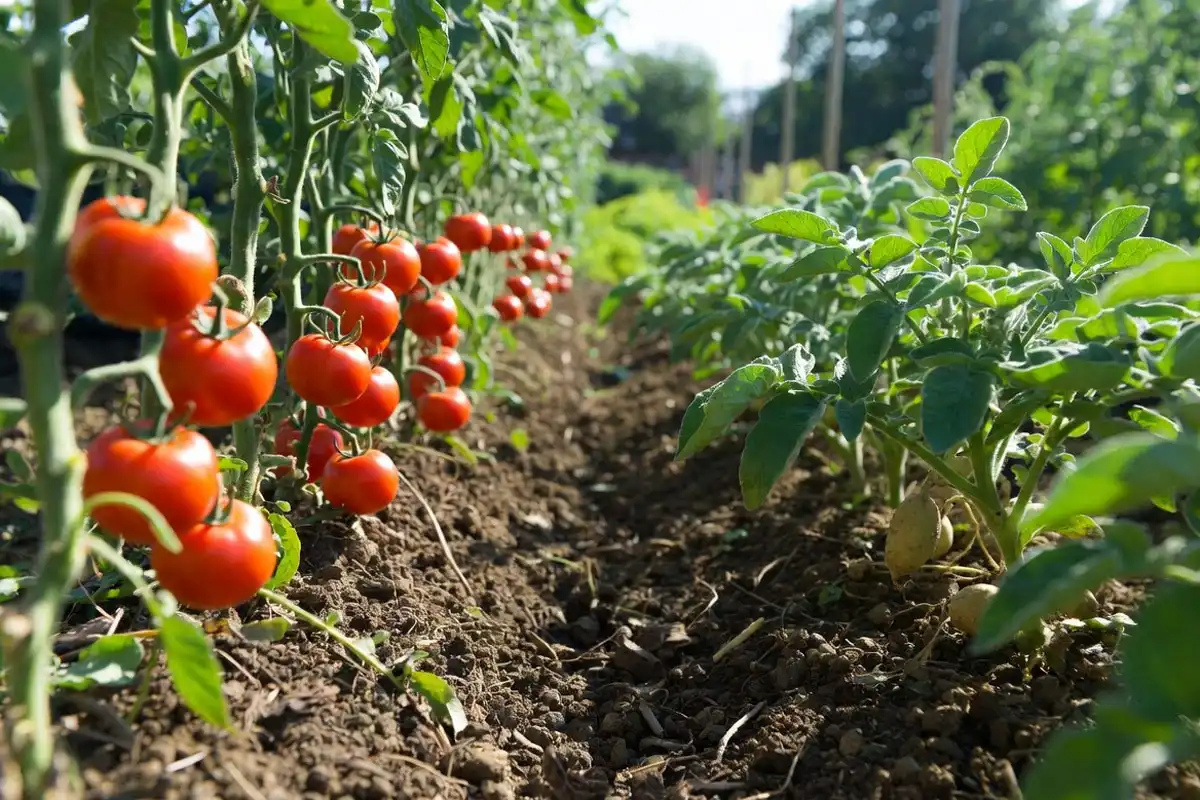
Sharing garden space between tomatoes and potatoes when they’re planted together creates more problems than most farmers expect. This guide covers the biological reason both plants conflict, the specific diseases and pests they share, how far apart they need to be, and what to grow near each crop instead. Whether you manage row crops, raised beds, or containers, the information here helps you protect both yields and plan a smarter garden layout.
Tomatoes and potatoes should not be planted together. Both belong to the Solanaceae (nightshade) family, which means they share the same pests and diseases, including late blight (Phytophthora infestans). Growing them in close proximity accelerates disease spread and increases pest pressure on both crops. Keep them at least 10 feet apart, or place them in completely separate sections of the farm or garden.
Are Tomatoes and Potatoes in the Same Plant Family?
Yes. Tomatoes (Solanum lycopersicum) and potatoes (Solanum tuberosum) both belong to the Solanaceae family. They share the same genus, Solanum.
This close relationship is the root of the problem. Shared genetics means shared vulnerabilities. Pathogens and insects that target one crop target the other with equal intensity.
Other Solanaceae members include peppers, eggplant, and tomatillos. Avoid grouping any of these crops together in the same bed or row.
Learn more: Flowers to Plant with Tomatoes to Improve Garden Yield
Why Planting Tomatoes and Potatoes Together Creates Problems
Do They Share the Same Diseases?
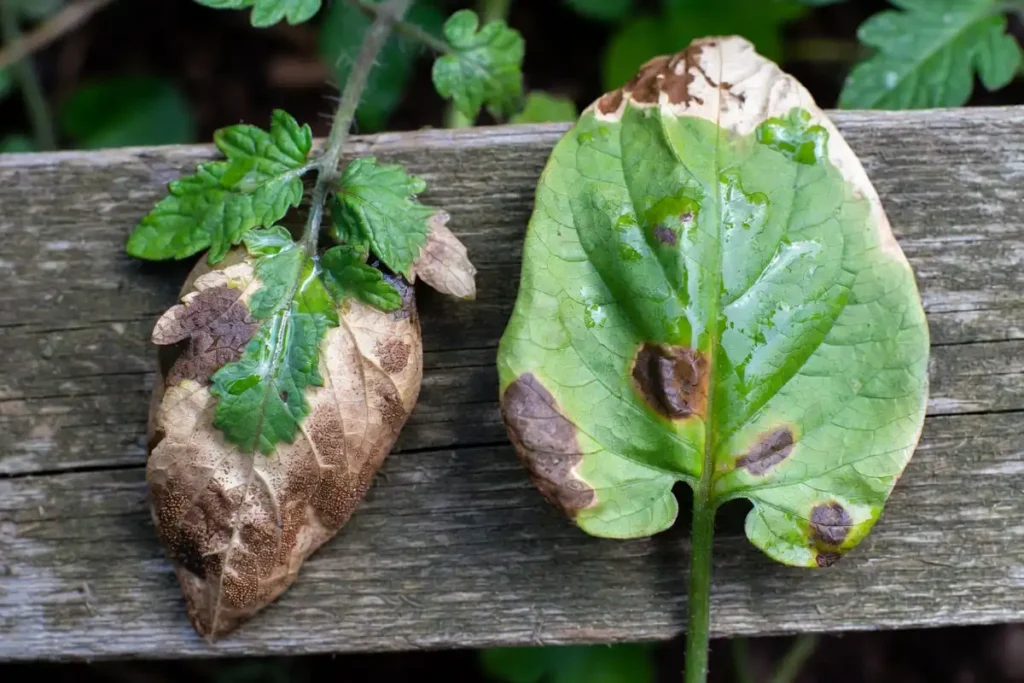
Yes, and this is the most serious reason to keep them separated. The primary shared threat is late blight, caused by Phytophthora infestans.
Late blight spreads through airborne spores. A single infected potato plant releases spores that reach nearby tomato foliage within hours under humid conditions. Once the spores land and germinate, visible lesions appear within 3 to 5 days.
From there, infected tomato plants release new spores back to potatoes. This cycle accelerates disease pressure on both crops at the same time, and a planting can collapse within a single week during wet weather.
Early blight (Alternaria solani) also targets both crops. It produces dark, concentric lesions on lower leaves and reduces photosynthesis, which decreases yield across both plants. Identifying these symptoms early is critical. Reviewing common crop diseases and how they spread helps you catch both blight types before they establish.
Verticillium wilt is a third shared disease. This soil-borne fungus colonizes root systems and blocks water uptake. Planting both crops in the same soil section increases the resident fungal load for both.
Read next: Rules of Eggplant and Tomatoes Plant Together
Do They Share the Same Pests?
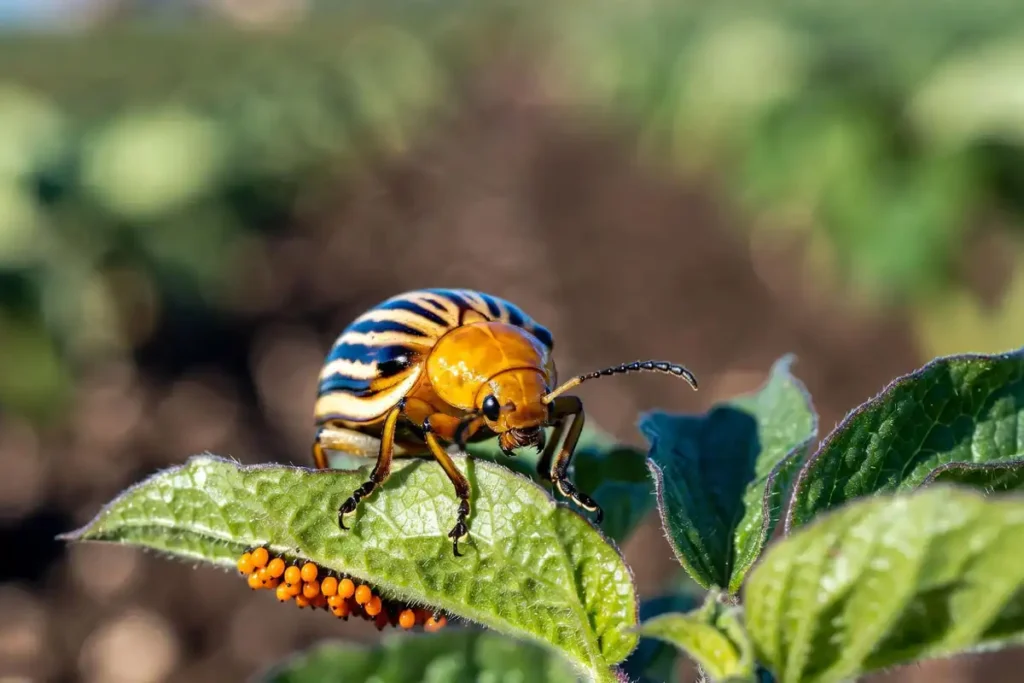
Yes. Colorado potato beetles, aphids, flea beetles, and whiteflies feed on both tomatoes and potatoes.
Colorado potato beetles lay orange egg clusters on the undersides of leaves from both plants. When both crops grow side by side, beetle populations build faster because the combined leaf surface area supports higher reproduction.
Aphids spread plant viruses between crops as they move. A colony on potato foliage feeds on nearby tomato stems within the same season, transferring viruses such as potato virus Y (PVY) in the process.
Strategies for managing these shared pests without chemicals are covered in the guide on natural pest control for crops.
Do They Compete for Nutrients?
Yes. Both crops consume high levels of potassium, phosphorus, and nitrogen during their growing seasons.
Potato tubers develop underground and draw heavily from the root zone throughout the season. Tomato root systems extend 2 to 3 feet deep. In shared soil, both root systems compete directly for water and minerals, which reduces the final yield of each crop.
Also learn: Plant Tomatoes and Zucchini Together: See Space Guide
How Far Apart Should Tomatoes and Potatoes Be?
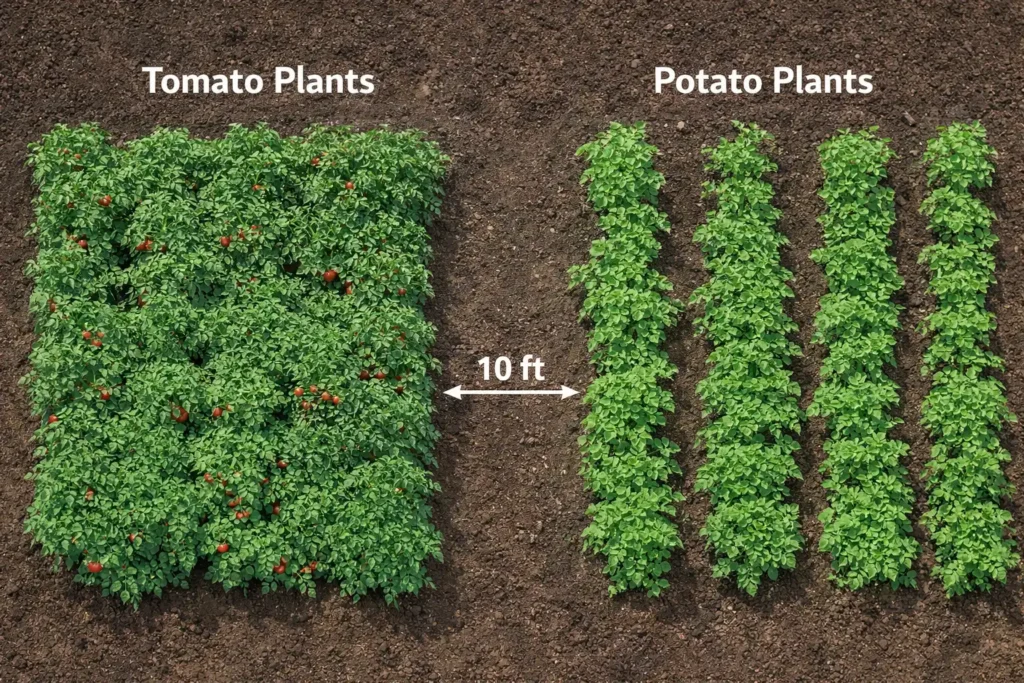
Keep tomatoes and potatoes at least 10 feet apart in open-field planting. This distance reduces the direct transfer of airborne spores between crops during disease outbreaks.
In raised beds or small gardens where 10 feet is not possible, place a physical barrier between them. A solid fence, a masonry wall, or a row of tall corn reduces direct spore drift from one section to the other.
Container growing offers a reliable solution for small spaces. Growing potatoes in fabric grow bags and tomatoes in separate containers prevents root competition entirely. It also limits the movement of soil-borne pathogens between plants. For guidance on spacing practices that reduce competition and disease pressure, see this guide on plant spacing for crops.
What Should You Plant Near Tomatoes Instead?
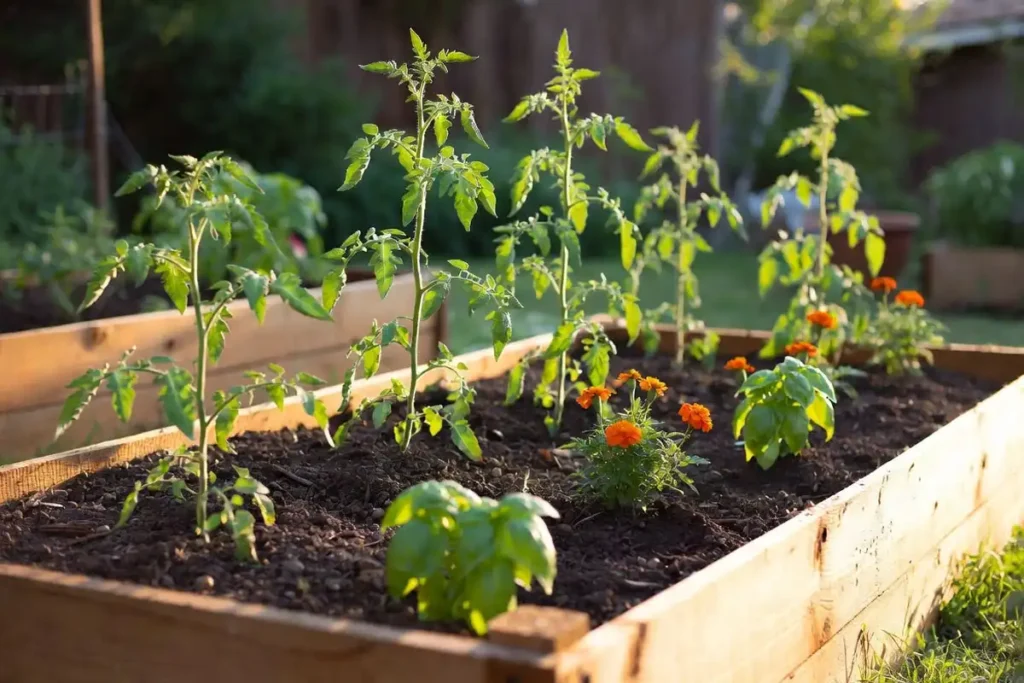
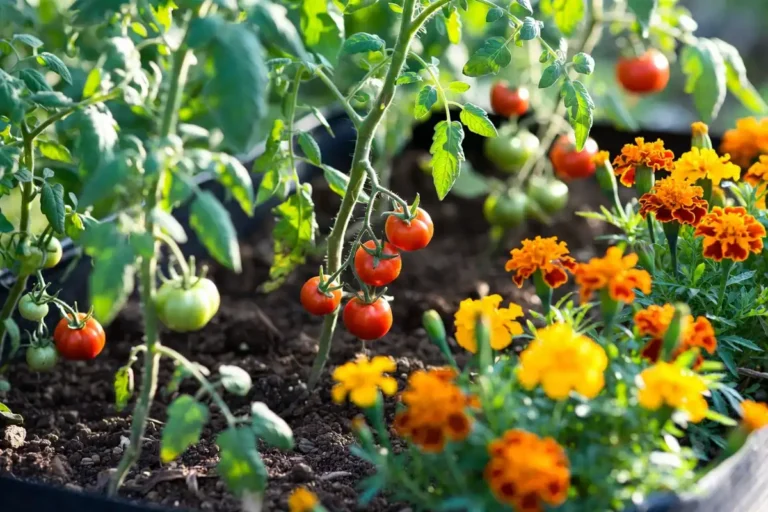
Tomatoes grow well with basil, carrots, marigolds, and parsley. These companions deter pests without introducing shared disease vulnerabilities.
Marigolds (Tagetes spp.) release compounds from their roots that suppress nematode populations in the soil. Basil planted 12 to 18 inches from tomato stems reduces aphid and spider mite pressure. Carrots loosen the soil around tomato roots without competing aggressively for nutrients.
Avoid planting tomatoes near fennel, brassicas, or any other Solanaceae crop. For a broader list of plants that actively protect tomatoes from insects, see companion plants that keep bugs away from tomatoes.
What Should You Plant Near Potatoes Instead?
Potatoes grow well with beans, corn, and horseradish. Each companion supports potato health without sharing its disease risk.
Beans fix atmospheric nitrogen in the soil through root nodules. This increases available nitrogen for potato plants during the growing season without requiring added fertilizer.
Horseradish planted at the corners of a potato bed deters Colorado potato beetles. Farmers have used this pairing for generations. Corn rows planted around the perimeter of a potato section also reduce wind-borne disease spores from neighboring crops.
Avoid planting potatoes near cucumbers, squash, sunflowers, or any other Solanaceae relative.
How Does Crop Rotation Protect Both Crops?
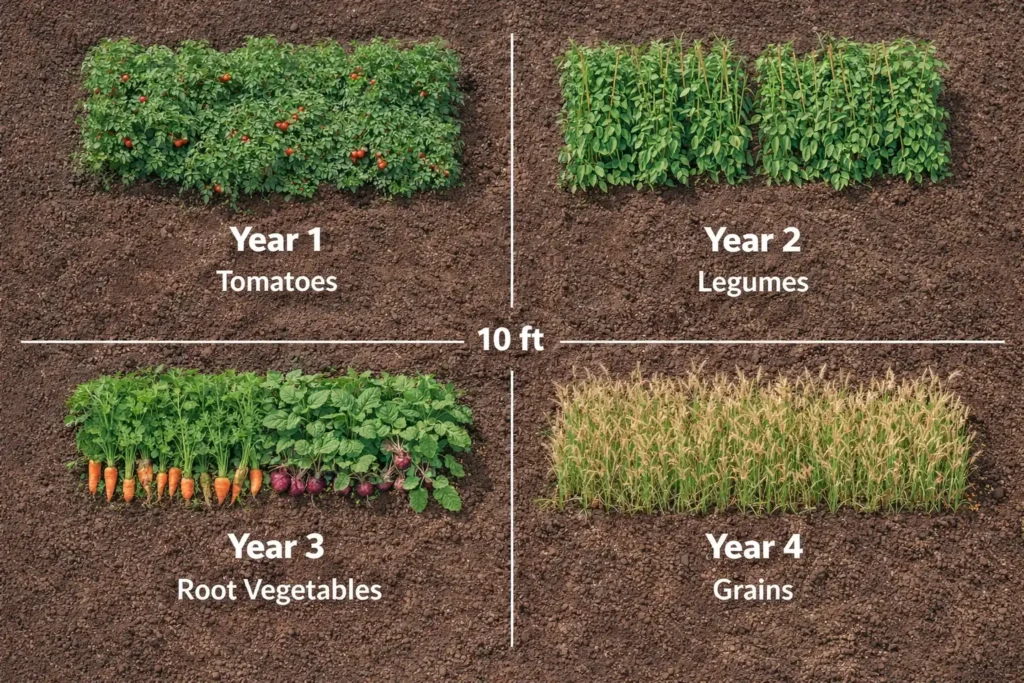
Rotating tomatoes and potatoes to different sections each season reduces the buildup of shared soil pathogens. Phytophthora infestans and Verticillium dahliae both survive in infected plant debris left in the soil over winter.
A three-year rotation keeps Solanaceae crops out of the same soil long enough to reduce fungal inoculum to manageable levels. A practical structure:
- Year 1: Grow tomatoes or potatoes in a bed or field block
- Year 2: Plant legumes or brassicas in that same bed or block
- Year 3: Grow root vegetables, grains, or alliums in that space
- Year 4: Return tomatoes or potatoes to that bed or block
Removing all plant debris after harvest each season is part of this process. Debris left in the field carries viable spores into the next planting cycle. Building a solid crop rotation plan is one of the most effective long-term strategies for managing blight and soil-borne wilt across both crops.
Combining rotation with an integrated pest management approach gives you both disease control and pest suppression across the full season without relying heavily on chemical inputs.
Common Mistakes to Avoid
Planting both crops in the same raised bed. Raised beds concentrate root zones and retain moisture longer than open soil. Shared space in a confined bed increases both disease transmission and nutrient competition more than open-field planting does.
Reusing soil from an infected bed. Late blight spores persist in plant debris from prior seasons. Remove all plant material at the end of each growing season and replace the top few inches of soil in raised beds if blight appeared.
Composting diseased plants. Do not add tomato or potato plants showing blight symptoms to a backyard compost pile. Home compost piles rarely reach temperatures high enough (above 140°F) to destroy Phytophthora spores. Bag and discard infected plant material instead.
Ignoring early symptoms. Water-soaked lesions on lower leaves signal early blight. Removing and disposing of affected leaves within 24 hours slows disease progression. Waiting even a few days allows spore production to increase substantially.
Planting in the same spot every year. Rotating to a new section each year is not optional when blight has appeared. The pathogen overwinters in infected tubers and soil debris and re-infects new plantings the following season.
Safety Note
Potato foliage and green potato tubers contain solanine, a naturally occurring glycoalkaloid. Handle potato plants with gloves and wash hands thoroughly after contact. Do not consume green or sprouted portions of potato tubers. Tomato leaves also contain alkaloids and are not edible, though ripe tomato fruit is safe. Discard any potato tubers that developed near the soil surface and turned green during the season.
Conclusion
Tomatoes and potatoes share a plant family, a disease list, and a pest list. Growing them together stacks those risks into a single section of your farm or garden. Keep them at least 10 feet apart, rotate them on a three-year schedule, and choose companion plants that support each crop individually. That separation is the most reliable way to protect both yields across the season.