Best Fertilizer for Tomatoes (2026): Top Picks and Feeding Guide
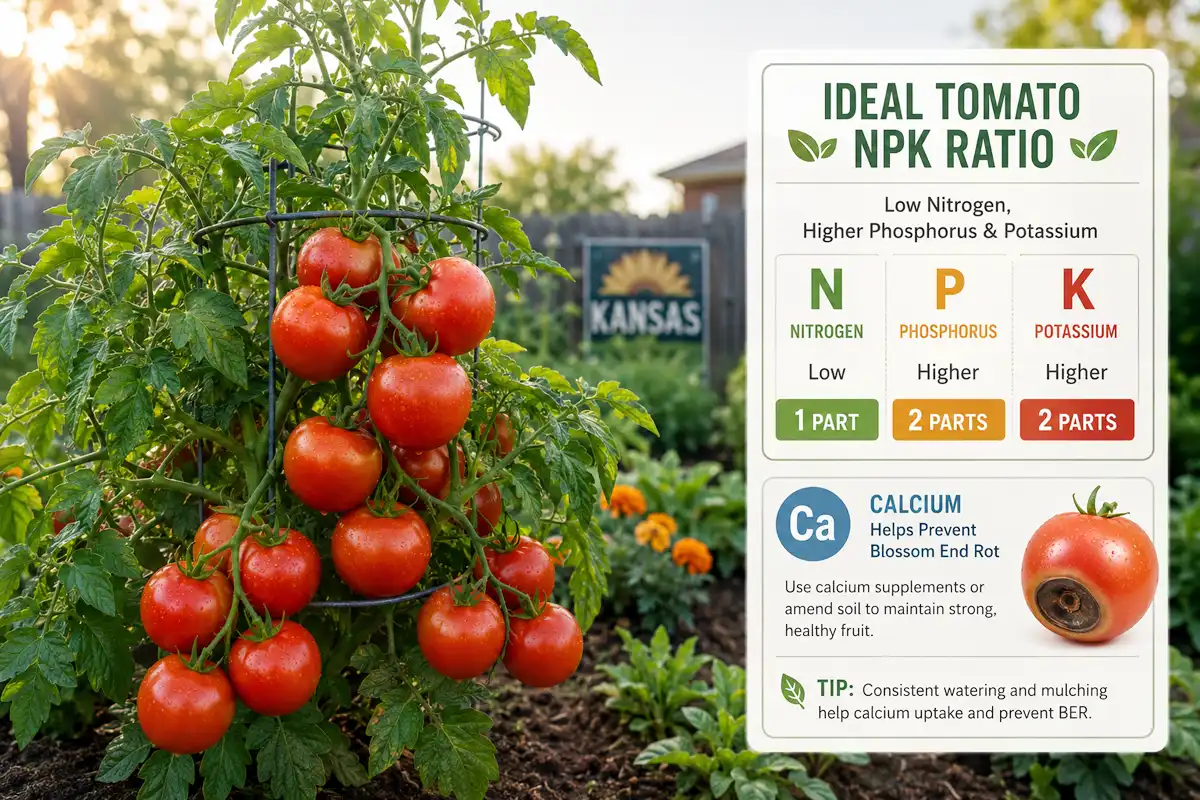
The best fertilizer for tomatoes feeds fruit, not just foliage. Tomatoes are heavy feeders, so the wrong NPK leaves you with tall green plants, few tomatoes, or blossom end rot. The right pick depends on your growth stage and a soil test.
The best fertilizer for tomatoes is Espoma Tomato-tone, a 3-4-6 organic feed with calcium that grows fruit and prevents blossom end rot. Fox Farm Happy Frog is a top OMRI-listed pick for hungry plants. For fast feeding in pots, Miracle-Gro water-soluble food works well.
10 Best Fertilizers for Tomatoes at a Glance
Here is how the best tomato fertilizers compare at a glance, by type, NPK, and use.
| Product | Type | NPK | Organic | Best for |
|---|---|---|---|---|
| Espoma Organic Tomato-Tone | Granular | 3-4-6 | Yes | Best overall, steady feeding |
| Dr. Earth Home Grown Tomato & Vegetable | Granular | 4-6-3 | Yes | Building soil life |
| Jobe’s Organics Tomato Fertilizer Spikes | Spikes | 6-18-6 | Yes | No-mess container feeding |
| Fox Farm Happy Frog Tomato & Vegetable | Granular | 5-7-3 | Yes | Vigorous feeders |
| Neptune’s Harvest Tomato & Veg | Liquid | 2-4-2 | Yes | Early-season growth |
| Miracle-Gro Water Soluble Tomato Plant Food | Water-soluble | 18-18-21 | No | Fast results |
| Greenway Biotech Tomato Fertilizer | Water-soluble | 4-18-38 | No | Heavy fruiting, hydroponics |
| Farmer’s Secret Tomato Booster | Liquid | 3-8-7 | No | Concentrated fruiting feed |
| Big A Tomato Premium Organic Fertilizer | Water-soluble | 3-4-6 | Yes | Full micronutrient feed |
| Burpee Organic Tomato & Vegetable Granular | Granular | 3-6-4 | Yes | Set-and-forget feeding |
What NPK Ratio Is Best for Tomatoes?
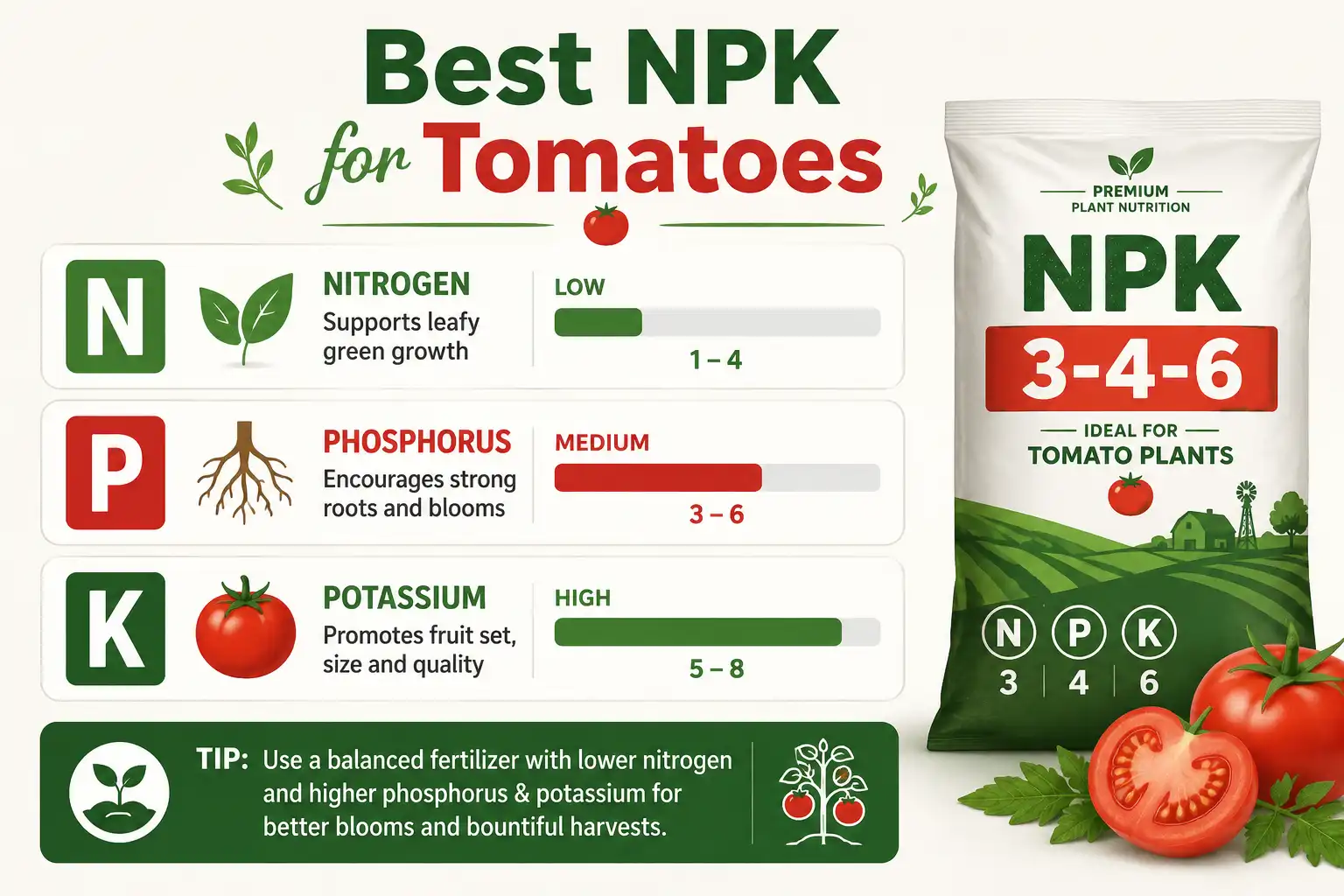
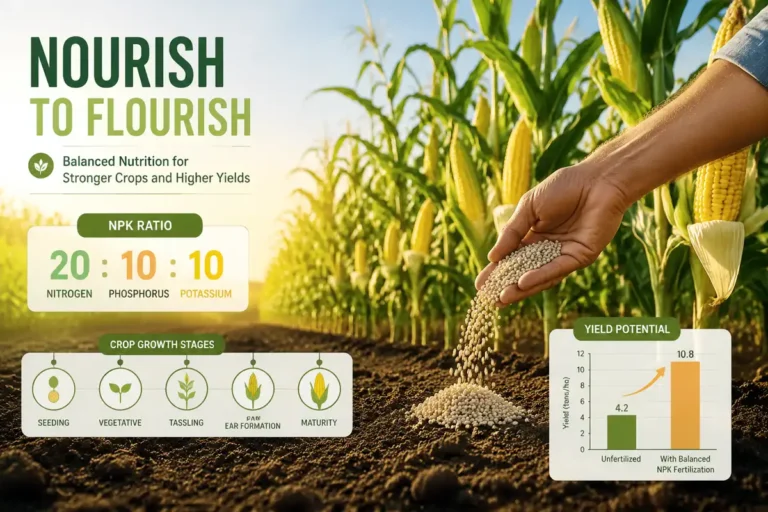
Tomatoes want a lower first number and higher second and third numbers. A good tomato fertilizer NPK ratio looks like 3-4-6 or 4-6-3. That low first number matters most. Here is what each number does.
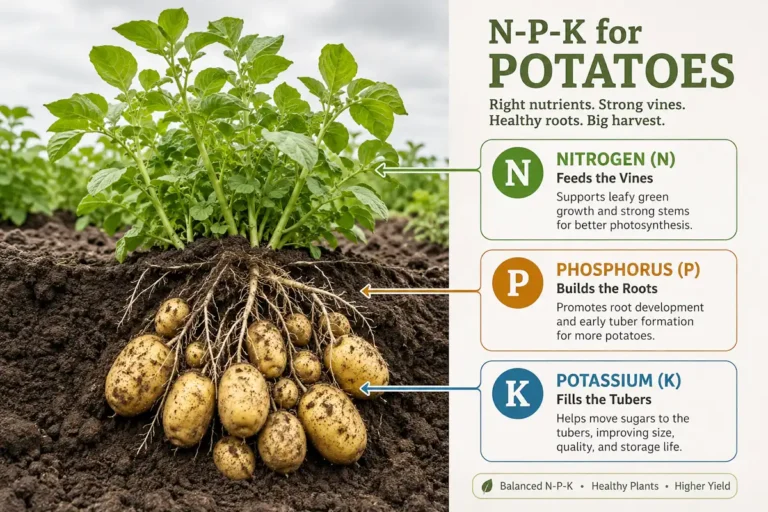
The first number is Nitrogen, and it drives leaves and stems. The second is Phosphorus, which supports roots and flower set. The third is Potassium, and it builds fruit size, flavor, and firmness. These three numbers, the NPK ratio behind every crop feed, show the percentage of each nutrient in the bag.
So a high-nitrogen feed pushes vegetative growth. Then you get a big green plant with few tomatoes. That is the classic mistake. Once flowers appear, your plant needs less nitrogen and more potassium for good fruit set. A balanced NPK blend made for tomatoes keeps that ratio right.
Calcium and Blossom End Rot: What Actually Prevents It
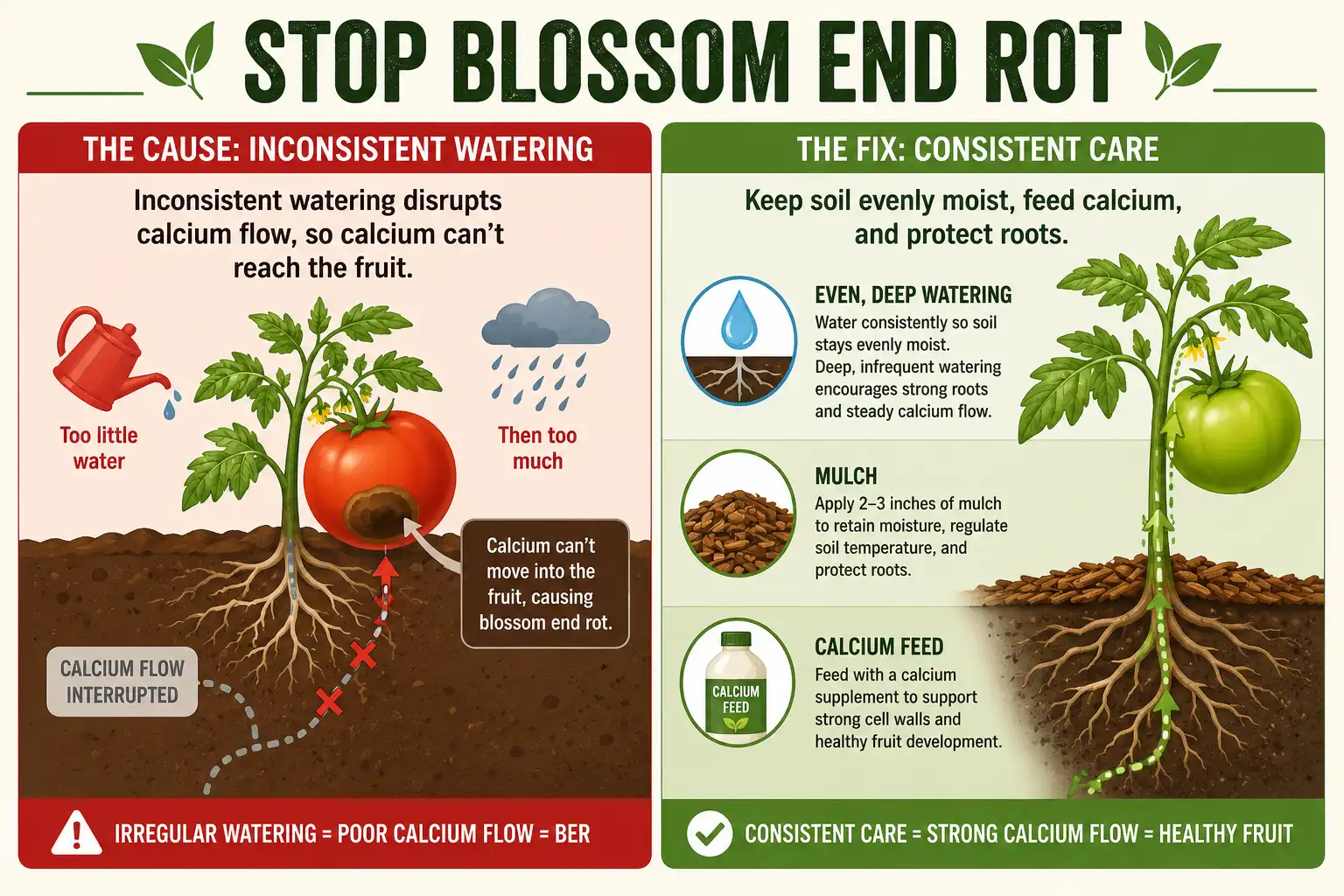
Blossom end rot is a calcium uptake problem, not always a soil shortage. Most garden soil already holds enough calcium. So the real issue is delivery, not supply. Calcium moves through the plant in water. When watering swings from dry to soaked, the fruit cannot pull calcium in fast enough. Then the bottom of the tomato breaks down into that dark, sunken spot.
The fix is steady moisture, not just more calcium. Water deeply on a set schedule, then mulch to hold that moisture even. In fact, watering tomatoes the right way prevents more rot than any spray. A feed with added calcium still helps as backup. Gypsum adds calcium without shifting pH. Too much magnesium (from heavy Epsom salt) can actually block calcium, so skip that habit. Bone meal works in slow calcium and phosphorus at planting.
Types of Tomato Fertilizer (Granular, Liquid, Water-Soluble, Spikes)
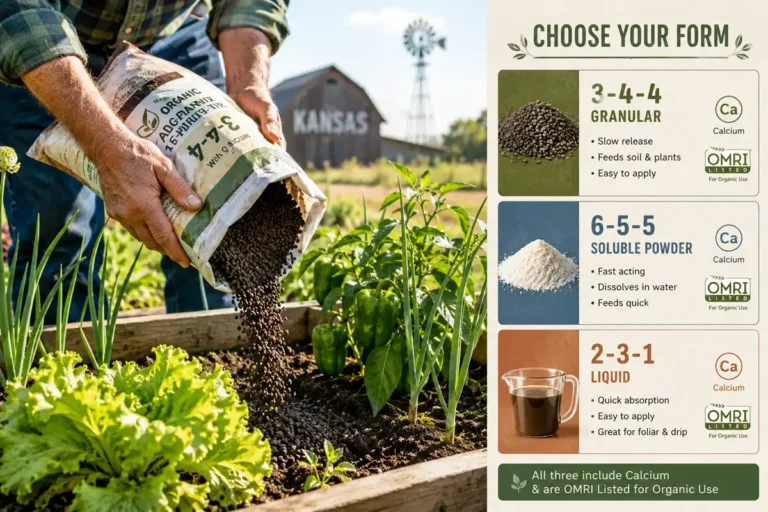
Tomato fertilizer comes in four main forms, and each has a clear trade-off. The table below breaks it down.
| Type | Best for | Trade-off |
|---|---|---|
| Granular (slow-release) | Pre-plant and steady feeding | Slow to act |
| Liquid | Fast uptake and containers | Needs frequent reapplication |
| Water-soluble | Flexibility and hydroponics | Must be mixed, washes out |
| Spikes | No-mix convenience | Feeds one spot, not the root zone |
Which one should you pick? For a set-and-forget base, granular wins at transplant. For pots or a fast fix, reach for a liquid feed, since container-grown tomatoes drain nutrients quickly. Water-soluble powders suit growers who want to adjust the dose or run hydroponics. Foliar feeding (spraying the leaves) adds a quick micronutrient boost. But roots take up most nutrients better, so treat it as a supplement.
On a long row, broadcasting the pre-plant dose rather than measuring plant by plant is typical, and a fertilizer spreader for even coverage keeps the rate steady from end to end.
Organic vs Synthetic Fertilizer for Tomatoes
Organic feeds the soil biology and releases slowly, so it builds better ground over time. Synthetic feeds hit fast and cost less, but they skip soil health. Both grow good tomatoes. The choice comes down to your goal.
Organic wins for long-term beds and flavor. It feeds the microbes that feed your plant, and it rarely burns roots. Compost and fish emulsion are classic organic sources. Look for the OMRI seal, which verifies a product is approved for organic growing.
Synthetic wins when you need a fast rescue or you started with poor soil. It also delivers micronutrients in a precise, cheap dose. Lean organic on the beds, then reach for a liquid synthetic only when a plant stalls. For the full organic versus chemical feed comparison, see this breakdown of organic vs chemical fertilizer.
How and When to Fertilize Tomato Plants
Test your soil first, then feed by growth stage. A soil test done right from your local cooperative extension service tells you what your ground already holds. That way you add only what tomatoes actually need. This is the schedule each season.
- At transplant: Work a granular tomato feed into the planting hole for a slow base.
- Early growth: Let the plant establish and go easy on nitrogen, so it roots deep instead of running to leaf.
- At flowering: Ease off nitrogen for good, then shift toward potassium to push fruit.
- Through fruiting: Feed a liquid tomato fertilizer every 1 to 2 weeks. Side-dress granular around the drip line if plants look pale.
- Late season: Stop feeding once the plant quits setting new fruit.
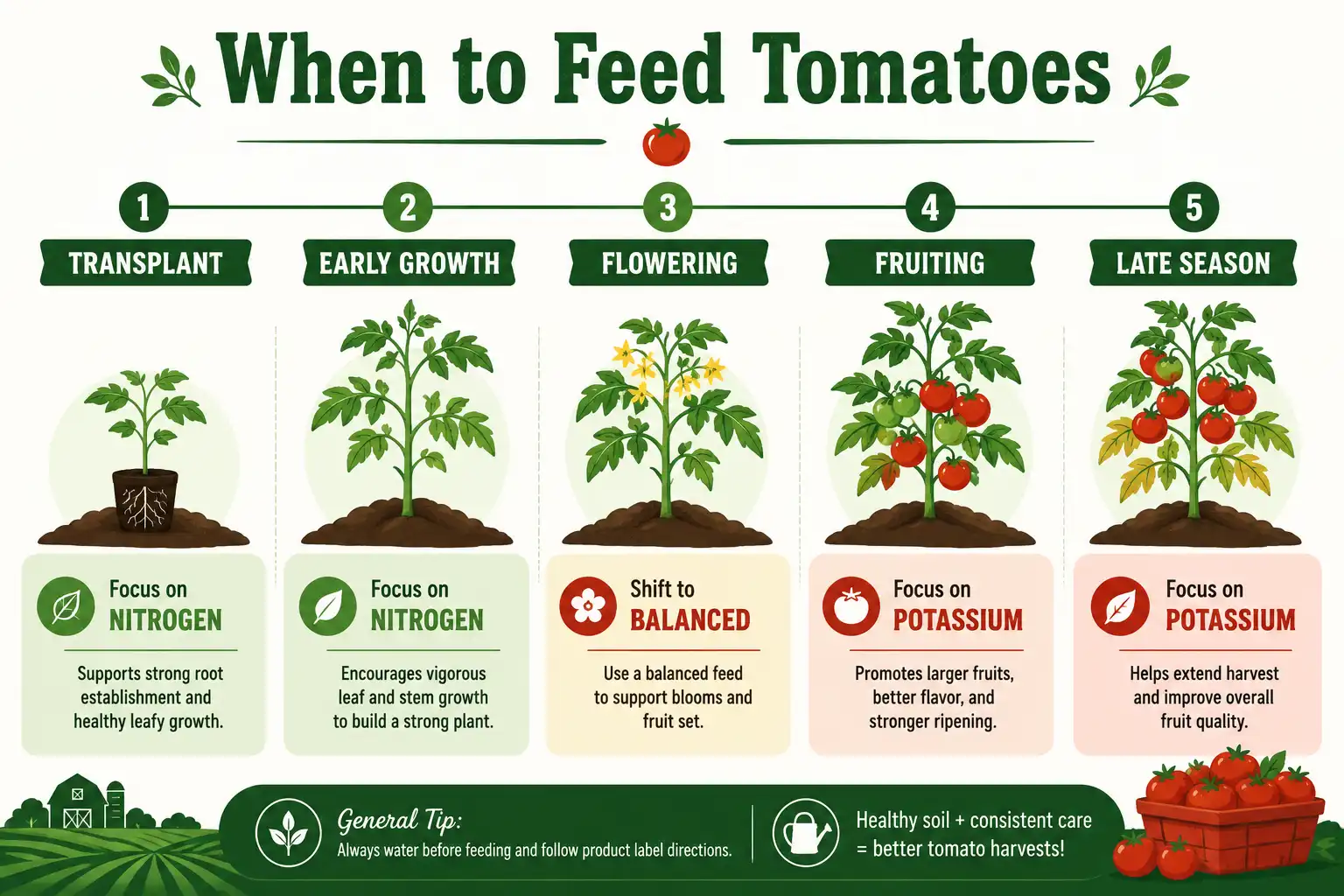
Knowing when to fertilize tomatoes matters as much as what you use. Steady, light feeding through fruit set grows more fruit than one heavy dose ever will. This is where the transplant stage and the soil test pay off together.
The 10 Best Tomato Fertilizers: Reviews
Here are the top ten tomato fertilizers, sorted by where each one fits best.
1. Espoma Organic Tomato-Tone
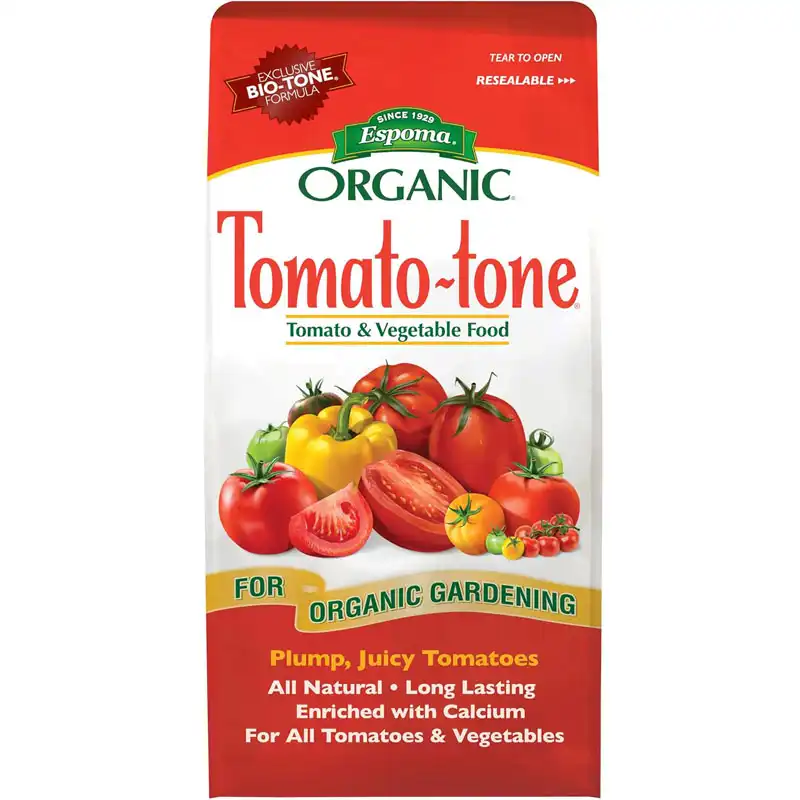
Espoma has made natural fertilizers since 1929, and this stays the top pick for most gardens. Tomato-tone is a 3-4-6 organic granular with 8% calcium, so it feeds fruit and helps prevent blossom end rot. It works on every tomato type, plus peppers and eggplant.
The Bio-tone blend adds soil microbes that build long-term soil health. Growers report plump fruit and few rot problems when watering stays steady. It carries an OMRI listing and needs no mixing. Best for gardeners who want a simple, steady organic feed.
Specifications:
- NPK: 3-4-6 with 8% calcium
- Form: ready-to-use granules
- Size: 4 lb resealable bag
- Feeds every 2 weeks, slow-release
2. Dr. Earth Home Grown Tomato & Vegetable
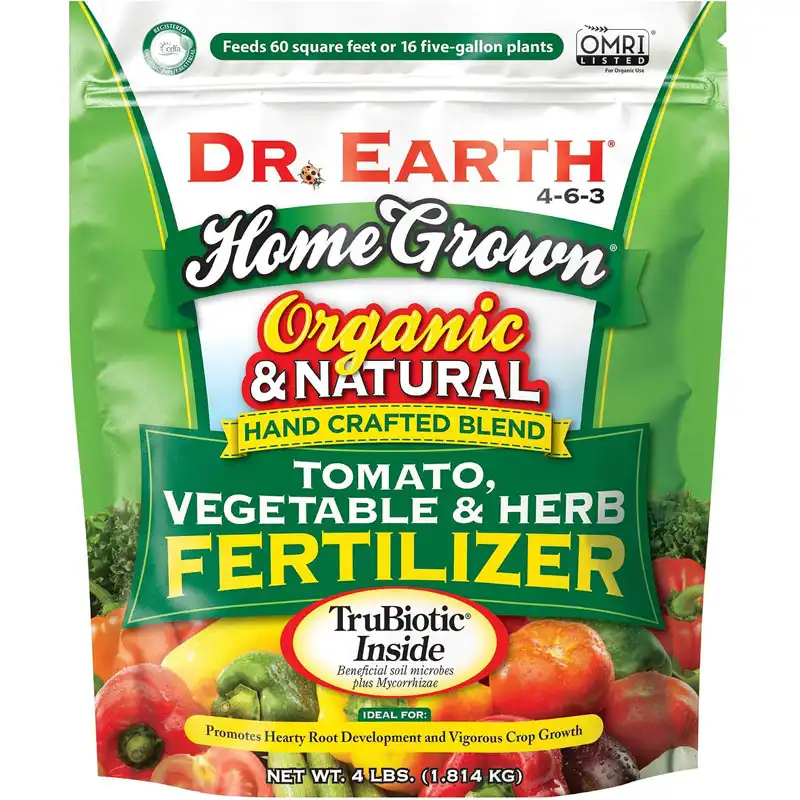
If soil life is your goal, Dr. Earth built this granular around it. The brand has made organic feeds since 1991. The 4-6-3 formula pairs with 4.75% calcium for strong roots and steady fruiting. It packs seven strains of beneficial microbes plus ecto and endo mycorrhizae, which support drought tolerance.
Ingredients include fishbone meal, bone meal, feather meal, and alfalfa meal. There are no GMOs, no chicken manure, and no sewage sludge. It also feeds for several months on one application. Best for gardeners building living, healthy soil over time.
Specifications:
- NPK: 4-6-3 with 4.75% calcium
- Form: dry granules
- Size: 4 lb bag
- Contains mycorrhizae and probiotics
3. Jobe’s Organics Tomato Fertilizer Spikes
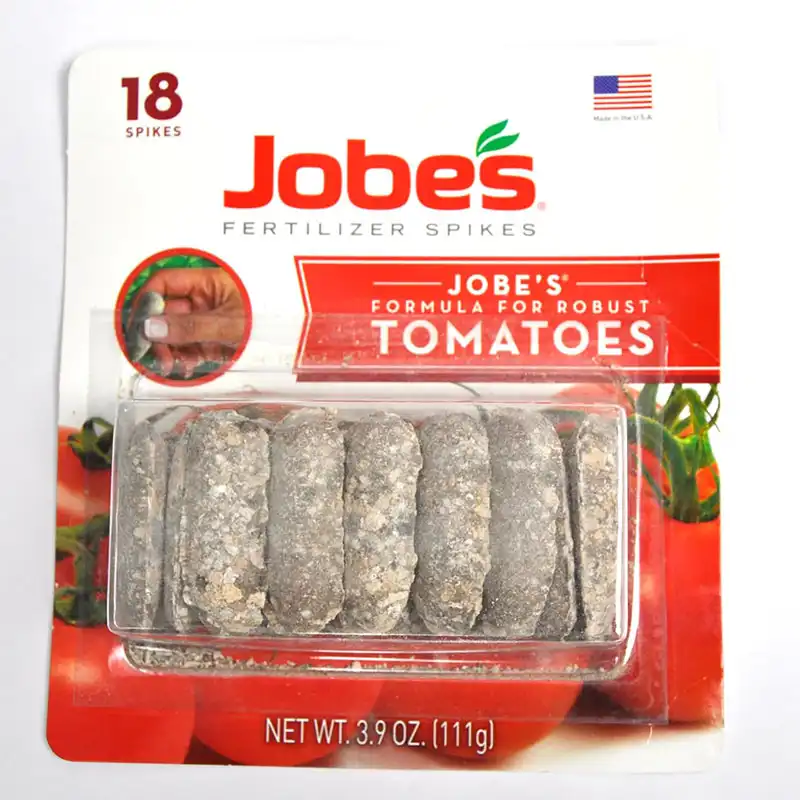
These spikes are the easy button for busy gardeners. Jobe’s Organics has made them in Kentucky since 1969. Each pack holds 18 pre-measured spikes with a 6-18-6 NPK, heavy on phosphorus for roots and blooms. You push a spike into the soil near the plant. It then feeds the root zone for up to 8 weeks. Nothing washes off in the rain, so there is no runoff, mess, or smell. Ingredients are feather meal, bone meal, and sulfate of potash. Best for container growers who want no mixing and no measuring.
Specifications:
- NPK: 6-18-6, high phosphorus
- Form: 18 solid spikes
- Duration: up to 8 weeks
- Made in USA since 1969
4. Fox Farm Happy Frog Tomato & Vegetable
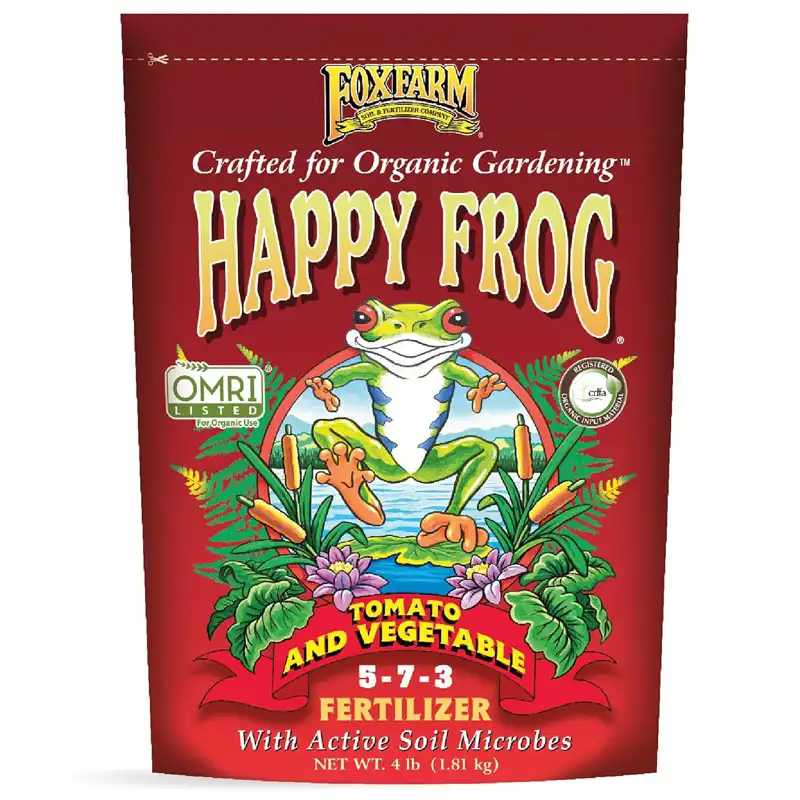
Happy Frog comes from FoxFarm, a name with 35-plus years in the garden trade. It suits hungry plants like tomatoes and berries. The 5-7-3 granular carries added calcium to guard against blossom end rot. It also includes mycorrhizal fungi, which help roots pull in water and nutrients. Bone meal, bat guano, and fish emulsion round out the mix. It holds an OMRI listing and works in containers or garden rows. Owners report strong fruit set through the season. Best for vigorous feeders that need steady, complete nutrition.
Specifications:
- NPK: 5-7-3 with calcium
- Form: dry granules
- Size: 4 lb bag
- Contains mycorrhizal fungi
5. Neptune’s Harvest Tomato & Veg
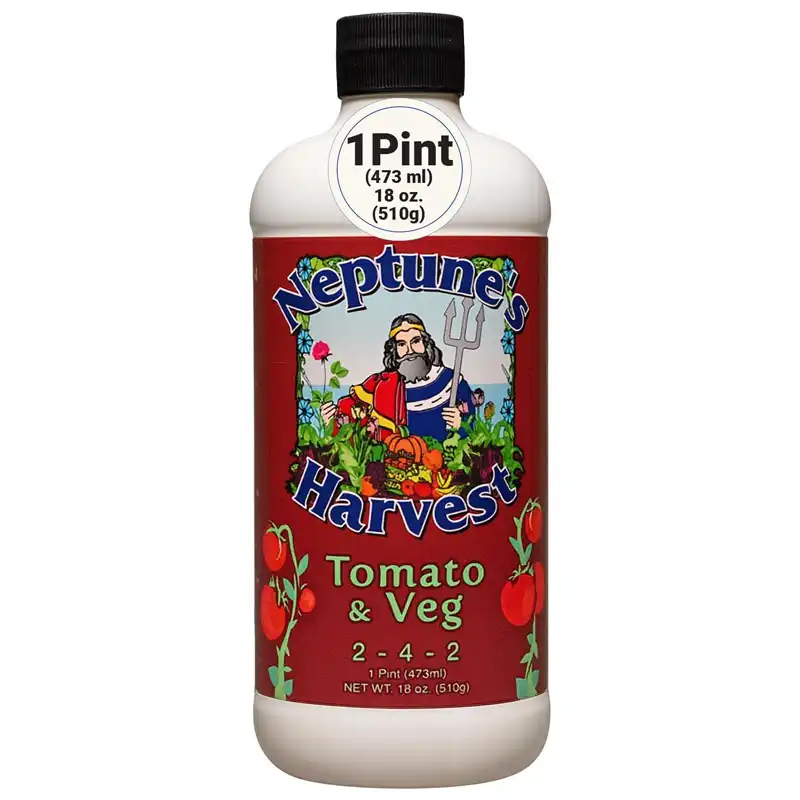
Neptune’s Harvest makes this liquid from fishing-industry byproducts, so it is about as natural as feed gets. The 2-4-2 formula shines during the vegging stage, when tomatoes build foliage, stems, and roots. You mix 1 oz per gallon of water, then feed every 1 to 2 weeks.
It blends fish, seaweed, molasses, humic acid, yucca extract, and liquid calcium. You can use it as a root drench or a foliar spray. It also stays safe around kids and pets. Best for early-season growth and container plants.
Specifications:
- NPK: 2-4-2 with calcium
- Form: liquid concentrate
- Mix: 1 oz per gallon
- Feed every 1 to 2 weeks
6. Miracle-Gro Water Soluble Tomato Plant Food
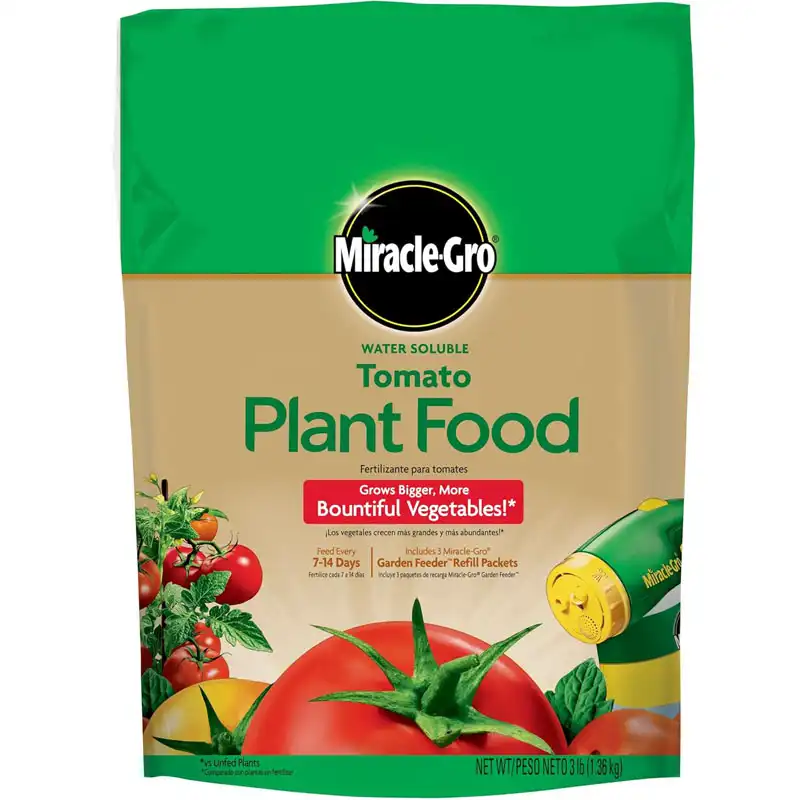
When you need fast results, Miracle-Gro delivers. This water-soluble feed from The Scotts Company has been a garden staple for over 50 years. The 18-18-21 NPK runs far stronger than most organics, with high potassium for the fruiting stage.
One 3 lb box feeds about 1,200 square feet. You mix it in a watering can or a hose feeder, then apply every 7 to 14 days. It dissolves clean and starts working within days, not weeks. Note it is synthetic, so it skips the soil biology that organic feeds build. Best for gardeners who want quick, visible results.
Specifications:
- NPK: 18-18-21, high potassium
- Form: water-soluble granules
- Coverage: 1,200 sq ft per 3 lb
- Apply every 7 to 14 days
7. Greenway Biotech Tomato Fertilizer
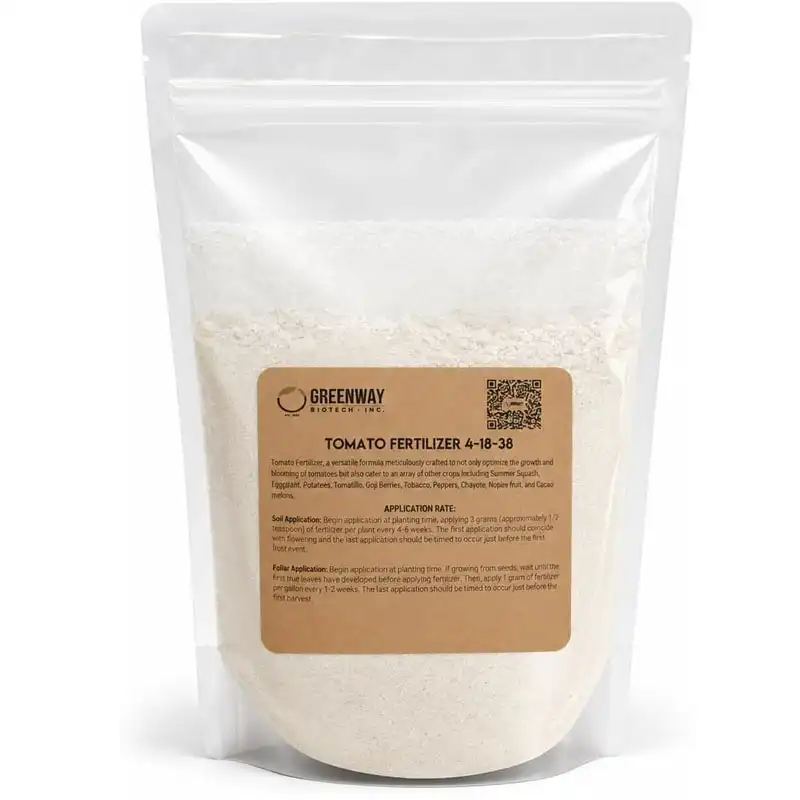
This is the potassium heavyweight of the group. Greenway Biotech has made the powder in the USA since 1989. The 4-18-38 NPK carries the highest potassium on this list, which drives bigger fruit and better flavor. Low nitrogen keeps plant energy on fruit, not leaves.
It also includes a full micronutrient package. Iron, zinc, manganese, and copper come in chelated form. That form stays available across a wide pH. The powder dissolves fully, so it fits drip lines, hydroponics, and soil drenching. It holds CDFA registration and passes heavy-metal testing. Best for nightshade crops in peak production.
Specifications:
- NPK: 4-18-38, high potassium
- Form: water-soluble powder
- Micros: iron, zinc, manganese, copper
- CDFA registered, purity tested
8. Farmer’s Secret Tomato Booster Fertilizer
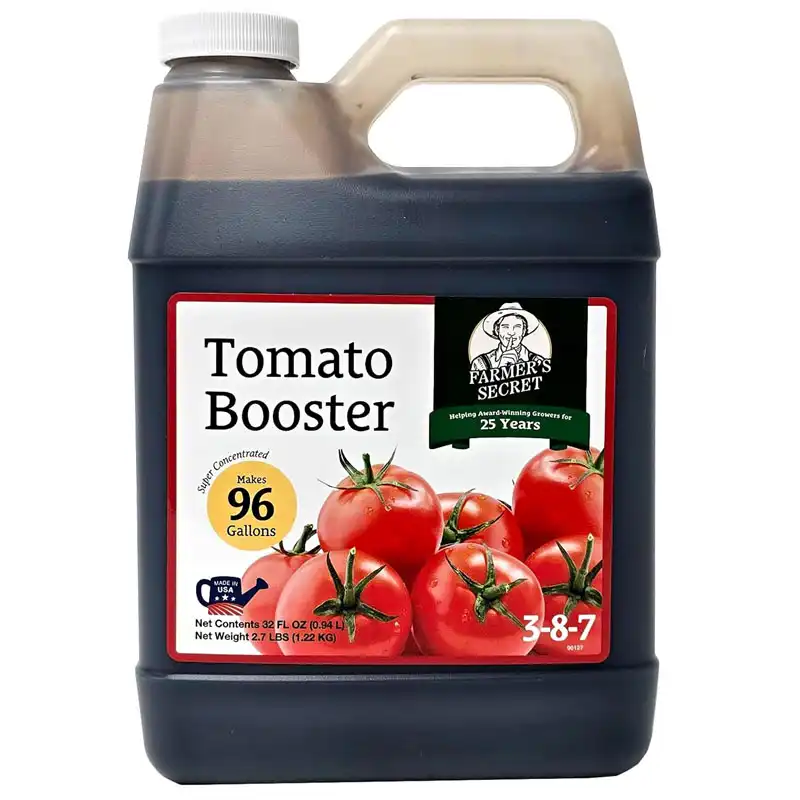
Farmer’s Secret bottles this liquid in Kentucky, and agronomists built it for tomato fruiting. The 3-8-7 NPK leans on phosphorus and potassium, which push flowers and fruit quality. The concentrate is strong, so 2 teaspoons per gallon goes a long way.
One 32 oz bottle makes about 64 gallons of feed. The mix adds humic acid, iron, and calcium, which helps hold off blossom end rot. You apply it weekly across the whole growing season. Best for growers chasing bigger, better-tasting fruit.
Specifications:
- NPK: 3-8-7, fruiting formula
- Form: liquid concentrate
- Mix: 2 teaspoons per gallon
- Yield: 32 oz makes 64 gallons
9. Big A Tomato Premium Organic Fertilizer
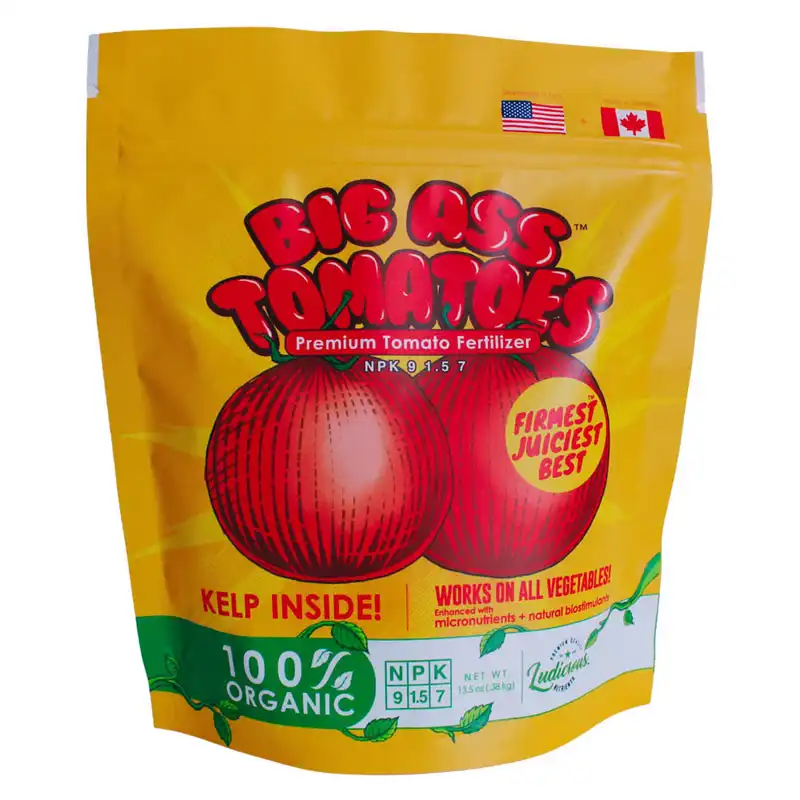
Big A Fertilizers comes out of Scottsdale, Arizona, with over 50 years of formulation know-how. This organic powder centers on North Atlantic sea kelp, plus amino acids and humic acid. Beyond the main NPK, it carries calcium and magnesium for fruit quality and green leaves.
Organic micronutrients like iron, copper, boron, and zinc fill out the profile. The powder dissolves well, so 1 tablespoon per gallon mixes fast for quick uptake. You feed every 4 to 6 weeks through the season. Best for gardeners who want a full organic micronutrient feed.
Specifications:
- Form: water-soluble organic powder
- Key input: North Atlantic sea kelp
- Mix: 1 tablespoon per gallon
- Feed every 4 to 6 weeks
10. Burpee Organic Tomato & Vegetable Granular Plant Food
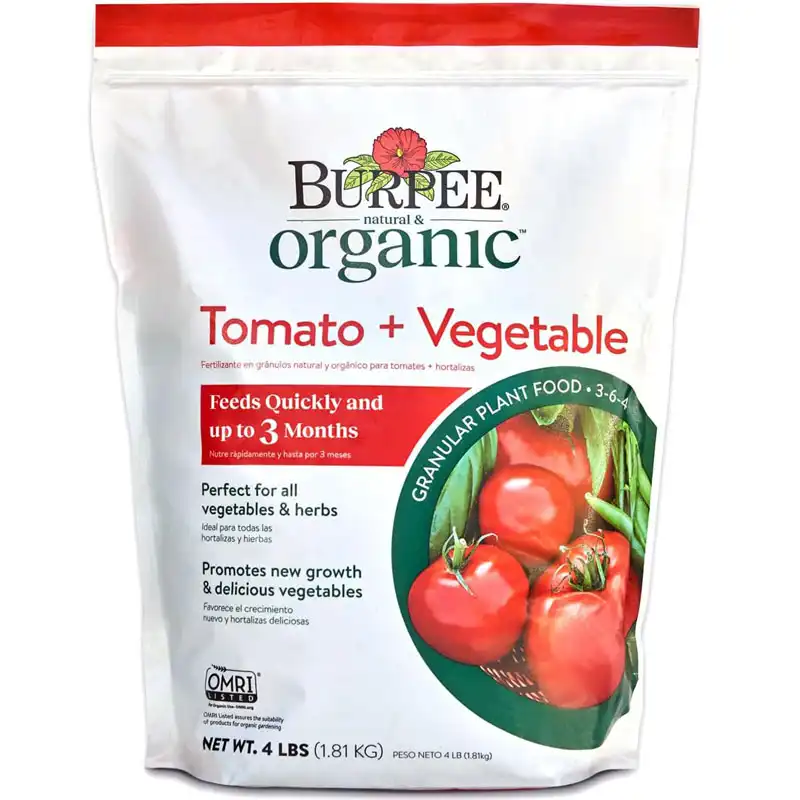
Gardeners have trusted Burpee since 1876. This granular suits long, steady feeding. The 3-6-4 organic formula releases nutrients right away, then keeps feeding for up to 3 months. Chicken manure supplies slow nitrogen, while bone meal adds phosphorus and natural calcium.
Kelp brings trace minerals to round it out. One 4 lb bag covers about 160 square feet. It also suits raised beds, rows, and containers alike. Burpee keeps it OMRI listed for organic gardens. Best for gardeners who want to feed once and move on.
Specifications:
- NPK: 3-6-4, balanced organic
- Form: slow-release granules
- Coverage: about 160 sq ft
- Feeds up to 3 months
Common Tomato Fertilizer Mistakes to Avoid
Most tomato feeding problems trace back to a short list of mistakes. Fix these, and your plants respond fast.
- Too much nitrogen: You grow a jungle of leaves and few tomatoes.
- Inconsistent watering: Swings from dry to wet trigger blossom end rot.
- Feeding dry soil: Fertilizer on parched ground can burn roots, so water first.
- Ignoring soil pH: Tomatoes take up nutrients best at a soil pH of 6.0 to 6.8.
- Over-fertilizing: More feed does not mean more fruit, and over-fertilizing salts up the soil.
- Stopping too early: Quitting at first fruit starves the rest of the crop.
Watering and pH are worth checking before blaming the nitrogen in the bag. Nine times out of ten, that is where the real fault sits.
Can You Make a Homemade Tomato Fertilizer?
Yes, you can build a solid homemade tomato fertilizer from a compost base plus a few amendments. Match it to a soil test, so you do not overload one nutrient. A simple mix does the job.
Start with finished compost for the base and gentle nitrogen. Then add bone meal for phosphorus and slow calcium. Mix in kelp meal for potassium and trace minerals. A light dusting of wood ash raises potassium, but use it sparingly since it also raises pH. Good compost you make at home does most of this work already.
Homemade feeds work well once you learn your soil. Still, store-bought blends stay more consistent, which helps a lot if you are new to tomatoes.
FAQs on Organic Fertilizer for Tomatoes
What is the best fertilizer for tomatoes?
How often to fertilize tomatoes?
What is the best NPK ratio for tomatoes?
How often should you fertilize tomato plants?
What is the best fertilizer for tomatoes in pots?
How do you prevent blossom end rot?
Is Epsom salt good for tomatoes?
Bottom Lines on Tomatoes Fertilizer
Feeding tomatoes gets simple once you know the pattern. Test your soil, then pick a lower-nitrogen feed with calcium. For most gardens, the best fertilizer for tomatoes is a balanced organic blend like Espoma Tomato-tone. Go liquid for containers and quick fixes. Then feed steadily through fruiting, keep water even, and watch for blossom end rot. Do that, and you grow fruit, not just foliage.
Good luck and enjoy reading.