What Is Eating My Eggplant Leaves? 2026 Pest ID Guide With Fixes
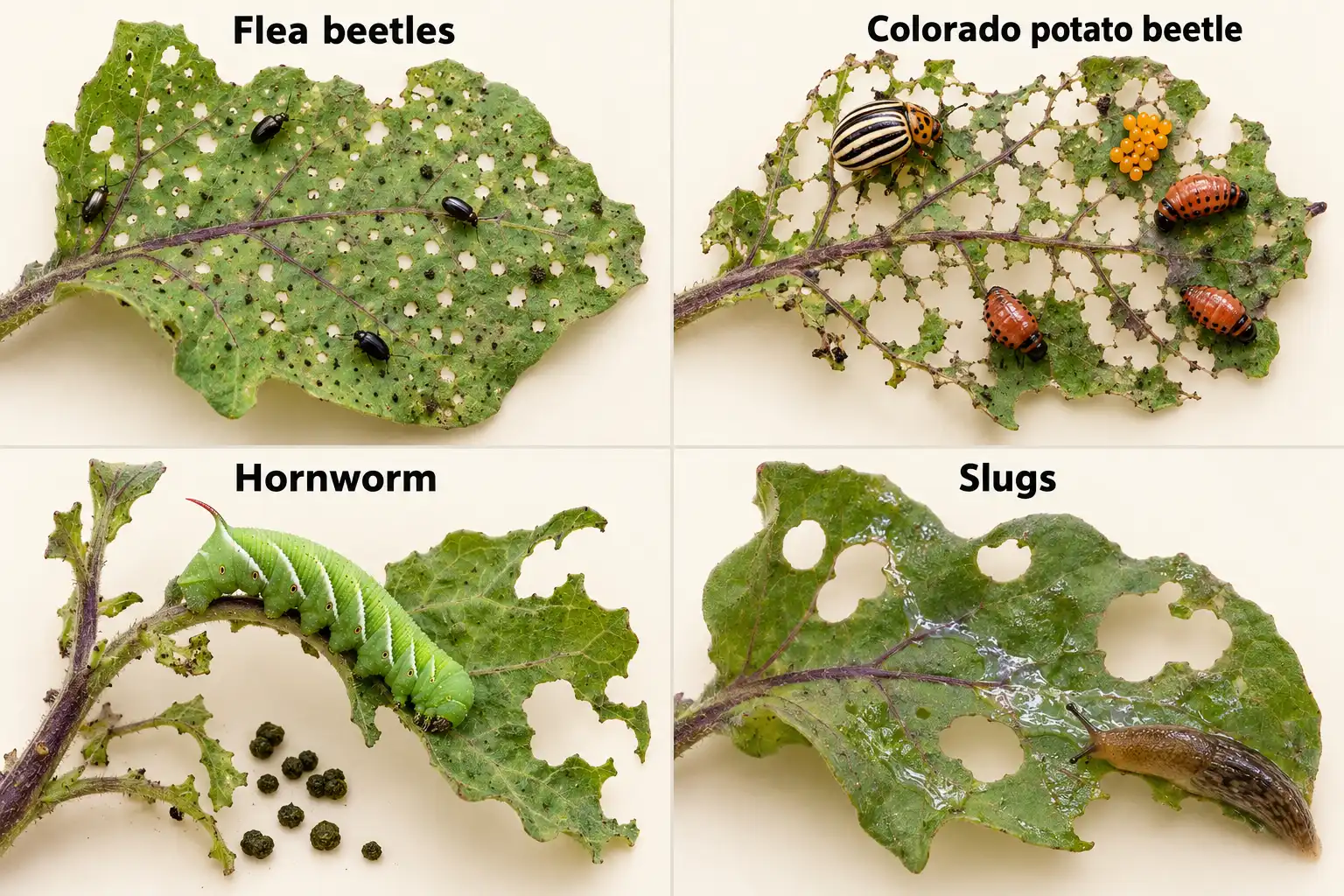
Holes in eggplant leaves come from chewing pests, and each pest leaves its own pattern. Tiny shot holes, stripped stems, slime trails, and clean cuts all point to different culprits. Matching that pattern answers “what is eating my eggplant leaves?” and shows which fix works.
Flea beetles are the most common pest eating eggplant leaves in home gardens. They chew tiny round holes, usually under 1/8 inch wide. Colorado potato beetles and hornworms strip whole leaves, while slugs leave irregular holes and slime trails.
How to Tell What Is Eating Eggplant Leaves
The size, shape, and location of the damage identify most eggplant pests. Check both sides of each leaf in daylight. Then look again after dark with a flashlight. University of Minnesota Extension notes that slugs and cutworms both feed at night.
| Damage you see | Likely culprit | How to confirm |
|---|---|---|
| Many round holes under 1/8 inch | Flea beetles | Tiny black beetles jump when disturbed |
| Leaves and shoot tips eaten away | Colorado potato beetle | Striped adults, red larvae, orange eggs under leaves |
| Whole leaves gone except the main veins | Hornworms | Large green caterpillar, dark droppings below |
| Irregular holes with smooth edges | Slugs or snails | Silvery slime trails on leaves |
| Young plant cut off at the soil line | Cutworms | Gray or brown caterpillar curled in the soil |
| Leaves and stems snipped off cleanly | Rabbits | Cut edges look trimmed with scissors |
| Leaves torn with jagged edges | Deer | Ragged tears instead of clean cuts |
| Yellow patches or stippling, no holes | Lace bugs or spider mites | Nymph clusters or fine webbing under leaves |
Pests That Chew Eggplant Leaves
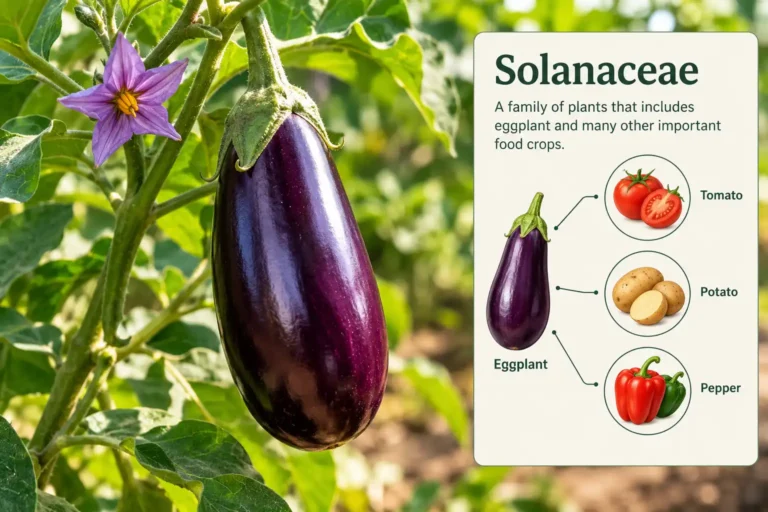
Eggplant belongs to the nightshade family, so it shares leaf pests with potatoes, tomatoes, and peppers. University of Minnesota Extension lists all four crops as hosts for both flea beetles and hornworms.
Flea Beetles: Tiny Shot Holes
Flea beetles are the most common pest of eggplant in the home garden, according to Iowa State University Extension. The eggplant flea beetle (Epitrix fuscula) is black, oval, and just over 1/16 inch long, per NC State Extension. Its enlarged hind legs let it jump away when disturbed.
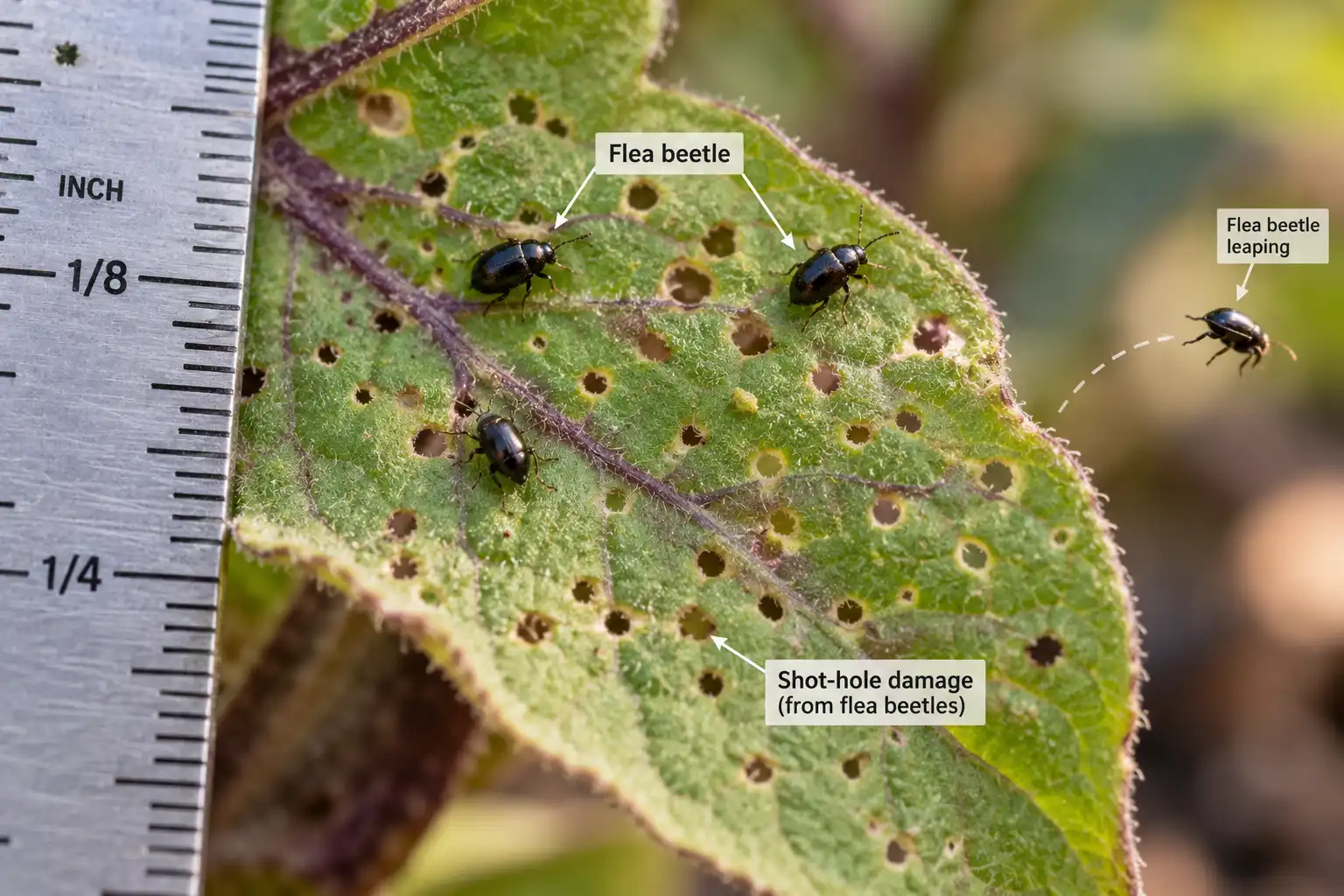
Each hole is small and round, usually under 1/8 inch across. University of Minnesota Extension calls this shothole damage and notes that no other pest leaves it. Young plants suffer most. UC IPM, part of UC ANR, warns that adults often defoliate and kill young plants. Most of that risk falls in the month after transplanting.
Flea beetles complete one to four generations a year. North Carolina likely sees three or four, per NC State Extension.
University of Minnesota Extension gives these thresholds for commercial eggplant:
| Plant height | Consider treatment at |
|---|---|
| Under 3 inches | 2 beetles per plant |
| 3 to 6 inches | 4 beetles per plant |
| Over 6 inches | 8 beetles per plant |
Its home garden rule is simpler: treat seedlings that carry more than five beetles per plant.
Colorado Potato Beetles: Stripped Leaves and Orange Eggs
Colorado potato beetles rank as an important economic pest of eggplant and potato, per University of Minnesota Extension. Adults and larvae both chew the foliage. Clemson Extension warns of quick population buildup, significant defoliation, and yield loss.
Check plants for all three life stages:
- Adults: oval, about 3/8 inch long, with 10 narrow black stripes on yellowish-white wing covers.
- Eggs: clusters of 10 to 30 bright yellow-orange eggs on leaf undersides.
- Larvae: brick red when young, then pink to salmon, with two rows of dark spots on each side.
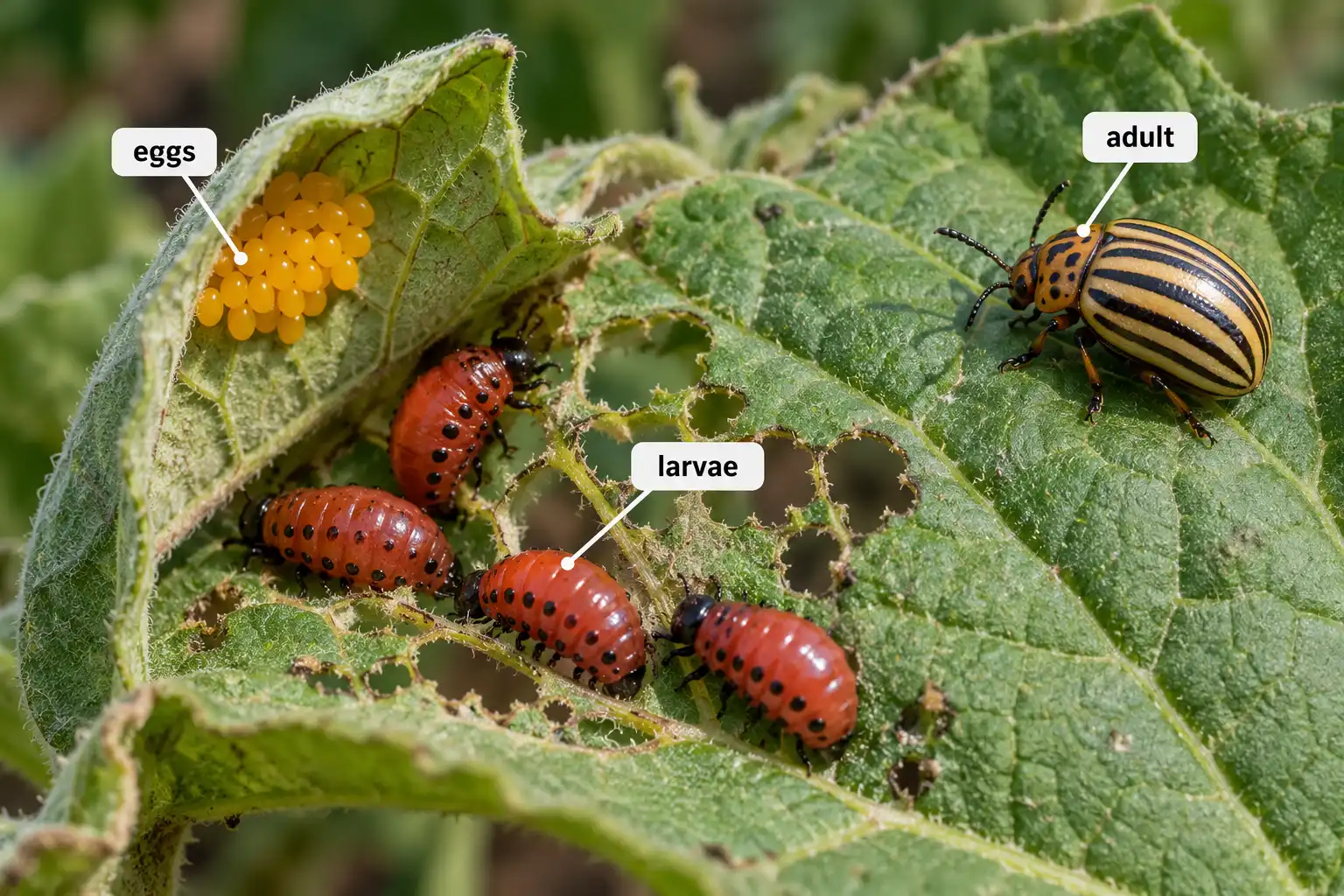
The oldest larvae cause up to 75 percent of the feeding damage, per UMN Extension. So crush egg clusters and remove small larvae before they reach that stage. Southern and central Minnesota usually see a second generation each summer, so keep scouting after the first wave.
Straw mulch between plants helps, too. A thick straw layer reduced beetle numbers in 2020 Minnesota trials, per UMN Extension. Mulch seems to make it harder for adults to reach plants and for larvae to burrow in and pupate.
Hornworms: Big Bites and Dark Droppings
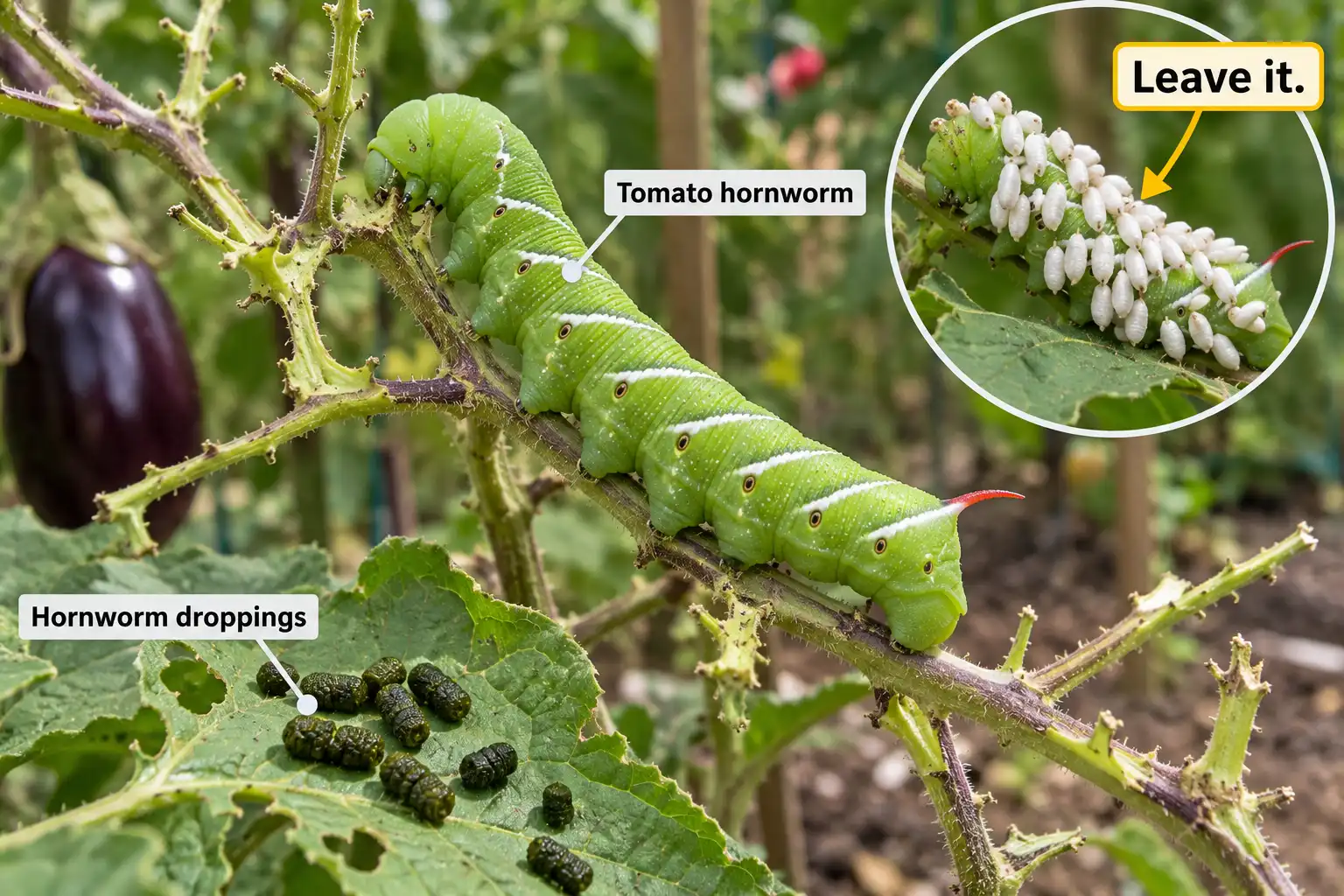
Hornworms eat large amounts of foliage quickly and sometimes leave little more than the large veins, per Clemson Extension. Even a few pose a real defoliation risk in a small garden. Tomato hornworms grow up to 4 inches long and carry a horn on the rear end, per UMN Extension. UC IPM tells the two species apart by stripes. Tomato hornworms have eight V-shaped marks per side, and tobacco hornworms have seven diagonal stripes.
Their green color blends into the foliage. So look for dark green or black droppings on the leaves below, then search the stems above them. Tomato is their favorite host, so check both crops wherever eggplant and tomatoes share a bed.
Leave any hornworm carrying white, rice-like cocoons. Those belong to parasitic braconid wasps, and UMN Extension advises letting the adult wasps emerge.
Slugs and Snails: Smooth Holes and Slime
Slugs and snails leave irregular holes with smooth edges, per UC IPM. Silvery slime trails confirm them. Both feed mostly at night and on cloudy days, then hide in shady, damp spots.
UMN Extension notes that feeding risk rises in rainy weather and that too much leaf mulch encourages slugs. To confirm, check plants after dark with a flashlight. Flat boards laid on the soil also trap slugs overnight, so check under them each morning.
Cutworms: Seedlings Cut at the Soil Line
Cutworms cut through young stems just above the soil surface, per UMN Extension. Some also chew holes in leaves during spring and early summer. These gray or brown caterpillars reach about 2 inches and curl into a tight C shape when disturbed.
Rabbits and Deer: Clean Cuts vs. Torn Leaves
Rabbits snip leaves and stems off cleanly, as if with scissors, according to Iowa State University Extension. Deer tear the foliage instead, which leaves jagged edges.
Iowa State recommends a 2-foot chicken wire fence with mesh of 1 inch or smaller. Pin the bottom with U-shaped landscape pins, or bury it 1 to 2 inches deep. That height stops rabbits only, so deer country calls for a taller deer fence.
Leaf Damage That Isn’t Chewing
Two sap-feeding pests discolor eggplant leaves without making holes:
- Eggplant lace bugs: Quarter-size discolored spots appear first, per NC State Extension. Flip the leaf to find an egg mass and a cluster of nymphs. Over time, the whole leaf yellows and dries out.
- Spider mites: These mites feed on leaf undersides, leaving yellow stippling and sometimes fine webbing, per Clemson Extension. Hot, dry weather and broad-spectrum sprays both raise the risk of a fast buildup.
How to Stop Pests From Eating Eggplant Leaves
Start these steps the day you transplant:
- Scout early. Check young transplants every few days for the first month, as UC IPM advises. Look at both leaf surfaces, count flea beetles, and watch for orange egg clusters.
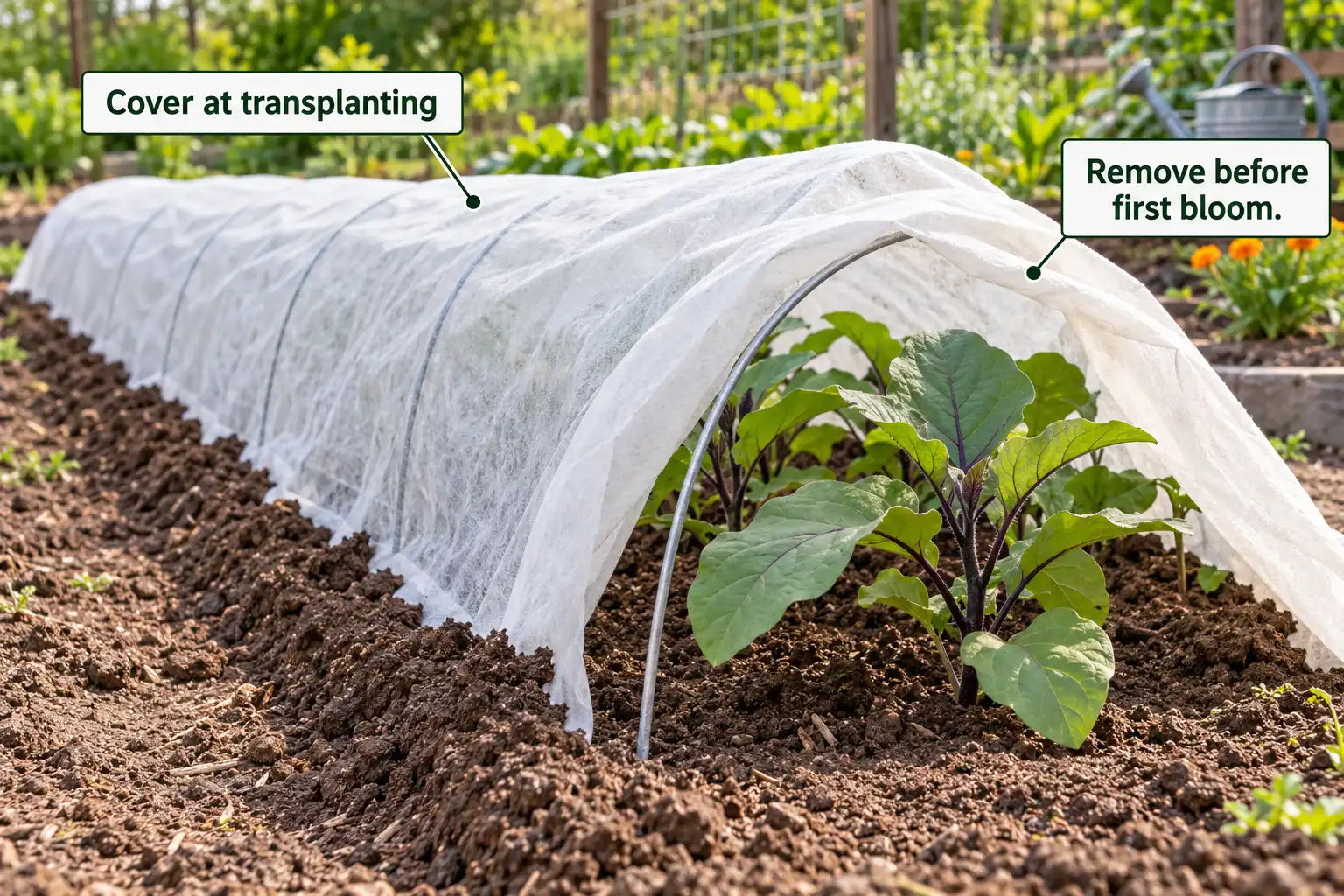
- Cover young plants. Stretch floating row cover over wire hoops before beetles arrive, since UMN Extension notes eggplant needs hoops under the fabric. Remove the cover before the first flowers open so pollinators reach the blooms.
- Handpick the big pests. Drop potato beetles, their larvae, and hornworms into soapy water. Crush egg clusters on leaf undersides, too.
- Collar new transplants. Push a cardboard or foil collar a few inches into the soil around each stem to block cutworms.
- Bait slugs safely. Scatter iron phosphate bait in moist, sheltered spots. UC IPM rates it safer around pets and wildlife than metaldehyde, which is especially poisonous to dogs and cats.
- Clean up the site. Pull horsenettle and pokeweed, which NC State Extension calls early flea beetle food. Remove nightshade and ground cherry too, which UMN Extension lists as possible Colorado potato beetle food. After harvest, clear crop residue to cut flea beetle overwintering sites, then till to destroy hornworm pupae.
Transplant Later to Dodge Early Flea Beetles
Delayed planting favors the crop over flea beetle establishment, according to NC State Extension. So skip the earliest dates and transplant later in the normal eggplant planting window. Black plastic mulch, another NC State recommendation, helps transplants establish faster.
When to Spray Eggplant and What to Use
Spray only when handpicking falls behind or counts pass a threshold, a core rule of integrated pest management. Then match the product to the pest:
- Young hornworms: Bt kurstaki, a Bacillus thuringiensis strain, works best on very young caterpillars. It does not affect bees, per UMN Extension.
- Colorado potato beetles: Treat newly hatched larvae, the most susceptible stage, with spinosad or the Bt tenebrionis strain.
- Flea beetles: Use spinosad, carbaryl, or permethrin once counts pass the thresholds above.
Clemson Extension lists these home garden options for eggplant, along with the wait before harvest:
| Active ingredient | Pests managed | Wait before harvest |
|---|---|---|
| Spinosad | Flea beetles, Colorado potato beetle, caterpillars | 1 day |
| Carbaryl | Flea beetles, Colorado potato beetle, caterpillars, lace bugs | 3 days |
| Permethrin | Flea beetles, Colorado potato beetle, caterpillars | 3 days |
| Insecticidal soap | Spider mites, aphids, whiteflies | 0 days |
Confirm that eggplant appears on the label before you buy. Also rotate active ingredients, since UMN Extension reports documented resistance to more than 50 of them in Colorado potato beetles.
Common Mistakes That Keep the Damage Coming
- Spraying caterpillar Bt on beetles. Bt kurstaki affects only caterpillars, so flea beetles and potato beetles keep feeding.
- Waiting until larvae are full grown. UMN Extension reports very poor control on large potato beetle larvae, and adults are hard to control too.
- Starting with broad-spectrum sprays. Clemson Extension notes they kill beneficial insects, and spider mites tend to follow.
- Watering late in the day. Morning watering lets plants dry before slugs come out, per UMN Extension.
FAQs about Eggplant Leaf Pest
Why are there holes in eggplant leaves but no bugs?
Flea beetles jump away when disturbed, so they often vanish before you spot them. Slugs, snails, and cutworms hide during the day and feed at night, so check plants with a flashlight after dark.
Does eggplant recover from flea beetle damage?
Yes, established plants usually outgrow light feeding, but heavy feeding often stunts or kills new transplants. Iowa State University Extension notes that minor flea beetle damage has little effect on yield.
Is eggplant fruit safe to eat from damaged or sprayed plants?
Yes, chewed leaves do not affect the fruit, and sprayed plants are safe once the label’s preharvest interval passes. Clemson Extension lists 0 days for soap, 1 for spinosad, and 3 for carbaryl.
Does neem oil work on eggplant pests?
Neem oil gives only limited control, mainly on young Colorado potato beetle larvae. University of Minnesota Extension rates it below spinosad and Bt and advises using it before populations build.
The Practical Takeaway
Start with a flashlight check and a close look under the leaves, because the pest’s identity decides the fix. Protect transplants through their first month, when flea beetles do the most harm. Save sprays for counts above threshold, and choose the narrowest product that matches the pest.