Cover Crops for Beginners: 6 Smart Choices for Healthier Soil Now
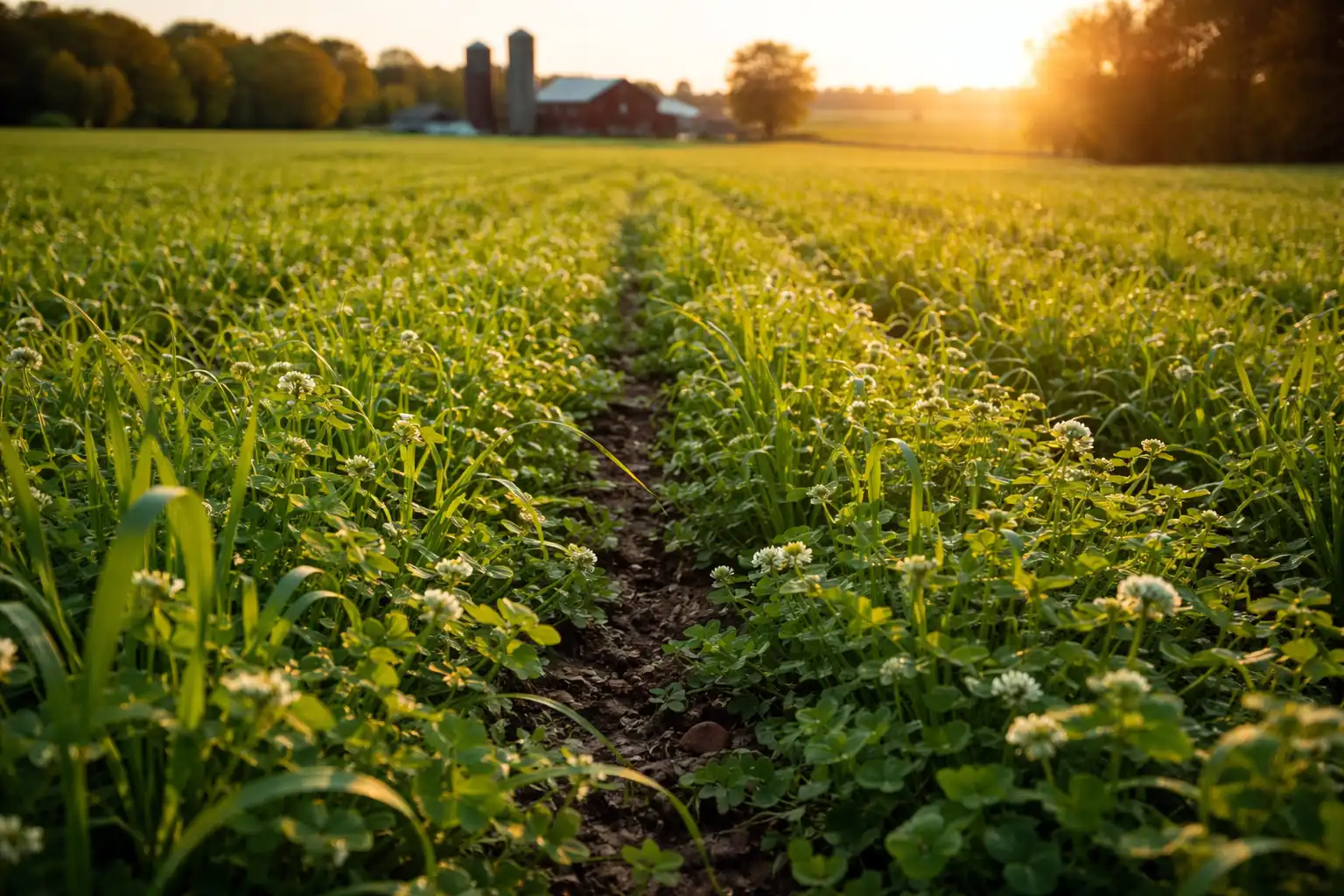
Cover crops for beginners start with one simple goal: keep living roots in your soil when your cash crop is gone. A cover crop shields soil from erosion, feeds soil biology, and suppresses weeds by occupying light and space. Farmers plant cover crops between main crops, after harvest, or ahead of spring planting. The best beginner plan uses one species, one planting window, and one clear termination method. Start small, measure results, then expand acres once the system behaves the same way twice.
What is a cover crop?
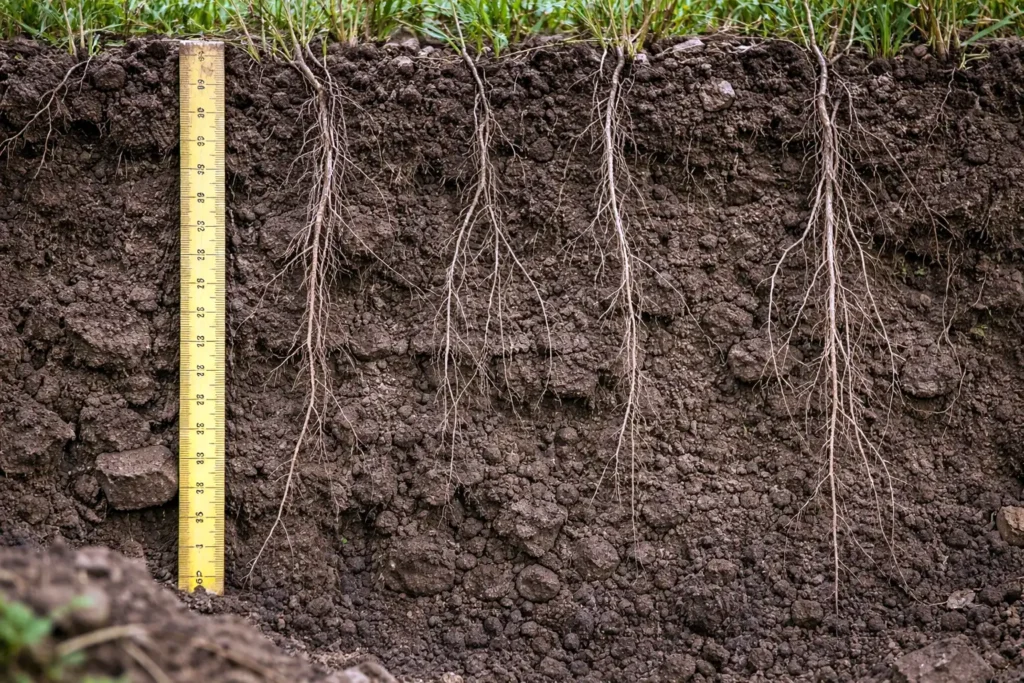
A cover crop is a non-cash crop that grows to protect and improve soil. The plant covers bare ground, reduces runoff, and builds residue. The root system improves soil structure by creating channels for water and air. Many covers also compete with weeds by shading the soil surface.
For building a first rotation, start with the basics in this guide on how to start a crop farm.
Why do beginners plant cover crops?
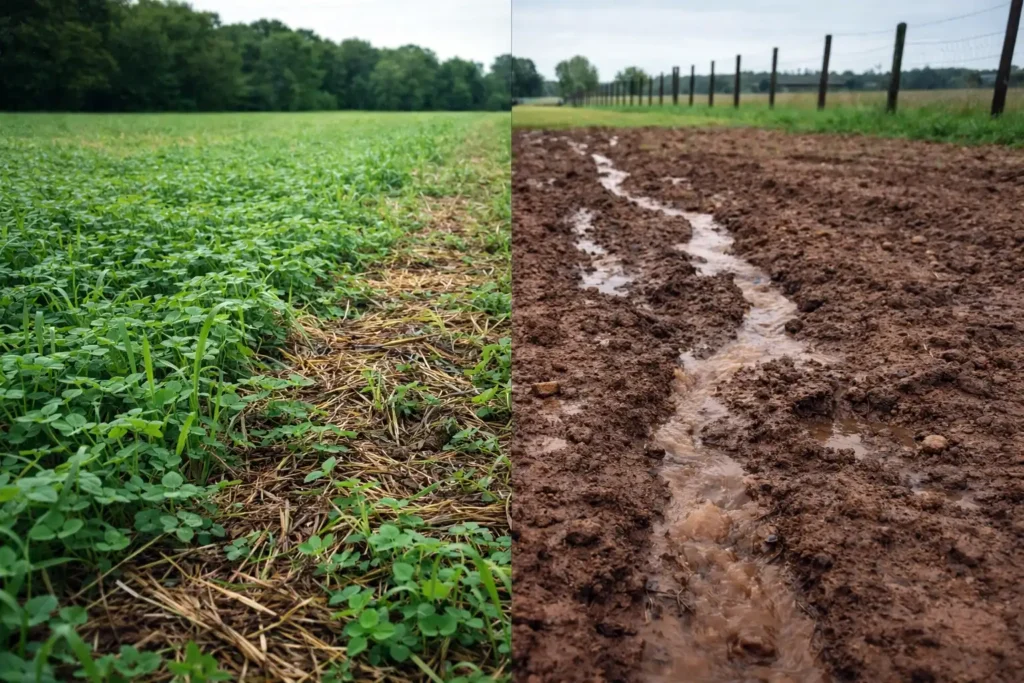
Beginners plant cover crops to solve common field problems with a plant instead of a pass. A cover crop reduces erosion by holding soil in place with roots. A cover crop suppresses weeds by forming a canopy and leaving residue. A cover crop improves infiltration by keeping soil pores open. A cover crop can reduce nitrogen loss by capturing leftover nutrients.
If your main goal is soil performance, keep your notes with a simple soil test routine from soil fertility basics.
Crop farming seed selection comes down to picking genetics that fit your soil, your disease risks, and the maturity window you can actually harvest. Running agricultural soil testing before you pick a cover crop helps you match species to your real needs, like low organic matter, compaction zones, or leftover nitrogen after harvest.
How do you pick the right cover crop?
Pick the cover crop by matching the plant to the job and the calendar. Grasses build biomass and armor the soil surface. Legumes fix nitrogen and raise protein in residue. Brassicas produce deep taproots and fast fall growth in the right window.
Use this quick decision filter:
- Erosion control and spring mulch: choose a grass.
- Nitrogen for a heavy-feeding crop: choose a legume.
- Short window after harvest: choose a fast fall grass or a brassica.
- Compaction and crusting: choose a deep-rooting mix or a taproot species.
When you’re choosing how to seed and terminate a cover crop, understanding the difference between tillage and no till helps you decide whether to plant into residue, roll-crimp, or make a light incorporation pass.
What are the best cover crops for beginners?
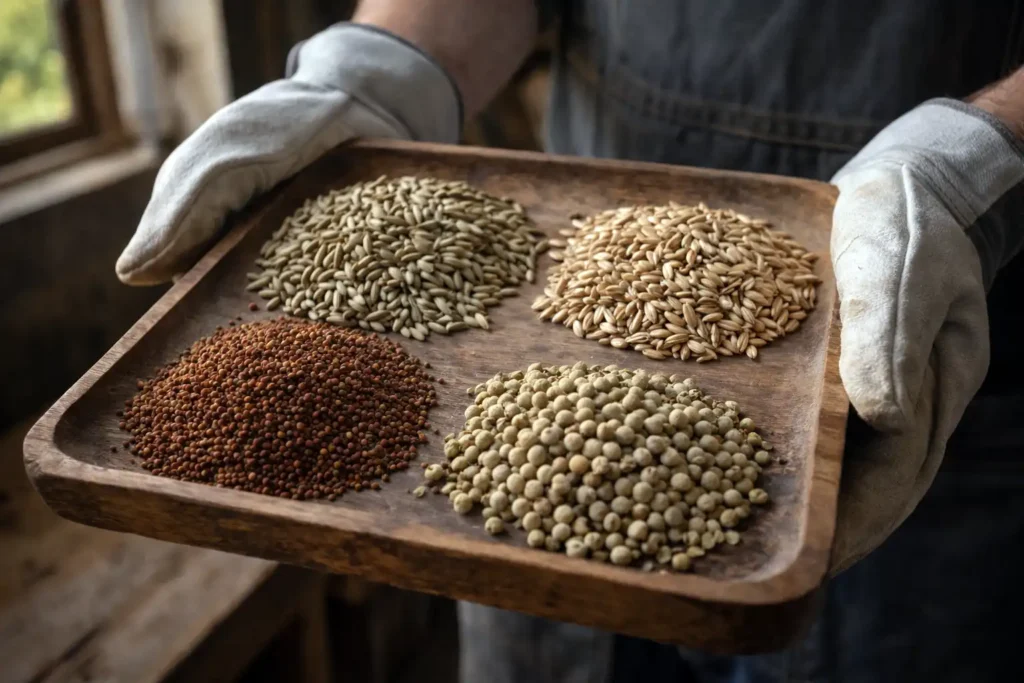
The best beginner cover crops establish easily and tolerate imperfect timing. These options work because they germinate reliably and give a visible stand fast.
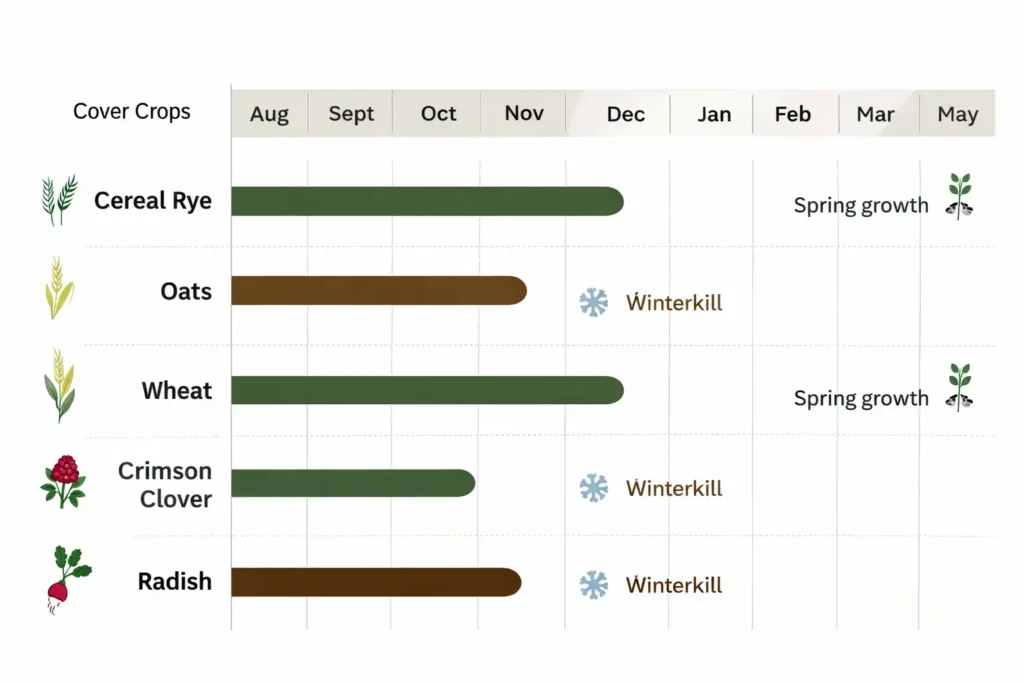
Cereal rye
Cereal rye produces heavy spring biomass and strong weed suppression. The plant tolerates cold and keeps growing early in spring. Rye fits beginners who want a durable winter cover before corn or soybeans. Rye also fits fields that need a thick mulch for weed control.
Oats
Oats germinate fast and cover soil quickly in fall. Most oats winterkill in cold winters, which removes a spring termination step. Oats fit beginners who want a simple cover ahead of early spring planting. Oats also fit first-timers who seed with a broadcast spreader and rely on rain.
Winter wheat
Winter wheat establishes well and stays more manageable than rye in spring. Wheat produces less biomass than rye in many systems, which can simplify planting into residue. Wheat fits beginners who want winter cover without the most aggressive spring growth.
Crimson clover
Crimson clover fixes nitrogen and provides spring flowers that support beneficial insects. Clover establishment requires decent seed-to-soil contact. Clover fits beginners who plant after small grain harvest or into a clean seedbed. Clover termination also requires attention to timing.
Field peas or hairy vetch
Peas and vetch fix nitrogen and add protein-rich residue that breaks down faster than grass residue. Vetch can overwinter and grow aggressively in spring in some areas. These legumes fit beginners who manage termination carefully and plant a crop that benefits from added nitrogen.
Tillage radish or other brassicas
Radish grows fast in late summer and early fall and produces a strong taproot. Brassicas fit beginners who want quick ground cover and root channels. Brassicas do not replace drainage, and they do not “fix” compaction alone.
When should beginners plant cover crops?
Beginners plant cover crops when soil moisture and temperature support fast germination. A cover crop that emerges quickly outcompetes weeds and survives weather swings better.
After cash-crop harvest
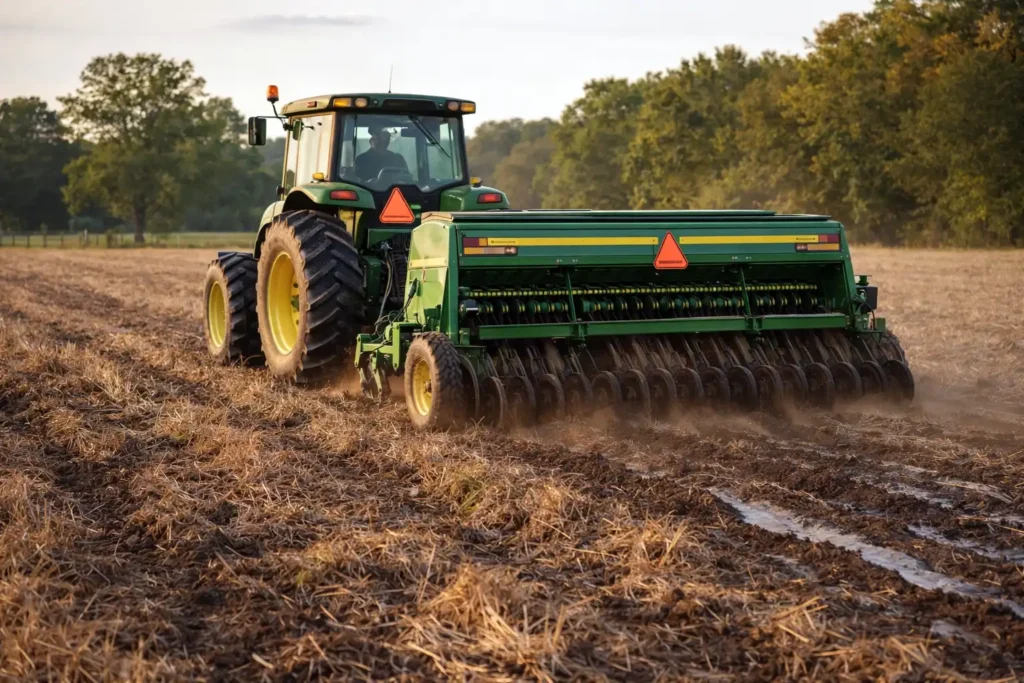
Plant as soon as possible after harvest. Fall days shorten fast, and covers lose growth potential each week. This timing works well for rye and wheat because those grasses tolerate cooler conditions.
Late summer into early fall
Plant in late summer for strong fall growth, especially for oats, clover, peas, and radish. Earlier planting usually improves root development and canopy cover before frost. This window often fits after wheat or other small grains.
Spring planting
Plant spring covers when you have a clear termination plan and time before the cash crop. Spring cover planting often turns into a moisture and timing risk in dry areas. Spring planting works best for short, fast covers ahead of a later-planted crop.
For the practical “how” of getting seed into the ground, use these planting fundamentals under planting and seeding.
How deep do you plant cover crop seed?
Seed depth follows seed size. Small seed needs shallow placement so it can reach light and warmth. Larger seed tolerates deeper placement where moisture holds longer.
A simple depth guide:
- Small seed (clovers): plant shallow and firm the seedbed.
- Medium seed (oats, wheat, rye): plant deeper than clover, into moisture.
- Large seed (peas): plant deeper than grains if the topsoil is dry.
Good seed-to-soil contact drives germination. A cultipacker or roller improves contact after broadcasting.
How do you terminate a cover crop safely and on time?
Termination ends cover crop growth so the next crop starts clean. Beginners succeed when they terminate early enough to protect soil moisture and reduce planting headaches.
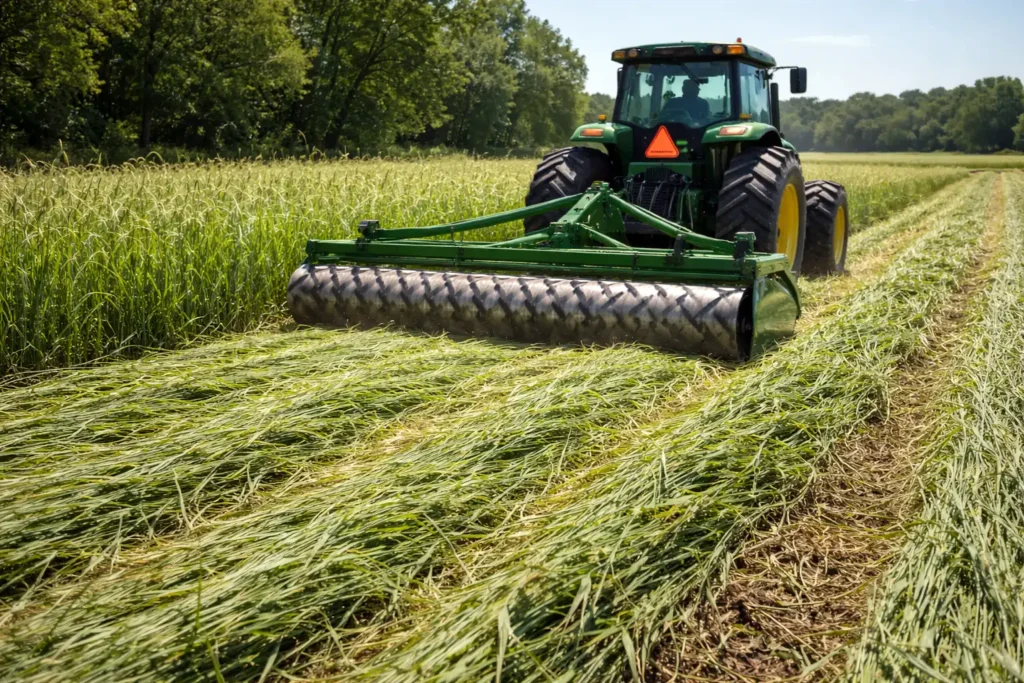
Common termination methods:
- Herbicide termination: A sprayer ends growth quickly when the product matches the species and growth stage. Follow label directions and local guidance. Use proper gloves, eye protection, and clean water for decontamination. If you want a safety refresher, start with farm safety PPE and your sprayer setup under sprayers and application gear.
- Mechanical termination: Mowing, rolling, or tillage stops growth depending on species and stage. Mechanical termination relies on timing, especially for grasses that regrow after cutting.
- Winterkill: Oats and many brassicas die after hard freezes in colder areas. Winterkill reduces spring work, but it depends on your winter pattern.
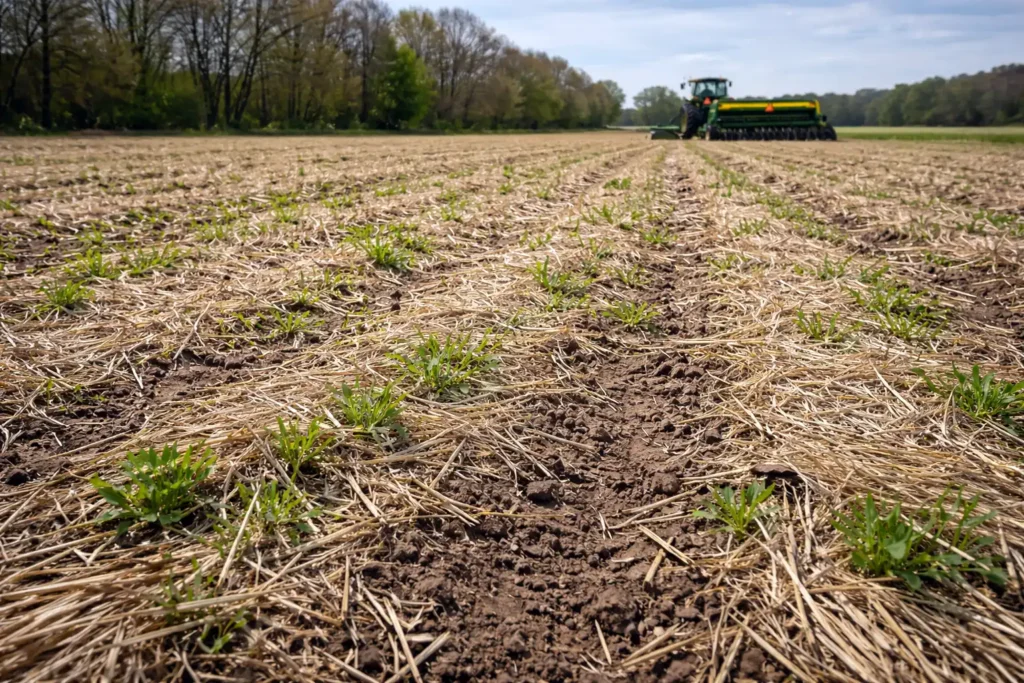
If weed pressure is your main worry, pair cover residue with a clean plan from weed control practices.
What mistakes do beginners make with cover crops?
Most beginner problems come from timing and expectations.
- Planting too late: The stand emerges thin, and the soil stays exposed.
- Skipping seedbed firmness: Broadcast seed sits on residue and dries out.
- Letting spring covers get too big: The cover pulls moisture and creates tough residue at planting.
- Using a complex mix too early: Multiple species complicate seeding rate, termination, and residue behavior.
- Ignoring moisture management: Covers use water. Dry springs require earlier termination.
If drought and irrigation planning play a role on your farm, keep your water plan tight with irrigation and water management.
A simple first-year cover crop plan that works
Start with one field, one goal, and one species. That approach shows you how your soil and equipment respond.
- Pick a goal like erosion control or spring weed suppression.
- Choose one species that fits your planting window, like cereal rye after harvest or oats after small grains.
- Seed at a rate that gives full ground cover, and focus on even distribution.
- Terminate on time so the next crop plants smoothly.
- Take notes on stand, residue, and planting conditions, then adjust one variable next season.