Can You Plant Spinach and Lettuce Together? A Farmer’s Guide
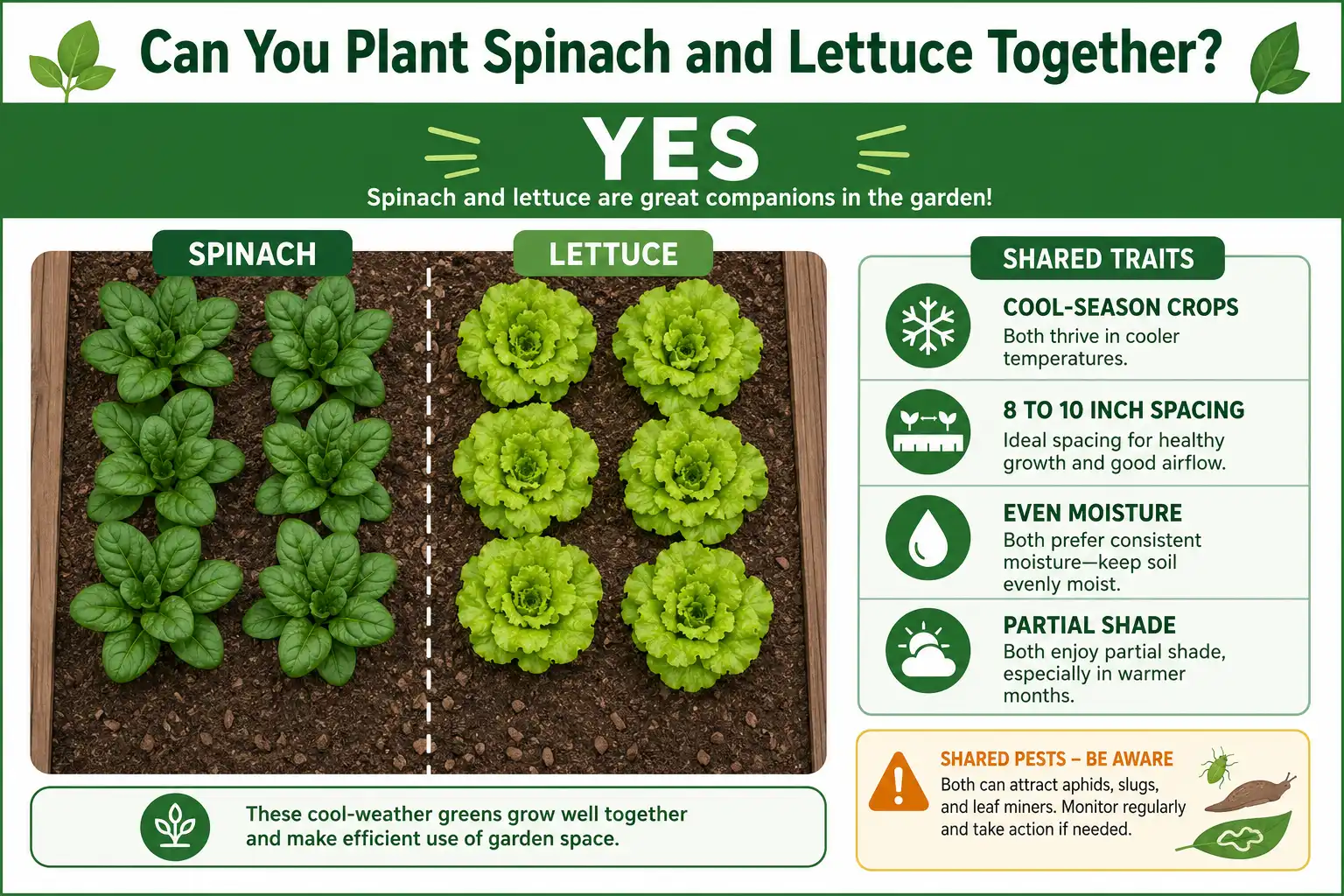
Spinach and lettuce both love cool weather and shallow soil. That overlap makes them natural bed partners. So can you plant spinach and lettuce together? Yes, and they reward you with a steady salad supply.
Yes, you can plant spinach and lettuce together. Both are cool-season greens with shallow roots and matching water needs. Space alternating rows 8 to 10 inches apart, pick loose-leaf lettuce, and harvest both as cut-and-come-again crops.
Can You Plant Spinach and Lettuce Together?
Yes, spinach and lettuce make excellent garden partners. Both are cool-season leafy greens. They share the same temperature range, the same shallow root zone, and the same steady moisture demand. Neither one releases chemicals that stunt the other. So there is no allelopathy to worry about here. Treat them as a single planting block and manage them as one crop.
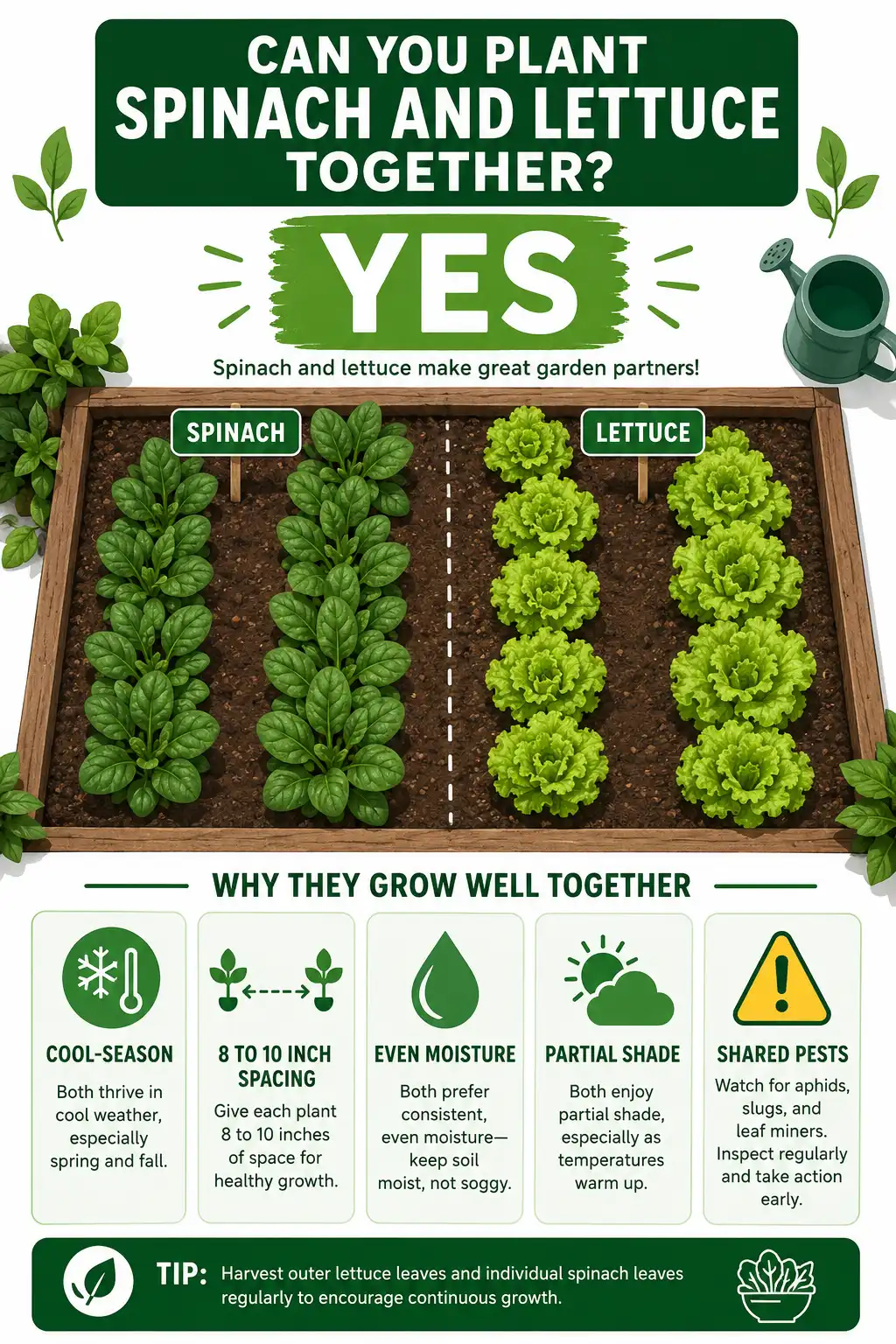
Why Spinach and Lettuce Grow Well Side by Side
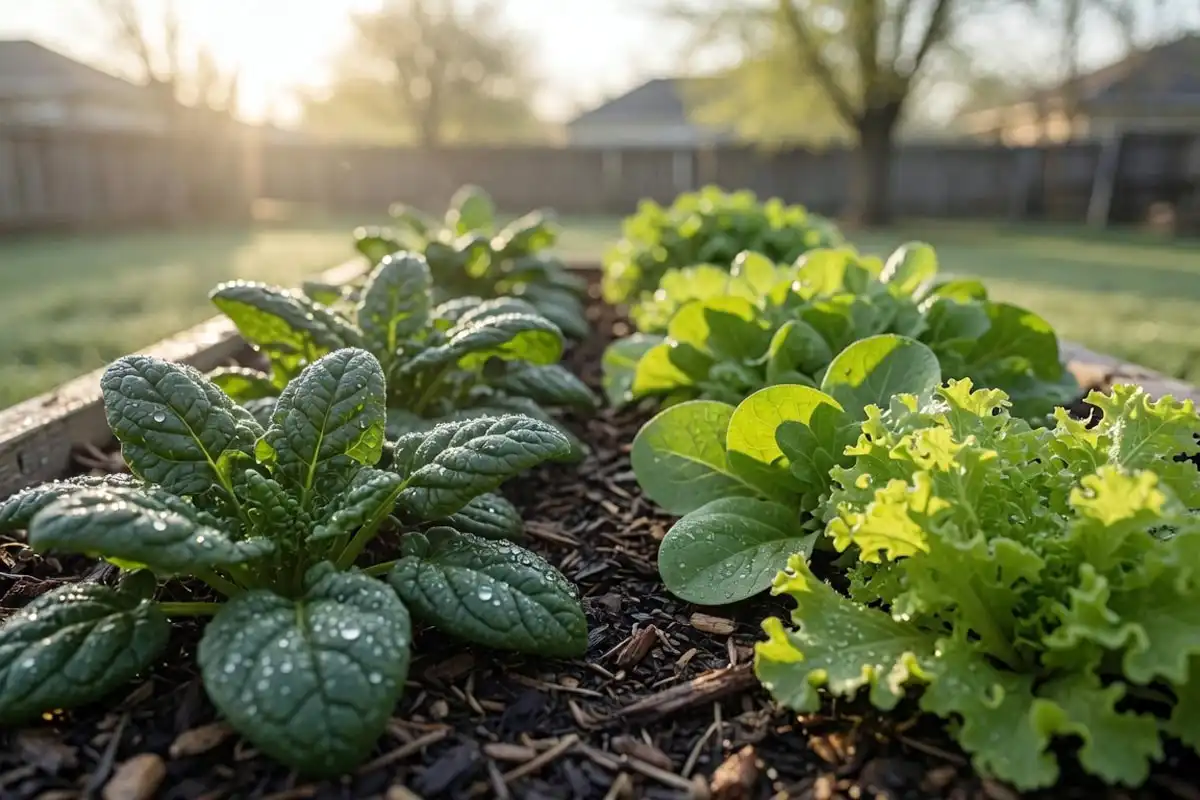
The two crops want nearly identical conditions. Lettuce grows best between 45 and 75 degrees Fahrenheit. Spinach germinates fastest in soil around 50 to 60 degrees and slows down as heat climbs. Both bolt once daytime temperatures push past the upper 70s. Their comfort zones line up. So you can sow them the same day and pull them on a similar timeline.
Light needs match too. Leafy greens handle partial shade better than fruiting crops. Six hours of sun keeps both productive, though a little afternoon shade in late spring slows bolting. If your bed gets dappled light, that suits them fine. This approach works well when tucking greens beside taller plants. The same logic helps when you are growing lettuce in partial shade.
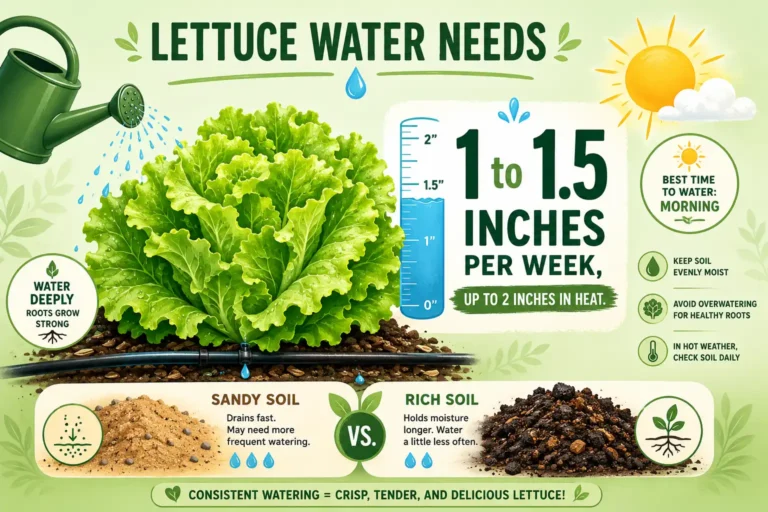
Moisture is the third match. Both want soil kept evenly damp, never soggy. Uneven watering causes tipburn on lettuce and tough leaves on spinach. Water in the morning so the foliage dries by dark, which cuts disease pressure. Knowing lettuce’s weekly water needs makes it easy to set one schedule for the whole bed.
How to Plant Spinach and Lettuce Together
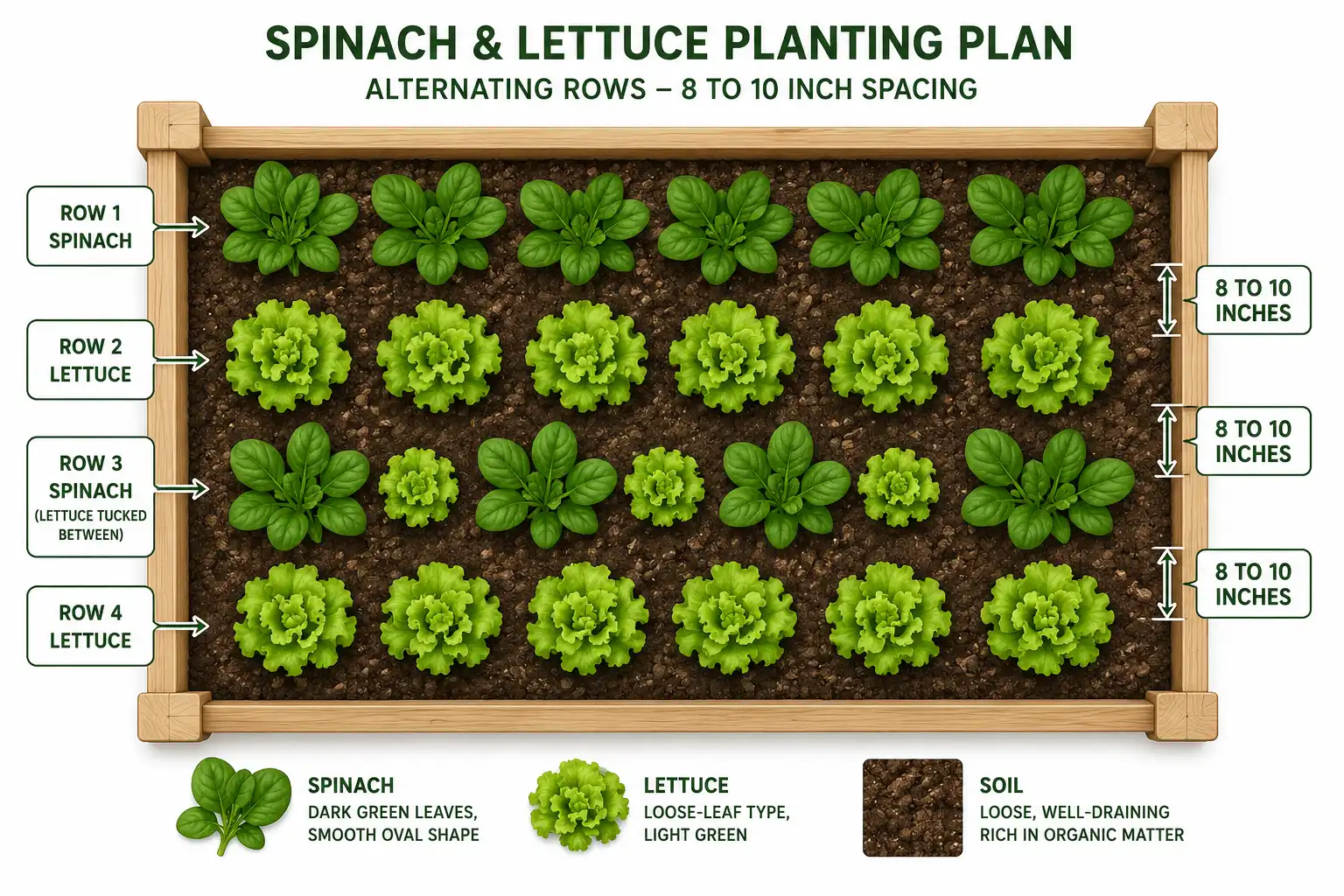
Set the two crops in alternating rows 8 to 10 inches apart. That spacing gives each plant room without crowding the bed. You can also tuck individual lettuce heads between spinach plants for a denser salad block. Either layout works.
Pick the right lettuce type. Loose-leaf and butterhead varieties stay low and will not shade out your spinach. Skip large crisphead types that sprawl and block light. Spinach seed goes in shallow, about half an inch deep, sown 2 inches apart in the row. Lettuce seed sits even shallower, just under the surface, since it needs light to sprout.
Sow in succession for a longer harvest. Drop a fresh row every two to three weeks from early spring into early fall. That keeps young, tender leaves coming instead of one big flush that bolts at once. For tighter beds, check how far apart to set lettuce rows before you map out your spacing. The same row math keeps your whole greens patch from getting jammed.
What Soil and pH Do Spinach and Lettuce Need?
Aim for a soil pH between 6.0 and 6.8, which suits both crops. Lettuce prefers 6.0 to 6.5. Spinach runs a touch higher, closer to 6.5, and it gets fussy in acid ground. Low pH invites Fusarium wilt in spinach, so liming any bed that tests below 6.0 is the recommended approach.
Both greens want loose, fertile soil rich in organic matter. Work in compost before sowing and keep drainage sharp. Soggy ground rots shallow roots fast. A soil test each season shows exactly where things stand. K-State Research and Extension offers cheap testing for Kansas growers. That single step saves more crops than any guesswork.
When to Plant Spinach and Lettuce Together
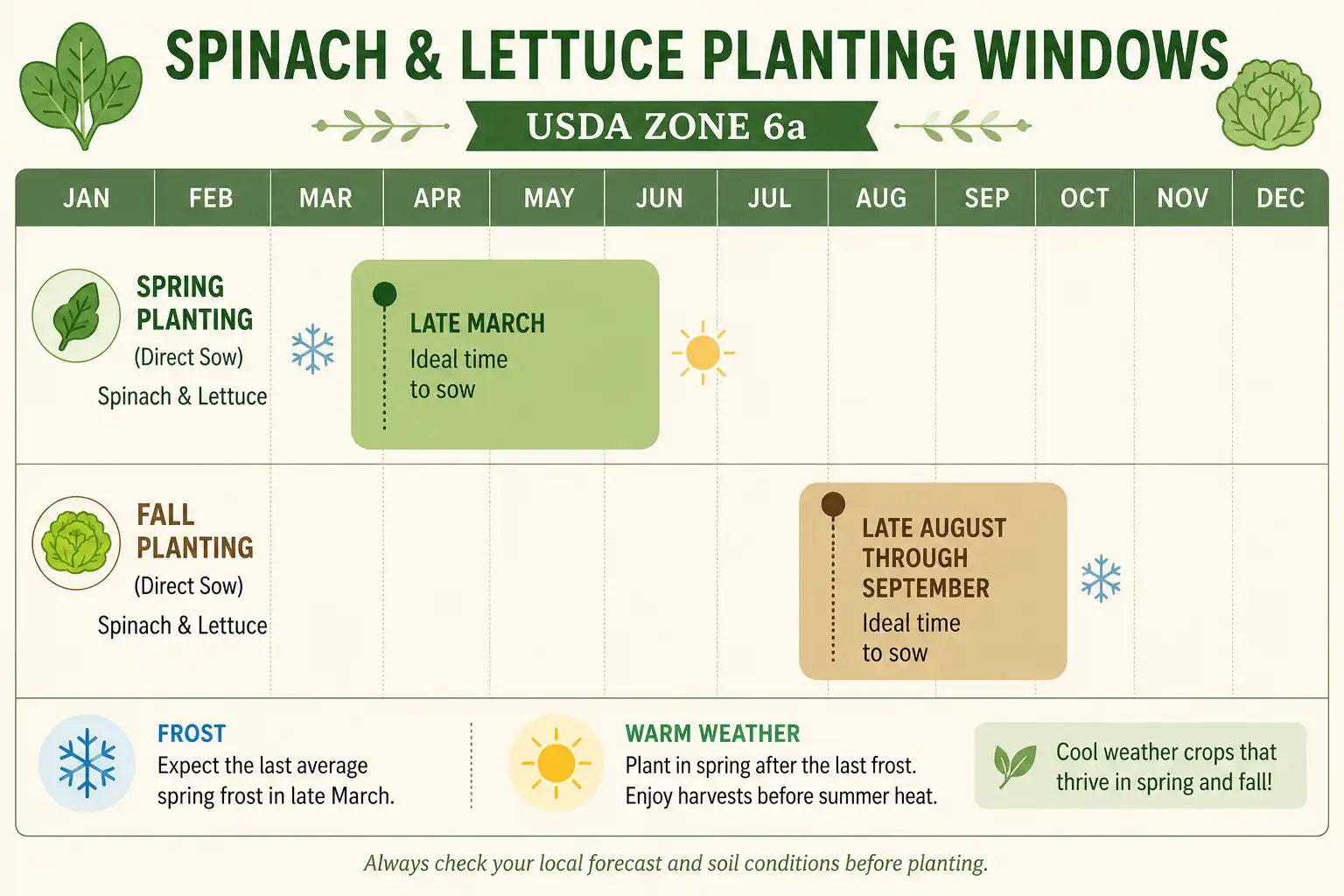
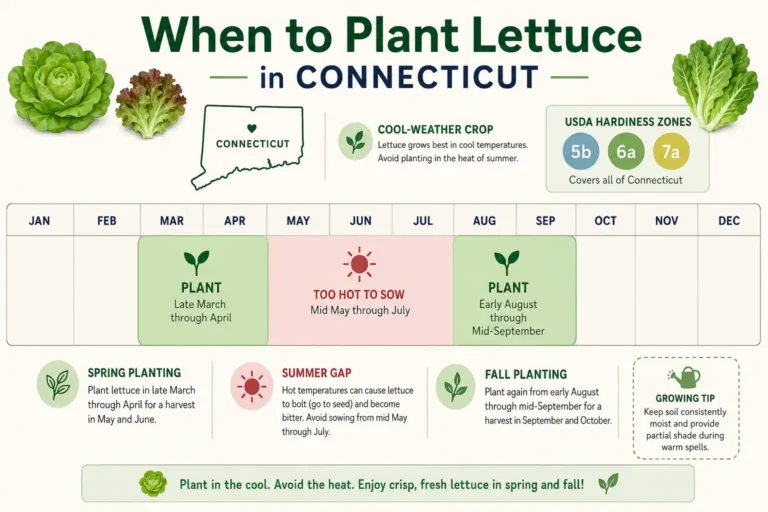
Plant both in early spring and again in late summer for fall. In USDA hardiness zone 6a around Topeka, sow in early spring. Start as soon as you can work the soil, usually late March. Both crops handle a light frost, so an early start is safe.
Fall is a favorite window. Sow in late August and September as the heat breaks. Cool nights then sweeten the leaves and slow bolting. Spinach especially shines in fall and even overwinters under row cover some years. If you want crisp cool-weather heads, our notes on planting fall lettuce line up perfectly with the spinach schedule.
Watch your soil temperature, not just the calendar. Spinach germinates poorly once soil tops 75 degrees. Lettuce sprouting also drops off in warm ground. So in the heat of a Kansas July, hold off and wait for cooler conditions.
Do Spinach and Lettuce Share Pests and Diseases?
Yes, and this is the one real downside of pairing them. Spinach and lettuce attract many of the same troublemakers. Aphids, slugs, and downy mildew hit both crops. So an outbreak on one can spread straight to the other.
Spinach also draws leaf miners. These tiny larvae tunnel inside the leaf and ruin it in days. Lettuce is less prone to leaf miners but still feeds aphids, which can carry cucumber mosaic virus. Damp, crowded greens also invite downy mildew.
Good airflow is your best defense. Keep spacing honest, water in the morning, and scout the undersides of leaves twice a week. Floating row cover keeps leaf miners off spinach early in the season. Plant radishes nearby as a trap crop, since aphids prefer them. You will see the same pattern in pairing lettuce with tomatoes. Shared pests there demand the same watchfulness.
Harvesting Spinach and Lettuce From the Same Bed
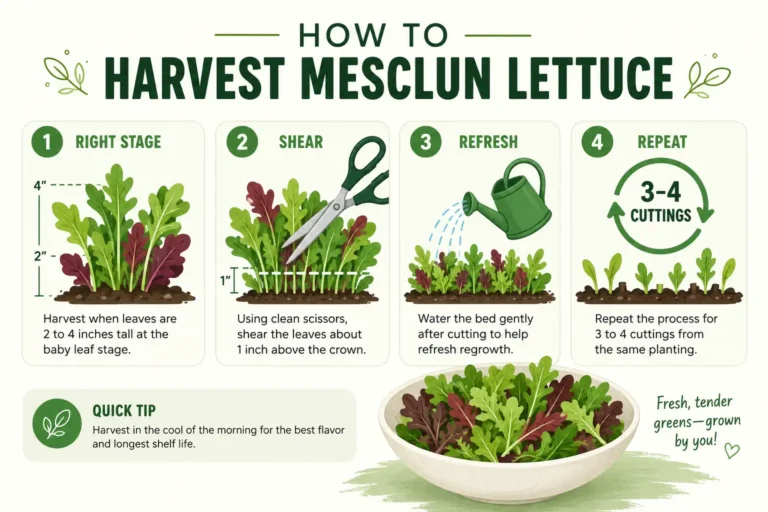
Harvest both as cut-and-come-again crops on the same schedule. Pick the outer leaves and leave the center to regrow. That way one bed keeps feeding you for weeks.
Take spinach leaves young, before the plant bolts in warm weather. Once spinach sends up a flower stalk, the leaves turn bitter. Lettuce follows the same rule. Cut loose-leaf types at three to four inches tall for the sweetest flavor. Harvesting in the cool of early morning, when leaves are crisp and full of water, is the recommended approach. Then cooling them fast helps them hold longer in the fridge.
What Else Can You Plant With Spinach and Lettuce?
Plenty of cool-season crops fit right in beside them. Radishes top our list. They mature fast and pull aphids off your greens as a trap crop. Onions, garlic, and other alliums repel pests with their strong smell. Peas fix nitrogen and feed the leafy growth both crops crave. Marigolds nearby draw in ladybugs and deter root-knot nematodes. One plant to keep out, though, is fennel. It releases compounds that stunt most neighbors, so give it its own corner.
Bottom Line for Your Salad Bed
Spinach and lettuce belong together. They want the same weather, the same soil, and the same water. Set them in alternating rows 8 to 10 inches apart, sow in spring and fall, and watch for shared pests. Do that, and one tidy bed will hand you fresh salad for most of the cool season. Start small, run a couple of successions, and you will dial it in fast.