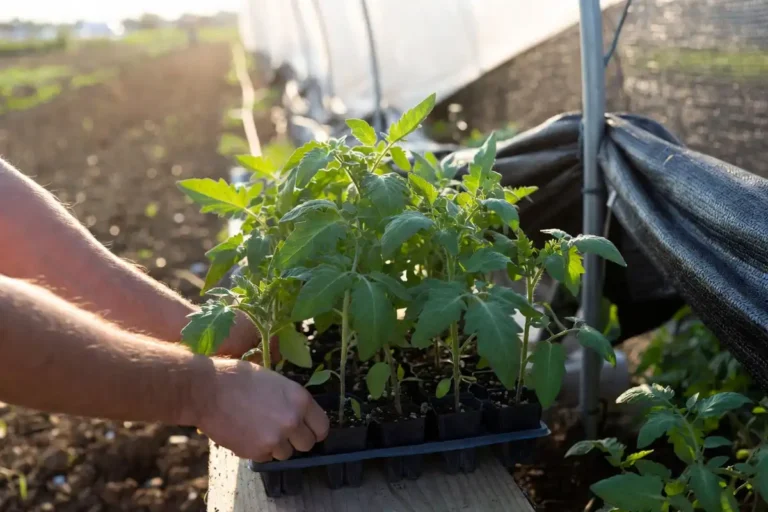
When to Plant Tomatoes in Kansas for a Strong, Reliable Harvest
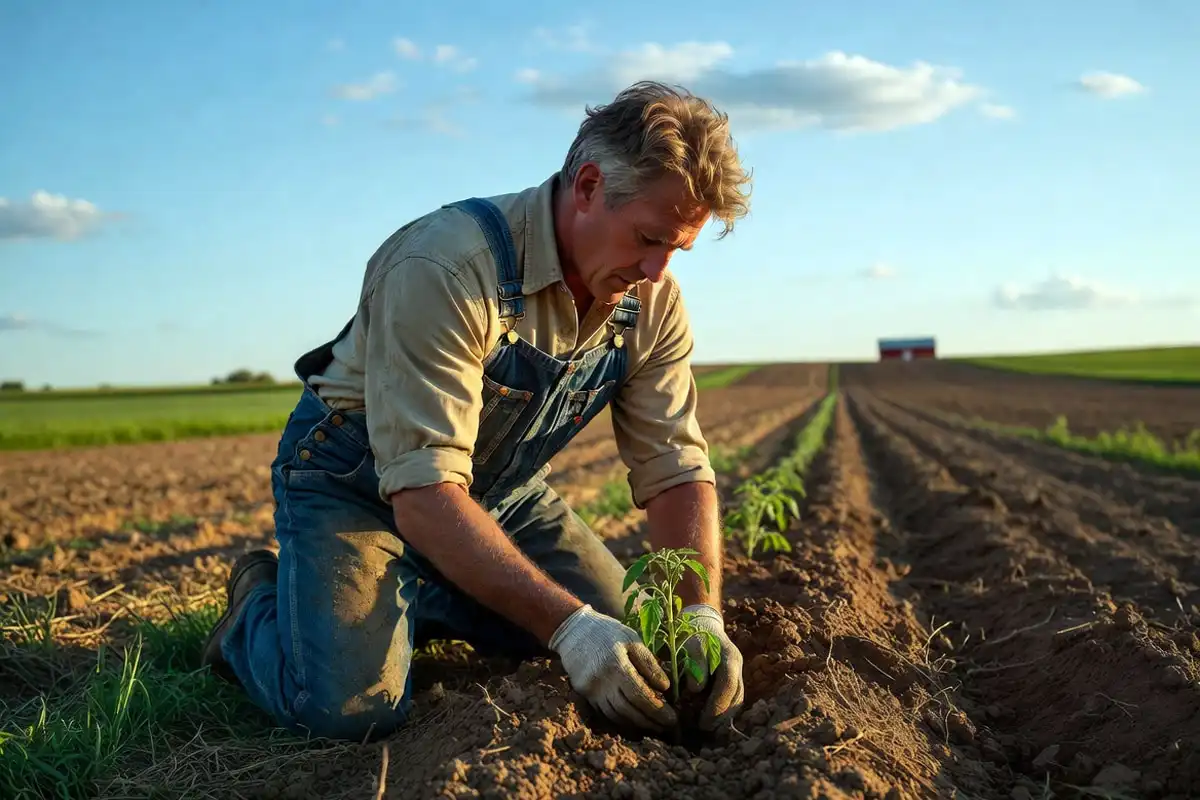
Kansas farmers plant tomatoes outdoors after the last frost passes and soil temperatures reach at least 60°F. This guide covers planting dates by region, soil preparation, transplant timing, common mistakes, and what to do when spring weather stalls or swings. Whether you grow a backyard row or a market plot, every section gives you a clear decision to act on.
Plant tomatoes outdoors in Kansas between May 1 and May 20 for most of the state. Eastern Kansas is ready closer to late April to early May. Western Kansas benefits from waiting until mid-May. Soil temperature at 4 inches deep needs to read 60°F or above before transplanting. Starting seeds indoors 6 to 8 weeks before your outdoor date gives transplants the head start they need.
What Tomato Planting Timing Really Means in Kansas
Tomato planting timing refers to the window when outdoor soil and air conditions support consistent plant growth without frost damage. Kansas sits in USDA hardiness zones 5b through 7a, which creates meaningful differences between the southeast corner of the state and the northwest high plains.
Tomatoes are warm-season crops. They stop growing when nighttime temperatures fall below 50°F and suffer cell damage at 32°F or below. Getting the timing right protects the transplant investment and sets the yield trajectory for the whole season.
When to Plant Tomatoes in Kansas by Region
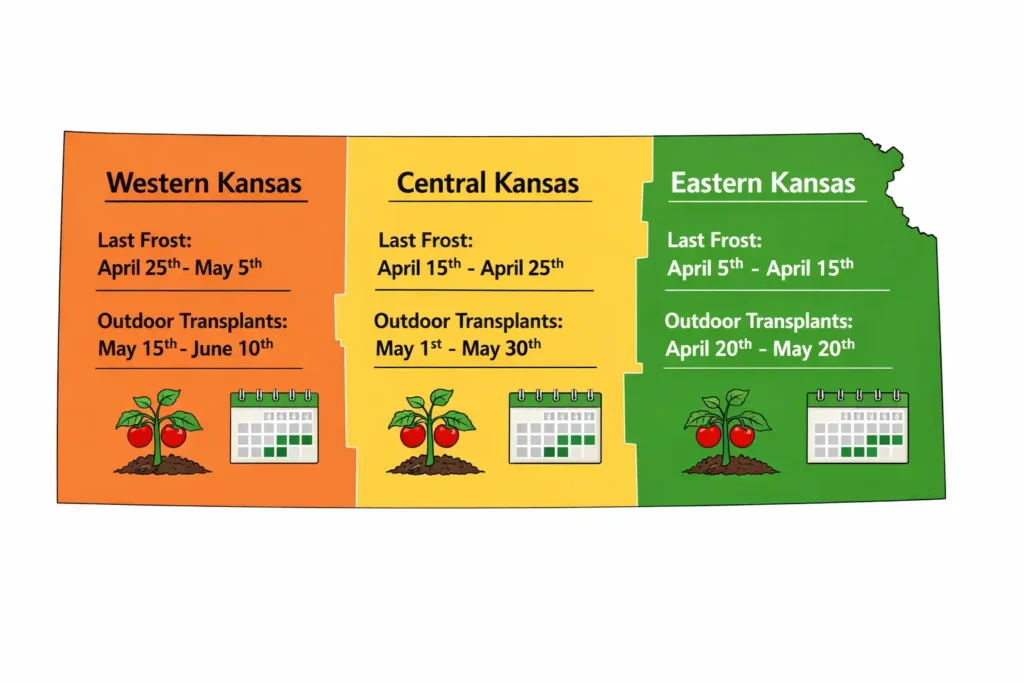
Kansas divides into three broad planting zones for tomatoes. Each zone carries a different average last frost date, and that date drives the outdoor transplant window.
Eastern Kansas (Wichita, Topeka, Kansas City area) The average last frost falls between April 5 and April 20. Outdoor transplanting opens from late April through May 10. Soil in river-bottom ground warms faster than upland clay, so check temperature rather than relying on the calendar alone.
Central Kansas (Salina, Hutchinson, Great Bend) Last frost averages between April 15 and May 1. Safe outdoor planting runs from May 1 to May 15. Cold fronts push through this region into early May, so watch the 10-day forecast before setting transplants.
Western Kansas (Dodge City, Garden City, Colby) Last frost averages May 1 to May 15. Wind exposure increases frost risk even after the calendar date passes. Wait until May 10 to May 20 and monitor overnight lows closely.
For up-to-date frost data specific to your county, the NOAA Climate Data Online tool provides historical frost probability by location and date. Also see the best time to plant tomatoes in California.
When to Start Tomato Seeds Indoors in Kansas
Starting tomatoes indoors 6 to 8 weeks before your outdoor transplant date gives seedlings time to develop a strong root system and 4 to 6 true leaves before field exposure.
Use this simple calculation:
- Eastern Kansas: Start seeds indoors between March 1 and March 15
- Central Kansas: Start seeds indoors between March 15 and April 1
- Western Kansas: Start seeds indoors between March 20 and April 5
Seeds germinate best at soil temperatures between 70°F and 80°F. A seedling heat mat speeds germination from 10 days down to 5 to 7 days in a cool house.
Learn more about direct sowing vs. transplanting to decide which method fits your operation and schedule.
What Soil Conditions Tomatoes Need Before Planting
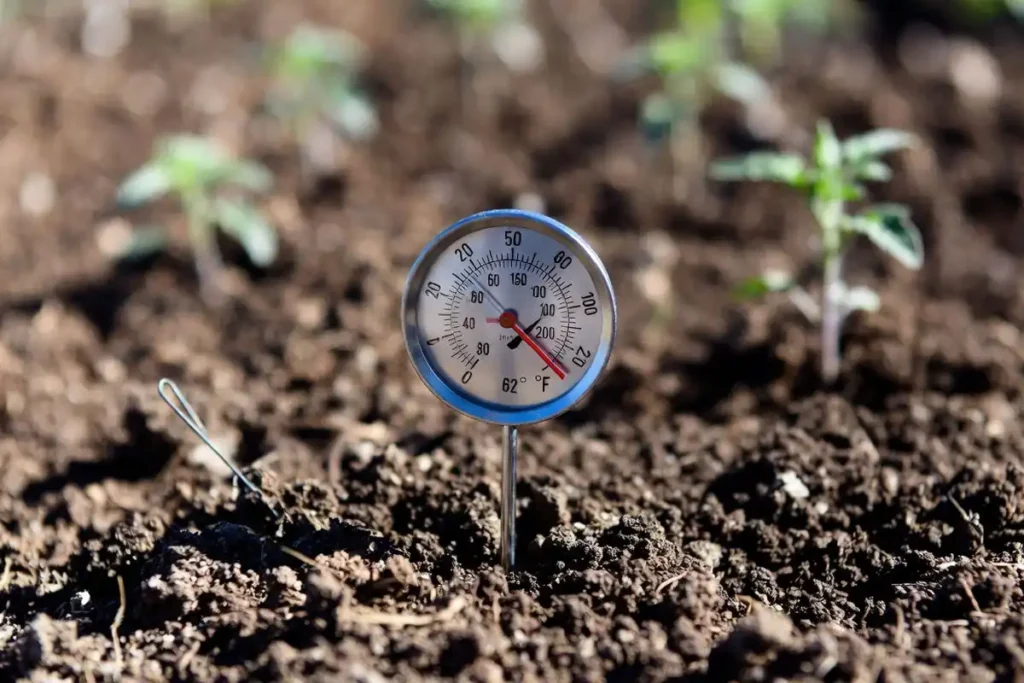
Soil temperature matters more than air temperature when setting transplant dates. Tomato roots stall in cold soil even when daytime air feels warm.
Check soil temperature at 4 inches deep using a soil thermometer. Take readings at the same time each morning for three consecutive days. If the average stays at 60°F or above, the soil is ready.
Beyond temperature, tomatoes perform well in:
- Soil pH between 6.0 and 6.8
- Well-draining loam or sandy loam
- Organic matter above 3%
Kansas clay soils in the east hold moisture well but drain slowly. Raised rows or beds improve drainage and warm faster in spring. Sandy soils in the west drain quickly but dry out between rains, increasing irrigation demand.
Use a soil test before planting to check pH and nutrient levels. Kansas State University Research and Extension recommends soil testing every 2 to 3 years for row crops and gardens.
How to Prepare the Planting Site
Soil preparation starts 2 to 3 weeks before transplanting. Follow these steps in order.
Step 1: Test the soil Send a sample to your county extension office or a certified lab. Results guide fertilizer rates and lime applications.
Step 2: Till or loosen the bed Break the top 8 to 10 inches. Tomato roots reach 24 to 36 inches deep at maturity, but early root development concentrates in the top foot.
Step 3: Incorporate compost or aged manure Apply 2 to 3 inches of compost and work it into the top 6 inches. Compost improves both drainage in clay soils and water retention in sandy soils. Review compost use in farming for application rates and sourcing options.
Step 4: Apply pre-plant fertilizer Use the soil test recommendation. A general baseline for Kansas vegetable ground is 1 to 2 lbs of 10-10-10 per 100 square feet, worked in before planting. Learn about NPK fertilizer options for crops to match the right product to your soil reading.
Step 5: Form rows or beds Space rows 4 to 5 feet apart for indeterminate varieties and 3 to 4 feet for determinate types. This spacing supports airflow, which reduces fungal pressure in humid eastern Kansas summers.
How to Transplant Tomatoes in Kansas
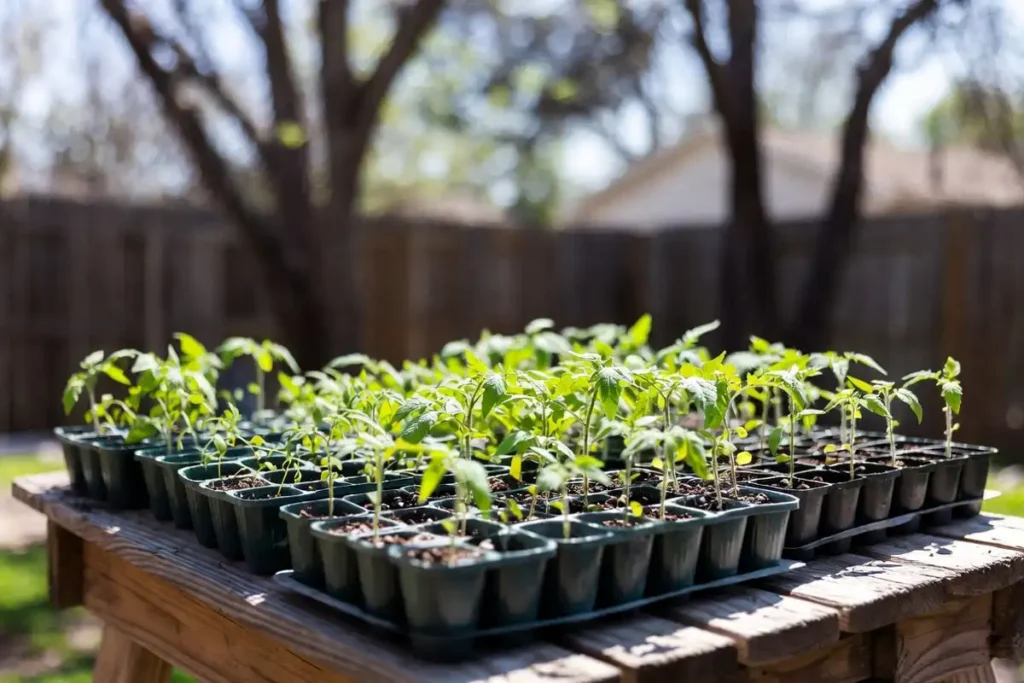
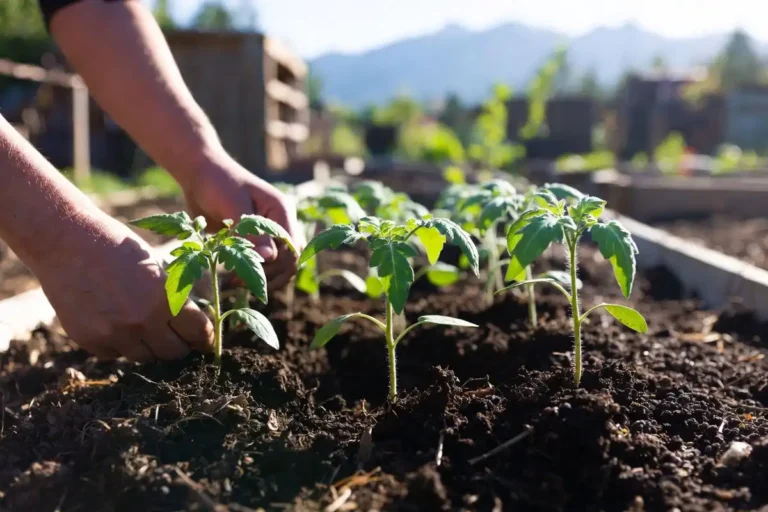
Transplanting correctly reduces transplant shock and speeds establishment. Work through these steps on a cloudy day or in the late afternoon to reduce heat stress on the seedling.
Step 1: Harden off transplants for 7 to 10 days Move seedlings outside for 1 to 2 hours on day one. Increase outdoor exposure by 1 to 2 hours each day. By day 7, leave them out all day. Read the full process for hardening off tomato transplants before moving to the field.
Step 2: Water transplants thoroughly before moving them Saturated root balls hold together during handling and reduce root disturbance.
Step 3: Dig the transplant hole deep Set tomatoes deeper than they grew in the pot. Bury up to two-thirds of the stem. Buried stem sections produce adventitious roots, which increases the plant’s ability to take up water and nutrients.
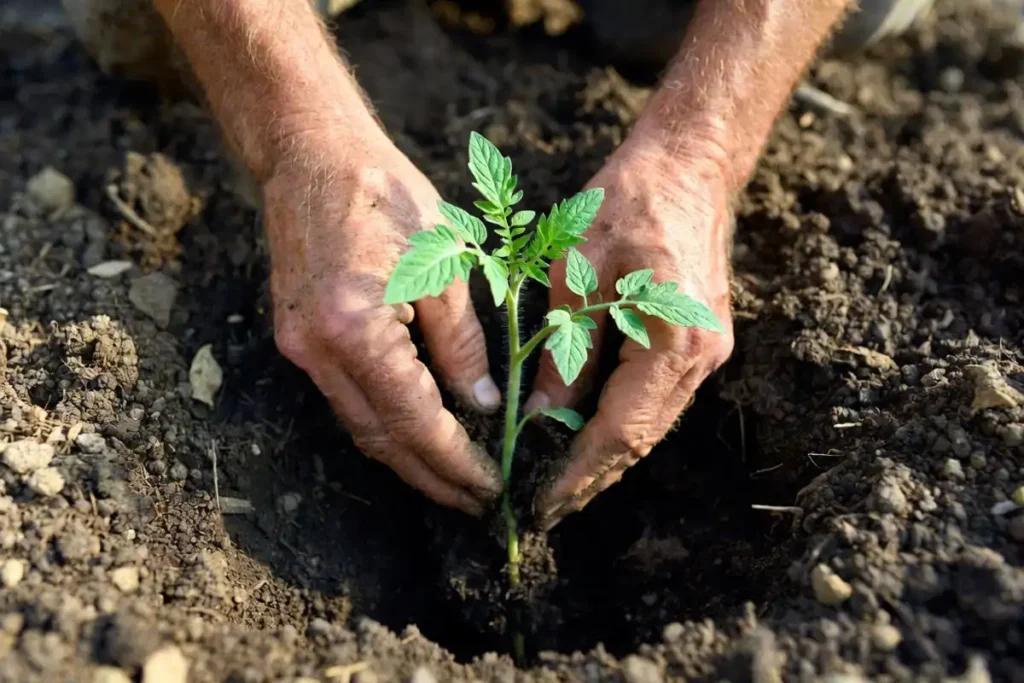
Step 4: Set the transplant and firm the soil Press soil gently around the base to remove air pockets. Loose soil dries out faster and leaves roots exposed.
Step 5: Water in with a starter fertilizer solution A diluted phosphorus-rich starter fertilizer (such as 10-52-17 or similar) applied at transplanting supports early root development.
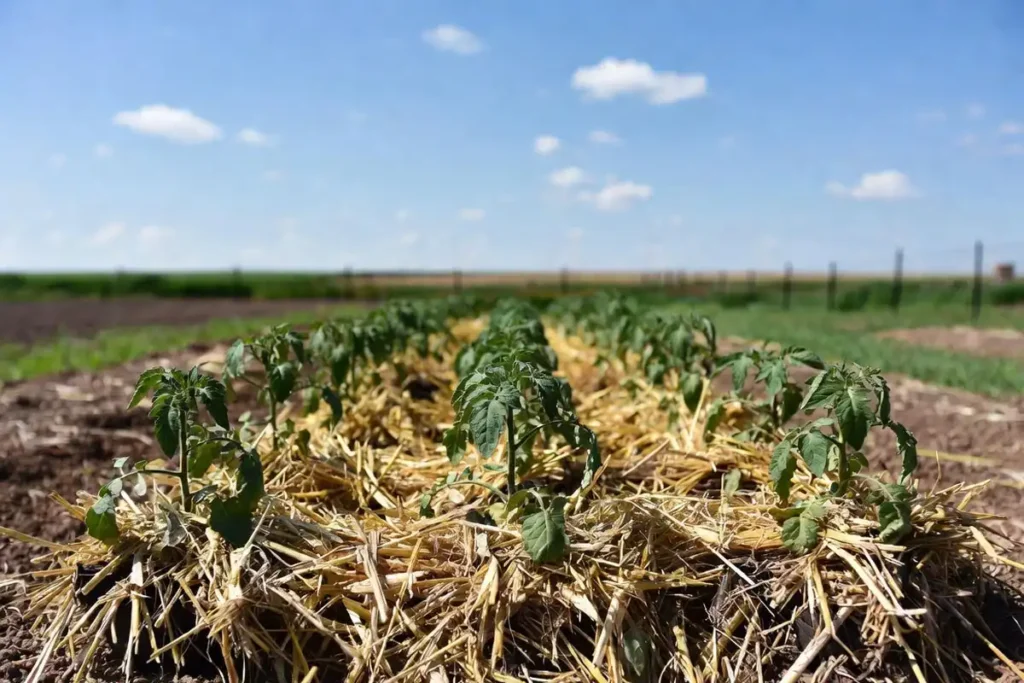
Step 6: Apply mulch Lay 2 to 3 inches of straw, wood chips, or black plastic mulch around the base. Mulch holds soil moisture, moderates temperature, and reduces weed pressure. Review how mulching supports crop production for material comparisons and application methods.
Staking, Caging, or Trellising Tomatoes in Kansas
Kansas wind loads make support a practical requirement, not optional. Unsupported plants tip over in summer storms and experience fruit rot from ground contact.
Choose your support method before transplanting so you can install it at planting time rather than disturbing established roots later.
- Cages work well for determinate varieties in home gardens and small plots.
- Stakes and twine suit indeterminate varieties and longer rows.
- Trellises support high-density planting and reduce labor for pruning.
Read more about the trade-offs between staking, trellising, and caging tomatoes to match the method to your variety and row length.
When to Plant Tomatoes in Kansas: Variety Timing Differences
Determinate and indeterminate varieties respond differently to Kansas conditions.
Determinate varieties (Celebrity, Roma, Bush Early Girl) set all fruit over a 2 to 4 week period. They suit Kansas’s dry late summers well because harvest concentrates before the hottest stretch. Plant determinate types at the earlier end of the planting window.
Indeterminate varieties (Better Boy, Cherokee Purple, Brandywine) produce continuously until frost. They need a longer season to pay off. Plant indeterminate types when soil temperature is stable and the 10-day forecast shows no frost risk, typically mid-May for central Kansas.
Early-maturing varieties (65 days or fewer to harvest) give western Kansas growers a full crop before the intense August heat peaks.
What Happens When You Plant Too Early or Too Late
Too early: Transplants set in cold soil (below 55°F) stop growing for 2 to 3 weeks. They yellow, stall, and often get overtaken by transplants set 2 weeks later in warm soil. A late frost kills unprotected transplants outright.
Too late: Transplants set after June 1 in central Kansas face peak summer heat during fruit set. Tomatoes drop blossoms when daytime temperatures exceed 95°F or nighttime temperatures stay above 75°F for extended periods. Late planting compresses the productive window.
The target is a transplant date that puts blossom development in the 75°F to 85°F daytime range, which Kansas typically delivers from mid-June through mid-July.
Common Mistakes Kansas Tomato Growers Make
Planting by date alone, not soil temperature The calendar is a starting point. A cold, wet spring delays soil warming by 1 to 2 weeks. Always confirm with a thermometer.
Skipping hardening off Greenhouse-grown transplants moved directly to full sun suffer sunscald and leaf curl within 24 hours. Harden off every transplant regardless of source.
Planting too shallow Surface roots dry out faster and anchor poorly. Always bury 50 to 66% of the stem.
Inconsistent irrigation after transplanting Inconsistent soil moisture during early establishment causes blossom drop and blossom-end rot later in the season. Water deeply and consistently for the first 3 weeks after transplanting.
Ignoring wind exposure Kansas wind desiccates young transplants quickly. Windbreaks, row orientation, and mulch all reduce wind stress. Orient rows north to south to reduce direct wind exposure on the broadside of the plant canopy.
How to Protect Tomatoes from Late Spring Frost in Kansas
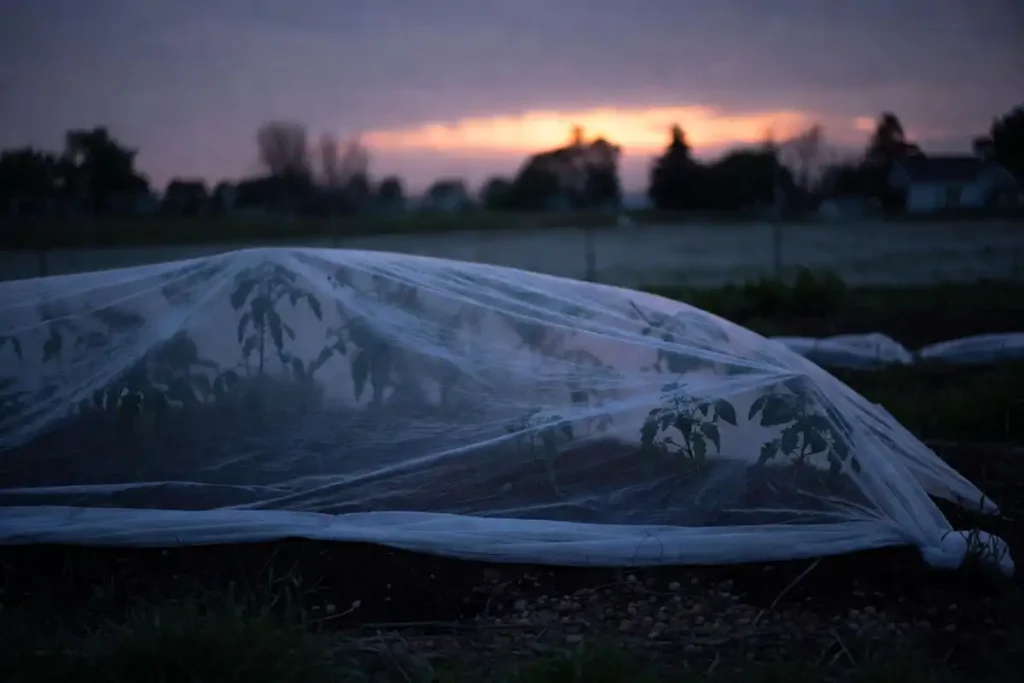
Late cold snaps occur in Kansas even after the average last frost date. Growers who plant in late April in eastern Kansas face meaningful frost risk if a polar front pushes through.
Protection options include:
- Row cover fabric (floating row cover): Provides 4°F to 6°F of frost protection. Install at dusk and remove at sunrise to prevent heat buildup.
- Wall-O-Water season extenders: Water-filled tubes protect transplants down to 16°F and allow planting 4 to 6 weeks earlier than the unprotected date.
- Cold frames: Useful for high-value transplants or small garden plots.
Monitor the National Weather Service forecast for your county from April through mid-May. A single overnight frost at 28°F for 4 hours kills an unprotected transplant.
Troubleshooting Early-Season Tomato Problems in Kansas
Yellowing leaves after transplanting Nitrogen uptake stalls in cold soil. Wait for soil temperatures to rise above 60°F. Avoid over-fertilizing, which can burn recovering roots.
Wilting in midday heat New transplants wilt in afternoon sun for the first 7 to 10 days even when soil moisture is adequate. This is normal as the root system re-establishes. Shading transplants during the first week reduces stress.
Purple leaf undersides Phosphorus deficiency develops when soil temperatures stay below 55°F. The plant cannot absorb phosphorus in cold soil even when phosphorus is present. Warming soil resolves this without added fertilizer.
No growth after 2 weeks in the ground Check soil temperature first. If soil reads below 58°F, the plant is in stasis. Consider row cover to warm the zone around the plant.
Safety Notes for Tomato Planting Season
Handling pesticides and fertilizers during soil preparation carries risk. Wear nitrile gloves when applying any granular fertilizer or herbicide. Wash hands before eating or handling food. Keep children away from the planting area until pre-plant herbicides have dried or been incorporated per the product label.
When using season-extension devices like Wall-O-Waters, handle the water-filled tubes with care. Filled tubes weigh 5 to 7 lbs each and are slippery on wet soil. Bend at the knees when placing them.
Avoid spraying any foliar products during high wind. Kansas wind exceeds 15 mph frequently from March through May. Spray drift onto adjacent plants or surfaces creates unintended exposure.
Kansas Tomato Planting Calendar at a Glance
| Region | Start Seeds Indoors | Transplant Outdoors | Last Frost Average |
|---|---|---|---|
| Eastern KS | March 1 – March 15 | April 25 – May 10 | April 5 – April 20 |
| Central KS | March 15 – April 1 | May 1 – May 15 | April 15 – May 1 |
| Western KS | March 20 – April 5 | May 10 – May 20 | May 1 – May 15 |
Conclusion
Tomatoes in Kansas grow well when transplanted into warm soil after the last frost passes. Eastern Kansas opens around late April, central Kansas around May 1, and western Kansas around May 10 to 15. Start seeds indoors 6 to 8 weeks before your target outdoor date.
Confirm soil temperature at 4 inches deep before setting transplants, harden off every seedling, and protect plants when late frost threatens. Getting these timing basics right produces stronger plants, more consistent fruit set, and fewer losses from cold or heat stress.