How Does Lettuce Reproduce? Bolting, Flowers, and Seed Explained
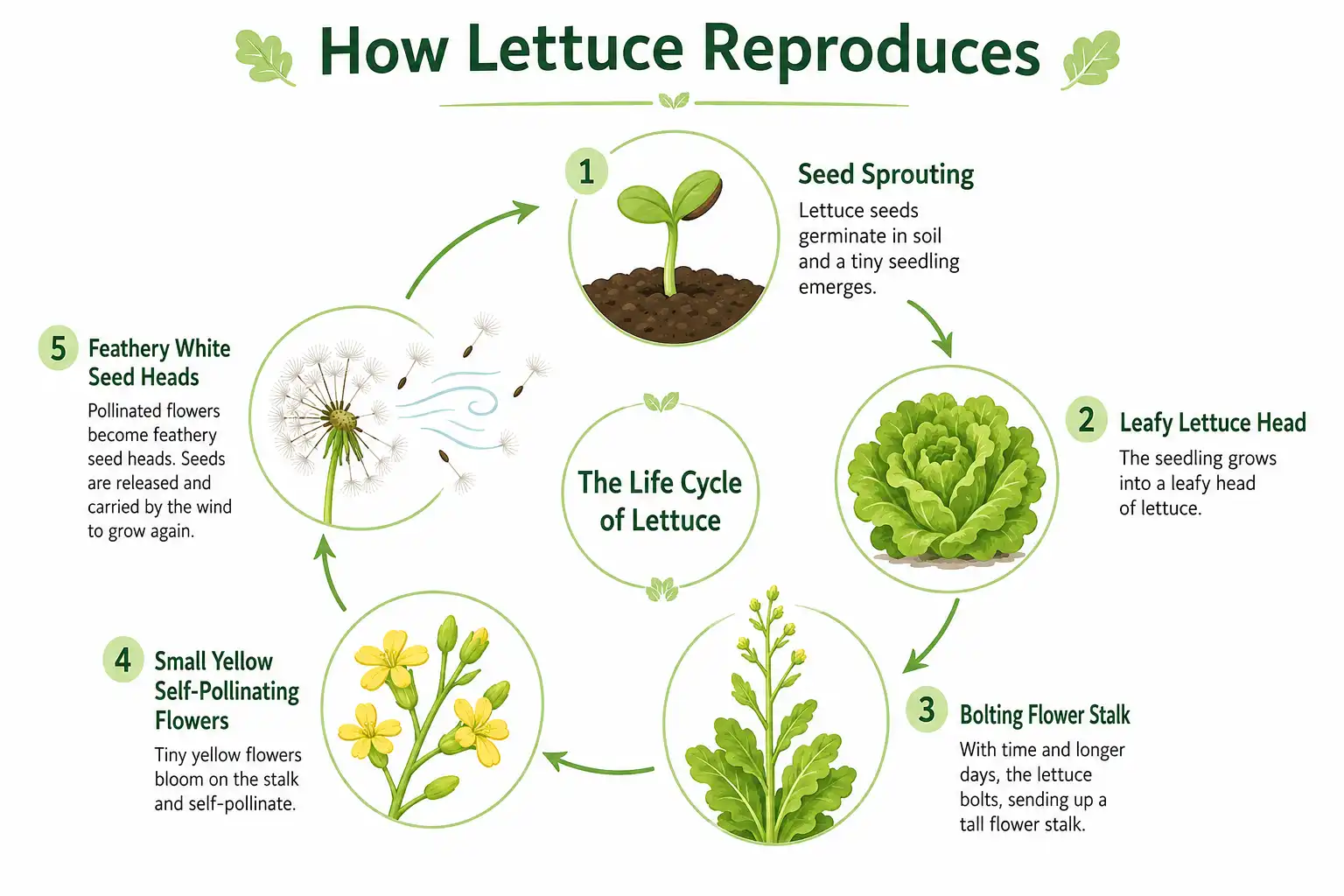
Lettuce reproduces by seed, but only after it bolts and flowers. Most growers harvest the leaves long before that happens. So how does lettuce reproduce, step by step? It bolts, blooms, pollinates itself, and sets seed inside fluffy white tufts.
Lettuce reproduces sexually through seed. When heat and long days trigger bolting, the plant sends up a flower stalk with small yellow blooms. Those flowers self-pollinate, then form seeds attached to feathery pappus that the wind scatters.
How Does Lettuce Reproduce?
Lettuce reproduces by seed, and only by seed. It is an annual plant. That means it runs its entire life cycle, root to seed, in a single season.
The plant you grow is Lactuca sativa, a member of the Asteraceae family (the same group as sunflowers and dandelions). It is self-pollinating, so most plants set seed with no help from bees. Research puts self-pollination at roughly 98 percent.
All four lettuce types reproduce the same way. Whether you grow crisphead (iceberg), romaine, butterhead, or loose-leaf, the path is identical. The plant makes leaves, bolts, flowers, pollinates itself, and drops seed.
In Kansas, this rarely happens on purpose. We pull most heads for the kitchen well before they bolt. Still, every lettuce plant carries the same plan.
What Makes Lettuce Bolt and Start Flowering?
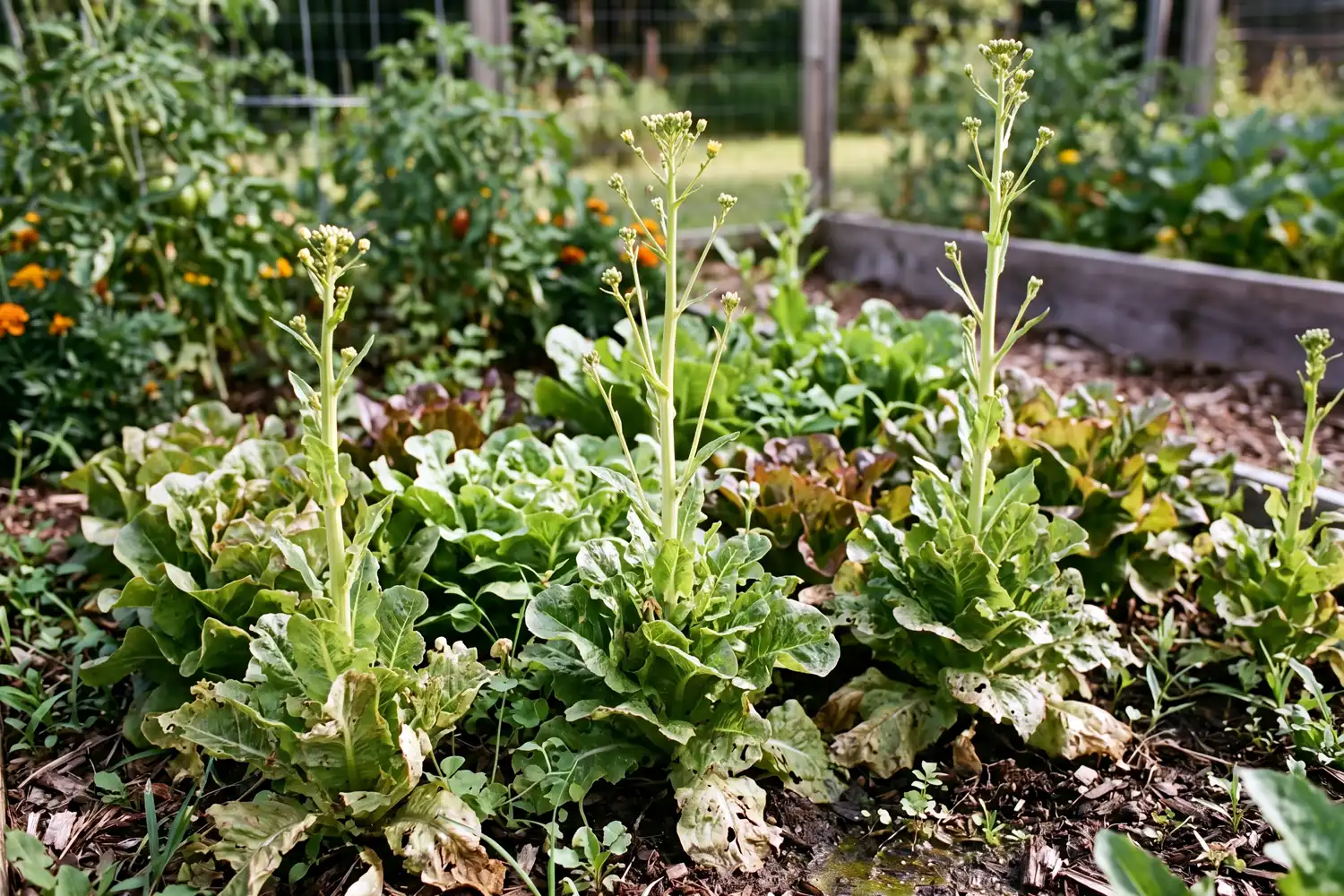
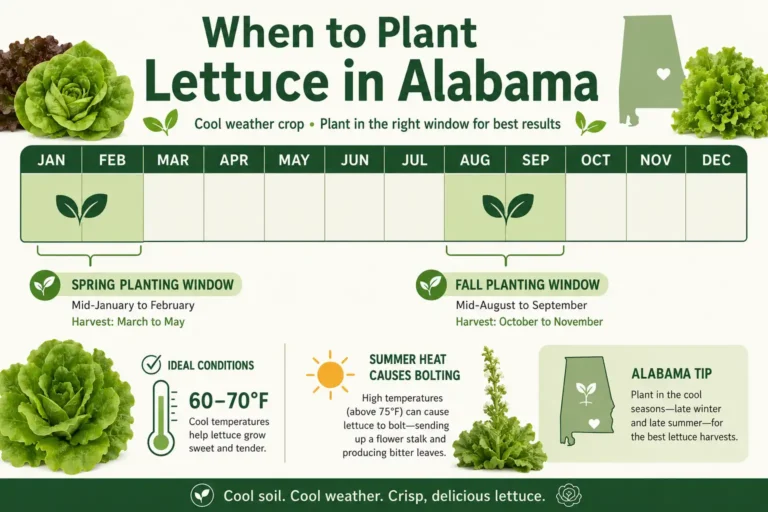
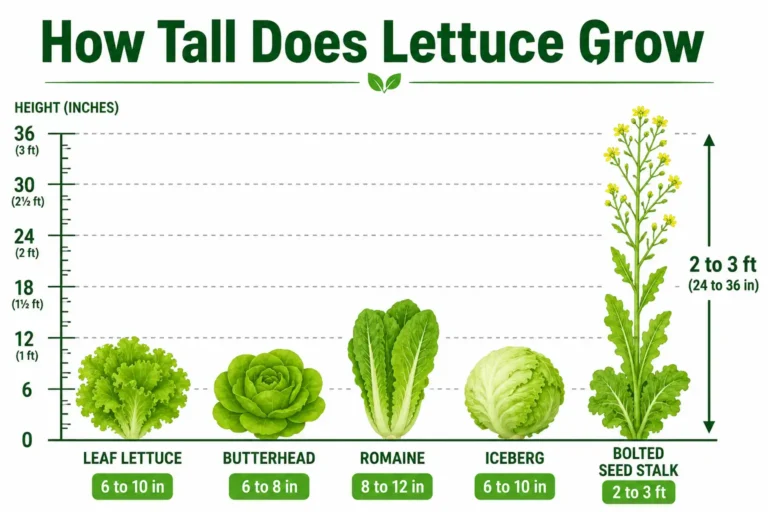
Heat and long days make lettuce bolt. Lettuce is a cool-season crop. It grows best when temperatures sit in the 60s and low 70s Fahrenheit.
Once daytime highs push past the mid-70s and nights stay above 60°F, the plant shifts gears. It stops making leaves and sends up a tall central stalk. That shift is bolting. By the time temperatures reach the mid-80s, nearly every variety bolts. Clemson Extension and Purdue Extension both tie this flowering response to summer heat and lengthening days.
Stress speeds it up. Dry soil, crowding, and root damage all push a plant toward seed faster. The plant reads stress as a signal to reproduce before conditions get worse.
You also lose eating quality at this stage. Bolted leaves turn bitter as the plant pumps energy into the stalk. If you want tender greens for longer, you can grow lettuce through the cooler months and pick heat-resistant varieties.
What Do Lettuce Flowers Look Like?
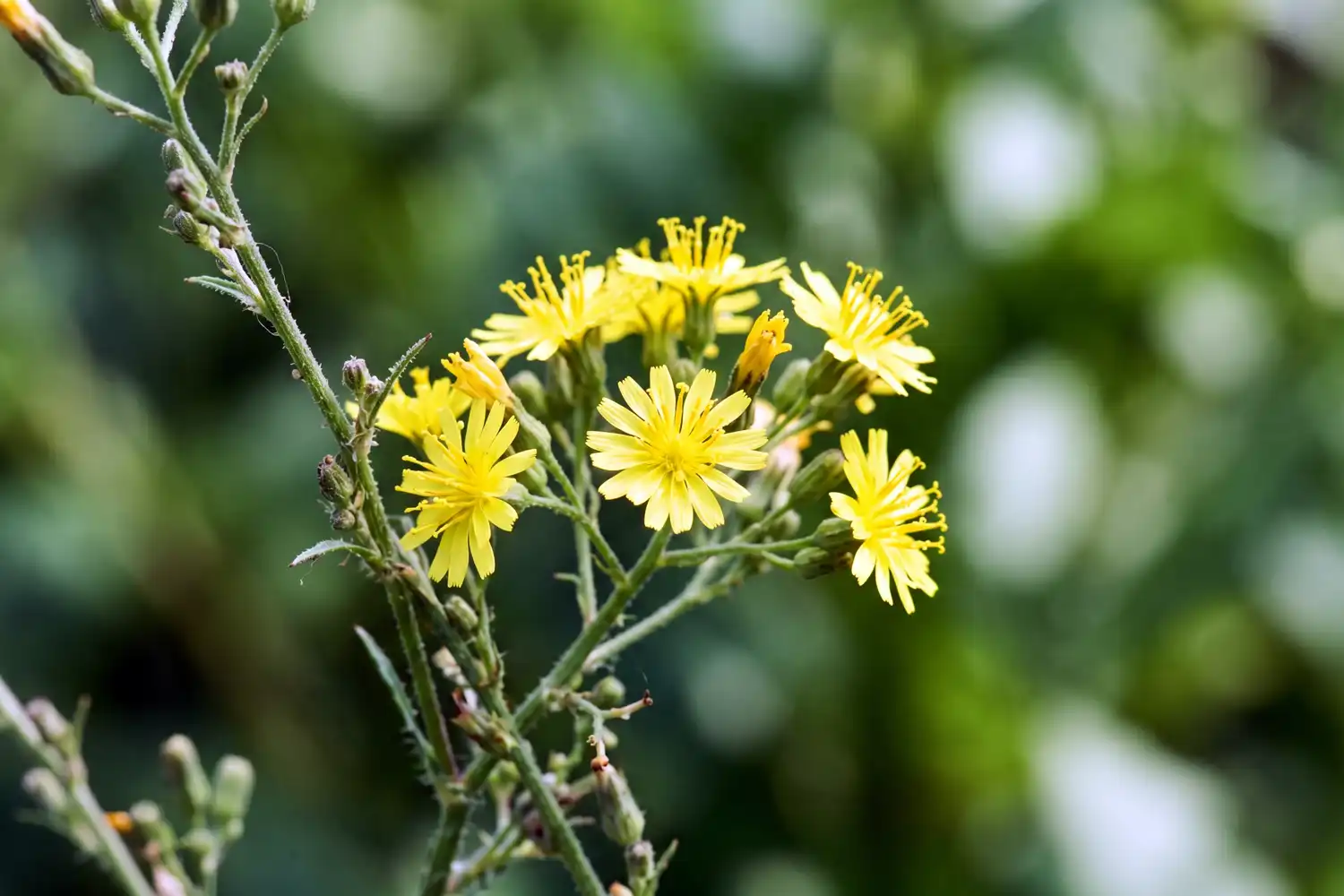
Lettuce flowers are small and yellow, and they look like tiny dandelions. Each one sits at the tip of a branch on the seed stalk. They are easy to miss, since each bloom is barely the size of a dime.
Lettuce belongs to the composite family, so what looks like a single flower is actually a cluster. Botanists call that cluster a flower head. Inside each head sit several small strap-shaped florets. Every floret can make one seed. A single head usually yields 15 to 25 seeds.
The flowers open for only a few hours. The flowers crack open in the morning and close by midday. Each flower is “perfect,” which means it carries both male and female parts in the same bloom.
How Does Lettuce Pollinate Itself?
Lettuce pollinates itself inside the flower, usually before any insect lands on it. The setup is simple. The male parts (anthers) fuse into a small tube. As the flower opens, the female style grows up through that tube and picks up the plant’s own pollen. The stigma gets coated, and the flower fertilizes itself.
This is why we call lettuce self-pollinating, or autogamous. Bees and other insects do visit the flowers. Cross-pollination between plants happens, but it stays low, usually a few percent at most.
That low crossing rate matters for you. It means saved seed comes back true to type. A Black Seeded Simpson plant gives you Black Seeded Simpson again, season after season. So lettuce ranks among the friendliest crops for saving your own seed.
How Does Lettuce Make Seed?
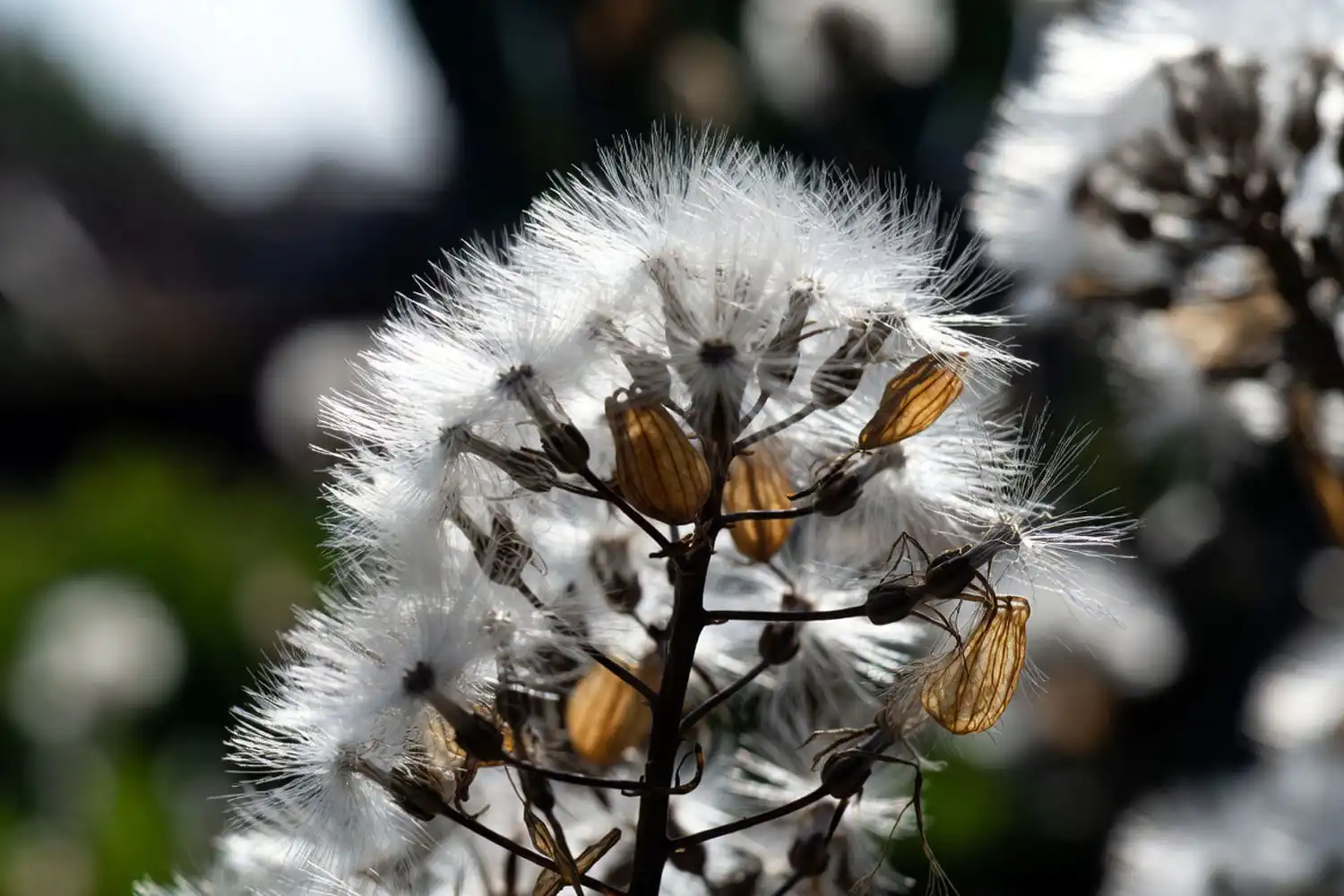
After a flower pollinates, its ovary swells into a single seed. That seed is technically a dry fruit called an achene, with the seed coat and fruit wall fused tight. Most folks just call it a lettuce seed.
The achene fills out fast. It reaches full size about nine days after pollination, then hardens and dries on the plant. A few weeks after the flowers first appear, white tufts called pappus push out of each spent flower head. Growers call that stage “feathering.” When you see the fluff, the seed underneath is ripe.
That pappus is the plant’s shipping system. The tufts catch wind and carry the seed away, exactly like a dandelion does. Each tuft holds two or three slim, ribbed seeds. If you want to see the shape, here is how lettuce seed looks up close.
One plant makes a lot of seed. A single bolted lettuce can drop several thousand seeds in a season. That is why one volunteer plant, left to bolt, can reseed a whole corner of the garden.
Can You Save Seed From Your Own Lettuce?
Yes, and lettuce is about the easiest seed to save. Because the plant self-pollinates, you do not need a big isolation buffer. Keeping different varieties about 10 to 20 feet apart is plenty for clean seed.
Start with the right plants. Save only from open-pollinated or heirloom varieties. Hybrid plants will not breed true, so their seed gives you a mixed, unpredictable crop. If you are unsure which you have, read up on how heirloom and hybrid seed differ before you save any.
Let a few of your best plants bolt and flower. Save seed from at least five or six plants, not just one. That keeps enough genetic spread to hold the variety’s vigor over the years.
Harvest once the pappus shows. Shaking the dry heads into a paper bag every few days works well, since seed on one plant ripens over two or three weeks. Watch the milky sap, called latex, because it gets sticky on your hands and tools. After harvest, dry the seed well, rub it loose from the fluff, and store it somewhere cool and dry, out of direct light.
Saved seed stays viable for years when you store it right. When you are ready to plant it, getting lettuce seed to germinate is the first hurdle. From there, follow the same steps for planting lettuce from seed that with store-bought packets.
Can Lettuce Reproduce Without Seeds?
Not in any practical way. Lettuce reproduces by seed, not through runners, tubers, or division. There is no natural vegetative route the way you get with potatoes or strawberries.
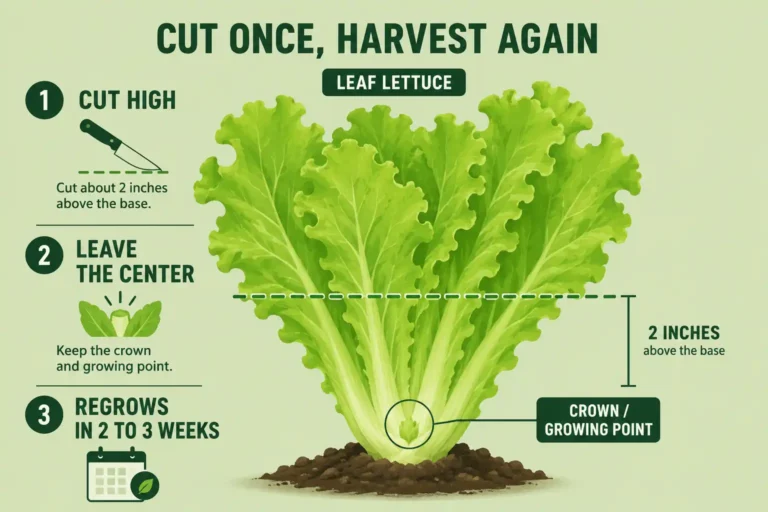
You have probably seen the “cut and come again” trick, where you snip leaves and the plant pushes out more. That is regrowth, not reproduction. The same root and crown simply keep feeding new leaves for a while.
You can also set a leftover lettuce base in shallow water and get a few small leaves. It looks neat, but it will not give you a full new head, and the stub bolts fast. For an actual new plant, seed is the only reliable path.
What This Means for Your Lettuce Patch
Lettuce keeps it simple. Heat and long days trigger bolting, the plant throws up a stalk of little yellow flowers, those flowers pollinate themselves, and each one sets a seed wrapped in fluff.
For eating, pull your heads before they bolt, because flavor drops once the stalk shoots up. For seed, let two or three strong, open-pollinated plants finish the cycle and collect the fluff when it shows. In USDA zone 6a, spring plantings bolt by midsummer right on schedule, which sets the window for seed-saving. Save a little seed once, and you may never buy a lettuce packet again.