How to Prevent Lettuce From Bolting (Keep Heads Sweet Longer)
Bolting turns a sweet head of lettuce into a bitter, woody stalk almost overnight. Once heat and long days arrive, your crop races to seed. Learning how to prevent lettuce from bolting comes down to timing, variety, and a few cooling moves.
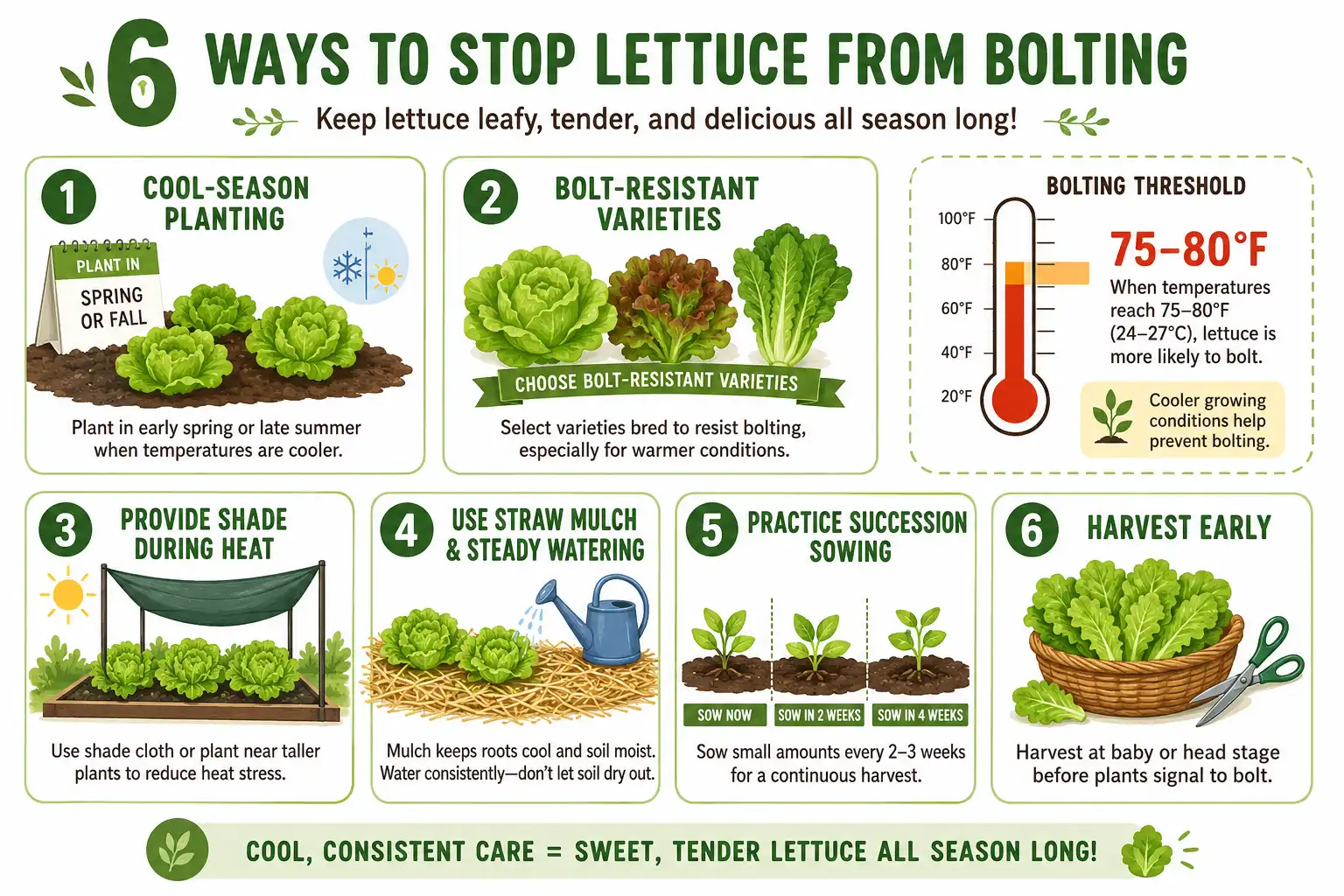
To prevent lettuce from bolting, keep plants cool and unstressed. Grow bolt-resistant varieties and plant for spring and fall. Then add afternoon shade, mulch to cool the soil, water steadily, and harvest young before the seed stalk forms.
What Makes Lettuce Bolt?
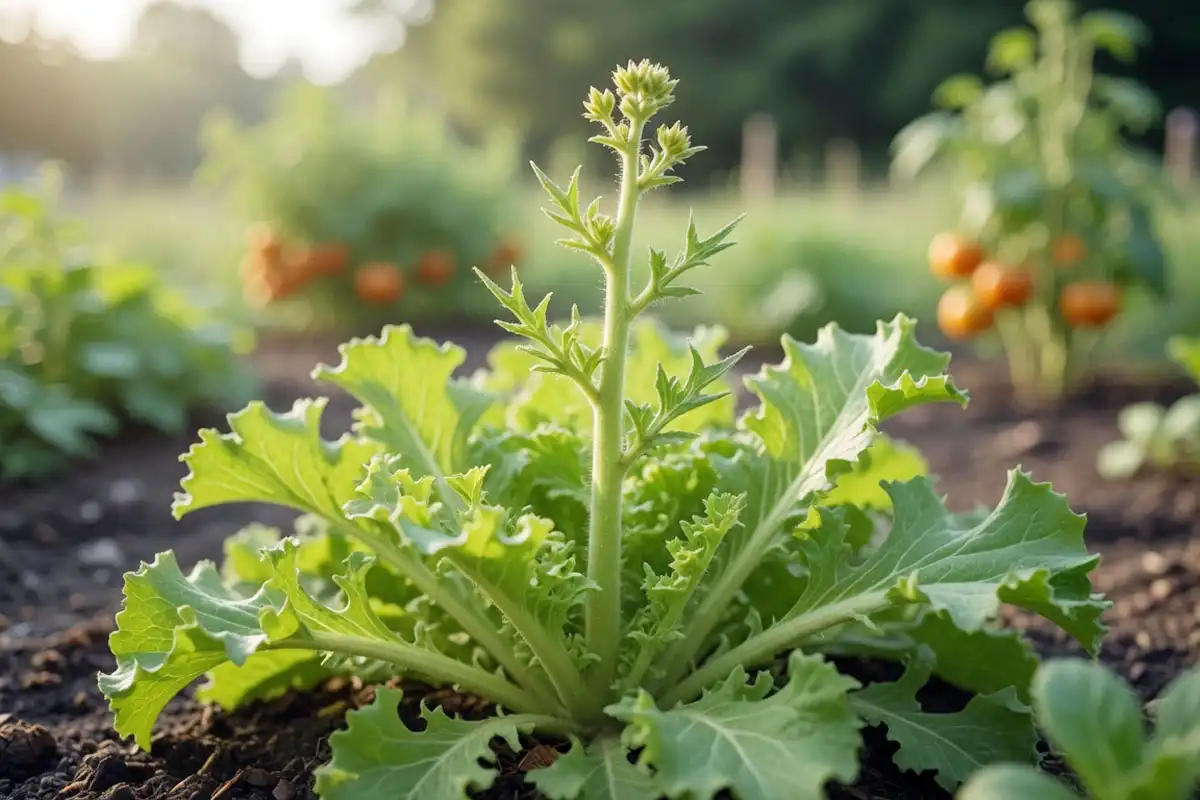
Lettuce bolts when it switches from growing leaves to making seed. Three things push that switch: heat, long days, and stress. Lettuce is a cool-season, long-day plant. University of Minnesota Extension explains that heat and lengthening days are the main bolting triggers. So as days stretch past 14 hours and the soil warms, the plant reads it as time to flower. Sudden stress speeds the process. Drought, crowding, root damage at transplanting, and nutrient shortages all act as triggers. The flower stalk shoots up, the leaves turn bitter, and the texture goes tough. That bitterness comes from a milky latex the plant makes as it matures.
At What Temperature Does Lettuce Bolt?
Most lettuce starts bolting when soil and air temperatures hold above 75°F to 80°F, especially when nights stay warm. K-State Research and Extension lists lettuce as a cool-season crop that grows best between 60°F and 65°F. Warm nights matter more than hot afternoons. When overnight lows stay above 68°F for several days, the plant rarely recovers. Long daylight then adds pressure on top of the heat. That combination peaks across the Great Plains from late June through August. In USDA hardiness zone 6a around Topeka, spring lettuce has to finish before that window opens.
How Do You Prevent Lettuce From Bolting in Hot Weather?
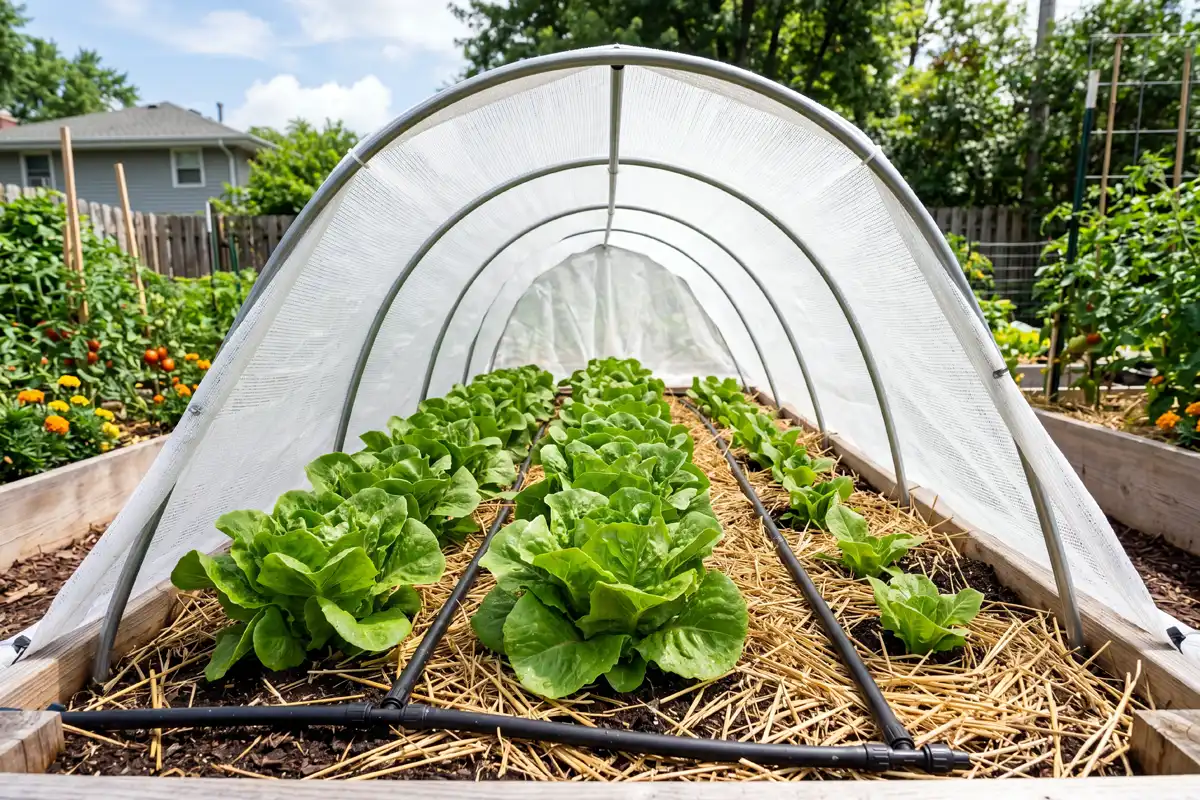
Keep the roots cool, the soil moist, and the leaves shaded. Heat is the main trigger, so every move here buys you time. Shade is the single biggest fix. A 30% to 50% shade cloth over wire hoops drops leaf and soil temperature fast. You can also tuck plants on the east side of taller crops like pole beans or corn. There they catch morning sun and afternoon cover. Most years, growing lettuce in partial shade holds far longer than full sun.
Next comes mulch. A layer of straw or shredded leaves keeps the root zone several degrees cooler and locks in moisture. Then water. Steady, even soil moisture keeps plants from stalling and racing to seed. Knowing how much water lettuce needs keeps the bed from swinging between bone dry and soaked. Drip irrigation works best because it feeds the roots without wetting the crown.
Which Lettuce Varieties Resist Bolting?
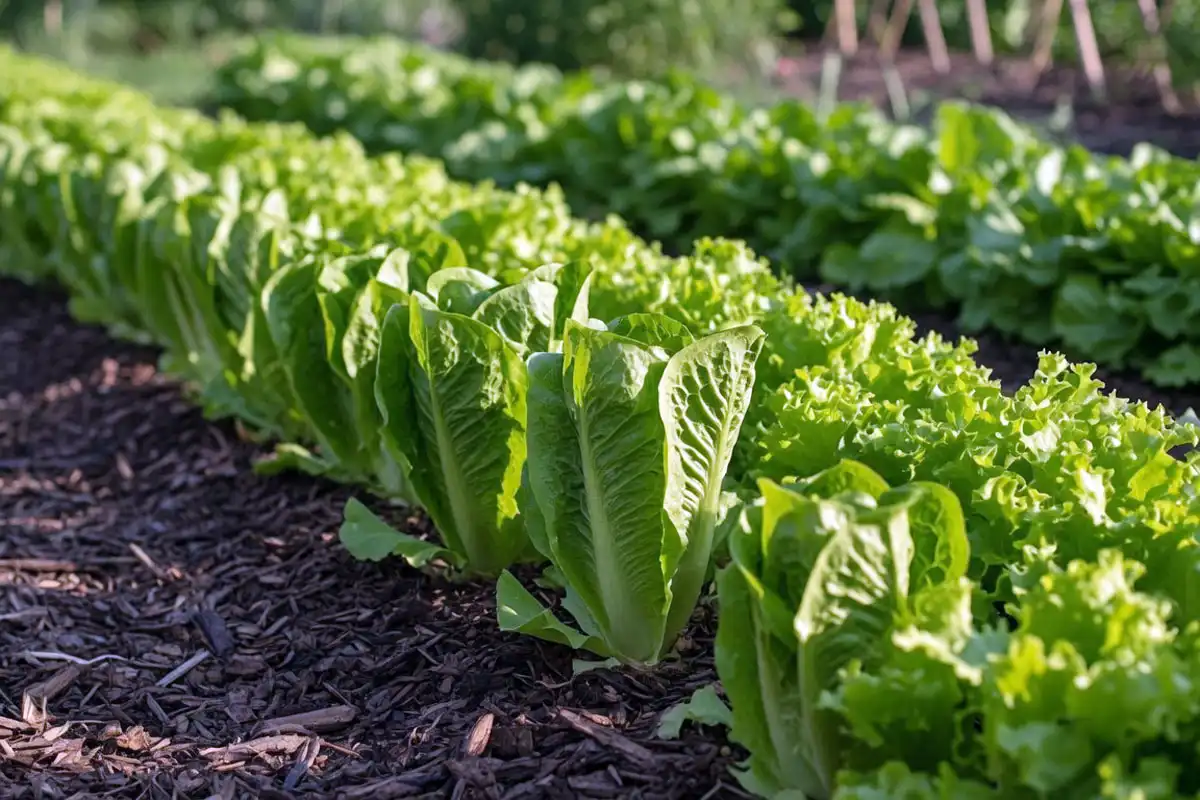
Some lettuces simply hold weeks longer before bolting. Variety choice is the easiest win, so it helps to use slow-bolt types once spring warms. For romaine, ‘Jericho’ was bred for desert heat and stays sweet well into warm weather. ‘Coastal Star’ is another tough romaine. Among summer crisp types, ‘Nevada’ and ‘Cherokee’ handle heat better than most. ‘Muir’ is one of the slowest-bolting green leaf lettuces. For butterhead, ‘Buttercrunch’ takes more heat than soft Boston types. And ‘Slobolt’ is a green leaf named for exactly what it does. Looseleaf types like ‘Black Seeded Simpson‘ also bolt later than tight heads. Seed companies such as Johnny’s Selected Seeds list bolt resistance right on the variety page, so check before you order.
When Should You Plant Lettuce to Avoid Bolting?
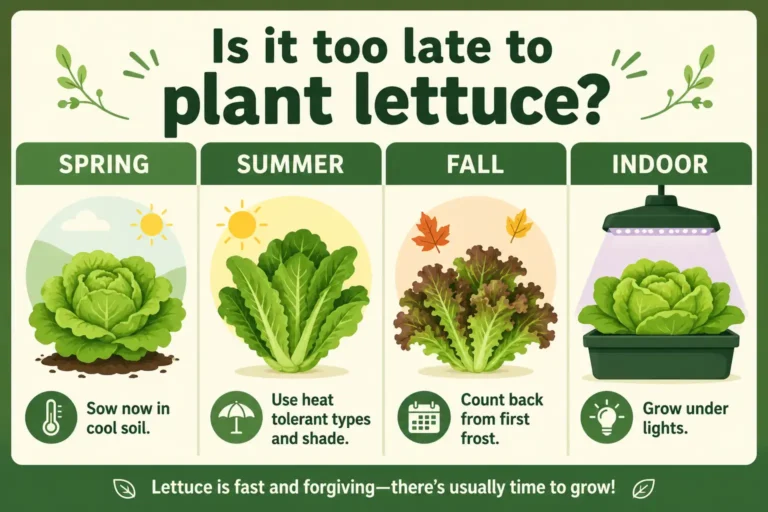
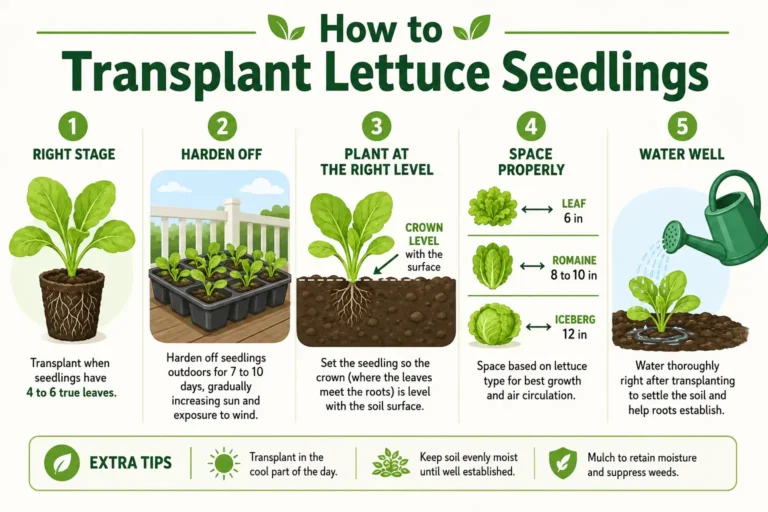
Plant so your lettuce matures in cool weather, not midsummer. Spring and fall are the safe windows across most of the country. For a spring crop, sow early so heads finish before the late-June heat. Timing matters as much as variety, and planting lettuce for the sweetest harvest follows the same cool-weather rule. Fall is even more reliable. Days shorten and temperatures fall as the crop matures, which is the opposite of bolting weather. Direct sow or set transplants for a fall lettuce crop from late August into September in zone 6a. You can also start seeds indoors during summer heat, then move them out once it cools. Succession sowing keeps it going. Drop a short row every two to three weeks, so have young plants below bolting age.
How Can You Tell Lettuce Is About to Bolt?
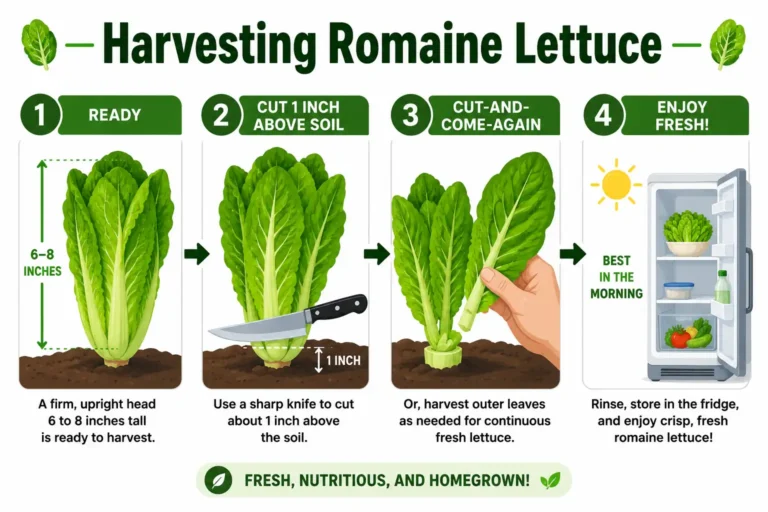
Watch for the center of the plant rising and tightening into a point. That is the first sign a seed stalk is forming. Leaves then start growing more upright and spaced out along a lengthening stem. A faint bitter edge creeps into the flavor before the stalk is obvious. On romaine and head types, the head feels firm and then suddenly elongates at the top. Once you spot any of this, harvest right away. Cutting lettuce so it keeps producing lets you take leaves early without losing the whole plant.
Can You Still Eat Lettuce That Has Bolted?
Yes, but only the early leaves, and only if you act fast. As soon as a plant bolts, bitterness builds and the texture toughens. Pick the youngest inner leaves first, then taste before adding them to a salad. Cooking down older bolted leaves tames some bitterness, the way you would with other strong greens. If a plant is too far gone, let one or two finish flowering and save the seed instead. Saving seeds from your best plants gives you free, locally adapted lettuce next year. Harvesting early is still the better plan, so cut heads young and stay ahead of the heat.
What This Looks Like in the Beds
Treat bolting as a timing problem first. Plant slow-bolt varieties in early spring, harvest before the late-June heat, then start fresh in fall. Through the hottest weeks shade cloth, straw mulch, and steady drip water. When a plant finally bolts, pick what you can and move on. Stay ahead of the heat and you get sweet lettuce for most of the year.