What Does a Rice Plant Look Like? Leaves, Stems, and Grain
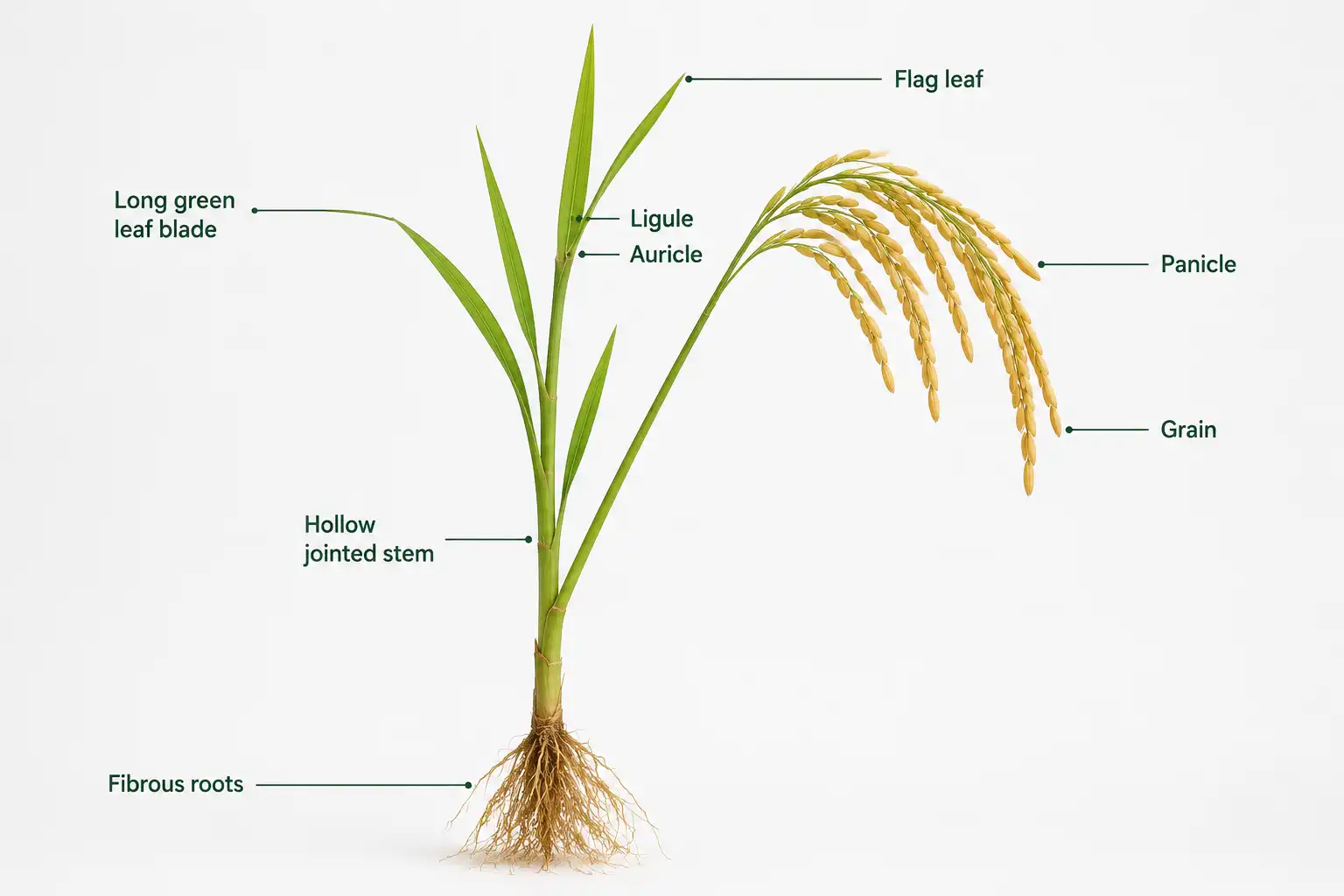
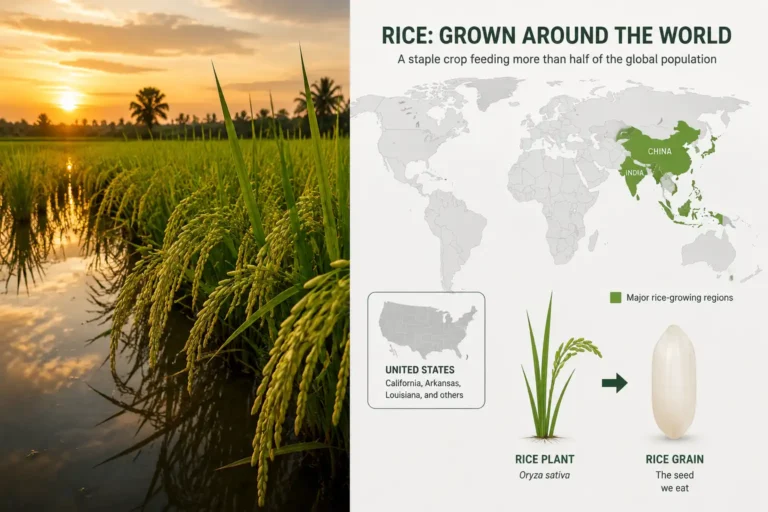
A rice plant looks like a tall clump of grass with long, narrow leaves and a branched seed head that droops as it fills. It grows about waist-high, stays green through summer, then turns golden at harvest.
A rice plant looks like a bushy clump of grass, usually 3 to 4 feet tall. Long green blades rise from hollow, jointed stems. At the top sits a branched, drooping grain head that ripens from green to golden.
What Does a Rice Plant Look Like Overall?
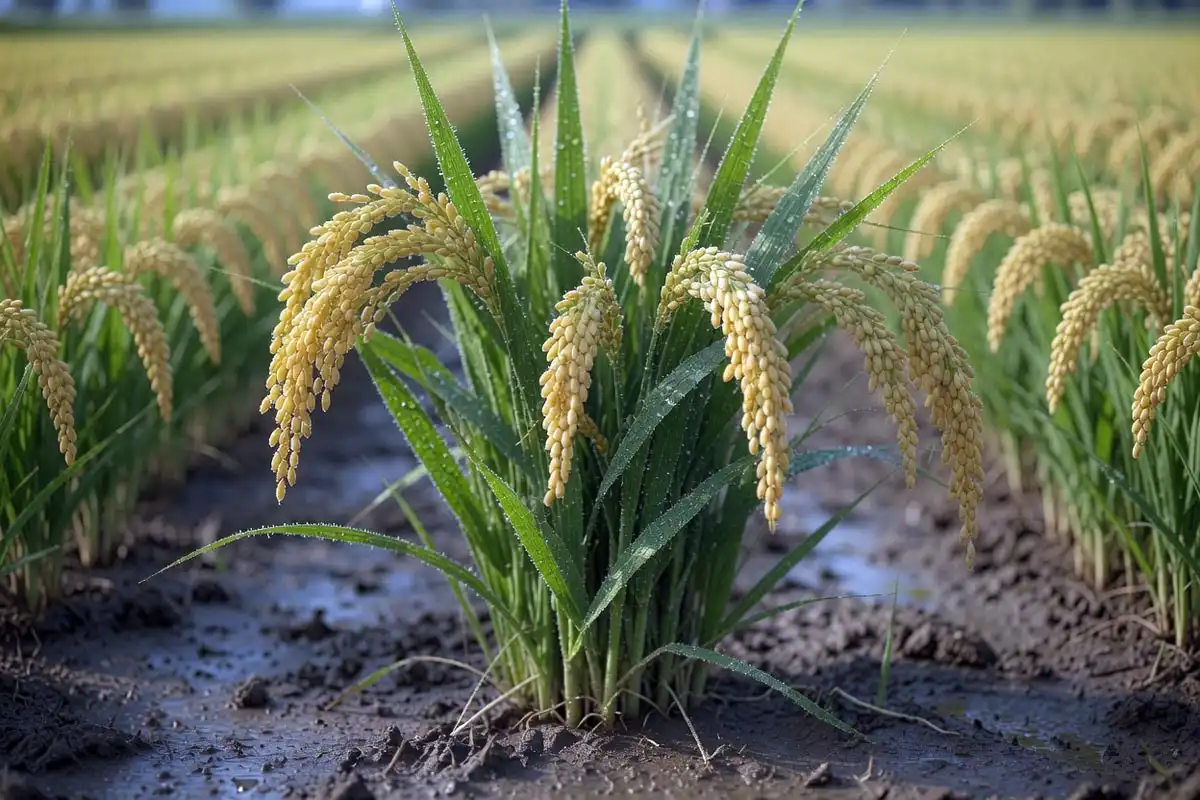
A rice plant looks like a dense tuft of tall grass growing from one crown. Most modern U.S. varieties stand about waist-high, 3 to 3.5 feet to the top of the grain. Older, traditional types can reach chest-high or taller.
The whole plant stays bright green through summer. Then it fades to gold and tan as the grain ripens. Each plant sends up several stems, so one seed becomes a small bushy hill.
Rice (Oryza sativa) is a member of the grass family (Poaceae), like the wheat and sorghum in Kansas. So its parts follow a familiar pattern: fibrous roots, jointed stems, long blades, and a seed head up top. Still, a few features set rice apart, and cover those below.
Learn more: How to measure rice moisture
The Main Parts of a Rice Plant
A rice plant has five parts worth knowing: the roots, stems, leaves, panicle, and grain. Here is what each looks like up close.
Roots
Rice grows a fibrous root system, not a single taproot. Thin white roots spread out in a dense mat near the surface. Two kinds show up over the season. First, short seminal roots feed the young seedling. Then thicker adventitious roots grow from the lower stem nodes and take over. In flooded fields, these roots pull oxygen down through the hollow stem.
Stems (Culms) and Tillers
The stem, or culm, is round and hollow, jointed like a drinking straw. Solid joints called nodes divide it into segments. Each node carries one leaf and one bud. That bud can grow into a side shoot, which farmers call a tiller. One plant may push out 3 to 4 tillers in a field stand. Each tiller can carry its own grain head. Together they form the bushy clump you see.
Leaves
Rice leaves are long and narrow. Each blade is flat, with a pointed tip and slightly rough edges. Lower leaves can grow 12 to 20 inches long and about half an inch wide. They grow one per node, alternating down each side of the stem. A main stem usually makes 14 to 15 leaves before heading. The topmost leaf, the flag leaf, stands just below the grain head and feeds the filling grain.
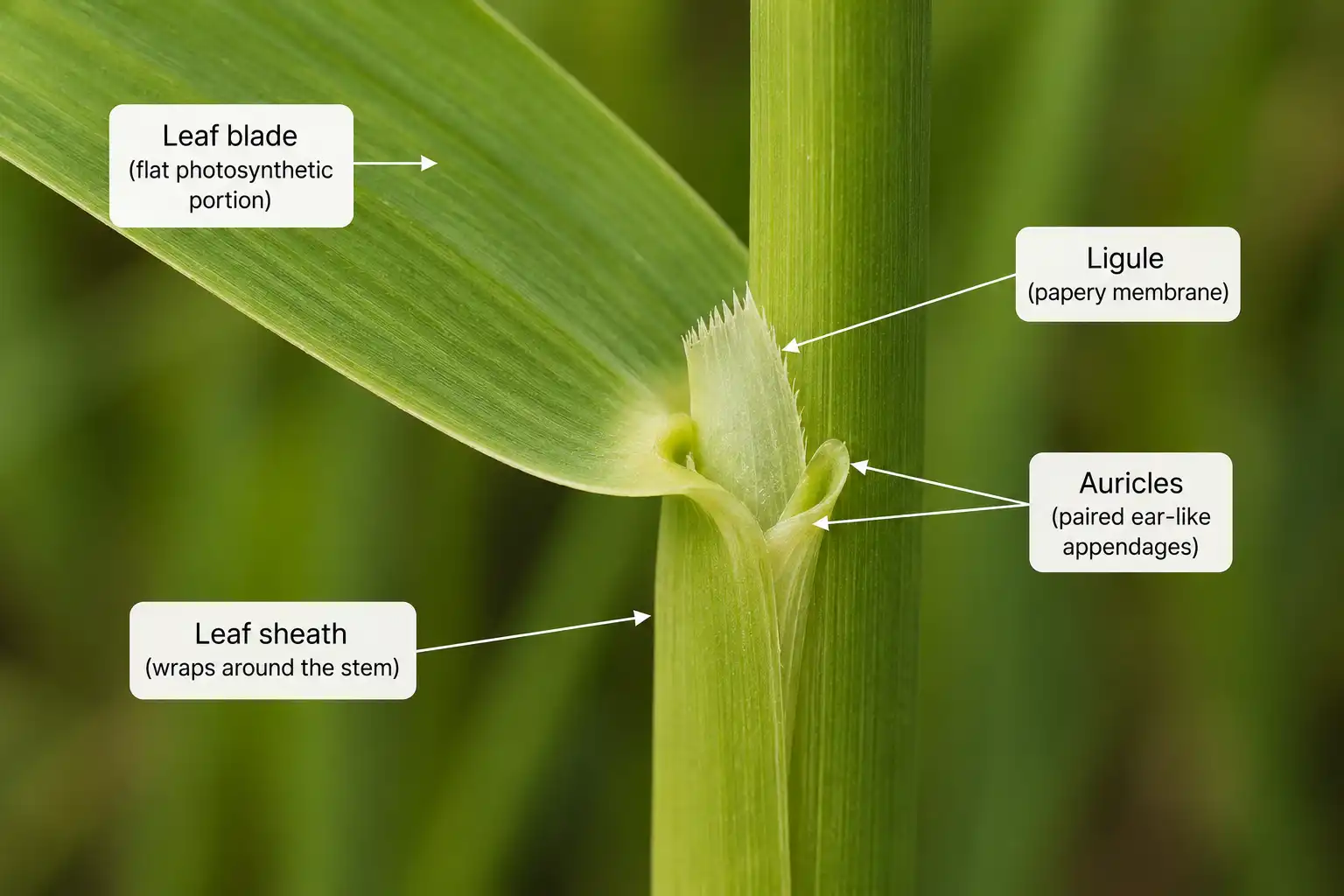
Here is the key detail to tell rice from lookalike grasses. Right where the blade meets the stem, rice shows two small features together. One is a papery flap called the ligule. The other is a pair of clasping, ear-like tabs called the auricles. Rice is the only common grass with both. So if a young grassy plant in a wet field shows both, it is almost certainly rice.
The Panicle (Grain Head)
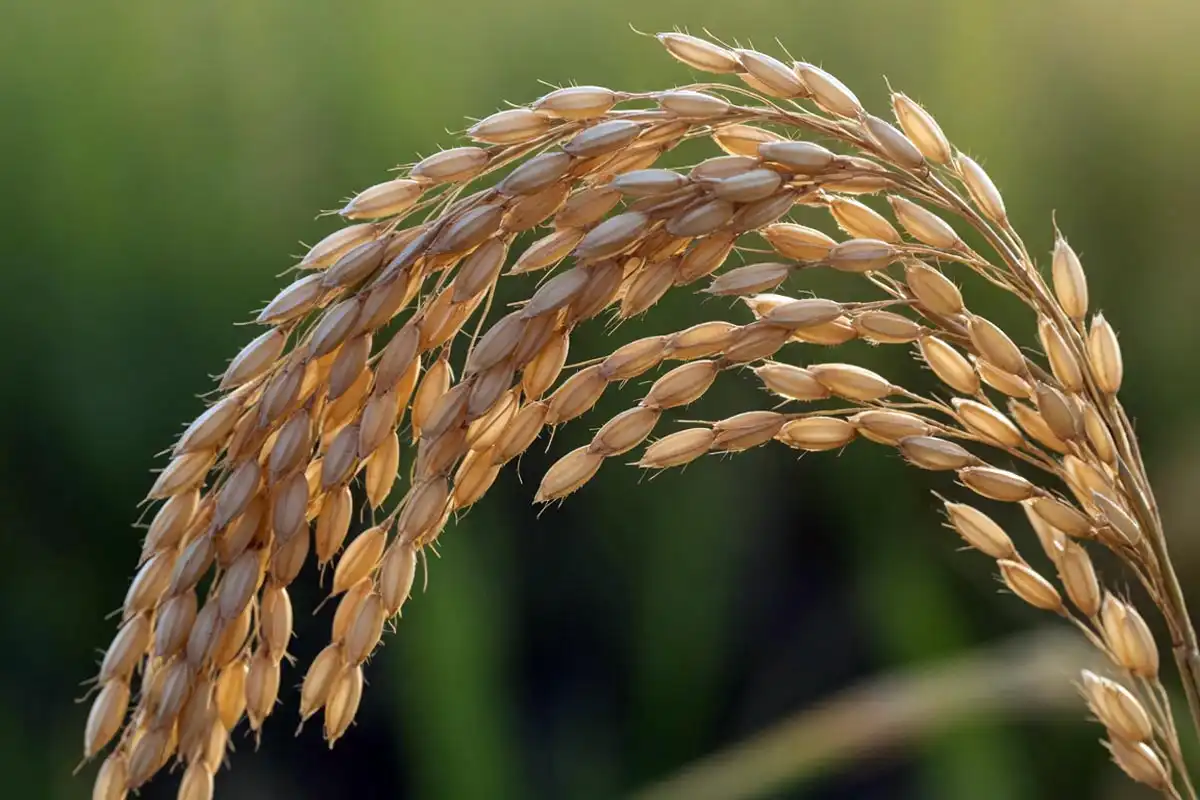
The panicle is the branched seed head at the very top of each stem. Farmers also call it the rice head. It looks like a loose, open spray of tiny grains on fine stalks, usually 6 to 12 inches long. A single panicle can hold 100 to 350 spikelets, and each spikelet becomes one grain. While it fills, the panicle bends over and nods toward the ground. That drooping arch is a good sign the crop is ripening.
The Grain
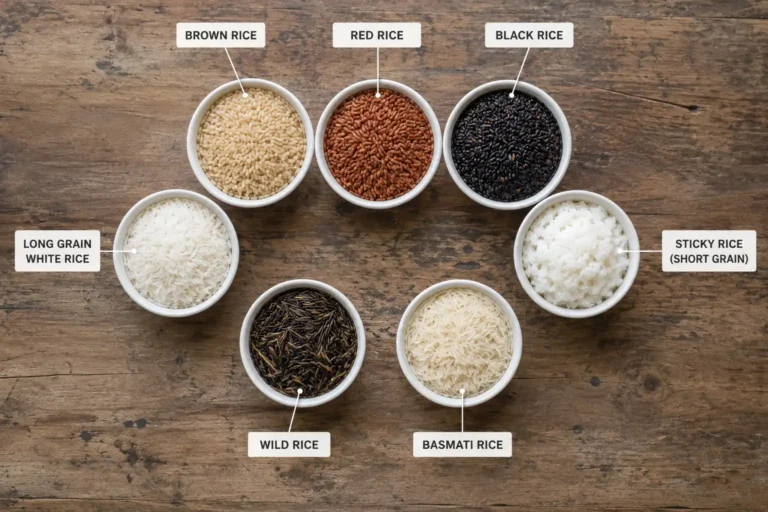
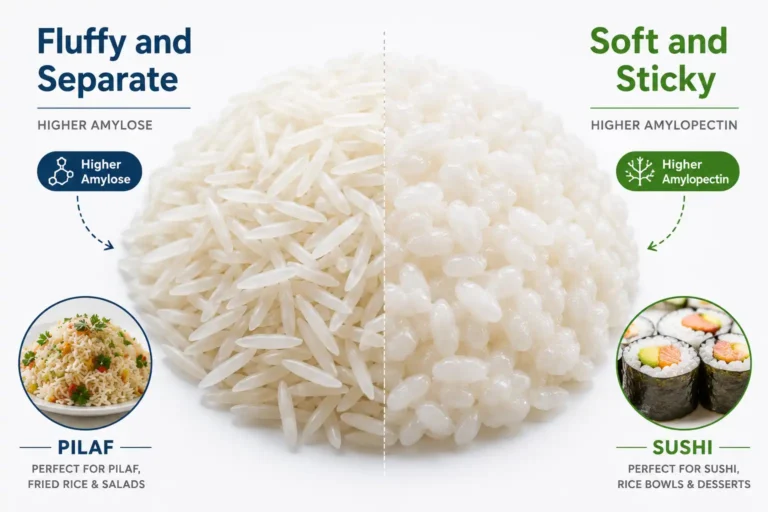
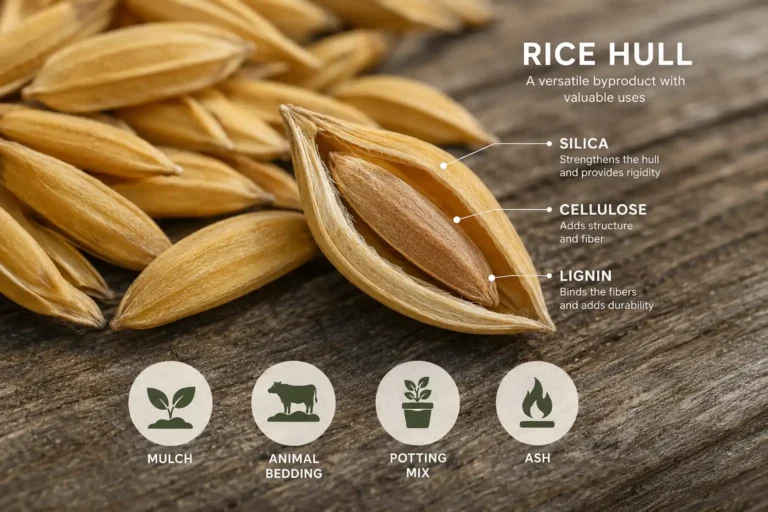
Each grain sits inside a tough outer shell. Two husk pieces, the lemma and palea, wrap the seed to form each rice hull. The hull is a slim, pointed capsule, straw-gold to tan, about a third of an inch long. Some varieties grow a stiff bristle, called an awn, on the tip. Most U.S. rice, though, is awnless or nearly so. Under the hull sits the brown grain. Mill that grain down, and you get the white rice on your plate.
Learn more: Pusa Basmati Rice
What Does a Rice Plant Look Like at Each Growth Stage?
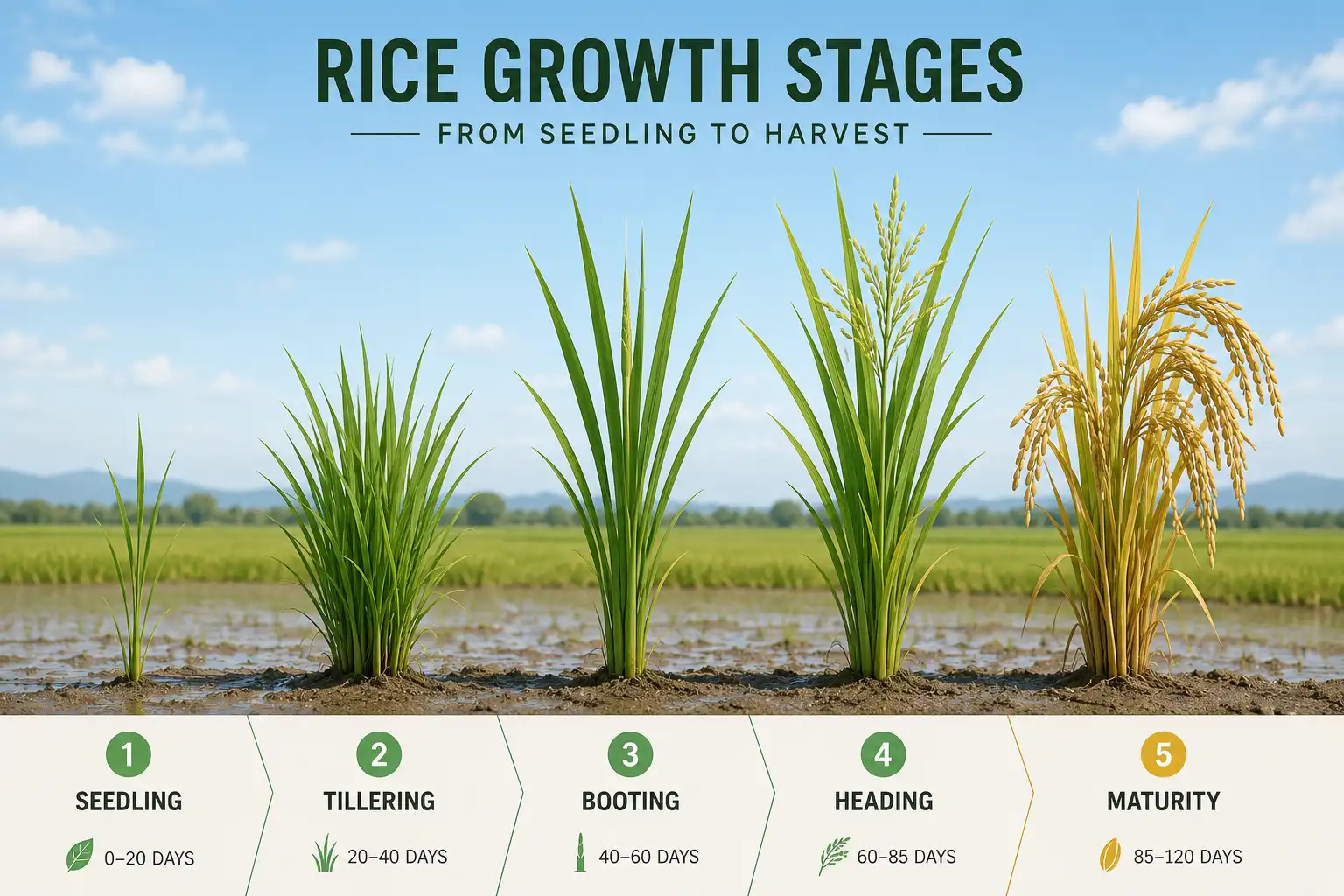
A rice plant changes shape a lot from sprout to harvest. It starts as a thin grass blade. Next it bushes out with tillers. Then it shoots up a tall stem. Finally it raises a green head that ripens to gold. Most U.S. crops run that full course in roughly 115 to 160 days. Here is the season, stage by stage.
Seedling Stage
A rice seedling looks like a single thin blade of grass, pale to bright green. For the first two to three weeks it stands just 2 to 6 inches tall. At this stage it mimics a weedy grass, so check for that ligule and auricle pair.
Tillering Stage
Now the plant bushes out. Over a few weeks, side shoots (tillers) rise from the base, so one seedling turns into a leafy clump. The stand looks like a solid green carpet of grass across the field. This stage sets how many grain heads the plant will carry.
Stem Elongation and Booting
Next the stems stretch upward and the plant gains most of its height. Late in this phase, the flag leaf unfurls at the top. Soon after, the developing panicle swells inside the flag leaf sheath, a stage farmers call booting. You can feel the fat, rounded bulge before the head shows.
Heading and Flowering
The panicle pushes out of the sheath, and this is heading. Within a few days, tiny florets open during the warm midday hours. Rice mostly pollinates itself, so you will not see showy flowers, just small yellow anthers hanging out. The heads are green and stand fairly upright at first.
Ripening and Maturity
Finally the grain fills and the color shifts. The milk stage brings a white, milky liquid inside each kernel. Then it firms to a dough texture, and at last the grain goes hard. The whole plant turns golden brown, and the heavy panicles bow low. That golden, nodding field is the classic mature-rice look.
What Does a Rice Field Look Like?
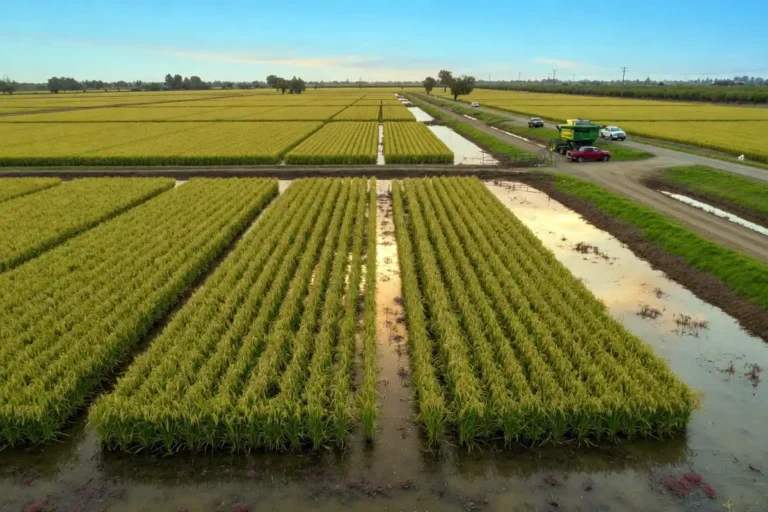
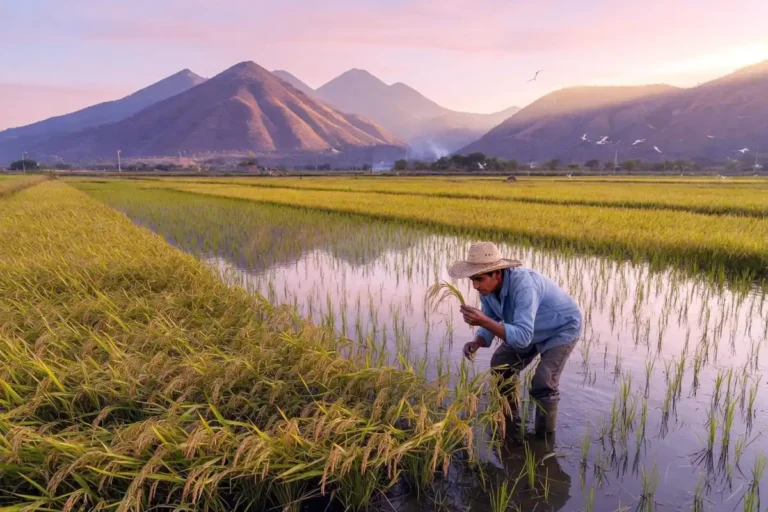
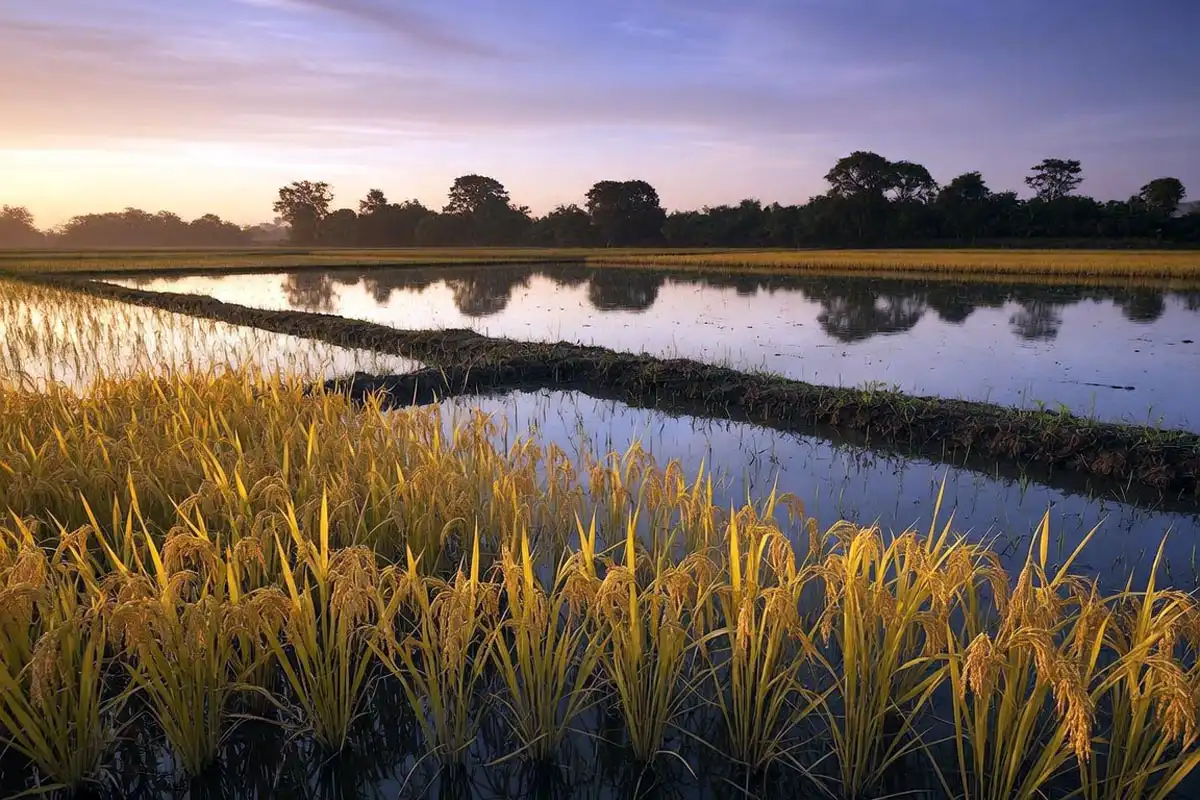
A mature rice field looks like a flat sheet of golden grass, often standing in shallow water. Most U.S. rice grows in leveled, diked paddies that farmers flood on purpose. The steady water controls weeds and evens out temperature. That is the main reason rice paddies stay flooded. From the road, an early-season paddy reads as a bright green lawn on water. By harvest it glows gold. Not all rice needs standing water, though. Some upland types grow in dry fields, but nearly all U.S. rice is the flooded kind. You will see it across Arkansas, Louisiana, Texas, and California. Most of that crop grows in California’s Sacramento Valley.
How to Tell a Rice Plant From Other Grasses
You tell rice apart by three things: the ligule-and-auricle pair, the drooping branched head, and the wet ground it favors. A few crops and weeds can fool you at a glance. Here is how the common ones differ.
| Plant | Seed head | Grows in | Quick tell |
|---|---|---|---|
| Rice | Loose, branched, drooping | Flooded or wet fields | Has both a ligule and auricles |
| Wheat and barley | Tight, upright spike | Dry fields | Stiff head that never nods |
| Sorghum | Thick, dense, often reddish | Dry fields | Much taller, bold head |
| Wild rice (Zizania) | Tall, open, spindly | Ponds and marshes | Aquatic and very tall |
The wet ground plus that ligule-and-auricle combo is the fastest tell. Sorghum can look closest from a distance, so if you want a side-by-side, see how a sorghum head looks. And do not confuse the crop with true wild rice, genus Zizania. That is a taller, marsh-loving plant, though you can still grow wild rice in shallow water.
Reading a Rice Plant at a Glance
Spotting a rice plant comes down to a short checklist. Look for a grassy clump, hollow jointed stems, and long narrow leaves. Then check the blade base for the ligule and auricle pair. Next, look up for a branched head that nods as it fills. Add shallow standing water, and you are looking at rice. Even in Kansas, where wheat grow, that same grass blueprint makes rice easy to read.