What Does Sorghum Look Like? 10 Visible Traits You Should Know
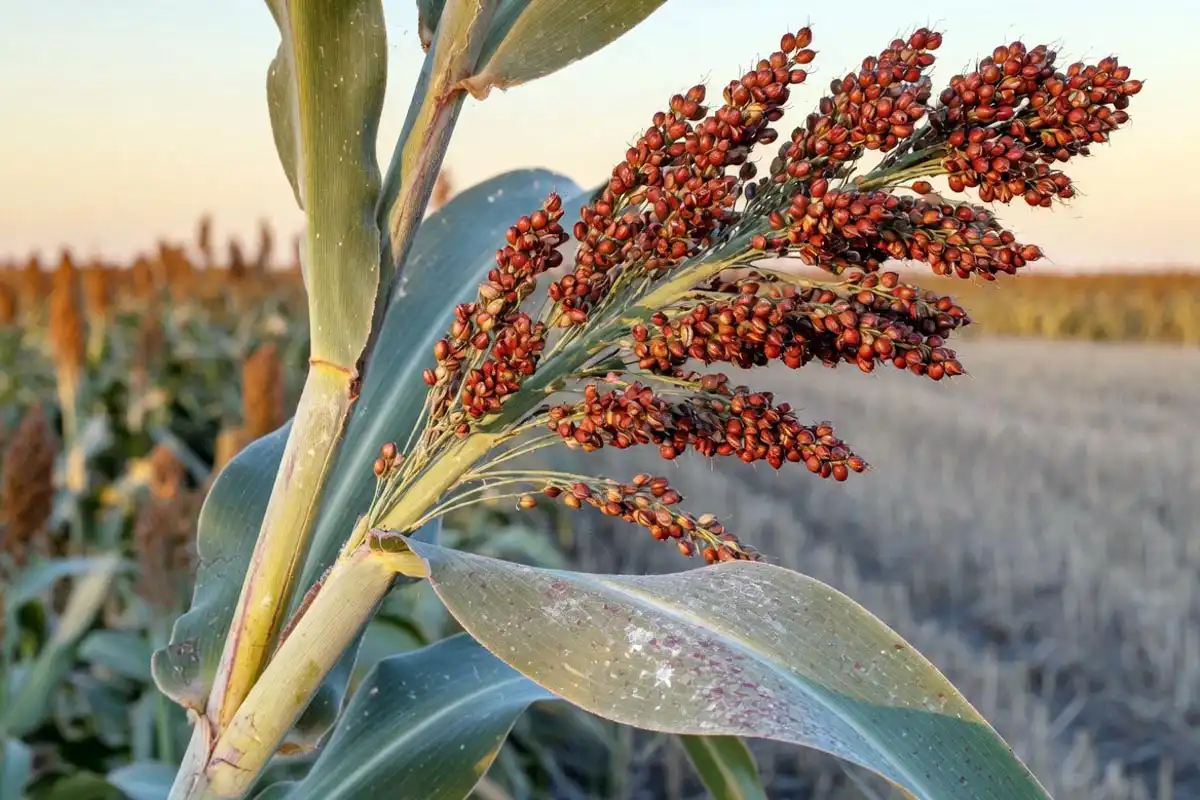
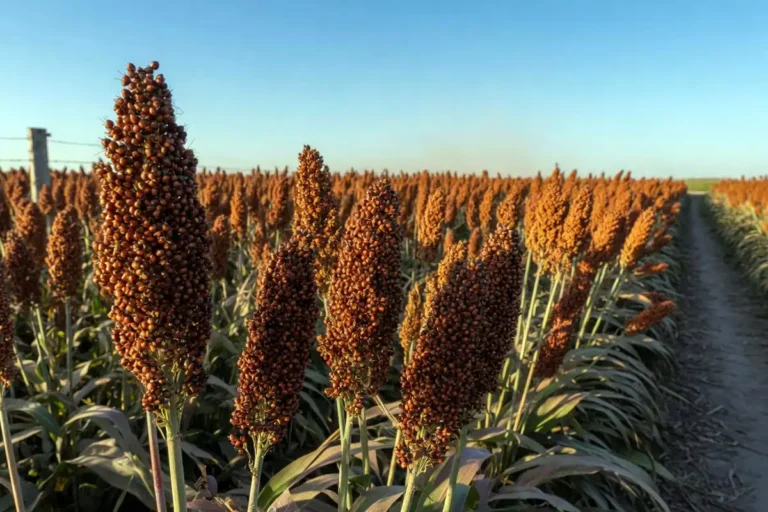
Sorghum looks like a tall grass with thick jointed stalks, long narrow blue-green leaves, and a bushy seed head on top filled with small round grains. This guide walks you through every visible feature so you can spot sorghum in a field, garden, or feed store with confidence.
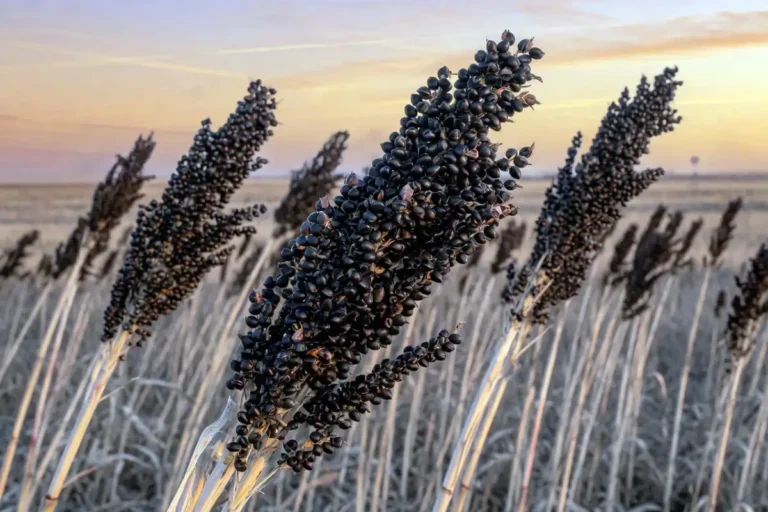
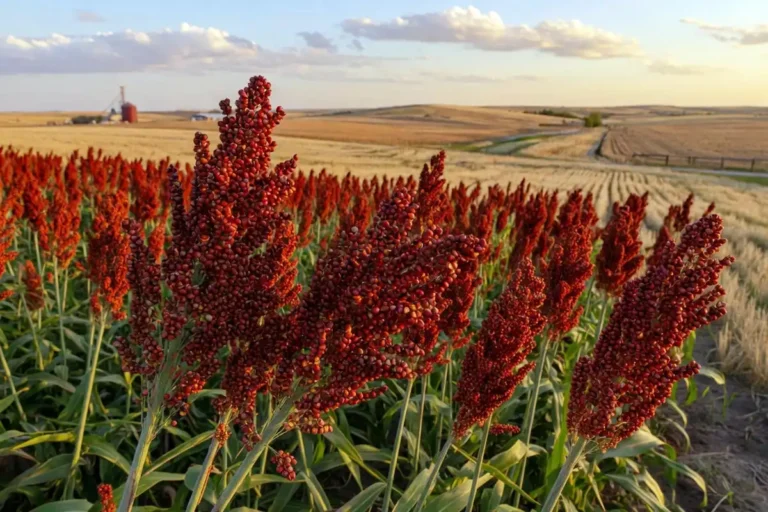
Sorghum is a cereal grass standing 2 to 15 feet tall, with corn-like stalks, blue-green waxy leaves, and a dense panicle of small grains at the top. Grain colors range from white and tan to bronze, red, brown, and near-black depending on variety.
What Sorghum Looks Like in the Field
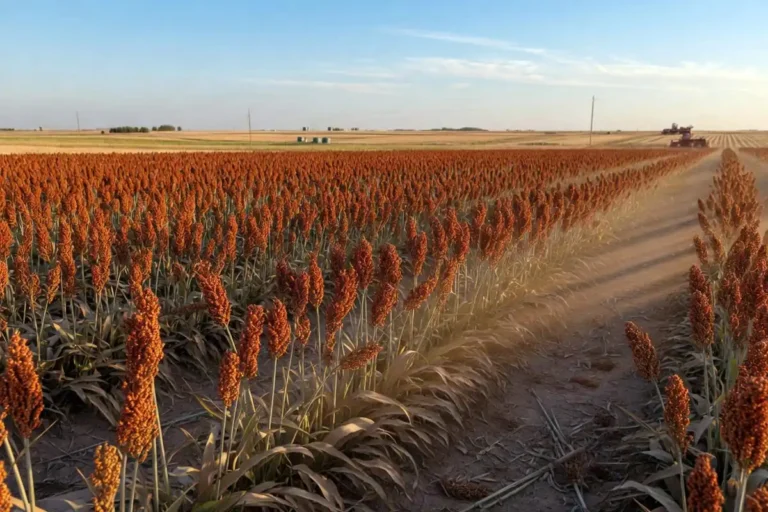
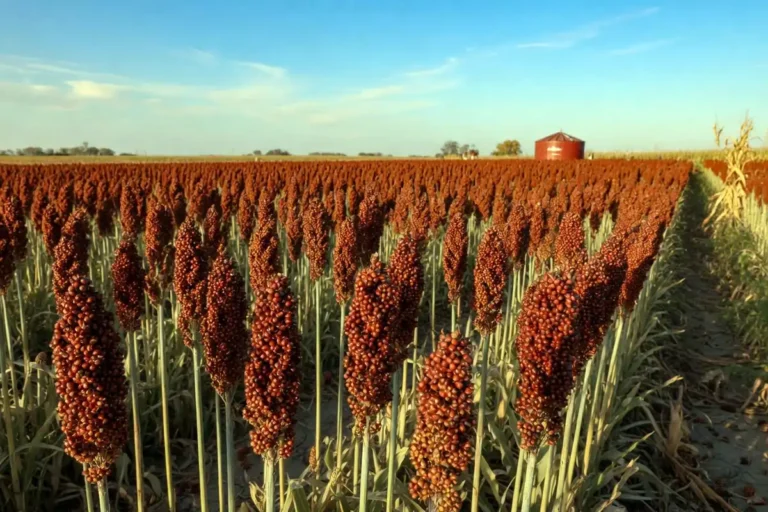
A mature sorghum plant looks like a slimmer cousin of corn from a distance. Up close, the differences become clear. The stalk stands upright and jointed, the leaves spread out at angles, and the top of the plant carries a tight cluster of seeds called a panicle. That seed head is the fastest way to identify sorghum at a glance.
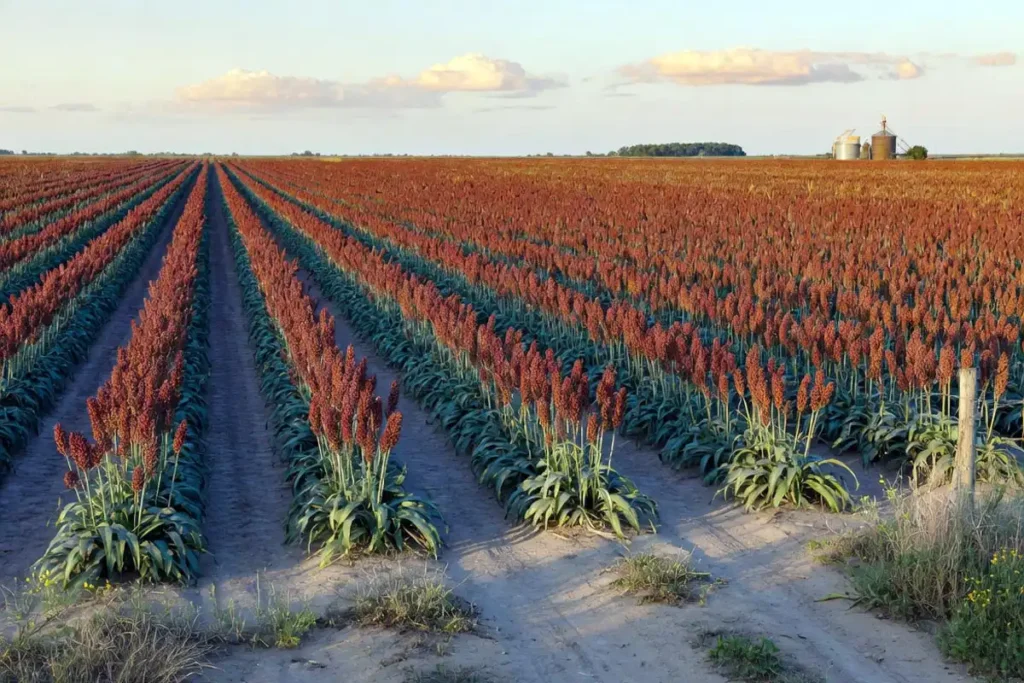
Sorghum is a common crop in Kansas each season, and even growers familiar with corn often pause to ask which variety was planted, since each type carries its own look.
Sorghum Plant Height and Stalk
Height depends on the type. Grain sorghum (also called milo) usually grows 2 to 5 feet. Sweet sorghum reaches 6 to 12 feet. Forage and biomass types push past 15 feet in good soil.
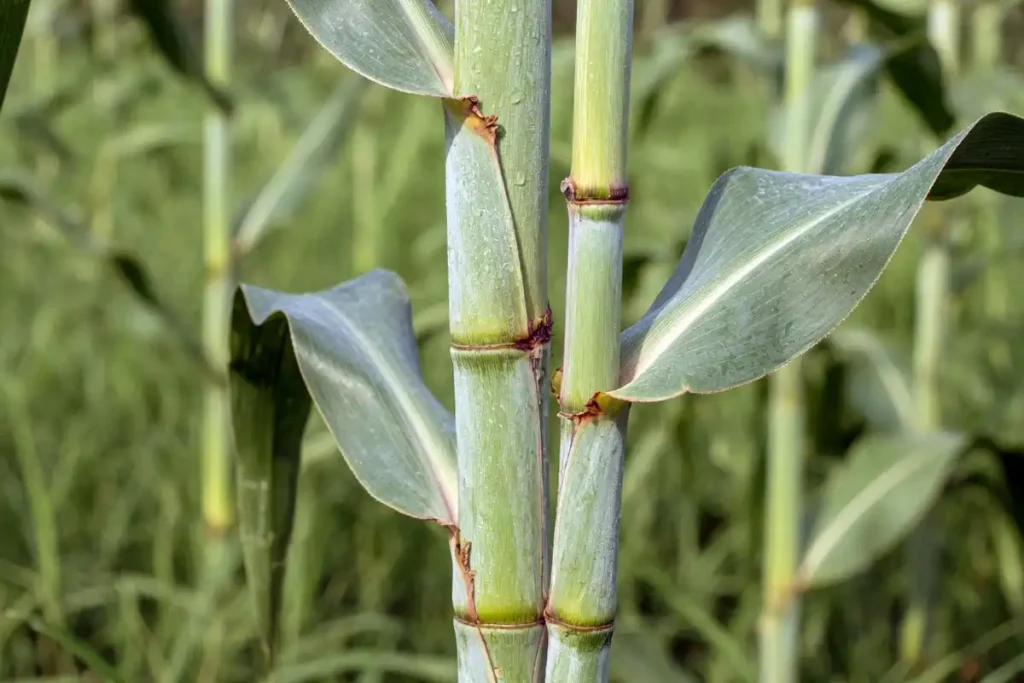
The stalk is solid, round, and jointed every few inches. Each joint (called a node) can sprout a leaf or a tiller. Mature stalks turn from green to tan or reddish as the plant dries down. If you want timing tips for similar warm-season cereals, this planting calendar for grain crops lays out the windows by region.
Leaves of the Sorghum Plant
Sorghum leaves look like wide grass blades. Each leaf is 1 to 3 inches across and 12 to 30 inches long. The color is blue-green with a waxy bloom that helps the plant hold moisture during dry summers.
Leaves attach to the stalk in an alternating pattern. The midrib runs straight down the center, white on the underside. If you notice early yellowing, check your NPK fertilizer plan for crops because sorghum responds well to nitrogen.
The Sorghum Seed Head (Panicle)
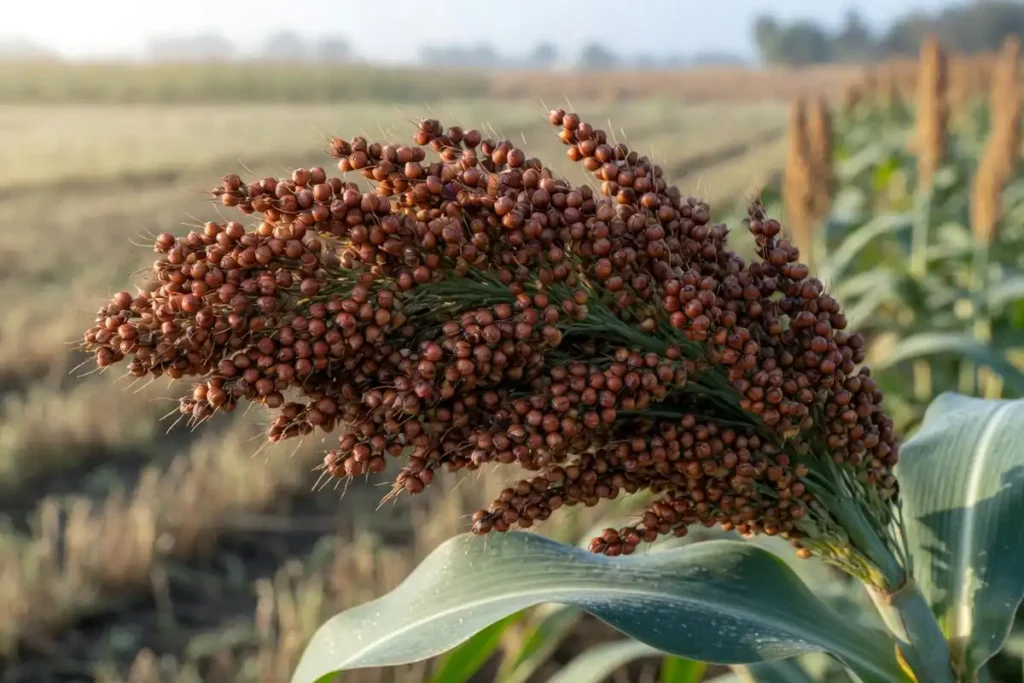
The panicle sits at the very top of the plant and holds hundreds of small grains. Shape varies by variety:
- Grain sorghum: tight, compact, oval or club-shaped panicle
- Sweet sorghum: looser, more open panicle
- Broomcorn: long spreading branches that resemble a kitchen broom
- Sudangrass and forage hybrids: thin, airy panicles with fewer seeds
A grain sorghum panicle can hold 800 to 3,000 seeds, depending on variety and growing conditions, per research from Kansas State University.
Sorghum Grain Colors and Shapes
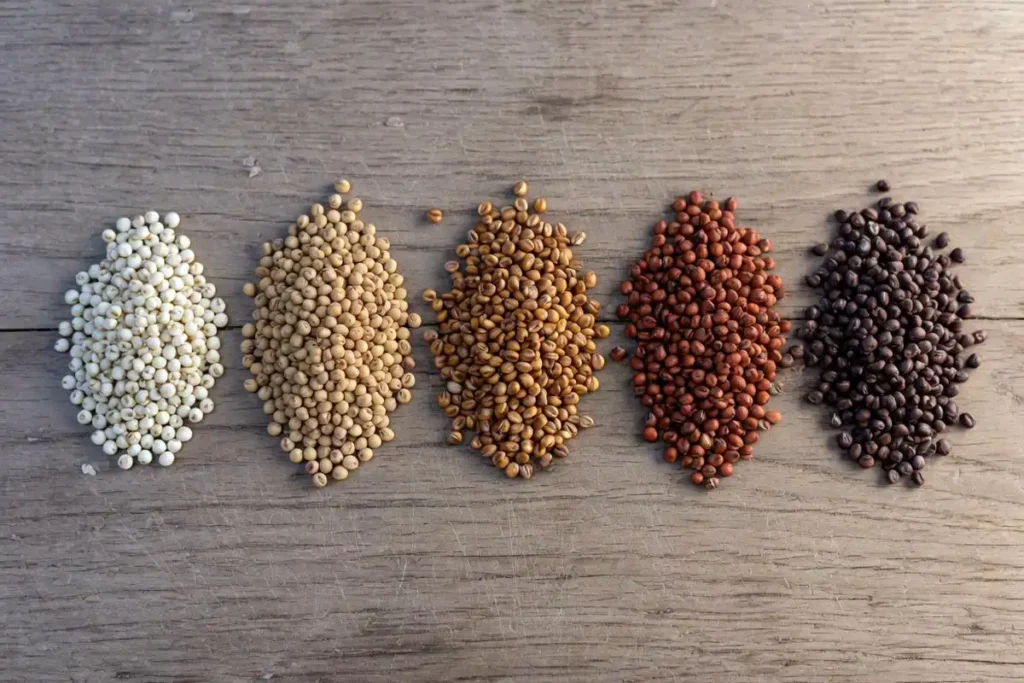
Sorghum seeds are small and round, about 4 millimeters across, similar in size to a peppercorn. Colors include:
- White or cream
- Tan or yellow
- Bronze and red
- Brown
- Dark purple to near-black
White and tan grains are most common in food-grade sorghum. Red and bronze types serve livestock feed markets. After harvest, dry kernels feel hard and hold their shape under firm pressure.
Different Types of Sorghum and How They Look
Each main type carries a distinct appearance:
- Grain sorghum (milo): short thick stalks, dense panicle, red or bronze grain
- Sweet sorghum: tall juicy stalks, open panicle, used for syrup
- Forage sorghum: tall and leafy, smaller seed heads
- Sorghum-sudangrass hybrids: grassy, fine-stemmed, often cut for hay
- Broomcorn: long fibrous panicle branches used for brush
If you grow sudangrass for livestock feed, our notes on cutting sorghum-sudan grass for hay cover the right mowing stage.
How Sorghum Looks at Different Growth Stages
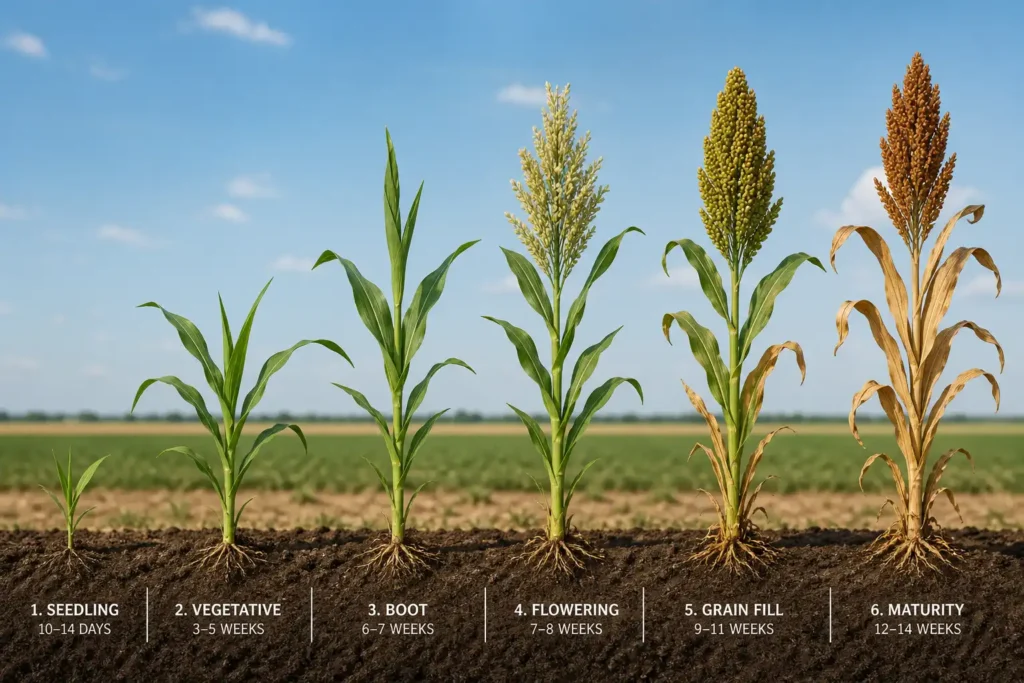
A sorghum plant changes its look as it matures:
- Seedling (week 1 to 2): thin grass-like shoots, 2 to 6 inches tall
- Vegetative (week 3 to 7): upright stalks with broad leaves
- Boot (week 8 to 9): swollen sheath where the panicle forms
- Flowering (week 10): small yellow anthers appear on the panicle
- Grain fill (week 11 to 14): panicle grows heavy, seeds harden
- Maturity (week 15 to 18): stalks dry, seeds turn their final color
Knowing these stages helps with timing decisions, and our guide on knowing when crops are ready to harvest follows the same logic.
How to Tell Sorghum Apart from Corn
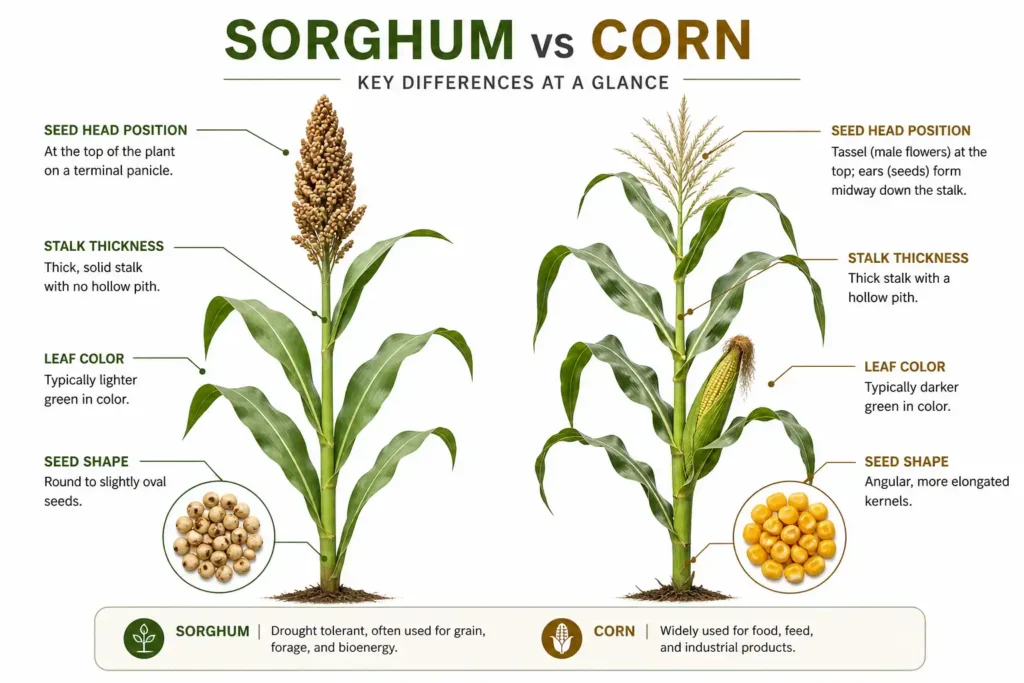
Sorghum and corn share the grass family but look different up close:
| Feature | Sorghum | Corn |
|---|---|---|
| Seed location | Top panicle | Side ear |
| Stalk | Solid, slimmer | Pithy, thicker |
| Leaf color | Blue-green, waxy | Bright green |
| Seed shape | Round, small | Flat, large |
| Mature height | 2 to 15 feet | 6 to 10 feet |
The seed head position is the fastest tell. Corn forms ears along the stalk inside husks. Sorghum carries grain at the top, fully exposed. The USDA Plants Database lists these traits in detail.
Common Mistakes When Identifying Sorghum
A few things to watch for:
- Mistaking young sorghum for corn seedlings (corn leaves are wider and brighter green)
- Calling sudangrass “sorghum” without checking the panicle
- Confusing broomcorn with ornamental millet
- Assuming red grain means sweet sorghum (red color is more common in milo)
If you keep grain after harvest, our notes on crop storage methods help protect dry sorghum from moisture and pests.
Safety Notes
Sorghum forage can build up prussic acid (cyanide) when stressed by frost or drought. Never graze livestock on stressed sorghum or sudangrass until the plant fully cures. Wait at least 7 days after a killing frost before grazing or feeding fresh forage.
FAQs
Does sorghum look like corn?
What color is sorghum grain?
How tall does sorghum grow?
What does a sorghum seed head look like?
Is sorghum a grain or a grass?
Conclusion
Sorghum stands out by its top-mounted panicle, blue-green waxy leaves, and round colorful grains. Once you spot the panicle, telling grain, sweet, forage, and broom types apart takes a quick second look. Walk a sorghum field with these features in mind and identification becomes second nature.