What Is a Rice Hull? Uses, Composition, and Value
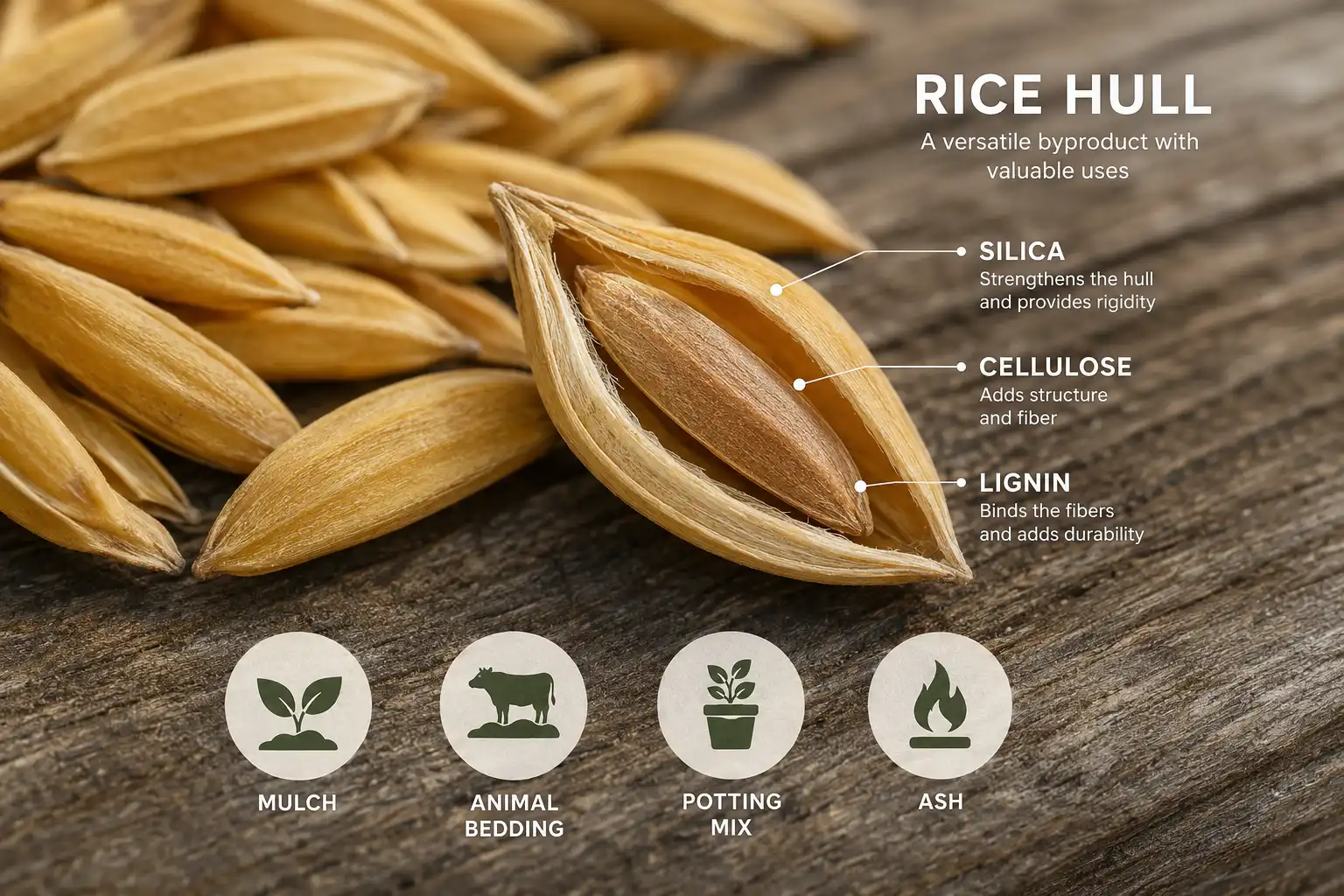
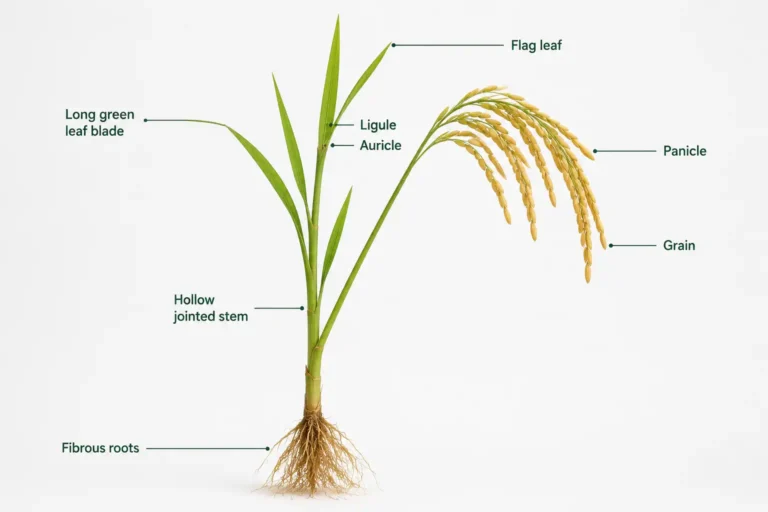
A rice hull is the hard outer shell that protects a rice grain while it grows. Mills strip it off before rice reaches your plate. Most people toss it aside, but this tough little husk earns its keep on farms and in gardens across the country.
A rice hull is the tough, silica-rich outer husk of a rice grain that mills strip away during processing. Farmers and gardeners use rice hulls as mulch, animal bedding, a perlite substitute in potting mix, and fuel for energy.
What Is a Rice Hull Made Of?
A rice hull is mostly fiber and silica. Cellulose and hemicellulose make up close to half its weight. Lignin adds another quarter or so. The rest is silica, usually 15 to 20 percent. That is what makes the hull so hard and slow to rot.
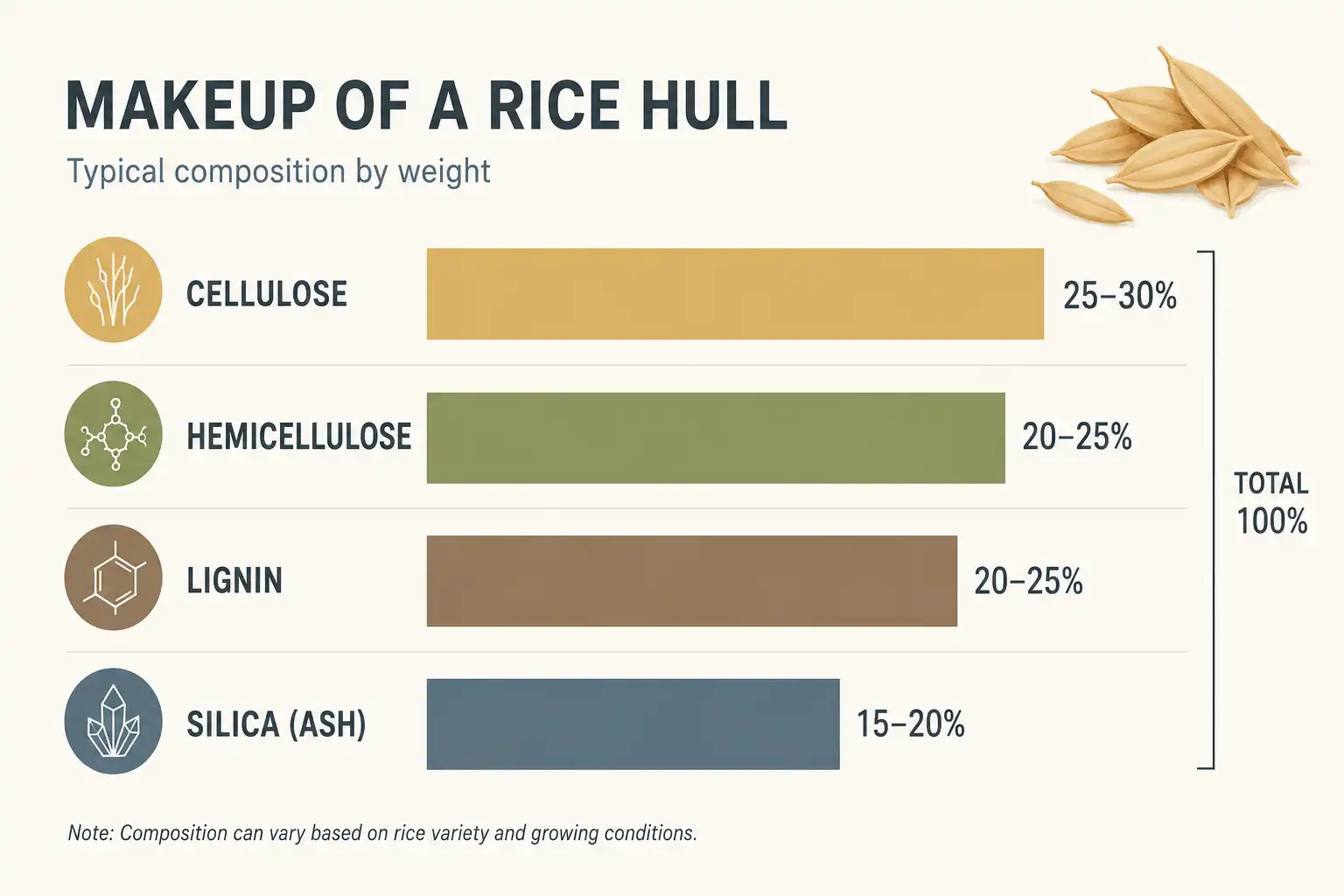
That silica does not come from nowhere. The rice plant pulls it out of the soil as silicic acid, then stores it in the hull as the grain fills. So each hull ends up with a gritty, glass-like coating. Because of that coating, rice hulls shed water, resist compaction, and take a couple of years to break down in soil.
Where Do Rice Hulls Come From?
Rice hulls come straight from the rice milling process. When harvested paddy rice reaches a mill, the first step strips the inedible outer husk off each grain. That husk is the rice hull. It makes up about 20 percent of the weight of harvested rice. So a mill turns out a mountain of hulls every season.
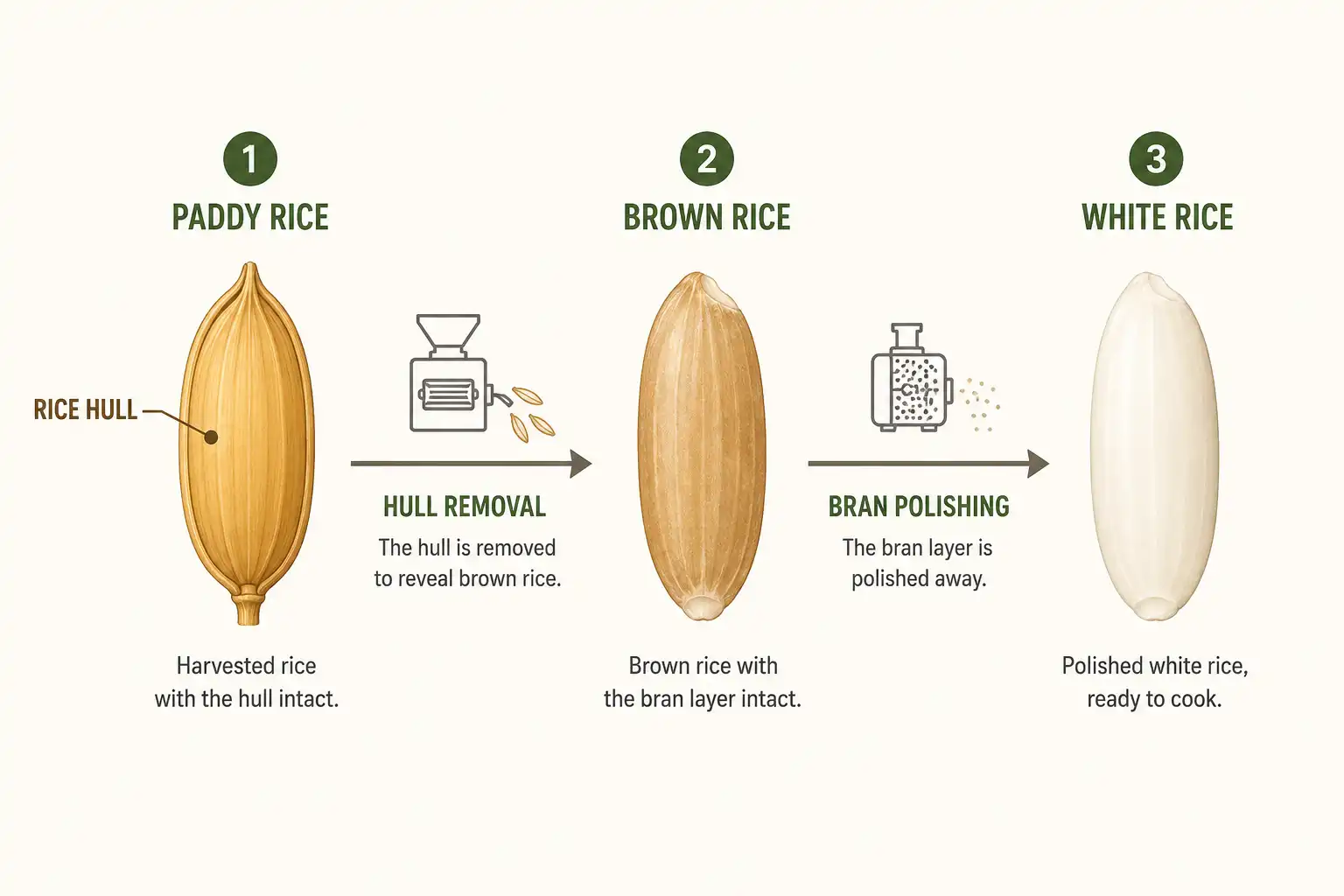
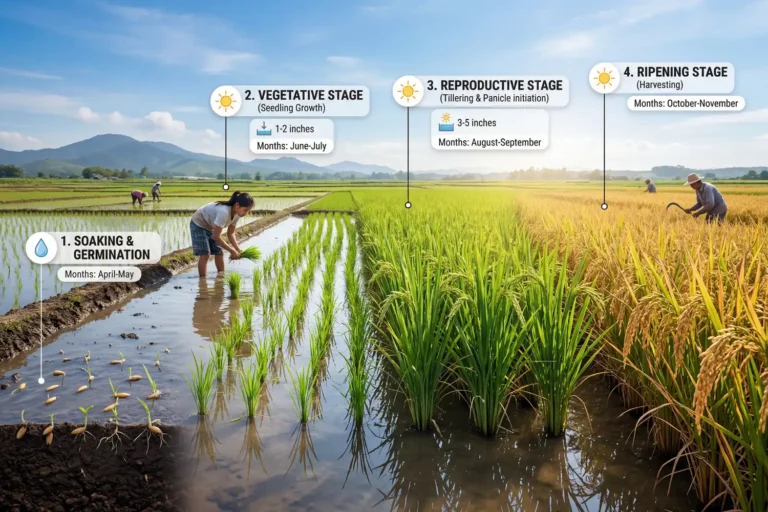
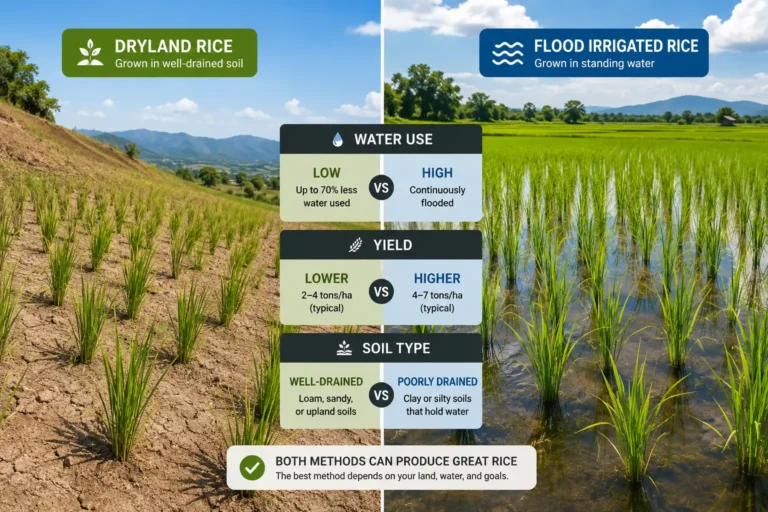
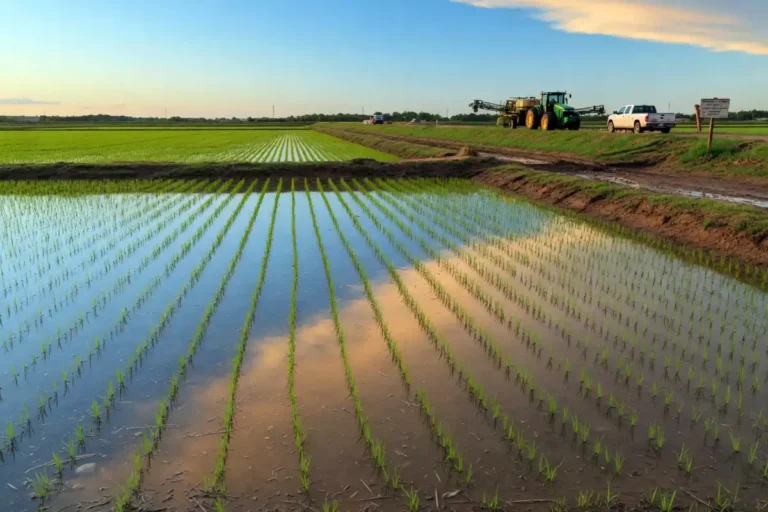
Milling does not stop there. After the hull comes off, the machines polish away the bran layer. Any grains that crack become the broken rice fragments used in pet food and brewing. The hull is simply the first thing to go. Rice also grows in standing water. That is part of why growers keep flooded rice paddies through much of the season.
Is a Rice Hull the Same as a Rice Husk?
Yes. Rice hull and rice husk are two names for the same part. Some regions and industries lean toward husk, while most American growers and garden suppliers say hull. Either word points to the same protective shell around the grain. So do not overthink it if a bag at the feed store reads husks instead of hulls.
What Are Rice Hulls Used For?
Rice hulls do real work as a soil amendment, garden mulch, animal bedding, compost ingredient, and biofuel. The traits that make hulls hard to dispose of are the same ones that make them useful. Light weight, high silica, and slow decay all help once you put hulls to work. Here is how it helps to use them, and how bigger operations do too.
A Perlite Alternative in Potting Mix
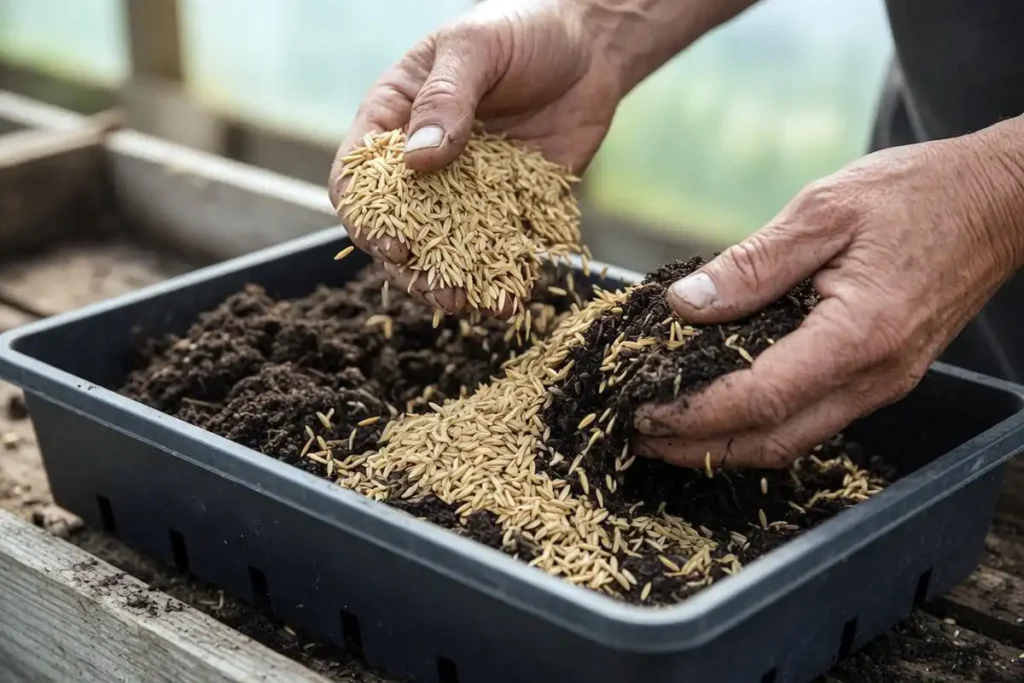
Parboiled rice hulls work as a direct swap for perlite in potting mix. They lighten the blend, open up air space, and improve drainage, all without the mining that perlite needs. Growers at Purdue University and the University of Arkansas tested hulls against perlite in peat mixes. The hulls produced equal or better root growth.
Blend them at roughly 30 percent by volume for seed starting and container work. They also add a little silica, which stiffens cell walls and helps plants handle heat and drought. One quirk to plan for: hulls are light, so they float to the top when you water hard. Look for bags marked OMRI listed if you grow organic. If you are still building a seed-starting setup, hulls pair well with peat or coco coir and a solid tray.
Mulch for Beds and Rows
Spread as mulch, rice hulls hold soil moisture and slow down weeds. Rake a half-inch to one-inch layer over the beds. Work a little into the surface so it does not blow away. The hulls let rain through, keep the soil from crusting, and break down slowly into organic matter.
They are lighter than straw and far cleaner to handle. Next to the mulch you spread across a field of row crops, hulls fit smaller beds and raised beds best. Over about two years they melt into the soil, so top them off each season.
Animal Bedding for Poultry and Livestock
Rice hulls make solid bedding, especially for chickens. They stay dry because water drains right through them, and they throw off very little dust. Poultry extension programs list hulls right alongside pine shavings, on their own or blended in.
In a deep-litter coop, the hulls resist matting and clean up easy. One caution though: keep hulls away from horses, since a horse that eats bedding can run into gut trouble. For chickens, ducks, and hogs, they work fine.
Compost, Biofuel, and Rice Hull Ash
Rice hulls also go into compost piles, furnaces, and industrial ash products. In compost they act as a carbon-rich brown, so balance them with green, nitrogen-rich material like manure or fresh clippings. Parboiled hulls barely tie up nitrogen, which makes them easier to compost than many raw plant wastes.
Whole hulls also burn well, so mills press them into pellets and briquettes for boilers and stoves. Burn them under control and you get rice hull ash, which runs 80 to 90 percent silica. That ash goes into concrete, insulation, and steel making as a cheap silica source. Not bad for something that used to pile up behind the mill.
What’s the Difference Between Parboiled and Fresh Rice Hulls?
Parboiled rice hulls are steamed and dried after milling, while fresh hulls skip that step. The steam kills weed seeds, mold, and any live rice seed, so parboiled hulls come out clean and sterile. For potting mix and garden beds, parboiled hulls are the safer pick.
Fresh, raw hulls can carry weed seeds and sometimes sprout stray rice in your pots. They also pull a little nitrogen as they break down. Most bagged garden hulls, often sold as PBH, are already parboiled, so check the label. For bedding or fuel, raw hulls are fine and usually cheaper.
Do Rice Hulls Add Nutrients or Improve Soil?
Rice hulls do not add much in the way of nutrients. They carry only trace potassium and other minerals, so they are not a fertilizer. Their value is physical. You get better drainage, more air, less compaction, plus a slow feed of organic matter and silica as they decay.
So use hulls to fix soil structure, not to feed the crop. Pair them with a proper nutrient plan, and you get the best of both. To feed your soil naturally, hulls fit right in with compost, cover crops, and steady organic matter.
Where Rice Hulls Fit on the Farm
Do not grow rice, but keep bags of rice hulls around all the same. They start transplants, mulch beds, and bed down the birds. For the price, few byproducts pull this much weight. If you have never tried them, grab a parboiled bag, swap them in for perlite, and watch how your roots respond.