How to Measure Moisture Content in Rice Paddy (Essential Guide)
Knowing how to measure moisture content in rice paddy protects your milling quality, your storage, and your paycheck. Read it too high and mold moves in. Read it too low and kernels crack.
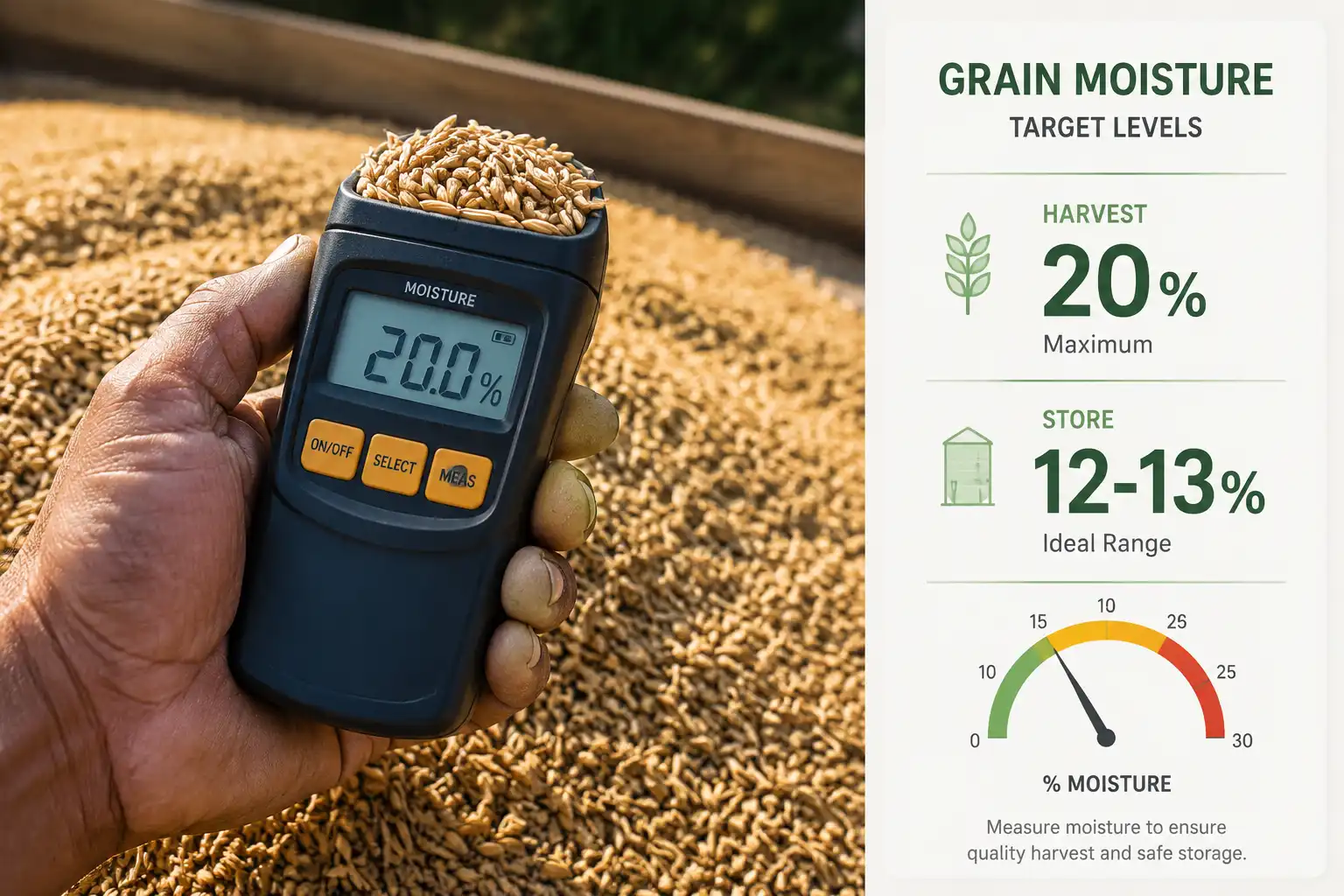
Measure moisture content in rice paddy with a handheld grain moisture meter set to rough rice. Pull a mixed sample, fill the chamber, and read the wet-basis percent. Harvest near 20 percent, then dry to 12 to 13 percent.
Why Rice Paddy Moisture Content Matters
Moisture decides three things at once: how well your crop mills, whether it stores safely, and what the buyer pays. Get it right and you protect all three. Miss it and the losses stack up.
Here paddy means rough rice, the grain still sealed in its protective hull. That is what you test in the field and at the bin. The number matters for three reasons:
- Milling quality. Cut too wet or too dry and more kernels break during milling, which drops head rice yield.
- Safe storage. Store paddy too wet and fungi take hold fast. Some produce aflatoxin, a toxin regulated in food grain.
- Price. Deliver wet grain and you pay drying charges. The elevator also docks value based on its own moisture reading.
Read next: How to grow rice indoors
What Wet-Basis Moisture Means
Wet-basis moisture is the share of the grain’s total weight that is water. You divide water weight by wet weight, then multiply by 100. That is the figure your meter shows and the figure every US buyer uses.
Wet-basis formula: MCwb % = (wet weight minus dry weight) ÷ wet weight × 100
Researchers sometimes report a dry basis, but you will rarely meet it in the field. So treat wet basis as the default for every target below.
Ideal Moisture Content for Rice Paddy
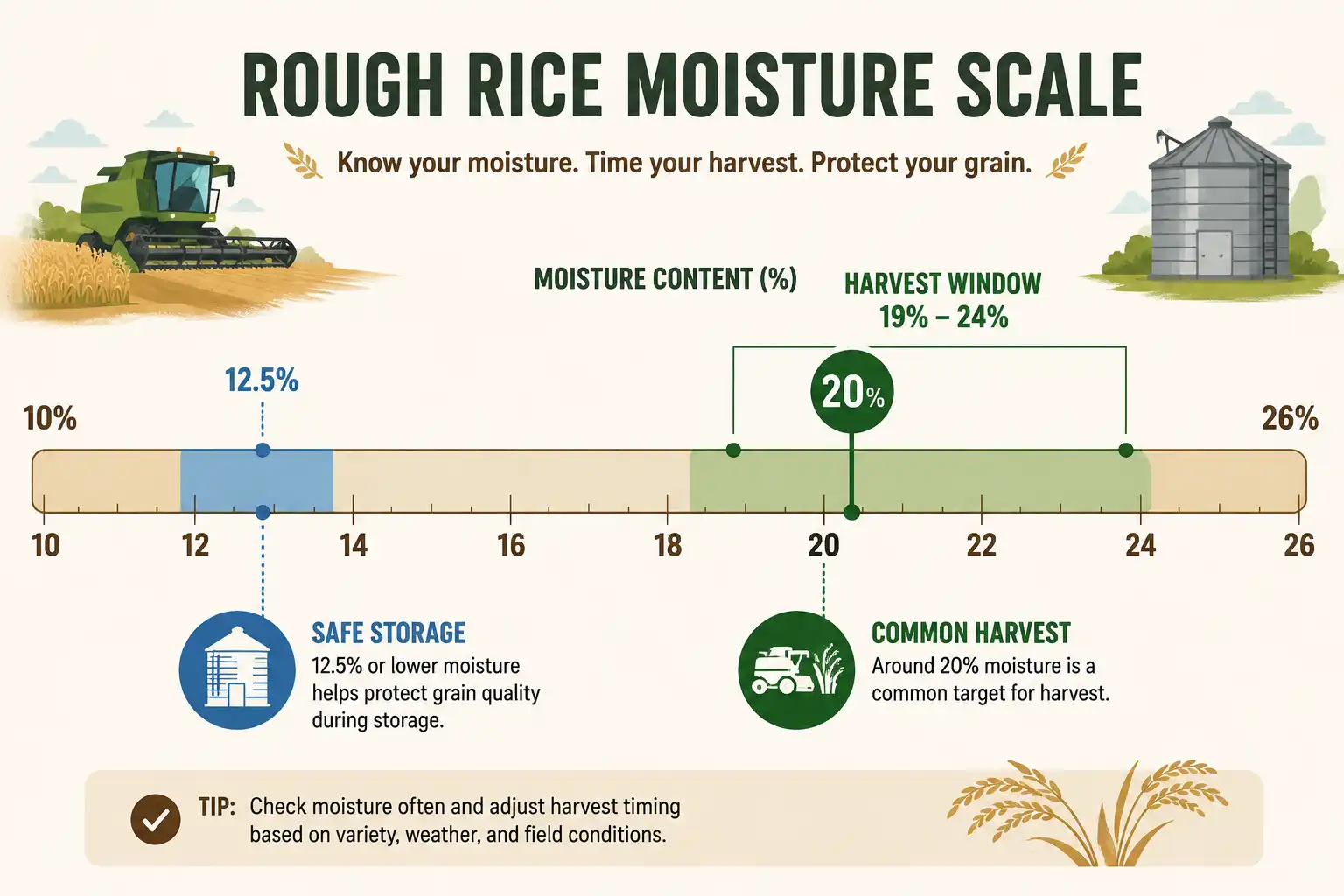
Cut rough rice near 20 percent and store it around 12.5 percent. Those two numbers anchor every decision from the combine to the bin.
| Stage | Target moisture (wet basis) | Why it matters |
|---|---|---|
| Harvest, long-grain | 19 to 21% | Peak head rice yield |
| Harvest, medium-grain | 22 to 24% | Peak head rice yield |
| In-bin drying start | 18 to 19% | Saves fan energy |
| Long-term storage | 12 to 13% (about 12.5%) | Blocks mold and insects |
| Caution zone | Above ~14% | Mold and aflatoxin risk climbs |
Research from the University of Arkansas puts peak head rice yield near 19 to 21 percent for long-grain. Medium-grain runs a touch higher. If you dry in your own bins, newer Arkansas guidance points to 18 to 19 percent at harvest. That lower start saves fan energy.
Timing ties in too. Most growers pull the flood before cutting, and after draining the flooded paddies, the crop firms up and dries down. Do not chase a low field reading, though. Below about 14 percent, kernels crack as they soak up dew and dry out again. That cycle quietly steals head rice yield, so late cutting rarely pays.
Tools to Measure Paddy Moisture
You have three practical options. Each has a clear job.
| Method | Speed | Typical accuracy | Best use |
|---|---|---|---|
| Handheld meter | Seconds | Half a point (good) to 2 to 3 points (budget) | Field, bin, quick checks |
| Oven method | Hours | Reference standard | Calibration and disputes |
| Bite or thumbnail test | Instant | Rough feel only | A quick go or no-go call |
Handheld Grain Moisture Meter
Set the meter to rough rice before you read anything. This matters more than folks expect. Paddy is light and hull-covered, so it reads differently than dense corn or wheat. The wrong crop setting can throw your number off by several points.
A handheld meter reads moisture electrically, then converts that signal to a percent in seconds. Better units correct for grain temperature and show test weight too. If you are still shopping, the breakdown of a quality grain moisture tester covers what to check first.
The Oven Method
The oven method is the standard every meter gets checked against. Here is the short version:
- Weigh about 15 grams of paddy on a scale that reads to 0.01 gram.
- Dry the whole grain in an oven at 130°C (266°F) until the weight stops dropping, usually overnight.
- Weigh it again, then run the wet-basis formula above.
Research labs sometimes dry longer at 105°C (221°F) for extra precision. It stays the most accurate route, since it removes water directly. Still, it takes hours, so treat it as a calibration check, not a field tool.
USDA Official Moisture
Your buyer’s reading is the one that sets your check. At the elevator or mill, moisture gets graded on FGIS-approved meters like the DICKEY-john GAC 2500-UGMA and 2700-UGMA. They run the Unified Grain Moisture Algorithm, and USDA holds them within about 0.15 percent of the air-oven method. Grade moisture rounds to the nearest 0.1 percent. So compare your handheld against the buyer’s meter before you price a load, and expect a small gap.
How to Measure Moisture Content in Rice Paddy Step by Step
Follow the steps below for a reading you can trust. The sample matters more than the meter.
What you need:
- A handheld meter set to rough rice
- A clean pail for mixing
- Fresh batteries
- A notepad or phone
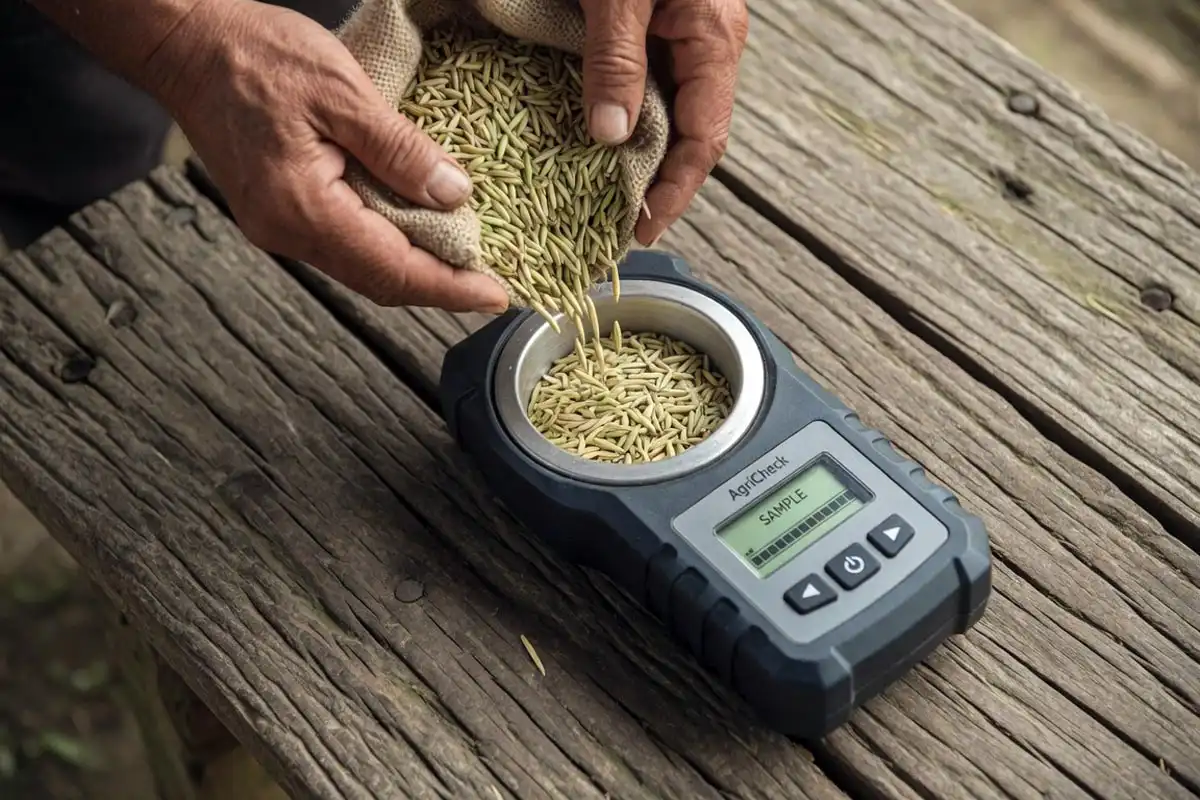
- Cool hot grain first. Straight off the combine or dryer, let the sample come near room temperature. Hot grain reads off.
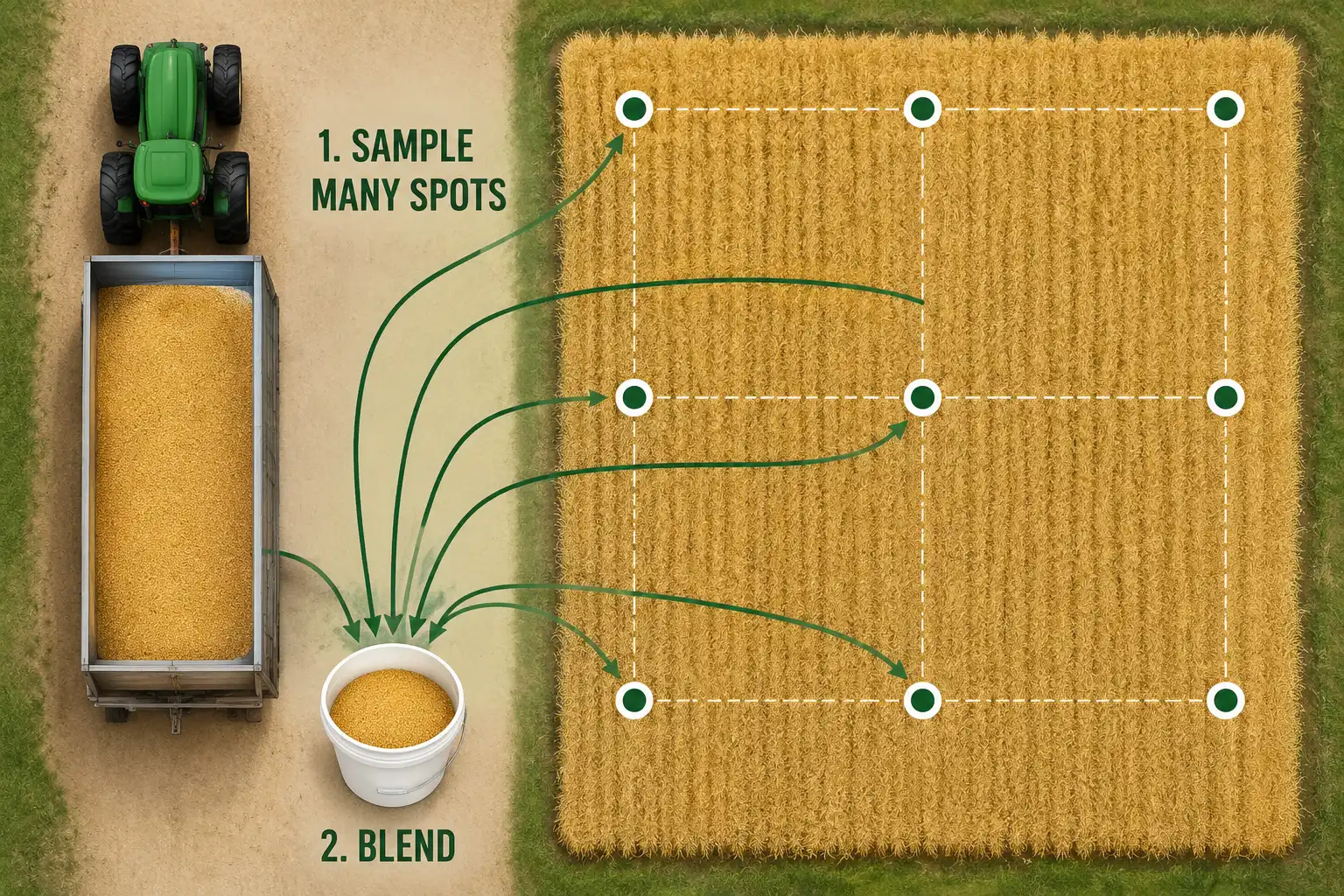
- Pull a representative sample. Grab handfuls from several spots, not one scoop. In a load or bin, take from the top, middle, and lower zones.
- Blend it. Combine your handfuls in the pail and stir. One mixed sample beats a single grab.
- Set the meter to rough rice. Confirm the paddy scale, not brown or milled rice. Check the battery too.
- Fill the chamber correctly. Pour to the fill line. Level it off, and never pack or overfill.
- Read the wet-basis percent. Close the meter and write the number down.
- Repeat and average. Run two or three fills, then average them. That smooths out any odd scoop.
How Accurate Are Rice Moisture Meters?
Good handheld meters read within about half a point of the oven method. Budget units can drift two to three points. The official GAC meters at the elevator sit within roughly 0.15 percent of the oven. Accuracy comes down to three things: the meter, the crop setting, and your sample.
Freshly cut or freshly dried paddy hides a trap. The moisture sits unevenly, with a wetter core and a drier surface, so the reading drifts for a while. So let a sealed sample rest, then read it again. To keep your meter honest, check it against a fresh oven test at the start of harvest.
How to Check Moisture While You Dry
Check moisture every few hours during in-bin drying, and pull grain from several depths. The top layer dries last, so it tells you when the batch is truly done. Stop near 12.5 percent for storage. Over-drying burns extra propane and cracks kernels, while stopping too wet invites mold. The same habits for keeping stored grain safe apply straight to paddy.
Common Mistakes That Skew Your Reading
Most bad readings trace back to a short list of habits:
- Sampling one spot instead of blending several
- Leaving the meter on the wrong crop setting
- Testing hot grain against a cool meter
- Packing or overfilling the chamber
- Weak batteries or a dirty measuring cell
- Trusting a single reading with no average
- Reading paddy before its moisture evens out
Fix these and your meter earns its keep.
Bottom Line for Your Rice Crop
Moisture testing is the same craft everywhere. Check wheat and milo. A rice grower checks paddy down in Arkansas. The steps do not change. Pull a real sample, set the meter to rough rice, and average a few reads. Cut near 20 percent, dry to about 12.5 percent, and you protect both head rice yield and your storage. Good calls about when a crop is ready start with that one number, and it pays every season.