What Is Rice Berry: Nutrition, Origin, and How It’s Grown
Rice berry keeps coming up at co-ops and in farm magazines, even in regions like Kansas where grain is the dominant crop. Follow global crop trends, and this Thai variety is worth knowing. Here is what rice berry actually is, where it grows, and why it matters.
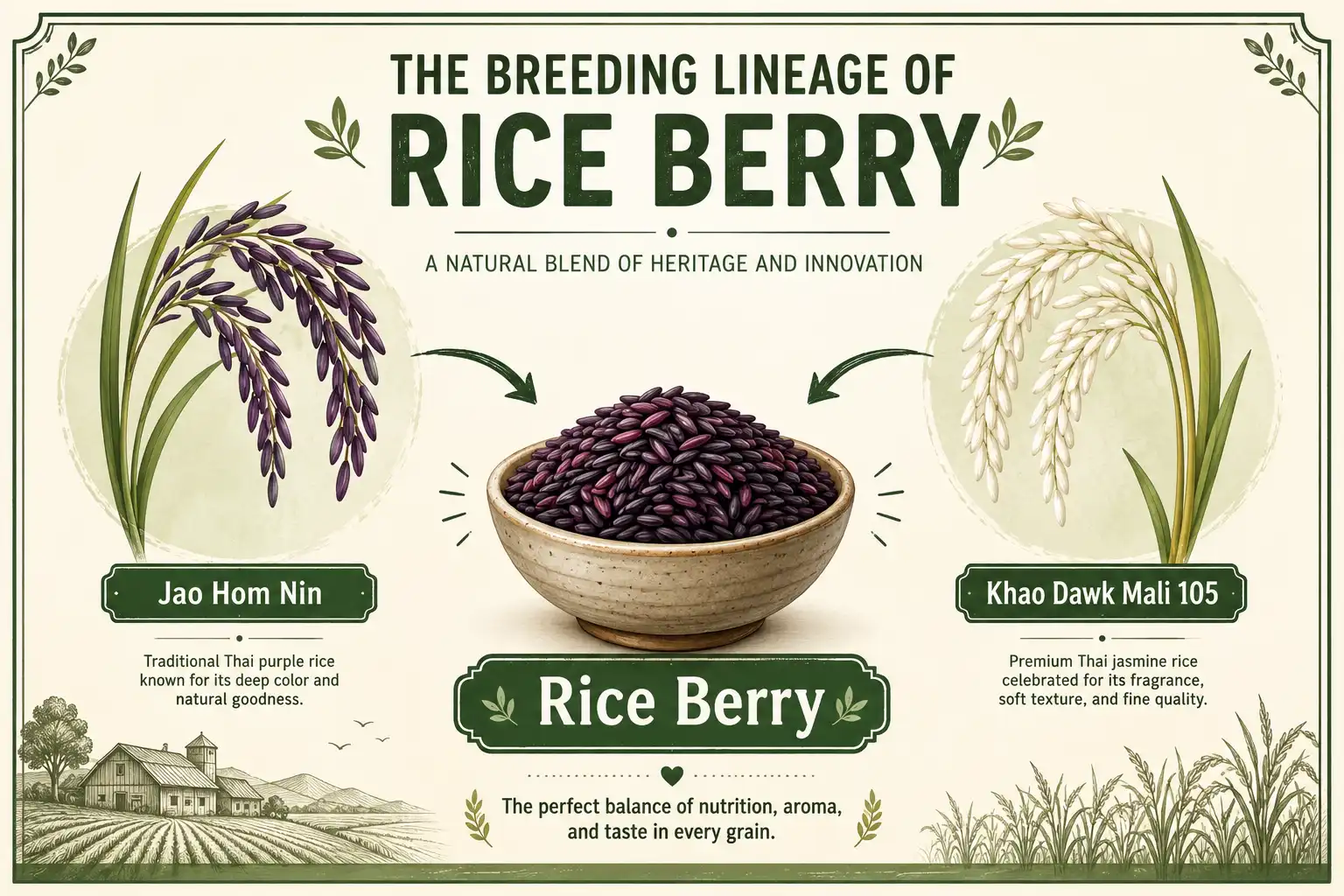
Rice berry is a Thai whole-grain rice with a deep purple color and soft, nutty flavor. It comes from a cross between Jao Hom Nin purple rice and Khao Dawk Mali 105 jasmine rice, bred at Kasetsart University in 2002.
Where Rice Berry Comes From
Rice berry was developed in 2002 at the Rice Science Center, part of Kasetsart University’s Kamphaeng Saen Campus in Nakhon Pathom, Thailand. Professor Apichart Vanavichit and his team led the breeding work. The variety came from crossing Jao Hom Nin, a Thai non-glutinous purple rice known for antioxidant content, with Khao Dawk Mali 105, the famous Thai jasmine rice prized for aroma and soft texture.
The goal was simple. Combine the deep nutritional value of the purple parent with the fragrant cooking quality of jasmine. The result is a long-grain whole-grain rice that holds up in the kitchen and on the nutrition label.
What Rice Berry Looks Like
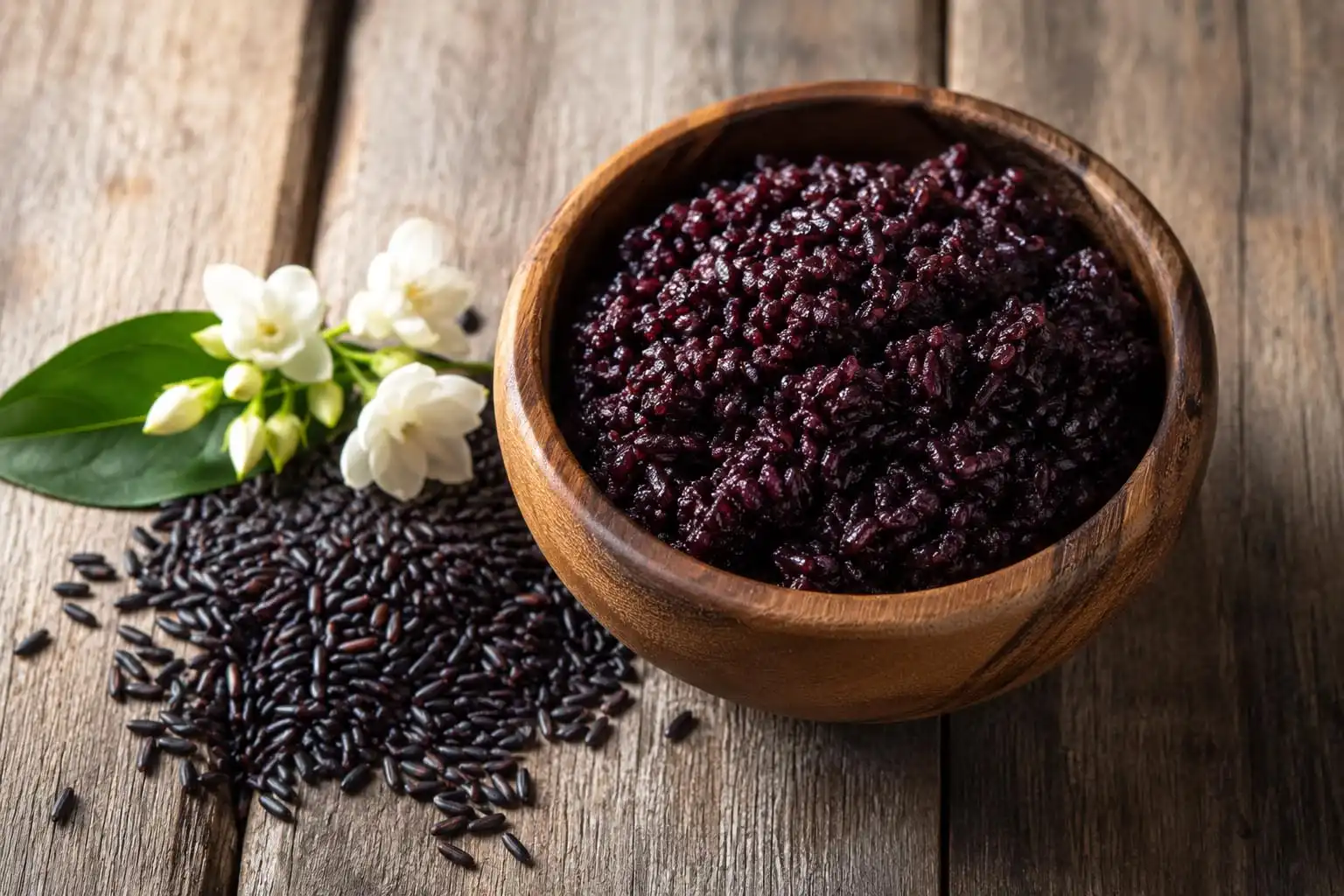
Rice berry has long, slender grains in the indica style. Raw kernels are dark reddish-purple, almost black. Once cooked, the color deepens into a rich purple shade. That color comes from anthocyanins, the same pigment family found in blueberries and elderberries. The hue is not added or dyed. It sits naturally in the bran layer of the grain.
The grain is whole rice. Only the husk gets removed during milling. The bran and germ stay intact, which is where most of the nutrition lives.
How Rice Berry Is Grown
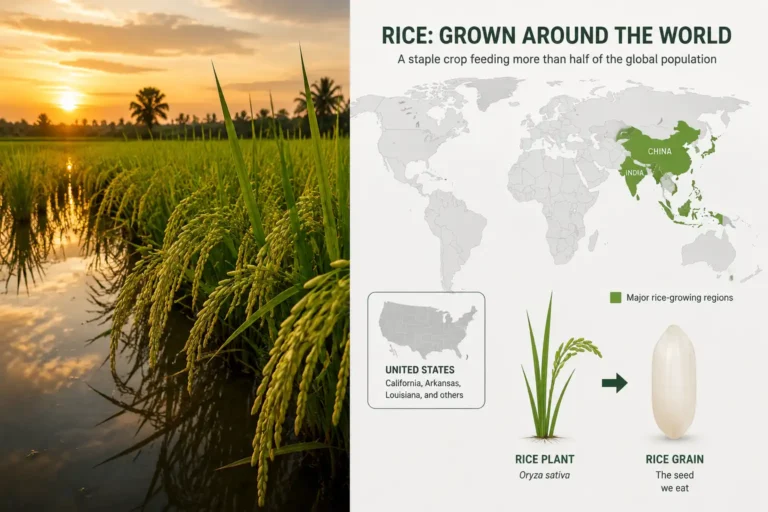
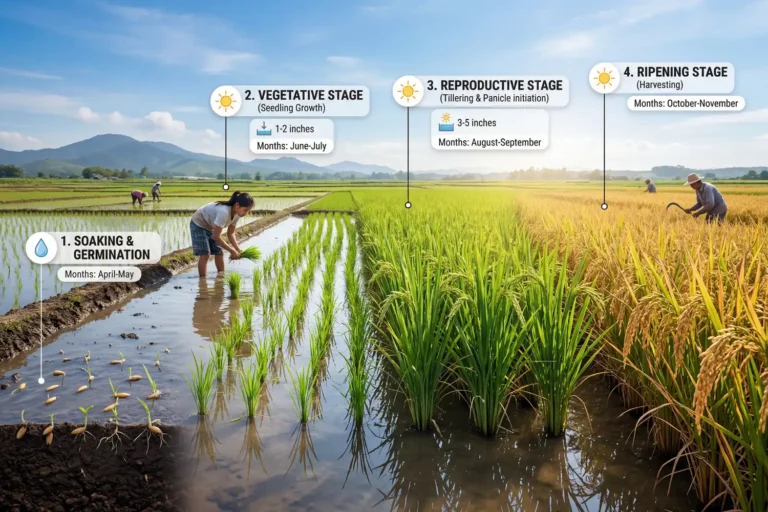
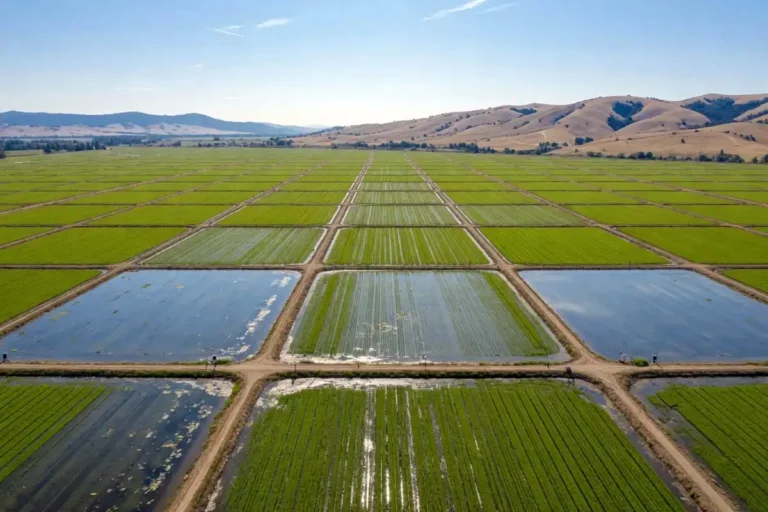
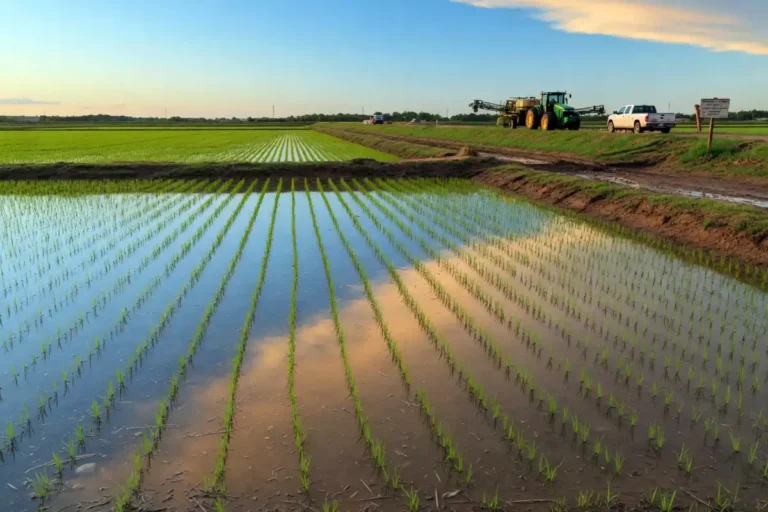
Rice berry grows mostly in northern and northeastern Thailand, where the climate suits it best. Farmers plant during the wet season, generally August through December. The production cycle runs about 110 to 120 days, similar to other Thai paddy varieties. Production happens in flooded paddies, which is also the reason rice paddies are flooded throughout the growing season.
Most certified rice berry plots follow organic standards. Around 20,000 rai (roughly 3,200 hectares) sit under organic programs, including USDA Organic, EU Organic, IFOAM, and Thailand’s national organic certification. Many growers also apply regenerative rice practices to protect soil and water systems over the long haul.
Nutritional Profile of Rice Berry
Rice berry stands out for what it carries in the bran. The grain contains:
- Anthocyanins, the purple antioxidant pigment
- Beta-carotene and lutein, found in concentrations not present in white rice
- Gamma oryzanol and vitamin E (tocopherols and tocotrienols)
- Folate (folic acid)
- Iron, at roughly three times the level of standard rice varieties
- Phosphorus, magnesium, zinc, manganese, and molybdenum
The glycemic index of rice berry sits around 62, which is lower than typical white rice. A peer-reviewed clinical study on rice berry bread published in the journal Nutrients found improved postprandial glycemic and antioxidant responses in healthy adults.
The fiber content is also higher than polished white rice, since rice berry is consumed as a whole grain. That fiber, along with the bran oil, supports steady digestion and slower carbohydrate absorption.
How Rice Berry Tastes and Cooks
Rice berry cooks soft, slightly chewy, and lightly aromatic. The aroma is gentler than pure jasmine but stronger than most plain brown rices. Use a ratio close to 1 part rice to 1.5 parts water, simmered for about 25 to 30 minutes. Many cooks soak the grain for 30 minutes first to soften the bran. The cooked grain is non-sticky and holds its shape well in stir-fries, grain bowls, salads, and savory porridges.
How Rice Berry Compares to Other Rice
Rice berry is closer in eating quality to brown jasmine than to long-grain white rice. The flavor is nuttier and slightly earthy, with floral notes. The antioxidant load runs far higher than basmati rice or California rice varieties like Calrose. Compared with wild rice, which is technically a different aquatic grass, rice berry cooks faster and softer.
The grain is also naturally gluten-free, like all true rice. It fits most special diets, including diabetic-friendly meal plans, thanks to its lower glycemic index.
Why Rice Berry Matters for Growers and Consumers
Rice berry sells at a premium. On both the Thai market and export shelves, it pulls higher prices than standard jasmine or white rice. That premium comes from health-conscious buyers willing to pay for nutrient density and the organic certification many lots carry. The crop has also become a flagship example of breeding for nutritional value, not just yield.
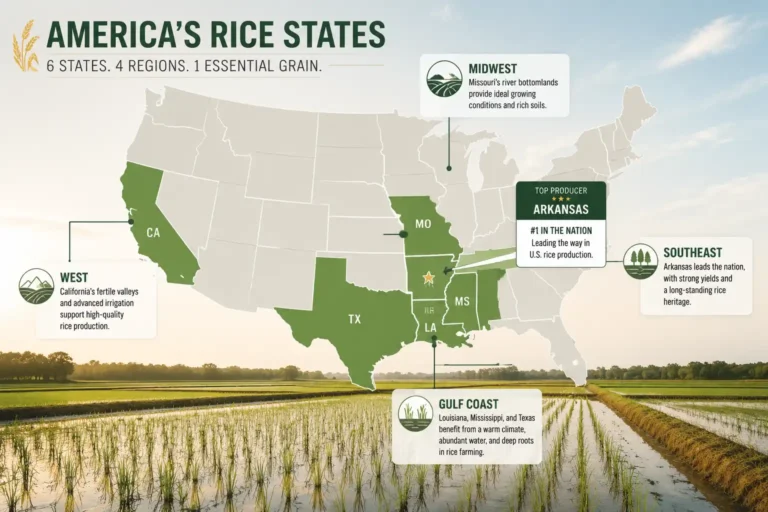
For American consumers, rice berry is available through specialty grocers, Asian food markets, and online retailers. For American farmers, it works mostly as a case study in how a single breeding program can build a globally recognized specialty crop and lift incomes across entire regions.
FAQs
Is rice berry the same as black rice?
Is rice berry gluten-free?
Can rice berry be grown in the United States?
Why is rice berry called "berry"?
What This Means for Growers and Eaters
Rice berry is a clear example of what modern crop breeding can do when nutrition becomes a real goal alongside yield. For Thai farmers, it has opened a premium market. For consumers, it offers a whole grain that delivers far more than standard white rice in every bite. Keep tabs on programs like this because they show how a single well-bred variety can shift the value of an entire crop.