What Is Pusa Basmati Rice: Varieties, Growing, and Uses
Pusa Basmati rice is one of the world’s most planted aromatic rice varieties. It dominates India’s basmati export market and shows up in kitchens across the US under premium brand labels. Here is what Pusa Basmati actually is and why it carries that name.
Pusa Basmati rice is a group of aromatic long-grain rice varieties developed by the Indian Agricultural Research Institute (IARI) in New Delhi. The leading lines, Pusa Basmati 1121 and Pusa Basmati 1509, drive most of India’s basmati production and exports today.
Where the Name Pusa Comes From
Pusa is the campus name of IARI, India’s top public crop research institute. The institute originally opened in 1905 in Pusa, a village in Bihar. An earthquake in 1934 damaged the site, and the institute relocated to New Delhi but kept the Pusa name. Every rice line bred there carries it. So a name like “Pusa Basmati 1121” simply means basmati line number 1121 from the Pusa-named institute.
The Main Pusa Basmati Varieties Grown Today
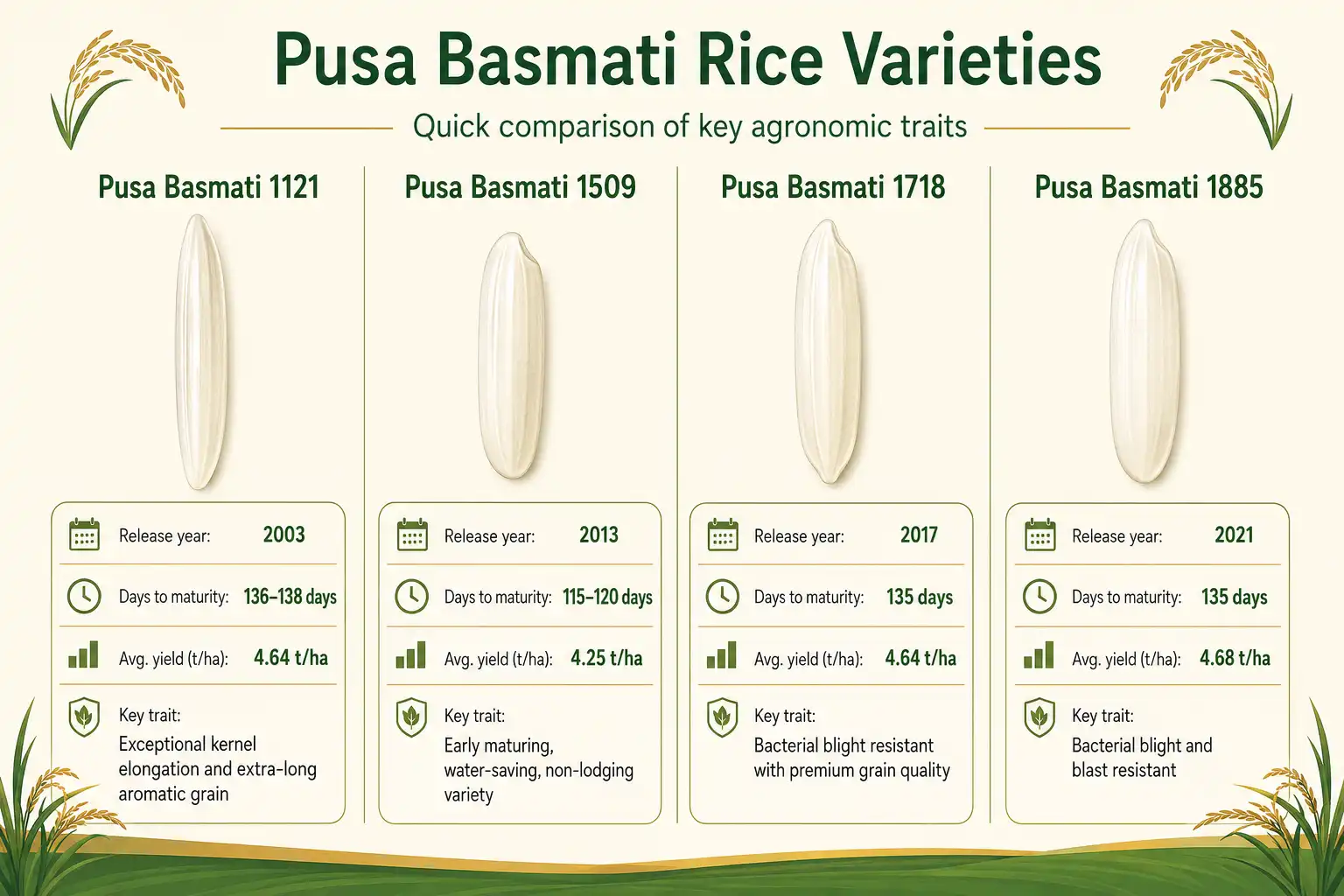
Pusa Basmati 1121
Released in 2003. Known for extra-long cooked grains that stretch over 20 mm. This is the variety behind most basmati shipments leaving India for the US, Middle East, and Europe. Yields run around 4.5 to 5 tons per hectare.
Pusa Basmati 1509
Released in 2013. Matures in about 115 days, which is short for basmati. Plants are shorter and resist lodging better than older varieties. Farmers in Punjab and Haryana like it because it fits double-cropping rotations with wheat.
Pusa Basmati 1718, 1847, 1885, and 1886
Newer releases bred for bacterial blight resistance using marker-assisted selection. They keep the aroma and grain length of 1121 and 1509 but cut down on fungicide passes.
What Makes Pusa Basmati Different from Other Long-Grain Rice
Three traits set Pusa Basmati apart from American long-grain rice like Texmati or southern varieties.
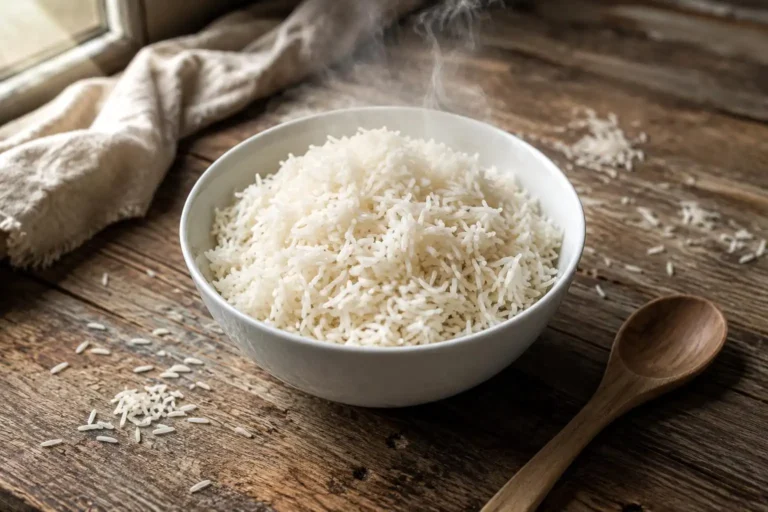
Aroma. Pusa Basmati contains 2-acetyl-1-pyrroline, the compound responsible for the popcorn-like scent of true basmati. Most US long-grain varieties carry only trace amounts.
Grain elongation. Cooked grain stretches almost twice its raw length without breaking. Pusa Basmati 1121 holds the record for cooked-grain length in commercial basmati.
Non-sticky texture. Cooked grains stay separate, which is the texture profile required for biryani and pilaf dishes.
Where Pusa Basmati Is Grown
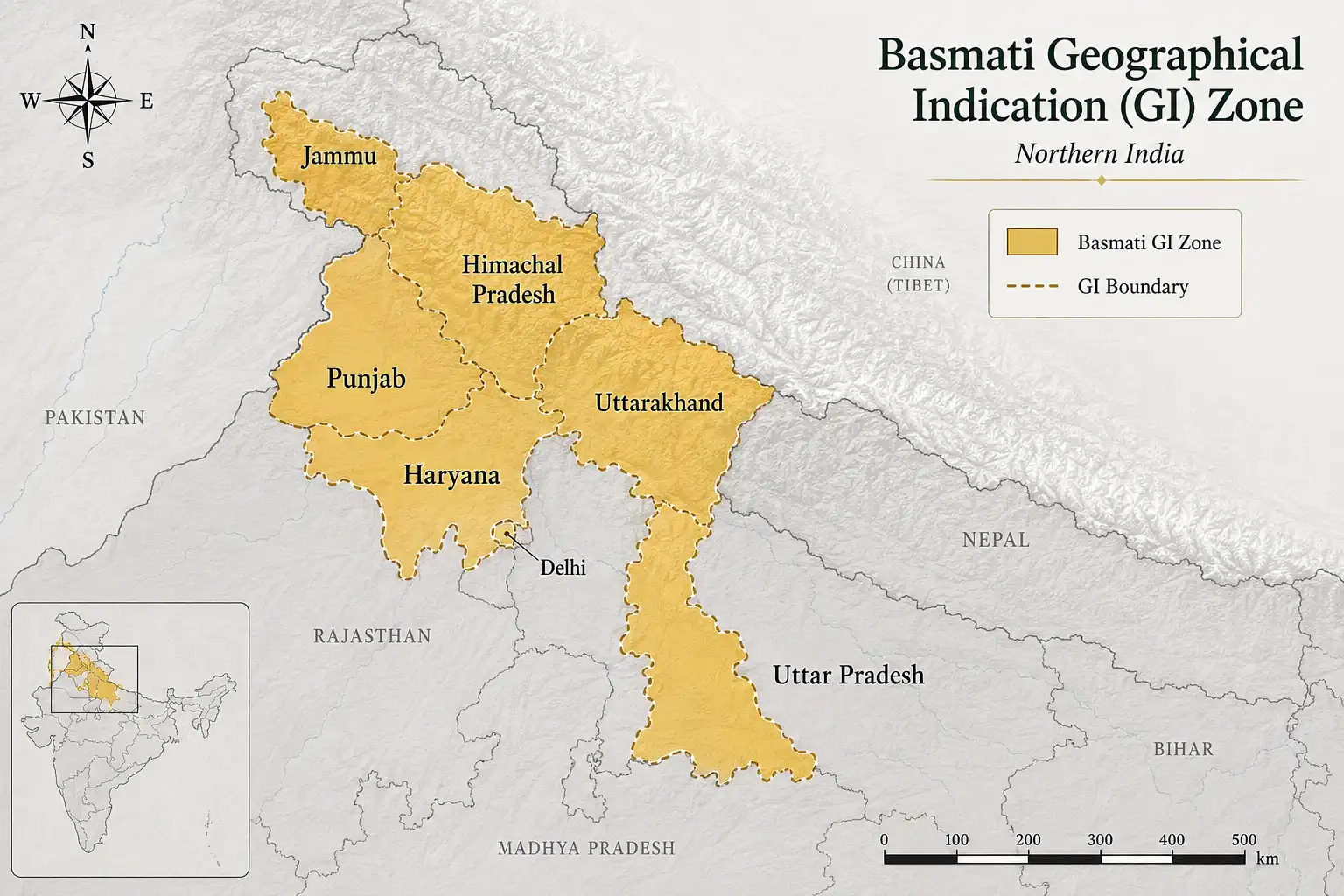
Pusa Basmati production is limited to India’s basmati Geographical Indication (GI) zone. This zone covers Punjab, Haryana, Himachal Pradesh, Uttarakhand, Delhi, western Uttar Pradesh, and the Jammu region. Soil type, water access, and climate in these states meet the protected GI requirement. For the full breakdown of the regional origin and protected status, see where basmati rice is from.
Pakistan grows its own basmati varieties in its share of the historical basmati belt, but those are not Pusa lines.
How Pusa Basmati Is Grown
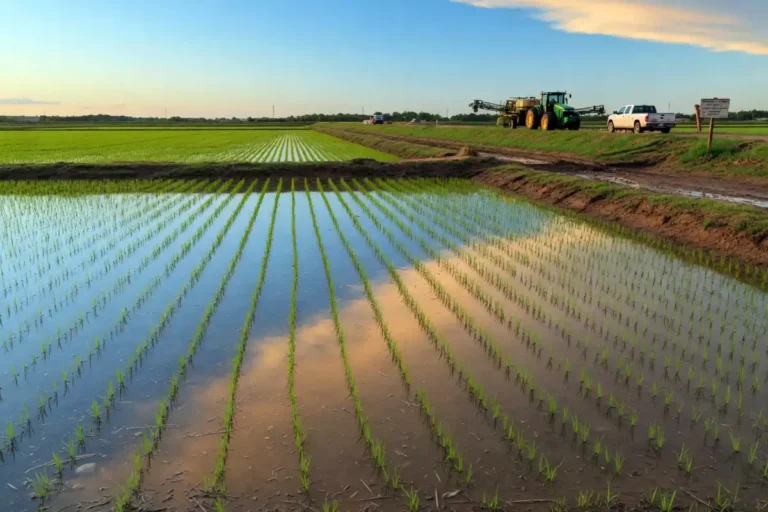
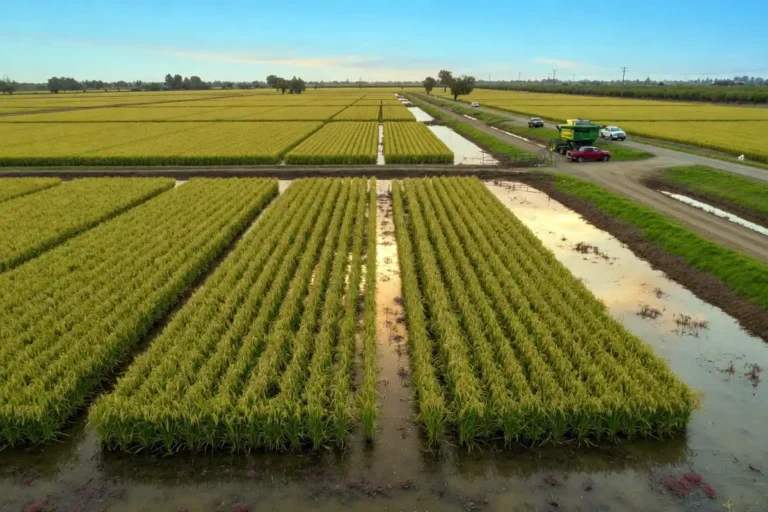
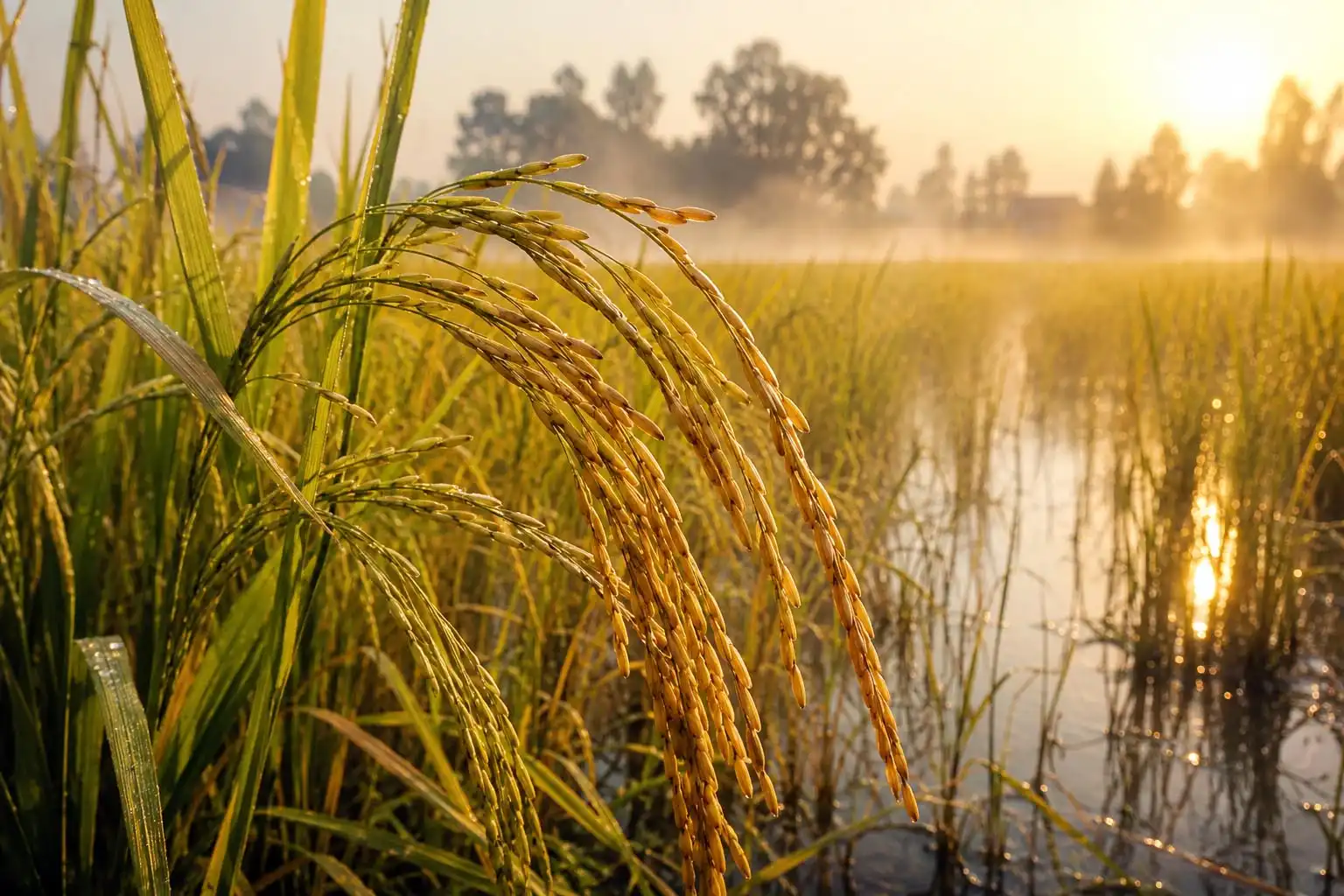
Farmers grow Pusa Basmati in flooded paddy systems during the kharif (monsoon) season. They sow nurseries in May and transplant 25 to 30 day old seedlings into puddled fields in June and July. Standing water sits at about 2 to 5 cm deep through the vegetative stage. The flooding suppresses weeds and keeps soil temperature steady. For more on why rice fields stay under water, read up on flooded rice paddies.
Fertility programs use urea, DAP, and muriate of potash in split applications. Disease pressure mostly comes from bacterial blight and blast, which is why newer Pusa lines focus on blight resistance. Harvest runs October to November.
Pusa Basmati vs Traditional Basmati
Traditional basmati landraces like Basmati 370 and Taraori Basmati produce slightly longer grains and a stronger aroma. The problem is yield. They top out around 2 to 2.5 tons per hectare. Pusa Basmati 1121 doubles that with grain quality close enough to traditional types that exporters and buyers accept it without complaint. That yield gap is why Pusa lines now cover the bulk of India’s basmati acreage.
Why US Buyers See So Much Pusa Basmati
The US imports nearly all of its basmati rice from India and Pakistan. Most of the bagged basmati on American grocery shelves with Indian origin is Pusa Basmati 1121. According to USDA Foreign Agricultural Service data, India remains the largest basmati supplier to the US market by a wide margin.
If you want a sense of how this compares to a domestic US variety, see where Calrose rice is growing. Calrose is a medium-grain japonica with a completely different texture and use case.
For more on Pusa Basmati exports, the USDA Foreign Agricultural Service publishes annual grain trade reports covering rice imports by country and variety.
FAQs
Is Pusa Basmati rice genetically modified?
Is Pusa Basmati the same as basmati?
Can Pusa Basmati be grown in the US?
How long does Pusa Basmati take to mature?
Is Pusa Basmati organic?
Final Words
Pusa Basmati is the engine behind India’s basmati export business. The breeding program at IARI pulled off something every public crop institute aims for. They took a premium niche crop with weak economics and rebuilt it into a high-yield, disease-resistant, export-grade product without losing the traits buyers pay for. Kansas is known for wheat and sorghum rather than rice, but the work behind rice production earns respect. Pusa Basmati 1121 alone reshaped a global market, and the newer disease-resistant lines are doing the same job for farmer profitability in Punjab and Haryana.