How to Grow Wild Rice in Paddies From Seed to Harvest
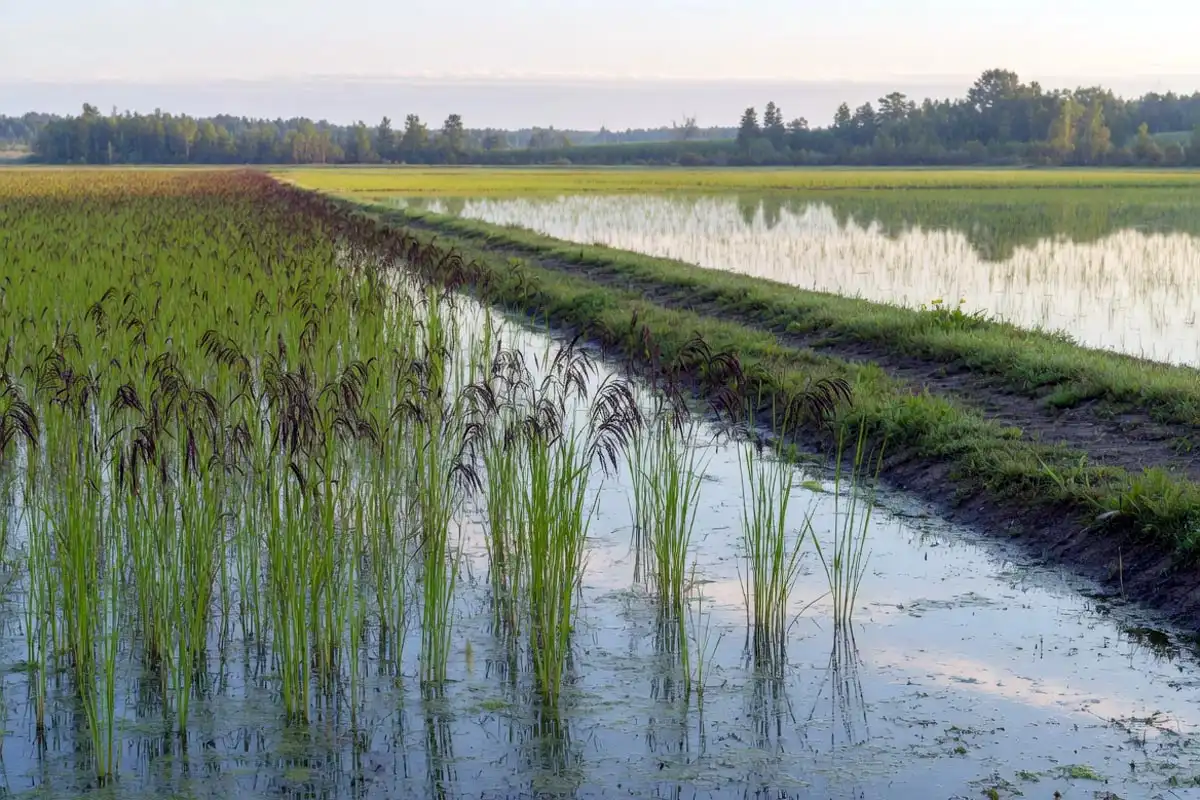
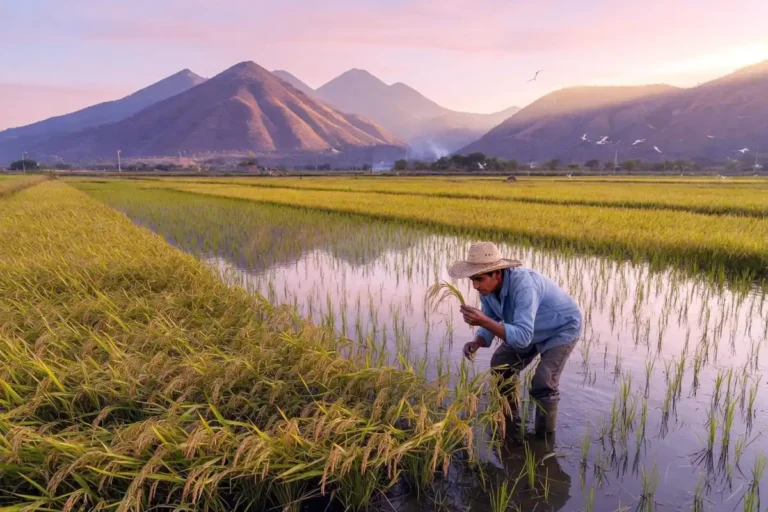
Wild rice is an aquatic grass grown in shallow flooded paddies, mainly in Minnesota and Wisconsin. It’s harder to grow than corn or soybeans because water management decides the crop. Here’s how to grow wild rice the way commercial paddy operations actually run it.
To grow wild rice, flood a level paddy 6 to 18 inches deep, broadcast 30 to 40 pounds of stratified seed per acre in fall, manage water depth through the season, and harvest by combine in late August or early September.
What Wild Rice Is
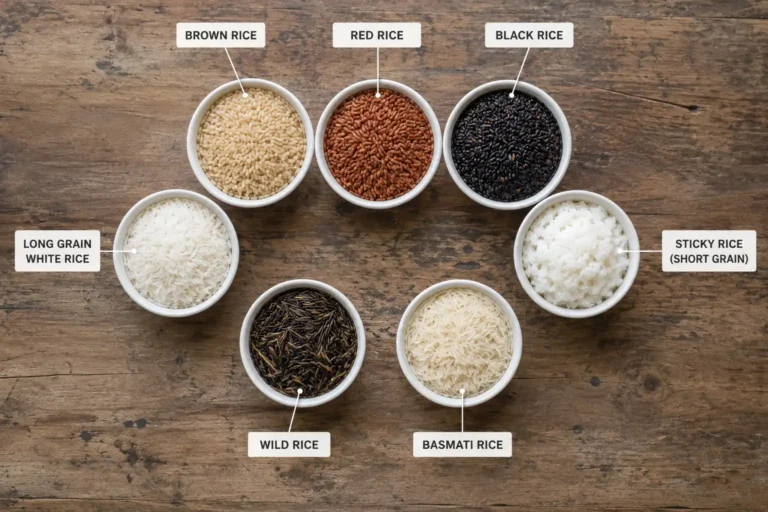
Wild rice is Zizania, a North American aquatic grass. It’s not related to Oryza sativa, the rice in grocery bags. The grain runs darker, longer, chewier, and higher in protein. Zizania palustris is the species farmed commercially. Zizania aquatica grows wild in southern marshes and isn’t grown for paddy production.
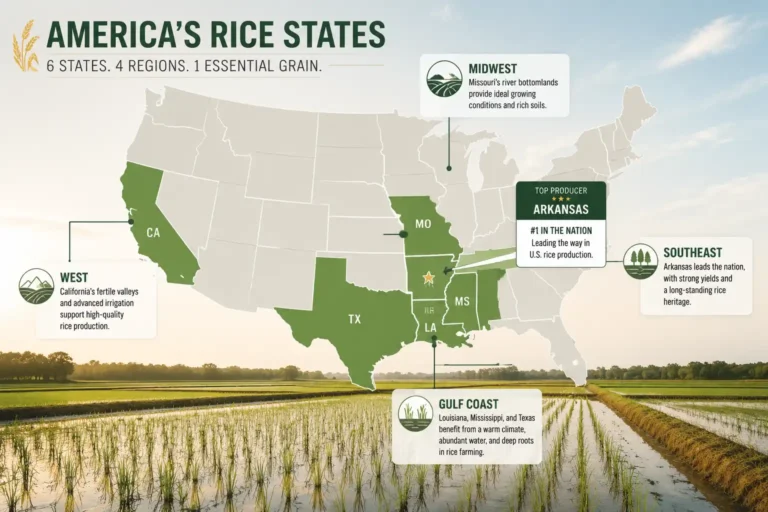
Minnesota produces most of the cultivated supply in the US. Wisconsin and California run smaller acreage. The Ojibwe of the Great Lakes have harvested wild rice from natural lakes for centuries, and that history still shapes how the crop is regulated in those states.
Where Wild Rice Will Actually Grow
Wild rice needs cool summers, clean slow-moving water, and heavy soil. The Upper Midwest and northern California are the only US regions with consistent commercial production.
If you’ve got low ground that floods, a spring-fed pond, or a river bottom with the right grade, it might fit. Anywhere south of the Corn Belt is a stretch.
Soil and Water Requirements
Wild rice wants muck or silty clay loam that holds water. Sandy ground drains too fast and loses the flood. Target a pH between 6.0 and 7.0. Pull samples and run a proper soil test before you spend a dollar building a paddy.
Water needs to be clean, low in salt, and moving slow. Stagnant warm water grows algae and rots seedlings. Most operations manage water the same way commercial rice growers do, which is the reason rice paddies stay flooded through almost the entire season.
Building the Paddy
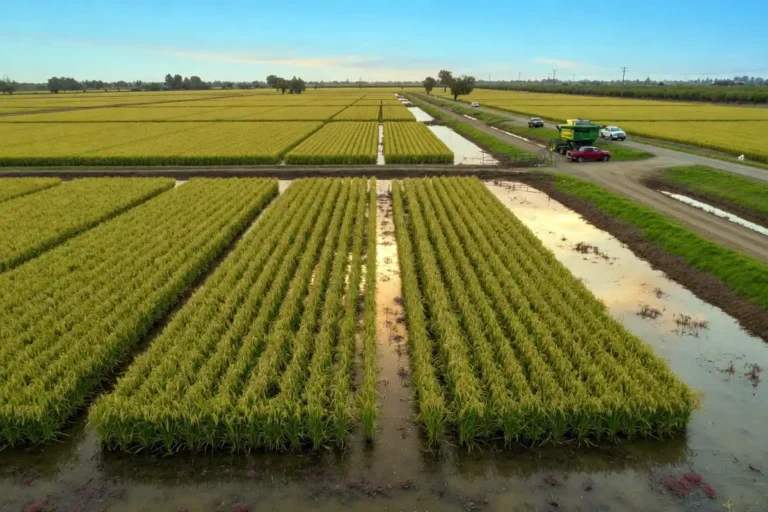
A wild rice paddy is dead level with packed clay levees and inlet and drain structures you can control by the inch. Grade should be 0.1 percent or flatter. If one corner sits two inches deeper than another, that corner won’t produce a crop.
When to Plant Wild Rice
Plant wild rice in fall, right after the October harvest, or in early spring once water temperature hits 40°F. Fall seeding is the easier route. The seed needs three to four months of cold, wet stratification to germinate, and a flooded paddy handles that on its own through winter.
Spring seeding requires pre-stratified seed shipped wet from a supplier. Dry storage kills wild rice seed within weeks. Once it arrives, it goes straight in the water.
How to Plant Wild Rice
Broadcast 30 to 40 pounds of stratified seed per acre over the flooded paddy. Slinger seeders mounted on airboats are standard for most growers. Larger operations use small aircraft. The seed sinks and settles into the mud on its own.
For small plots, hand-broadcasting from a canoe works. Even coverage matters because skipped strips show up as bald patches once the stand comes up.
Hold the water at 4 to 6 inches at seeding and keep it there through winter for fall-seeded paddies.
Water Management Through the Season
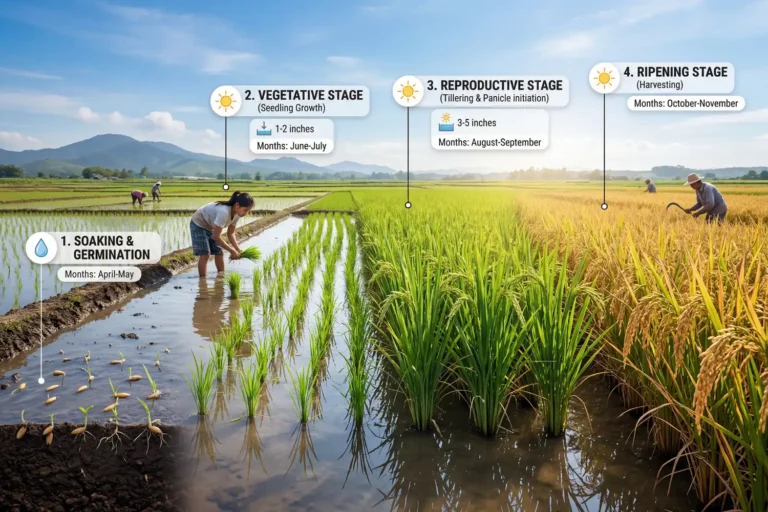
Wild rice runs through three growth stages, each with its own water depth. Get one wrong and you lose the crop. The water rules below come straight from how commercial growers manage paddies in the Upper Midwest, and they’re the reason calculating water needs matters more here than in any row crop.
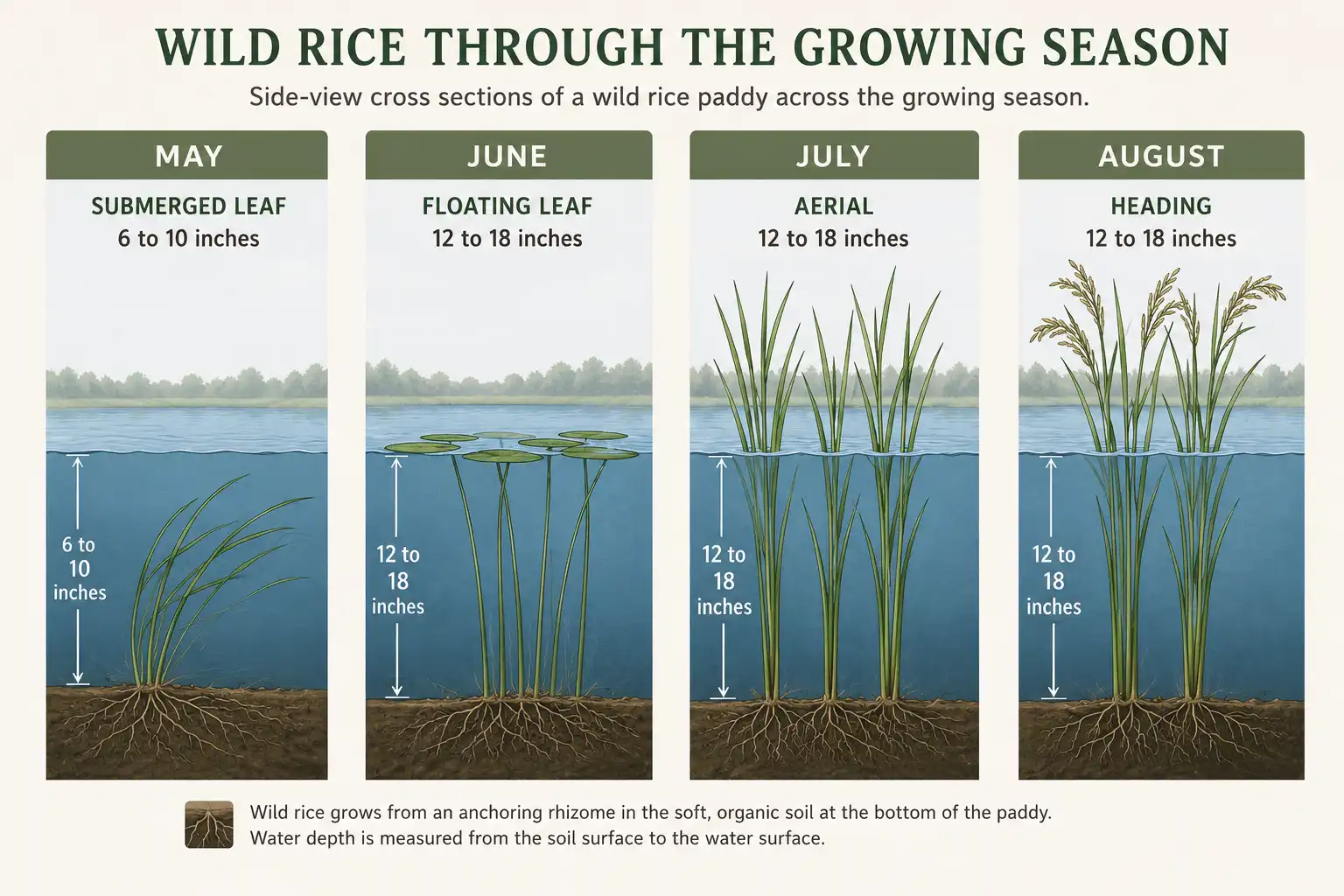
- Submerged leaf (May): hold 6 to 10 inches while shoots emerge underwater.
- Floating leaf (June): raise to 12 to 18 inches as leaves spread on the surface.
- Aerial (July): hold 12 to 18 inches as stems break the surface.
- Heading and grain fill (August): keep water steady, no draining.
The hard rule: never drop water during floating leaf stage. The plants aren’t anchored yet and a sudden drawdown kills the leaves. Most paddy failures trace back to a bad water call in June.
Fertilizing Wild Rice
Wild rice runs lean on fertilizer compared to corn. Most growers apply 40 to 60 pounds of nitrogen per acre, split between pre-flood and early aerial stage. Phosphorus and potassium go in based on the soil test result. Apply nitrogen as urea broadcast over the flood.
Don’t push it. Heavy nitrogen drives lodging and brown spot disease. To rather come in light and topdress later if the plant needs it.
Pests and Diseases
Brown spot, caused by Bipolaris oryzicola, is the main disease problem in wild rice. It builds in dense stands with high nitrogen and slow water. Lower seeding rates, balanced fertility, and steady water flow keep it down.
Rice worms and aphids show up some years. Most paddies sit inside or next to waterfowl habitat, so natural pest control is the practical route. The NRCS recognizes wild rice paddies as functional wetland habitat, and many growers coordinate spray decisions with state wildlife biologists.
When and How to Harvest Wild Rice
Harvest in late August or early September, when about half the grain has filled and started to shatter. Wild rice doesn’t ripen all at once. Many growers combine the same paddy two or three times across a week to catch grain as it matures.
Drain the paddy about a week before the first pass so the ground firms up enough to hold a track combine. Slow the cylinder and lighten the threshing setup. The grain is fragile and dehulls if you run too aggressive.
Wet grain comes off at 35 to 45 percent moisture. It has to be parched (heat-dried) and hulled at a processor. Don’t store it wet because it molds within a day.
Mistakes That Cost the Crop
Wild rice gives one shot a year. The common ways growers blow it:
- Spring-seeding non-stratified seed. It won’t germinate.
- Flooding too deep at seeding. Drowns the new shoots.
- Dropping water during floating leaf stage. Kills the canopy.
- Over-fertilizing nitrogen. Drives lodging and brown spot.
- Harvesting late. Shatter loss eats the yield fast.
For deeper agronomy guidance, the University of Minnesota Extension wild rice resources are the strongest authority source in the country.
Bottom Line for Your Paddy
Wild rice pays well when the land fits and the water works, and it punishes shortcuts. If you’ve got a level low spot, cool summers, and the patience to manage water by the inch, it can sit in a diversified operation as a high-value specialty grain. The 2026 cultivated paddy rice market still pays a strong premium over conventional grains. Before you turn dirt or buy seed, call your state ag department and the University of Minnesota Extension.