What Do Soybeans Look Like Growing in the Field? (2026 Guide)
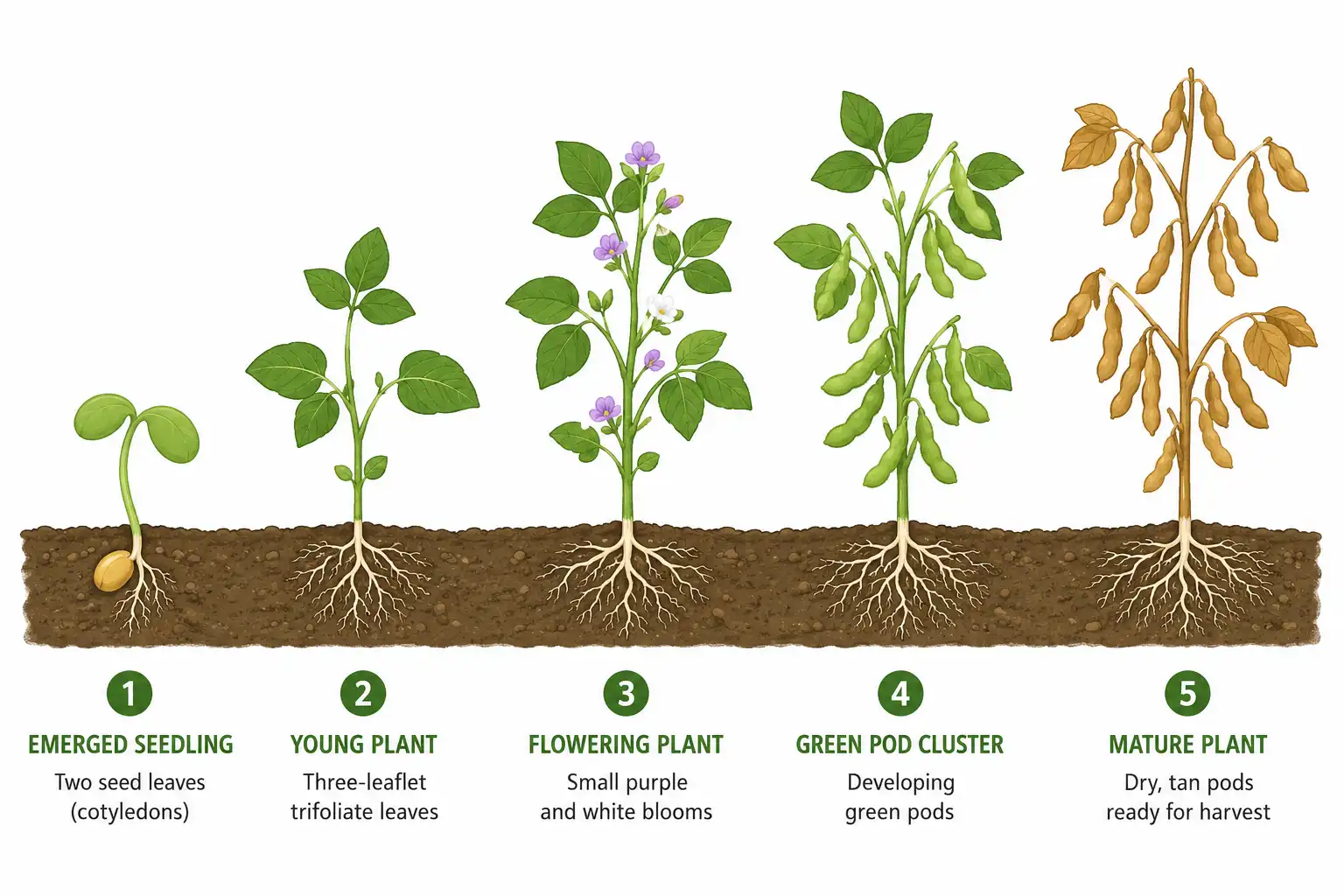
Soybeans change appearance fast across a single season. What do soybeans look like growing? They start as two seed leaves pushing through soil, then build bushy green plants with three-part leaves, small white or purple flowers, and fuzzy pods that dry to tan at harvest.
Growing soybeans look like erect, bushy annuals, 2 to 4 feet tall, with fuzzy stems and trifoliate leaves of three leaflets each. The plants carry small white or purple flowers, then green pods that ripen to tan or brown.
How Soybean Seedlings Look When They First Emerge
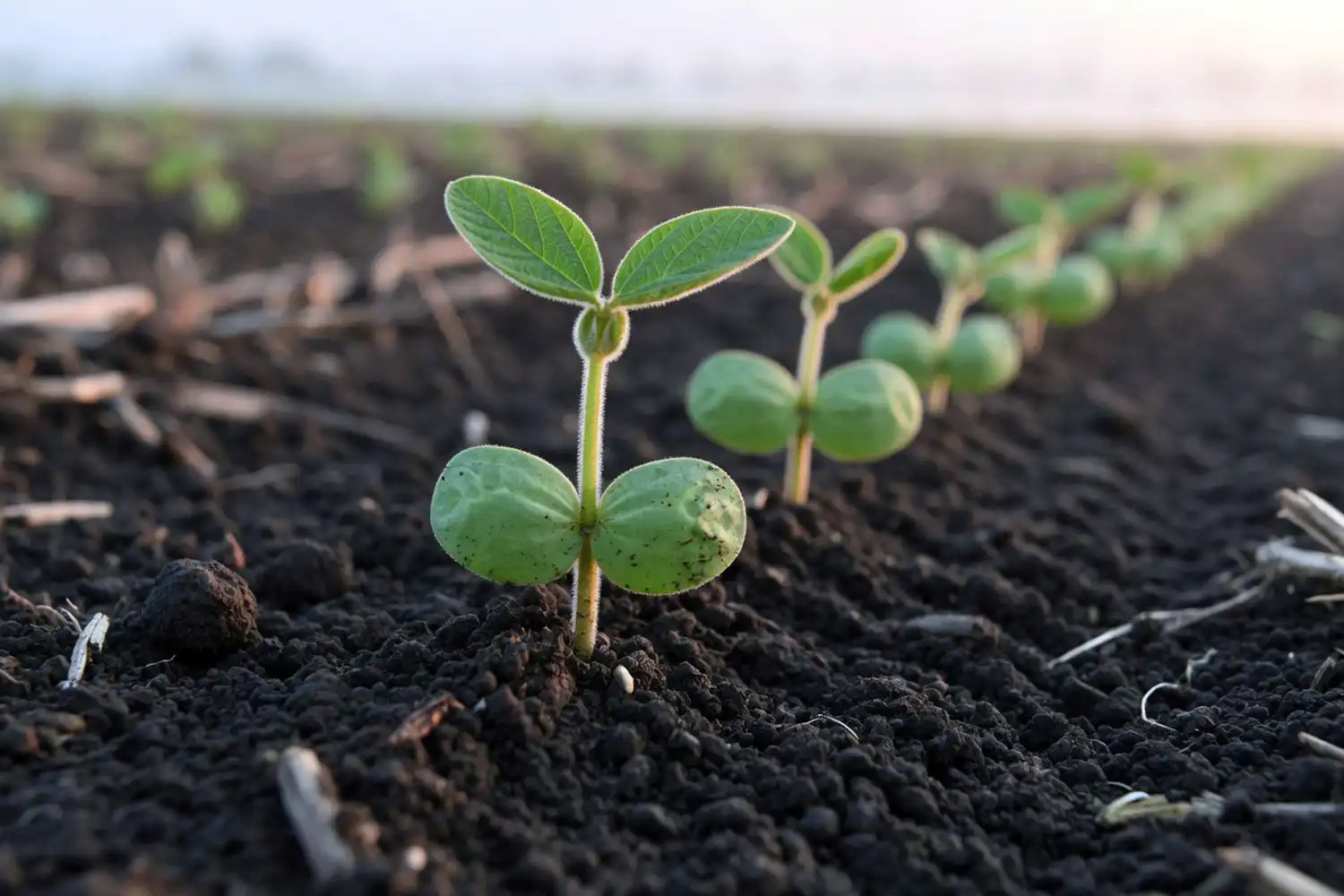
A new soybean seedling looks like two thick, oval seed leaves on a curved stem breaking the soil surface. Those first leaves are the cotyledons. They ride up on a hooked stem called the hypocotyl. Once the hook straightens, the cotyledons open and turn green within a day or two.
Emergence usually happens 5 to 10 days after planting, depending on soil temperature and moisture. The growing point sits above the soil at this point, not below it like corn. That is why a late frost or hail hits young soybeans harder than young corn.
Right after the cotyledons, a pair of single leaves unrolls at the first node. These are the unifoliate leaves, and they sit opposite each other. Seeing them means the plant cleared emergence cleanly. Stand quality starts here, so getting the right planting depth for even emergence matters more than most folks think.
The Three Leaflets That Mark Every Soybean Plant
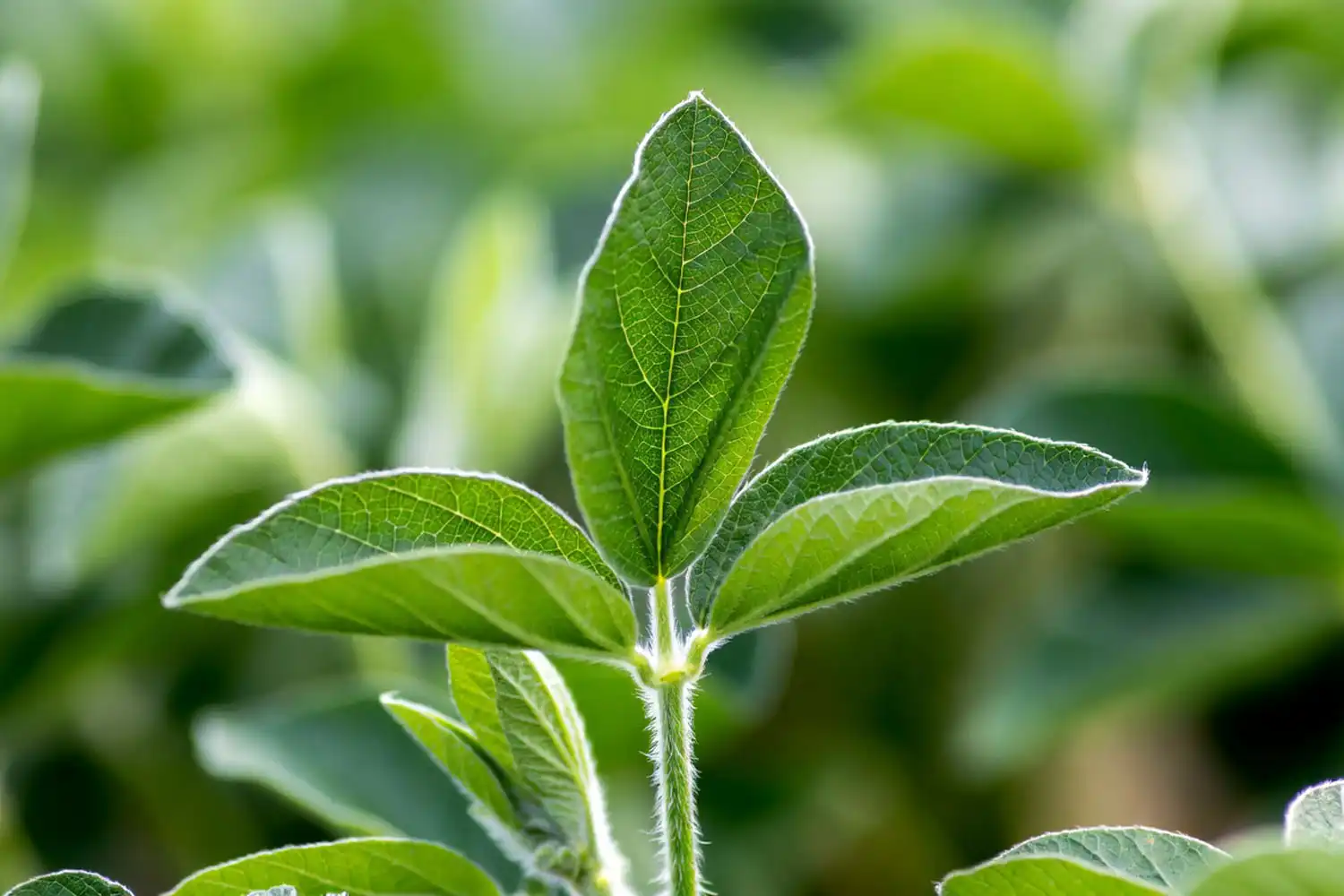
Every true soybean leaf is a trifoliate, meaning one leaf made of three leaflets. The three leaflets share a single stalk and attach to the stem in an alternating pattern. This three-part leaf is the easiest way to spot a soybean (Glycine max) plant in a field.
Field crews count these leaves to set the growth stage. One full trifoliate is V1, two is V2, and so on up the main stem. By V2, plants stand about 6 to 8 inches tall. Around then, root nodules form and nitrogen fixation begins. Rhizobium bacteria in those nodules pull nitrogen from the air and feed the plant.
The leaflets are broad, pointed, and medium green. Like the rest of the plant, they carry fine hairs. Run your hand across the canopy and it feels slightly fuzzy.
How Tall Do Soybeans Grow?
Most soybeans grow 2 to 4 feet tall, with 2.5 to 3.5 feet common across the Great Plains and Corn Belt. The plant is erect and bushy, with branches coming off a central stem. Together those branches build a dense green canopy that closes over the rows by midsummer.
Final height depends on variety, planting date, row spacing, and weather. Maturity group plays a role too. Northern fields run lower group numbers, and southern fields run higher ones. In USDA zone 6a, planting groups suited to Kansas typically fill a normal canopy in 15-inch rows by July.
What Do Soybean Flowers Look Like?
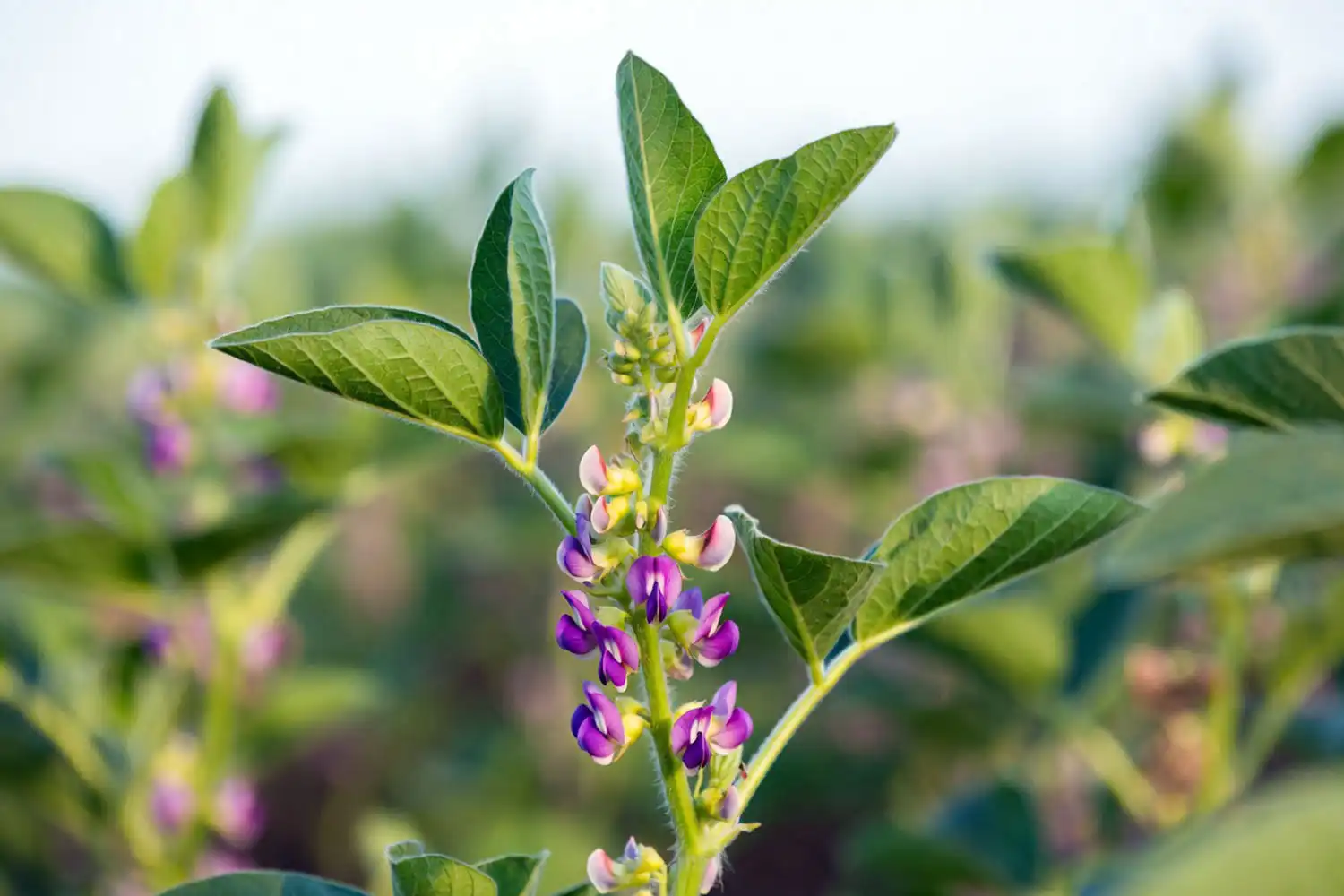
Soybean flowers look like tiny pea-shaped blooms, about a quarter inch long, in either white or purple. They grow in small clusters where the leaves meet the stem. Each variety holds one flower color, so a field reads as either white-flowered or purple-flowered, never both on one plant.
Flowering starts at the R1 stage, usually when plants reach V7 to V10 and stand 15 to 18 inches tall. The first blooms open low on the plant, around the third to sixth node, then move up and out along the branches. Soybeans self-pollinate, so they do not need bees to set seed.
The plant sets far more flowers than it keeps. Anywhere from half to four-fifths of them drop off without making a pod. That is normal. What stays inside the pods is what drives yield.
How Soybean Pods Develop and Fill Out
Young pods look like small, flat, fuzzy green pods in clusters at the leaf nodes. They show up within one to two weeks of the first flowers. At the R3 stage a pod runs about 3/16 inch. By R4, full pod, it reaches about three-quarters of an inch, and growth speeds up.
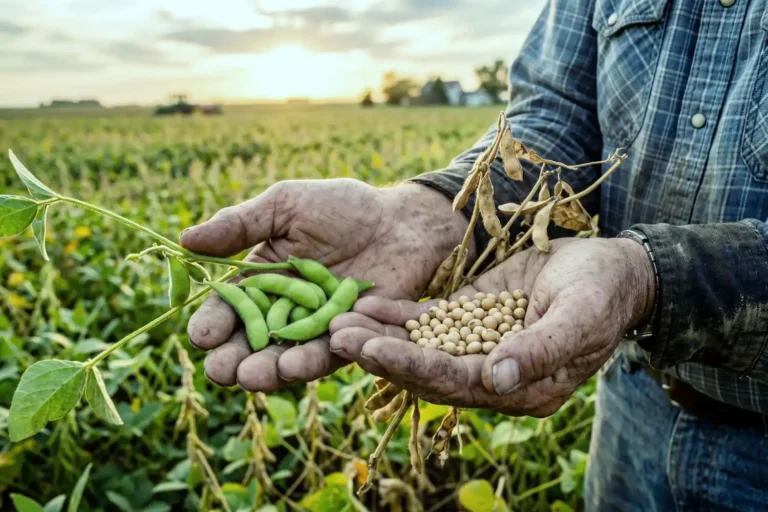
Each pod is slightly curved and covered in the same fine hairs as the stem. Most hold two or three seeds, sometimes four. Inside, the seeds start small and green, then swell to fill the pod cavity through R5 and R6. Picked young and green, these same beans are sold as edamame, which is the main split between soybeans and edamame.
Seed fill is the make-or-break window. The plant moves food from leaves into seeds for 30 to 40 days. Stress here, like drought or hail, cuts yield fast. This stretch from bloom to filled pod is the heart of the crop’s run from seed to harvest.
What Soybeans Look Like at Maturity and Harvest
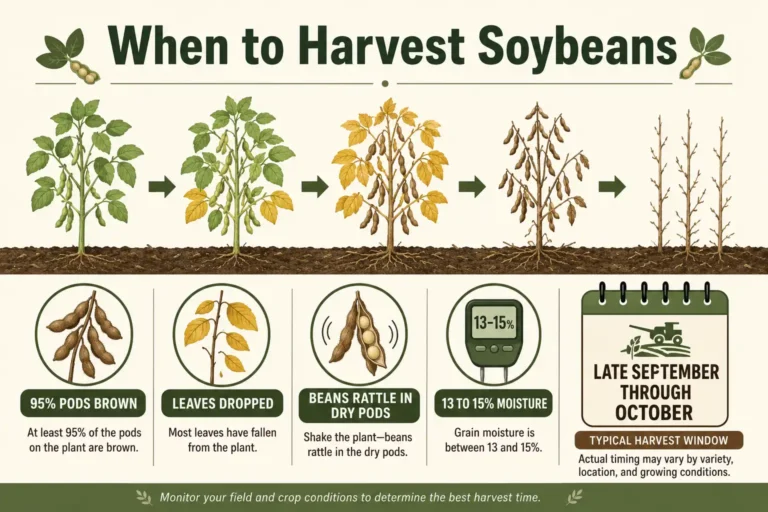
Mature soybeans look like dry, tan or brown plants with brittle pods and no leaves. The change starts at R6, when the lowest leaves yellow. By R7, one pod on the main stem turns its mature brown or tan color, and about half the leaves have yellowed.
At R8, full maturity, 95 percent of the pods have turned color and the leaves drop off. The whole plant browns out, and the pods rattle when you shake them. Pod color at this stage runs tan, brown, gray, or black depending on variety. Dark pods do not mean disease. They are just a variety trait.
After R8, the crop needs 5 to 20 days of dry weather to fall below 15 percent moisture. Then it combines clean. If you want the full picture of growing soybeans from planting to harvest, this drydown is the last visual cue before the header rolls.
What Do Soybeans Look Like Growing Across a Full Season?
Across a full season, soybeans shift from bare rows of tiny green seedlings to a tall green canopy, then to a yellow and finally brown field at harvest. Each phase has a clear look.
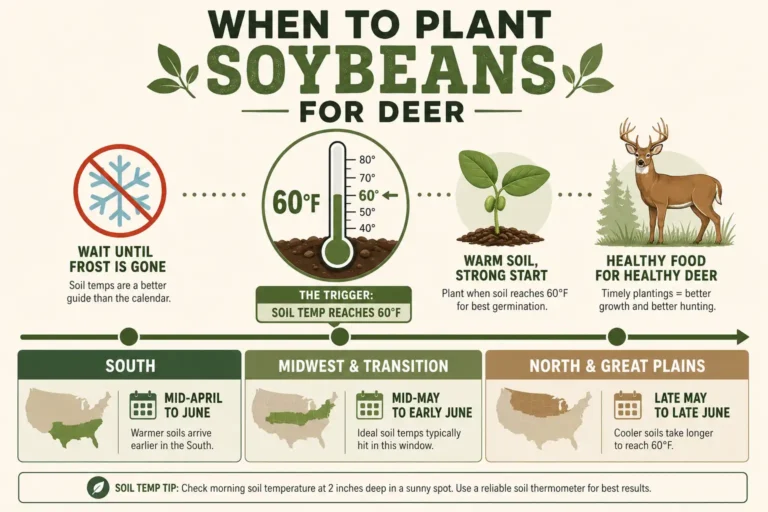
In late spring you see short rows of seedlings with seed leaves and the first trifoliates. By early summer the canopy fills in green and bushy. Midsummer brings flowering, with small white or purple blooms tucked in the leaves. Late summer the plants stay green while pods fill. By early fall the field turns gold, then tan, as leaves drop and pods dry. Timing all of this starts with knowing when to plant soybeans for your area.
How to Tell Soybeans Apart From Other Field Crops
Look for the three-leaflet leaf, the fuzzy stem, and the bushy 2 to 4 foot height. That combination separates soybeans from most field crops. Corn stands taller with long single blades. Cotton has lobed leaves and showy flowers. Dry beans look similar but usually sit on different row patterns and lack the dense soybean canopy.
The fuzzy texture is a strong tell. Soybeans carry fine hairs on stems, leaves, and pods. Few other row crops feel that way. In fall, the small tan pods packed with two or three round beans confirm it. Those beans get crushed for oil and meal, which is a big part of what soybeans are used for across the country.
What to Watch For When Walking Soybean Fields
Read soybeans by their look at each stage. Even seed leaves and clean rows early, dark green trifoliates through summer, then steady flowering and pod set. When the field turns gold and the pods rattle, harvest is close. Learning each look helps you catch a problem before it costs you bushels.