Is Eggplant a Nightshade? Family, Alkaloids, and Safety
Nightshade lists show up in diet plans, garden rotation charts, and disease guides. Eggplant sits on almost every one. So is eggplant a nightshade, and does that label change how you grow it or eat it?
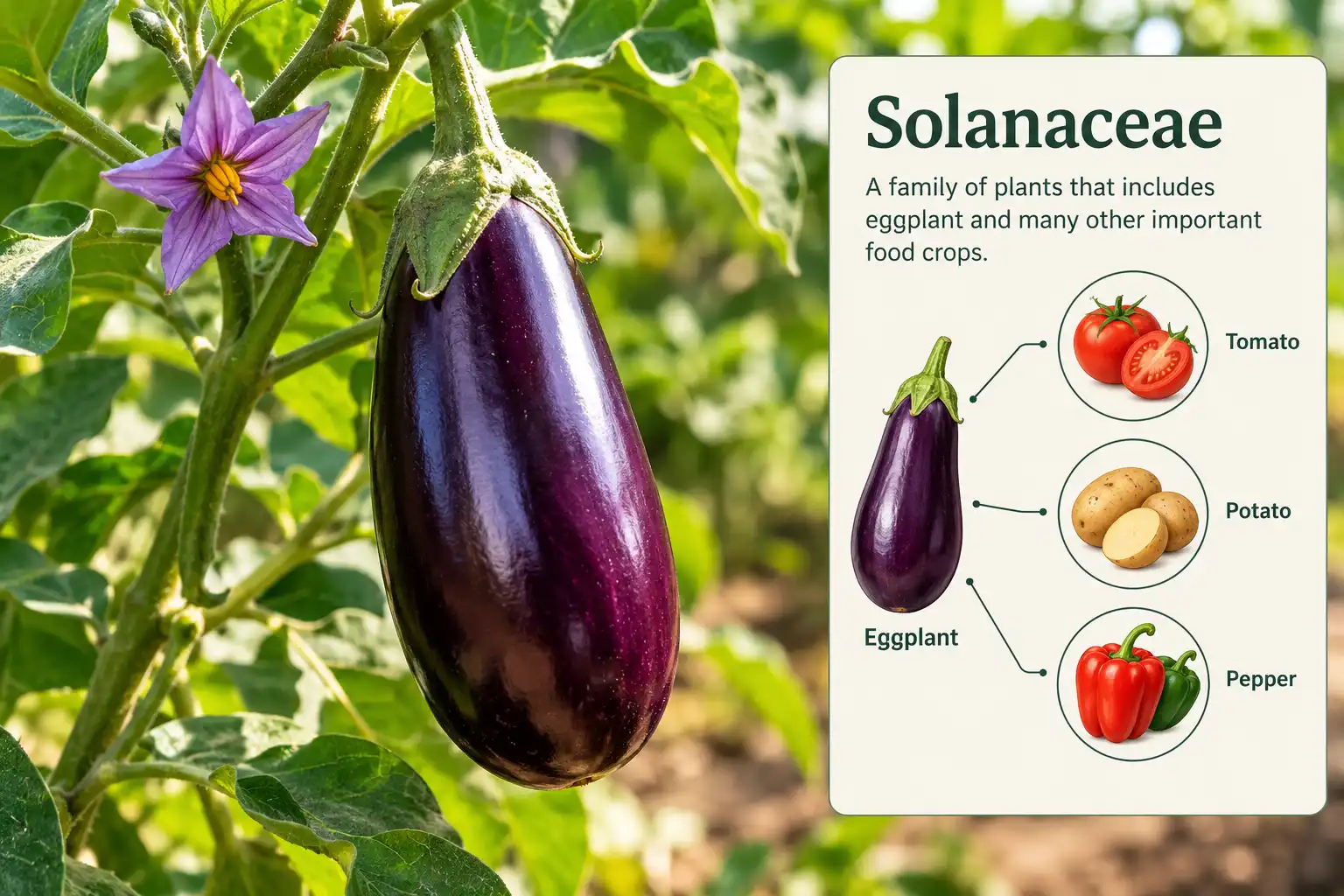
Yes, eggplant is a nightshade. Solanum melongena sits in the Solanaceae family with tomato, potato, and pepper. Its leaves and stems hold mild glycoalkaloids, while the fruit stays low enough for normal eating.
What Makes Eggplant a Nightshade?
Eggplant is a nightshade because it belongs to the plant family Solanaceae. Its botanical name is Solanum melongena. That puts it in the genus Solanum, the same genus as potato (Solanum tuberosum) and tomato (Solanum lycopersicum).
Family placement comes from flower and fruit structure, not from any health rating. According to NC State Extension, eggplant belongs to the Solanaceae or nightshade family along with tomatoes, potatoes, and peppers. The same source notes its small violet flowers are star shaped, and its leaves and stems carry star shaped hairs.
You can confirm the family traits on the plant itself:
- Five petals fused into a star shaped flower
- A tight cone of yellow anthers at the flower center
- Fruit that forms as a fleshy berry holding many small seeds
- Alternate leaves, often fuzzy and sometimes prickly
Those same traits appear on tomato and potato blooms. Once you know the flower shape, the family link is easy to spot in any bed. Anyone comparing eggplant plant features against a tomato plant will notice the flowers first.
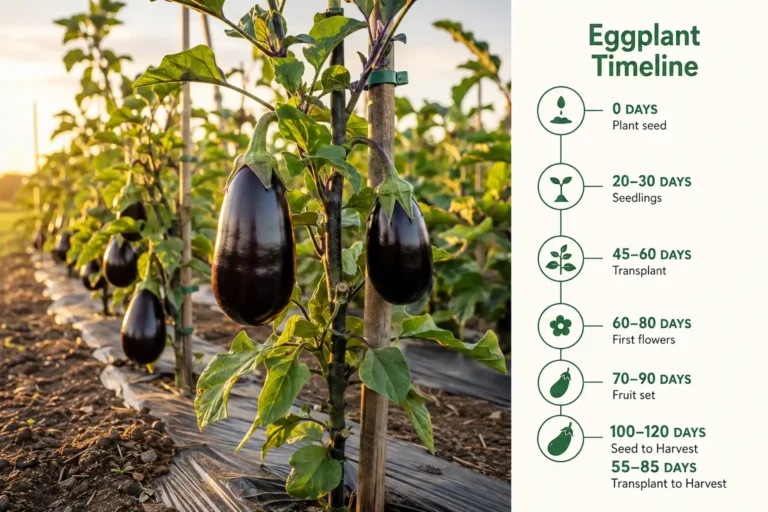
NC State Extension lists 105 to 133 days from seeding to harvest. That long warm season need runs across the whole family.
Which Other Crops Are Nightshades?
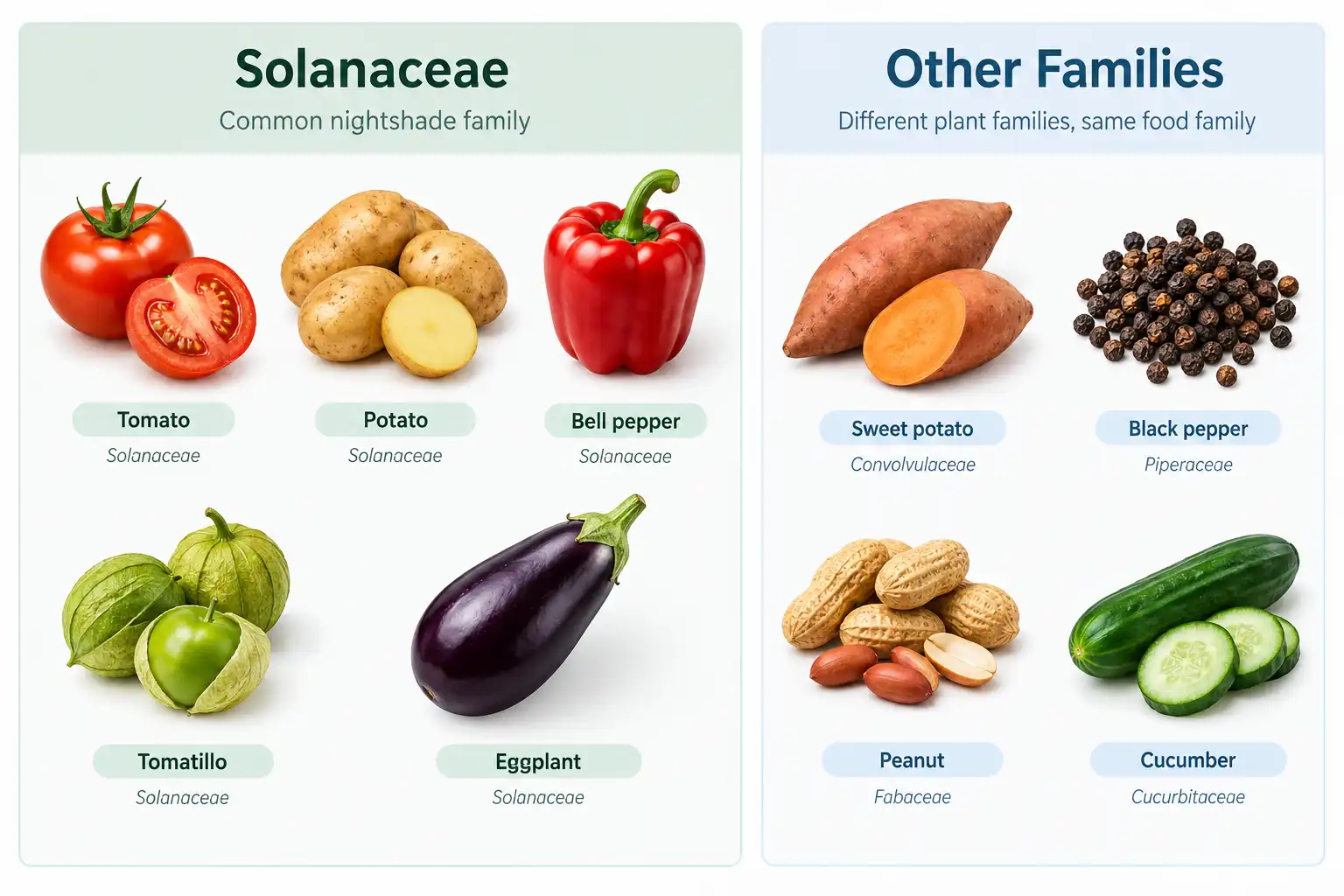
Roughly 2,500 species sit in Solanaceae, but only a handful reach US kitchens and fields. Several crops that people assume are nightshades actually belong to other families.
| Crop | Botanical family | Nightshade |
|---|---|---|
| Eggplant | Solanaceae | Yes |
| Tomato | Solanaceae | Yes |
| Potato | Solanaceae | Yes |
| Bell and chili peppers | Solanaceae | Yes |
| Tomatillo | Solanaceae | Yes |
| Ground cherry | Solanaceae | Yes |
| Goji berry | Solanaceae | Yes |
| Tobacco | Solanaceae | Yes |
| Sweet potato | Convolvulaceae | No |
| Black pepper | Piperaceae | No |
| Peanut | Fabaceae | No |
| Cucumber and squash | Cucurbitaceae | No |
Sweet potato causes the most confusion, since the name suggests a potato relative. It sits in the morning glory family instead. Black pepper is a vine fruit from a separate family, so it stays off nightshade elimination lists. Peanuts raise the same question every season. The answer there is also no, since peanuts sit outside the nightshade family.
Paprika and cayenne do count, though, because both come from Capsicum peppers.
Is Eggplant Related to Deadly Nightshade?
Eggplant shares a family with deadly nightshade, but not a genus. Deadly nightshade is Atropa belladonna, which sits in the genus Atropa. Eggplant is Solanum melongena.
The gap between them is chemical, not just taxonomic. Belladonna produces atropine and scopolamine at levels that make small doses dangerous. Eggplant produces different alkaloids at a tiny fraction of that concentration.
Family membership alone tells you nothing about toxicity. Solanaceae holds food crops, ornamentals like petunia, and genuinely poisonous species such as jimsonweed. What separates them is which compounds each species makes and how much.
Does Eggplant Contain Solanine?
No. Eggplant does not produce solanine. Solanine and chaconine are potato alkaloids, built on a steroid backbone called solanidine.
Eggplant makes solasonine and solamargine instead. Both use a different backbone, solasodine. That difference matters. Solasodine based compounds show lower toxicity in testing than the solanidine based compounds in potato.
Concentrations are low in the fruit. A review in the Pharmaceutical Chemistry Journal cites a survey of 21 eggplant varieties. Total glycoalkaloids ran from 6.25 to 20.5 mg per 100 grams of fresh fruit. The average landed at 11.3 mg. Common food safety guidance for Solanum crops sets a 200 mg per kilogram ceiling. That equals 20 mg per 100 grams.
Levels are not even across the plant. Flower buds and leaves test highest, while the fruit tests well below them. Concentration also climbs as fruit passes full maturity, which is one reason overripe eggplant turns bitter.
Is Eggplant Safe to Eat?
Yes, eggplant fruit is safe for most people at normal serving sizes. The parts to leave alone are the leaves and stems, which hold higher alkaloid levels and are not food crops.
USDA FoodData Central lists raw eggplant at roughly 25 calories per 100 grams. That same serving holds about 3 grams of fiber and 229 mg of potassium. Skin carries much of the fiber and the purple anthocyanin pigment, so peeling removes real nutrition.
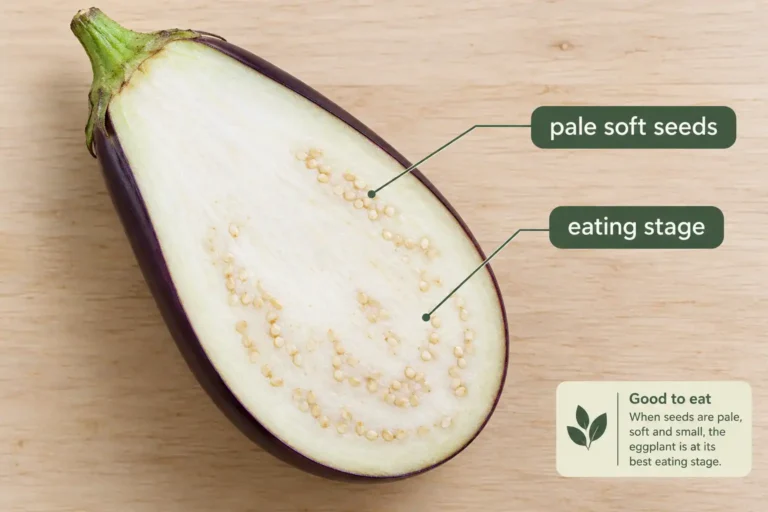
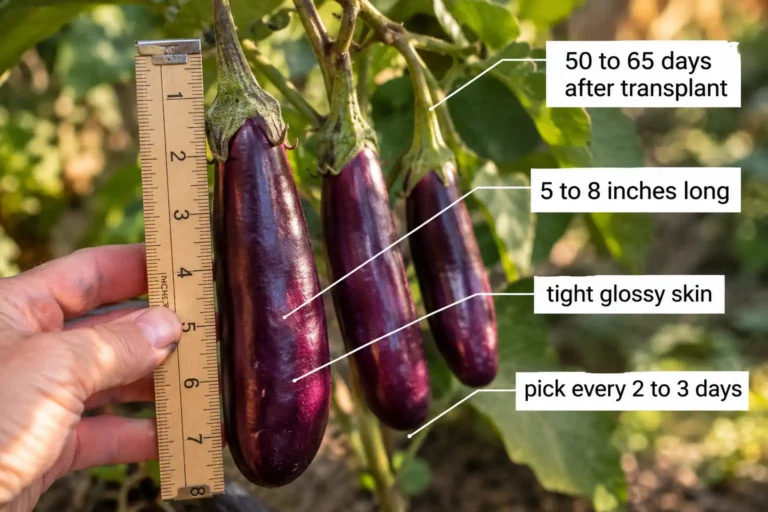
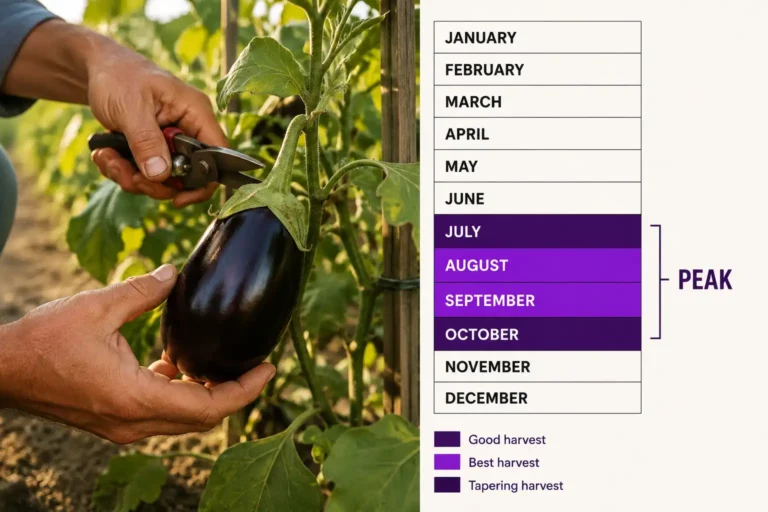
Bitterness is your practical signal. Bitter flavor tracks with higher glycoalkaloid and saponin content. It usually means the fruit sat too long on the plant. Pick while the skin still snaps back under thumb pressure and the seeds stay pale. Getting eggplant harvest timing right removes most bitterness complaints before they start.
Two more points worth knowing:
- Cooking does not meaningfully reduce glycoalkaloid content, since these compounds are heat stable
- Salting sliced fruit draws out moisture and some bitter compounds, but it is a flavor step, not a safety step
Do Nightshades Like Eggplant Cause Inflammation?
Research has not established a link between eating nightshades and worse joint inflammation. The Arthritis Foundation notes that scientific evidence on either side is thin, while many people still report symptom changes.
Two things are true at once here. Population level studies have not found nightshades driving arthritis flares. At the same time, individual food sensitivities are real, and some people consistently feel worse after eating them.
If you want to test your own response, the common approach is a short elimination window followed by careful reintroduction. Keep notes on sleep, stress, and weather alongside food, since those confound the picture. Anyone managing an autoimmune condition should run that plan past a clinician first. Dropping a nutrient dense food group on assumption carries its own cost.
What Does Nightshade Status Mean for Crop Rotation?
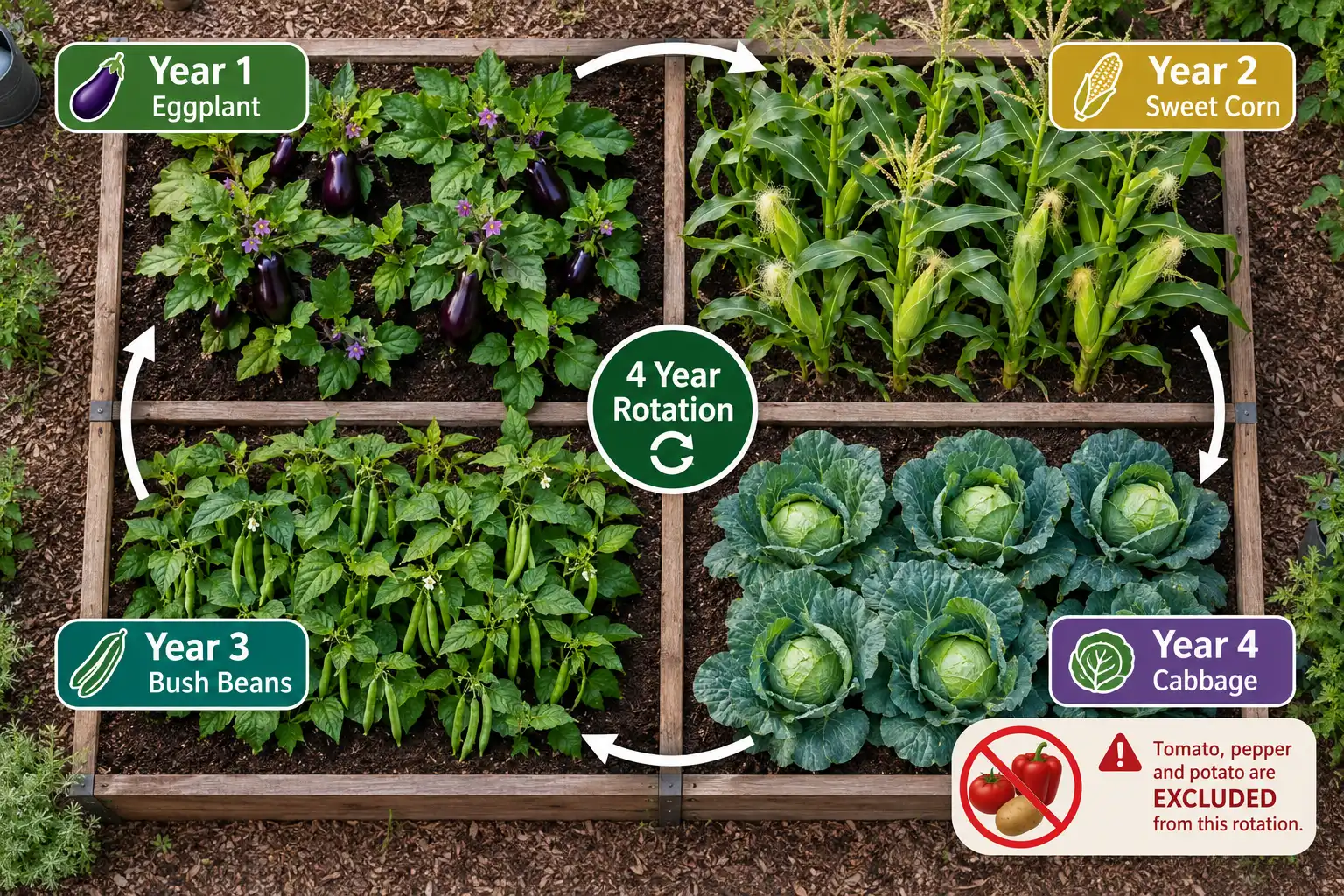
Nightshade status matters more in the field than on the plate. Eggplant shares soilborne pathogens and specialist insects with tomato, pepper, and potato. Following one with another rebuilds pest pressure instead of breaking it.
| Shared problem | Hosts | Time away from nightshades |
|---|---|---|
| Verticillium wilt | Eggplant, tomato, pepper, potato | 3 years minimum, 4 to 5 better |
| Colorado potato beetle | Eggplant, potato, tomato, pepper | 1 year plus physical separation |
| Early blight | Eggplant, tomato, potato | 2 to 3 years |
| Bacterial wilt | Eggplant, tomato, pepper, potato | 3 years plus drainage correction |
University of Maryland Extension recommends a three year rotation for crops susceptible to Verticillium wilt. Utah State University Extension explains why longer is safer. The fungus survives as microsclerotia, hard black resting structures. Those can persist in soil for a decade or more.
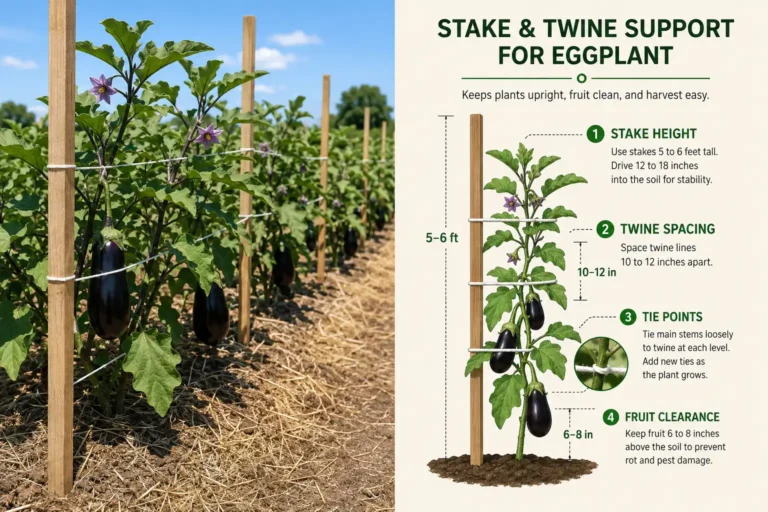
Good follow crops include sweet corn, small grains, brassicas, cucurbits, and onions. None of them host the nightshade specific pathogens. Keeping a crop rotation planning sheet beats trying to recall which bed grew what.
Bed neighbors follow the same logic. Planting eggplant and tomatoes together concentrates the same pest and disease load in one spot.
Which Pests and Diseases Does Eggplant Share With Other Nightshades?
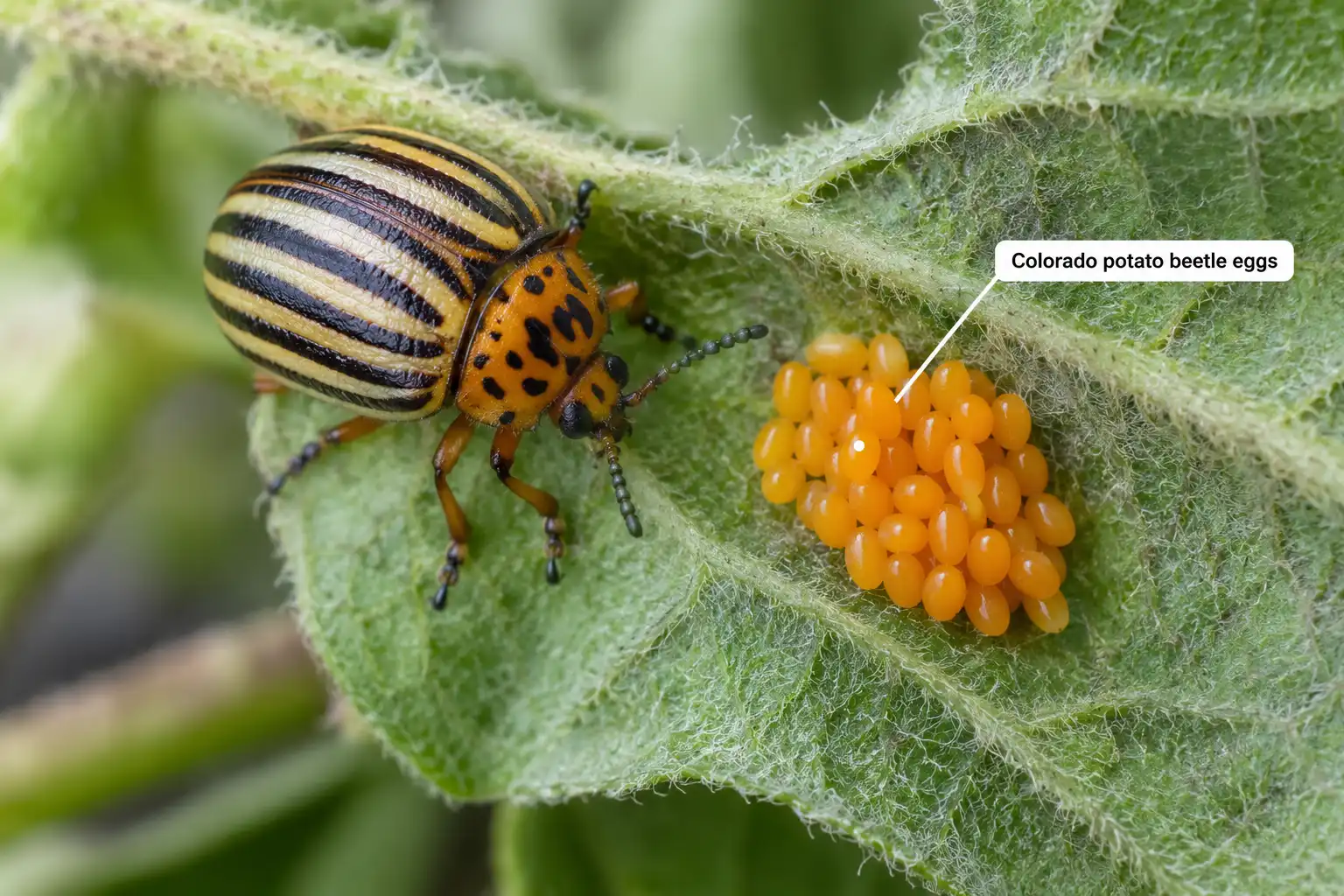
Eggplant shares its worst pests with the rest of the family because those insects feed only on Solanaceae. That narrow host range is exactly what makes rotation work.
Colorado potato beetle. University of Maryland Extension states that eggplant is a favorite host, and notes the beetle can be pulled to eggplant as a trap crop to protect potatoes. Adults and larvae strip foliage fast, and defoliation past 20 percent cuts yield. Scout leaf undersides for orange egg clusters early.
Flea beetles. These chew small round shot holes in young leaves. Damage hits hardest in the first few weeks after transplant. Row cover until flowering usually carries the crop past the worst of it.
Verticillium wilt. Lower leaves yellow, plants stunt, and cut stems show darkened vascular tissue. There is no rescue treatment once plants are infected.
Bacterial wilt and early blight. Both move through the same family and both reward sanitation. Pull and destroy infected plants rather than composting them.
Telling fungal wilt from bacterial wilt saves guesswork. A broader reference on crop disease symptoms helps when two problems show up at once.
Is Eggplant a Fruit or a Vegetable?
Botanically, eggplant is a fruit, and more precisely a berry. It develops from a flower’s ovary and holds seeds inside fleshy tissue. Tomato and pepper follow the same pattern.
In cooking and in USDA food group terms, eggplant counts as a vegetable. Both labels are correct in their own system, which is the same situation tomatoes sit in.
Frequently Asked Questions
Is eggplant the same nightshade as the poisonous one?
Can you eat eggplant skin and seeds?
Are eggplant leaves poisonous?
Does cooking remove nightshade alkaloids from eggplant?
Which nightshade has the most alkaloids?
Can you plant eggplant where tomatoes grew last year?
Key Points to Carry Into the Field
Eggplant is a nightshade in the full botanical sense. That fact earns its keep in rotation planning more than in diet planning. The fruit is safe, low in alkaloids, and nutrient dense. The family link that actually costs you money is the shared pest and pathogen load with tomato, pepper, and potato. Plan three years or more between nightshade crops in the same ground. Scout early for Colorado potato beetle. Then harvest before fruit turns bitter.