When to Harvest Eggplant: Gloss, Press Test, and Timing
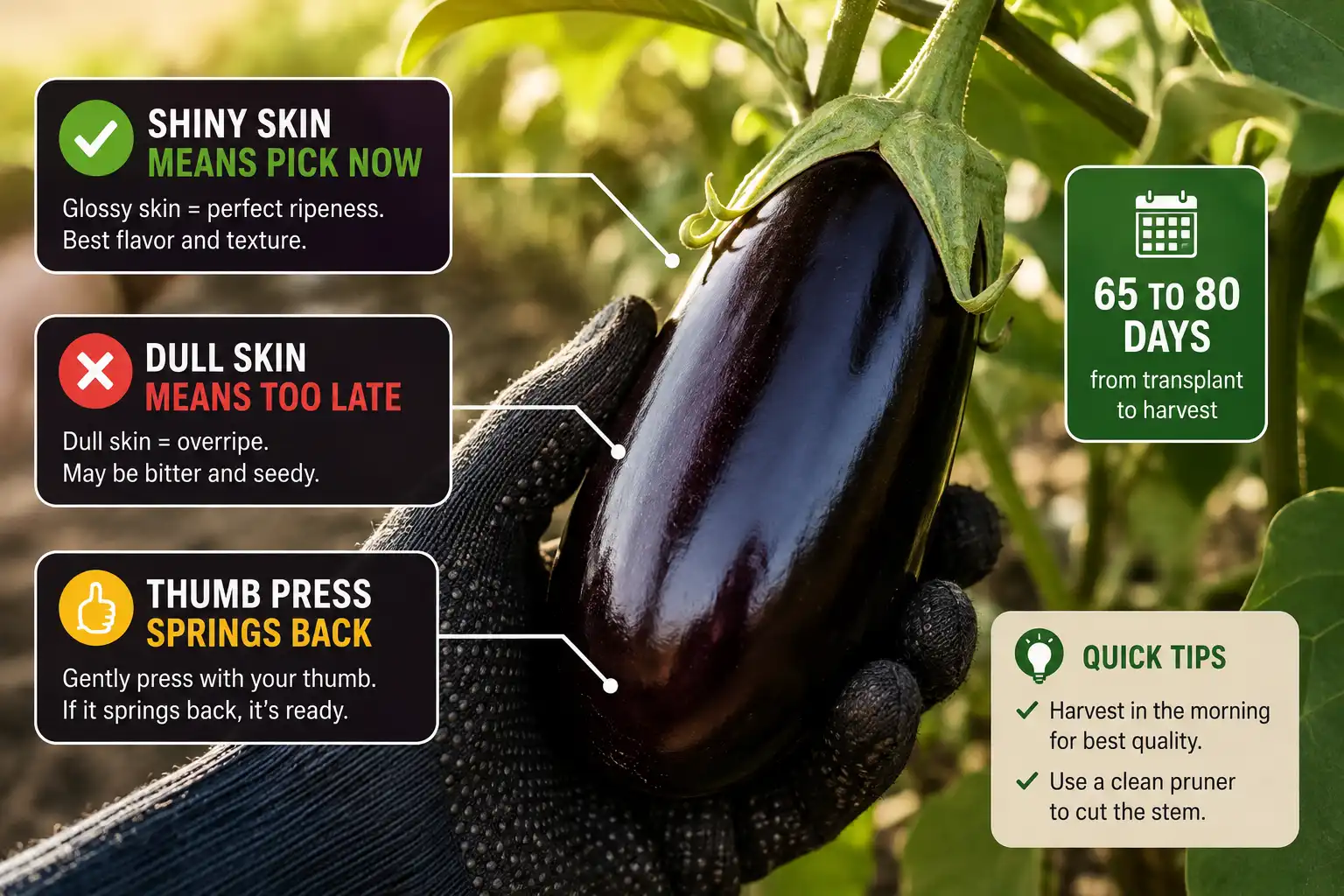
Eggplant gives you a narrow picking window. Pick early and you lose size. Wait too long and the flesh turns spongy and bitter. Knowing when to harvest eggplant comes down to skin gloss, a thumb press, and days from transplant, not calendar guessing.
Pick eggplant 65 to 80 days after transplant, while the skin still shines and a thumb press springs back. In practice, when to harvest eggplant depends more on gloss and firmness than on size.
When Is Eggplant Ready to Harvest?
Eggplant is ready 65 to 80 days after you set transplants in the field. Started from seed, the full count runs 100 to 120 days. Those numbers assume warm soil and steady moisture, so a cool June pushes them back.
There is a second clock that matters more day to day. Once a flower opens and sets, the fruit sizes up in 14 to 21 days. Warm nights speed that up. A stretch of 65°F nights stretches it toward three weeks.
Here is the part new growers miss: eggplant is picked immature on purpose. Solanum melongena is harvested well before the seeds finish developing. So a fruit that looks fully ripe by grocery store standards is already past its best eating stage. Michigan State University Extension notes that immature fruit at 3 to 5 inches is the tenderest and highest quality.
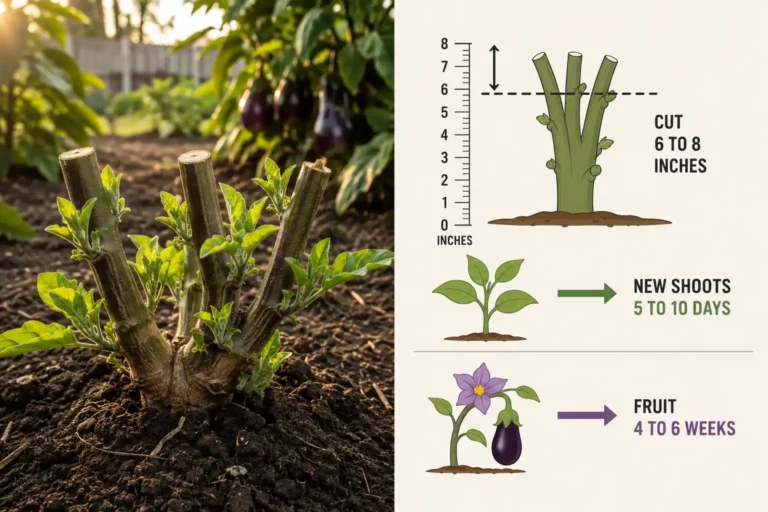
Heat also breaks the rhythm. Pollen loses viability above 90°F, so blossoms drop during a Kansas heat wave and fruit set stalls. That gap is normal. A second flush follows once temperatures moderate in late August. If your plants stopped setting mid-season but look healthy, keep water on them and wait. Our article on growing eggplant in the field cover how to hold plants through that stretch.
Eggplant Days to Maturity by Variety
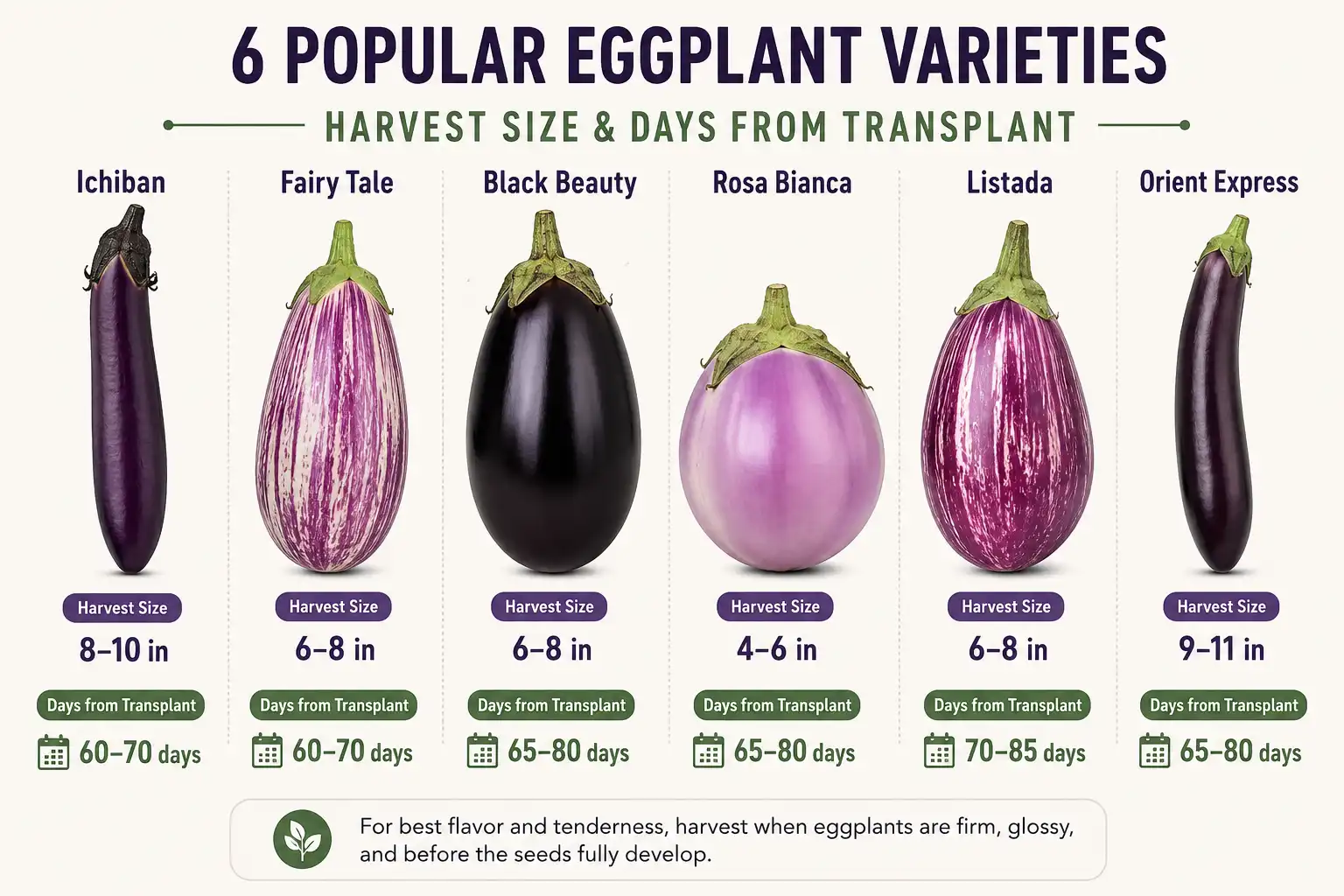
Days to maturity swing by more than 30 days across types, so check your seed packet before you count. Miniature and Asian slender types mature fastest. Italian globe and heirloom types take the longest.
| Variety | Type | Days from transplant | Harvest size |
|---|---|---|---|
| Fairy Tale | Miniature | 50 to 65 | 1 in. wide, 2 to 4 in. long |
| Millionaire | Japanese hybrid | 55 to 65 | 8 to 10 in. long |
| Orient Express | Asian slender | 58 to 65 | 8 to 10 in. long |
| Ichiban | Japanese | 58 to 70 | 7 to 10 in. long, 2 in. wide |
| Little Fingers | Mini Asian | 65 to 70 | 3 to 6 in. long |
| Black Beauty | Italian globe | 70 to 80 | 6 to 8 in. long |
| Rosa Bianca | Italian heirloom | 73 to 90 | 5 to 6 in. long |
| Listada de Gandia | Striped heirloom | 75 to 85 | 6 to 8 in. long |
Two practical notes come out of this table. First, the count starts at transplant, not at seeding. Second, short-season growers should lean on Orient Express or Millionaire. Both set fruit at cooler night temperatures and finish weeks ahead of Black Beauty.
Size targets matter as much as days. A Fairy Tale at 4 inches is mature. A Black Beauty at 4 inches is not. Judge each variety against its own standard.
How Can You Tell an Eggplant Is Ready to Pick?
Four field checks tell you, and they take about ten seconds per fruit. Run them in order.
The Gloss Test
Look at how the skin handles light. A ready fruit reflects light sharply, almost like wet paint. Once that shine flattens to a dull or bronze finish, the fruit has gone past prime. University of Illinois Extension puts it plainly: dull or brown fruit is too mature for the kitchen.
Gloss works on every color. White, green, and striped varieties never turn purple, so shine is your only reliable visual cue on those.
The Thumb Press Test
Hold the fruit in your palm and press the side with your thumb. Three outcomes are possible:
- Springs right back with no mark. Still immature. Give it three or four more days.
- Dents slightly, then rebounds slowly. Ready. Cut it today.
- Dent stays put. Overmature. The flesh has turned spongy.
That middle response is the target. It works across every type, including slim Japanese fruit that stays firmer than globe types.
The Size Check
Match the fruit against its variety standard from the table above, not against a grocery store eggplant. Commercial fruit is often picked larger than home quality peaks. NC State Extension flags fruit over 9 inches as likely overmature for most common types.
The Seed Check
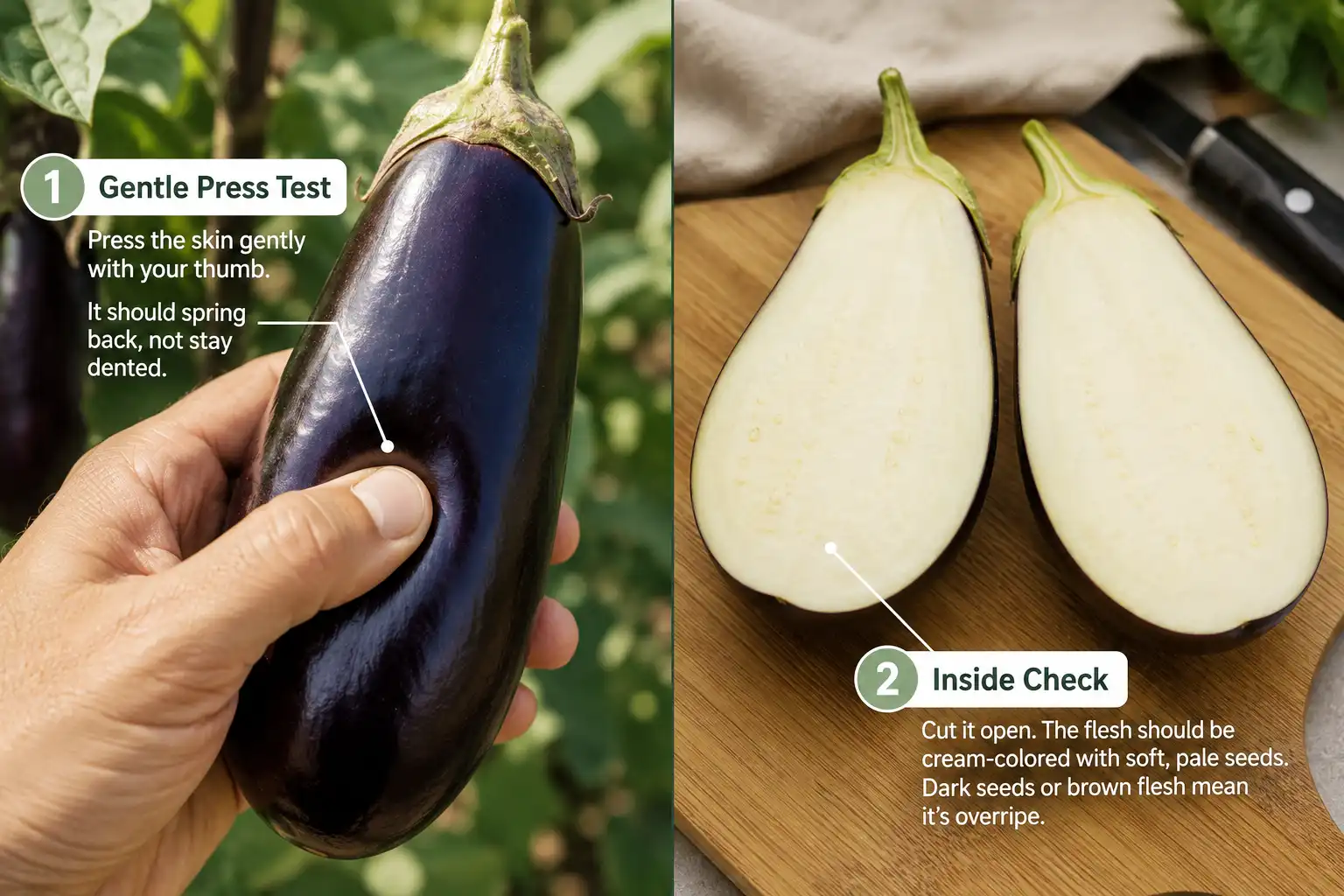
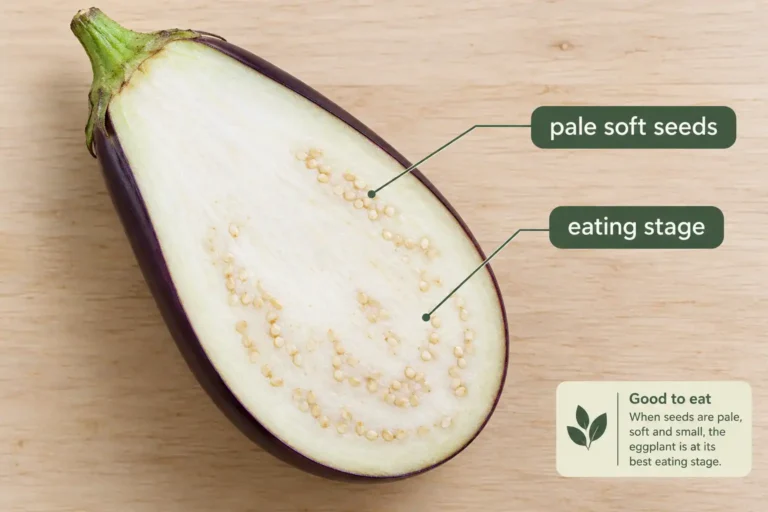
Cut one fruit open mid-season to calibrate your eye. Seeds should be pale, soft, and barely visible against cream-colored flesh. Brown or hard seeds mean you waited too long. Do this once, and the gloss test carries you the rest of the season.
What Does an Overripe Eggplant Look Like?
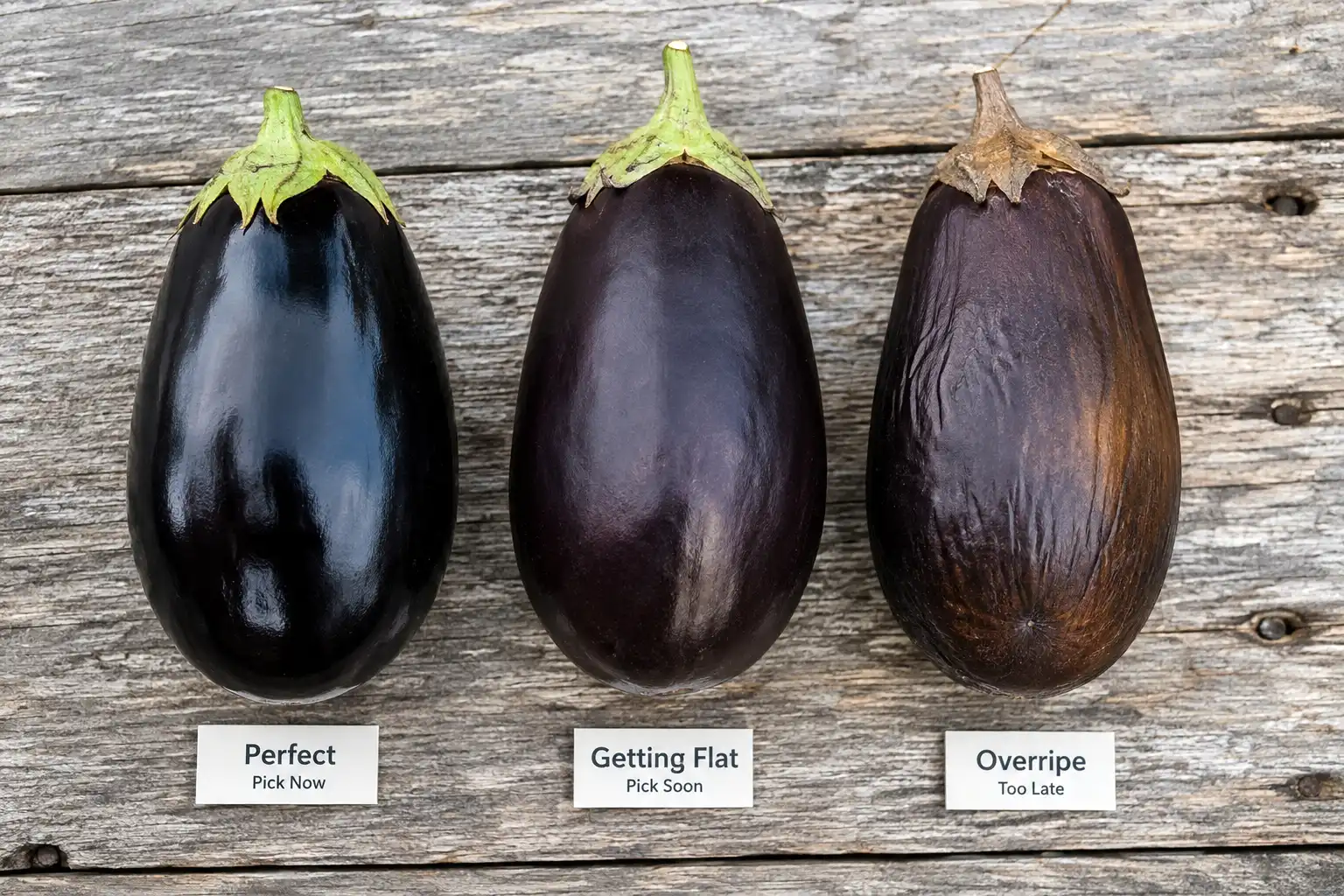
An overripe eggplant loses its shine first, then goes soft. The skin turns dull, bronzed, or yellowish. The flesh feels spongy under a press. Cut it open and the seeds are brown and hard instead of pale and soft. Flavor turns bitter as phenolic compounds build.
The calyx tells you something too. A fresh calyx is bright green and firm. A browning calyx means the fruit has been hanging too long or has lost water.
Leaving that fruit on the plant costs you more than one meal. Once a fruit matures fully, the plant reads its reproductive job as finished and slows new flower production. One forgotten fruit can delay the next fruiting cycle by two to three weeks. So walk the rows and cut every overmature fruit off, even the ones headed for the compost pile.
Bitterness has a second cause worth naming: drought stress. Plants running short on water build more bitter compounds regardless of picking timing. Eggplant needs about an inch of water per week during fruiting. Steady moisture and steady picking solve most bitterness complaints.
How Often Should You Pick Eggplant?
Pick every two to three days once fruit starts sizing. Twice a week is the absolute minimum during peak season. Fruit moves from perfect to spongy in about four days of Kansas August heat, so a weekly pass will cost you.
Frequent picking does double duty. You get better quality, and the plant keeps setting flowers instead of shutting down. Growers who harvest on a tight schedule pull noticeably more total fruit per plant across the season.
Expect four to six fruits per plant from globe types like Black Beauty at peak. Slender Asian types and miniatures produce far more. Each fruit draws less energy, so a healthy plant carries 15 to 20 across the season.
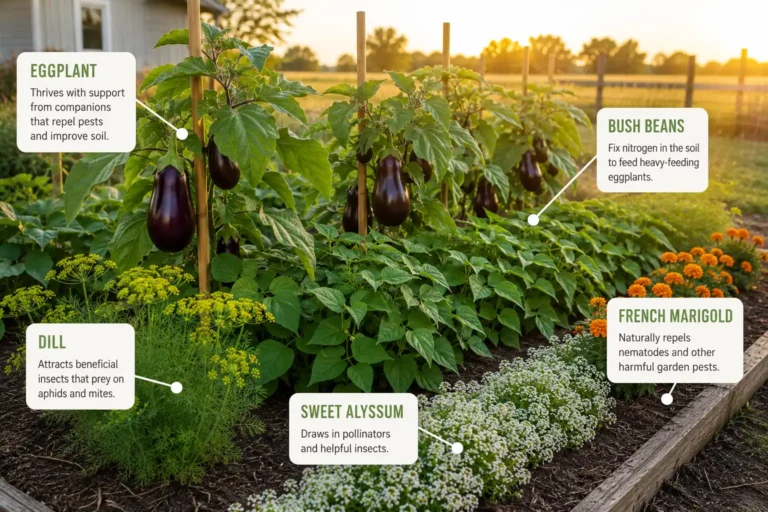
Checking eggplant rows during the same walk-through as pepper rows works well, since both crops share similar growth habits and care needs. That way nothing gets skipped. Pairing eggplant with other frequently picked crops helps. So plan what to grow alongside eggplant around your picking route.
How to Harvest Eggplant Without Hurting the Plant
Never pull or twist eggplant off the plant. The stems are woody, and pulling tears bark, snaps branches, and bruises fruit. Follow these steps instead.
- Wear gloves. Most varieties carry small spines on the calyx and stem. They draw blood.
- Use bypass pruners or a sharp knife. Clean cuts heal fast and leave no ragged stub.
- Cut about one inch above the calyx. Leave that green cap attached. It seals the fruit and slows water loss.
- Support the fruit as you cut. Let it settle into your hand rather than drop.
- Set fruit in a shallow vented container. Eggplant bruises easily and cannot take stacking. Vented garden harvest baskets that vent well beat a deep five gallon bucket every time.
- Get the load out of the sun within 30 minutes. Field heat drives water loss faster than anything else.
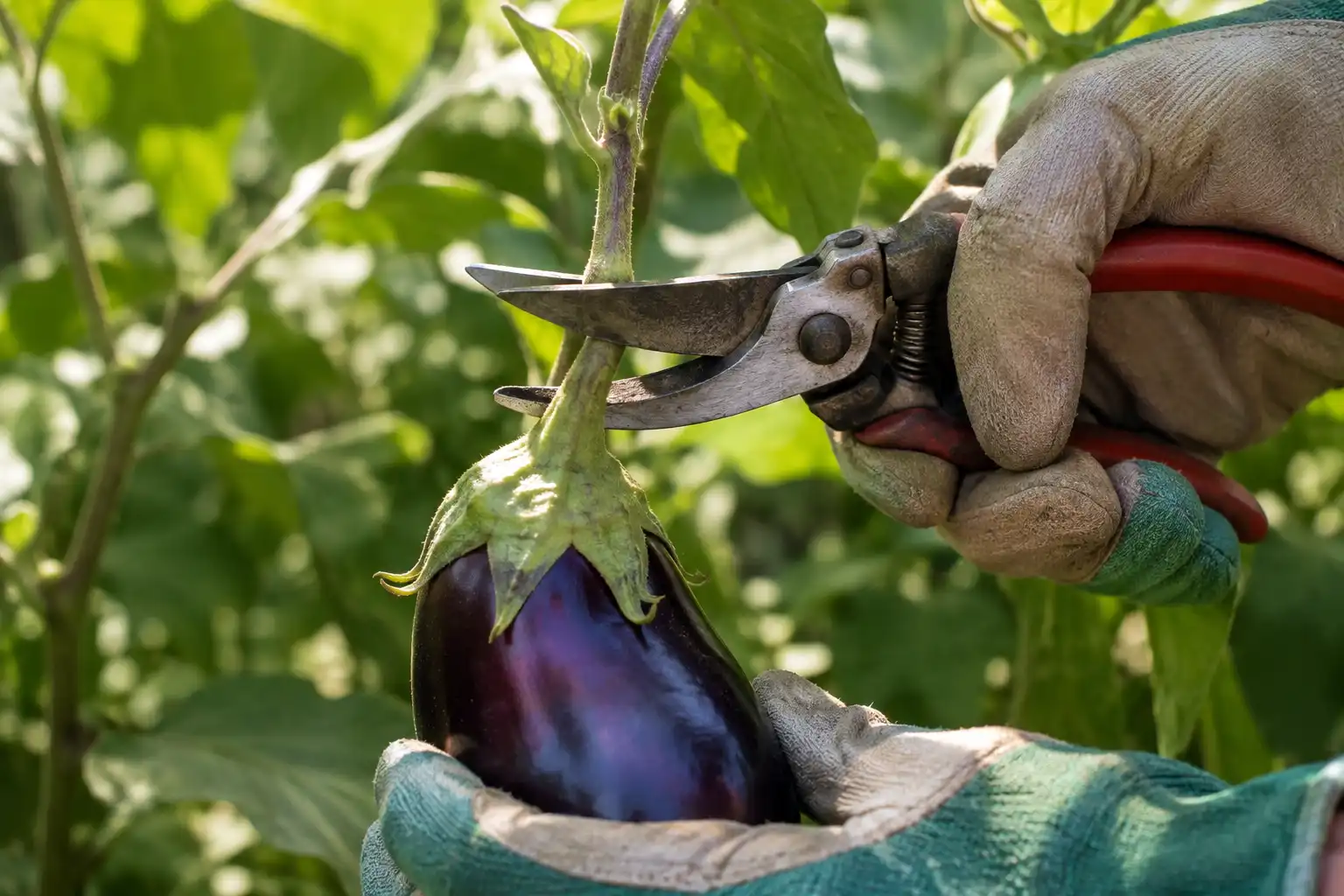
Bruises show up two days later as sunken brown patches, so careful handling pays off after the fact, not during. Solid handling produce right after harvest matters as much for eggplant as for any crop.
What Time of Day Should You Harvest Eggplant?
Harvest in the morning, after the dew dries but before the heat climbs. Fruit is fully turgid then, and it carries less field heat into storage. Both factors add days to shelf life.
Afternoon picking during a 95°F stretch is the fastest way to get limp, dull fruit by evening. If you must pick late, move the load straight into shade and cool it down.
Skip harvesting while foliage is soaking wet. Wet plants spread fungal spores from your hands and tools. Eggplant is prone to Phomopsis blight and early blight. A dry-foliage rule keeps you from spreading it down the row yourself.
When to Harvest Eggplant Before Frost
Clear the plants one to two days ahead of your first frost warning. Eggplant is frost tender, and 32°F ends the crop outright. In USDA hardiness zone 6a near Topeka, that usually falls in mid-October.
Watch nights ahead of that date. Once nighttime lows settle below 50°F, growth slows and new fruit stops sizing. Any fruit smaller than a golf ball at that point will not finish, so pick it anyway and use it. Small immature eggplant eats fine.
For the final pass, take everything usable regardless of size. Then pull the plants and get them off the field. Old nightshade residue harbors flea beetles and Verticillium wilt inoculum through the winter across the Great Plains.
Planning next season starts with that same frost math. Counting backward from your first frost sets your eggplant planting window so the crop has enough warm days to finish.
How to Store Eggplant After Picking
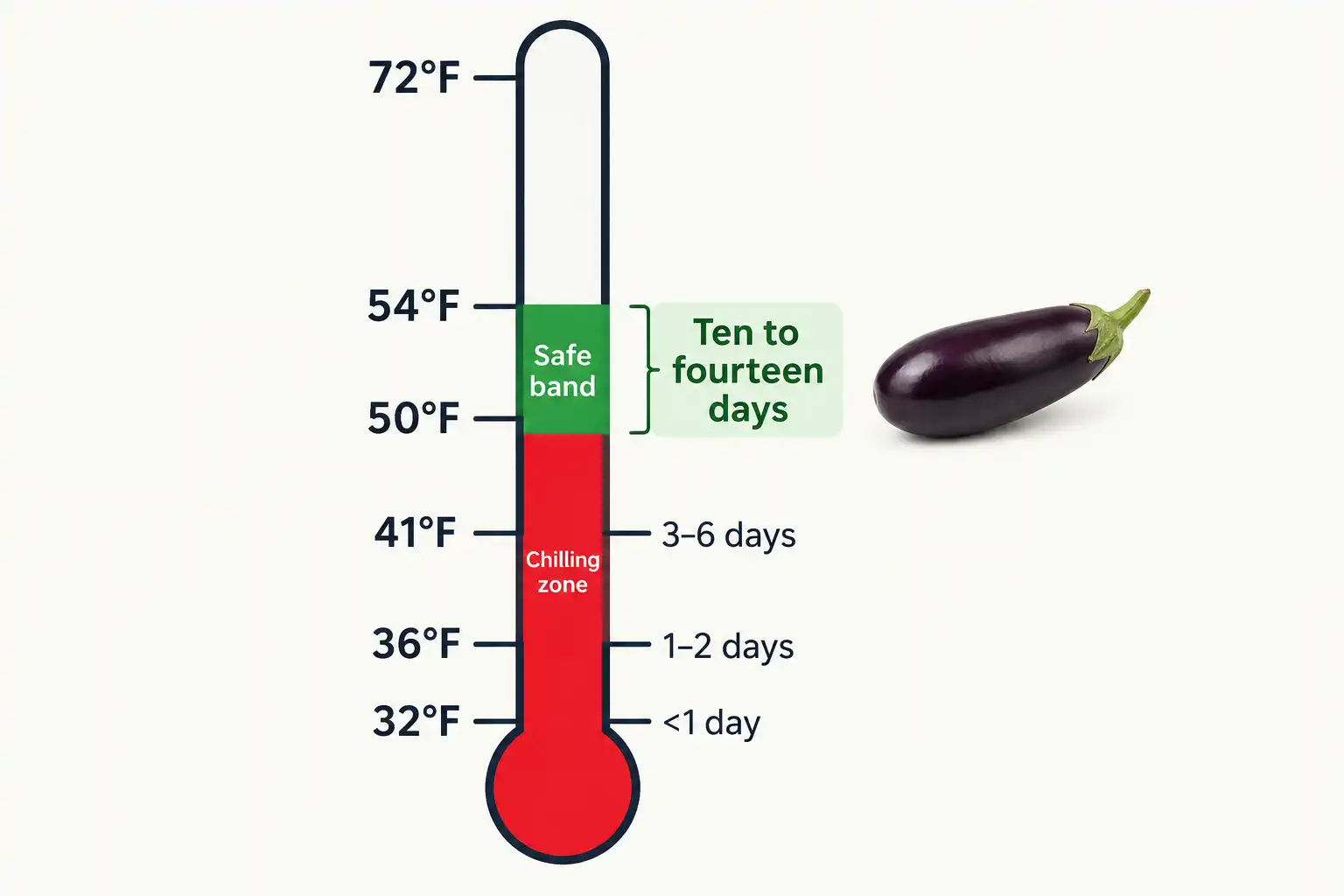
Store eggplant at 50 to 54°F with 90 to 95 percent humidity. That range holds quality up to 10 to 14 days. A standard refrigerator runs too cold, which is the single most common storage mistake.
| Storage condition | Temperature | How long before quality drops |
|---|---|---|
| Best storage range | 50 to 54°F | 10 to 14 days |
| Cool basement or root cellar | 55 to 60°F | 7 to 10 days |
| Kitchen counter | 68 to 72°F | 3 to 4 days |
| Refrigerator shelf | 41°F | Chilling injury in 6 to 8 days |
| Cold refrigerator | 36°F | Chilling injury in 4 days |
| Near freezing | 32°F | Chilling injury in 1 to 2 days |
Chilling injury shows up as surface pitting, bronze scald patches, browned seeds, and faster decay. Research from the UC Davis Postharvest Technology Center documents those thresholds clearly, and the damage accumulates rather than reverses.
Three more storage rules matter:
- Do not wash before storage. Surface moisture invites Alternaria and Botrytis rot. Wash right before cooking instead.
- Keep eggplant away from ripening tomatoes, apples, and bananas. Eggplant is highly ethylene sensitive, and exposure browns the calyx and softens flesh fast.
- Skip freezing raw fruit. Texture collapses. Blanch slices three minutes in steam first, or roast and freeze the pulp.
Japanese types lose water about three times faster than American globe types, so use those within a week. Broader crop storage practices apply here, with the chilling limit as the one hard exception.
FAQs on Eggplant Harvesting Time
Does eggplant ripen after picking?
Can you eat an eggplant with brown seeds?
Can you harvest eggplant too early?
Should you wash eggplant right after harvest?
How many eggplants does one plant produce?
Bottom Lines
Eggplant timing rewards frequency more than precision. Start checking around day 60 from transplant, then walk the rows every two or three days until frost. Gloss decides most calls. When light stops bouncing off the skin, that fruit needed cutting yesterday.
Keep two numbers in your head: 65 to 80 days from transplant, and 14 to 21 days from bloom. Add the thumb press for confirmation. Cut with pruners, leave the calyx on, cool the fruit fast, and hold it above 50°F. Do those things and eggplant will keep setting new flowers right up until the first freeze.