When to Harvest Japanese Eggplant for Sweet, Tender Fruit
Japanese eggplant goes from perfect to seedy in about four days. That short window catches most growers off guard. Knowing when to harvest Japanese eggplant comes down to skin gloss, give under your thumb, and length.
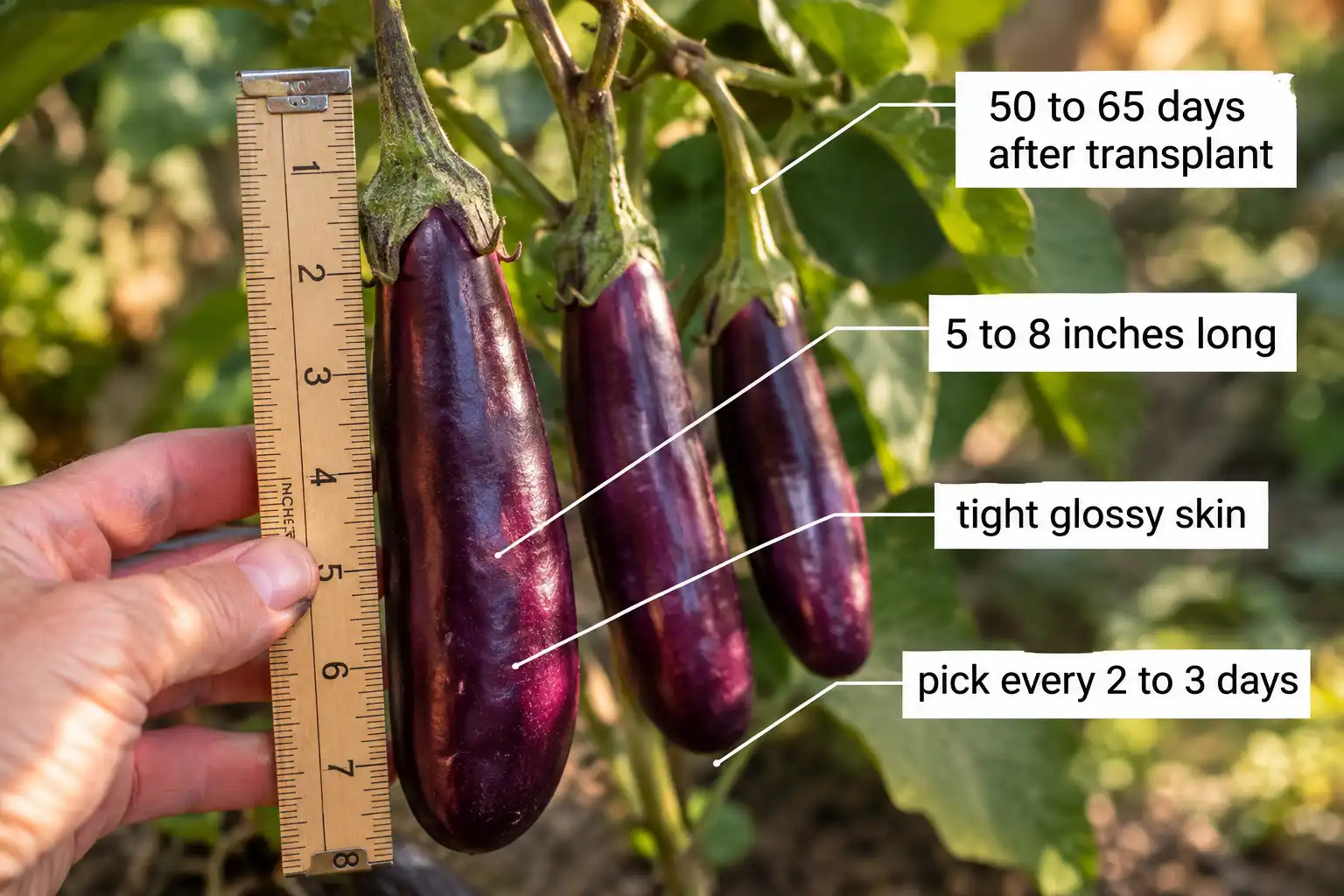
Pick Japanese eggplant 50 to 65 days after transplant, once fruit hit 5 to 8 inches long with tight, glossy skin. Then keep cutting every 2 to 3 days. Dull skin means the seeds already hardened.
How Many Days Until Japanese Eggplant Is Ready to Pick?
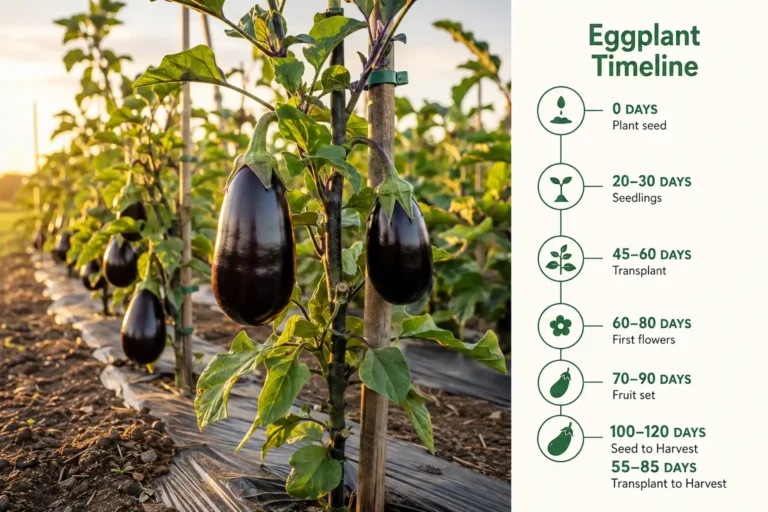
Most Japanese types are ready 50 to 65 days after transplant, which is roughly two weeks earlier than globe types. Started from seed, figure 100 to 120 days total. Slender Asian cultivars size up fast because they never bulk out into a heavy globe.
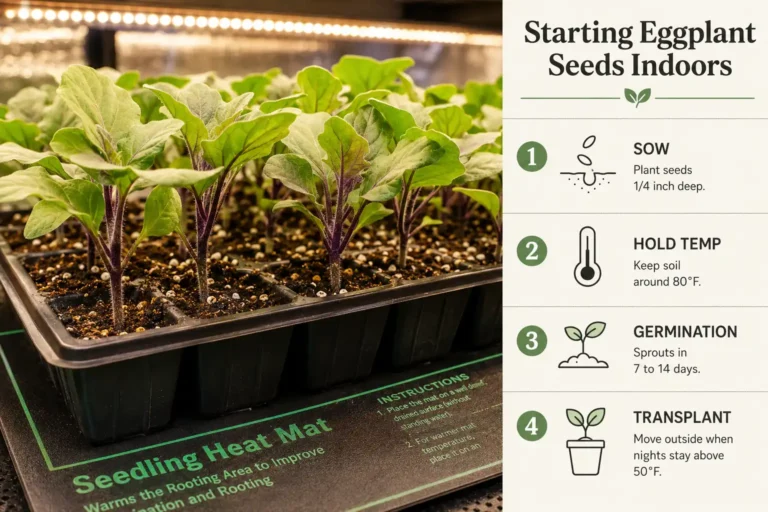
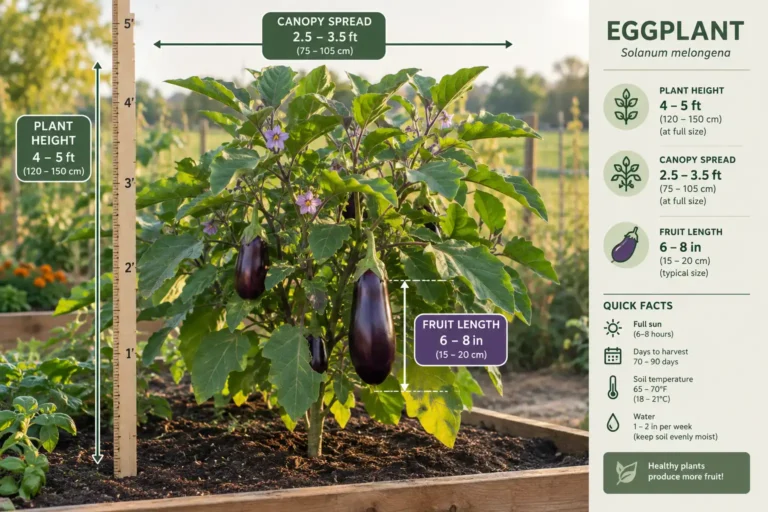
Your first pick date rides on soil temperature at transplant. So planting eggplant once soil hits 65°F matters more than the calendar date. In USDA zone 6, transplants generally go out in mid to late May once soil reaches 65°F, per University of Maryland Extension.
| Variety | Days from transplant | Pick length |
|---|---|---|
| Ichiban | 50 to 60 | 6 to 8 inches |
| Millionaire | 54 to 60 | 6 to 8 inches |
| Orient Express | 58 to 64 | 8 to 10 inches |
| Little Fingers | 60 to 68 | 3 to 5 inches |
| Ping Tung Long | 65 to 70 | 10 to 12 inches |
Those numbers assume steady heat. Cool nights stretch them out. Eggplant sets fruit poorly until night lows clear 55°F, according to University of Maryland Extension. So a chilly June pushes your whole harvest back a week or more. For the full seed to harvest picture, see how long eggplant takes from seed to a finished crop.
Four Signs Japanese Eggplant Is Ready to Pick
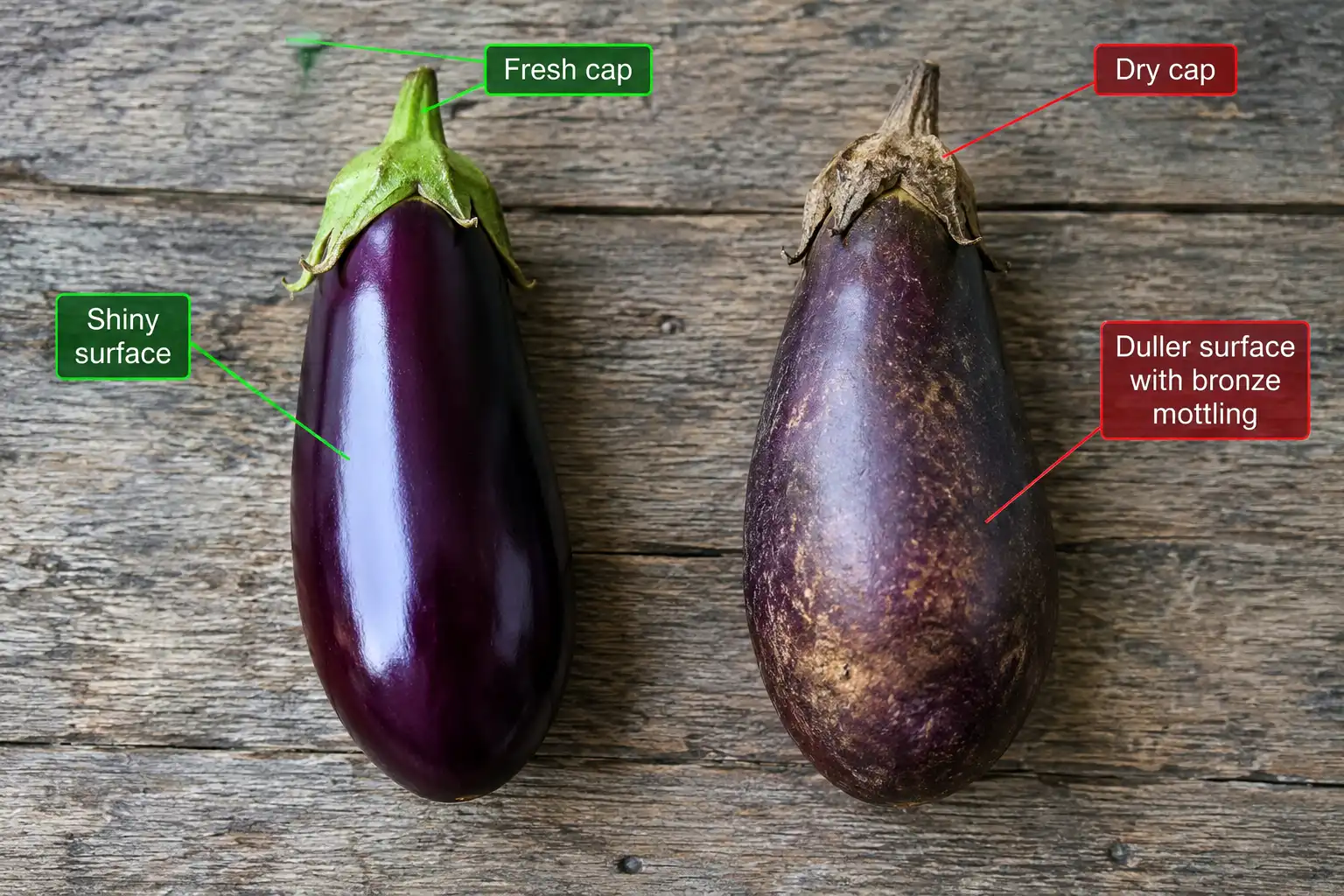
Skin gloss, thumb give, a green calyx, and length together tell you far more than any day count. Check all four. One sign alone will fool you, especially on white and striped cultivars where color never darkens.
Skin Gloss
Ready fruit reflects light like polished paint. Once that shine flattens to a matte or bronzed finish, the fruit is past prime. Oregon State University Extension flags loss of sheen as the first visible marker of over maturity. Thin Japanese skin dulls faster than thick globe skin, so you get less warning.
Thumb Give
Press the side of the fruit with your thumb. A slight dent that springs right back means pick it now. If the dent stays, the flesh has gone spongy. If nothing dents at all, the fruit is still filling and needs two or three more days.
Calyx Color
The green cap should look fresh and firm. A dull, dry, or browning calyx signals an over mature fruit, per NC State Extension produce grading notes. That cap also tells you a lot about storage life after cutting.
Seed Color
Slice one fruit open mid season and look. Young seeds are white, soft, and barely visible. Brown or hard seeds mean you waited too long, and the flesh turns bitter within days.
What Size Should Japanese Eggplant Be When You Pick It?
Aim for 5 to 8 inches on most Ichiban style cultivars. Target about one to one and a half inches thick. Clemson Cooperative Extension puts it plainly: Asian types are ready at roughly finger or hot dog size. Diameter matters more than length, because seed hardening tracks girth.
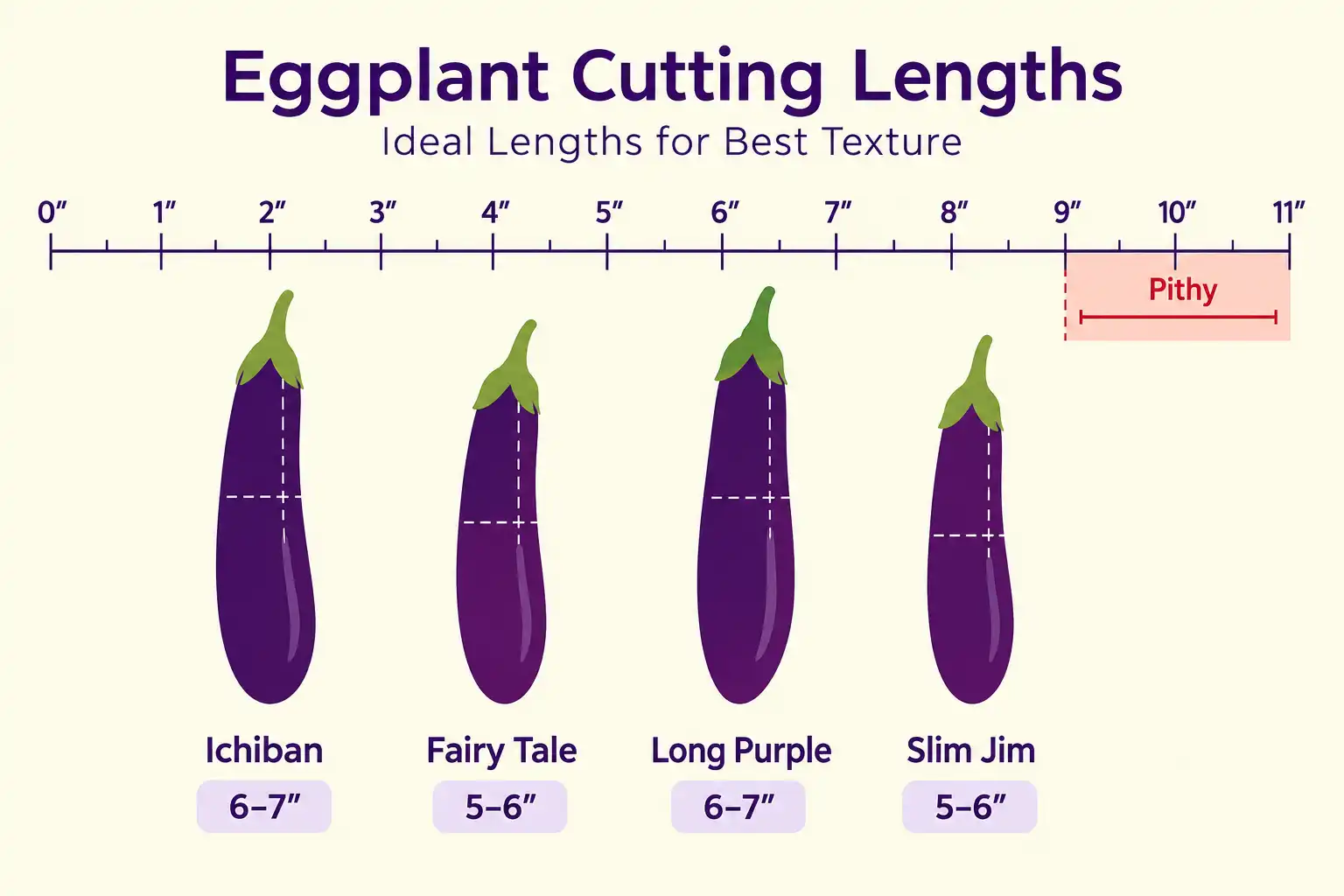
Read your seed packet, then subtract. Catalog length is the maximum the fruit reaches, not the eating stage. A cultivar listed at 10 inches eats best around 7. Picking at two thirds of listed size is a reliable rule across the Japanese group.
Past 9 or 10 inches, most slender types turn pithy. Little Fingers is the exception and stays sweet at 3 to 5 inches. Container plants complicate this further, since restricted roots often size fruit unevenly. If you are growing eggplant in containers, check them daily during a heat run.
How Often Should You Pick Japanese Eggplant?
Walk the rows every 2 to 3 days once the first fruit sizes up. Thin skinned cultivars move through their prime window faster than globe types, so a weekly pass misses fruit. Clemson Extension recommends at least once weekly, and twice is better on Asian varieties.
Prompt picking also drives yield. Oregon State Extension notes that leaving mature fruit on the plant suppresses new fruit set. The plant pours resources into seed instead of flowers. So every over mature fruit you leave hanging costs you two or three later ones.
In Kansas, checking crops both morning and evening during July helps catch early signs of heat or moisture stress before they affect yield. Heat pushes sizing fast, and a fruit that looked small at dawn can hit cutting length by the next afternoon.
How to Harvest Japanese Eggplant Without Hurting the Plant
Cut the stem, never pull it. Eggplant stems are woody and tough, so yanking tears the branch or uproots the whole plant. Here is the sequence you can follow.
- Harvest in the morning while fruit is cool and turgid.
- Wear gloves. Many cultivars carry sharp spines on the calyx.
- Grip the fruit gently from underneath so it does not swing.
- Cut the stem about one inch above the green cap with bypass pruners or a sharp knife.
- Leave the calyx attached. It seals the fruit and slows moisture loss.
- Lay fruit in a single layer rather than stacking.
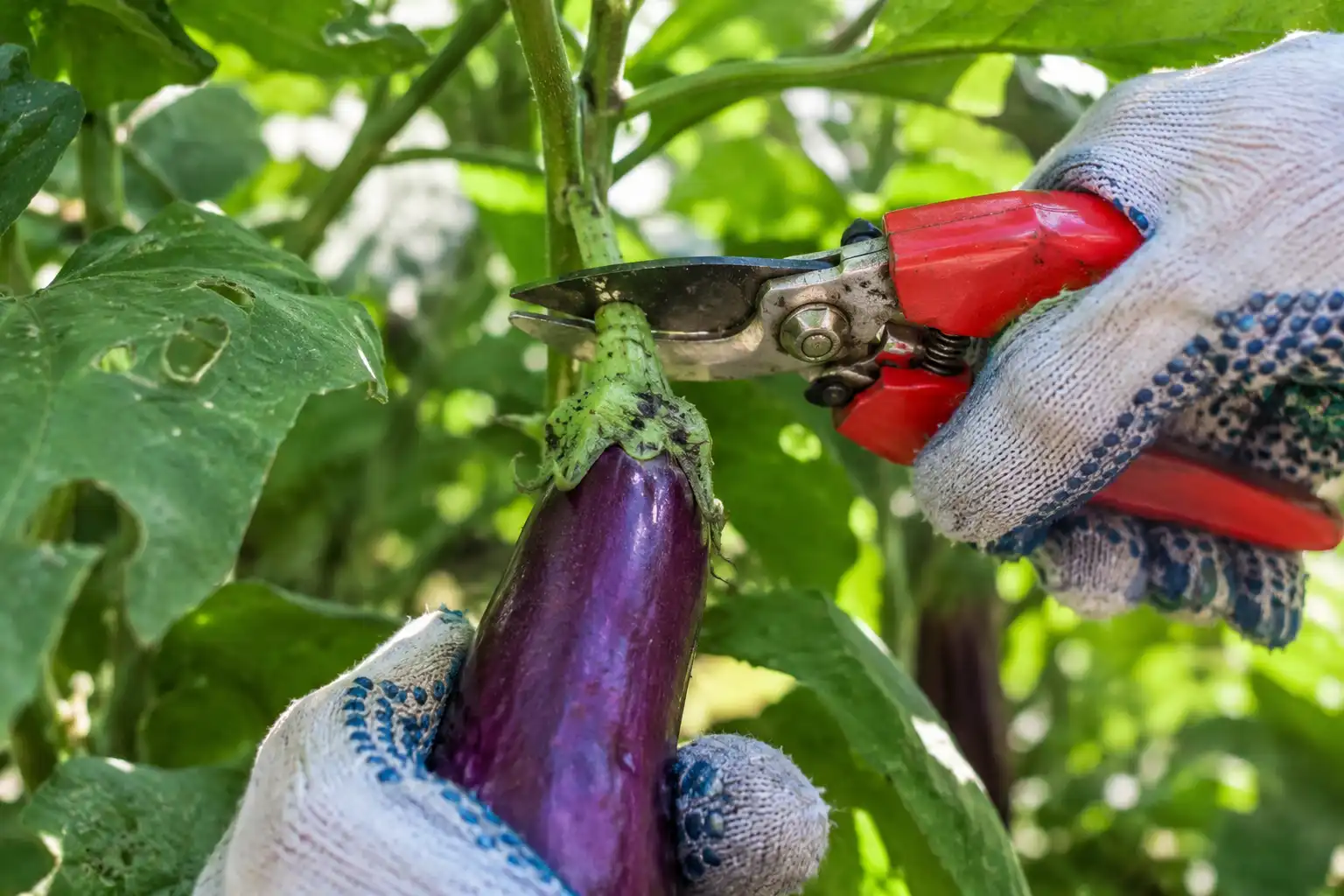
Japanese types bruise under their own weight, so use a shallow harvest basket instead of a five gallon bucket. Bruises show up as sunken brown patches within a day or two.
What Happens If You Pick Japanese Eggplant Too Late?
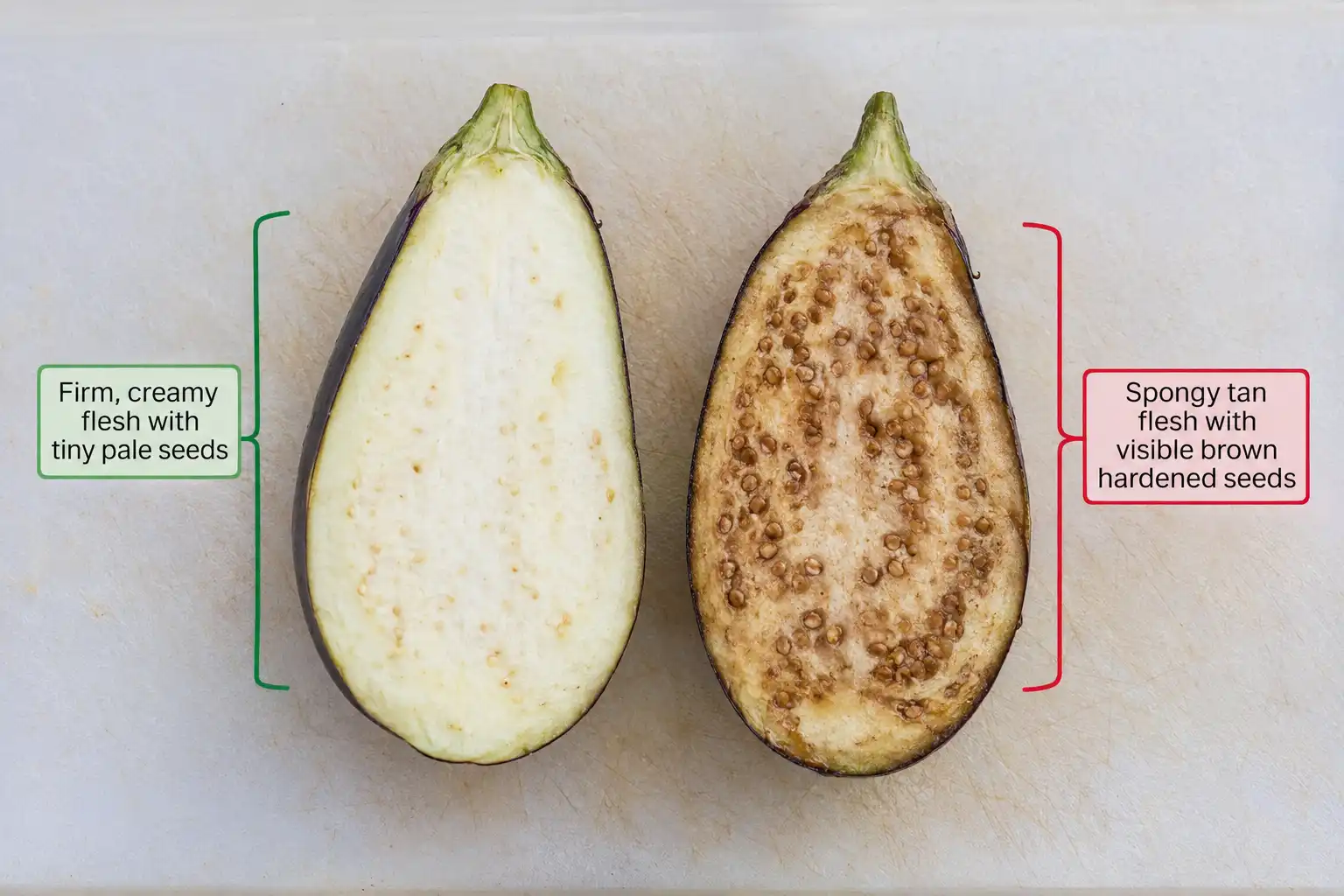
Flavor collapses and the plant slows down. As fruit passes eating stage, Oregon State Extension reports the surface goes dull. Seeds harden and darken, and flesh turns spongy. Bitterness climbs at the same time, since solanine and phenolic compounds concentrate as seeds mature.
Texture suffers first on Japanese cultivars. That prized creamy flesh gets cottony. Skin that needed no peeling becomes leathery in the pan.
The plant pays too. Every seedy fruit left hanging tells the plant its job is done, and flowering tapers off. Pull those fruit even if you plan to compost them.
Is It Bad to Pick Japanese Eggplant Too Early?
Early picking costs you size, not quality. An undersized Japanese eggplant still tastes sweet and tender, because these cultivars are harvested immature by design. So when in doubt, cut it.
The only real penalty is total yield per plant. A fruit pulled at 4 inches weighs less than the same fruit at 7. Still, early cutting triggers faster replacement fruit, which often evens out across a full season.
Globe and Italian types work differently. They run 65 to 80 days and hold eating quality longer on the plant. That shifts the eggplant harvest timing for those varieties.
When to Stop Harvesting Japanese Eggplant in Fall
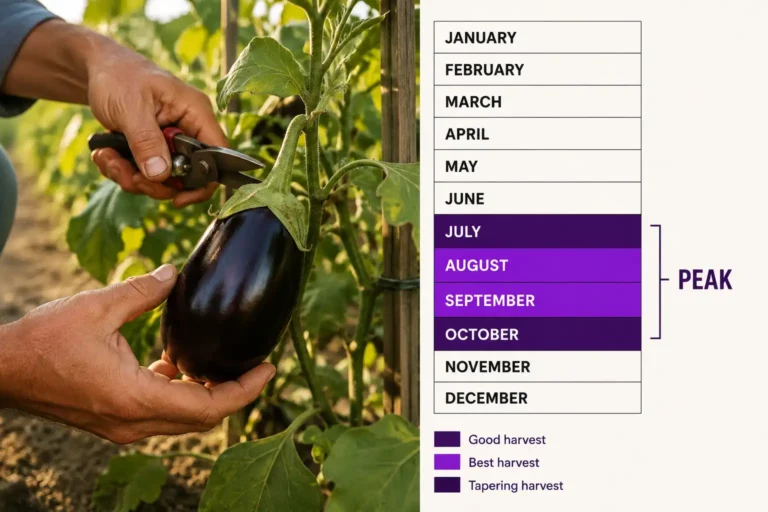
Strip every usable fruit before the first hard freeze. Eggplant carries no frost tolerance at all, and 32°F ends the plant outright. In USDA zone 6a, the average first frost falls in mid October. Plan a final clean pick for the second week.
Watch nights before that. Once lows sit below 50°F, fruit stops sizing and chilling damage starts in the field, not just in storage. Sustained cool weather also flattens flavor.
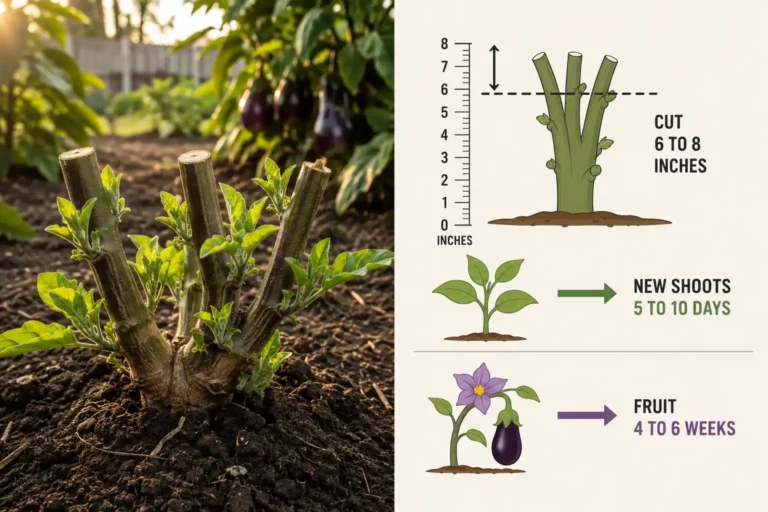
Small immature fruit is still worth cutting on that last pass. Japanese types eat fine at 3 or 4 inches. In longer season areas, growers sometimes push a second harvest before frost by cutting plants back once summer heat breaks.
How to Store Japanese Eggplant After Harvest
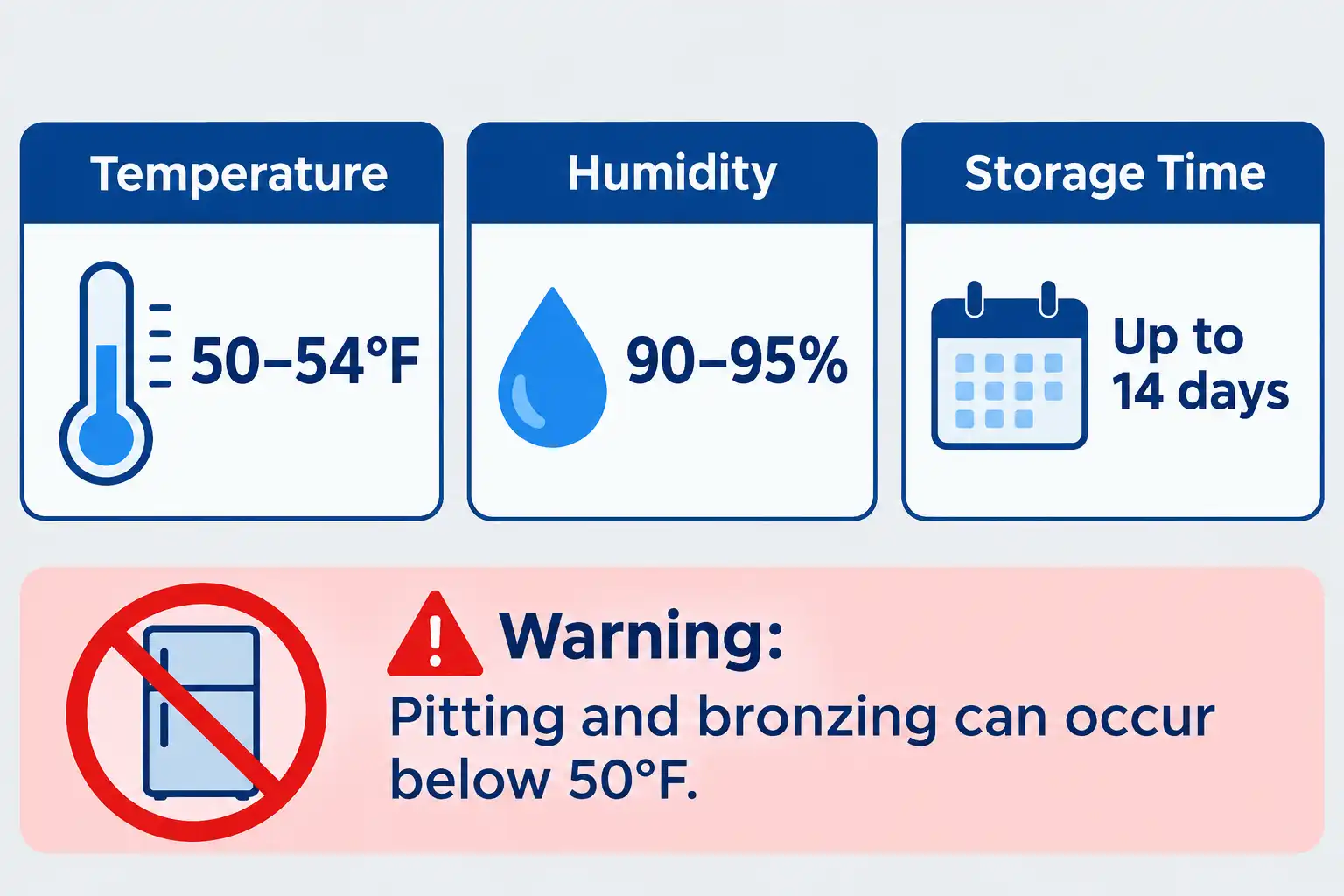
Hold fruit at 50 to 54°F with 90 to 95 percent humidity. NC State Extension and the UC Davis Postharvest Research and Extension Center both cap useful storage near 14 days. Quality slides well before that point.
Cold ruins eggplant faster than heat. Below 50°F, chilling injury sets in as surface pitting, bronzing, and browned seeds. A standard refrigerator runs near 37°F, so a crisper drawer damages fruit within a few days. Use the fridge only for short holds, and plan to cook within three or four days.
Keep eggplant away from apples, bananas, and ripening tomatoes. UC Davis rates eggplant as highly ethylene sensitive, and exposure above 1 ppm drops the calyx and browns the flesh. Thin skinned Japanese cultivars also dehydrate quickly, so a loose perforated bag helps hold moisture without trapping condensation.
Final Verdict
Once the first fruit shows color, checking fruit condition becomes more reliable than counting days. After that, gloss and thumb give run the schedule. If the shine is tight and the skin springs back, cut the fruit, even if it looks small. Slender Asian cultivars reward early hands and punish patience. Walk the rows every other day from mid July until frost, and you will never taste a bitter one.