Why Is My Eggplant Turning Yellow? 10 Causes and Proven Fixes
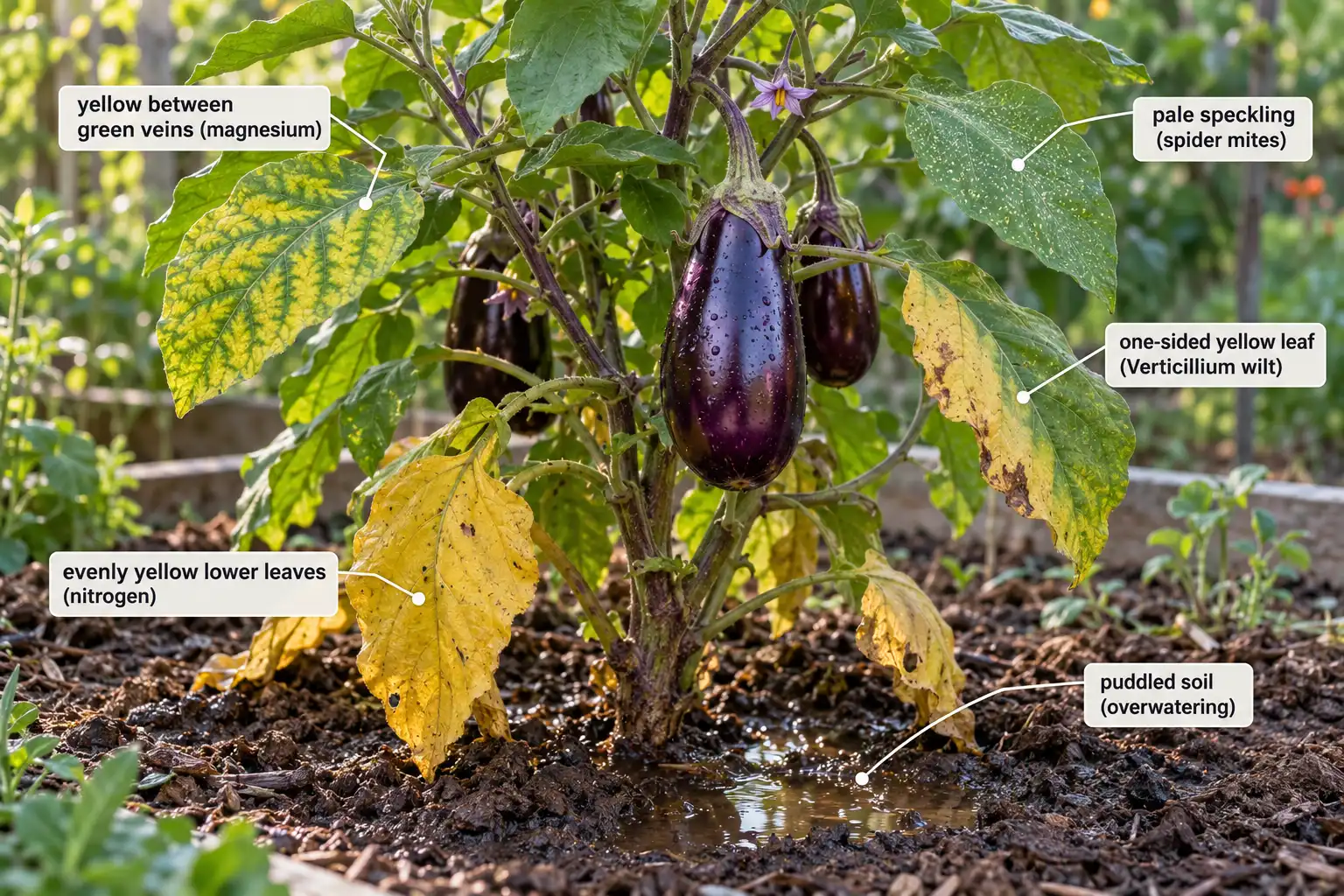
Eggplant leaves usually yellow from root trouble, nutrient shortage, cold, disease, or pests. Where the color change starts explains why your eggplant is turning yellow. It also points to the right fix, so check the pattern before you add fertilizer or water.
Nitrogen shortage, soggy or cold soil, Verticillium wilt, and spider mites cause most cases of an eggplant turning yellow. Uniform lower-leaf yellowing points to nitrogen shortage, while one-sided yellowing with wilting signals Verticillium wilt. Yellowing fruit is usually overripe.
What the Yellowing Pattern Tells You
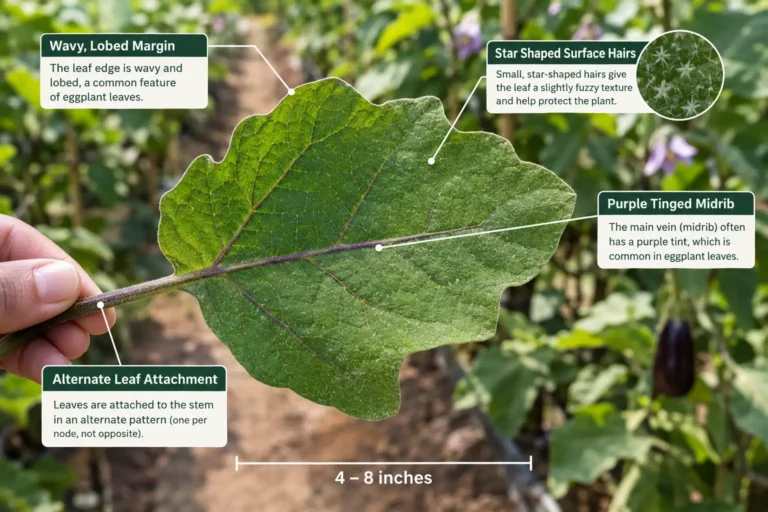
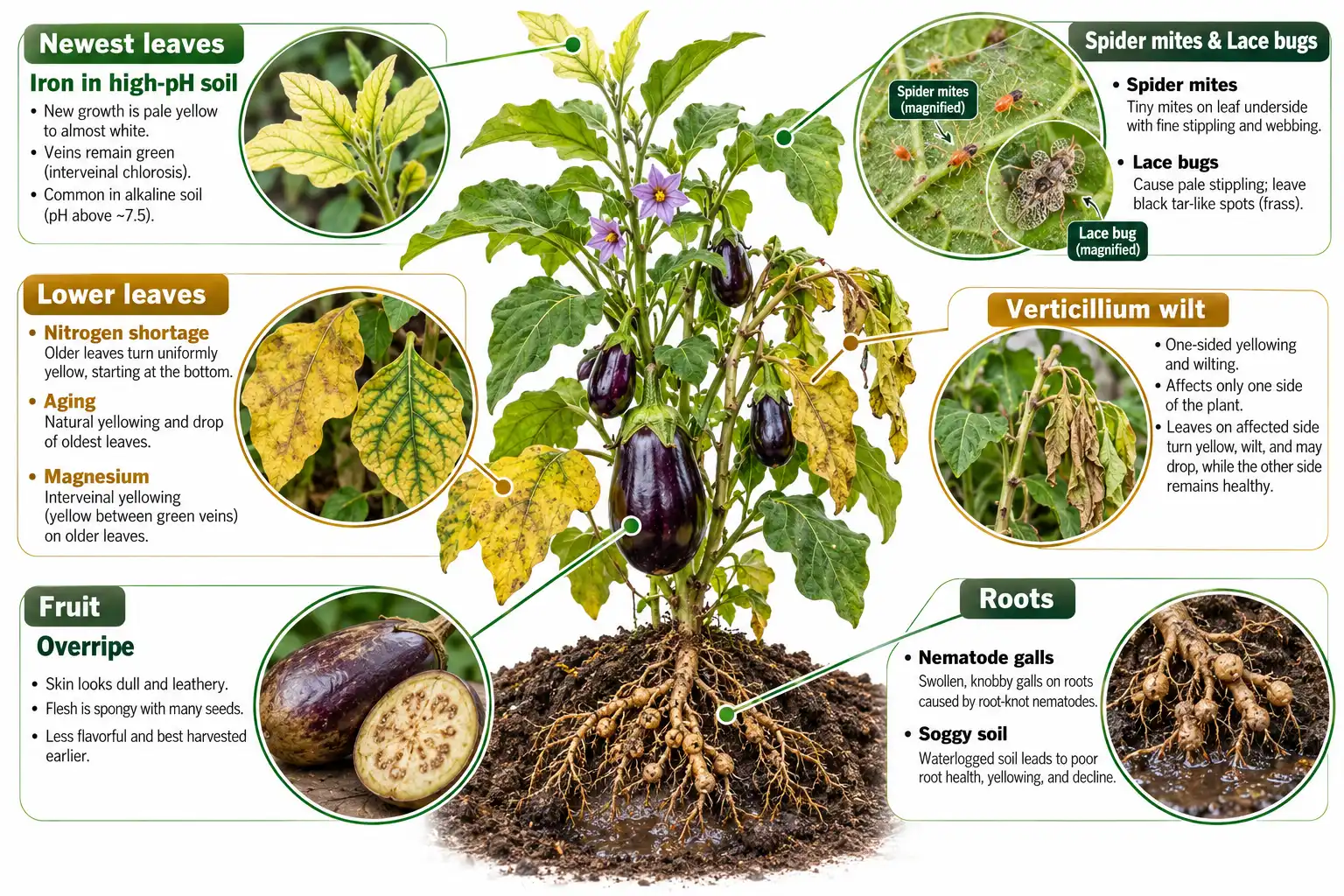
Each cause leaves its own pattern on the plant. Old leaves sit at the bottom, new growth sits at the tips, and most sap-feeding pests hide on leaf undersides. First, compare your plant with how healthy eggplant leaves look. Then match what you see to the table below.
| What you see | Likely cause | When it shows up | Quick check |
|---|---|---|---|
| Lowest leaves fade evenly to yellow | Nitrogen shortage or normal aging | Fruit set onward | Review your feeding history |
| Whole plant pale and droopy in wet soil | Waterlogged roots | After heavy rain or daily watering | Feel the soil 2 inches down |
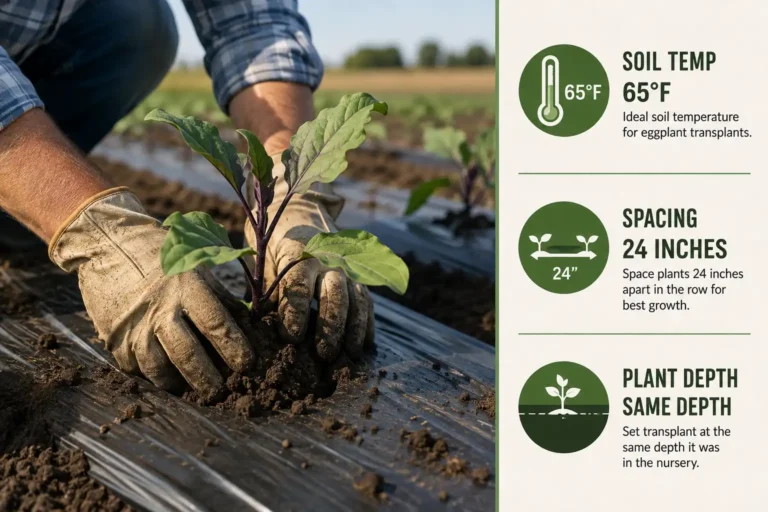
| Pale, stalled transplants | Cold stress | First weeks after transplanting | Compare night lows with 50°F |
| Older leaves yellow between green veins | Magnesium deficiency | Mid to late season | Soil test |
| Newest leaves yellow between green veins | Iron deficiency in high-pH soil | Any stage | Soil pH test |
| Yellow leaf edges on one side, afternoon wilting | Verticillium wilt | Any stage, worse in cool spells | Slice the lower stem lengthwise |
| Fine pale speckles, bronze cast, webbing | Two-spotted spider mites | Hot, dry weather | Tap a leaf over white paper |
| Quarter-size pale patches that spread | Eggplant lace bugs | Late spring through summer | Check leaf undersides |
| Yellowing, stunting, and wilting in heat | Root-knot nematodes | Warm months, sandy soil | Dig roots and look for galls |
| Fruit turns dull, bronze, or yellow | Overripe fruit | Peak harvest | Check seeds for hardness |
Why Is My Eggplant Turning Yellow From the Bottom Up?
Yellowing that starts on the lowest leaves usually means nitrogen shortage or normal aging. Eggplant moves nitrogen from older leaves to feed new growth and fruit, so the bottom fades first. Demand climbs once fruit sets, which is why this pattern often appears in midsummer.
University of Nebraska-Lincoln Extension calls eggplant a heavy feeder. On nitrogen-poor soil, it recommends side-dressing 1/4 cup of fertilizer per plant in a 2-foot circle right after flowering. Texas A&M AgriLife Extension likewise splits fertilizer into two doses, half before planting and half after the first fruits appear. Water the fertilizer in so it reaches the roots.
Too much nitrogen, however, produces leafy plants that are slow to bear fruit, according to University of Minnesota Extension.
A few yellow leaves at the very bottom are normal on a mature plant, especially under a dense canopy. Snip them off. Feed only when the yellowing keeps climbing or the whole plant looks pale.
Can Overwatering Turn Eggplant Leaves Yellow?
Yes. Waterlogged soil pushes oxygen out of the root zone, so roots stop taking up water and nutrients. Leaves then yellow and droop even though the soil is wet. Texas A&M AgriLife Extension calls good drainage a must, since eggplant is very sensitive to root rots.
Drought yellows leaves too, usually starting low on the plant with crisp brown edges. University of Minnesota Extension advises a thorough soaking at least once a week whenever rain totals less than 1 inch. Light, frequent watering keeps roots shallow and leaves plants more exposed to heat. Sandy soil also needs water more often.
Before watering, push a finger 2 inches into the soil or use a soil moisture meter. When the soil feels wet, skip watering and improve drainage instead. In heavy clay, raised beds and compost help excess water drain away.
Potted Eggplant Yellows Faster
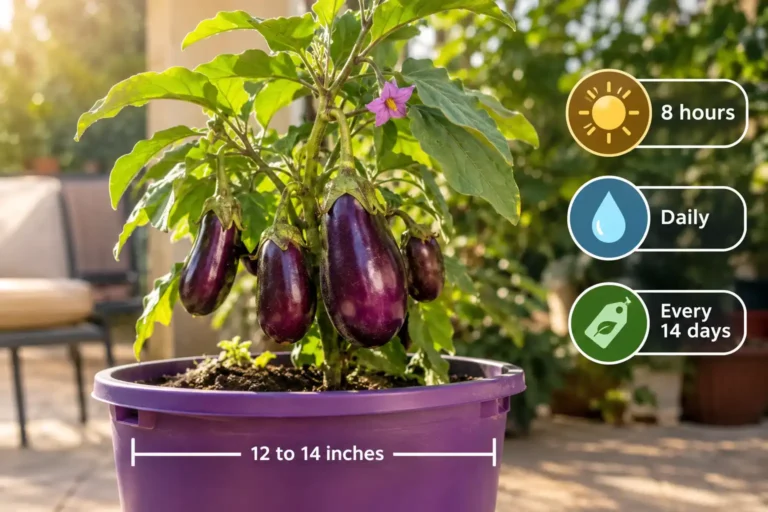
Containers dry out quickly, as University of Nebraska-Lincoln Extension points out. Frequent watering then flushes nutrients out of the drainage holes, so potted plants run short of nitrogen sooner. Use a large pot with open drainage holes, water when the top inch dries, and feed regularly.
Does Cold Weather Turn Eggplant Yellow?
Yes. Cold soil slows root growth and nutrient uptake, so chilled eggplant often sits pale and stunted for weeks. Texas A&M AgriLife Extension notes that eggplant growth stops below 63°F.
University of Minnesota Extension calls eggplant much less cold hardy than tomatoes. It advises transplanting only after nighttime lows stay above 50°F, because chilled plants may never recover and bear fruit. Frost or chilling injury looks different. The same source describes leaves that turn water-soaked and soft, then black. Before setting out transplants, confirm your local eggplant planting window.
To help chilled plants recover, warm the soil. Black plastic mulch heats the root zone, and row covers shield young plants from cold snaps. Hold straw and other organic mulch until the soil reaches 75°F, as University of Nebraska-Lincoln Extension advises. Skip extra fertilizer until nights warm, since cold roots absorb little of it.
Yellow Leaves With Green Veins: Magnesium or Iron?
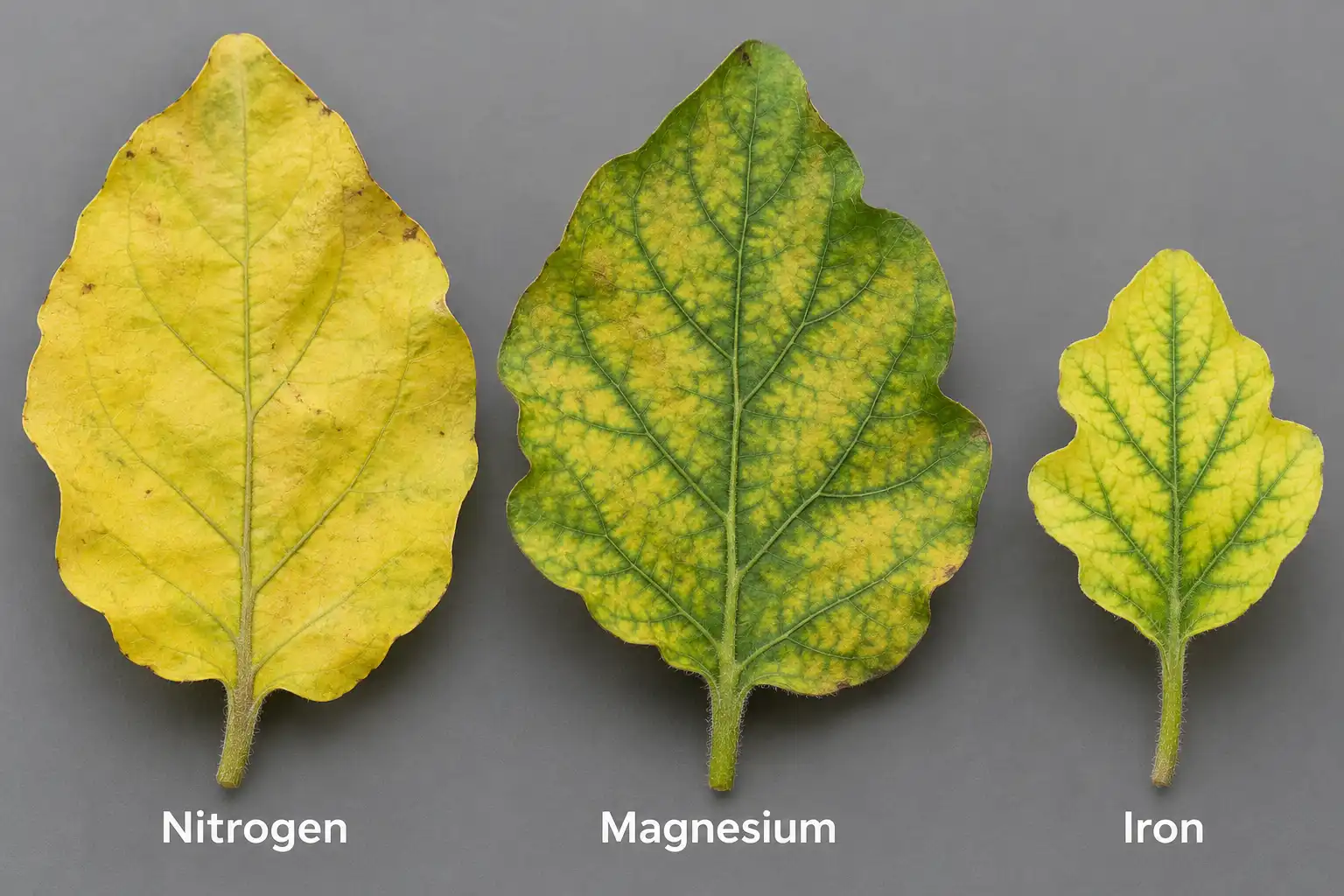
Yellow tissue between green veins, called interveinal chlorosis, points to magnesium or iron. Leaf age tells them apart.
Magnesium deficiency starts on older, lower leaves, because the plant moves magnesium to new growth. It shows up most often on sandy or acidic soil.
Iron deficiency starts on the newest leaves at the shoot tips. Texas A&M AgriLife Extension explains that high-pH soil holds iron in an insoluble form. Plants then turn yellow even when the soil contains iron. For iron chlorosis, the same source suggests powdered sulfur to lower pH in small areas, plus chelated iron sprays. It also notes that eggplant prefers a soil pH of 5.5 to 7.2.
Test before you treat. A soil test shows whether magnesium is truly low and whether pH needs correcting. Epsom salt (magnesium sulfate) fixes only a real magnesium shortage. Iron shortage is one of several micronutrient deficiencies that cause this green-vein pattern.
Verticillium Wilt: Yellowing on One Side
Verticillium wilt is the most common eggplant disease, according to University of Minnesota Extension. The soilborne fungus Verticillium dahliae blocks the plant’s water-conducting tissue, so leaves run short of water and nutrients. NC State Extension notes that infected plants have no cure.
University of Minnesota Extension, NC State Extension, and UC IPM (UC Agriculture and Natural Resources) describe these signs:
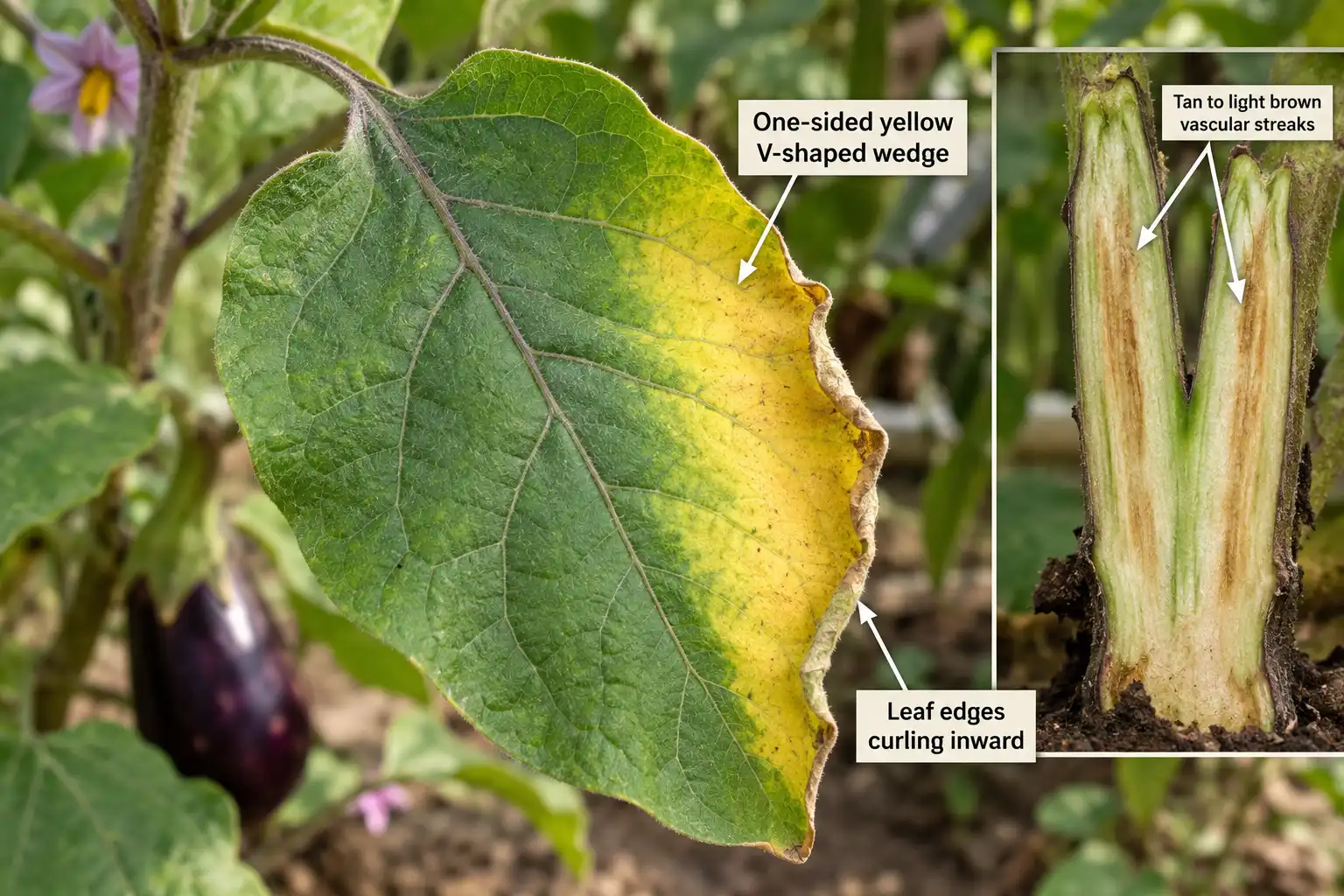
- Yellow leaf edges and tips, often on one side of a leaf, branch, or plant
- V-shaped yellow wedges that point inward from the leaf margin
- Leaf edges that roll inward as they yellow
- Afternoon wilting, then apparent recovery by morning
- Lower leaves dying first while symptoms climb the plant
NC State Extension puts ideal disease conditions at 75 to 85°F with neutral to alkaline soil (pH 7 to 9).
How to Confirm Verticillium Wilt
Slice the lower stem of the worst plant lengthwise, just above the soil line. University of Minnesota Extension describes tan vascular tissue around a green center. NC State Extension notes light brown to cream streaks under the outer stem tissue, strongest at the base.
Several problems mimic this disease, including drought, bacterial wilt, Fusarium wilt, and southern blight, according to NC State Extension. V-shaped leaf lesions, however, point to Verticillium.
What to Do About Verticillium Wilt
Pull badly affected plants and bag them, since the fungus survives in plant tissue. Keep them out of the compost pile. NC State Extension advises dipping tools and pots for at least 30 seconds in 10% bleach or 70% alcohol.
Then plan around the soil. The same source notes that the fungus survives up to 10 years in soil as microsclerotia. It advises a crop rotation of 4 to 5 years into non-susceptible grasses or wheat. Keep tomatoes, potatoes, peppers, tomatillos, and eggplant off that ground.
Control weeds as well, because weeds carry the fungus without showing symptoms. In beds with a wilt history, early-maturing varieties set a crop before the disease takes over.
Other Diseases That Yellow Eggplant Leaves
Three more diseases cause yellowing or wilting worth ruling out.
- Phomopsis blight: Circular gray to brown leaf spots with light centers appear first. Badly infected leaves tear, yellow, wilt, and drop, per University of Minnesota Extension. Water at the base to keep foliage dry.
- Viruses: Leaves show yellow and light-green mottling and often grow narrow or curled. The same source names cucumber mosaic virus as one cause. Pull infected plants, since viruses have no cure.
- Southern blight: The plant wilts suddenly as a brown to black lesion girdles the stem at the soil line. NC State Extension describes white fungal growth on the lesion with tan, seed-like sclerotia. Heat from 77 to 95°F and acidic soil favor it.
Spider Mites and Other Sap-Feeding Pests
Fine, pale speckling that spreads into a yellow or bronze cast usually means pests are sucking sap from the leaves. Flip a few leaves before you reach for fertilizer.
Two-spotted spider mites lead the list. NC State Extension notes they can do more damage to eggplant than flea beetles or lace bugs. Infested leaves show silvery or pale-yellow stipples, turn pale, then bronze, and finally dry up. The mites also spin fine webbing on leaf undersides.
Mites build up fastest in hot, dry weather, and University of Minnesota Extension reports them from late June through August. Adults measure about 1/50 inch, so tap a leaf over white paper and watch for moving specks.
UC IPM recommends water sprays, insecticidal soap, or horticultural oil aimed at leaf undersides. It also warns that some organophosphate and pyrethroid insecticides kill mite predators and trigger outbreaks.
Lace Bugs, Whiteflies, and Leafhoppers
| Pest | Leaf symptom | What to look for |
|---|---|---|
| Eggplant lace bug | Quarter-size pale patches that spread until the leaf yellows and dries | Spiny yellow nymphs and egg masses under each patch |
| Whiteflies | Yellow, dry-looking leaves with sticky honeydew or black sooty mold | Tiny white insects that fly up when you brush the plant |
| Potato leafhopper | Wrinkled leaves with a yellow tinge | Slender, wedge-shaped, yellow-green adults about 1/8 inch long |
According to NC State Extension, eggplant lace bugs are most common from Maryland, Missouri, and Oklahoma southward. It suggests coating both leaf surfaces with ultra-fine horticultural oil or insecticidal soap. For whiteflies, UC IPM recommends hosing plants and removing infested leaves early, plus reflective mulch and yellow sticky traps. University of Minnesota Extension reports potato leafhoppers from June through August.
Root-Knot Nematodes in Warm, Sandy Soil
Root-knot nematodes are microscopic roundworms that feed inside roots and leave knotty swellings called galls. UF/IFAS Extension lists yellowing, wilting, and stunting as the aboveground signs, which often resemble nutrient shortage or drought. Eggplant ranks among the vegetables these nematodes damage most often. Warm, sandy soils like Florida’s favor them, and damage usually appears in patches that slowly spread.
To check, pull a struggling plant and rinse the roots. Galls look like swollen knots built into the root itself.
UF/IFAS Extension suggests these steps for home gardens:
- Solarize beds in summer under clear plastic for at least 4 to 6 weeks. The heat treats the top 6 to 8 inches of soil.
- Grow a resistant cover crop such as sunn hemp or hairy indigo between vegetable crops.
- Pull out the whole root system right after harvest so nematodes stop multiplying.
- Move eggplant into containers filled with clean potting mix where infestations run high.
Why Is My Eggplant Fruit Turning Yellow?
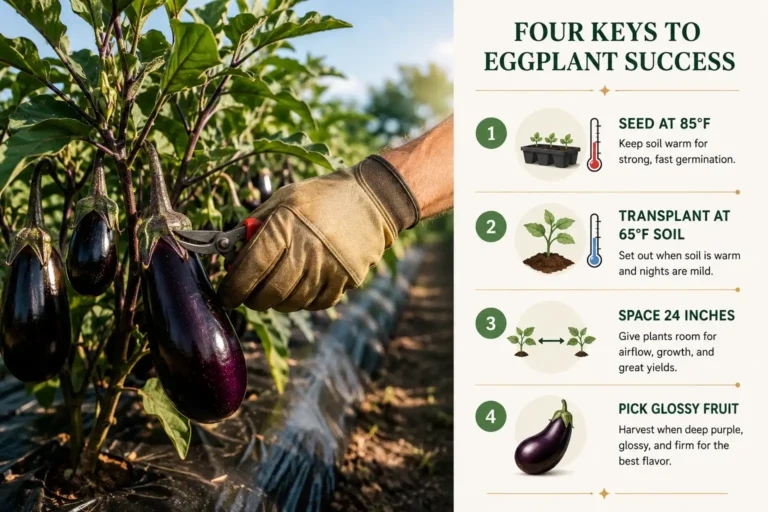
Eggplant fruit usually turns yellow or bronze because it stayed on the plant past its prime. Overmature fruit turns dull and spongy, with hard, dark seeds, according to University of Nebraska-Lincoln Extension. On purple types such as ‘Black Beauty‘, the glossy skin fades toward bronze or brown. White types take on a yellow cast.
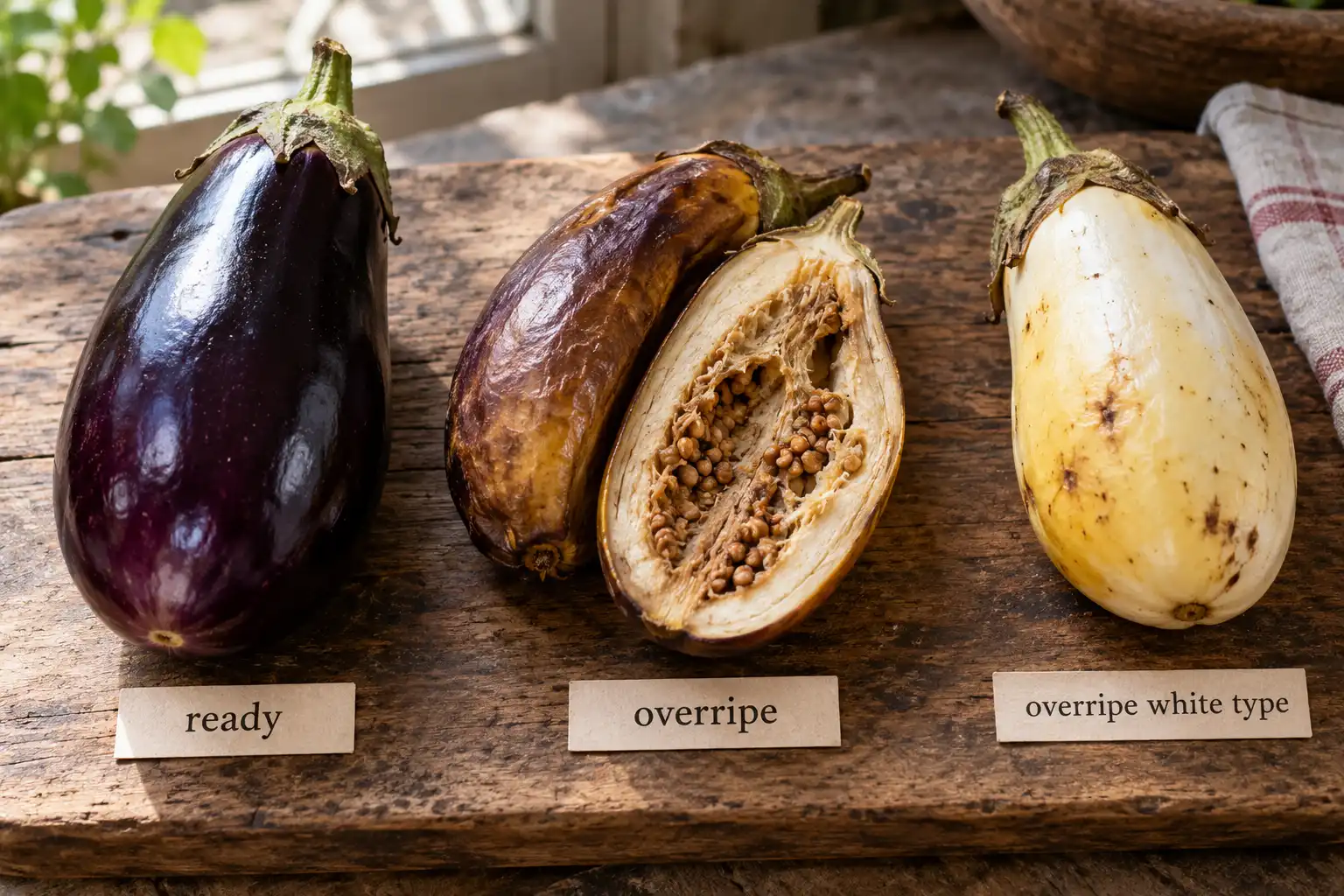
Some yellow fruit is normal, though. UF/IFAS Extension notes that the ornamental white eggplant, an inedible species, turns from white to yellow as it ripens.
Pick before the skin dulls and the seeds harden, as Texas A&M AgriLife Extension advises. Press the side of the fruit with a thumbnail. When the dent stays, the fruit is ready. Regular picking also keeps the plant flowering and setting new fruit. Harvest size varies by type, so match your picking to eggplant harvest timing for the variety you grow.
Other Reasons Fruit Turns Yellow
University of Minnesota Extension describes three more causes:
- Virus: yellow blotches or brown rings on the fruit, usually with mottled leaves
- Sunscald: tan or white patches on the sun-facing side, often after heavy leaf loss
- Chilling injury: bronzed skin with brown seeds and flesh, showing up 5 to 7 days after cold weather
FAQs About Yellow Eggplant
Can yellow eggplant leaves turn green again?
Rarely, once a leaf turns fully yellow, although mildly pale leaves often green up after you fix the cause. Judge progress by new leaves, which emerge a deep, healthy green once the plant gets what it needs.
Should you remove yellow eggplant leaves?
Yes, remove leaves that are mostly yellow, especially low leaves that touch the soil and collect splashed disease spores. Disinfect pruners between plants when Verticillium wilt is possible, using 10% bleach or 70% alcohol.
Why are my eggplant leaves turning yellow and brown?
Yellow leaves that turn brown and dry usually point to advanced Verticillium wilt, heavy spider mite feeding, or drought. Check the lower stem for streaks and the leaf undersides for mites before you treat.
Does Epsom salt fix yellow eggplant leaves?
Only when the soil is truly low in magnesium, which a soil test confirms. Epsom salt provides magnesium and sulfur, so it does nothing for nitrogen shortage, wet roots, disease, or mites.
Why are my eggplant seedlings turning yellow?
Seedlings usually yellow from soggy soil, cool temperatures, weak light, or a nutrient-poor seed-starting mix. Let the surface dry between waterings, keep them near 70°F under bright light, and feed lightly after true leaves form.
Is a yellow eggplant safe to eat?
Yes, an overripe culinary eggplant is safe if it is firm and free of rot. Expect tough skin, hard seeds, and some bitterness, and skip ornamental white eggplant, which UF/IFAS Extension describes as inedible.
Where to Start
For an eggplant turning yellow, start with the two fastest checks. Feel the soil 2 inches down, then flip a few leaves. Those checks rule out watering problems and sap-feeding pests within minutes. Next, note which leaves yellowed first and match the pattern in the table above. Feed only after you rule out wet or cold soil. One-sided yellowing with afternoon wilting calls for a stem check, and a streaked stem means the plant comes out.