How to Freeze Eggplant: Blanch 4 Minutes, Keep It Up to 12 Months
Eggplant freezes well after a short blanch in boiling lemon water. Without it, enzymes darken the flesh and dull its flavor in storage. Here is how to freeze eggplant slices, roasted pulp, and eggplant parmesan, plus fixes for brown or mushy results.
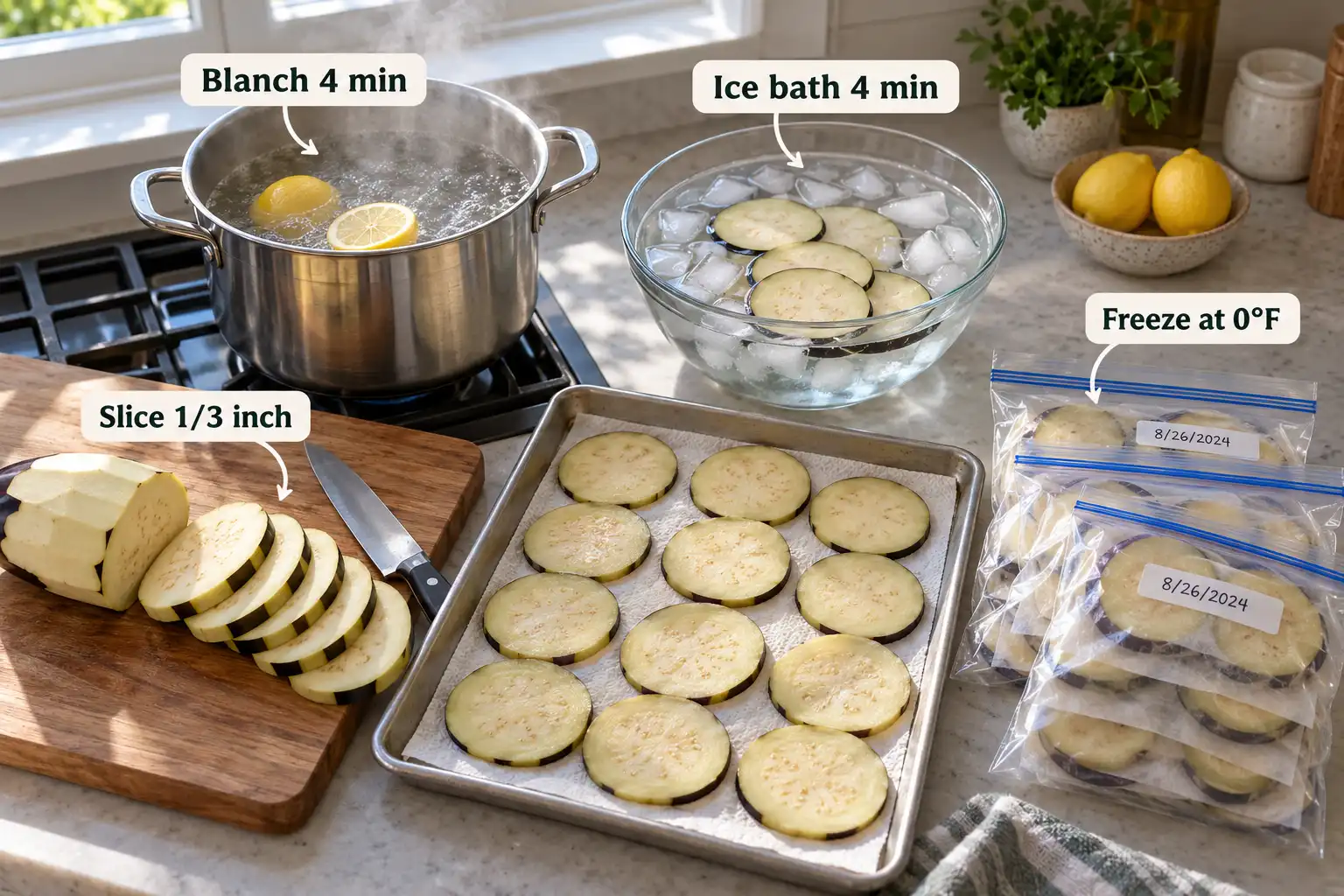
Blanching first is how to freeze eggplant without browning. Peel, cut 1/3-inch slices, and boil them 4 minutes in lemon water. Chill, drain, tray-freeze, and bag. Slices keep their best quality for 8 to 12 months at 0°F.
Can You Freeze Eggplant?
Yes. Eggplant freezes well, as long as you blanch it or cook it fully first. Raw eggplant keeps its enzymes working, even at freezer temperatures. The National Center for Home Food Preservation (NCHFP) at the University of Georgia explains the problem. Those enzymes cause loss of flavor, color, and texture, even in frozen storage. Blanching stops them.
Texture changes no matter what. Clemson Cooperative Extension notes that water makes up over 90 percent of most produce. As that water freezes, ice crystals rupture the cell walls. As a result, thawed eggplant turns soft. However, the change is far less noticeable in cooked food, so plan frozen eggplant for casseroles, soups, sauces, and dips.
Freezing also beats canning here. Penn State Extension reports that no USDA process times exist for canning plain eggplant.
Pick the Right Eggplant for Freezing
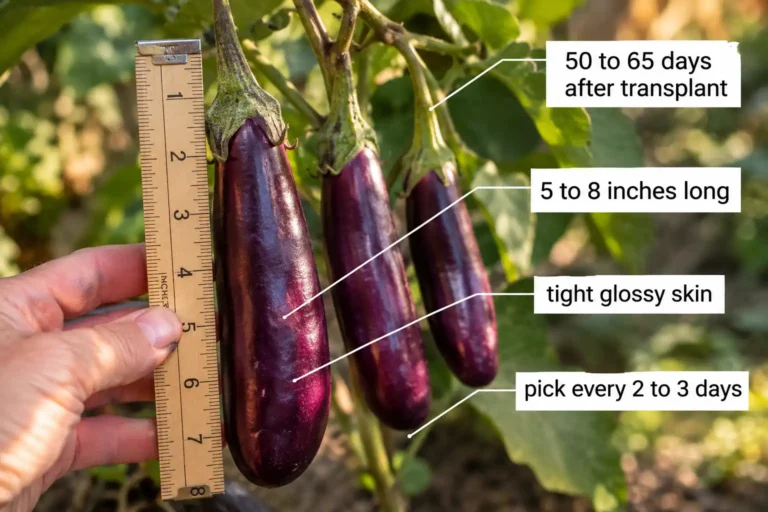
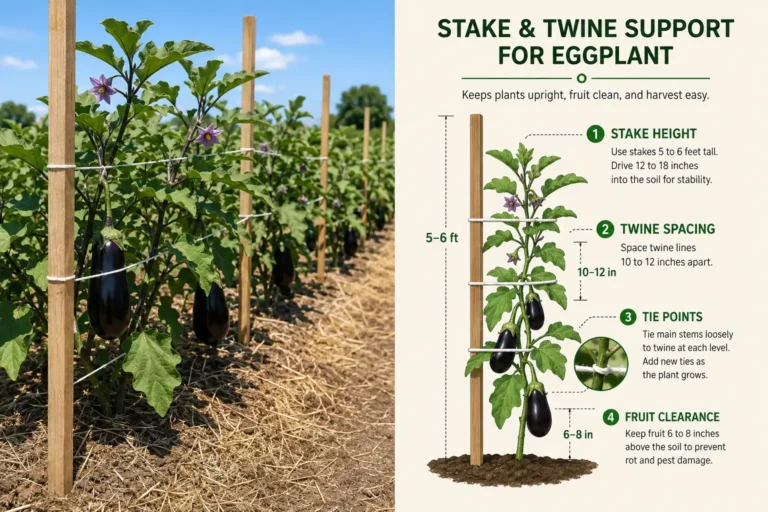
Freezing never improves quality, so start with firm fruit picked at the right stage. NCHFP advises harvesting before the seeds mature, while the color is uniformly dark. Overmature fruit turns seedy and bitter, which makes eggplant harvest timing more important than size.
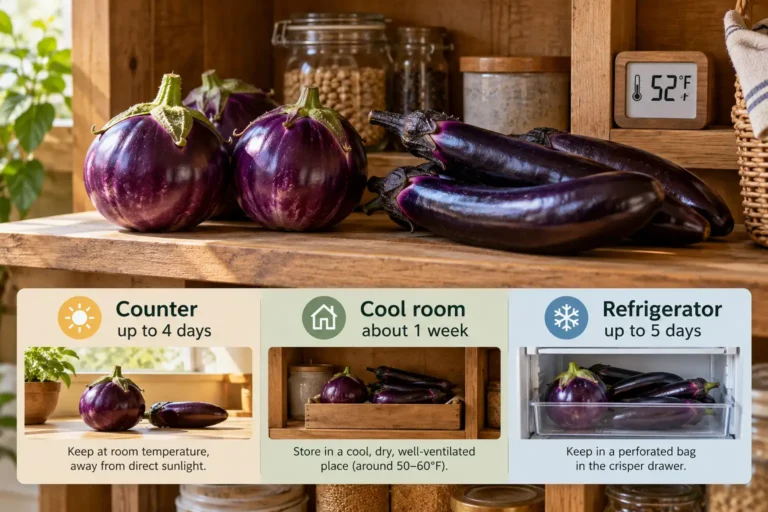
Speed matters too. Michigan State University Extension notes that eggplant keeps only one to two days in the refrigerator, wrapped in plastic. So freeze it the day you pick or buy it.
Variety changes the prep. Penn State Extension notes that small, thin varieties may have skin tender enough to leave on. Slender Japanese types such as Ichiban, an elongated variety on Michigan State’s recommended list, fit that profile. For skin-on slices, pick Japanese eggplant at the tender stage. Large globe fruit still follows the standard peel-and-slice method.
How to Freeze Eggplant Step by Step
These steps follow the NCHFP method, with details from Clemson and Michigan State.
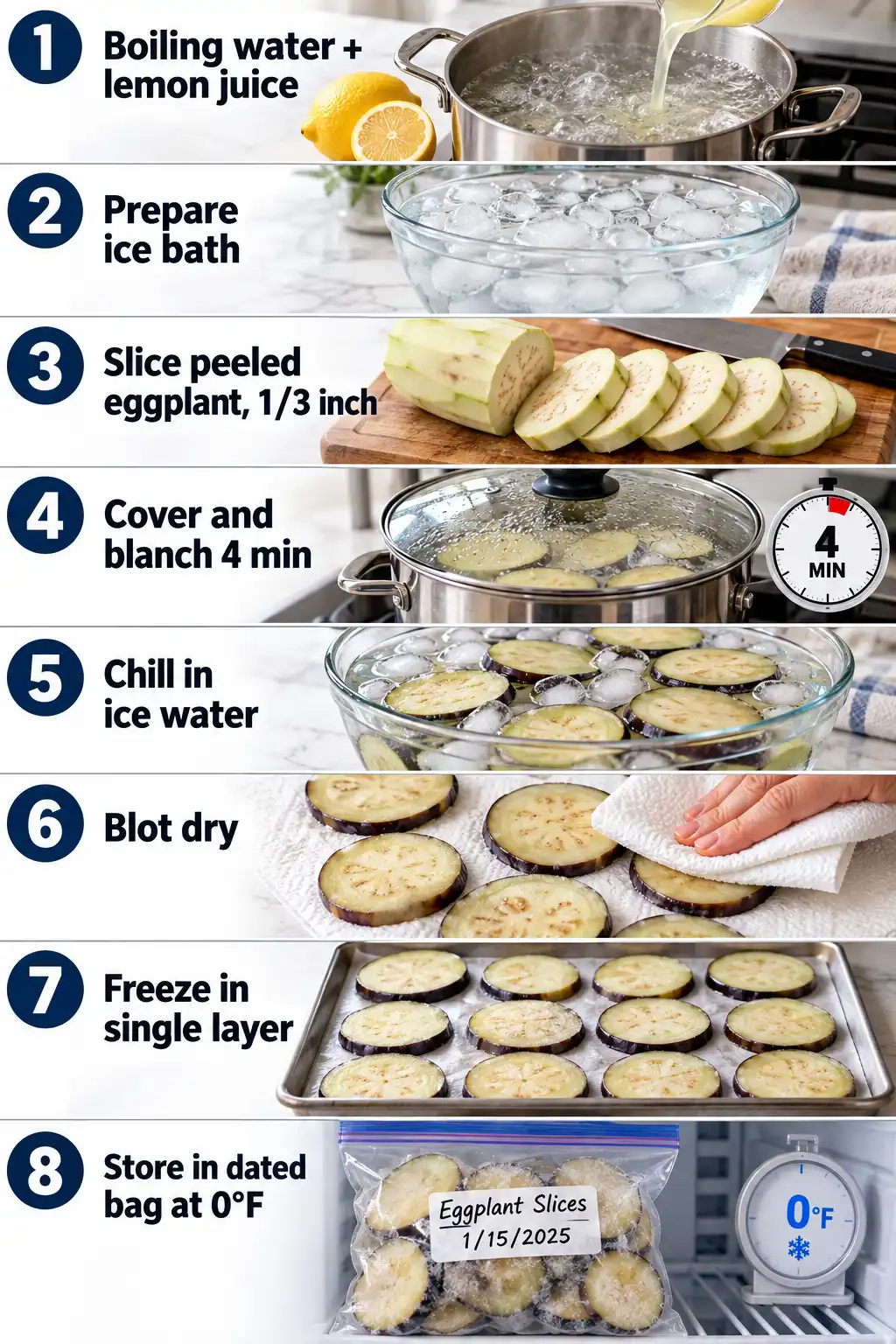
- Heat the blanching water. Bring 1 gallon of water to a rolling boil for each pound of prepared eggplant. Then add 1/2 cup of lemon juice per gallon.
- Set up an ice bath. Fill a large bowl with ice water before you cut anything.
- Wash, peel, and slice. Cut the eggplant 1/3 inch thick, and prepare only one batch at a time. Cut eggplant darkens quickly in air, so work fast.
- Blanch for 4 minutes. Lower the slices into the boiling water and cover the pot. Start timing when the water returns to a boil. If that takes longer than 1 minute, the batch is too big.
- Chill for 4 minutes. Move the slices straight into the ice water for the same time as the blanch.
- Drain and blot dry. Extra water forms excess ice crystals, so pat the slices with a clean towel.
- Tray-freeze the slices. Spread them in a single layer on a tray and freeze until solid. Then bag them right away.
- Pack, label, and store at 0°F. Press the air out of each bag and write the date on it. For slices packed straight into rigid containers, leave 1/2-inch headspace.
Penn State Extension notes that the lemon juice reduces the enzyme reactions that darken cut eggplant. For slices you plan to fry, NCHFP recommends a different pack: drained slices stacked with freezer wrap between them.
Freezing Eggplant Recipes: Match the Method to the Dish
The right prep depends on how you plan to cook the eggplant later.
| Freezing method | Prep before freezing | Best dishes | Using it later |
|---|---|---|---|
| Blanched slices | Blanch 4 minutes in lemon water, chill, dry, tray-freeze | Lasagna, curries, soups, stews | Cook straight from frozen |
| Slices for frying | Blanch and chill, then stack with freezer wrap between slices | Breaded cutlets, eggplant parmesan | Thaw in the refrigerator, pat dry, then bread |
| Roasted pulp | Roast until soft, scoop, cool fast, pack flat | Baba ghanoush, dips, sauces | Thaw in the refrigerator |
| Assembled casserole | Layer cooked eggplant with sauce, wrap airtight | Eggplant parmesan, stuffed eggplant | Thaw overnight in the refrigerator, then bake to 165°F |
Freezing Roasted Eggplant for Dips and Sauces
Cooked eggplant freezes too, and Penn State Extension notes that roasted eggplant purees well for dips and sauces. Roast whole or halved fruit at 400°F until the flesh collapses. Then scoop out the pulp, cool it quickly, and pack it flat in portion bags.
For baba ghanoush, freeze the plain pulp and add garlic, tahini, and lemon after thawing. NCHFP notes that garlic tends to turn strong and bitter in the freezer.
Can You Freeze Eggplant Parmesan?
Yes. Eggplant parmesan freezes well baked or unbaked. Penn State Extension advises using frozen casseroles within 3 months for best quality.
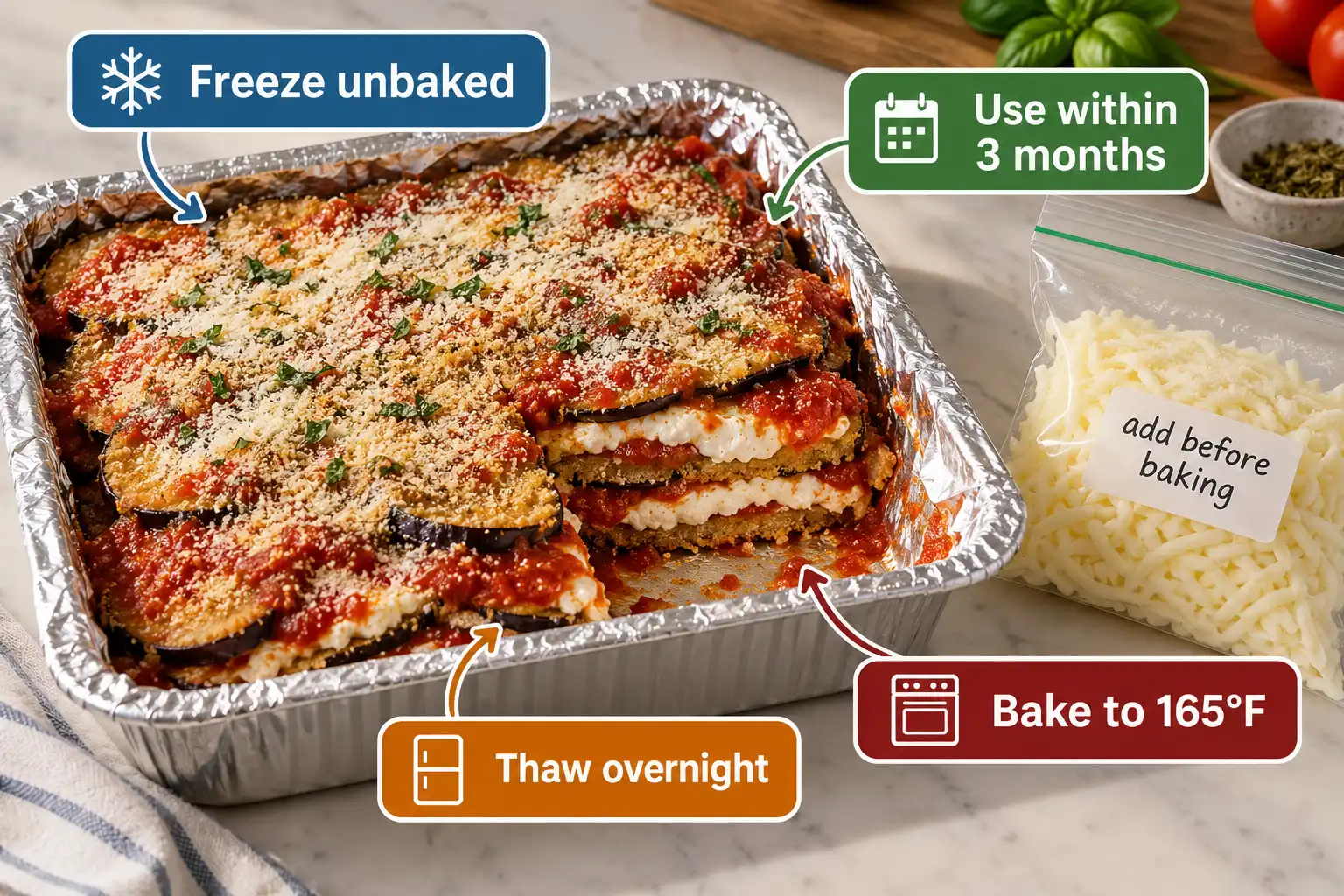
The eggplant decides whether to bake first. Penn State advises freezing casseroles unbaked when every ingredient is already cooked, but not dishes with raw vegetables. Fried or oven-baked cutlets count as cooked, so assemble the dish and freeze it unbaked. Raw slices layered straight into the pan do not, so bake that version, cool it, and then freeze it.
Two more steps protect texture. First, cool a baked pan quickly by setting it in ice water, then wrap it airtight. Second, hold back the top layer of mozzarella and any bread crumbs. NCHFP lists cheese and crumb toppings among foods that turn soggy in the freezer. Fried coatings also lose their crispness.
To serve, thaw the pan overnight in the refrigerator and add the cheese. Then bake as usual plus 15 to 30 minutes, per Penn State, until the center reaches 165°F. Also, NCHFP warns against moving a cold glass dish into a preheated oven unless the maker labels it freezer-to-oven safe.
How Long Does Frozen Eggplant Last?
Blanched eggplant keeps its best quality for 8 to 12 months at 0°F, according to NCHFP. For the best flavor, NCHFP suggests using the shorter end of that range. Casseroles like eggplant parmesan peak within about 3 months, per Penn State Extension.
These limits cover quality, not safety. USDA’s Food Safety and Inspection Service (FSIS) states that freezing keeps food safe almost indefinitely. Still, Michigan State University Extension advises freezing no more than your household eats in 12 months. Use the oldest bags first.
How to Thaw and Cook Frozen Eggplant
Skip thawing for most dishes. NCHFP advises cooking most frozen vegetables without thawing first, so add frozen slices straight to soups, stews, curries, and sauces.
Thaw only when you plan to layer or bread the slices. In that case, thaw them in the refrigerator and pat them dry before cooking. Never thaw them on the counter. NCHFP warns that the outer layer then warms into the 40°F to 140°F danger zone, where bacteria multiply fast.
Troubleshooting Frozen Eggplant
Why Is My Frozen Eggplant Brown?
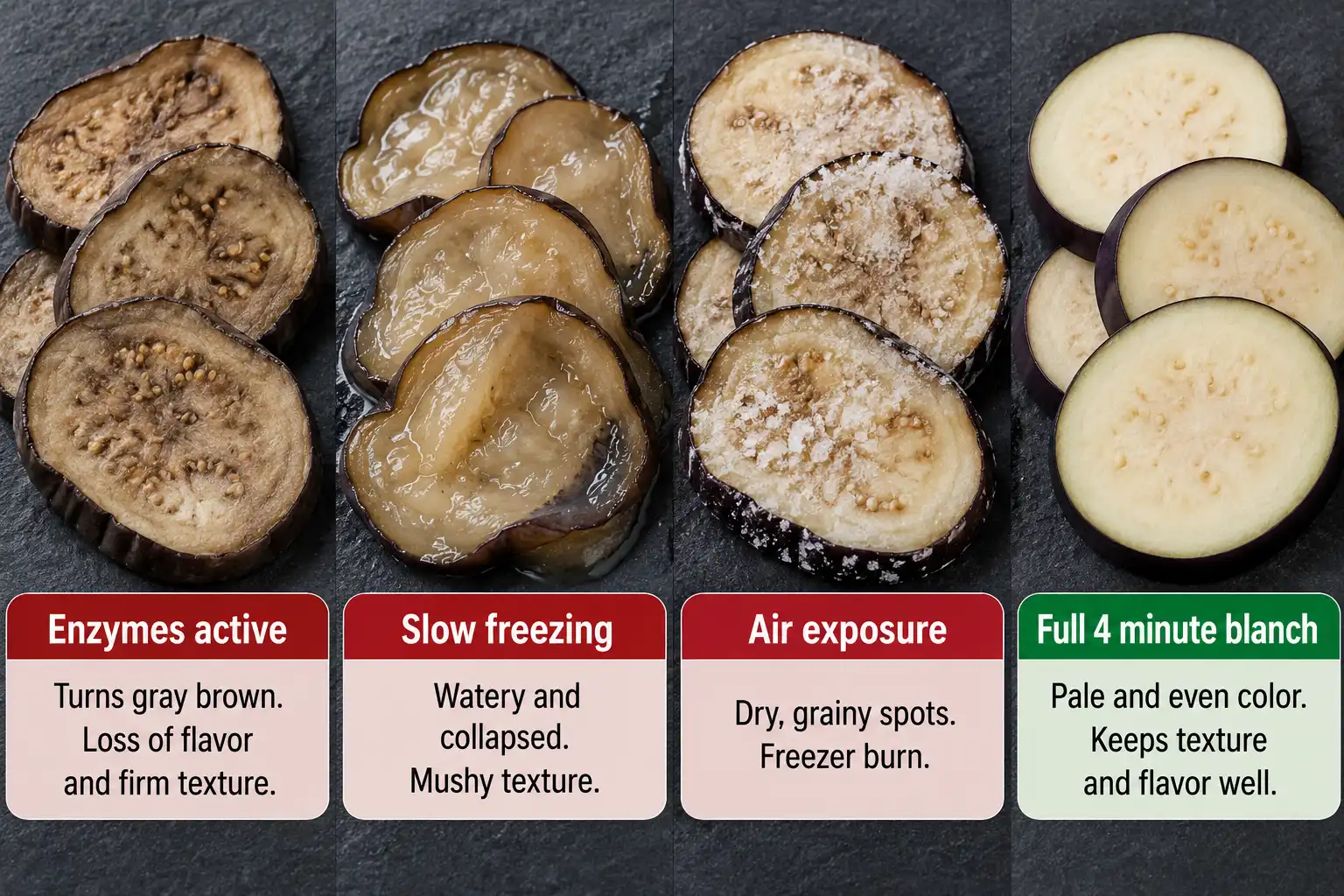
Brown or gray slices mean the enzymes stayed active. The usual causes are slices cut too far ahead, a blanch without lemon juice, or a blanch cut short. Clemson Cooperative Extension warns that under-blanching stimulates enzyme activity and is worse than no blanching at all. So time the full 4 minutes from the moment the water returns to a boil.
Why Is Frozen Eggplant Mushy?
Some softening is normal, but slow freezing makes it worse. Penn State Extension notes that high-moisture vegetables form large ice crystals. Their sharp edges cut cell walls, so the slices leak water as they thaw. To freeze faster, load the freezer lightly. NCHFP advises adding only as much food as freezes within 24 hours. That usually means 2 to 3 pounds per cubic foot of freezer space. Also, dry the slices well and tray-freeze them.
What Causes Freezer Burn on Eggplant?
Air contact causes freezer burn, according to FSIS, and it affects quality rather than safety. Clemson describes it as grainy, brownish spots where the tissue turns dry and tough, often with off flavors. Trim those spots and cook the rest. To prevent it, skip sandwich bags, which Clemson rates unsuitable for freezing. Use real freezer bags and press out as much air as possible. A vacuum sealer removes even more air, but tray-freeze the slices first so the seal does not crush them.
Why Does Frozen Eggplant Taste Bitter?
Overmature fruit usually causes it, not the freezer. Penn State Extension notes that older, larger eggplant with more seeds may taste bitter. Salting those slices draws out the bitter juices. Freezing does not fix the flavor, so pick fruit before the eggplant seeds mature.
Frequently Asked Questions
Can Eggplant Be Frozen Whole?
Not raw, because the 4-minute blanch time applies to 1/3-inch slices, not whole fruit. Instead, roast the whole eggplant until soft, then scoop out the pulp and freeze it in flat bags.
Is Freezing Aubergine Any Different?
No, because aubergine is simply the British name for eggplant, Solanum melongena. Peel and slice it 1/3 inch thick, blanch 4 minutes in lemon water, then chill, dry, and freeze at 0°F.
Can You Refreeze Thawed Eggplant?
Yes, as long as the eggplant thawed in the refrigerator and stayed cold. USDA’s FSIS says refrigerator-thawed food is safe to refreeze, though some quality drops with the moisture lost in thawing.
Can You Freeze Cooked Eggplant Dishes?
Yes, and slight undercooking helps, since Clemson Cooperative Extension notes that frozen dishes finish cooking when reheated. Cool them quickly, pack them airtight, and reheat ratatouille, stews, or pasta sauces to 165°F.
The Practical Takeaway
Freeze eggplant the day you pick it, while the color is uniformly dark and the seeds are still immature. Blanch every batch the full 4 minutes in lemon water, then chill, dry, and tray-freeze it. Label each bag with the date and the dish you plan to make. For plants still flowering in late summer, a second eggplant harvest before frost adds one more batch.