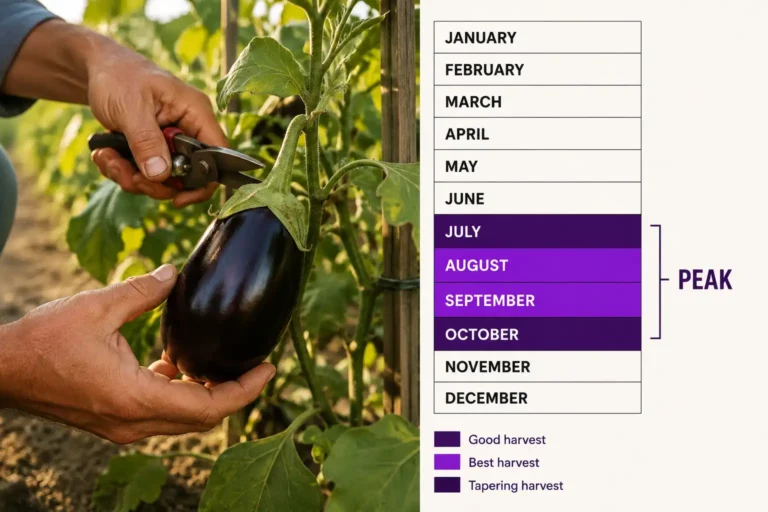
How Far Apart to Plant Eggplant in Rows, Beds, and Pots
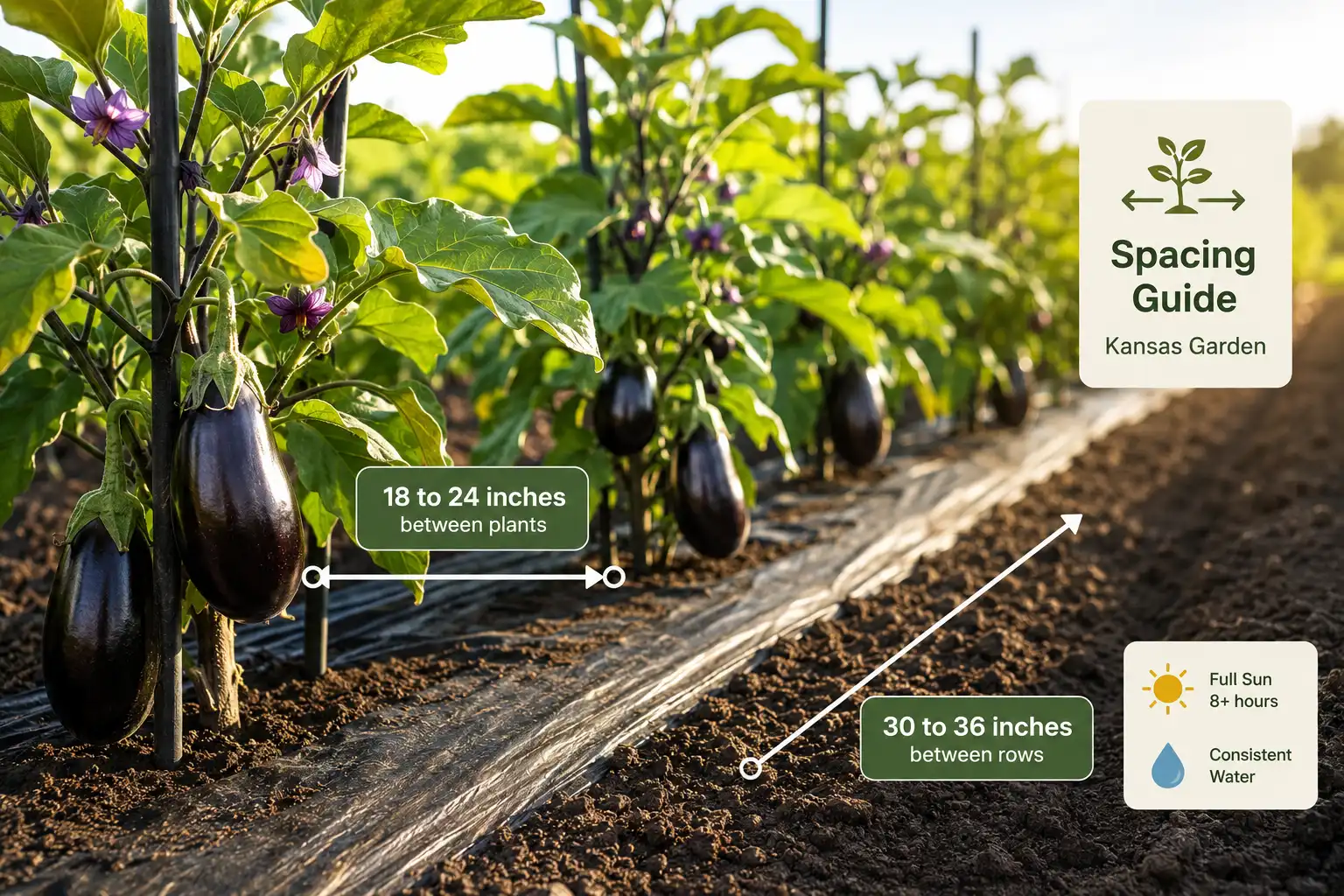
Eggplant needs more elbow room than most growers give it. Crowd the row, and you get small fruit, thin stems, and leaf disease by August. Get how far apart to plant eggplant right at transplant time, and the plants carry their own load all season.
How far apart to plant eggplant comes down to variety size. Set standard types 18 to 24 inches apart in rows 30 to 36 inches wide. Compact varieties need only 14 to 18 inches.
Eggplant Spacing Chart for Every Setup
Use this chart first, then adjust for your variety and your equipment width.
| Setup | Spacing in the row | Spacing between rows |
|---|---|---|
| Standard globe types (Black Beauty, Classic, Nadia) | 18 to 24 in | 30 to 36 in |
| Asian long types (Ichiban, Orient Express, Ping Tung Long) | 18 to 20 in | 30 to 36 in |
| Compact patio types (Patio Baby, Fairy Tale, Hansel, Gretel) | 14 to 18 in | 24 to 30 in |
| Raised bed, no defined rows | 24 in on all sides | Not applicable |
| Field production on plastic mulch | 24 in | 42 to 60 in bed centers |
| Grown as a perennial in zones 9 to 12 | 4 to 6 ft | 4 to 6 ft |
K-State Research and Extension lists 18 to 24 inches in the row and 36 inches between rows for Kansas gardens. University of Illinois Extension gives the same in-row range, with 30 to 36 inches between rows. So the 18 to 24 inch figure holds across the Corn Belt and the Great Plains alike.
Tighten toward 18 inches when you stake or cage every plant. Open up to 24 inches when plants run free and branch out.
Read next: How Fast Does Eggplant Grow
Why Eggplant Needs This Much Room
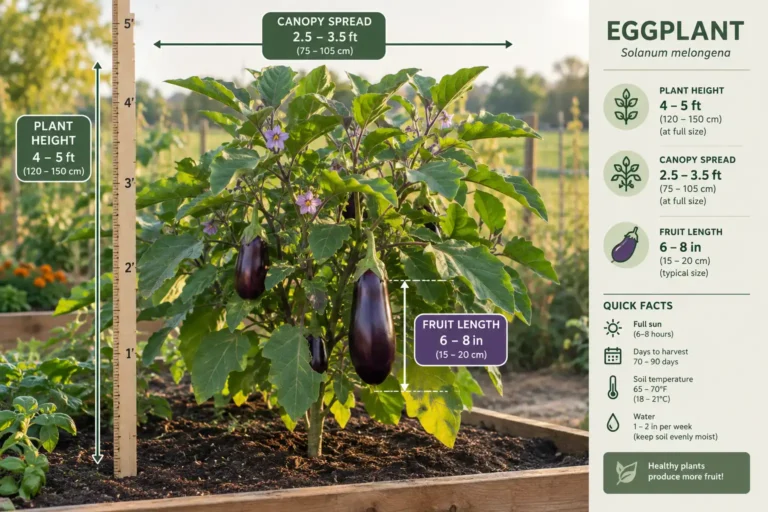
Eggplant is a bush, not a vine, and a mature standard plant fills a 2 to 3 foot circle. Stems are woody and brittle. Once fruit sets, branches splay outward under the weight.
Four things drive the spacing number:
- Mature spread. Standard varieties reach 2 to 4 feet tall with a 24 to 36 inch spread.
- Airflow. Dry leaves resist Phomopsis blight and Cercospora leaf spot. Tight canopies hold dew until midmorning.
- Root volume. Eggplant roots pull moisture from 18 to 24 inches out and down. Crowded roots compete during July heat.
- Harvest access. You cut eggplant with pruners, not by pulling. Cramped rows mean snapped branches every pass.
Flea beetles also hit crowded plantings harder, because the closed canopy holds humidity and shelters them from wind. Since eggplant runs a long season in Kansas, that canopy stays dense from July through first frost.
Does Variety Change How Far Apart to Plant Eggplant?
Yes, and the difference runs from 14 inches to 6 feet. Check the mature spread on the seed packet or plant tag before you mark anything.
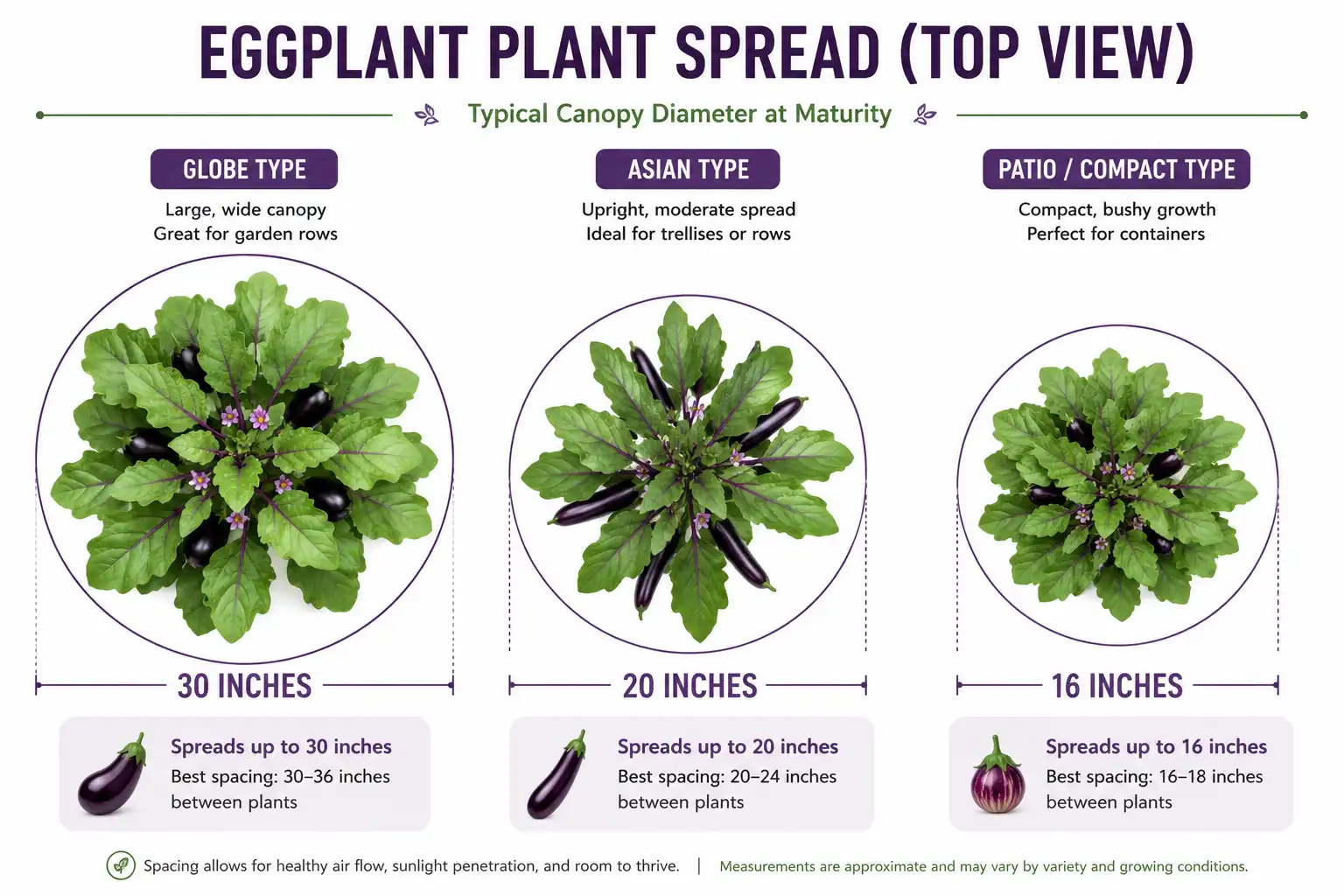
Standard globe types carry the biggest frame. Black Beauty and Nadia want a full 24 inches when unstaked. Both throw 1 pound fruit that pulls branches sideways.
Asian long types grow tall and narrow instead of wide. Ichiban and Orient Express hold together at 18 to 20 inches. They also set fruit faster, so a slightly tighter stand still yields well.
Compact patio types were bred for small spaces. Patio Baby matures in about 45 days and stays under 20 inches wide. Fairy Tale and Hansel behave the same way. All three work at 14 to 18 inches.
Perennial plantings are a different animal. In USDA hardiness zones 9 through 12, eggplant survives winter and grows woody. Plants there reach 6 feet or more, so growers set them 4 to 6 feet apart.
Match the spacing to the plant, not the crop name. That single step fixes most crowding problems before they start. Mature spread sets the spacing, and it also drives stake height and water demand when you are growing eggplant through a full season.
How Far Apart to Plant Eggplant in a Raised Bed
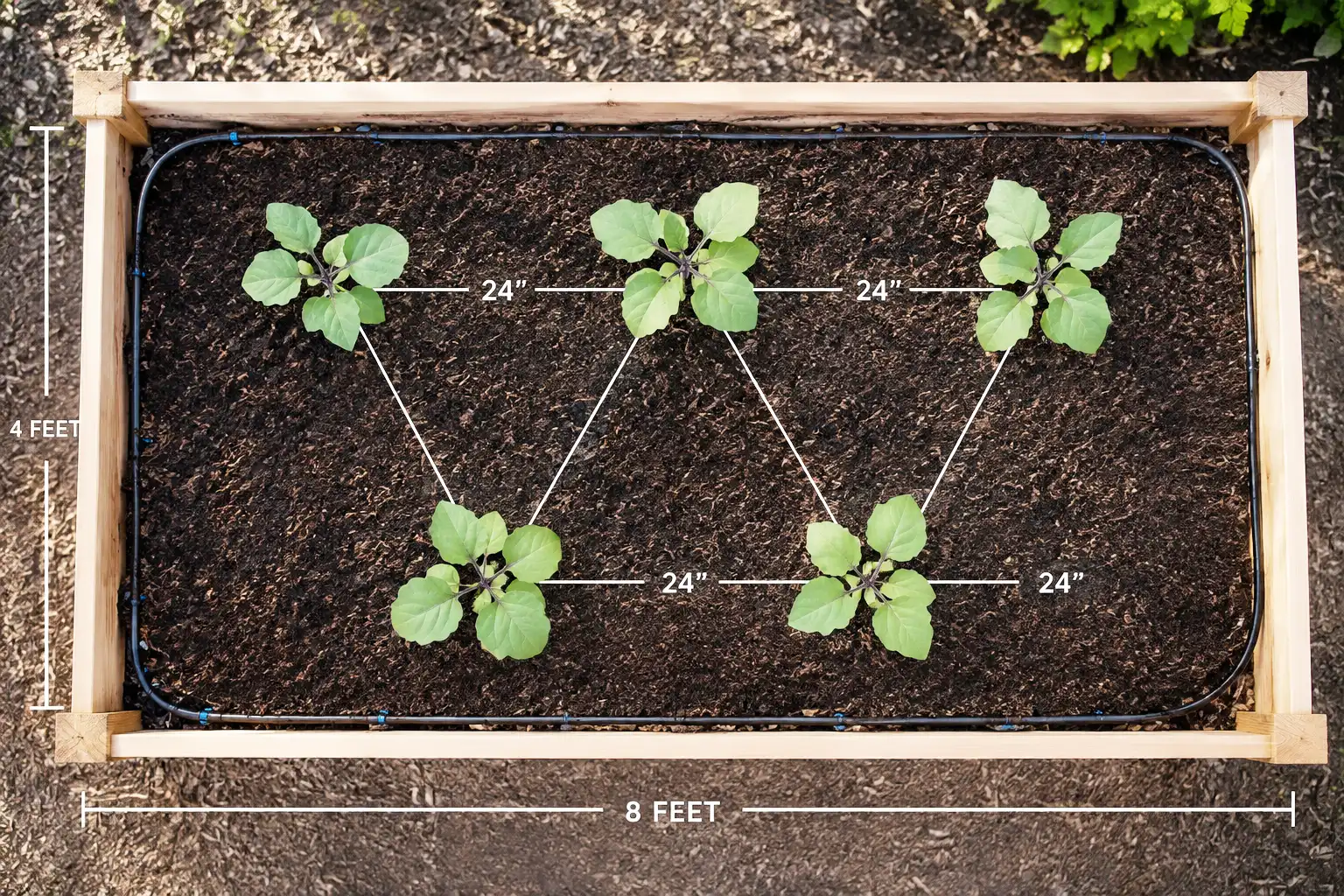
Space raised bed eggplant 24 inches apart in every direction and skip the row concept entirely. Beds do not need tractor paths, so you reclaim the row middles.
Here is what that means in common bed sizes:
| Raised bed size | Standard eggplant | Compact eggplant |
|---|---|---|
| 4 ft x 4 ft | 4 plants | 6 plants |
| 4 ft x 8 ft | 6 plants | 9 plants |
| 3 ft x 6 ft | 4 plants | 6 plants |
| 2 ft x 8 ft | 4 plants | 5 plants |
Stagger the plants in a triangle pattern rather than a grid. That way each plant sits 24 inches from its neighbors while you fit more into the same footprint.
Square foot gardeners often ask about one plant per square. Skip that idea for standard eggplant. Give each plant a 2 by 2 block instead, which works out to four squares per plant. Compact types can drop to a 1.5 by 1.5 block.
Raised beds warm earlier than field ground, which matters because eggplant sulks below 65°F soil. Before you commit to a layout, confirm your eggplant planting window for your region.
How Far Apart to Space Eggplant in Containers
Plant one eggplant per container and forget spacing between plants. The pot volume becomes the limit instead of the distance.
Size the container by variety:
- Compact types (Patio Baby, Fairy Tale, Bambino): 5 gallons minimum, 12 inches deep
- Asian long types (Ichiban, Orient Express): 7 gallons minimum
- Standard globe types (Black Beauty, Nadia): 10 gallons minimum, 14 to 16 inches deep
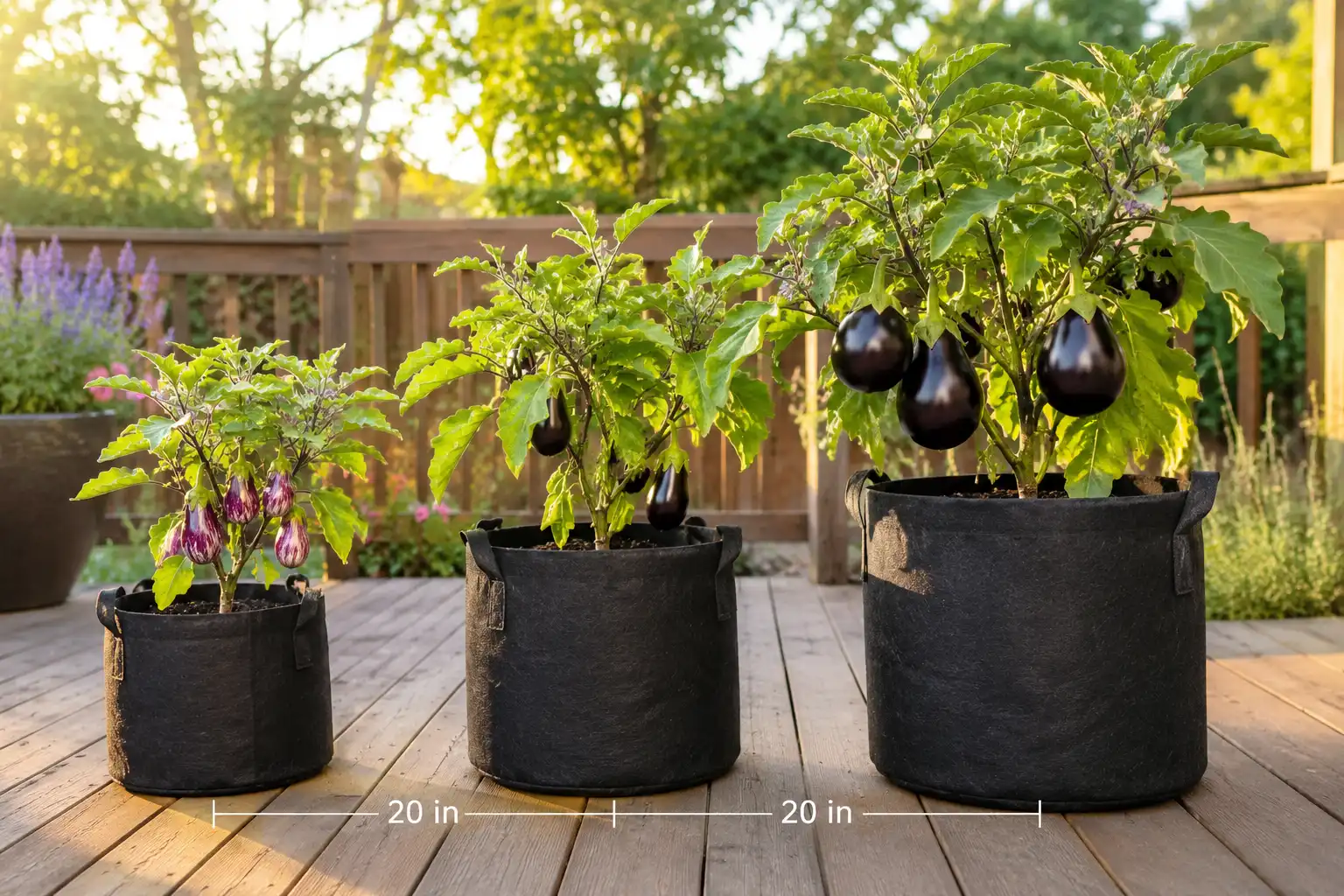
Then set the pots themselves 18 to 24 inches apart so leaves do not overlap. Touching canopies trap moisture and invite the same leaf spots you fight in the field.
Two plants in one big pot rarely pays. A 15 gallon container holding two standard plants still gives each one less root volume than a single 10 gallon pot. Roots compete, fruit sizes down, and you water twice a day in August.
Container plants also dry faster, so water stress shows up as bitter fruit. If you are working out volume for other crops, the same logic applies to grow bag sizing for tomatoes.
Row Spacing and Plants Per Acre for Field Eggplant
Commercial eggplant runs wider than garden spacing, because equipment sets the row width. NC State Extension recommends 24 to 30 inches in the row with rows 42 to 48 inches apart.
| In-row spacing | Bed or row centers | Plants per acre |
|---|---|---|
| 18 in | 60 in | 5,808 |
| 24 in | 42 in | 6,223 |
| 24 in | 60 in | 4,356 |
| 30 in | 60 in | 3,485 |
| 24 in | 72 in | 3,630 |
UF/IFAS tested in-row distances from 12 to 42 inches on polyethylene mulched beds. Across the 12 to 30 inch range, 24 inches returned the best economics, even though tighter stands produced more total fruit. Narrow spacing costs more in transplants while pushing fruit size below marketable grade.
A California cost study through UC ANR ran 60 inch beds at 24 inch in-row spacing, then skipped every seventh and eighth bed for equipment access. That layout landed at 3,267 plants per acre.
Match your row width to your tractor or tiller wheel spacing first. Then set in-row distance to hit your target population. Plasticulture beds with drip tape usually run one row per bed, with holes punched at fixed intervals.
How to Lay Out Eggplant Spacing Step by Step
Follow this order, and the row stays straight without a second pass.
- Check soil temperature. Wait until soil holds 65°F at 4 inches deep and night lows stay above 50°F. Cold soil stalls eggplant longer than it stalls tomatoes.
- Set your row width. Measure your tiller or tractor wheel spread, then match rows to it. Most Kansas gardens land at 36 inches.
- Run a string line. Stake both ends of the row and pull the string tight. Eyeballing costs you 3 to 4 inches per plant.
- Mark the in-row spacing. Cut a scrap board to your spacing distance, then walk it down the string as a spacing gauge. A 20 inch board covers most standard varieties.
- Dig and set the transplants. Plant at the same depth they grew in the tray. Eggplant does not root along buried stems the way tomatoes do.
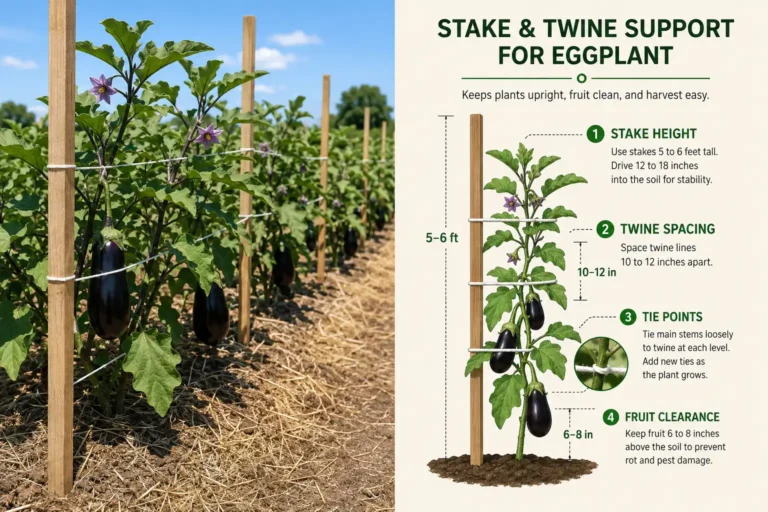
- Install supports now. Drive stakes or set cages at planting, before roots spread. Waiting until July means cutting roots.
- Mulch the middles. Black plastic or straw between rows holds moisture and blocks weeds.
Careful spacing at this stage saves rework later. Depth, hardening off, and starter fertilizer matter as much as distance when setting eggplant transplants.
What Happens When Eggplant Is Planted Too Close
Crowded eggplant produces smaller fruit, more culls, and heavier disease pressure. The plants still grow, so the problem hides until harvest.
Watch for these signs:
- Fruit under 4 inches on varieties rated for 6 to 8 inch fruit
- Leaf spots spreading fast through the lower canopy after a humid week
- Blossom drop during flowering, driven by shading and root competition
- Leggy stems reaching for light instead of thickening
- Broken branches from squeezing through the row at picking time
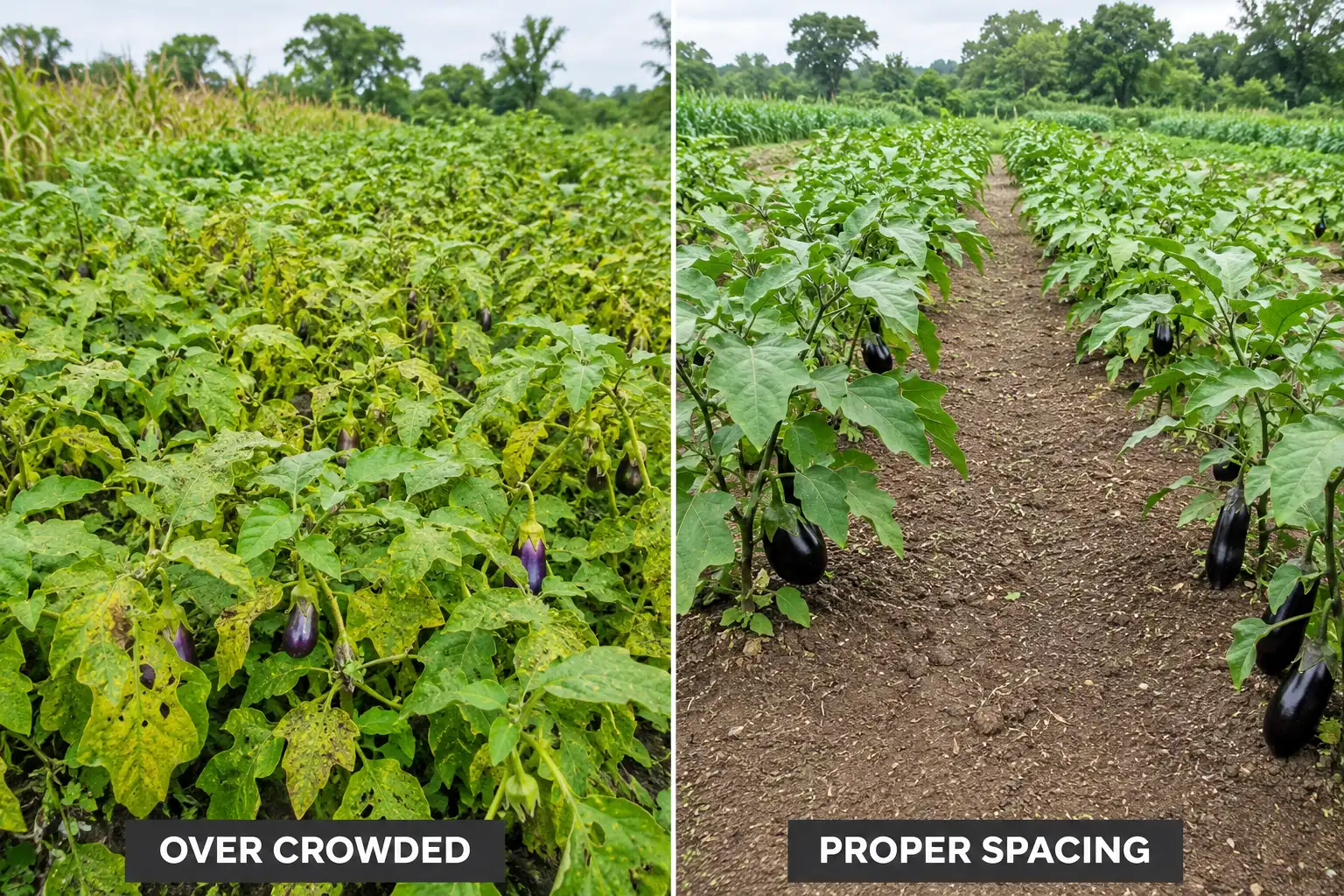
Yield per plant falls, though yield per acre may hold steady for a while. UF/IFAS density work showed that split clearly. Their tightest stand packed 8,712 plants per acre, yet the wider 24 inch spacing still paid better.
Can You Plant Eggplant Closer Than 18 Inches?
You can go to 14 to 16 inches with compact varieties or a staked, single-stem system. Anything tighter on standard varieties costs you fruit size. Illinois Extension notes small-fruited types tolerate closer spacing, while globe types do not.
Does Companion Planting Change Eggplant Spacing?
Yes, add 6 to 12 inches when you interplant anything between eggplant. Companions draw the same water and nitrogen, so the base spacing no longer covers both crops.
Practical adjustments:
- Bush beans between plants: widen in-row spacing to 30 inches
- Low herbs like thyme or oregano: keep 24 inches, since roots stay shallow
- Marigolds or nasturtiums along the row edge: no change needed
- Peppers in the same bed: hold 24 inches between all plants, both crops
Avoid pairing eggplant with tall crops on its south side. Shade cuts fruit set faster than crowding does. Nightshade neighbors need extra thought too, because they share Verticillium wilt and Colorado potato beetle pressure. Pick eggplant companion crops that stay short and shallow rooted, and the spacing adjustment stays small.
Rotation matters at the same time. Keep eggplant off ground that grew potatoes, tomatoes, or peppers within the last three years.
How Many Eggplant Plants Should You Grow?
Plan on 2 to 3 plants per person for fresh eating. K-State Research and Extension puts average yield near 10 pounds per 10 feet of row, which runs 5 to 7 plants at standard spacing.
| Household size | Plants for fresh use | Plants for canning or freezing |
|---|---|---|
| 1 to 2 people | 3 to 4 | 6 to 8 |
| 3 to 4 people | 6 to 8 | 12 to 16 |
| 5 or more | 10 to 12 | 20 to 24 |
A healthy standard plant gives 6 to 10 fruits across the season in zone 6a. Asian types run higher in count and lower in weight per fruit.
Do not plant extras to hedge against losses. Buy or start two spare transplants instead, then hold them in pots for two weeks. Mature plant size drives the numbers all over the garden, which is why spacing rules across common crops swing so hard from lettuce to squash.
Final Thoughts on Eggplant Plant Spacing
Run 20 inches in the row and 36 inches between rows. That gives me a cage on every plant and still leaves a walking path at picking time.
Start at 24 inches your first season if you have never grown eggplant. Then tighten next year once you see how your variety fills out. Wide spacing costs you a little ground. Tight spacing costs you fruit size, and that shows up in every basket you carry out of the field.