How to Use Potato Peels as Fertilizer
Potato peels pile up fast in any kitchen. Most advice says bury them and walk away. That wastes the potassium and invites pests. Here is how to use potato peels as fertilizer so the nutrients actually reach a root zone.
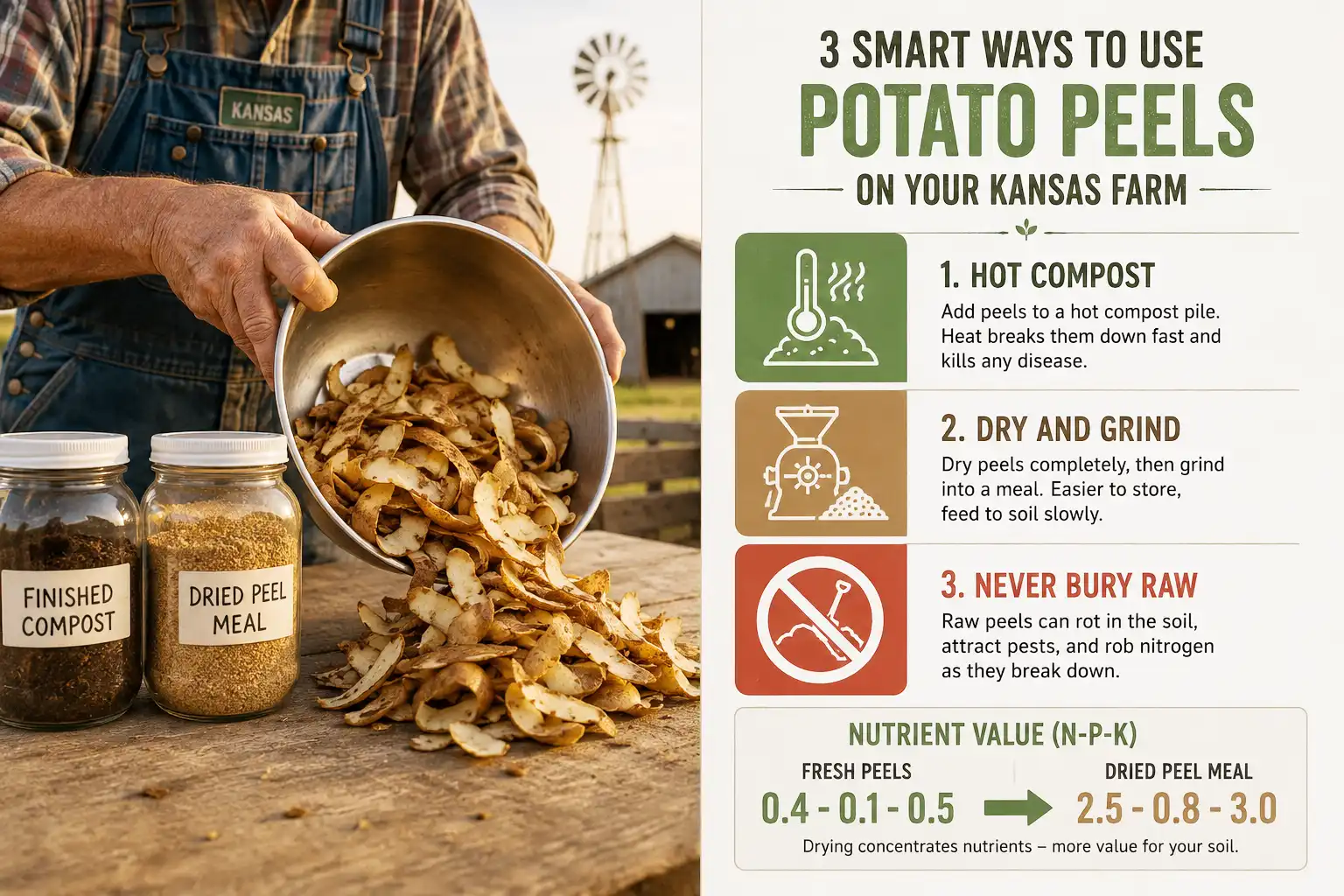
Compost potato peels hot, or dry and grind them into meal. Fresh peels test near 0.4-0.1-0.5, so raw burial wastes them. Use potato peels as fertilizer only after processing, since dried meal runs near 2.5-0.8-3.0.
What Nutrients Do Potato Peels Actually Supply?
Potato peels supply light nitrogen, very little phosphorus, and a fair share of potassium. Water accounts for the rest. Fresh peels run better than 80% moisture, so every number on a fresh basis stays small.
| Material | N | P2O5 | K2O |
|---|---|---|---|
| Fresh peels, as peeled | 0.4% | 0.1% | 0.5% |
| Dried, ground peels | 2.5% | 0.8% | 3.0% |
| Alfalfa meal, for scale | 2.5% | 0.5% | 2.5% |
| Bagged 10-10-10 | 10% | 10% | 10% |
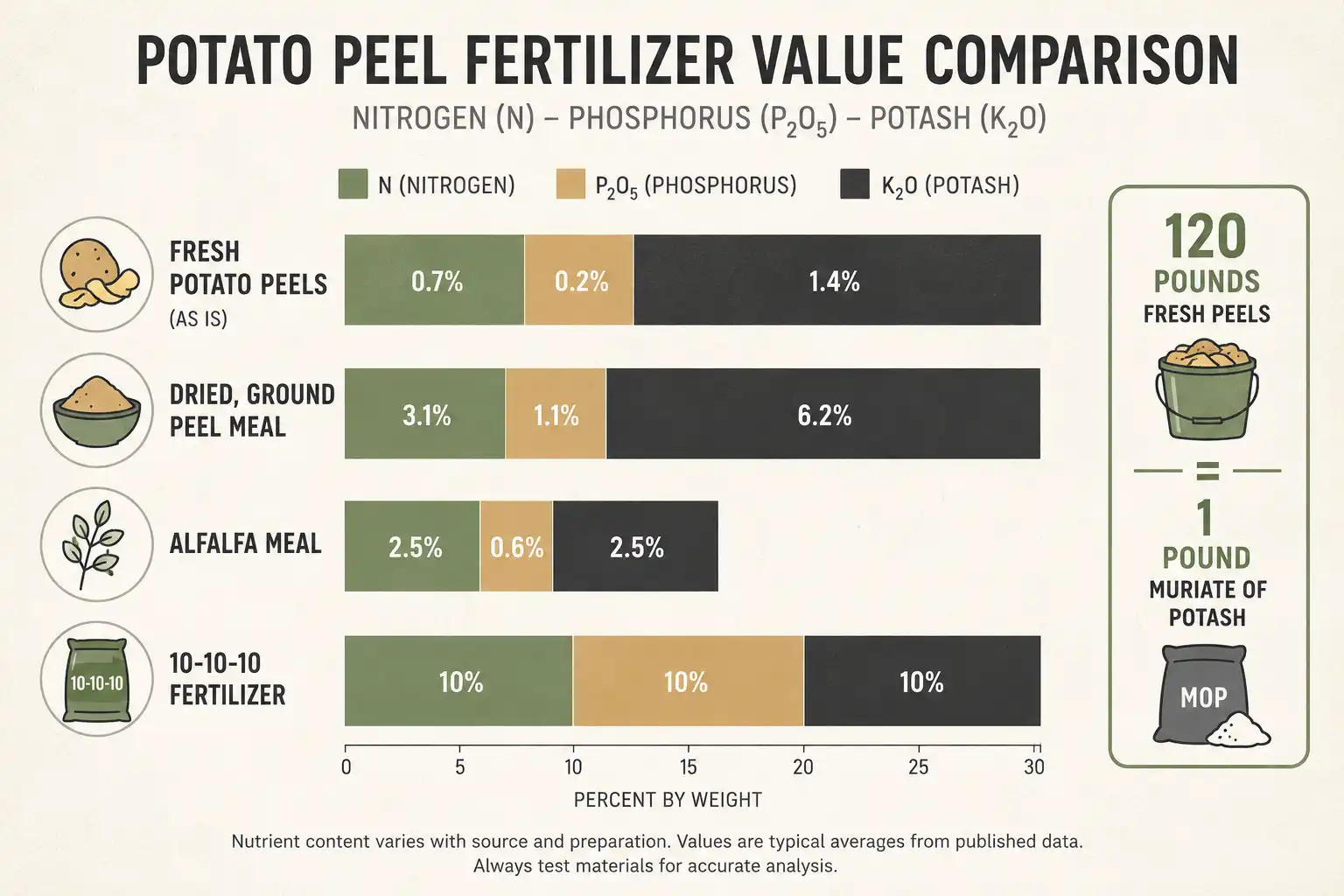
Values come from USDA data for raw potato skin. Converted to oxide form, the way a fertilizer label reads.
Ten pounds of fresh peels carry roughly 0.04 pound of nitrogen and 0.05 pound of potash. Matching the potash in one pound of 0-0-60 muriate of potash takes about 120 pounds of fresh peels. One pound of urea takes roughly the same.
That math sets honest expectations. Peels work as a garden-scale amendment, and mostly as one more input for building soil fertility without bagged products. They will never replace a fertilizer program on row-crop acres. On a raised bed, though, a season of peels covers a real share of what 100 square feet needs.
Why Raw Peels Should Not Go Straight Into a Planting Bed
Burying raw peels in a bed creates three problems. None of them feed your crop faster. So skip the trench method, even though plenty of sites push it.
- You are baiting wireworms. University of Idaho and Utah State both list buried potato chunks as a monitoring bait for wireworm larvae. A handful of peels four inches down does the same job. In carrot, onion or potato ground, that draws the pest you least want.
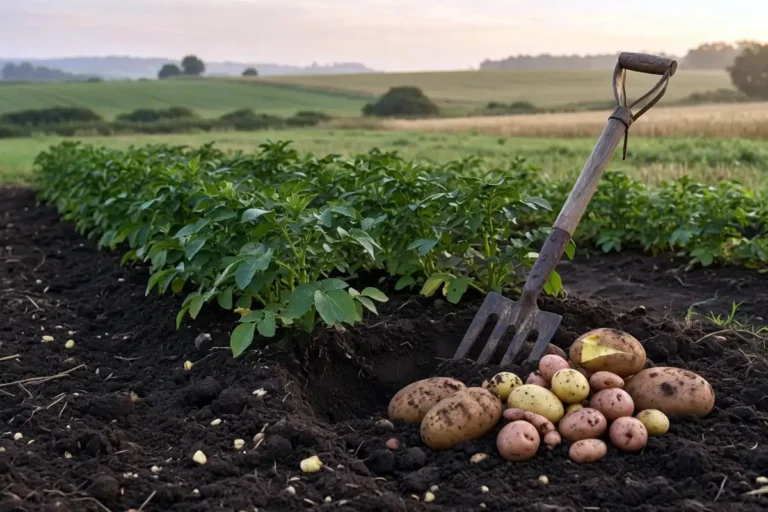
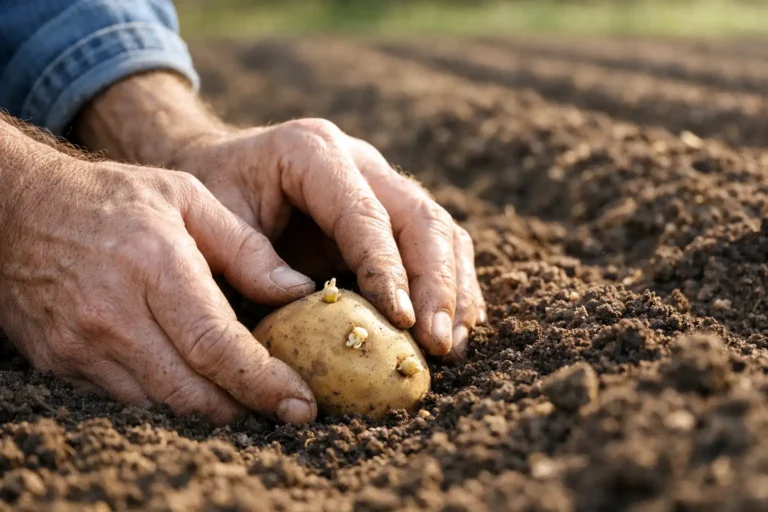
- Eyes sprout. Any peel with an eye can throw a volunteer potato plant. Volunteers steal water. Worse, they act as the main overwintering bridge for late blight.
- Starch mats go sour. Wet peels pack into a slick, airless layer. Roots hitting that layer sit in a low-oxygen pocket instead of open soil.
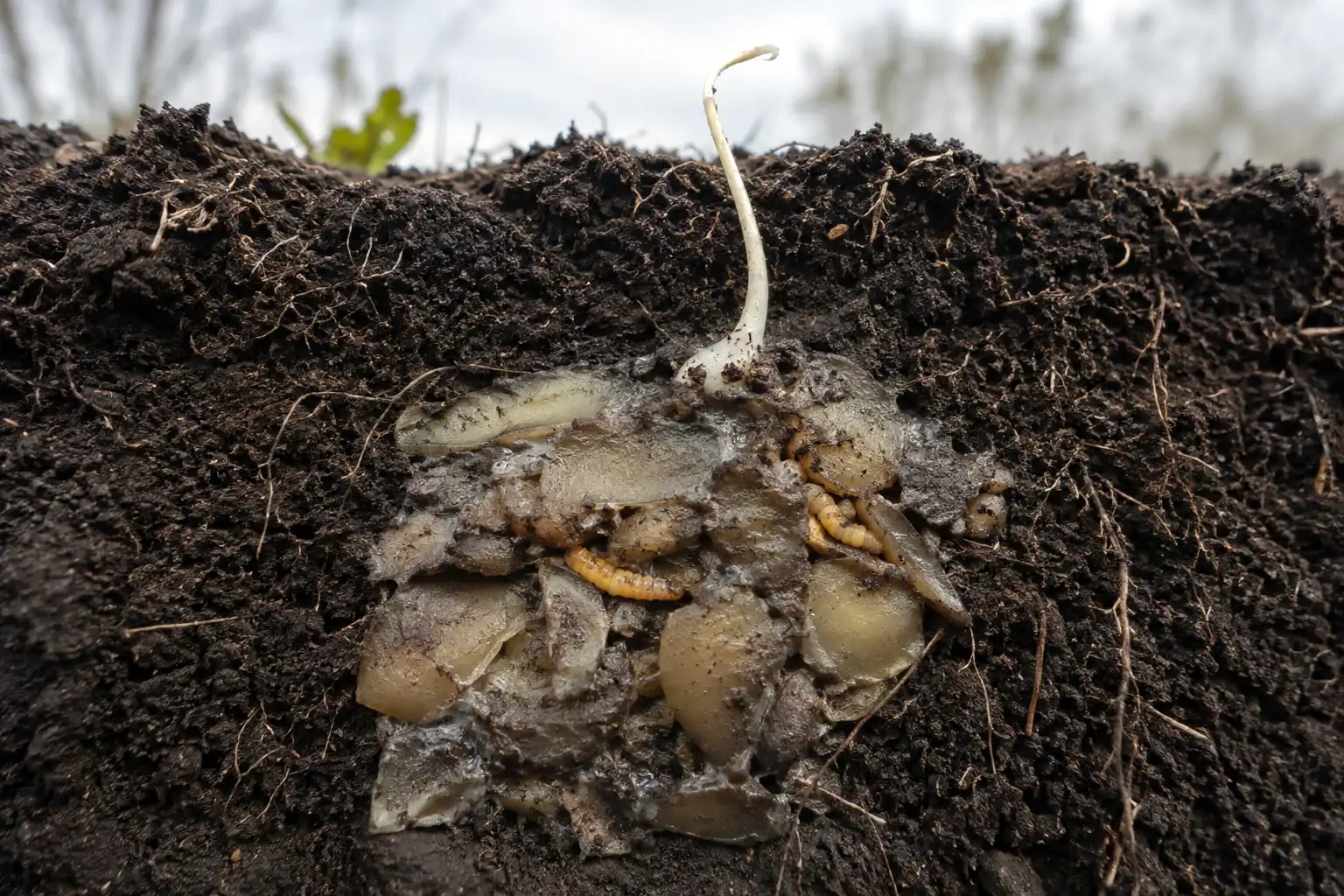
Rodents and slugs find the pile too. So process peels first, then apply the product. That one change separates a working system from a mess.
How Do You Compost Potato Peels the Right Way?
Hot composting handles peels best. Heat solves sprouting and disease in one step. Cold piles never reach the temperature that matters, so peels sit for months and sprout instead.
Work through it in order:
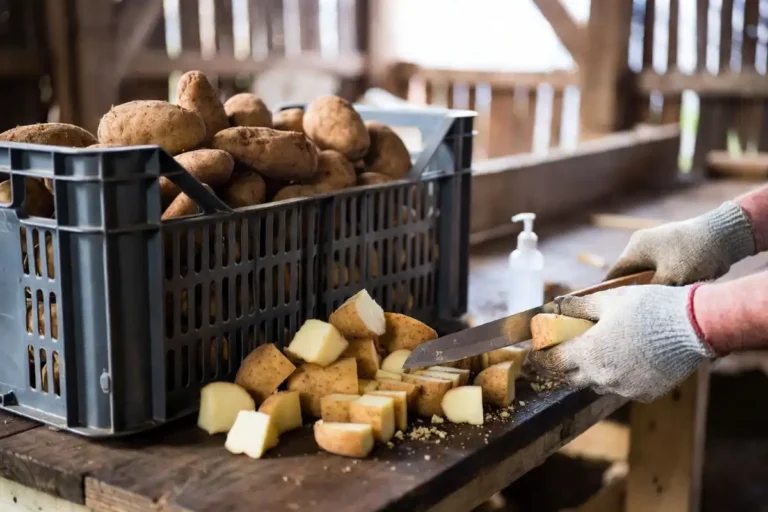
- Chop to one inch or smaller. Smaller pieces heat faster and mineralize faster.
- Add browns at two to three parts by volume. Dry leaves, straw, cardboard or sawdust all work. Peels count as a green, so target 25:1 to 30:1 carbon to nitrogen overall.
- Bury peels in the pile core. Surface peels stay cool, feed flies and sprout.
- Hold 131°F for three straight days. That figure comes from the USDA National Organic Program standard. It clears pathogens. Push to 145°F to also kill weed seeds and viable eyes.
- Turn five times across fifteen days. Turning moves outer material into the hot center and refills the pile with oxygen.
- Keep moisture near a wrung-out sponge. Too wet and the pile goes anaerobic. Too dry and it stalls below 110°F.
- Cure four to eight weeks before spreading.
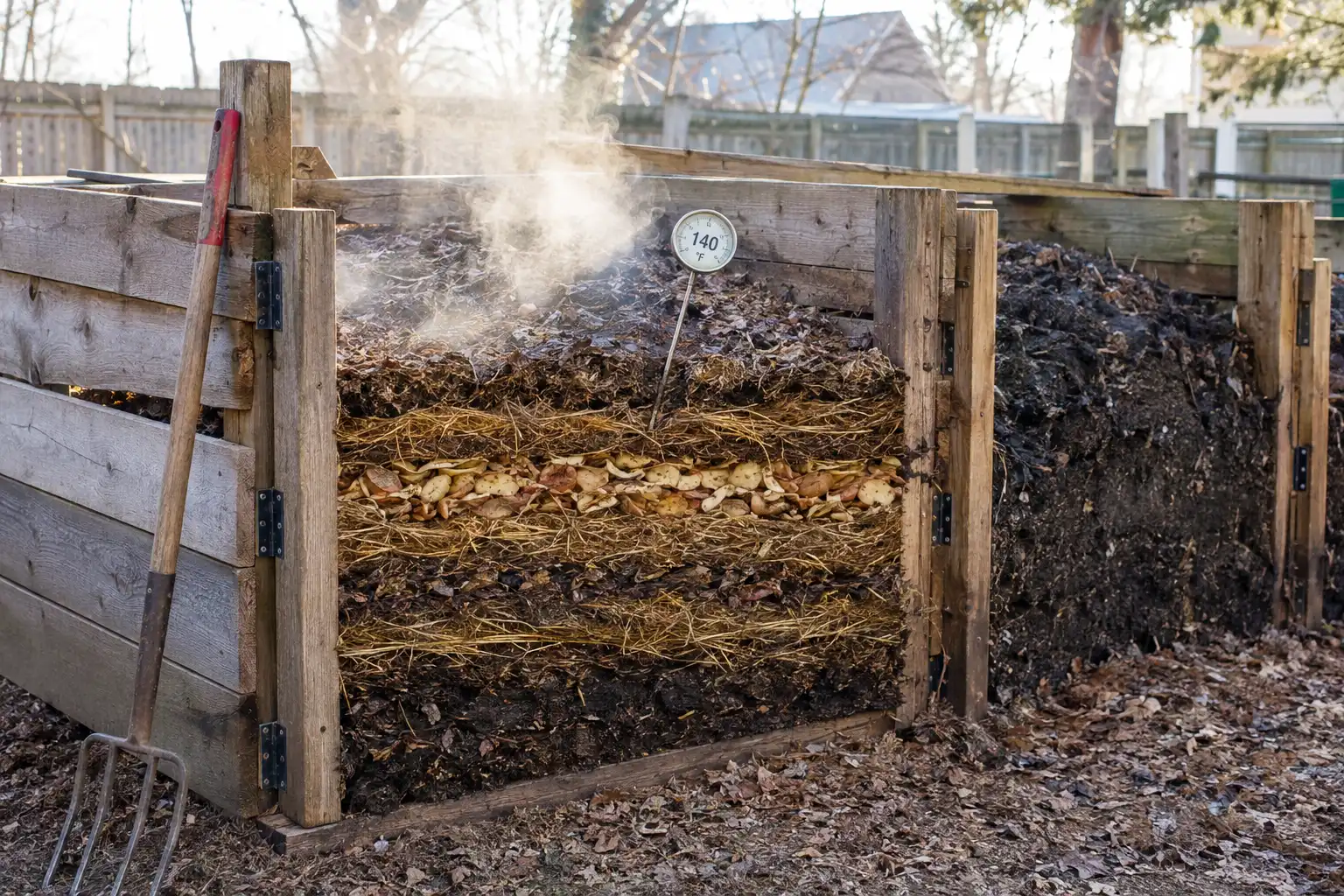
A pile under three feet in every direction rarely holds heat. Build big enough to insulate itself. The same principles apply when you scale up compost on a working farm, only the equipment changes.
How to Use Potato Peels as Fertilizer by Drying and Grinding Them
Drying gives the most concentrated product. It also ends the sprouting problem. Peels lose water, not minerals, so what stays behind reads like a mild organic fertilizer.
Here is the method:
- Rinse grit off and shake the peels dry.
- Spread one layer on screen trays or racks. Overlapping pieces mold.
- Dry until brittle. Full Kansas sun on a screen takes two to three days. An oven at 170°F to 200°F needs two to three hours with the door cracked. A dehydrator at 135°F runs eight to ten hours.
- Grind to a coarse meal in a blender or a cheap coffee grinder. Fine meal releases faster.
- Store sealed and dry. Any residual moisture molds the jar.
- Apply pre-plant at five to ten pounds per 100 square feet. That is roughly one to two cups per 10 square feet. Work it into the top two to four inches, then water in.
- Wait one to two weeks before setting transplants. Microbes then start breakdown before roots arrive.
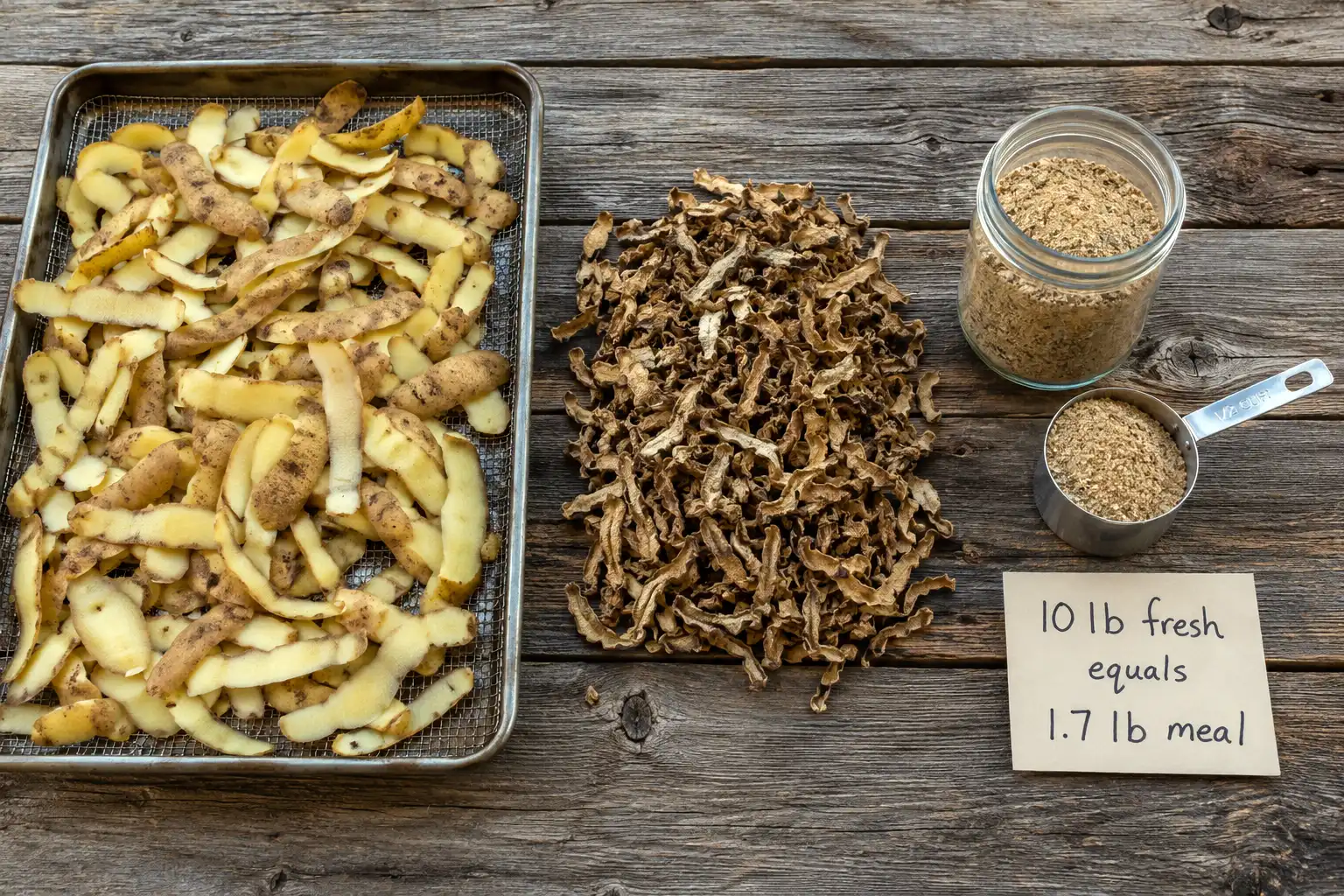
Ten pounds of fresh peels yield about 1.7 pounds of meal. So covering 100 square feet takes 30 to 60 pounds of peels. That is a lot of potatoes. Peel meal therefore works as a supplement, not a whole program.
Does Potato Peel Water Feed Plants?
Barely. Cooled potato water carries a trace of dissolved potassium plus some starch. That is about all. Treat it as water with a small bonus, not a liquid feed. Steeping peels in a bucket behaves the same way, since soaking pulls out only a fraction of the tissue.
Three rules keep it from backfiring:
- Never use salted water. Sodium degrades soil structure and cuts water uptake.
- Strain the solids. Loose bits mold and draw fruit flies fast.
- Cool it fully. Hot water scalds roots and soil life.
Boiling water does have one honest garden use. Poured on young annual weeds in sidewalk cracks, it kills top growth on contact. Deep-rooted plants regrow within a week or two, though.
How Much Potato Peel Compost Should You Apply?
Spread finished compost half an inch to one inch deep. Then work it into the top four to six inches. On 100 square feet that runs 1.5 to 3 cubic feet. Dried peel meal instead goes on at five to ten pounds per 100 square feet.
Test before you add, though. Many Great Plains soils already sit high in potassium. Piling on more potash can then crowd magnesium uptake without lifting yield. Keeping a soil test kit within reach answers that in an afternoon, and K-State Research and Extension runs full lab panels cheaply. Compost also raises organic matter and water-holding capacity, which is the larger payoff either way.
If a soil test flags a real deficiency, close the gap with a bagged fertilizer sized for potatoes rather than waiting on kitchen scraps.
Which Crops Use Potato Peel Compost Best?
Potassium-hungry crops respond most: potatoes, tomatoes, sweet corn, onions, carrots and beans. Fruiting and tuber crops pull heavy potassium while bulking, so a potash-leaning amendment fits them.
One rotation caution matters here. Compost that never hit 131°F should stay out of nightshade ground. Peels come from a nightshade. Returning under-processed residue to a potato or tomato bed recycles pathogens into the same host family. Fully finished, hot-cured compost carries no such concern. The same rotation logic decides which crops follow potatoes safely.
What About Late Blight and Solanine?
Both risks run smaller than most articles claim, yet neither sits at zero. So handle them with two habits rather than blanket fear.
Late blight. Phytophthora infestans needs living host tissue. UC IPM and the Pacific Northwest Pest Management Handbook both note it does not survive long in soil or dead debris. It overwinters in living tubers, mainly cull piles, storage and volunteers. A thin peel holds almost no living tuber tissue, and it breaks down fast. So the real risk pathway is a sprouted volunteer, not the peel. Kill sprouting with heat or drying, then pull any volunteer you spot. Peels from tubers with sunken brown lesions or granular flesh belong in the trash.
Solanine. Research on agricultural topsoils puts the half-life of alpha-solanine near two to four days at 59°F. Soil microbes do that work. Green peels are not a soil poison. Scrap questions like whether onions belong in a compost pile follow the same logic. Decomposition handles most plant compounds on its own.
Mistakes That Waste Good Peels
Each of these costs you either the nutrients or the season.
- Trenching raw peels between rows.
- Dumping peels on top of a cold pile.
- Adding peels from rotted or lesioned tubers.
- Feeding raw peels to a worm bin, where starch sours before worms process it.
- Using salted cooking water.
- Applying potash-heavy compost with no soil test behind it.
Final Thoughts on Potato Peels as Fertilizer
Peels are a soil-building input, not a fertilizer shortcut. Compost runs through the hot bin with straw and leaves. Each winter, a batch is also dried for the tomato and onion beds. That returns real potassium plus organic matter, without inviting wireworms or volunteers. Start with a soil test, then decide whether your ground needs the potash at all.