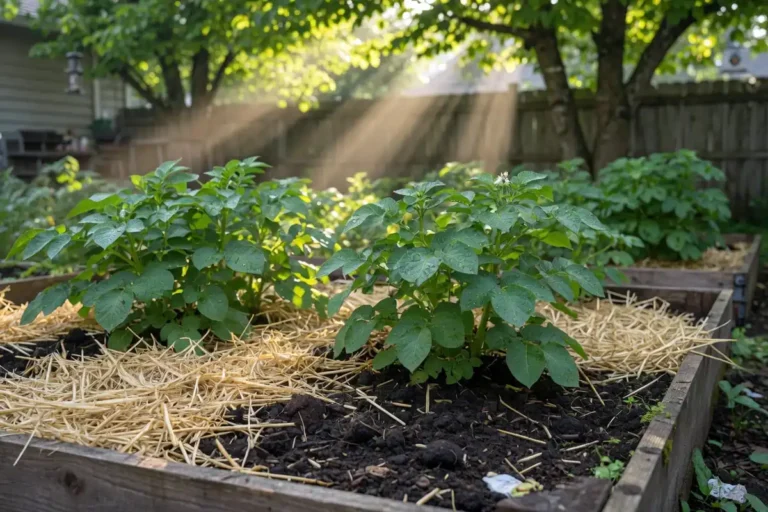
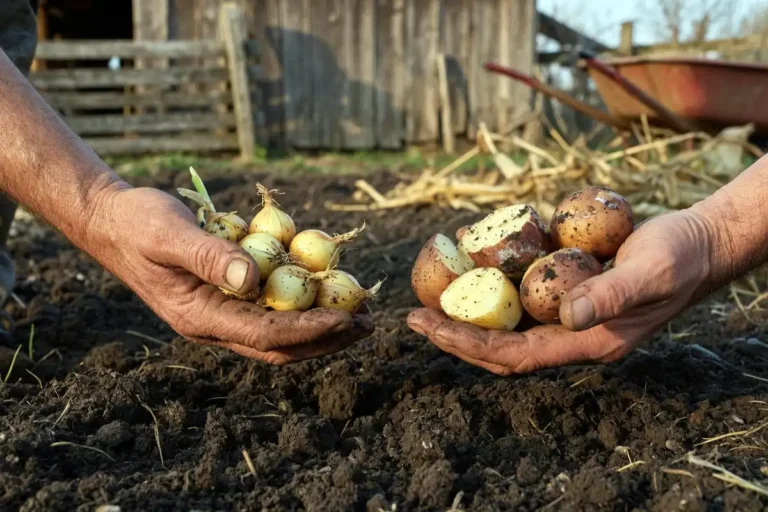
How to Grow Potatoes in Bags: 8 Steps for Big Yields
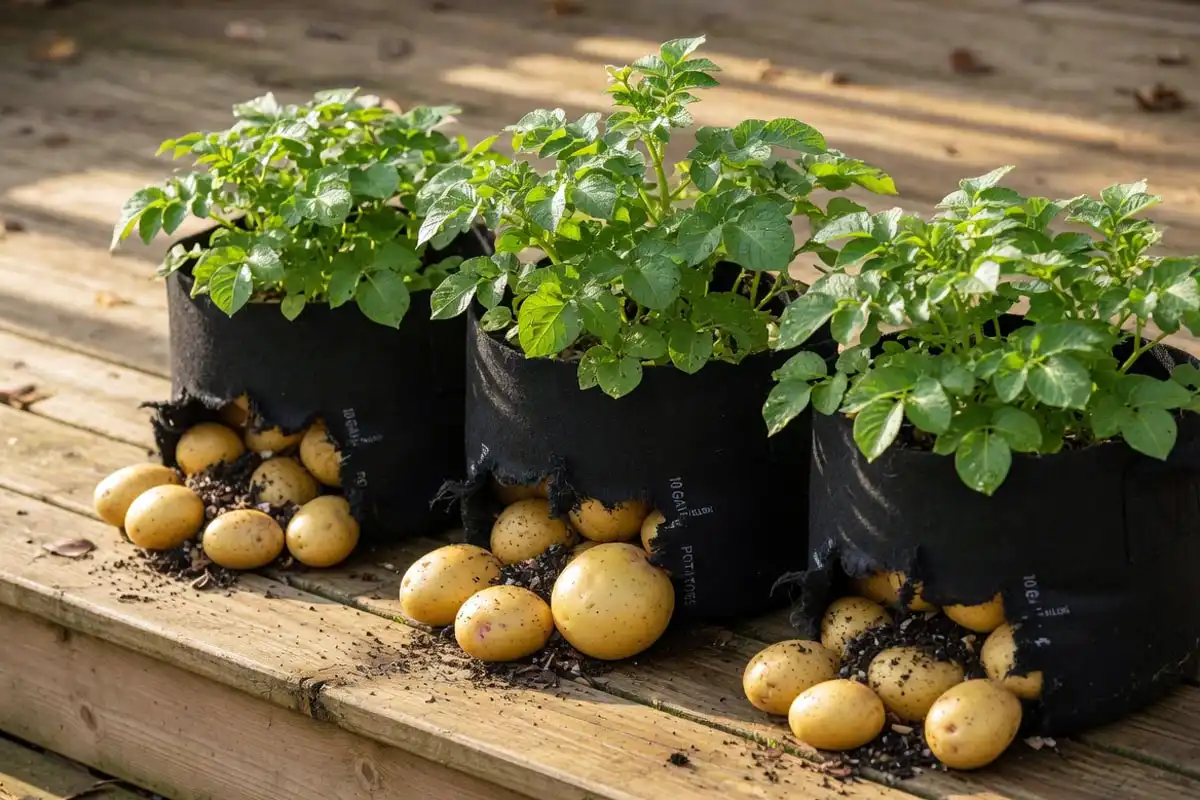
If you want to grow potatoes in bags, this method gives you a full crop without needing a garden plot. Fabric grow bags drain well, warm up fast, and let you harvest by tipping them over. This guide covers bag size, soil mix, planting, watering, hilling, and harvest timing on a patio or balcony.
Plant 2 to 3 seed potatoes in a 10-gallon fabric bag filled one-third with loose, compost-rich soil. Keep the soil moist but not soggy. Add more soil as stems grow to bury the lower leaves. Harvest 70 to 120 days after planting, based on the variety.
What Are Potato Grow Bags?
Potato grow bags are fabric or plastic containers sized from 5 to 20 gallons. Most growers pick fabric bags because the walls breathe and stop roots from circling. The bag acts as a portable raised bed. You fill it in stages, hill the stems, and dump it out at harvest.
For seed selection basics, The topic is covered in our guide to seed potatoes.
When to Plant Potatoes in Bags
Plant potatoes in bags 2 to 3 weeks before your last spring frost. Soil inside the bag should reach 45°F (7°C). Bags warm up faster than garden beds, so you often get a 1 to 2 week head start. In hot southern zones, a fall planting in late August also works.
Timing changes by region. Regional windows is covered in our post on potato planting dates.
Where to Place Your Potato Bags
Place bags where they get 6 to 8 hours of direct sun. A south-facing patio, driveway edge, or open balcony works well. The surface should be firm and level. Raise bags off concrete on bricks or a pallet so the bottom drains freely. Avoid shaded corners and windy rooftops.
How to Grow Potatoes in Bags Step by Step
Step 1: Pick the Right Bag Size
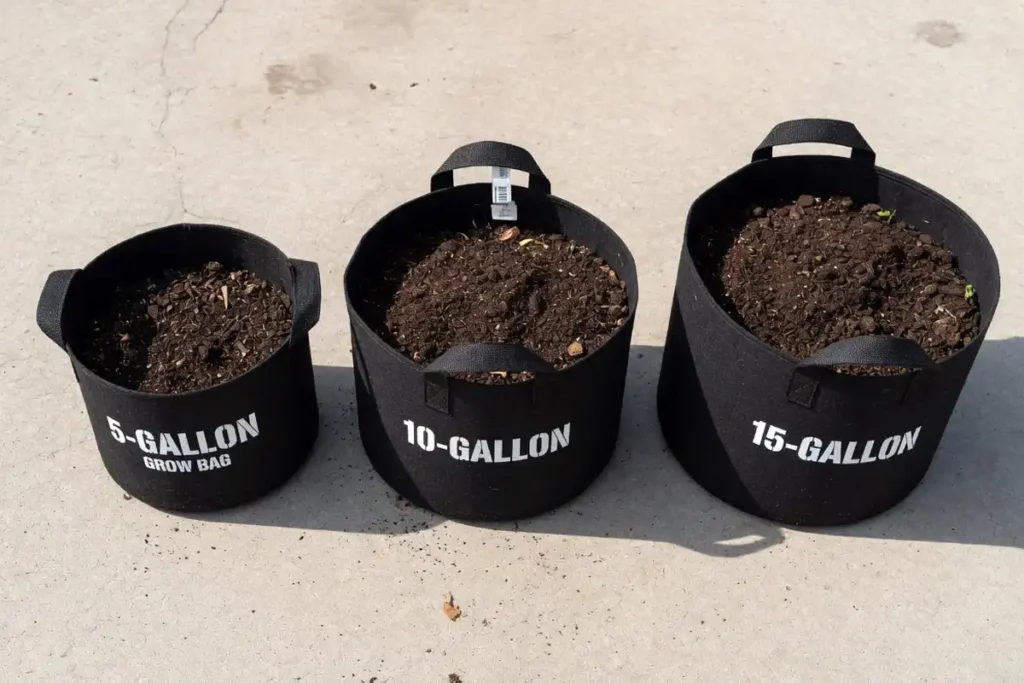
Use a 10-gallon bag for 2 to 3 seed potatoes. A 15-gallon bag fits 3 to 4 pieces, and a 20-gallon bag fits 4 to 5. Smaller 5-gallon bags suit a single fingerling plant. Choose bags with sturdy handles and open weave fabric.
Step 2: Prepare Seed Potatoes
Buy certified seed potatoes from a local nursery or feed store. Chit them in a bright, cool room for 2 weeks until sprouts reach 1/2 inch. Cut large tubers into 2-ounce chunks with 1 or 2 eyes each. Let cut pieces cure for 2 days so the wounds callous.
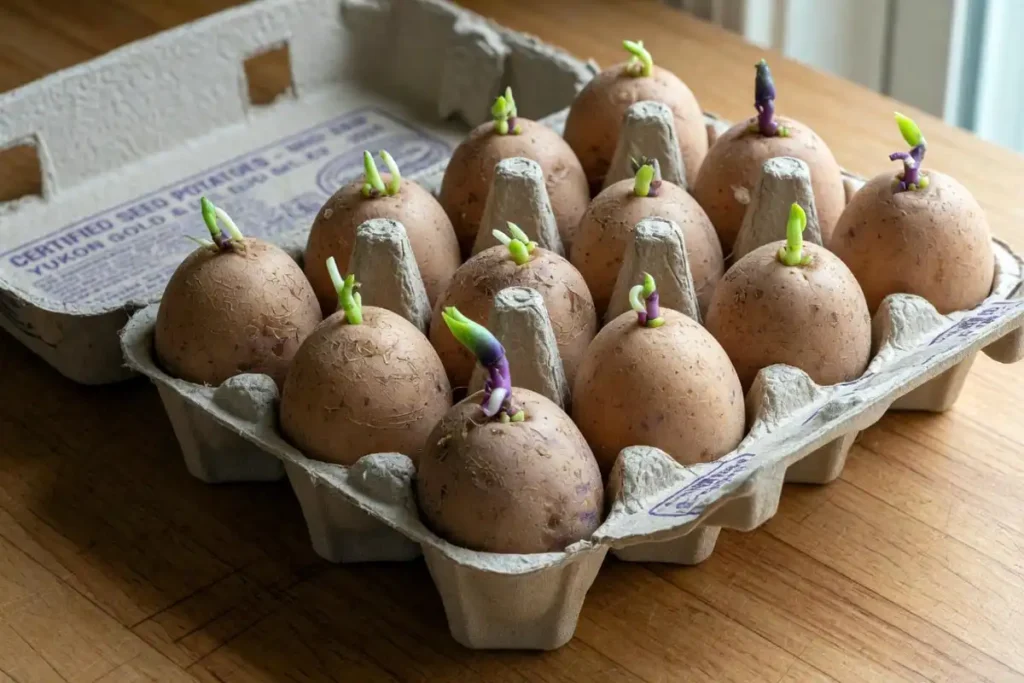
The full prep routine sits in our article on cutting and curing seed potatoes.
Step 3: Fill the Bag With Soil
Mix 60% quality potting soil, 30% finished compost, and 10% perlite or coarse sand. Fill the bag 4 to 6 inches deep. Do not pack the soil. Potatoes need loose, airy media for tubers to form.
Step 4: Plant the Seed Potatoes
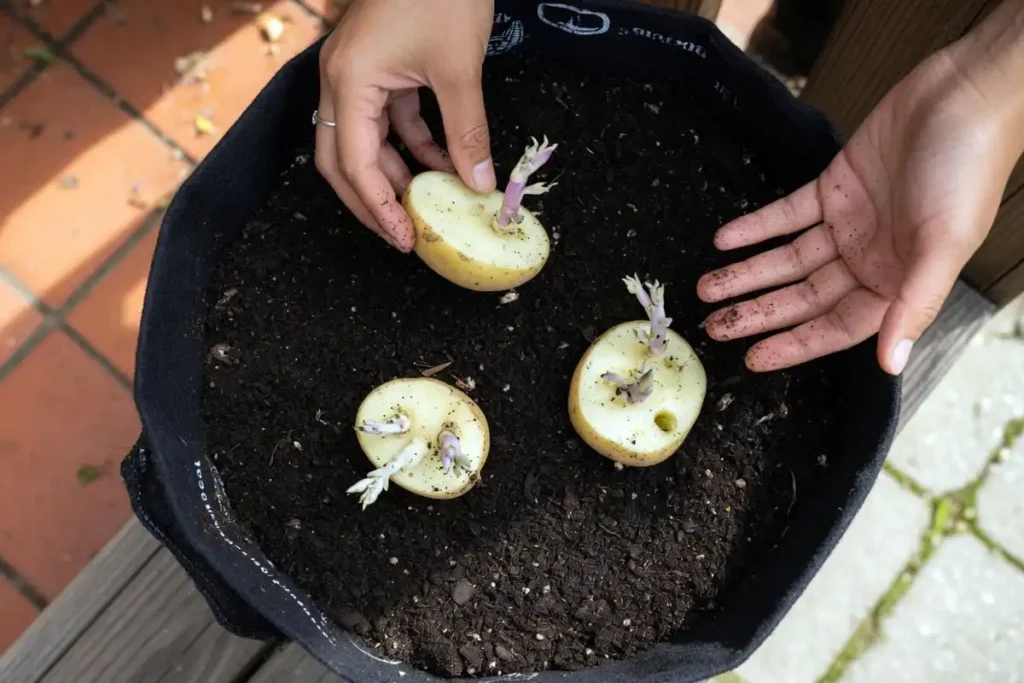
Space seed pieces 6 inches apart on the soil surface with eyes facing up. Cover with 3 inches of the same soil mix. Water lightly so the soil settles. The first sprouts break through in 10 to 21 days.
Step 5: Water on a Steady Schedule
Water when the top inch of soil feels dry. In summer heat, that often means daily watering. The soil should feel like a wrung-out sponge. Bags dry faster than garden beds because air moves through the fabric walls.
Step 6: Hill the Stems
When stems reach 8 inches tall, add 4 inches of soil around them. Leave the top leaves showing. Repeat every 2 to 3 weeks until the bag is full. Hilling forces new tubers along the buried stem and blocks light from turning them green.
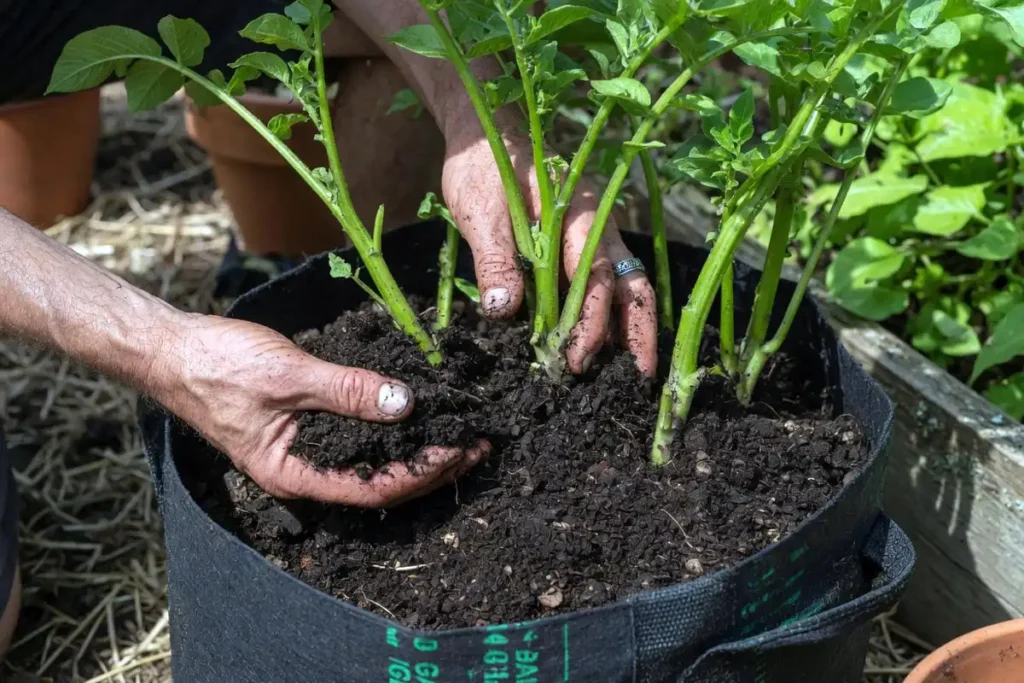
We wrote more on the technique in our hilling potatoes article.
Step 7: Feed the Plants
Mix 1/4 cup of balanced 5-10-10 fertilizer into the soil at planting. Side-dress with compost tea or a low-nitrogen feed every 3 weeks. Too much nitrogen grows leaves at the cost of tubers.
Step 8: Harvest
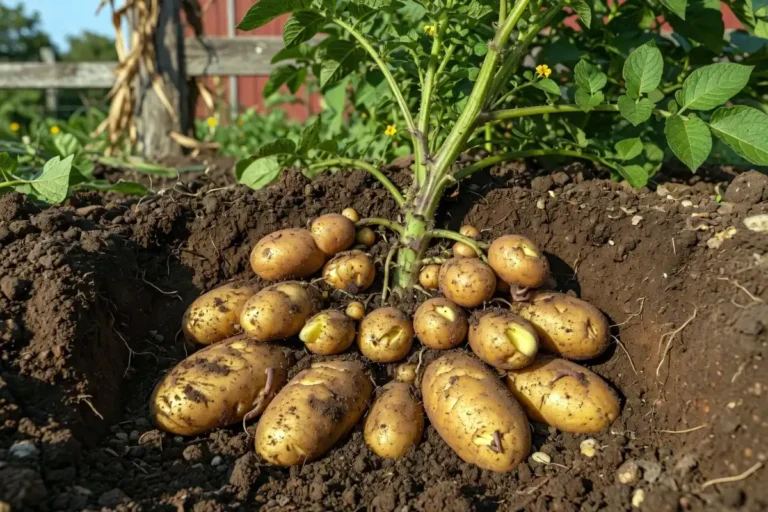
Harvest new potatoes when flowers open, about 60 to 70 days after planting. For full-size tubers, wait until the tops yellow and die back, around 90 to 120 days. Tip the bag onto a tarp and sort tubers by size. Cure them in a dark, dry spot for a week before storage.
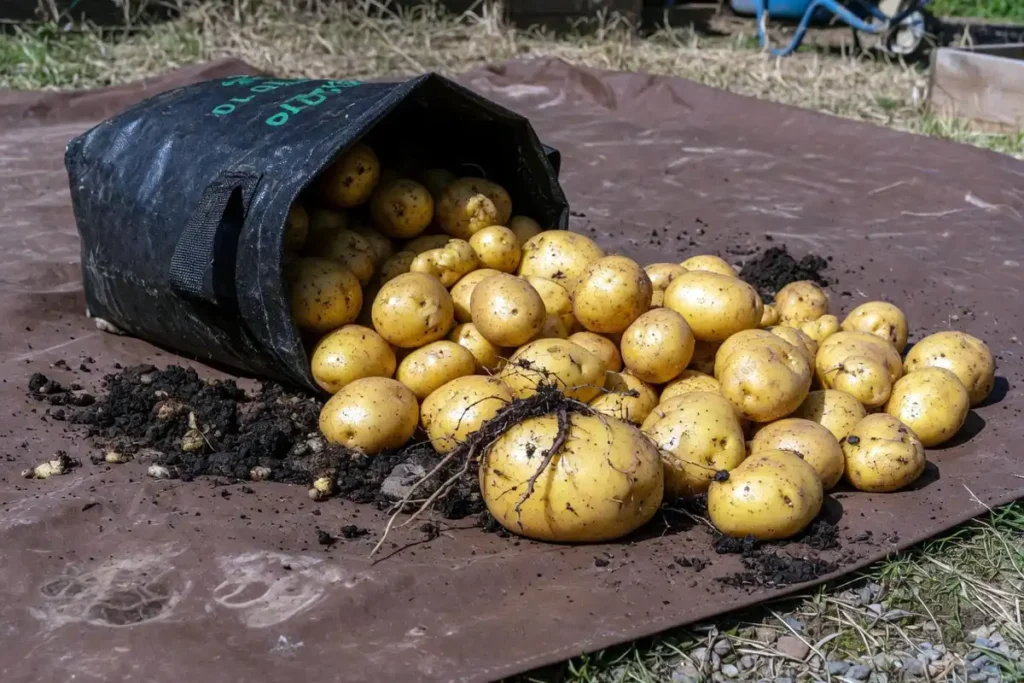
Our guide on digging potatoes covers harvest signals in more detail.
Best Potato Varieties for Bags
Early varieties work well in containers because they finish before summer heat stresses the plants. Yukon Gold, Red Norland, and Charlotte produce reliably in 10 to 15 gallon bags. Fingerlings like Russian Banana also thrive. Avoid large russets, which need deeper root space than most bags offer.
Common Problems and Solutions
Yellow Leaves Early
Early yellowing points to overwatering or nitrogen shortage. Check drainage first. If water pours out when you lift the bag, cut back. If the soil drains fine, feed with fish emulsion at half strength.
Small Tubers at Harvest
Small tubers come from crowded bags, dry spells, or poor soil. Next round, drop to 2 or 3 seed pieces per 10-gallon bag and water on a set schedule.
Green Potatoes
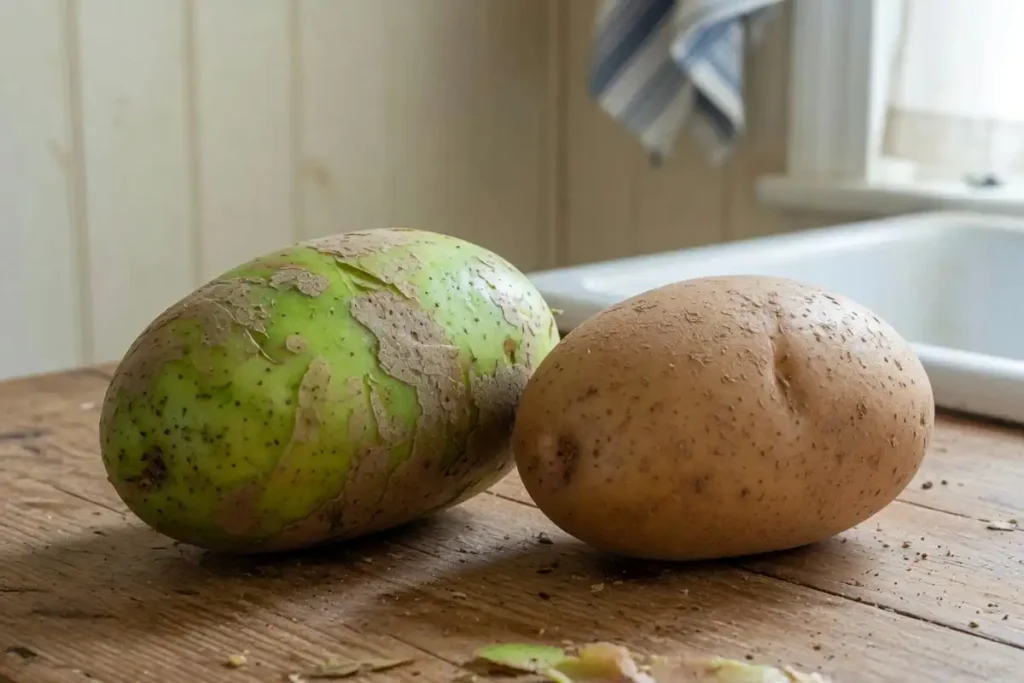
Green skin means the tuber saw sunlight. Also, green potatoes contain solanine, which is toxic. Toss them and hill more aggressively next season.
Pests and Disease
Colorado potato beetles, aphids, and late blight hit container plants too. Pick beetles by hand each morning. Space bags 18 inches apart for airflow. The University of Minnesota Extension offers sound disease guidance.
Mistakes to Avoid
- Using garden soil alone. It compacts and holds water.
- Skipping drainage. Roots rot fast in standing water.
- Planting whole large potatoes. Cut them into 2-ounce pieces with eyes.
- Forgetting to hill. Unhilled stems produce fewer tubers.
- Letting bags dry out during flowering. Tubers form in this window.
Safety Notes
Never eat green or sprouted potatoes from storage. Solanine levels rise with light exposure, per USDA food safety guidance. Wash hands after handling plants treated with any pesticide. Lift heavy bags with both hands or empty them in place to avoid back strain.
FAQs about Plant Potatoes in Bags
How many potatoes can one grow bag produce?
Do potato bags need drainage holes?
Can I reuse the soil from last year's potato bag?
How often should I water potato grow bags?
Can potatoes grow in bags indoors?
Last Notes
Growing potatoes in bags works on any sunny patio, deck, or driveway. Pick a 10-gallon fabric bag, start with 2 or 3 certified seed pieces, keep the soil moist, and hill the stems as they climb. In 3 to 4 months, you tip the bag and sort through a fresh harvest.