When to Plant Fall Potatoes: 7 Smart Timing Tips by USDA Zone
Fall potatoes go in the ground between late July and early September in most regions, roughly 10 to 12 weeks before the first hard frost. This guide covers planting dates by zone, soil prep, seed handling, hilling, and harvest windows so you can plan a strong fall potato crop.
Plant fall potatoes 90 to 110 days before your first hard frost. In most of the southern and mid-south United States, that falls between late July and early September. Use certified seed potatoes, cured pieces, and moist soil under 85°F for clean sprouting.
What Are Fall Potatoes?
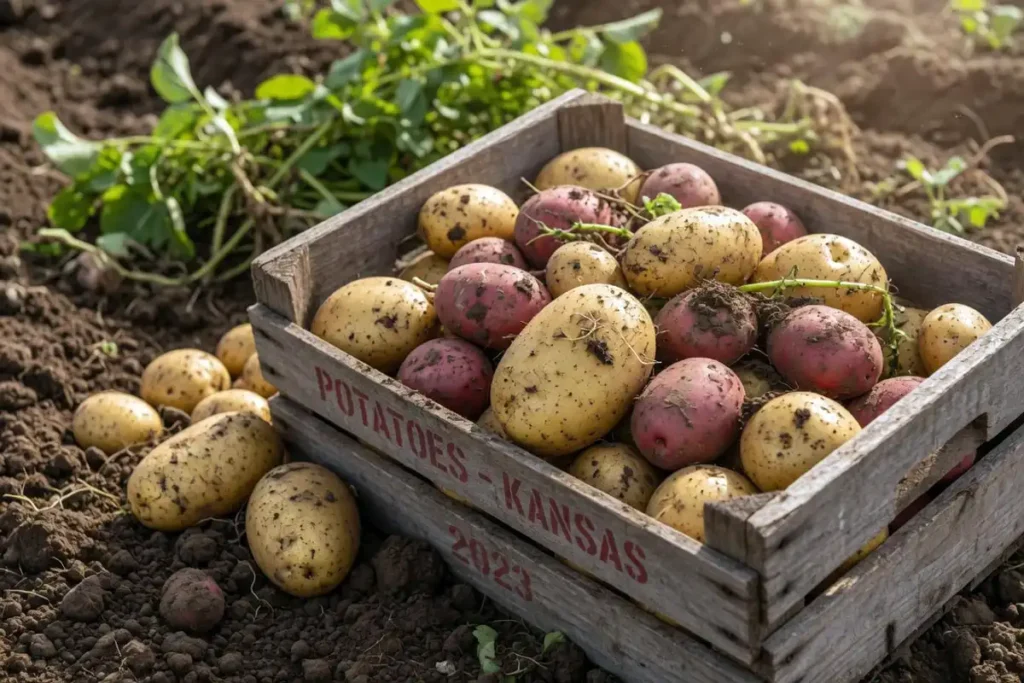
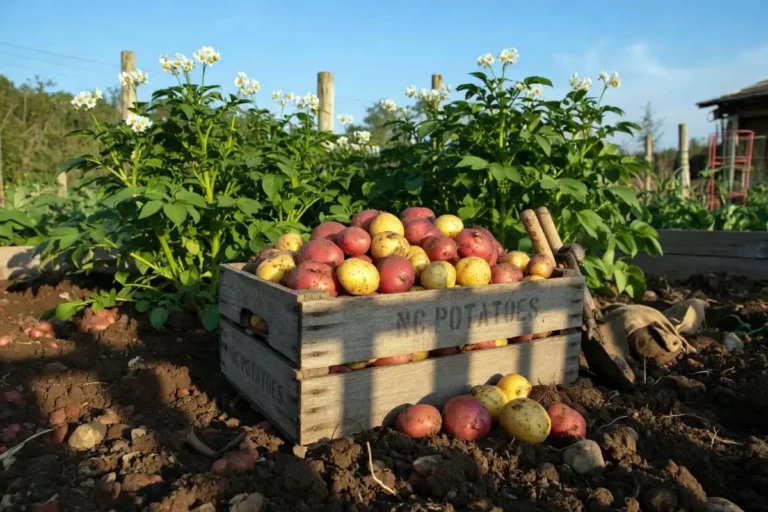
Fall potatoes are tubers planted in late summer and harvested before the first hard freeze. Farmers in warm zones grow them as a second crop after spring beans, corn, or greens come off the field. They deliver fresh new potatoes into October and November.
Short-season varieties work best. Yukon Gold, Red Pontiac, Kennebec, and La Soda mature in 70 to 100 days. These varieties handle warm soil at planting and cool soil at harvest.
When to Plant Fall Potatoes
Plant fall potatoes 10 to 12 weeks before your first expected frost. Count backwards from your frost date, then subtract another 7 to 10 days for sprouting. That gives you your ideal planting window.
Most southern growers plant between late July and mid-September. In Texas, Louisiana, and Florida, September planting works well.
Check your USDA hardiness zone and first frost date before scheduling. Soil temperature carries more weight than the calendar. Aim for soil below 85°F at planting depth.
Broader timing principles are covered in an earlier guide on general potato planting windows across seasons.
Fall Potato Planting by USDA Zone
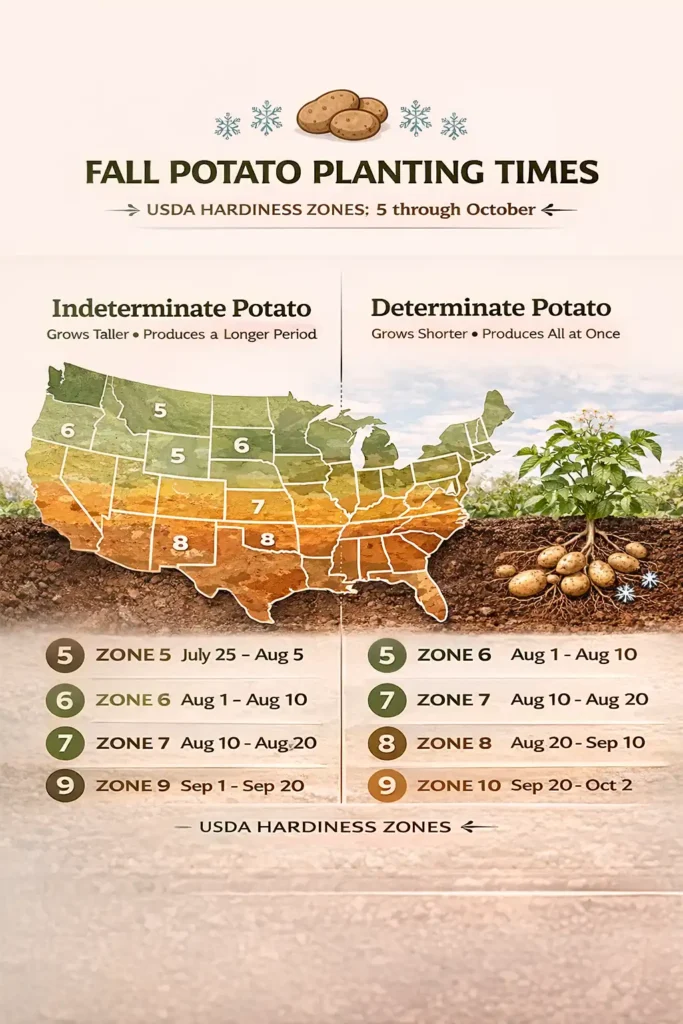
Each zone has its own window. Use this as a starting point, then adjust for local weather.
- Zones 9 to 10 (Florida, Gulf Coast, South Texas): Plant September through early October.
- Zone 8 (East Texas, northern Florida, Georgia): Plant August through mid-September.
- Zone 7 (Tennessee, North Carolina, Arkansas): Plant late July through August.
- Zone 6 (Kansas, Missouri, Kentucky): Plant late July through early August.
- Zone 5 and colder: Fall planting works for a few short-season reds, but frost risk runs high.
Where Fall Potatoes Grow Best
Fall potatoes grow best in loose, well-drained soil with a pH between 5.0 and 6.5. Sandy loam drains fast and warms slowly, which protects seed pieces from rot. Heavy clay holds water and increases disease pressure.
Pick a spot with full sun and no standing water. Rotate away from any bed that grew potatoes, tomatoes, eggplant, or peppers in the last 2 to 3 years. Disease carryover hurts fall crops harder than spring ones. Our post on covers this rotation rulecrops to avoid planting after potatoes.
How to Plant Fall Potatoes Step by Step
Step 1: Source Clean Seed Potatoes
Buy certified seed potatoes from a trusted supplier. Grocery store potatoes often carry sprout inhibitors and disease. Certified seed tests clean for ring rot, scab, and late blight.
Order early. Fall seed runs short by August.
Step 2: Presprout Before Planting
Place seed potatoes in a warm, bright spot for 5 to 7 days. Temperatures of 65 to 70°F trigger short green sprouts. Presprouted pieces emerge 5 to 10 days faster than dormant ones in warm August soil.
Step 3: Cut and Cure Pieces
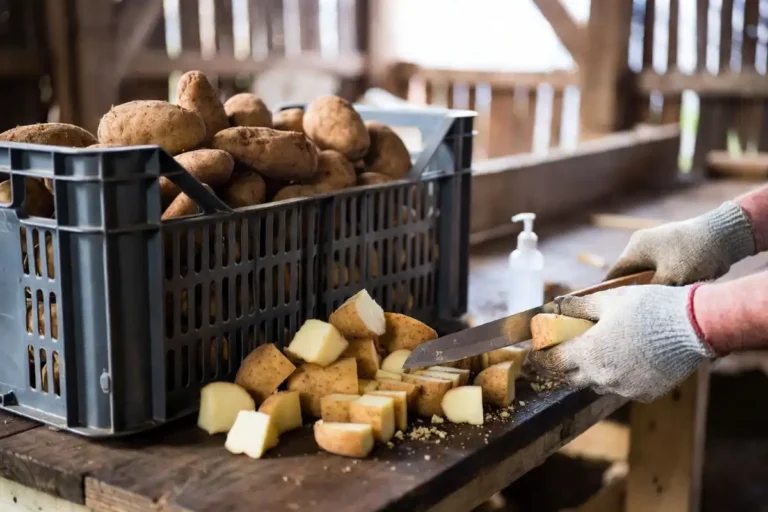
Cut larger tubers into 1.5 to 2 ounce chunks, each with at least one eye. Let cut pieces heal in shade for 2 to 3 days. our guide covers the full process in our guide on cutting and curing seed pieces to reduce rot risk.
Skip cutting for small seed potatoes under 2 ounces. Plant them whole.
Step 4: Prepare the Bed
Till or fork the bed to 8 inches deep. Work in 2 inches of finished compost. Add balanced 10-10-10 fertilizer at 1 pound per 100 square feet.
Soak the bed one day before planting. Moist soil cools faster and reduces heat stress on seed pieces.
Step 5: Plant the Pieces
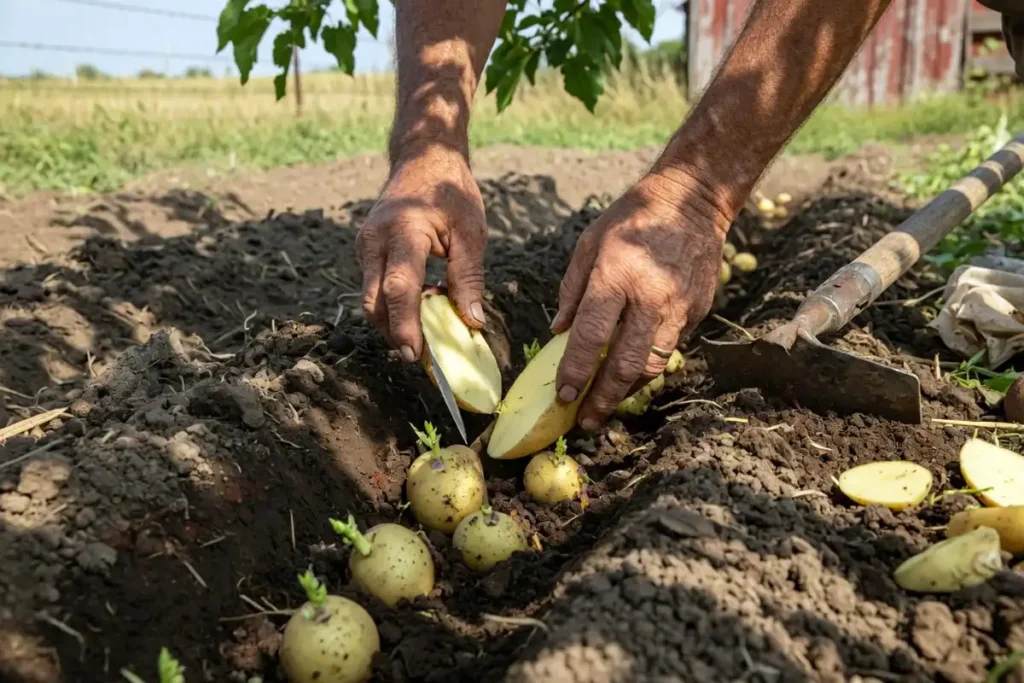
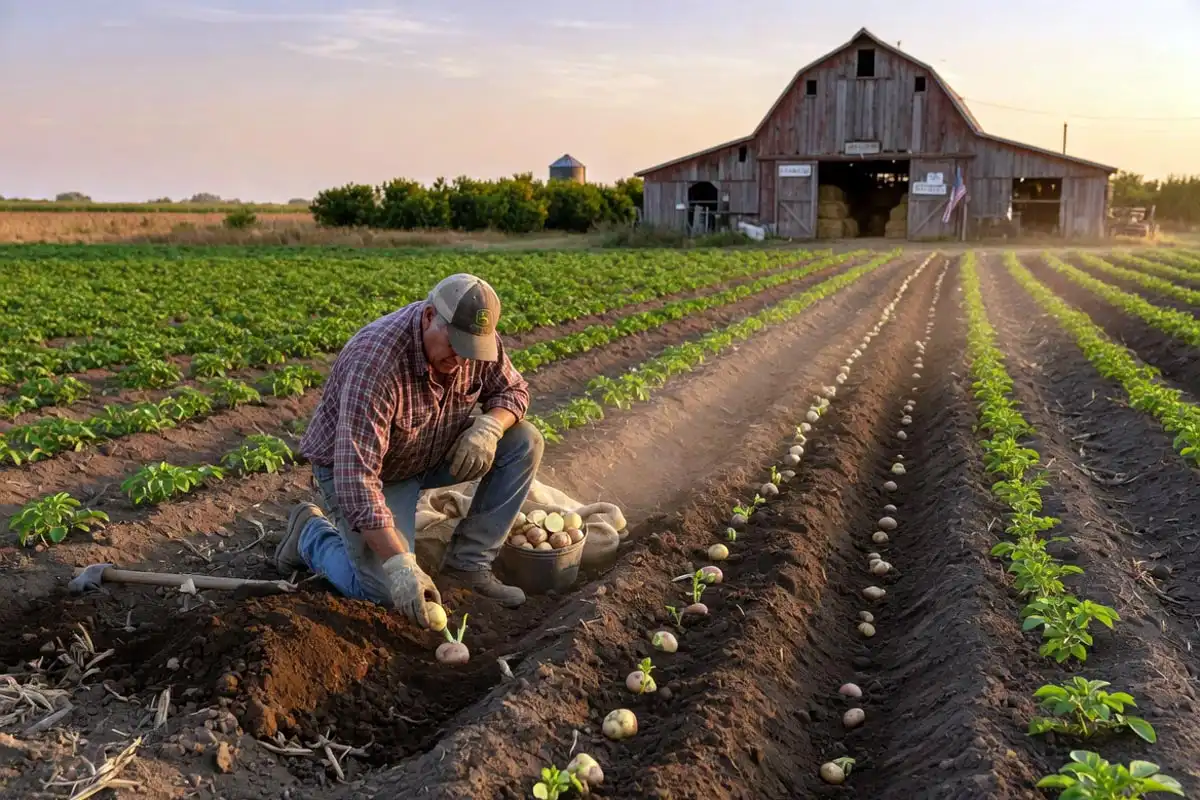
Dig trenches 4 inches deep and 30 to 36 inches apart. Place seed pieces 10 to 12 inches apart, cut side down, eyes up. Cover with 3 inches of soil.
Water the trench lightly. Avoid soaking, since August soil can waterlog and rot pieces fast.
Step 6: Mulch Heavy
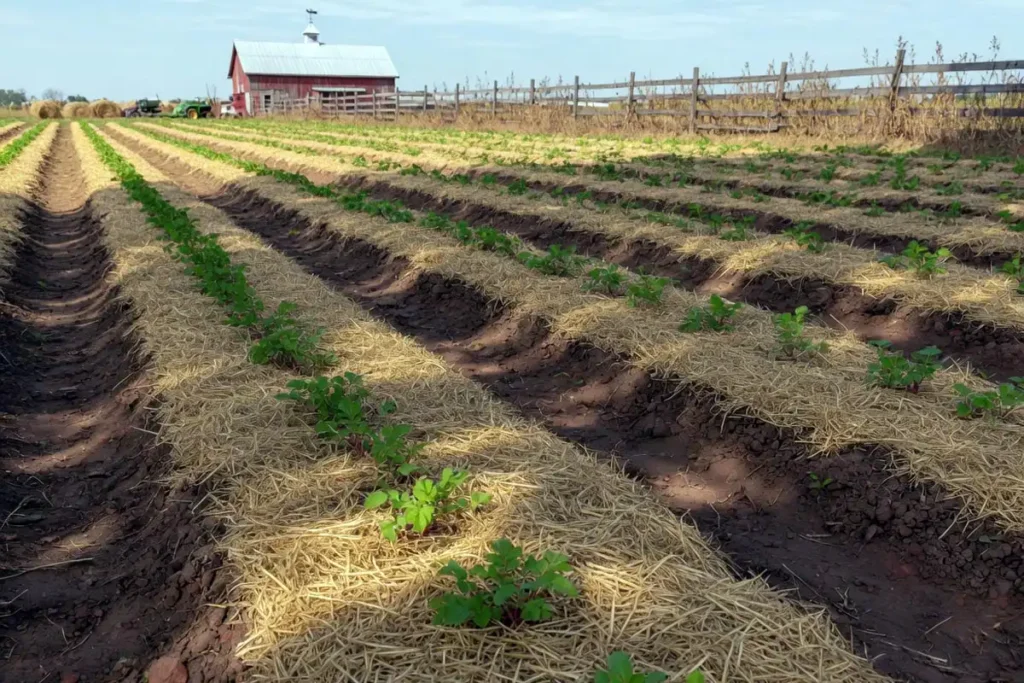
Mulch cools soil and saves water. Our guide covers the row with 4 to 6 inches of straw or dried grass clippings. Our breakdown on mulching practices for row crops explains why this step carries more weight in fall than in spring.
Step 7: Hill as Plants Grow
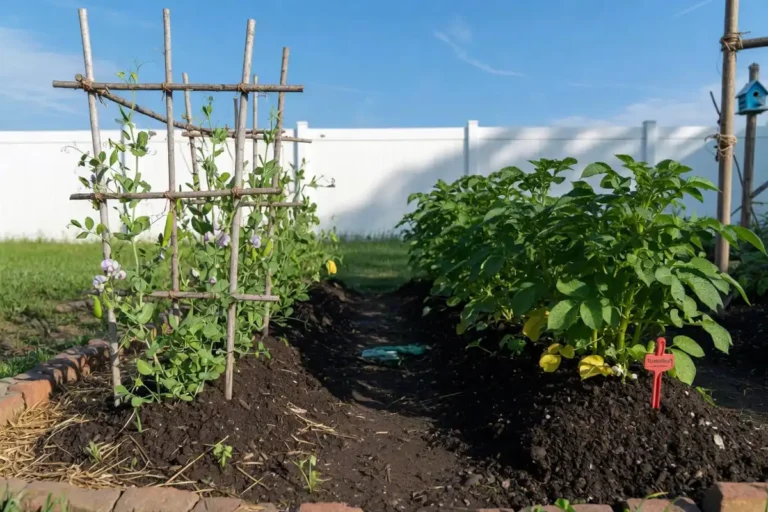
Pull soil up around stems once plants reach 6 to 8 inches tall. Hilling protects young tubers from sun and frost. Read our guide on how hilling potatoes works for the full technique.
Hill again 2 to 3 weeks later.
Common Problems and Solutions
Poor sprouting in hot soil: Delay planting 7 to 10 days. Water the bed to cool soil below 85°F.
Seed piece rot: Cure cut pieces longer next time. Plant shallower in wet soil.
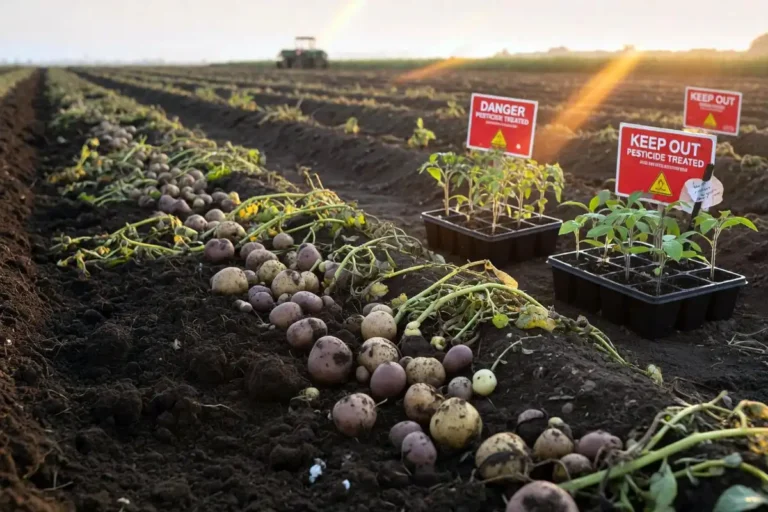
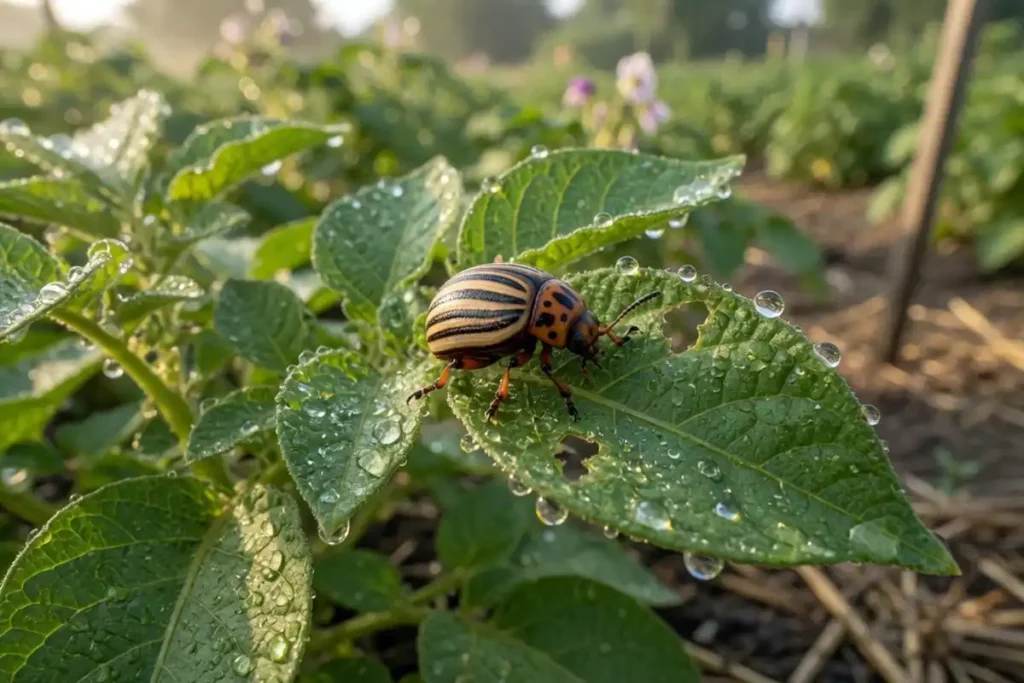
Colorado potato beetles in late summer: Hand-pick beetles early. Row cover works on small plots.
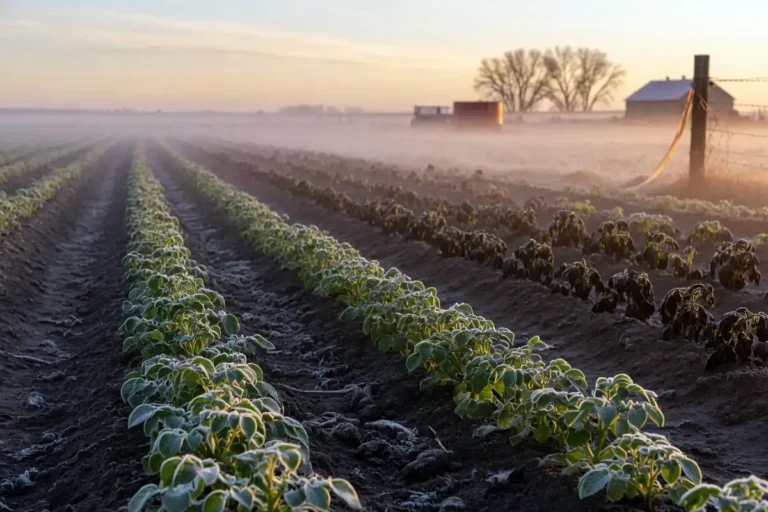
Early frost threat: Cover vines with frost cloth or straw the night before a freeze. Harvest within 2 weeks if a hard freeze hits.
Mistakes to Avoid When Planting Fall Potatoes
- Planting spring leftover seed without curing. Old seed rots fast in warm soil.
- Skipping mulch. Bare August soil cooks seed pieces.
- Using full-season varieties. Russets need 120 days and rarely finish before frost.
- Overwatering after planting. Waterlogged seed rots before sprouting.
- Planting in the same spot as last spring’s potatoes. Disease and beetle pressure spike.
Safety Notes
Wear gloves when cutting seed potatoes. Knives slip in humid August kitchens.
Hydrate during late summer hilling. Field heat hits hard on Kansas afternoons.
Store harvested fall potatoes in a cool, dark spot at 40 to 50°F. Never eat green or sprouted tubers, since they contain solanine, a natural toxin flagged by the University of Nebraska-Lincoln Extension.
FAQs about Plant Fall Potatoes
Can I plant fall potatoes in July?
How long do fall potatoes take to grow?
Can I use spring-harvested potatoes as fall seed?
Do fall potatoes taste different from spring potatoes?
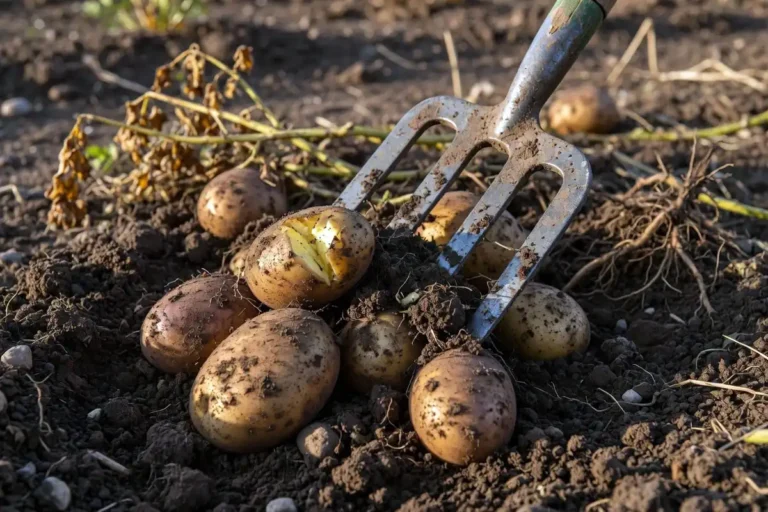
When are fall potatoes ready to dig?
Final Thoughts
Fall potato timing rewards careful planning. Count back 10 to 12 weeks from your frost date, pick a short-season variety, and protect seed pieces with mulch and shade. A clean fall crop beats store-bought tubers on flavor and storage life every season.