What Not to Plant After Potatoes: 8 Risky Crops to Avoid in 2026
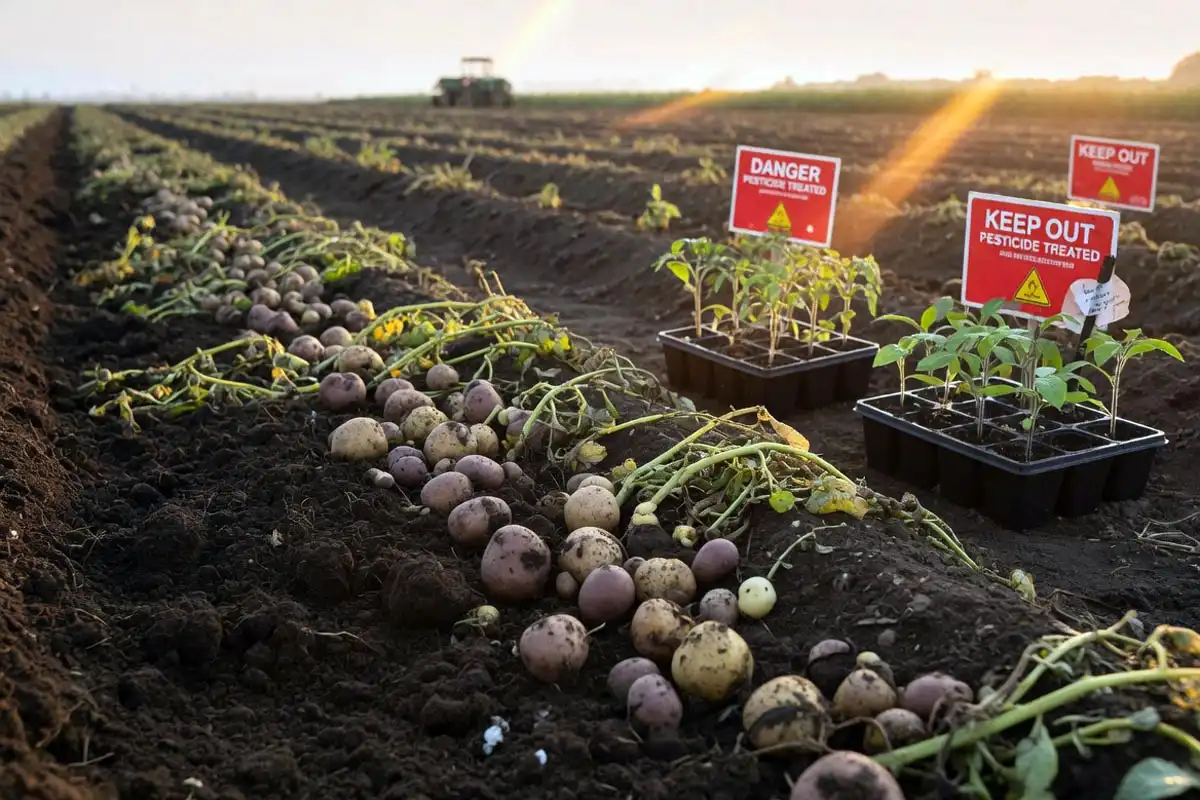
Don’t plant tomatoes, peppers, eggplant, or other nightshades right after potatoes. These crops share the same soilborne diseases and pests, which build up quickly in the root zone. This guide covers which crops to skip, why rotation matters, and what to plant instead for healthier soil and stronger yields.
Skip tomatoes, peppers, eggplant, tomatillos, strawberries, and sunflowers after potatoes. They share diseases like early blight, late blight, and Verticillium wilt with your potato crop. Wait at least 3 years before putting nightshades back in the same bed. Rotate with legumes, brassicas, or alliums instead.
What Not to Plant After Potatoes
Potatoes belong to the Solanaceae family, and the worst follow-up crops are their close cousins. They share the same pests and the same fungal enemies.
Tomatoes
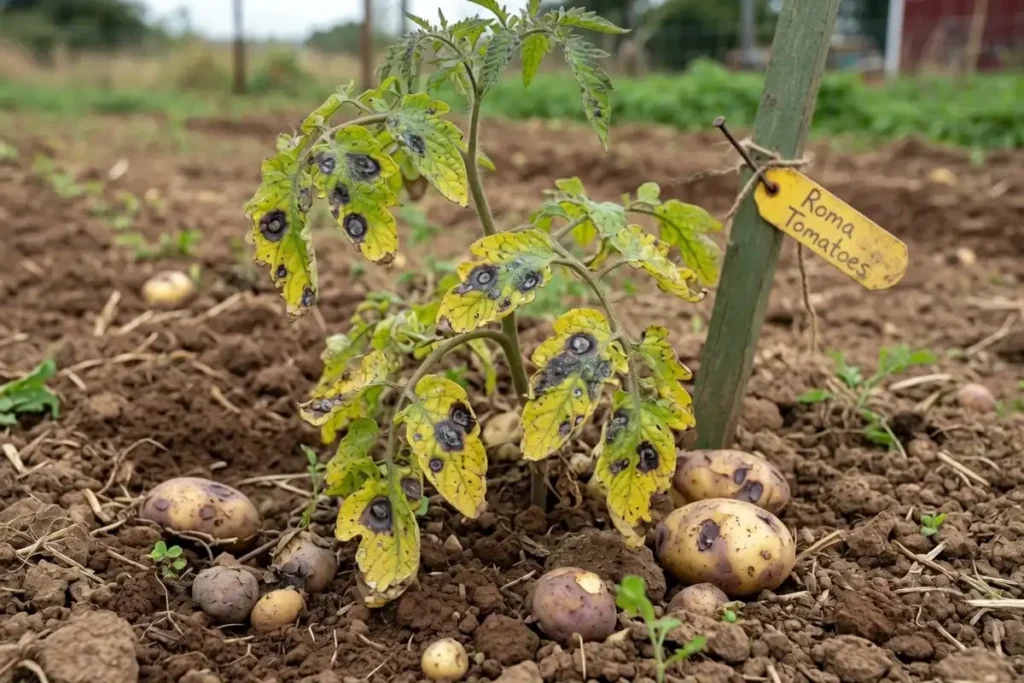
Tomatoes sit in the same nightshade family as potatoes. Both get hit by late blight (Phytophthora infestans) and early blight (Alternaria solani). Spores overwinter in the soil and in missed tubers. This overlap before is covered in a post on whether tomatoes and potatoes can grow in the same bed.
Peppers
Bell peppers, chili peppers, and sweet peppers belong to the Solanaceae family too. They share Verticillium wilt and Colorado potato beetle pressure with potatoes. Peppers planted in former potato ground often stunt and yellow within weeks.
Eggplant
Eggplant is another nightshade. It pulls heavily from the same nutrients potatoes drained, mainly potassium and magnesium. It also feeds the same beetle population.
Tomatillos and Ground Cherries
These lesser-known nightshades carry the same risks. Growers often forget tomatillos sit in this family. Skip them in the potato plot.
Strawberries
Strawberries are not nightshades, but they share Verticillium wilt with potatoes. Extension researchers at Penn State flag this as a known rotation conflict on their plant disease pages.
Sunflowers
Sunflowers host Verticillium wilt fungi in their roots. A sunflower stand planted on last year’s potato bed can build up the pathogen, harming future tomato, pepper, or potato crops.
Raspberries and Blackberries
Cane fruits are Verticillium-susceptible too. Don’t start a new berry patch on a recent potato bed.
Why These Crops Fail After Potatoes
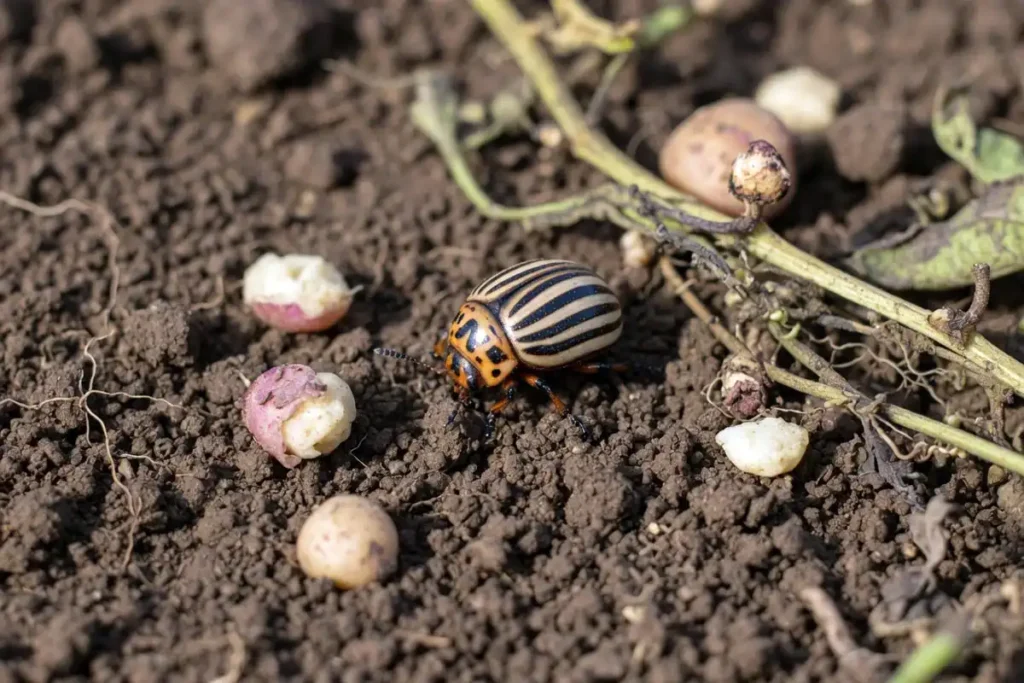
Three problems stack up in ground that just grew potatoes.
Soilborne diseases. Late blight, early blight, Verticillium wilt, and common scab all persist in the soil after harvest. Planting a susceptible crop gives the pathogens a fresh host. The University of Minnesota Extension outlines this pattern in their potato guidance.
Shared pests. Colorado potato beetles overwinter in the soil as adults. They wake up in spring looking for nightshade leaves. Tomatoes, eggplant, and peppers get hammered right away.
Nutrient depletion. Potatoes are heavy feeders. They can pull around 150 pounds of potassium per acre from the root zone, based on most university potato fact sheets. Following with another heavy feeder starves the new crop. More on rebuilding soil fertility naturally is covered when a plot gets run down.
How Long to Wait Before Replanting
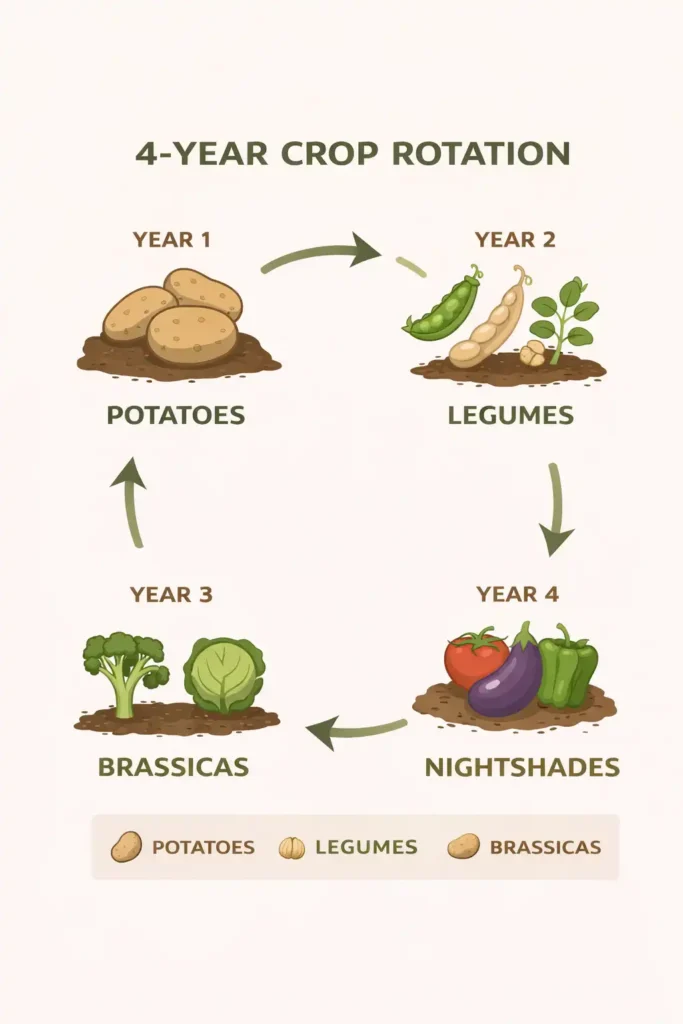
A 3-year minimum rotation is the standard recommendation for potatoes and their family. Some pathogens, like Verticillium, stay in the soil longer. For heavy infestations, wait 4 to 5 years.
Here’s the rotation:
- Year 1: Potatoes
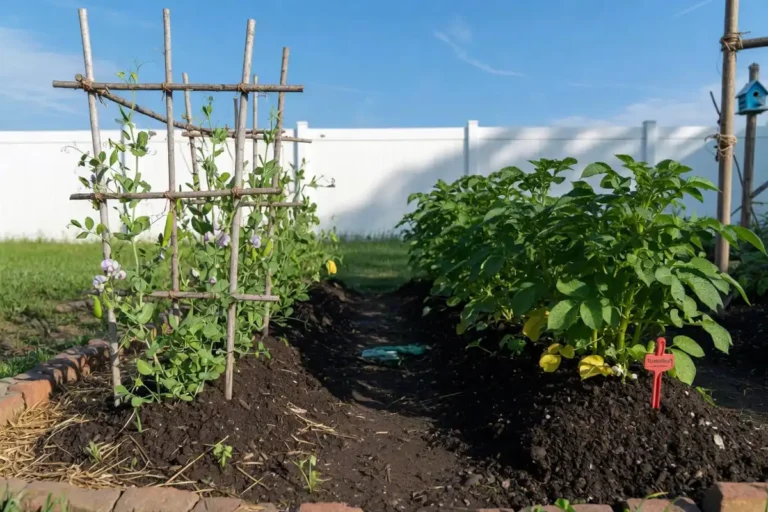
- Year 2: Legumes (beans, peas, or a cover crop)
- Year 3: Brassicas or alliums (cabbage, onions, garlic)
- Year 4: Return to nightshades if soil tests well
A solid crop rotation plan keeps soil life diverse and breaks pest cycles.
What to Plant After Potatoes
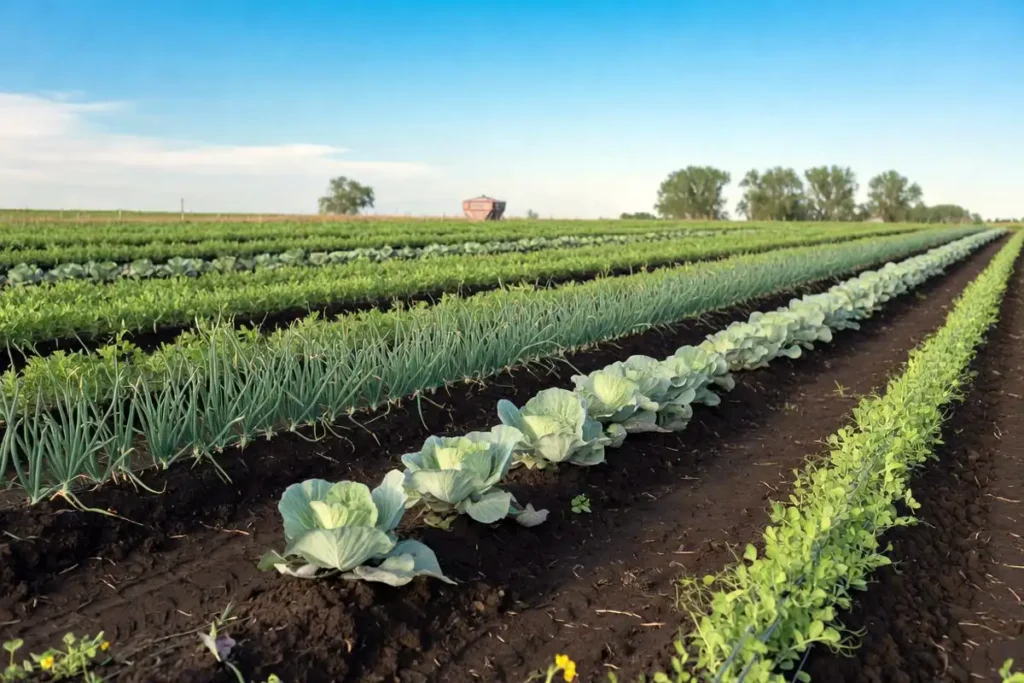
These crops thrive in former potato ground and give it a boost.
Legumes
Peas, beans, and clover fix nitrogen back into the soil. Potatoes leave the plot nitrogen-hungry. Legumes restore it for free.
Brassicas
Cabbage, broccoli, kale, and turnips break pest cycles. They don’t share diseases with nightshades. Their taproots also loosen compacted soil.
Alliums
Onions, garlic, leeks, and shallots do well after potatoes. They resist most soilborne diseases and repel some insect pests.
Leafy Greens
Lettuce, spinach, and chard are light feeders. They handle the leftover nutrients in post-potato soil without stressing it further.
Cover Crops
Winter rye, buckwheat, or crimson clover rebuild organic matter. If you have a full season to spare, a cover crop pays back double the next year. our guide covers cover crop basics for beginners in another guide.
Common Rotation Mistakes to Avoid
A few errors on every season can be happen on farms:
- Planting tomatoes right after potatoes. The most common mistake. Blight will find them.
- Ignoring volunteer potato plants. Missed tubers sprout the next spring and carry disease forward. Pull them out.
- Short rotations. A 1-year gap is not enough for Verticillium or scab to clear.
- Skipping cover crops. Bare soil invites erosion and weed pressure.
- Planting in soil with unknown pH. Potatoes prefer acidic ground. Follow-up crops may need lime.
Check your soil pH before the next crop goes in. It tells you whether you need amendments.
Signs Your Potato Ground Needs a Break
Watch for these warnings at harvest:
- Scab lesions on the tubers
- Yellowing or wilting on lower leaves mid-season
- Stunted growth in patches
- Small or misshapen potatoes
If you saw any of these last season, extend your rotation. Don’t rush nightshades back in.
Safety and Soil Health Notes
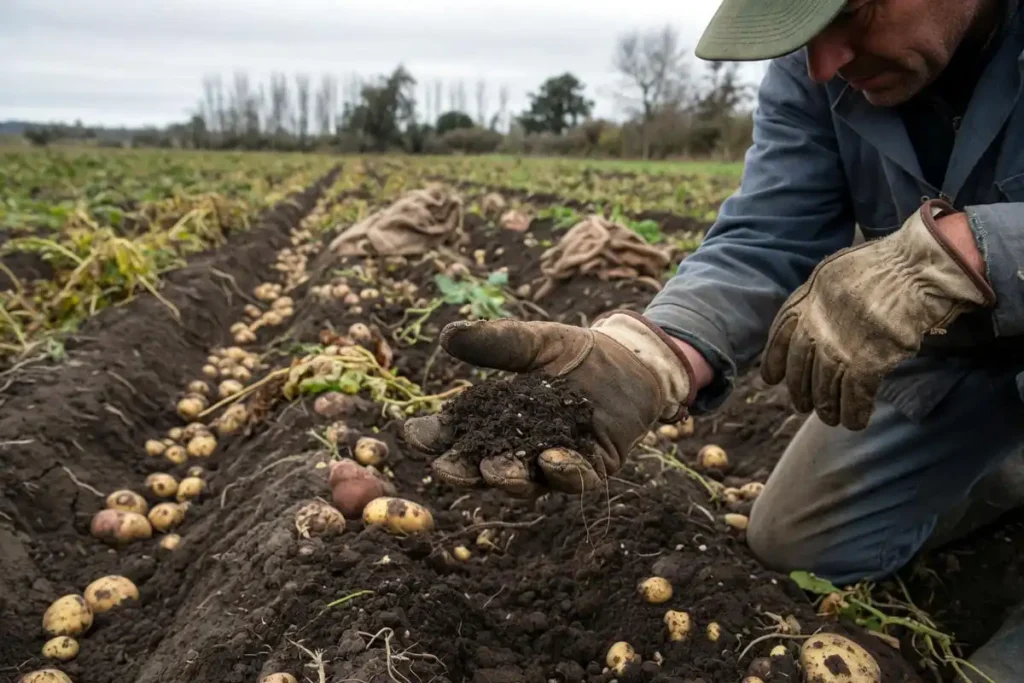
Don’t compost diseased potato vines or tubers. Home compost piles rarely get hot enough to kill blight spores. Bag them or burn them if local rules allow. Wash tools that touched infected plants so you don’t spread spores to the next plot.
If you used heavy chemical inputs during your potato season, let the soil rest. A cover crop or a fallow season gives microbes time to rebound. Healthy soil biology fights off more disease than any spray can. Read more on common crop diseases and how they spread.
FAQs about What Not to Plant After Potatoes
Can I plant tomatoes one year after potatoes?
Are carrots safe to plant after potatoes?
Can I plant potatoes in the same spot two years in a row?
What cover crop works best after potatoes?
Do onions grow well after potatoes?
Final Thoughts
Keep nightshades out of old potato beds for at least 3 years. Skip tomatoes, peppers, eggplant, strawberries, and sunflowers. Plant legumes, brassicas, alliums, or a cover crop instead. Your soil will recover, your next crop will be stronger, and you’ll avoid the disease cycle that catches so many growers off guard. A smart rotation is the cheapest insurance a farmer can buy.