Best Organic Fertilizer for Vegetables in 2026
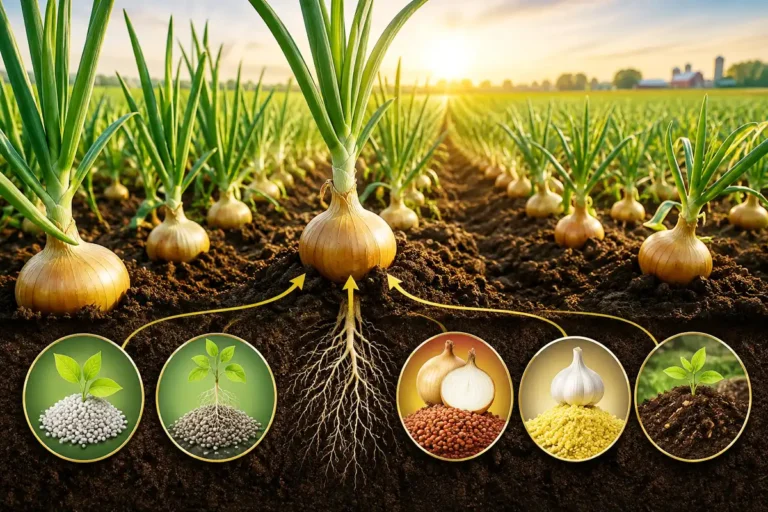
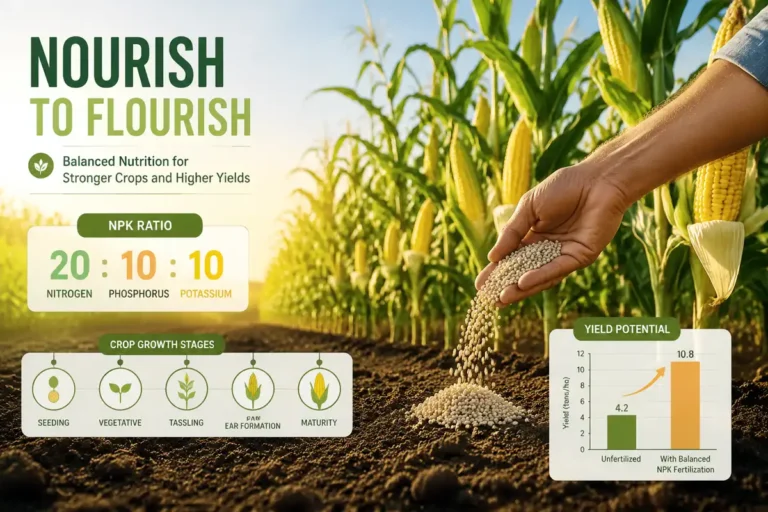
Sweet corn and onions call for 4 to 6 pounds of nitrogen per 1,000 square feet each season. Most garden soil cannot hold that pace past two years, and synthetic feeds spike growth then leave the ground flat. That is why you need the best organic fertilizer for vegetables. It feeds the crop and rebuilds soil at the same time.
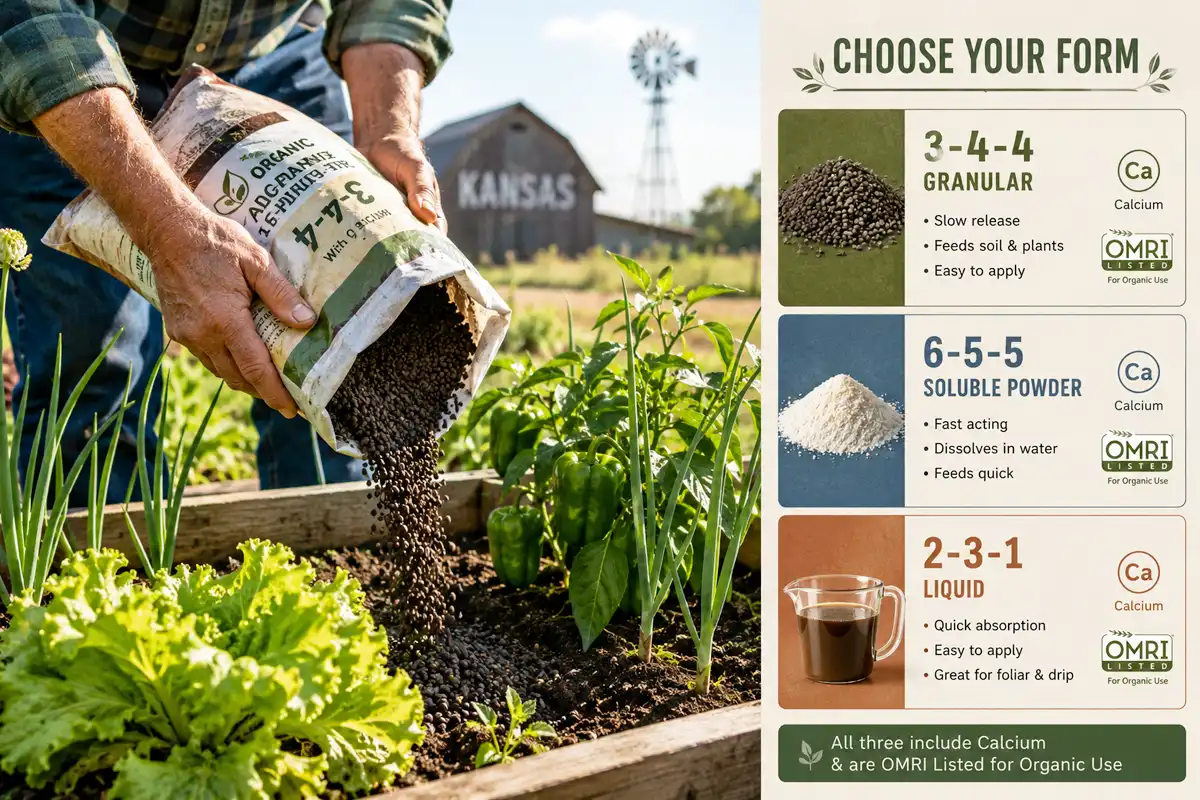
The best organic fertilizer for vegetables is Espoma Organic Garden-Tone. It is a 3-4-4 granular blend with 5% calcium, which suits leafy and fruiting crops alike. For heavy feeders like corn and onions, Organic Plant Magic at 6-5-5 carries the most nitrogen per pound here. The best organic liquid fertilizer for vegetables is Neptune’s Harvest Fish & Seaweed at 2-3-1.
The Best Organic Fertilizer for Vegetables at a Glance
- Best Overall: Espoma Organic Garden-Tone
- Best for Fruiting Crops: Espoma Organic Tomato-Tone
- Best Pre-Plant Base: Down To Earth Vegetable Garden
- Best for Transplants: Down To Earth All Purpose
- Longest Feeding Interval: Jobe’s Organics Vegetable & Tomato Granular
- Best Value Bundle: Jobe’s Organics Granular Garden Fertilizer, Two Pack
- Best Liquid: Neptune’s Harvest Fish & Seaweed
- Highest Nitrogen Liquid: Alaska Fish Fertilizer
- Best Soil Conditioner: Fox Farm Big Bloom
- Best Water Soluble Powder: Organic Plant Magic
- Best for Raised Beds: True Organic Raised Bed Food
- Best Phosphorus Source: Burpee Bone Meal
Also see: Top Rated Onion Fertilizers
What to Look For in an Organic Vegetable Fertilizer
Five specs separate a bag worth buying from one that just adds bulk to your beds. Check all five on any organic fertilizer for vegetable garden use before it goes in the truck.
What “Organic” Actually Means on the Label
The word carries almost no legal weight on a fertilizer bag. The USDA National Organic Program regulates crops and food, not most input materials. So a company can print organic on a bag without federal review of that claim. Two marks do mean something. OMRI, the Organic Materials Review Institute, checks products against NOP standards. It then lists what clears as an approved organic input material. Several states add their own registration on top, and you will see that stamped on Espoma and True Organic bags. Non-GMO Project verification is separate. It covers genetic modification only, not certified organic status. Treat that butterfly seal as extra information rather than proof.
The NPK Ratio That Fits Vegetables
The NPK ratio that fits vegetables is balanced to nitrogen-forward, roughly 3-4-4 through 5-5-5. Skip the phosphorus-heavy bloom formulas sold for flowers. A 2-8-4 pushes a nutrient most vegetable beds already carry in surplus. Organic labels read the same way synthetic ones do. Percent nitrogen first, then percent P₂O₅ as phosphate, then percent K₂O as potash. A 25-pound bag of 4-4-4 holds exactly 1 pound of actual nitrogen. If those numbers still feel abstract, the breakdown of NPK fertilizer numbers walks through the math. A balanced fertilizer covers most beds. Nitrogen-forward blends belong on greens and corn.
Granular, Water Soluble, or Liquid
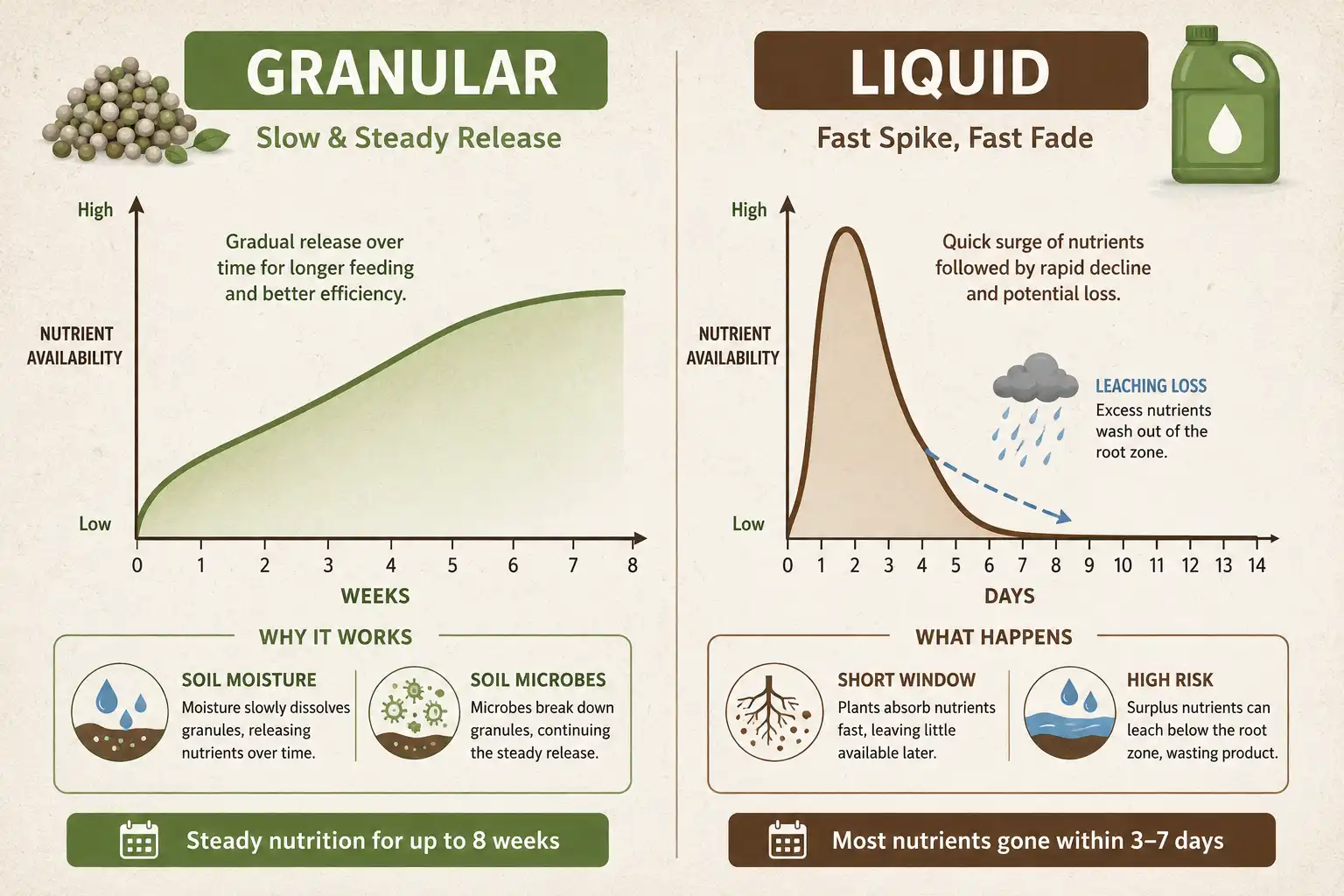
Granular for the pre-plant base, liquid for mid-season correction. And Granular organic fertilizer releases over four to eight weeks. It also adds organic matter as it breaks down. But it needs moist, warm soil, because microbes do the actual releasing. Spread it on dry August ground and it just sits there. Liquid organic fertilizer for vegetables works the other direction. Fish emulsion and seaweed extract are water soluble. Roots and leaves take them up within days. A foliar feed can green up a pale bed inside a week. That speed cuts both ways, since nutrient leaching carries liquid feed past the root zone after a heavy rain. Keep both on the shelf. Slow release granular carries the season, and liquid patches the gaps.
Calcium and Microbe Blends Worth Paying For
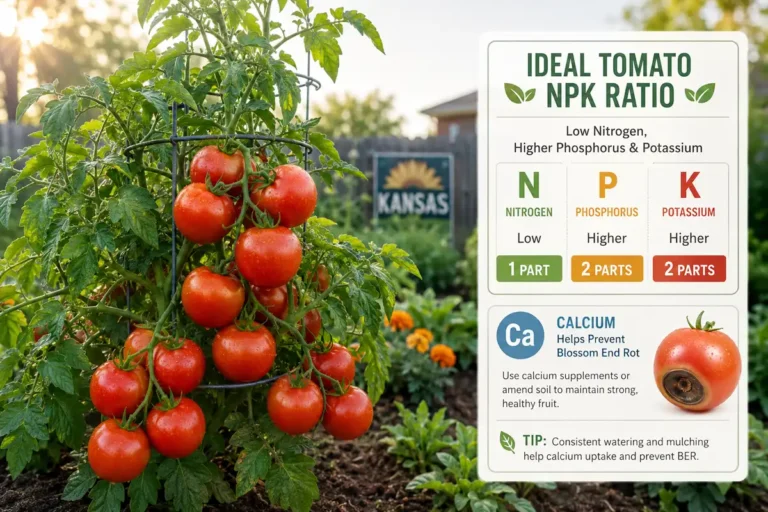
Calcium is the spec most gardeners skip, and it decides whether peppers hold clean fruit. Blossom end rot traces back to calcium moving unevenly into the fruit. A calcium deficiency in the soil is not always the cause. Jobe’s two-pack and Organic Plant Magic both declare 9%, the highest here. Espoma Tomato-Tone and Down To Earth All Purpose run 8%. Burpee Bone Meal carries 7%. Tomato-Tone is the one that pairs its 8% with 6% potash, which is what fruiting crops want at set. Microbe packages are a softer sell. Espoma’s Bio-tone, Jobe’s Biozome, and Dr. Earth’s TruBiotic all add beneficial microbes and mycorrhizae. Those speed the breakdown of meals and guanos. Field trials come back mixed, though, because native soil fungi usually outcompete what ships in the bag. Humic acid on the label is worth more in sandy beds, and Down To Earth All Purpose declares 2.5% of it.
Cost Per Pound of Nitrogen, Not Cost Per Bag
Compare any natural fertilizer on cost per pound of nitrogen, not the sticker on the front. Read the guaranteed analysis and run one division. A 4-4-4 carries 4% nitrogen, so every pound of product holds 0.04 pounds of nitrogen. You need 25 pounds of that product to lay down 1 pound of nitrogen. Blood meal at 12% holds 0.12 pounds per pound, so 8.3 pounds does the same work. That is three times the nitrogen in every pound of bag. Run that math on two products. The cheaper-looking one often costs more per unit of feed. Bulk fertilizer in 25 and 50-pound sacks beats the small boxes on this number almost every time.
Most organic products come in a coarse pellet or a damp crumble, and the two behave differently in the hopper, so pick a spreader for granular amendments with a gate wide enough to pass them.
The 12 Best Organic Fertilizers for Vegetables: Reviews
These are grouped by the job each one does, with the analysis and the application rate on every one.
1. Espoma Organic Garden-Tone
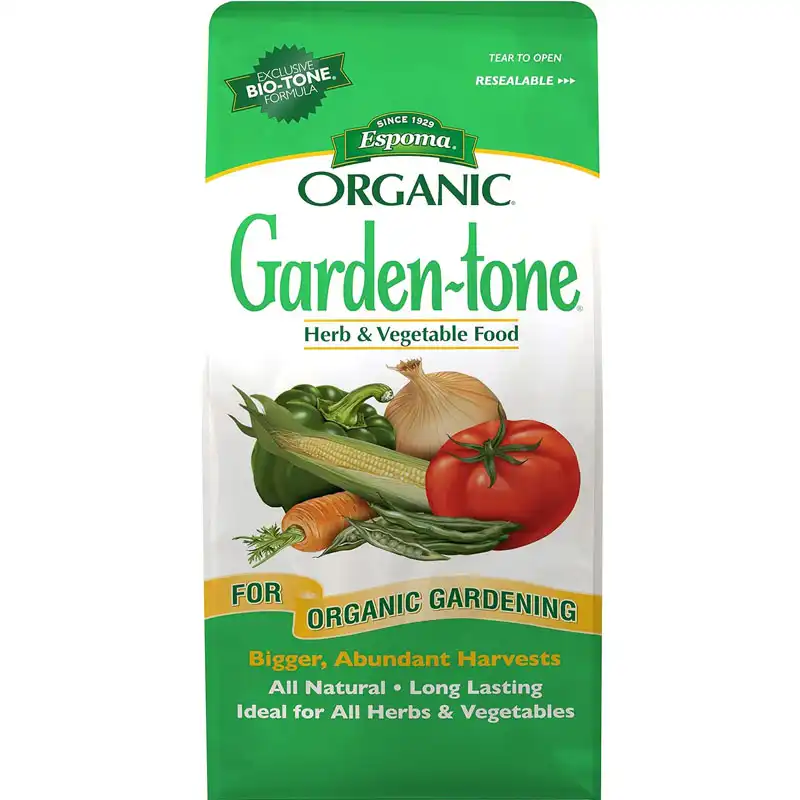
Espoma has blended natural plant food since 1929. Garden-Tone stands out as a single-bag pick. The 3-4-4 analysis with 5% calcium feeds cool-season greens and warm-season fruiting crops from the same box. Apply monthly around the drip line, or along both sides of the row, then water in.
Specifications
- 3-4-4 NPK with 5% calcium
- Bio-tone living microbe package
- Registered Organic Input Material
- Ready to use, no mixing
2. Espoma Organic Tomato-Tone
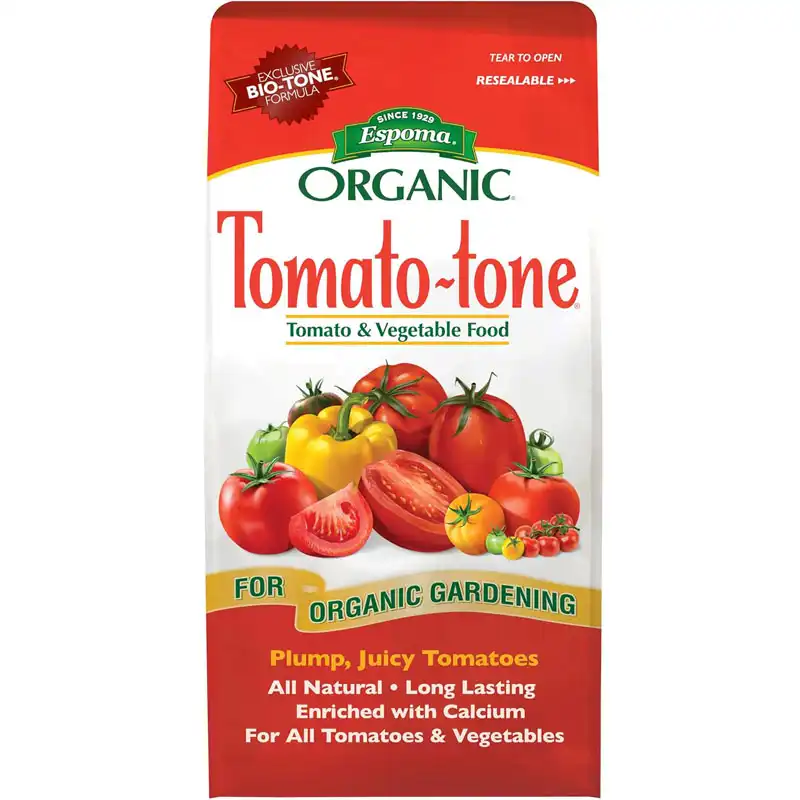
Same Espoma line, tuned for fruit. The 3-4-6 pairs 8% calcium with 6% potash, and that combination is what fruiting crops actually need at set. Two bags here declare more calcium, but neither carries the potassium alongside it. Apply 3 pounds per 50 square feet at bed prep. deeper look at fertilizer options for tomatoes covers rates by stage.
Specifications
- 3-4-6 NPK with 8% calcium
- Bio-tone beneficial microbes
- Granular slow release form
- Made in a solar-powered plant
3. Down To Earth Organic Vegetable Garden
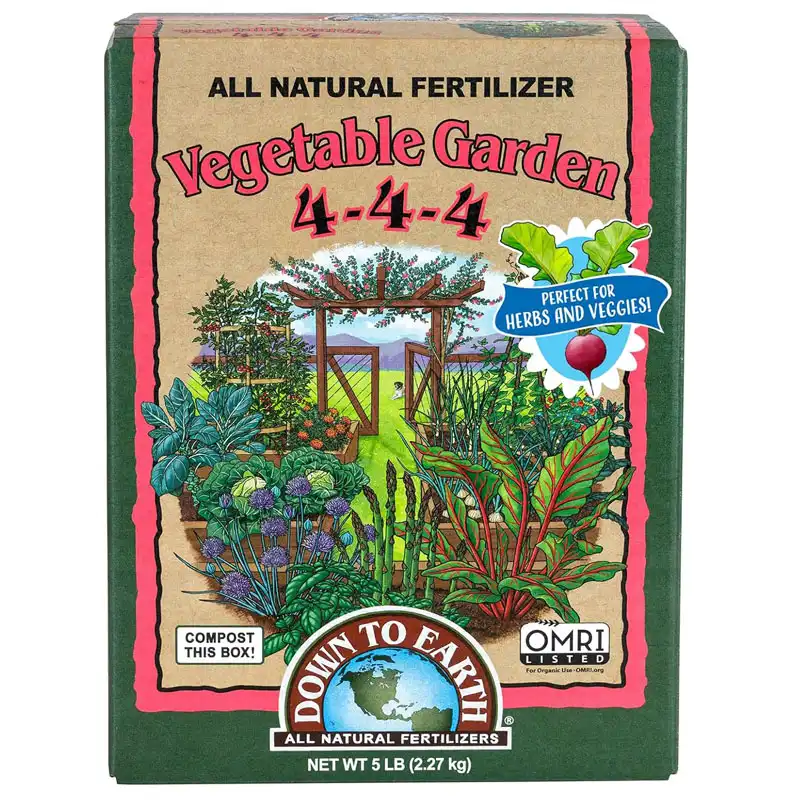
Down To Earth has blended fertilizer since 1977, and this 4-4-4 is the cleanest balanced base for broadcasting before planting. The label declares 6% calcium, 1% magnesium, and 0.4% iron on top of the NPK, which is more secondary nutrition than most balanced bags carry. New beds take 3 to 6 pounds per 100 square feet worked into the top 3 inches.
Specifications
- 4-4-4 NPK granular
- Fish bone, alfalfa, feather meal
- OMRI Listed for organic production
- Boxed dry, stores indefinitely
4. Down To Earth All Purpose 4-6-2 Organic Fertilizer
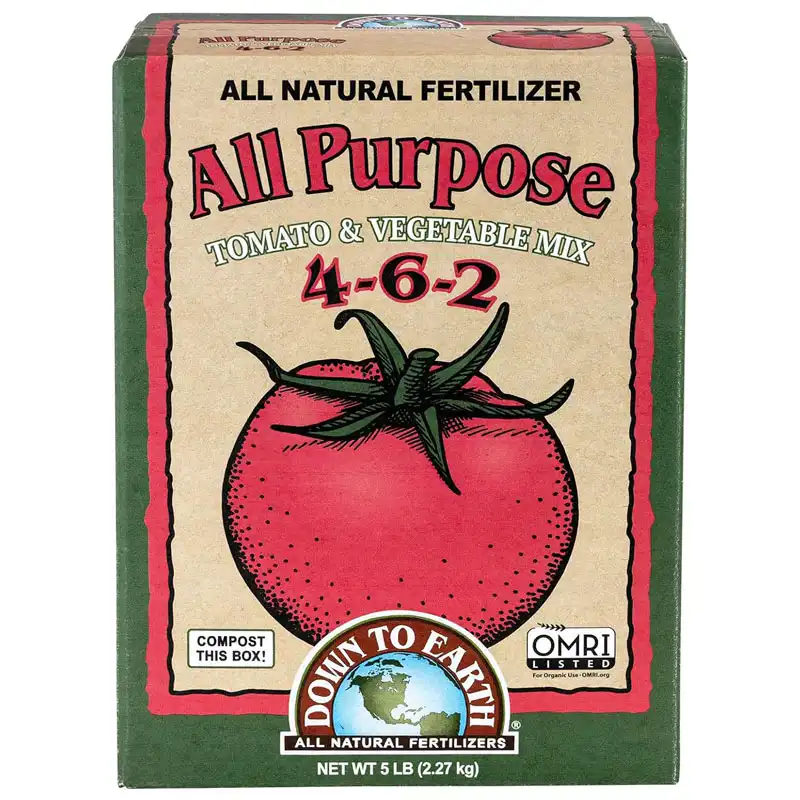
This is the original Down To Earth blend, and the extra phosphorus makes it a transplant fertilizer. The 4-6-2 analysis drives root establishment the week seedlings go in the ground. Blood meal and feather meal carry the nitrogen, rock phosphate and fish bone meal the phosphate. It also declares 8% calcium and 2.5% humic acids. Mix 1 to 2 tablespoons per transplant hole, or 2.5 to 5 pounds per 100 square feet.
Specifications
- 4-6-2 NPK granular
- 8% calcium, 2.5% humic acids
- Seaweed meal supplies trace minerals
- OMRI Listed for organic production
5. Jobe’s Organics Vegetable & Tomato Granular
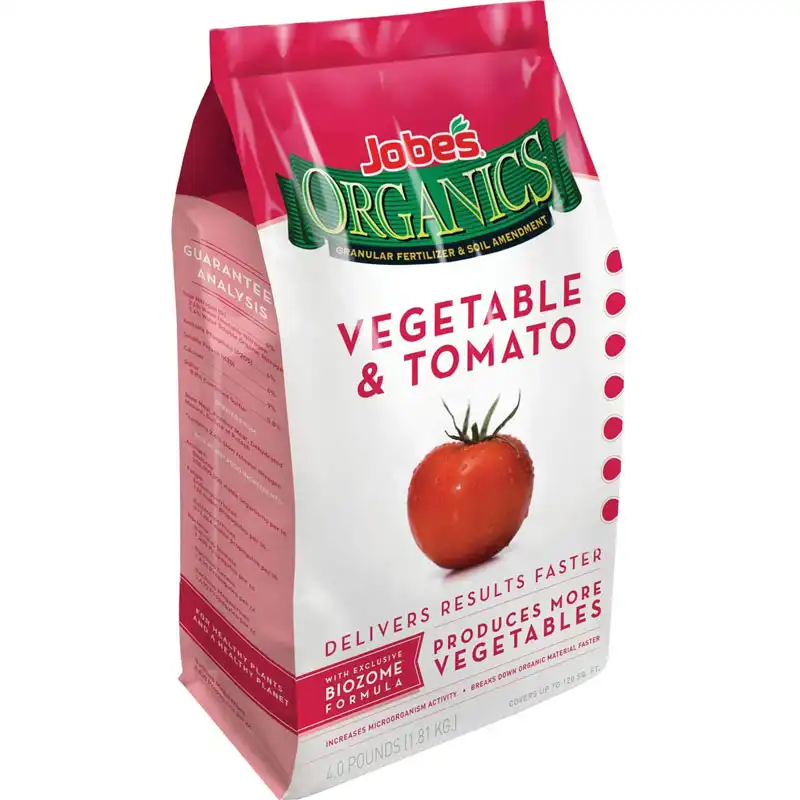
Jobe’s has made fertilizer in Kentucky since 1969. This 2-5-3 granular runs on a three-month interval, the longest stretch of anything here. Biozome brings bacteria, mycorrhizal fungi, and archaea to speed breakdown. Best if you would rather feed once and get back to work.
Specifications
- 2-5-3 NPK, phosphorus forward
- Biozome bacteria, fungi, archaea
- Granular slow release
- Approved for organic gardening
6. Jobe’s Organics Granular Garden Fertilizer, Two Pack
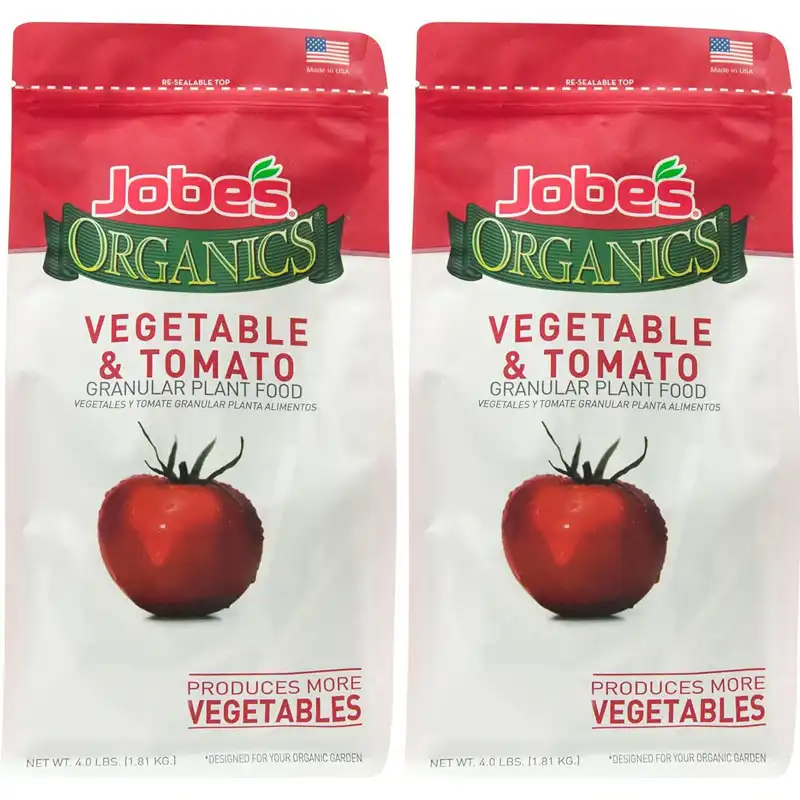
Same 2-5-3 Jobe’s formula in two four-pound bags. The guaranteed analysis also declares 9% calcium, 1% sulfur, and 0.5% magnesium. That secondary nutrition is real, and most bags at this level skip it. Feather meal, bone meal, processed poultry manure, and sulfate of potash do the feeding.
Specifications
- 2-5-3 NPK plus 9% calcium
- 1% sulfur, 0.5% magnesium
- Mycorrhizal fungi and archaea
- Every 4 to 6 weeks
7. Neptune’s Harvest Fish & Seaweed
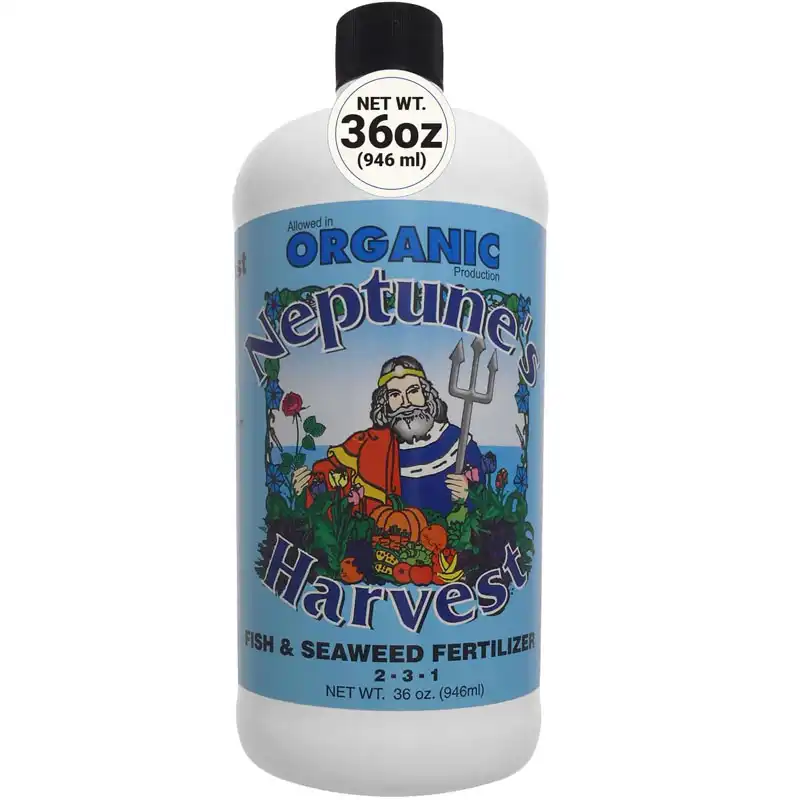
Neptune’s Harvest cold-processes North Atlantic fish, so amino acids and proteins survive the run. The 2-3-1 blend is 75% fish hydrolysate and 25% seaweed. This is the correction bottle for a bed that goes pale in July. Roots pull it up within days rather than weeks.
Specifications
- 2-3-1 NPK liquid concentrate
- One eighth cup per gallon
- OMRI Listed hydrolysate
- Apply every 1 to 2 weeks
8. Alaska Fish Fertilizer for Roses, Vegetables
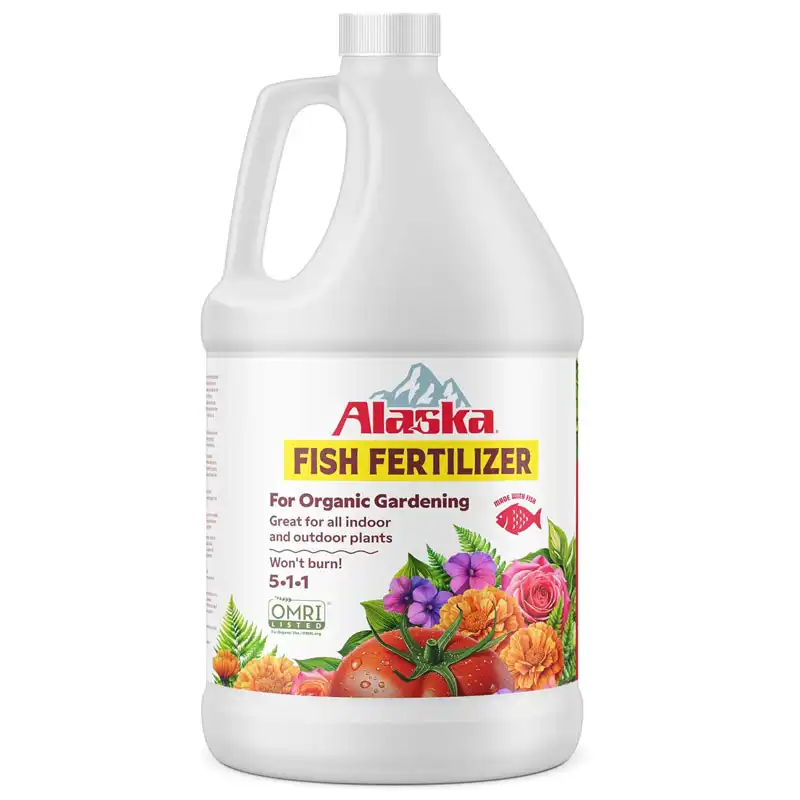
Alaska fish emulsion carries 5-1-1, the highest nitrogen figure of any liquid on this list. That makes it the pick for lettuce, spinach, kale, and sweet corn, where leaf and stalk are the harvest. One gallon covers roughly 1,000 square feet. It will not burn at label rate.
Specifications
- 5-1-1 NPK fish solubles
- OMRI Listed for crop production
- Every 2 to 3 weeks
- Runs through a hose sprayer
9. Fox Farm Big Bloom
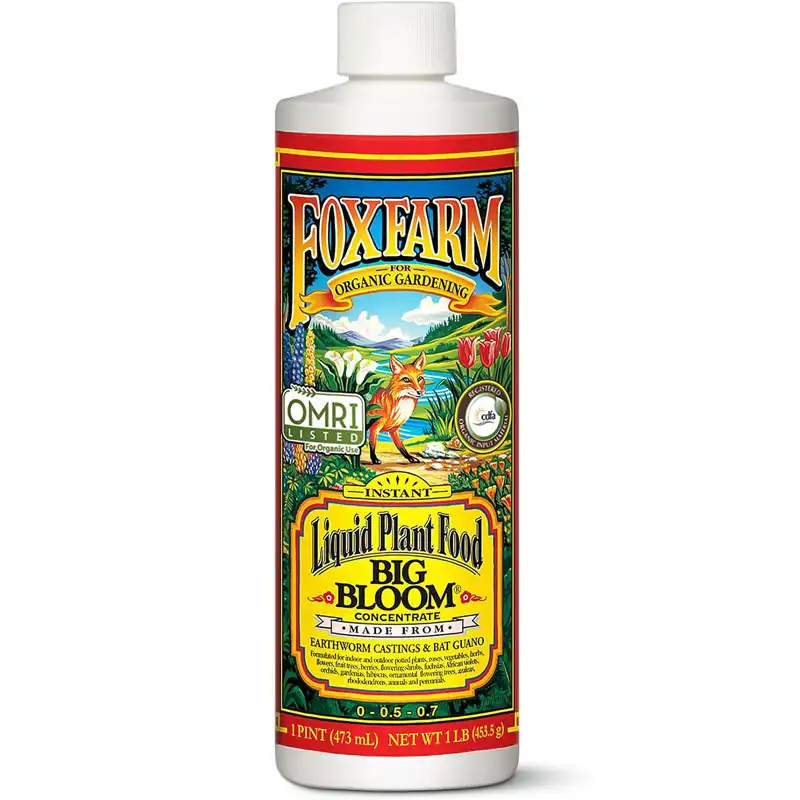
Read this label before you buy. Big Bloom runs 0-0.5-0.7, which means almost no nitrogen at all. Fox Farm built it from earthworm castings, bat guano, rock phosphate, and kelp as a microbial and micronutrient booster. Treat it as a supplement beside a granular base, never as your only feed.
Specifications
- 0-0.5-0.7 NPK liquid
- Four tablespoons per gallon
- Runs through drip irrigation
- Vented cap for gas exchange
10. Organic Plant Magic Fertilizer & Plant Food
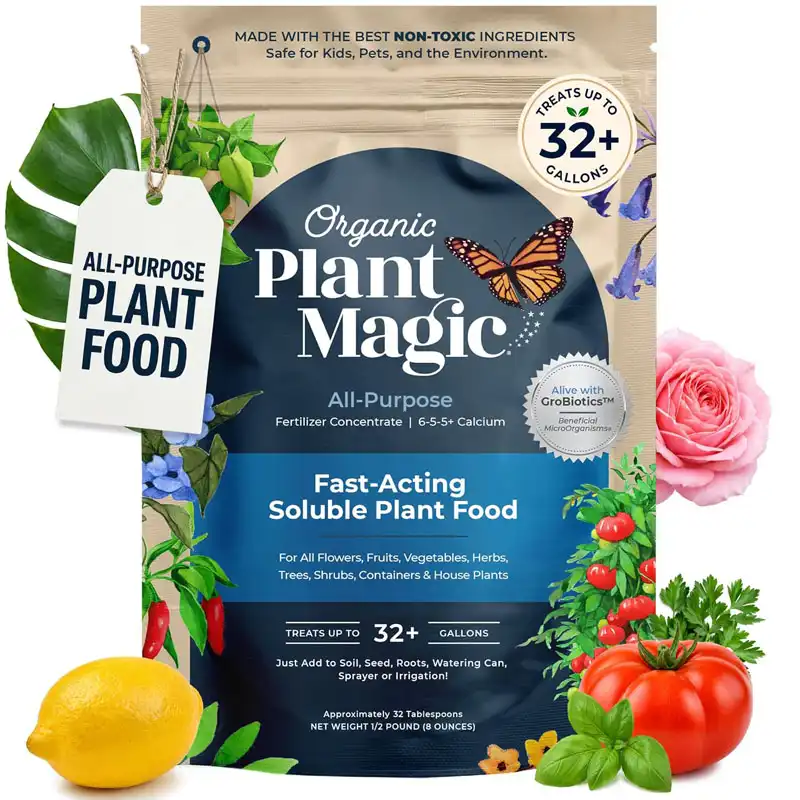
This is a water soluble powder, not a bottled liquid, so a half pound makes over 30 gallons of feed. The 6-5-5 analysis with 9% calcium is the strongest balanced number in this roundup. GroBiotics adds bacteria, mycorrhizae, humic acids, and kelp trace minerals. Nitrogen is plant-based, with no animal manure. One tablespoon per gallon covers a bed fast.
Specifications
- 6-5-5 NPK with 9% calcium
- GroBiotics bacteria and mycorrhizae
- 55 plus kelp trace minerals
- Use mixed solution within 24 hours
11. True Organic Raised Bed Food Organic Fertilizer
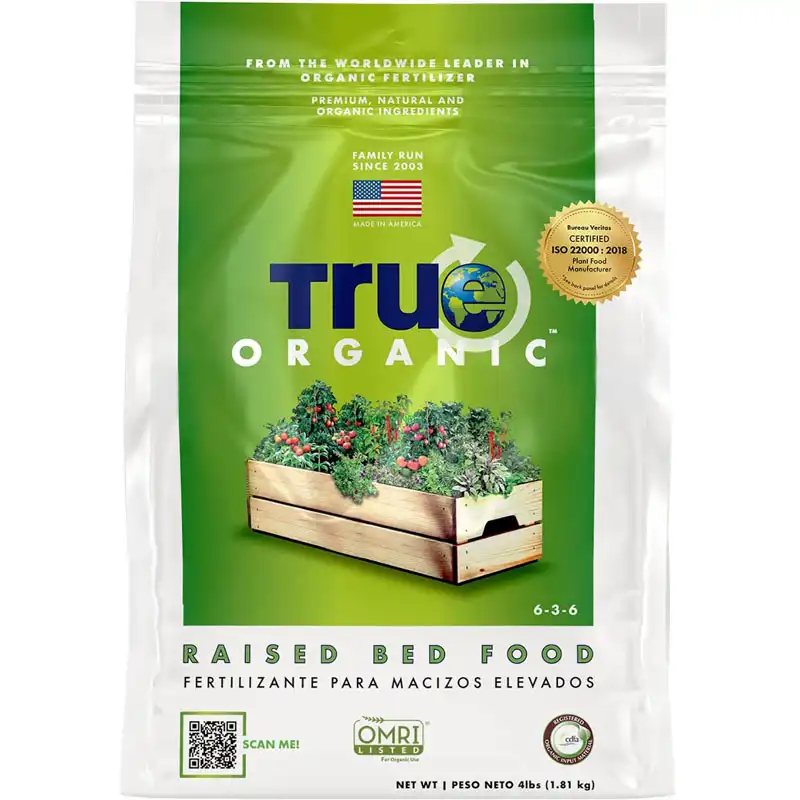
True Organic supplies commercial organic produce growers, and this 6-3-6 targets contained soil. Raised beds drain fast and lose nutrients faster. So the 4.5% slow release nitrogen matters more here than in field ground. Seabird guano, fish bone meal, soybean meal, and crab and shrimp shell meal make up the blend. New beds take a quarter cup per square foot, established beds half that.
Specifications
- 6-3-6 NPK with 5% calcium
- 4.5% slow release nitrogen
- 1% sulfur declared
- OMRI and CDFA listed
12. Burpee Bone Meal Fertilizer
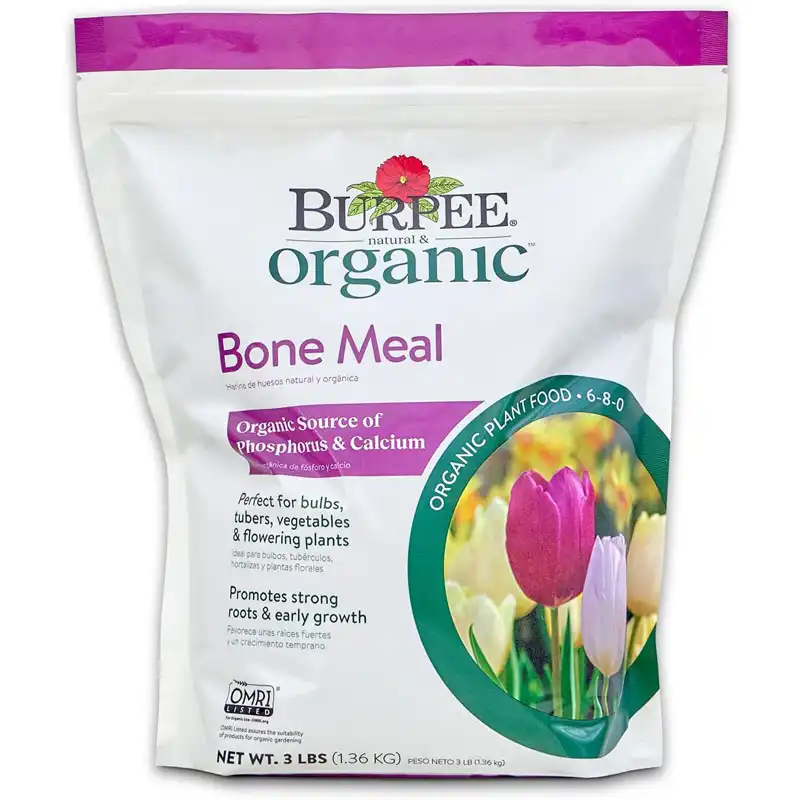
Burpee has served gardeners since 1876. This bone meal is 6-8-0 with 7% calcium, so treat it as a single-nutrient tool rather than a complete feed. Use it on carrots, beets, onions, and bulbs, or dropped in the hole under a tomato transplant. The 3-pound bag covers 240 square feet, so figure 1.25 pounds per 100. Only add phosphate your soil test actually calls for.
Specifications
- 6-8-0 NPK with 7% calcium
- OMRI Listed, made in USA
- Fine granular, rakes in easily
- Dry application only, never dissolved
Organic Vegetables Fertilizer Comparison
Sorted by nitrogen density, because that is what you are really buying. The last column is how many pounds of product it takes to lay down 1 pound of actual nitrogen.
| Product | Form | NPK | Interval | Best for |
|---|---|---|---|---|
| Organic Plant Magic | Soluble powder | 6-5-5 | 1 to 2 weeks | Heavy feeders, foliar |
| True Organic Raised Bed Food | Granular | 6-3-6 | 2 months | Raised beds |
| Burpee Bone Meal | Granular | 6-8-0 | Pre-plant or fall | Root crops, bulbs |
| Alaska Fish Fertilizer | Liquid | 5-1-1 | 2 to 3 weeks | Leafy greens, corn |
| Down To Earth Vegetable Garden | Granular | 4-4-4 | Pre-plant, then monthly | Balanced base |
| Down To Earth All Purpose | Granular | 4-6-2 | Pre-plant, then monthly | Transplants |
| Espoma Garden-Tone | Granular | 3-4-4 | Monthly | All-around use |
| Espoma Tomato-Tone | Granular | 3-4-6 | 2 weeks | Fruiting crops |
| Jobe’s Vegetable & Tomato | Granular | 2-5-3 | 3 months | Set and forget |
| Jobe’s Granular Two Pack | Granular | 2-5-3 | 4 to 6 weeks | Season supply |
| Neptune’s Harvest Fish & Seaweed | Liquid | 2-3-1 | 1 to 2 weeks | Fast correction |
| Fox Farm Big Bloom | Liquid | 0-0.5-0.7 | Every other watering | Soil conditioning |
How Much Organic Fertilizer Do Vegetables Actually Need
Utah State University Extension sorts garden vegetables into three nitrogen tiers, and those rates still stand in 2026. Nitrogen comes off crop demand rather than the lab, because a standard soil test does not measure it. Phosphorus and potassium do come off the report.
| Nitrogen need | Crops | Annual nitrogen (lb per 1,000 sq ft) | 4-4-4 product rate (lb per 1,000 sq ft) |
|---|---|---|---|
| Low | Peas, beans | 1 to 2 | 25 to 50 |
| Intermediate | Tomato, pepper, carrot, beet, lettuce, spinach, broccoli, squash, melon | 2 to 3 | 50 to 75 |
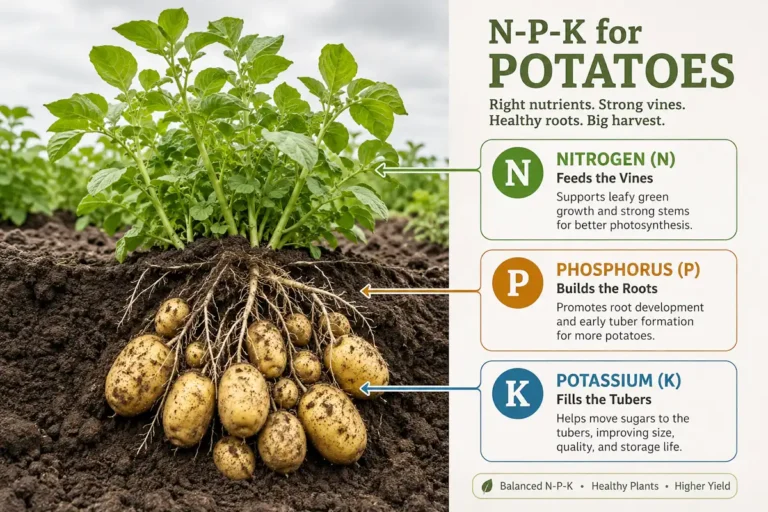
| High | Onion, sweet corn, potato | 4 to 6 | 100 to 150 |
Scale that down for a normal bed. The intermediate tier works out to 5 to 7.5 pounds of a 4-4-4 per 100 square feet. That lines up with the 3 to 6 pounds most guaranteed analysis panels print for new gardens.
Two rules keep you out of trouble. Never put down more than 1.5 pounds of nitrogen per 1,000 square feet in a single pass. On a 4-4-4 that caps you at roughly 37 pounds. Organic meals carry real salt loads, and salt burn hits seedlings hardest. Then split the high-nitrogen crops. Apply the intermediate rate before planting, and band or broadcast the balance once plants are established.
Credit your organic matter too. Cornell Cooperative Extension takes 0.5 ounce of nitrogen per 100 square feet off the annual rate. That applies for every 1% organic matter on the report, and most worked beds run 2% or better.
Get your phosphorus and potassium numbers before you buy anything. A home soil test kit handles it. Samples typically go to the lab at K-State Research and Extension.
How Long Does Organic Fertilizer Take to Work?
Granular organic fertilizer takes two to six weeks to show in the plant. Liquid shows in three to seven days. That gap trips up more gardeners than any wrong bag choice, and the reason sits in the soil, not the product.
The number on the bag is total nitrogen, not the nitrogen your crop can drink. Soil microbes have to convert it first, through a process called mineralization. Until that happens, the nitrogen in a feather meal or a guano is locked inside protein. Penn State Extension lists what controls the pace: soil temperature, soil moisture, oxygen, how well the material is incorporated, and what the material is made of.
Temperature is the one nobody checks. Mineralization crawls in cold ground and speeds up as soil warms. One controlled study measured nitrogen release climbing from 56% to 66% as soil went from 50°F to 77°F. Below roughly 50°F you get very little. That is exactly why a heavy pre-plant application in early April looks like it did nothing by the first week of May.
Three things follow from this, and they change how you work:
- Check soil temperature, not the calendar. A cheap probe in the top 4 inches tells you whether the bag will do anything yet.
- Go in 2 to 3 weeks ahead of planting. Incorporate into moist, workable soil so microbes have a head start before roots need the nitrogen.
- Do not expect the full label rate in year one. High-nitrogen meals like blood, feather, and fish release most of theirs in a season. Compost releases almost none, sometimes net zero.
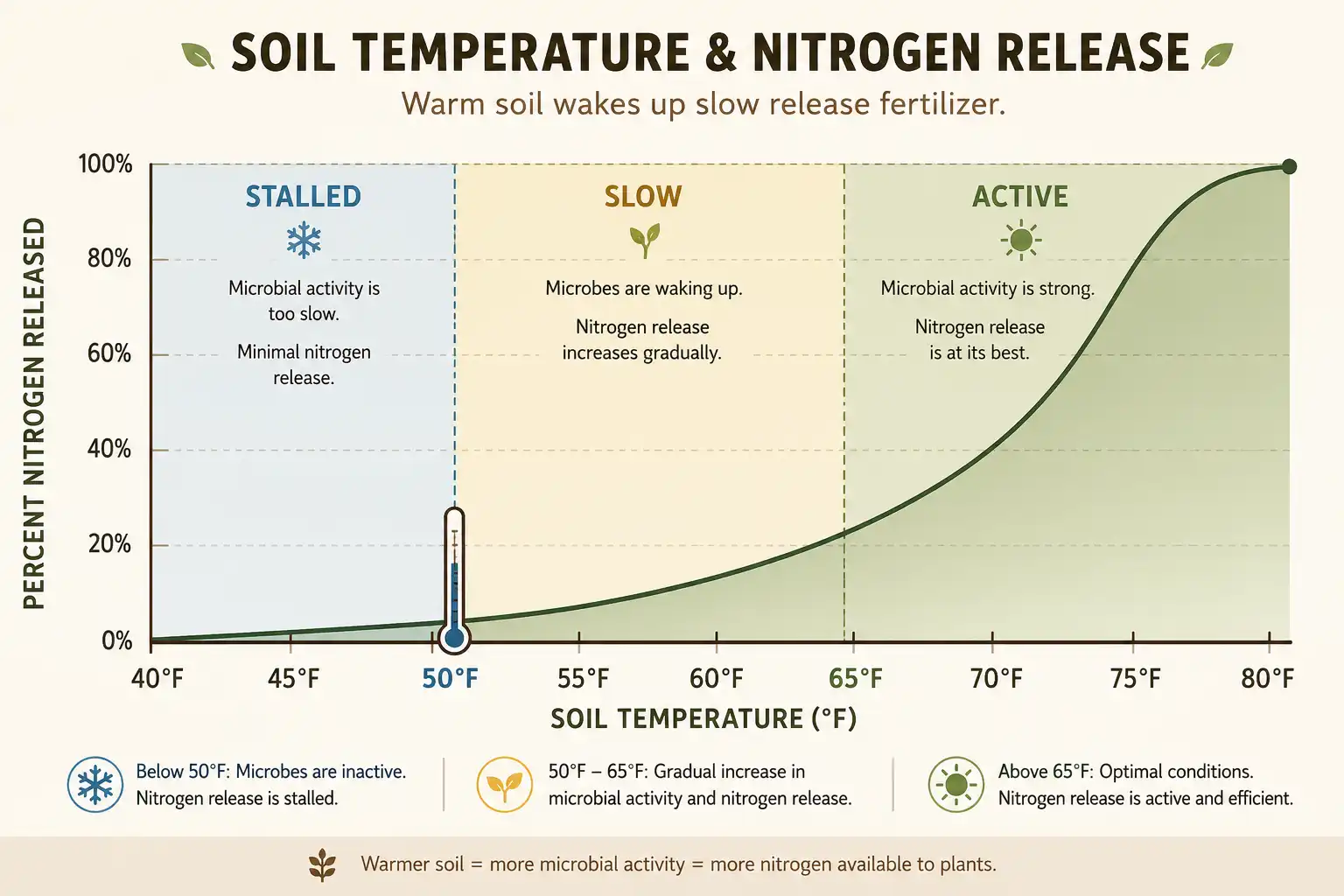
Cold, dry, or waterlogged soil all stall the same process. If you need a fast fix in a cold spring, reach for liquid and skip the granular until the ground warms.
How to Apply Organic Fertilizer to a Vegetable Garden
Applying organic fertilizer to vegetables comes down to three methods, and each fits a different moment in the season.
- Broadcast and incorporate before planting. Spread the full pre-plant rate across the bed. Then work it into the top 3 to 6 inches with a rake or tiller. Water it in. Granular meals need soil contact and moisture before microbes release anything, so surface-dusting a dry bed wastes the bag.
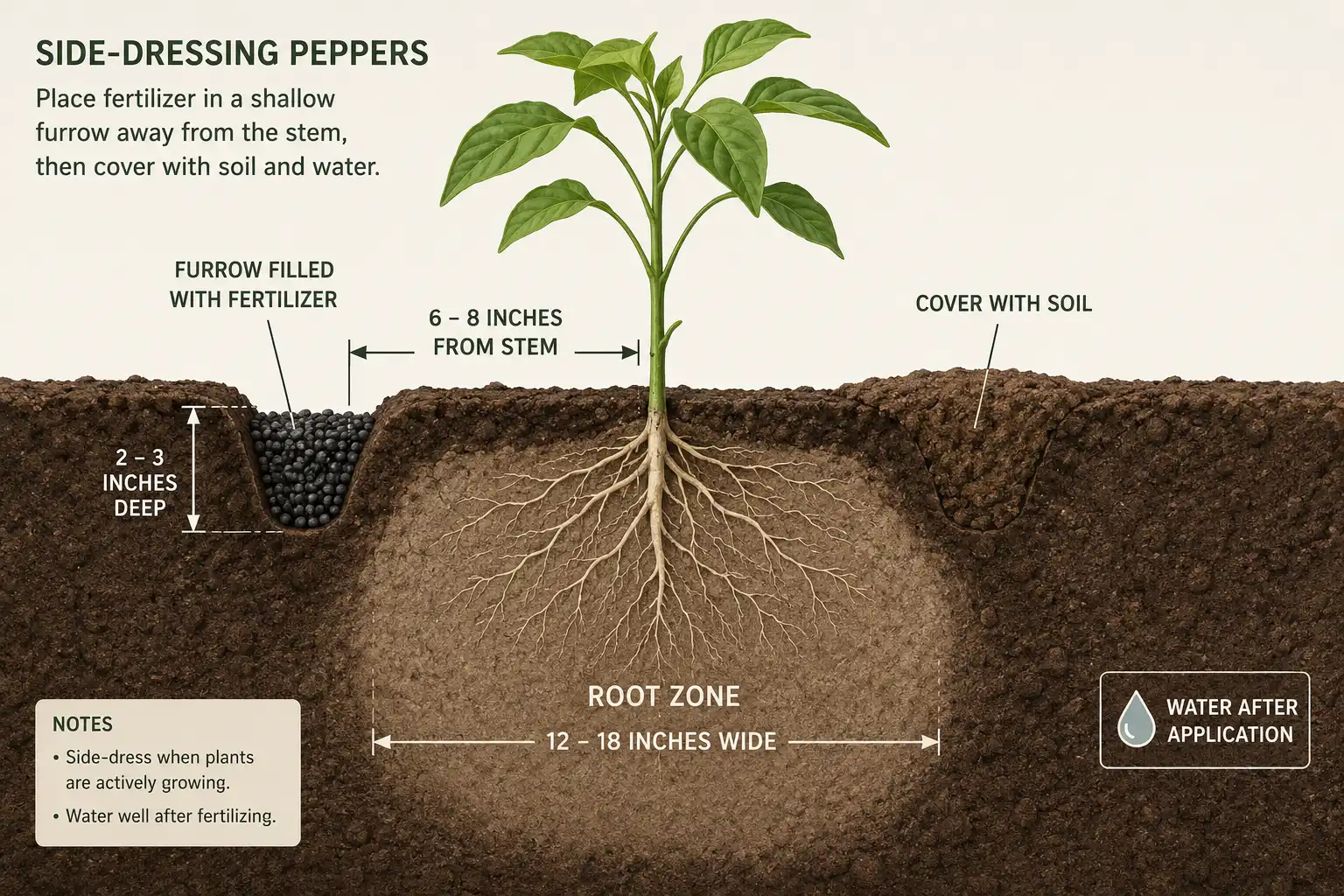
- Band for in-season nitrogen. Once plants are up and growing, open a narrow furrow 6 to 8 inches out from the plant base. Cut it 2 to 3 inches deep. Spread the material evenly down the furrow, then cover it with soil. Figure the broadcast amount for the whole bed first, then divide by the number of rows. This is how to side-dress sweet corn. It puts nitrogen inside the root zone rather than on top of it.
- Go liquid for a fast correction. Mix fish emulsion or compost tea at label rate, then soak the root zone. You can also spray leaves early or late in the day. Never spray in midday heat, since foliar burn shows up fastest on tender greens. Keep liquid applications inside the drip line so the feed lands where roots actually are. Two gallons of dilute mix covers about 20 square feet.
Calibrate the spreader before the first pass. Organic products go down at far higher volume than synthetic. So most spreaders need two or more passes, even at the top setting. Set the hopper high and run 2 or 3 pounds down a measured strip. Then figure the rate from path width times distance traveled. A drop spreader gives tighter rate control than a rotary unit. It only covers 18 inches to 3 feet per pass, though. For liquid feed on a bed, a hose end sprayer beats mixing buckets by hand.
How Often Should You Fertilize Vegetables
Granular goes in once before planting, then every 4 to 8 weeks depending on how hard the crop feeds. Liquid runs every 1 to 2 weeks through peak growth. Light feeders like beans often need nothing after the pre-plant pass. Sweet corn and onions want two or three rounds.
The seasonal arc matters more than the calendar. Nitrogen goes on early, when plants build leaf and stem during vegetative growth. Then shift the emphasis at fruit set, because potassium and calcium carry fruit quality from there forward. That is when tomatoes and peppers move off a plain all-purpose blend. Something with calcium in the analysis takes over.
Cut your side-dressing schedule short as harvest closes in. Late nitrogen on onions gives you thick necks and poor storage. On tomatoes it buys leaves instead of fruit. Application frequency should taper as the growing season winds down.
Best Organic Fertilizer by Vegetable Type
Match the bag to the crop and one product line covers most of a garden. This is where the best organic fertilizer for veggies stops being one answer.
Leafy greens: Lettuce, spinach, kale, and chard run on nitrogen, since the leaf is the harvest. A 4-4-4 like Down To Earth Vegetable Garden works pre-plant. Then push Alaska Fish Fertilizer at 5-1-1 every couple of weeks. Skip the calcium premium here, because the best organic fertilizer for leafy greens is simply the one with the highest first number you can afford.
Fruiting crops: Tomatoes, peppers, eggplant, squash, and melons want steady potassium plus calcium once flowers set. Espoma Tomato-Tone at 3-4-6 pairs 8% calcium with 6% potash. True Organic Raised Bed Food at 6-3-6 works if your beds are contained. Tomatoes carry enough quirks to deserve their own treatment, so check the Tomato-Tone review above for the calcium math.
Root crops: Carrots, beets, and radishes need phosphorus and modest nitrogen. Heavy nitrogen gives you leafy tops and forked, hairy roots. Cut the label rate in half on carrots. Lean on Burpee Bone Meal at 6-8-0 for the phosphate instead, which is the best organic fertilizer for root vegetables in most beds.
Alliums and sweet corn: These are the heaviest feeders in the garden at 4 to 6 pounds of nitrogen per 1,000 square feet. Start with the intermediate rate pre-plant. Then band Organic Plant Magic at 6-5-5, or any straight blood or feather meal, after establishment. Stop feeding onions once bulbs begin sizing.
Legumes: Peas and beans fix roughly 80% of their own nitrogen through Rhizobium bacteria, so they need the least. A light pre-plant pass carries them until nodules take over. Inoculate the seed and save the fertilizer for beds that need it.
Mistakes That Waste Organic Fertilizer
- Feeding without a soil test. You end up buying nutrients your ground already holds. Fix: test every three years, then buy to the report. A test runs $10 to $40 and pays for itself in one season.
- Piling on phosphorus and potassium that already test high. Excess phosphorus does nothing for yield and moves off-site in nutrient runoff, the exact risk NRCS nutrient management guidance targets. Fix: switch to a nitrogen-only material and let phosphorus buildup draw down.
- Broadcasting on dry soil. Microbes release the nutrients in organic meals, and microbes need moisture and warmth. Dry ground means no release at all. Fix: incorporate, then water in.
- Mixing high-carbon material into the bed at the same time. Fresh sawdust, straw, and wood chips cause nutrient tie-up, because microbes borrow soil nitrogen to break that carbon down. Fix: keep those on top as mulch, never tilled in.
- Using bloom formulas on leafy crops. A 2-8-4 marketed for flowers starves lettuce of the one nutrient it needs most. Fix: read the first number and match it to the harvest you want.
- Assuming organic cannot burn. Many organic materials carry high salt loads and will burn plants when over-applied. That puts them in the same risk category as a synthetic at the same rate. Fix: cap single applications at 1.5 pounds of nitrogen per 1,000 square feet. Keep granules 3 inches off the stem.
One more thing to watch. Over-fertilizing with nitrogen can drive soil pH and nutrient balance off. Then you see pale, mottled leaves that look like hunger but are not. If your plants look off after a heavy feed, stop. Check the pattern against real micronutrient deficiency symptoms first.
FAQs About Organic Fertilizer for Vegetables
What is the best organic fertilizer for vegetables overall?
How often should you apply organic fertilizer to a vegetable garden?
Can organic fertilizer burn plants?
Is compost enough, or do vegetables still need fertilizer?
Granular or liquid: which works better for vegetables?
Are organic fertilizers safe around kids and pets?
Do coffee grounds and eggshells work as organic vegetable fertilizer?
Final Thoughts on Vegetable Garden Fertilizer
For a single bed this year, Espoma Garden-Tone stands out as the pick. Test the soil first, then work the pre-plant rate into the top 4 inches. Keep liquid fish on hand for a mid-season pickup. One habit beats every product choice on this list. Test, then match the bag to what the report actually asks for. That is how a vegetable garden fertilizer budget stops leaking money.