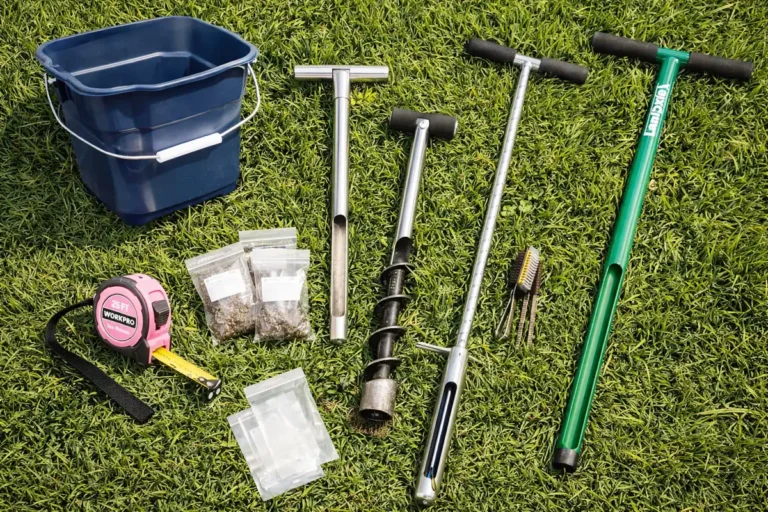
Digital Soil Moisture Meter: 9 Picks Plus Refill Triggers
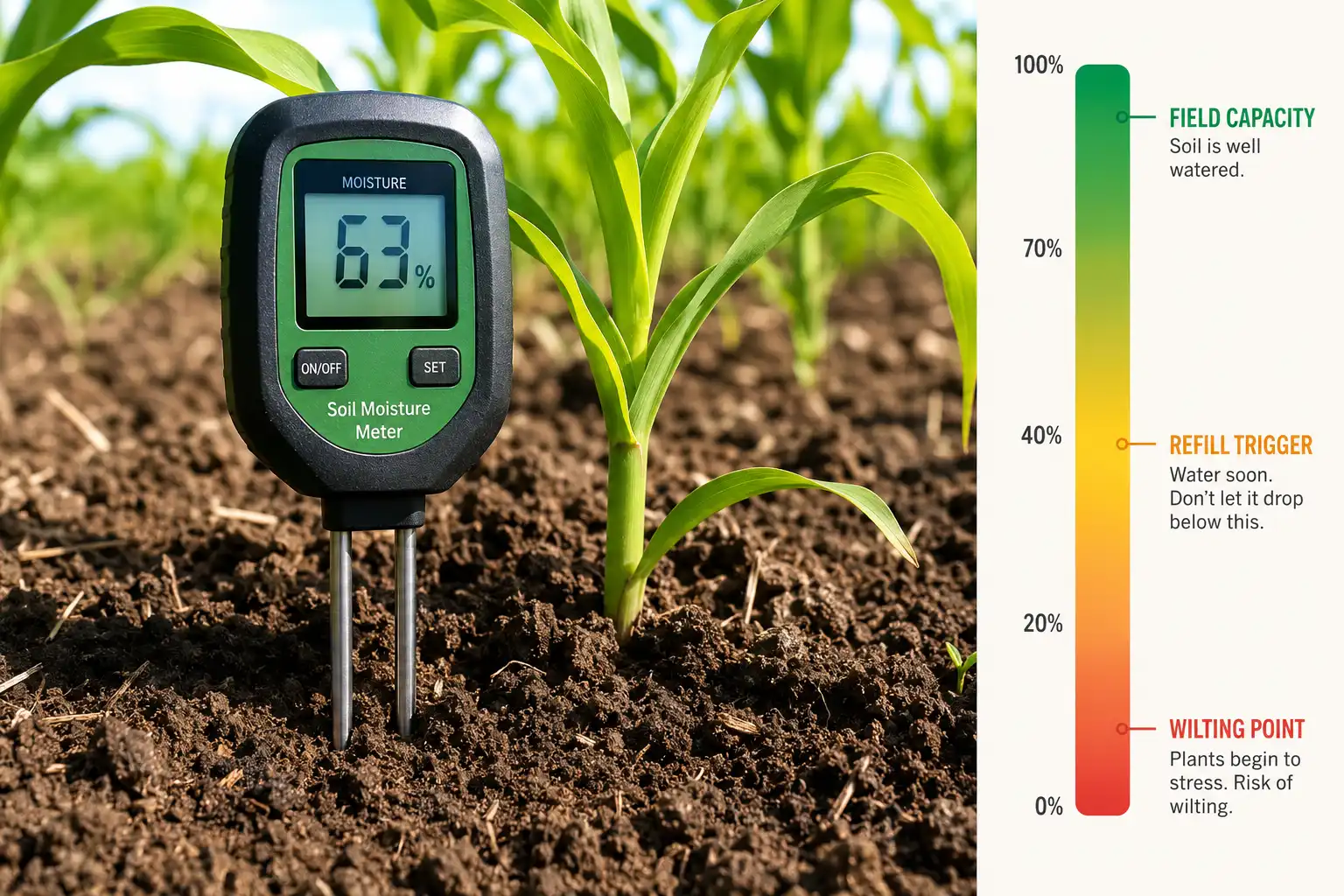
Soil that looks dry on top often stays wet four inches down. Watering by eye then wastes water and rots roots. A digital soil moisture meter reads the root zone directly. Sensor type, probe length, IP rating, and battery life decide which one lasts.
The best digital soil moisture meter overall is the General Tools DSMM500, with a 7.9 inch probe and IP65 sealing. Vodeson 4 in 1 monitors 12 zones wirelessly. Dr.meter S10 runs 12 probes from a battery free display.
Quick Picks: Best Digital Soil Moisture Meters at a Glance
Nine meters below cover every growing setup, from a windowsill pot to an irrigated field:
- General Tools DSMM500
- Vodeson 4 in 1
- Dr.meter S10
- LKBird 8 in 1
- YINMIK YK S02
- YAMRON 4 in 1
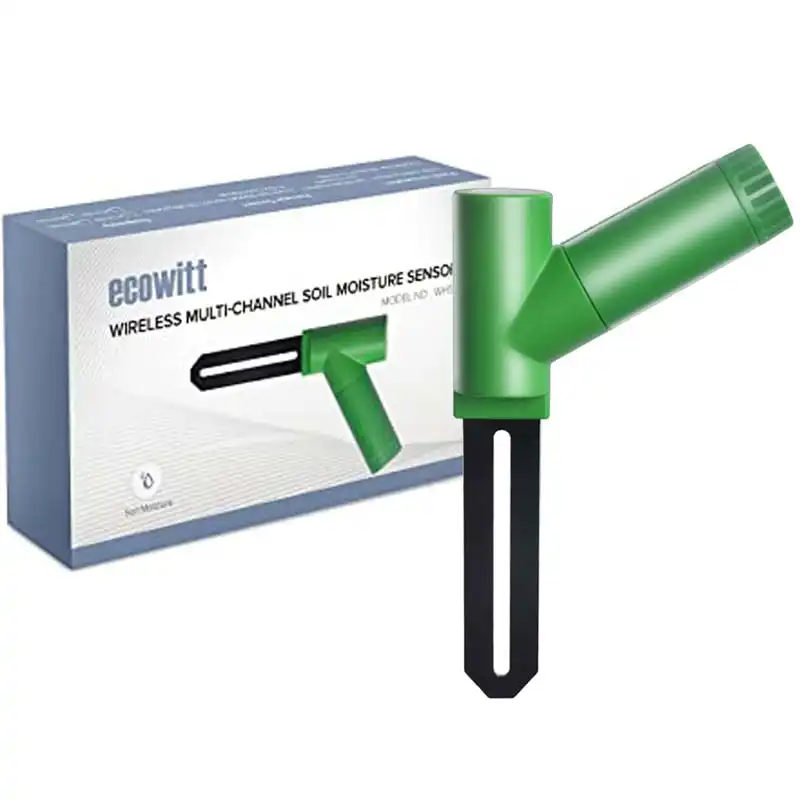
- ECOWITT WH51
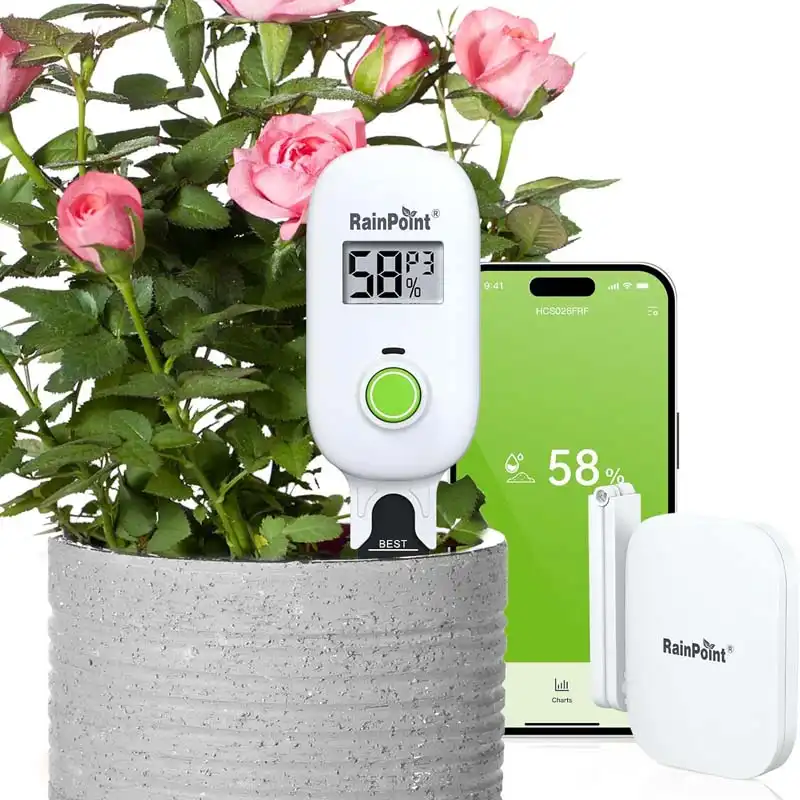
- RAINPOINT Smart
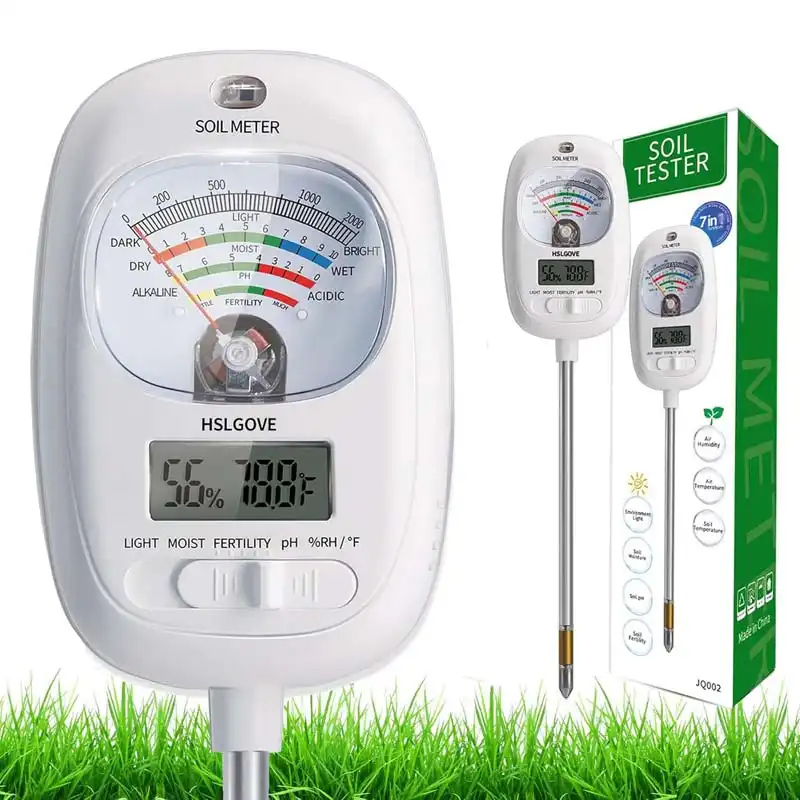
- HSLGOVE 7 in 1 Digital
Top 9 Digital Soil Moisture Meter Picks: A Quick Comparison
| Preview |
#1
Best Overall
|
#2
|
#3
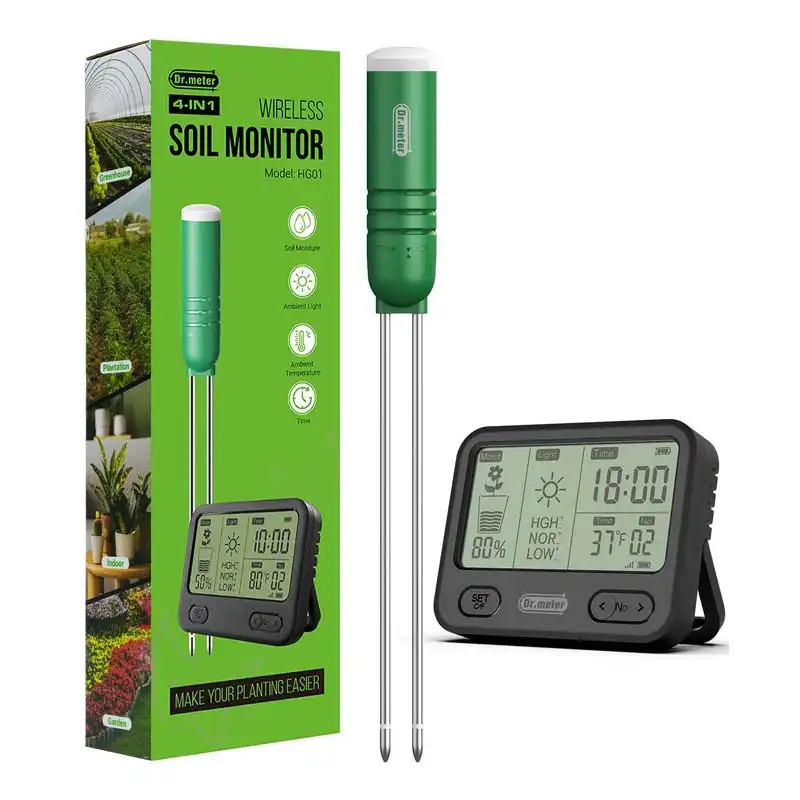
|
#4
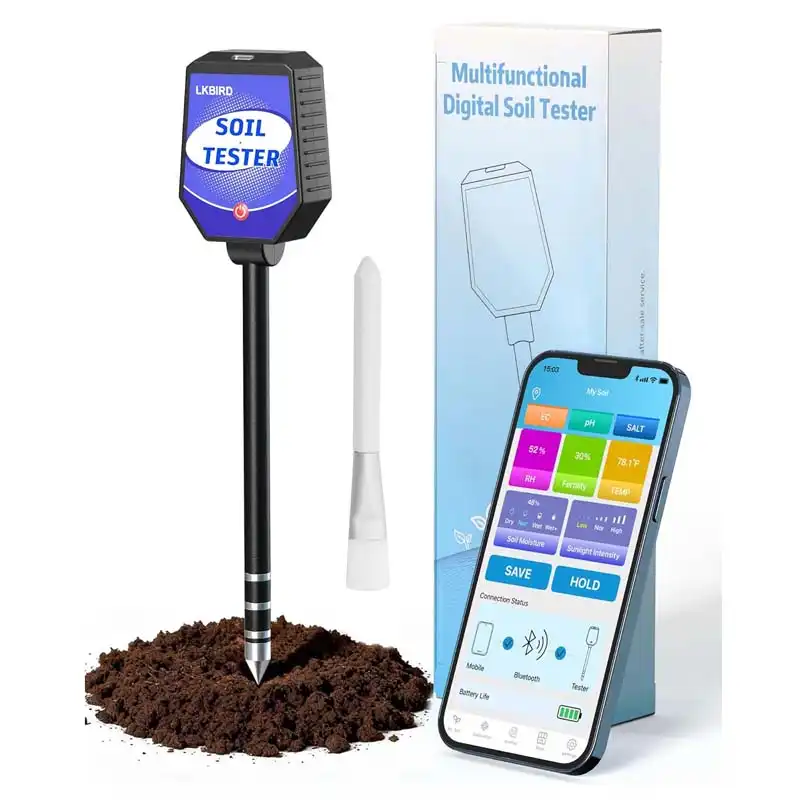
|
#5
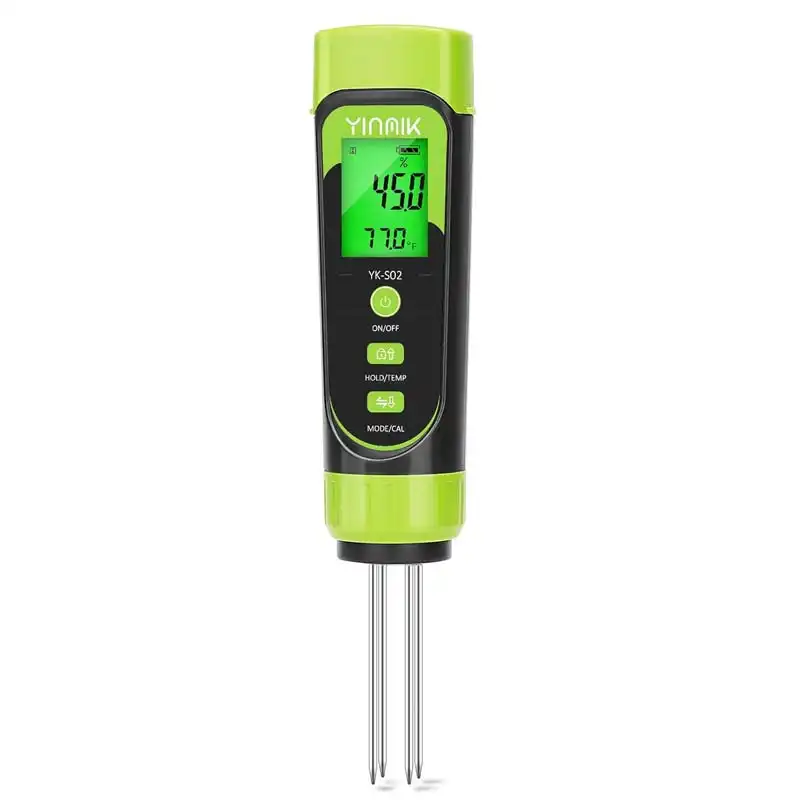
|
#6
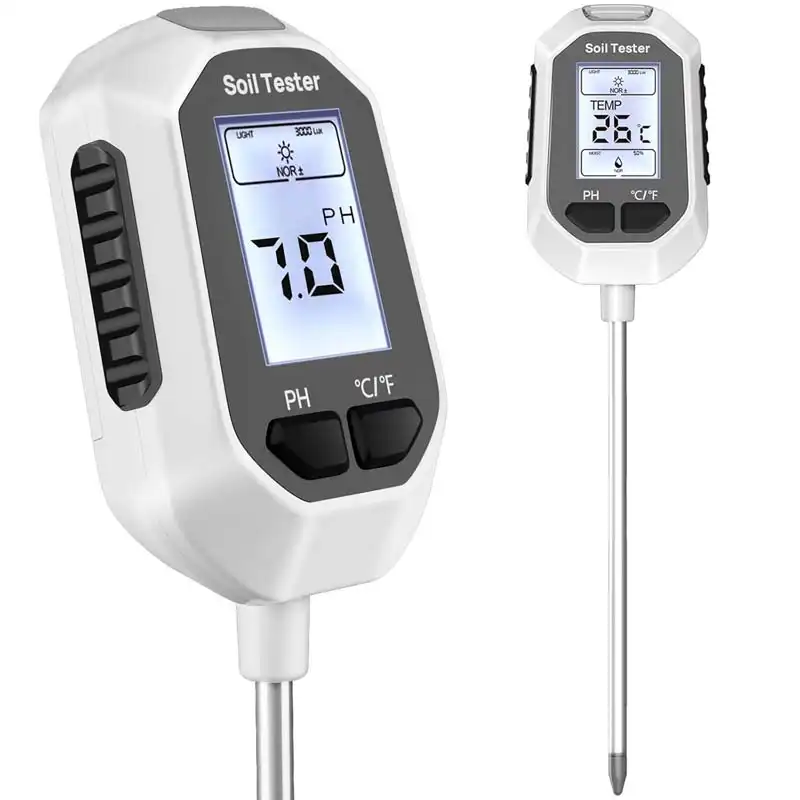
|
#7
|
#8
|
#9
|
| Title | General Tools DSMM500 | Vodeson 4-in-1 | Dr.meter S10 Digital | LKBird 8-in-1 | YINMIK YK-S02 | YAMRON 4-in-1 Backlit Digital | ECOWITT WH51 | RAINPOINT Smart Digital Wireless | HSLGOVE 7-in-One Digital |
| Price |
$221.64 – 05.09.2026 See Latest Price |
$69.99 – 05.09.2026 See Latest Price |
$24.89 – 05.09.2026 See Latest Price |
$33.98 – 05.09.2026 See Latest Price |
$29.99 – 05.09.2026 See Latest Price |
$32.98 – 05.09.2026 See Latest Price |
$22.99 – 05.09.2026 See Latest Price |
$31.49 – 05.09.2026 See Latest Price |
$23.69 – 05.09.2026 See Latest Price |
| Overall Score | |||||||||
| Sensor Type | Resistive (precision) | TDR | Wireless probe | Capacitive (aluminum alloy) | FDR | Resistive | Wireless sensor | Capacitive | 3-metal probe |
| Readings | Moisture only | Moisture, soil temp, sunlight, time | Moisture, light, time, ambient temp | pH, moisture, temp, light, salinity, fertility, EC, air humidity | Moisture, EC, soil temp | Moisture, pH, temp, sunlight | Moisture only | Moisture (with soil-type calibration) | Moisture, pH, NPK, light, soil temp, air humidity, ambient temp |
| Probe Length | 7.9 in (202 mm) | Standard probe | Standard probe | 2.7 in | Standard probe | 4 in (10 cm) | Standard probe | Standard probe | 6.8 in |
| Accuracy | ±5% + 5 digits | TDR-grade | Standard | ±2% error; pH ±0.1 | FDR-grade | Temp ±1.8°F | Good after calibration | Precision capacitive | Standard |
| Water Resistance | IP65 | IPX5 | IPX5 | Waterproof body | Standard | Standard | IP66 | Waterproof, anti-corrosion | Standard |
| Power | 4× AAA | 2× AAA + 2× AA (incl.), 8–12 mo | No external power needed | Battery + Bluetooth | Battery | 4× AAA | 1× AA, 45–60 days | Battery | 3 batteries |
| Wireless | No | Yes, 230 ft RF | Yes, 300 ft, 12 probes | Yes, Bluetooth app | No | No | Yes, 100 m, needs gateway | Yes, WiFi 2.4 GHz hub incl. | No |
Four makers publish no sensing method at all. That gap matters, because the sensing family sets how a meter behaves in salty, sandy, or heavy clay ground.
What Is a Digital Soil Moisture Meter?
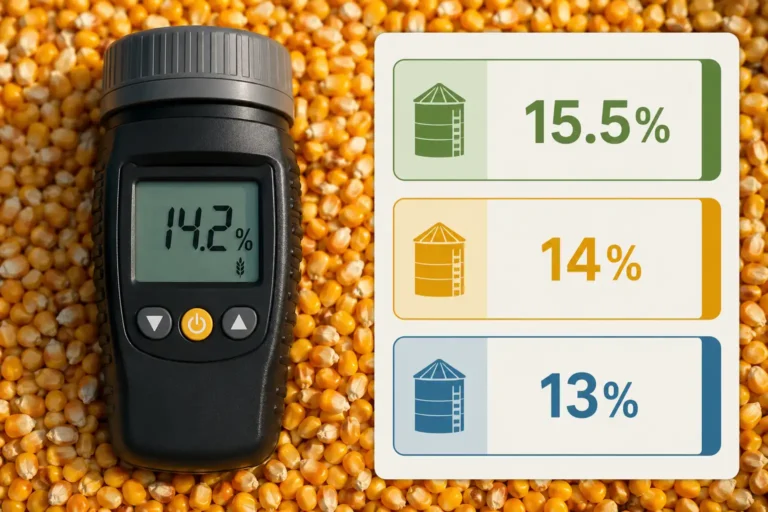
A digital soil moisture meter is a probe-based tool that measures water content in soil. The reading shows on an LCD screen. The probe sits in the root zone, reads soil dielectric properties, then converts the data into a percentage or a 1 to 10 scale. Farmers and gardeners use it to time irrigation, prevent root rot, and protect young seedlings from drought stress.
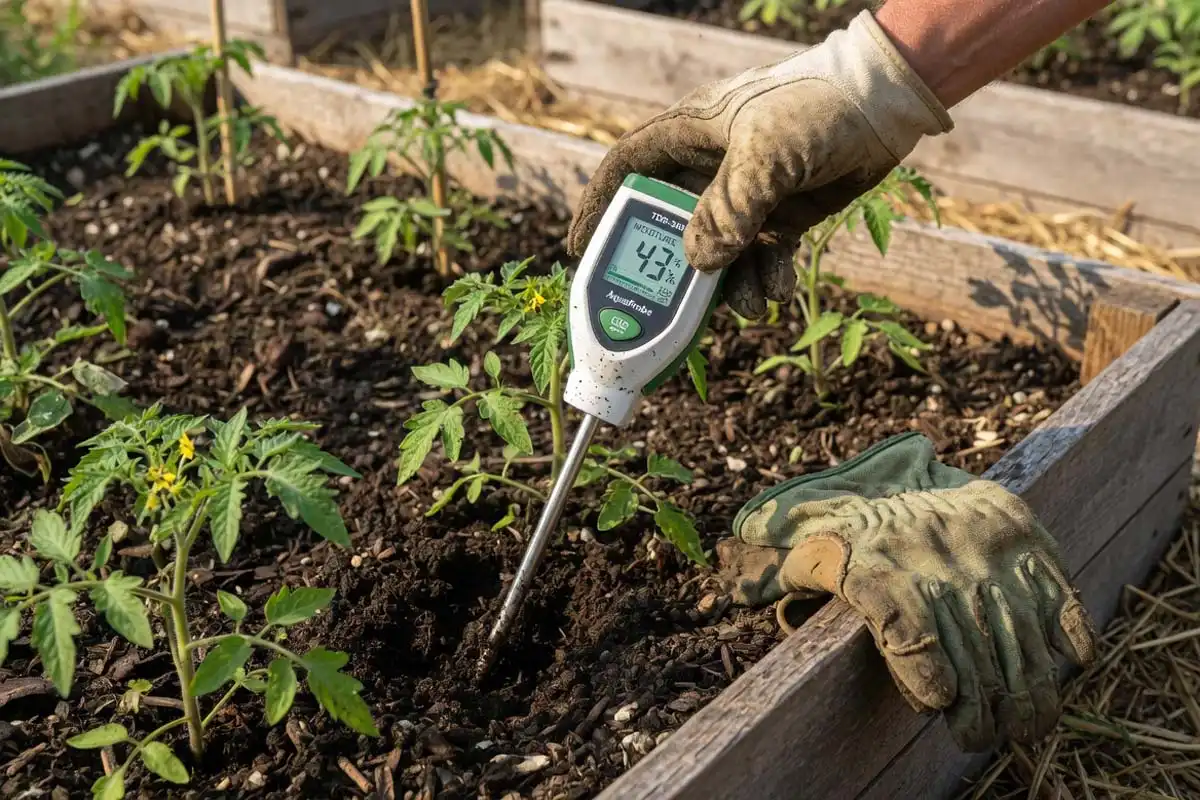
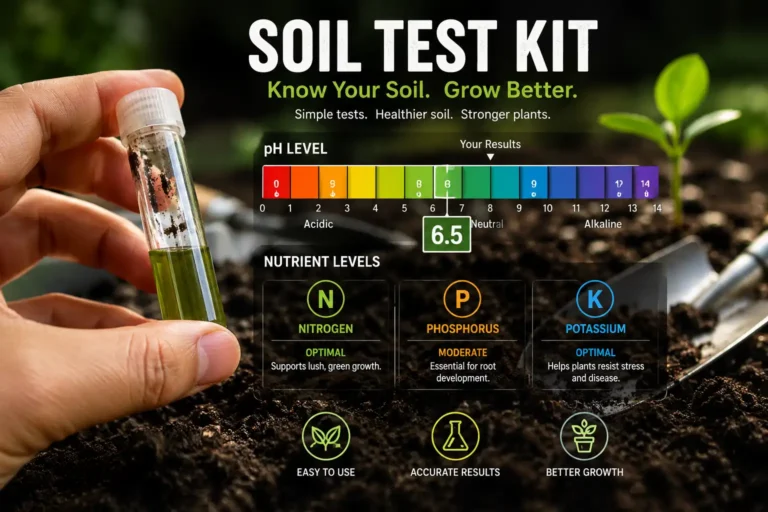
The percentage most meters report is volumetric water content. University of Minnesota Extension defines it simply: 25% VWC means 0.25 cubic inch of water per cubic inch of soil. So the number describes the soil, not the plant. A good soil testing routine almost always pairs a moisture meter with a pH meter and a sampling probe.
How Does a Digital Soil Moisture Meter Work?
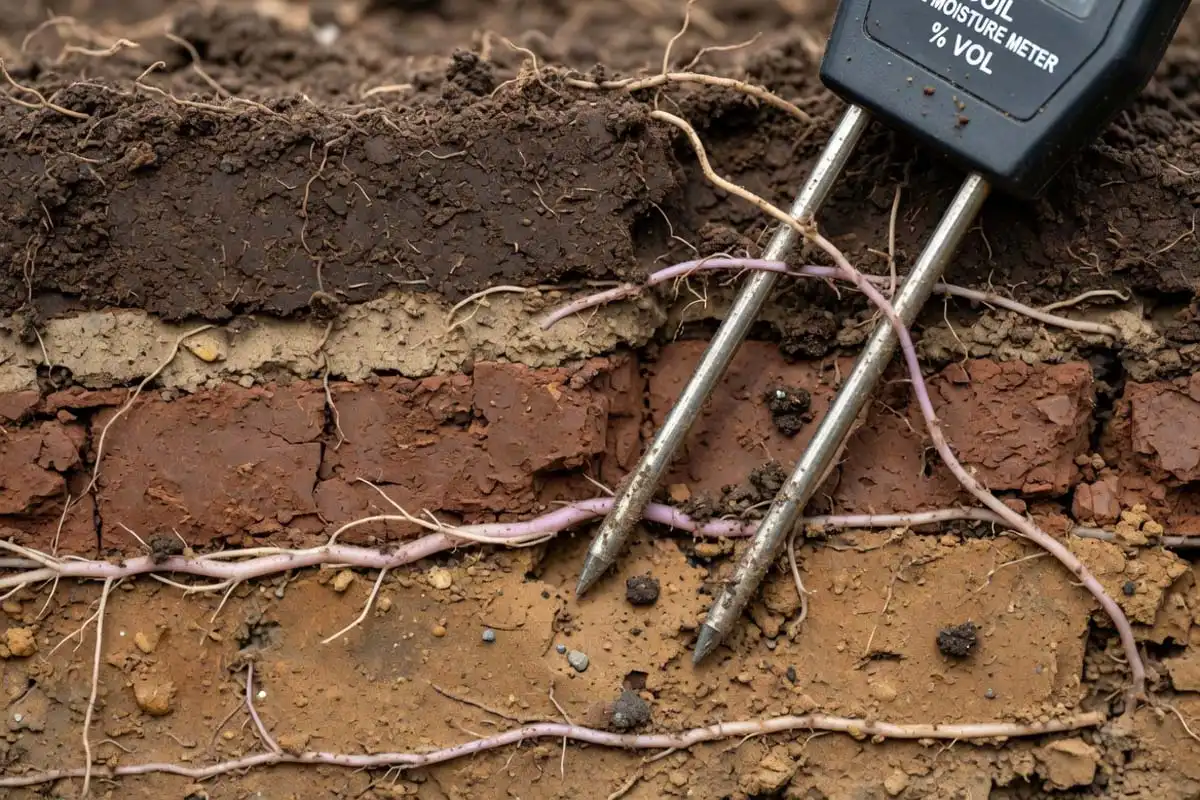
Most digital soil moisture meters use one of two sensor types: capacitance/dielectric probes or resistive probes. Capacitance probes read the soil’s dielectric constant, which rises as water content rises. Resistive probes pass a small current between two metal pins and measure how easily it flows. Wet soil conducts more current than dry soil. The meter converts that signal into a moisture percentage or a number on a scale.
Dielectric sensing beats resistive sensing on repeatability, but it is not immune to soil chemistry. University of Minnesota Extension names four conditions that shift capacitance and FDR (Frequency Domain Reflectometry) readings: salinity, clay content, temperature, and bulk density. That is why site calibration matters on fertilized or salty ground.
TDR (Time Domain Reflectometry) sits at the top of the accuracy scale. Oregon State University Extension explains the principle. A TDR probe times a voltage pulse down parallel rods, and travel time rises as the soil wets. TDR rarely needs soil-specific calibration, which is why research stations use it. Higher-end units also use a stainless probe with a non-corroding tip and store calibration data for repeat accuracy.
The 9 Best Digital Soil Moisture Meters: Reviews
These nine cover different probe depths, sensing methods, and levels of connectivity. Match the meter to your soil, crop, and budget rather than to the longest feature list.
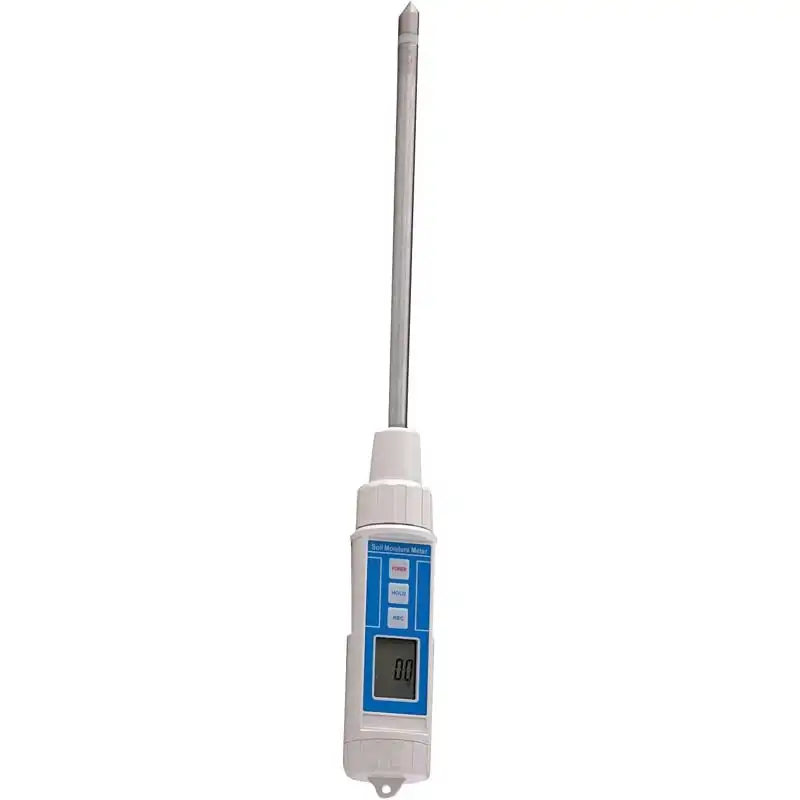
1. General Tools DSMM500 Precision Digital Soil Moisture Meter
The General Tools DSMM500 is a single-function precision meter from a long-standing U.S. measuring-instrument brand. This one fits commercial growers, agronomists, and row-crop farmers who need a rugged build for daily field use. The 7.9-inch heavy-duty probe stays straight in compost and field rows, and the IP65 housing handles rain and spray. Single-function design is the trade-off and the strength here, since nothing splits accuracy across pH, light, or fertility sensors.
PROS
- Long 7.9 inch probe
- IP65 sealed housing
- Min and max memory
- Fast 0.8 second sampling
CONS
- Batteries not included
- Moisture reading only
Specifications:
- Probe length: 7.9 inches (202 mm)
- Moisture range: 0 to 50%
- Accuracy: ±5% + 5 digits
- Water resistance: IP65, CE/RoHS approved
- Power: 4 AAA batteries (not included)
- Sampling time: 0.8 seconds
- Warranty: 1 year
Owner reports consistently note the build, though some describe the screen scratching over time. If you want extra readings, the HSLGOVE 7-in-One covers more bases.
A solid pick for commercial fields where probe durability beats extra sensors.
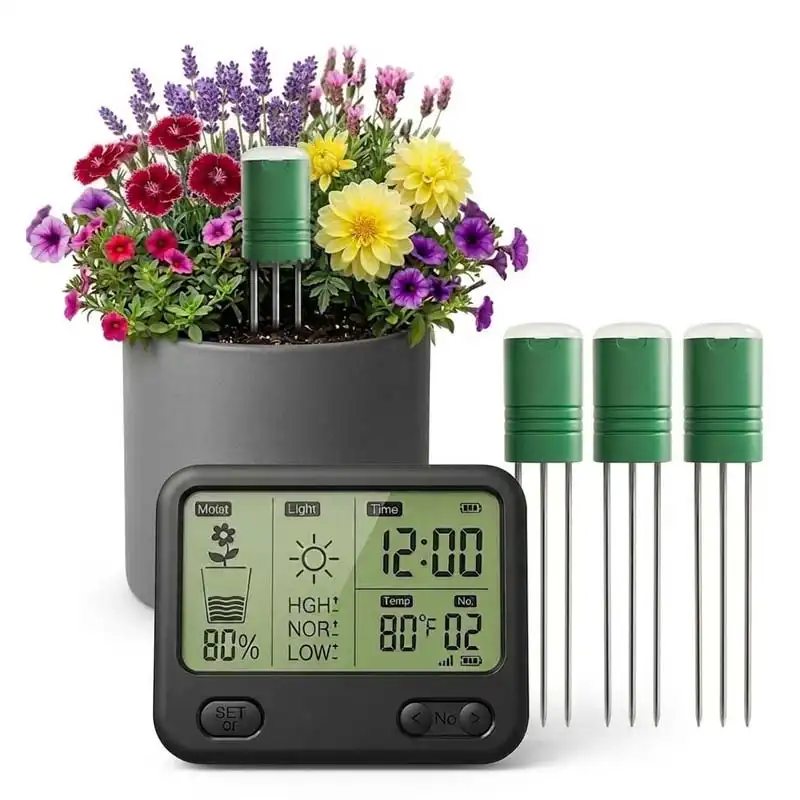
2. Vodeson Soil Moisture Meter
Vodeson sells a 4-in-1 wireless soil monitoring system built on TDR (Time Domain Reflectometry) technology. TDR holds accuracy better than basic resistive probes. This one fits gardeners managing multiple beds, rows, or orchard zones from one indoor display. The kit ships with one LCD console plus four wireless probes, expandable up to 12 zones. True soil temperature matters here, since it shows cold ground before you plant into it.
PROS
- Twelve zones one display
- Reads true soil temperature
- Adjustable low water alert
- Long alkaline battery life
CONS
- Not rated for gravel, perlite, coir, or coarse sand
Specifications:
- Sensor type: TDR
- RF range: 230 ft (open area)
- Reads: moisture, soil temperature, sunlight, time
- Probe rating: IPX5 waterproof
- Battery life: 8 to 12 months (AA + AAA, included)
- Expandable: up to 12 zones
Owner reports consistently note dropouts past 150 ft when walls or trees block the signal. The Dr.meter S10 is a similar multi-zone alternative without TDR accuracy.
A strong pick for spread-out gardens and orchards needing zone-by-zone data.
3. Dr.meter S10 Digital Soil Moisture Sensor
The Dr.meter S10 is a 4-in-1 wireless plant moisture system from a well-known garden-tech brand. This one fits indoor plant collectors and small-greenhouse growers who track many pots from one display. One console links up to 12 probes within a 300-foot range, with custom humidity alerts per plant. The screen promotes whichever probe reads driest, so the pot that needs attention surfaces on its own.
PROS
- Twelve probe support
- Battery free main display
- Per plant moisture alerts
- Auto priority for driest probe
CONS
- Short probe suits containers only
Specifications:
- Reads: soil moisture, light, time, ambient temperature
- Wireless range: 300 ft (open area)
- Multi-probe: connects up to 12 probes
- Probe rating: IPX5 waterproof
- Display: no batteries required
- Use: indoor and outdoor
Owner reports consistently note the multi-probe setup works well, but warn that the temperature label misleads buyers expecting soil temperature. The Vodeson with TDR is a more accurate alternative.
A smart pick for houseplant and greenhouse owners watching many pots at once.
4. LKBird 8-in-1 Soil Moisture pH Meter
LKBird is a smart-garden brand selling an 8-in-1 Bluetooth soil tester paired with the “Kactoily” mobile app. This one fits home gardeners and hobby farmers who want one tool for full soil chemistry and trend tracking. The aluminum alloy probe reads eight metrics in seconds and syncs data straight to the phone. Calibration powders ship in the box, which is rare at this level and worth using before the first reading.
PROS
- Eight metrics one insertion
- App calibration with powders
- Season long trend logging
- Weather resistant body
CONS
- Aluminum probe corrodes if left wet
Specifications:
- Reads: pH, moisture, temperature, light, salinity, fertility, conductivity, air humidity
- pH range: 3.0 to 10.0 (±0.1)
- EC precision: 0.01 mS/cm
- Probe insertion depth: 2.7 inches
- Material: aluminum alloy probe, ABS body
- Connectivity: Bluetooth + app
Owner reports consistently note fast readings, alongside sync failures on phones running older Bluetooth stacks. The HSLGOVE 7-in-One is a no-app alternative.
A versatile pick for home gardeners wanting full lab-style data without buying separate tools.
5. YINMIK Digital Soil Moisture Meter
The YINMIK YK-S02 is a digital meter built around FDR (Frequency Domain Reflectometry) sensing for steady accuracy. This one fits hydroponic growers and indoor farmers who test both soil and nutrient water solutions. The single LCD shows moisture, EC (electrical conductivity), and soil temperature on one screen with no app required. Reading EC alongside moisture is the real advantage, since nutrient strength and water content move together in a recirculating system.
PROS
- FDR beats resistive accuracy
- Reads true soil temperature
- Works in nutrient solution
- No app required
CONS
- No wireless logging
Specifications:
- Sensor type: FDR
- Moisture range: 0 to 100%
- EC range: 0.01 to 20.00 mS/cm
- Reads: moisture, EC, soil temperature
- Use: soil and water/hydroponic
- Display: digital LCD
Owner reports consistently point to the dual soil-and-water capability as the reason for the purchase. The LKBird 8-in-1 covers more readings if pH matters more than hydroponic use.
A strong pick for hydroponic setups and growers who care most about accurate moisture and nutrient data.
6. YAMRON 4-in-1 Backlit Digital Soil Moisture Meter
YAMRON sells a budget-friendly 4-in-1 digital soil tester with a large backlit LCD. This one fits beginner gardeners and home plant owners who want readable results in low light without spending much. The 4-inch probe inserts about 10 cm into the soil and returns a reading in roughly 10 seconds. Backlighting earns its keep at dusk, which is when most home watering actually happens.
PROS
- Backlit screen reads at dusk
- Head tilts 45 degrees
- Four readings one probe
- Low cost per function
CONS
- Batteries not included
Specifications:
- Reads: moisture, pH, temperature, sunlight
- Probe insertion: 4 inches (10 cm)
- Display: backlit LCD with 45° rotating head
- Power: 4 × AAA 1.5V batteries (not included)
- Operating range: 32°F to 122°F
- Use: indoor and outdoor
Owner reports consistently praise the readable display, while longer-term users describe drift after a season or two. The LKBird 8-in-1 is a step up with app sync and more readings.
A good budget pick for new gardeners who want clear multi-readings on one screen.
7. ECOWITT WH51 Soil Moisture Tester
The ECOWITT WH51 is a wireless soil moisture sensor from a popular weather-station brand. This one fits owners of ECOWITT or compatible weather systems who want soil data added to their existing setup. Important: it cannot work alone. You need a separate ECOWITT gateway (GW1100, GW2000, or compatible console, sold separately) to view readings. Once linked, soil moisture graphs beside rainfall on the same dashboard, which makes irrigation decisions far easier to justify.
PROS
- IP66 outdoor sealing
- Eight sensors per gateway
- Graphs and email alerts
- Updates every 70 seconds
CONS
- Gateway required, sold separately
Specifications:
- Reads: soil moisture only (0 to 100%)
- Wireless range: up to 100 m (open field)
- Update rate: every 70 seconds
- Water resistance: IP66
- Power: 1 × AA battery (45 to 60 day life per user reports)
- Frequency: 915 MHz (NA), 868 MHz (EU)
Owner reports consistently name the integration as the draw. Battery life runs closer to 45 to 60 days than a full season. The RAINPOINT smart meter is a standalone alternative.
A smart pick for ECOWITT owners adding soil monitoring to their existing weather setup.
8. RAINPOINT Smart Digital Wireless Plant Moisture Meter
RAINPOINT is a smart-garden brand offering a leave-in soil meter with WiFi-hub integration. This one fits smart-home gardeners building an automated watering system. The meter samples moisture every minute and pairs with the RainPoint Home App. From there it sends phone alerts and triggers compatible RainPoint watering devices. Soil-type calibration inside the app is the feature worth using, since it adjusts the reading for sand, loam, or clay.
PROS
- One minute sampling rate
- Triggers compatible watering valves
- Soil type calibration in app
- Push and email alerts
CONS
- Batteries not included
- First setup takes patience
Specifications:
- Sensor type: capacitive
- Sampling rate: every 1 minute
- Reads: soil moisture (with soil-type adjustment)
- Connectivity: WiFi via mini hub (2.4 GHz only, included)
- Compatibility: pairs with up to 39 RainPoint devices
- Includes: meter, hub, pH strips, screwdriver
Owner reports consistently note reliable automation once paired, following a fiddly first setup. The ECOWITT WH51 is an alternative for weather-station owners.
A top pick for gardeners wanting full smart-watering automation tied to one mobile app.
9. HSLGOVE 7-in-One Digital Soil Moisture Meter
The HSLGOVE 7-in-One blends a traditional dial with a digital LCD chip on the same handle. This one fits home gardeners and beginners who want every reading on one device without app pairing. The 6.8-inch probe uses three-metal construction for durability, and readings settle in 3 to 5 minutes. That probe length is the standout, since it reaches raised bed and shrub roots that most multi-function meters miss.
PROS
- Long 6.8 inch probe
- Seven readings one insertion
- Single probe spares roots
- Dual analog and digital readout
CONS
- Reading settles in 3 to 5 minutes
Specifications:
- Reads: moisture, pH, fertility (NPK), light, soil temperature, air humidity, ambient temperature
- Probe length: 6.8 inches
- Probe material: 3-metal blend
- Display: 1.6-inch LCD + analog dial
- Power: 3 batteries (replace all together)
- Use: indoor and outdoor
Owner reports consistently praise the longer probe and full readings, though slow read times frustrate busy growers. The LKBird 8-in-1 is faster with app sync.
A solid pick for home gardeners wanting an all-in-one analog and digital combo.
Buying Guide: What to Look for in a Digital Soil Moisture Meter
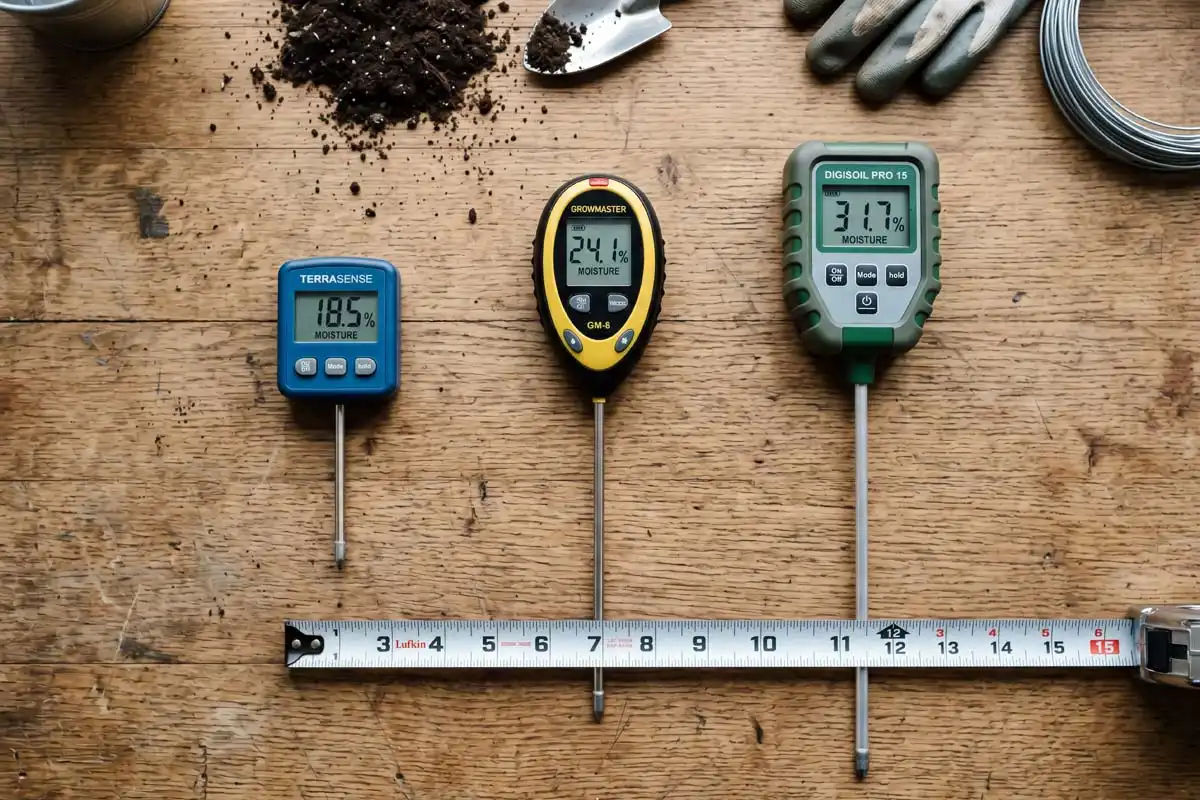
The right meter depends on what you grow, where you grow it, and how often you test. Six features separate a tool that lasts from one that drifts by the second season.
Probe Length and Material
Match probe length to the use case. A 3-inch probe handles houseplants and seed trays. A 6 to 8-inch probe works for raised beds and most vegetable crops. A 10 to 15-inch probe reaches the root zone in field crops, compost piles, and orchards. Stainless steel probes resist rust. Non-metallic dielectric probes resist corrosion better and last longer in wet soil.
Accuracy and Measurement Range
Most meters read 0 to 50% volumetric water content (VWC) or use a 1 to 10 scale. Look for accuracy of plus or minus 5% or better. A user-calibrated model lets you adjust readings for sandy, loamy, or clay soils. University of Minnesota Extension prefers site-specific calibration for capacitance and FDR sensors. Clay content and salinity both bias the result. A meter with no calibration path drifts on your ground and stays drifted.
Display and Readability
A backlit LCD makes outdoor reading easier in low light. Large digits and a percentage readout beat a small dial. Some meters tilt the display 90 degrees so you can read without bending over the plant. Across fifty checks in a season, that tilt saves more than it sounds like.
Battery Life and Power Source
Most digital meters run on AAA or AA batteries. WiFi and Bluetooth models use rechargeable cells. Leave-in sensors reporting every minute drain far faster than handhelds used for spot checks. Auto-shutoff after 60 to 120 seconds saves battery life, and a low-battery indicator prevents bad readings from a fading cell.
Multi-Function vs Single-Function
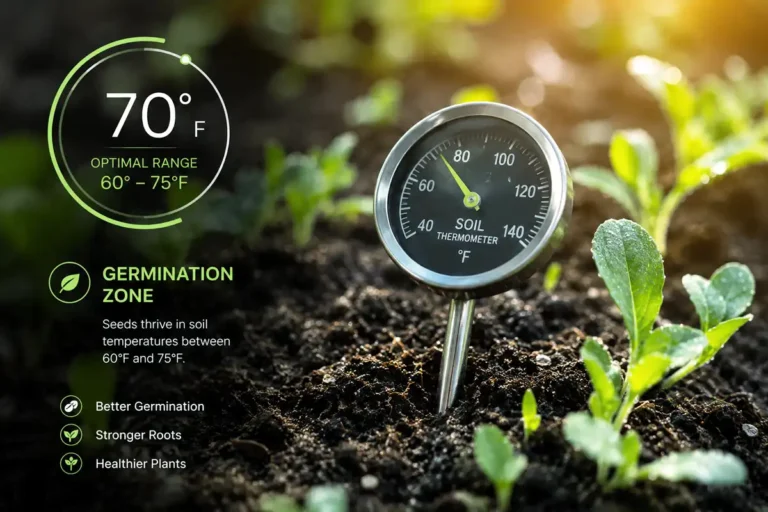
Single-function meters give the most accurate moisture reading. Multi-function units (3-in-1, 4-in-1, 7-in-1) add pH, temperature, fertility, and light readings on the same probe. They cost less per measurement but trade some accuracy for convenience. Where pH drives a lime decision, pair a dedicated moisture meter with a separate soil pH meter. The same logic applies to tracking soil temperature at planting.
Durability and Build Quality
An IP65 rating means the housing handles dust and water spray. IP66 adds resistance to heavy jets, which matters for leave-in sensors. A replaceable probe extends the meter’s life. A one-year warranty is standard; two years signals better build quality.
How to Use a Digital Soil Moisture Meter Correctly
Using the meter the right way is half the battle. A bad reading sends you down the wrong watering path. Follow the same routine every time so two readings stay comparable.
- Clear the soil surface. Brush away mulch, leaves, and rocks at the test spot. Hard objects bend the probe.
- Turn the meter on. Press the power button and wait for the display to settle.
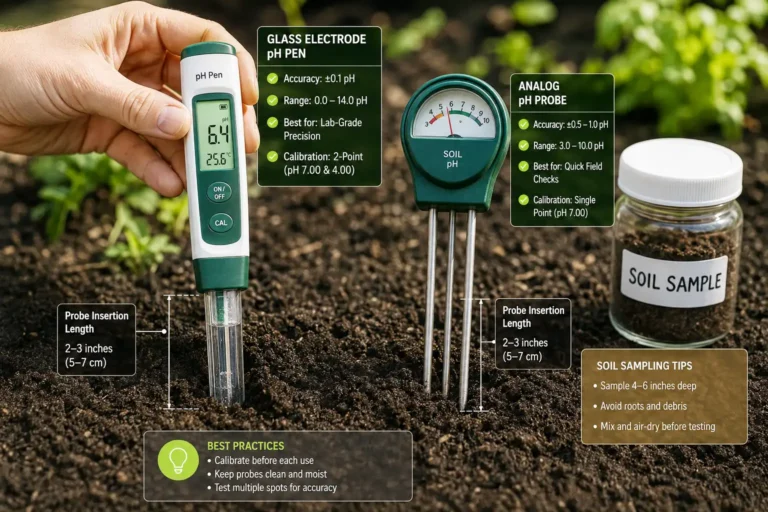
- Insert the probe at the root zone. Push the probe straight down to two-thirds or full depth. For seedlings, aim for 2 to 3 inches. For mature crops, 6 to 8 inches works.
- Wait 10 to 30 seconds. Let the reading stabilize before you record it.
- Take 3 to 5 readings. Test different spots in the same bed or row, then average the numbers. USDA NRCS recommends three or more sample sites per field for the same reason.
- Compare to your target range. Judge the number against your own soil’s field capacity, not against a universal figure. The next section explains how to find it.
- Wipe the probe. Clean the metal with a dry cloth before storage.
For deeper checks, USDA NRCS samples in one-foot increments down through the root zone. On packed or stony ground, open a pilot hole first with a soil sampling probe rather than forcing the meter.
How to Read the Soil Moisture Readings
A 1 to 10 dial reading is relative, not absolute. It compares conductivity against a fixed internal reference, so the bands describe the dial rather than a measured water content:
- 1 to 3 (dry): Water soon. Roots are working hard for what is left.
- 4 to 7 (moist): The working range for most vegetables, herbs, and turf.
- 8 to 10 (wet): Hold off watering. Risk of root rot rises.
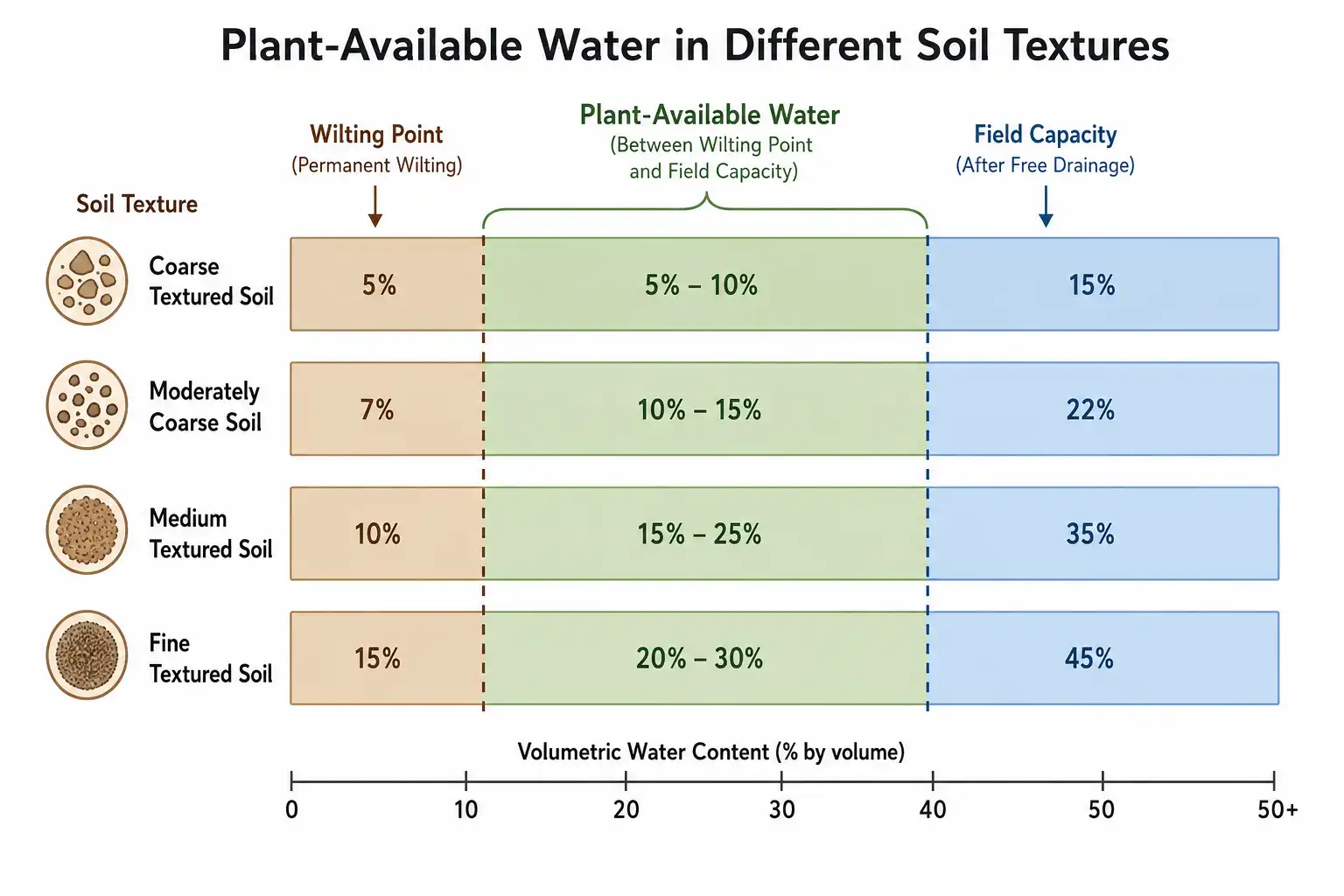
Percentage meters report VWC, and the right target depends entirely on soil texture. Oklahoma State University Extension reports field capacity below 20% VWC in sand and loamy sand, and above 35% in clay. So a 30% reading sits near saturation in one soil and reads dry in the other. Available water capacity tells the same story in inches, using USDA NRCS figures:
| Texture group | Example soils | Available water capacity |
|---|---|---|
| Coarse | Fine sand, loamy fine sand | 0.6 to 1.2 in/ft |
| Moderately coarse | Sandy loam, fine sandy loam | 1.3 to 1.7 in/ft |
| Medium | Sandy clay loam, loam, silt loam | 1.5 to 2.1 in/ft |
| Fine | Clay, clay loam, silty clay loam | 1.6 to 2.4 in/ft |
Find Your Own Field Capacity First
Take a reading 12 to 24 hours after a soaking rain or irrigation. University of Minnesota Extension treats that value as field capacity for your soil. Record it once per field, then judge every later reading against it. USDA NRCS also publishes field capacity, wilting point, and available water capacity by soil map unit through Web Soil Survey.
Then set a refill trigger. Most crops begin showing stress at 30 to 50% depletion of available water, per University of Minnesota Extension. Once you know that trigger, calculating water needs tells you how much to put back. Then drip and sprinkler setups decide how evenly it lands.
Containers Behave Differently
Peat and coir potting mixes hold far more water by volume than field soil. Succulents sit comfortably at 10 to 20%, while leafy greens in a rich mix run 50 to 60%. Those figures apply to container media only. Never carry a pot reading across to a field, or the other way around.
Digital vs Analog Soil Moisture Meters
Digital and analog meters both work, but they fit different users.
- Digital meters give precise readings to one decimal place or as a percentage. They include features like backlit displays, multi-sensor probes, data hold, and Bluetooth. They need batteries and cost more.
- Analog meters show a 1 to 10 scale on a needle dial, often color-coded red, green, and blue. They run with no batteries, work right out of the box, and cost less. Accuracy is lower and reads the same scale on every soil type.
Pick digital if you want exact numbers, multi-function readings, or remote tracking. Pick analog if you want a simple tool for casual checks. USDA NRCS notes that its feel and appearance method reaches roughly 5% accuracy with practice. That is a fair benchmark for an uncalibrated dial too. Many growers keep both: an analog model for fast field walks and a digital model for record keeping.
Common Mistakes to Avoid
A few habits will wreck the meter or give bad data:
- Forcing the probe into rocky or hard-packed soil. This bends or snaps the metal pin. Open a small pilot hole first.
- Leaving the probe in the soil long-term. Constant moisture corrodes the metal and ruins the calibration. Only sensors built to stay buried belong there.
- Testing dry, dusty soil. Contact is poor and the reading runs low. Test it as it is, or move to a spot with better contact. Never wet the ground first, since that destroys the measurement you came for.
- Reading from one spot only. Soil moisture varies across a bed. Always average 3 to 5 readings.
- Submerging the meter body in water. Only the probe is waterproof. Spray and rain can short the LCD housing.
- Skipping calibration. If your meter supports it, calibrate after every season change or soil amendment.
Care and Maintenance Tips
Care extends the meter’s life by years. Wipe the probe clean with a dry cloth after every reading, since fertilizer salts etch bare metal slowly. Store the meter in a dry case away from sunlight. Pull the batteries out if you will not use the meter for more than a month. Replace batteries when the low-battery icon shows. Recalibrate at the start of each growing season if your model supports it. Replace the probe once the pins pit or bend, because damaged pins read low and never recover.
FAQs on Soil Moisture Meters
Are digital soil moisture meters accurate?
What is a healthy soil moisture level?
Can I leave a digital soil moisture meter in the soil?
How deep should I insert the probe?
Do digital soil moisture meters need calibration?
What is the difference between a digital and analog soil moisture meter?
Can I use a digital soil moisture meter for indoor and outdoor plants?
Choosing the Right Meter for Your Setup
Buy for probe length and sensing type first, since those two specs decide whether a reading means anything. The Dr.meter S10 covers most home users. The General Tools DSMM500 fits commercial fields, while the ECOWITT WH51 handles smart greenhouses. Whichever you pick, measure your soil’s field capacity after a soaking rain and judge every later reading against that baseline.