How to Grow Lettuce in Water (Hydroponic + Regrow Guide)
You can grow lettuce in water two ways: regrow a leftover stump for a few extra leaves, or run a hydroponic setup for full heads. One is a fun, low-effort trick. The other gives you real salad.
To grow lettuce in water, set a cut stump in shallow water on a sunny sill for a few garnish leaves, or suspend seedlings over a nutrient solution (pH 5.5 to 6.0) for full heads in 30 to 45 days.
Can You Actually Grow Lettuce in Water?
Yes, and you have two clear paths. Regrowing a leftover stump in plain water gives you a few small leaves, nothing more. Growing lettuce hydroponically, in water mixed with nutrients, gives you full, crisp heads.
The difference comes down to nutrients. Plain water feeds nothing, and the stump has no nutrients stored in it. A hydroponic nutrient solution feeds everything the plant needs. So if you want real salad, you want the hydroponic route. The stump trick is best for kids, classrooms, or a slow winter afternoon.
This same soilless idea works for other crops too. Some growers even run carrots in a hydroponic system, though leafy greens stay far easier.
To know more: A Beginner’s Guide to Grow Lettuce at Home
What You Need to Get Started
For the stump method, you barely need anything. A leftover lettuce base, a shallow dish, water, and a sunny window cover it.
For hydroponics, gather these:
- An opaque container or a light-proofed jar
- A net cup that fits the lid
- A growing medium such as rockwool, perlite, or LECA
- Hydroponic nutrients made for leafy greens
- A pH test kit and pH Down
- Lettuce seeds or young seedlings
Keep the container opaque. Light hitting the water grows algae, and algae steals oxygen and nutrients from your roots.
How to Regrow Lettuce From a Stump in Water
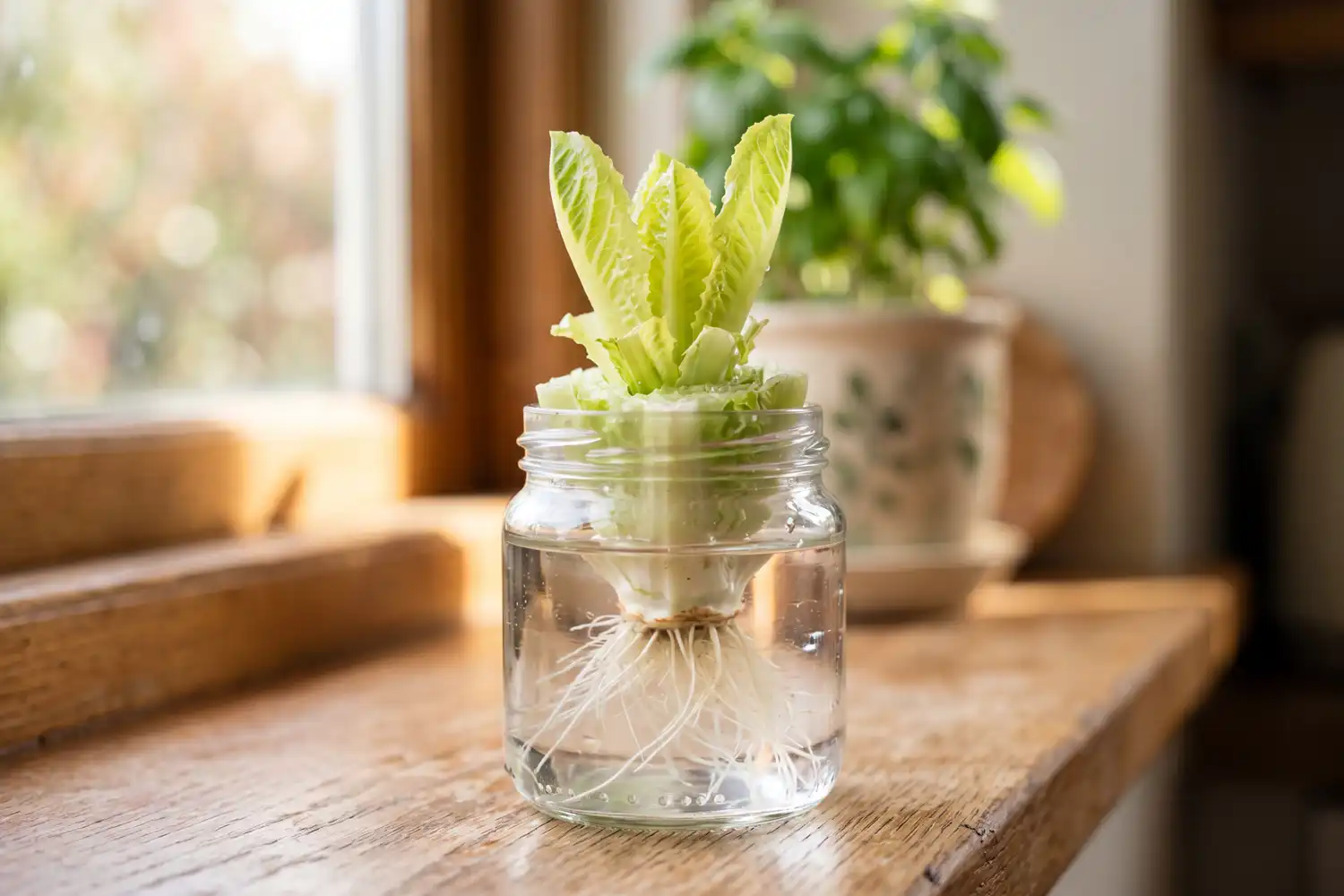
Start with the bottom of a head you already bought. Romaine hearts regrow best, though butterhead, red leaf, and Boston leaf also work.
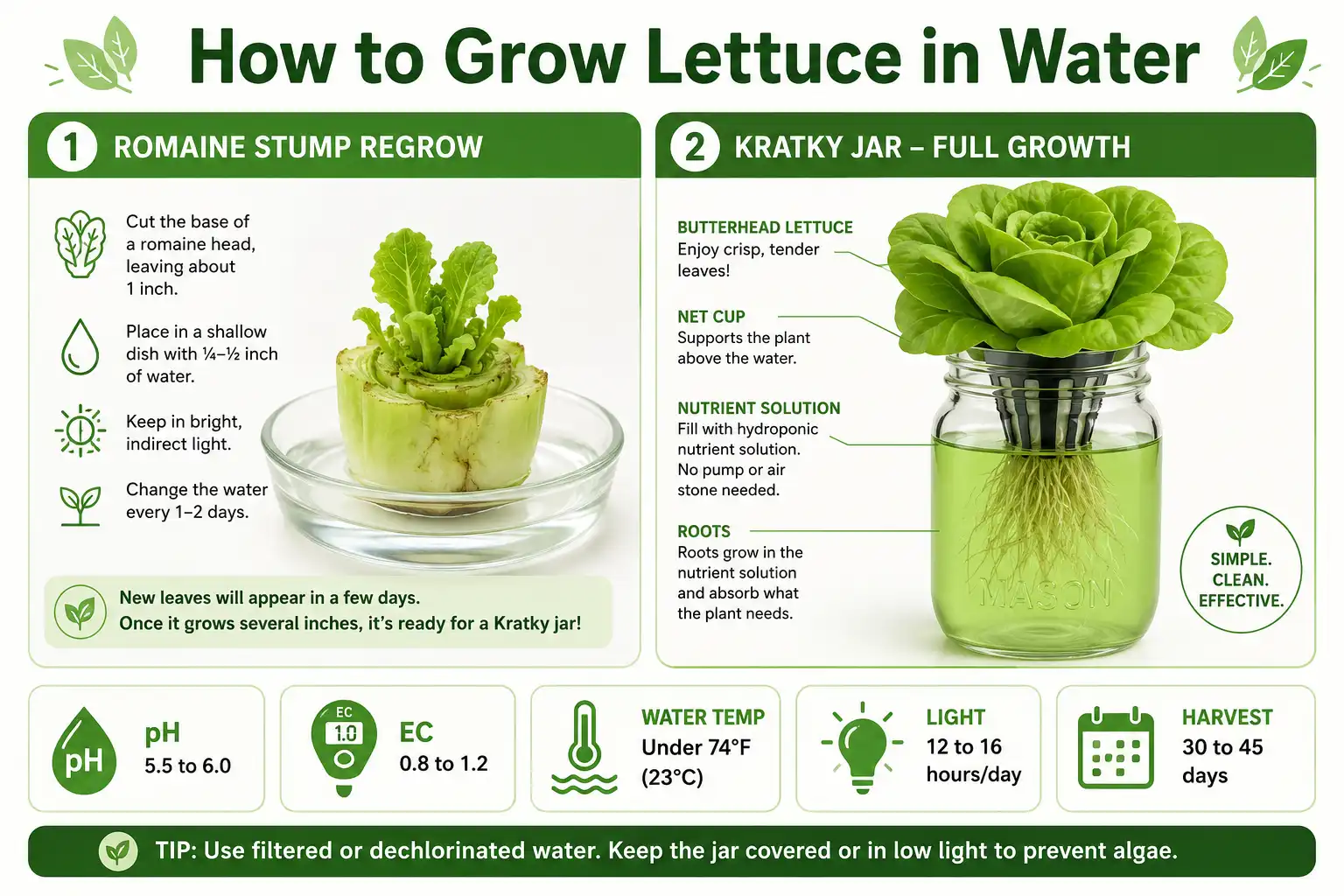
- Cut the leaves off, leaving the bottom 1 to 2 inches of the base intact. More stem means more hidden buds, and more buds means more new leaves.
- Set the stump cut-side up in a shallow dish. Add about 1/2 inch of water. Do not submerge the whole base, or it rots.
- Put the dish on a sunny windowsill. If your window runs cold, set it under a grow light instead.
- Change the water every day or two to keep it clean.
Roots and tiny leaves appear within a couple of days. The center then pushes out fresh growth from buds tucked inside the compressed stem.
How Long Does Regrown Lettuce Last?
About 10 to 12 days, and then growth stops. The leaves reach their full size and the plant has nothing left to give. Trim and use them before day 12, because after that the leaves turn bitter as the plant tries to bolt.
You will get a garnish, maybe enough for one sandwich. You will not get a full head, and the stump will not regrow a second time. For more than a few leaves, move to hydroponics or set a transplant in soil.
How to Grow Lettuce in Water Hydroponically (Full Heads)
This is the method that fills a salad bowl. You grow the plant in water mixed with nutrients, with its roots reaching down into the solution. Two simple systems work great for beginners: the Kratky method and deep water culture.
Most growers start lettuce from seed, then move the seedling into the system. If you are new to starting greens, germinating lettuce seed takes only a few days in a damp rockwool cube.
The Kratky Method (No Pump, No Electricity)
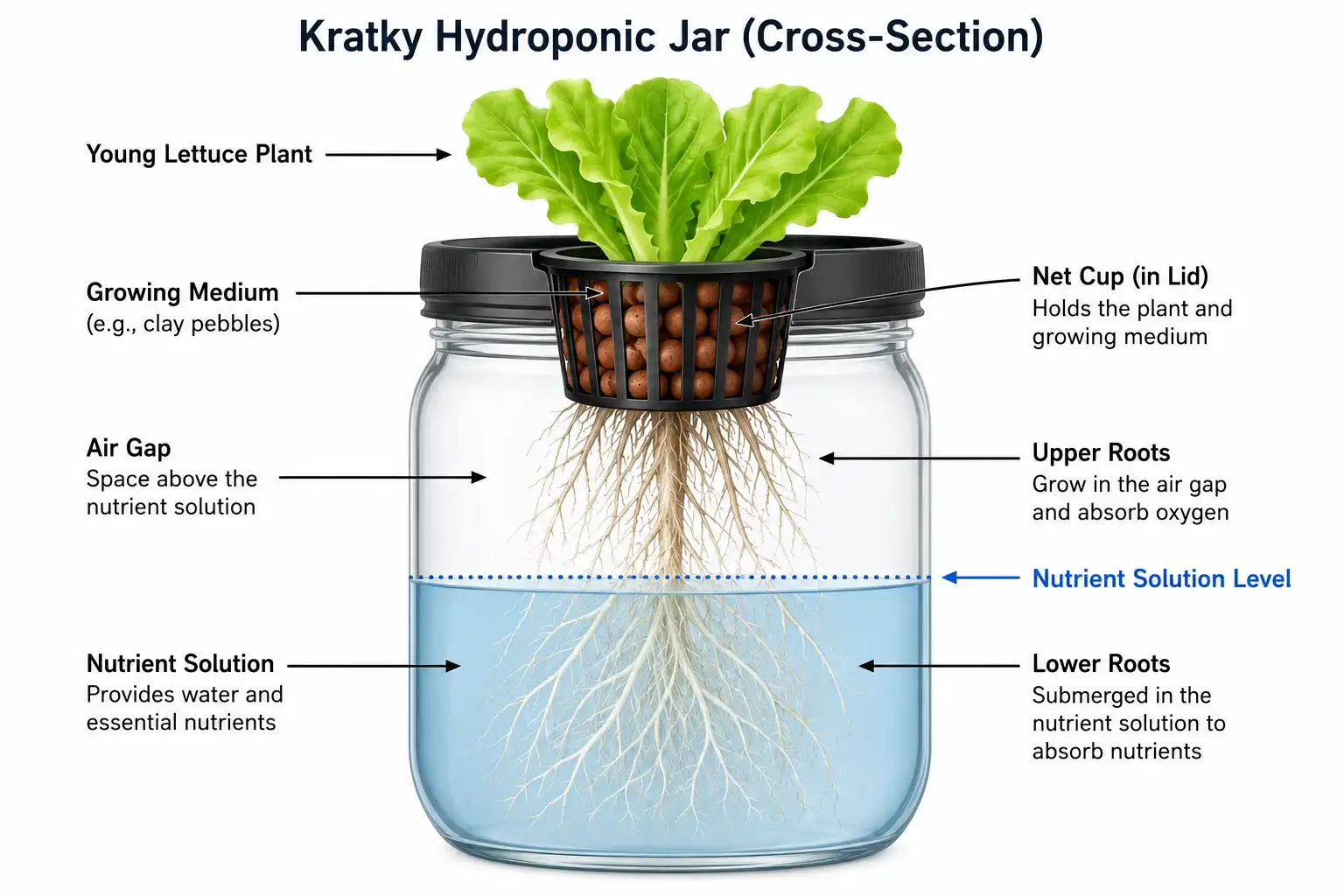
The Kratky method is the simplest hydroponic setup there is. Dr. B.A. Kratky developed it at the University of Hawaii. It uses no pump, no electricity, and no moving parts.
Here is how it works. The plant sits in a net cup on top of a sealed jar of nutrient solution. As the lettuce drinks, the water level drops and an air gap forms. The lower roots stay in the solution for food and water. The upper roots sit in that air gap and pull in oxygen. You set it up once and let it run.
Size the container to the crop. A loose-leaf plant grows well in a half-gallon jar, while a full head wants closer to 1 to 1.5 gallons. Fill the jar once at the start. Do not top it off, because adding more nutrients stacks the strength too high and turns the leaves bitter.
Deep Water Culture (With an Air Pump)
Deep water culture adds an air pump to the same idea. The roots hang fully in the nutrient solution, and an air stone keeps the water full of oxygen.
This system grows lettuce a little faster and supports more plants in one tank. It costs more and needs power, but the steady oxygen builds strong roots and quick growth. For a kitchen counter, Kratky stays simpler. For a basement rack of greens, deep water culture earns its keep.
Mixing the Nutrient Solution: pH and EC
Aim for a pH of 5.5 to 6.0 and a low nutrient strength. Lettuce is a light feeder, so keep the EC around 0.8 to 1.2 mS/cm. Overfeeding is the most common beginner mistake.
Mix your hydroponic nutrients into the water first. Then test and adjust the pH with a few drops of pH Down. Lettuce naturally pushes the pH up as it takes in nitrogen, so check it twice a week and nudge it back down. In a recirculating tank, dump and remix the solution every two weeks to keep the balance right.
Best Lettuce Varieties for Water Growing
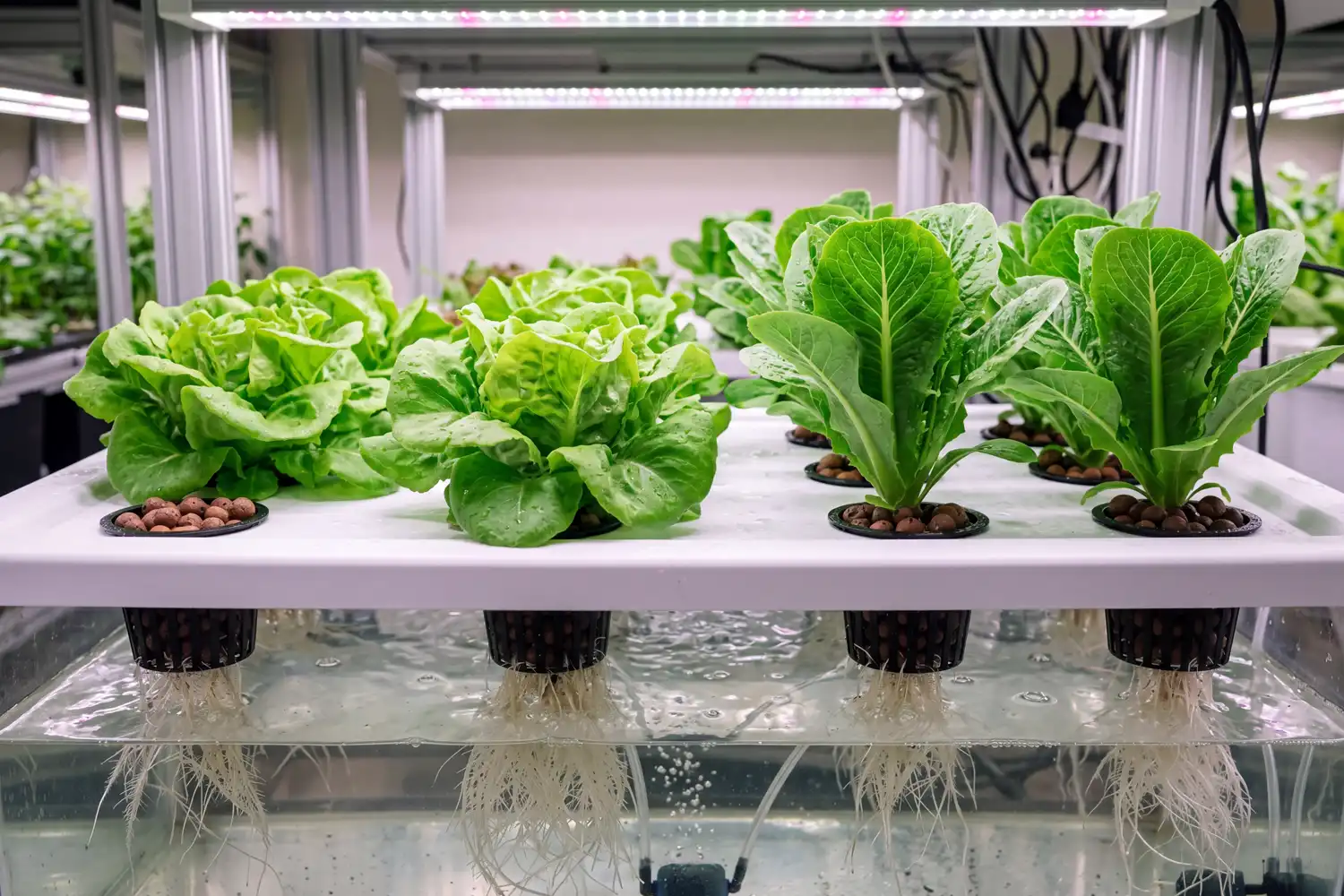
Loose-leaf and butterhead types perform best in water. They grow fast, stay compact, and handle a stagnant reservoir well. Romaine works too and gives you crisp, upright heads.
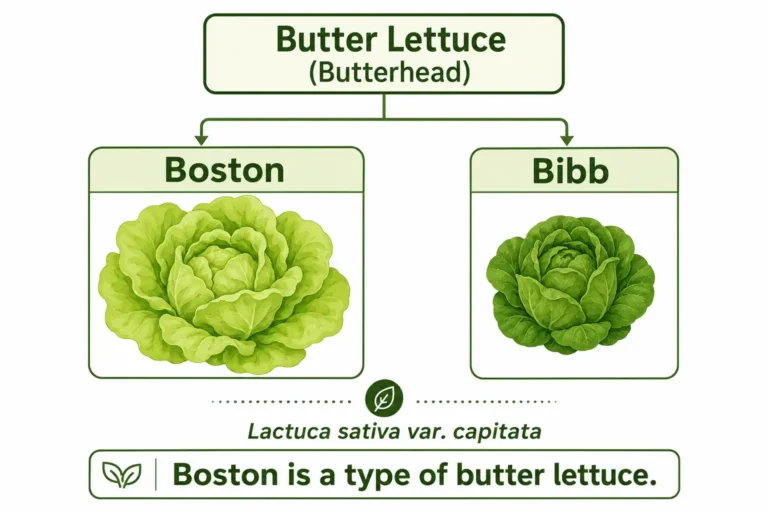
Loose-leaf lettuce lets you cut outer leaves and keep the plant producing, often for two or three pickings. Butterhead forms soft, sweet heads in about 40 to 50 days. If you like a dense, crunchy bite, romaine that resists bolting holds up well in a warm room. For mild, buttery leaves, tender Bibb heads are hard to beat.
Skip crisphead types like iceberg on your first try. They take longer and demand tighter conditions than leaf types.
Light and Temperature for Healthy Roots
Lettuce needs cool water and steady light. Keep the nutrient solution below 74°F. Warm water holds less oxygen and invites root rot, which shows up as brown, slimy roots.
Give plants 12 to 16 hours of light a day. A sunny south window can work, but most indoor growers get faster, fuller heads with lettuce under an LED light. Aim for an air temperature in the 60s to low 70s °F. Run a small fan for airflow. Moving air strengthens stems and helps prevent tip burn.
Common Problems and Easy Fixes
Most trouble traces back to four issues: tip burn, algae, root rot, and yellow leaves. Each one has a clear fix.
Tip burn shows as brown, crispy leaf edges. It comes from a calcium shortage in fast-growing leaves, made worse by low airflow and high humidity. Run a fan and avoid pushing growth too hard with strong nutrients.
Algae turns your water green and slimy. Light is the cause, so block all light from the reservoir with an opaque container or a wrap of foil.
Root rot brings brown, mushy, foul-smelling roots. Warm, low-oxygen water is the trigger. Cool the solution and add an air stone if you need one.
Yellow lower leaves usually mean low nitrogen. Check your nutrient strength and mix a fresh batch if the EC has dropped too far.
When Can You Harvest?
Most water-grown lettuce is ready in 30 to 45 days from seed. Loose-leaf types come first, often around 30 to 38 days. Butterhead and romaine heads take closer to 40 to 50 days.
For cut-and-come-again leaf types, snip the outer leaves once they reach 4 to 5 inches and leave the center to keep growing. That way you get two or three harvests from one plant. For a full head, cut the whole plant at the base when it feels firm and full.
Where to Start in Your Kitchen
If you just want to watch something grow, regrow a romaine stump on the windowsill. It is cheap, fast, and fun. But for lettuce you can actually eat all week, set up a one-gallon Kratky jar with loose-leaf seeds, hold the pH near 5.7, and keep the water cool. That single jar will teach you more about hydroponics than any guide. Once it clicks, scale up to an opaque tote or a deep water culture tank, and you will have fresh greens year round.