How to Plant Lettuce in a Raised Bed for a Longer Harvest
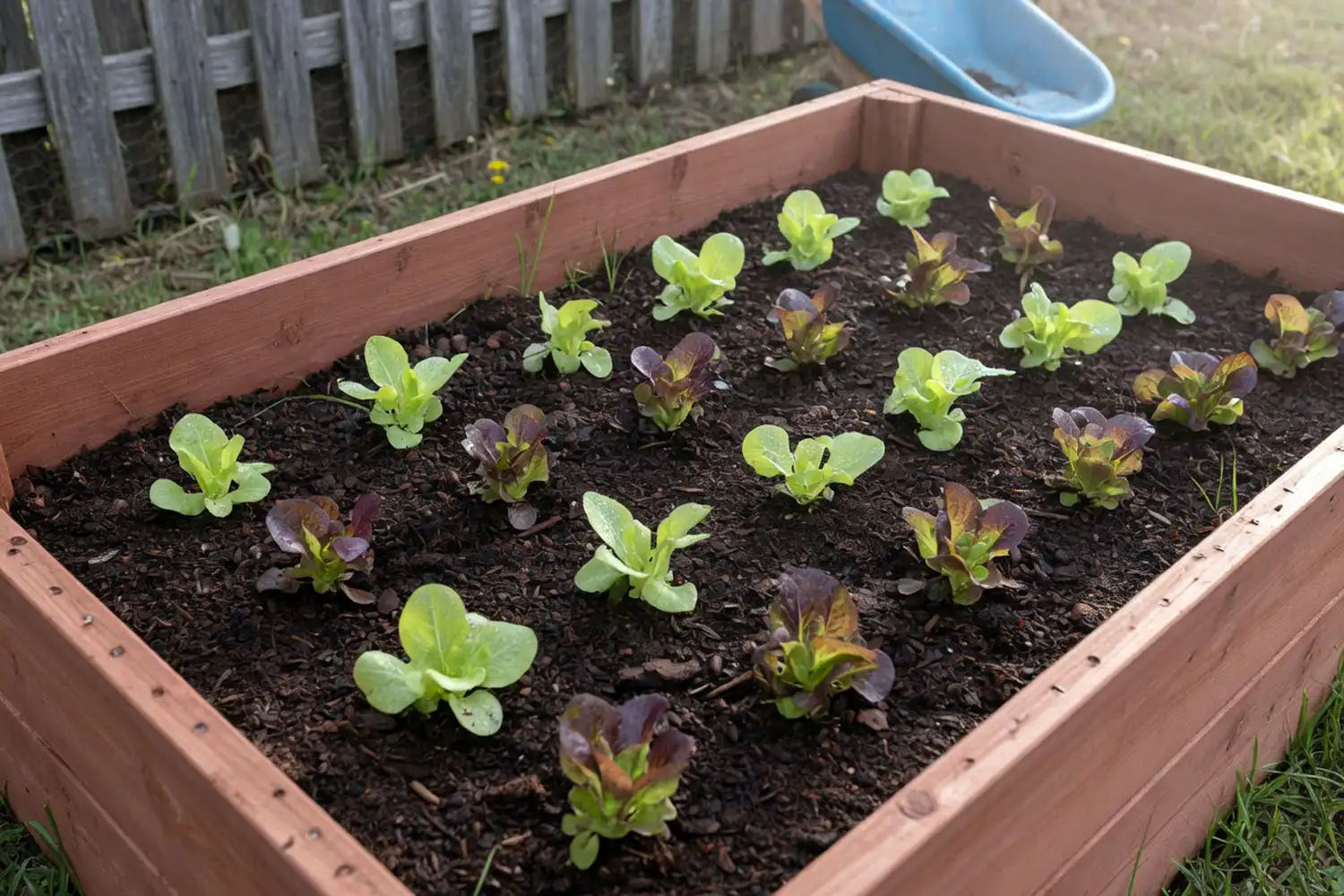
Lettuce thrives in raised beds because the soil warms early, drains fast, and stays loose enough for shallow roots. Knowing how to plant lettuce in a raised bed the right way means crisper heads, fewer pests, and a longer harvest window. Here’s the full process in the plot.
Plant lettuce in a raised bed 4 to 6 weeks before the last frost. Use loose, compost-rich soil at pH 6.0 to 6.8, sow seeds a quarter inch deep, and space plants 6 to 10 inches apart.
Why Raised Beds Are Built for Lettuce
Raised beds give lettuce exactly what it wants: loose, draining soil that warms fast in spring and cools faster than the surrounding ground in summer. Raised beds produce cleaner heads, fewer slugs, and far less soil splash. The defined edges also make spacing and succession planting simple.
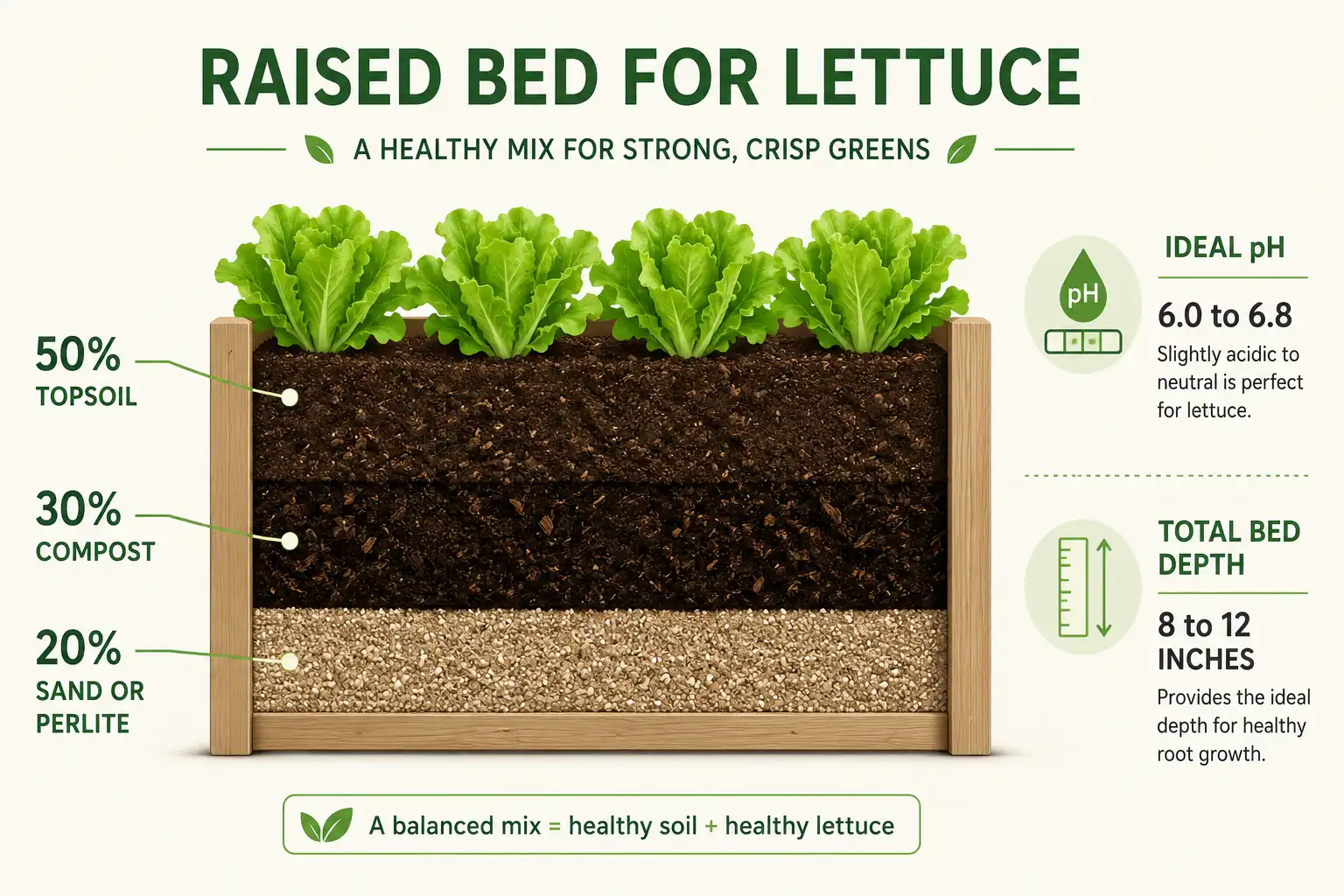
The shallow root system of lettuce (mostly in the top 6 inches) does not need deep beds. An 8 to 12 inch bed depth is plenty. That depth lets you control the soil mix and avoid hardpan or clay layers that ruin germination.
When to Plant Lettuce in a Raised Bed
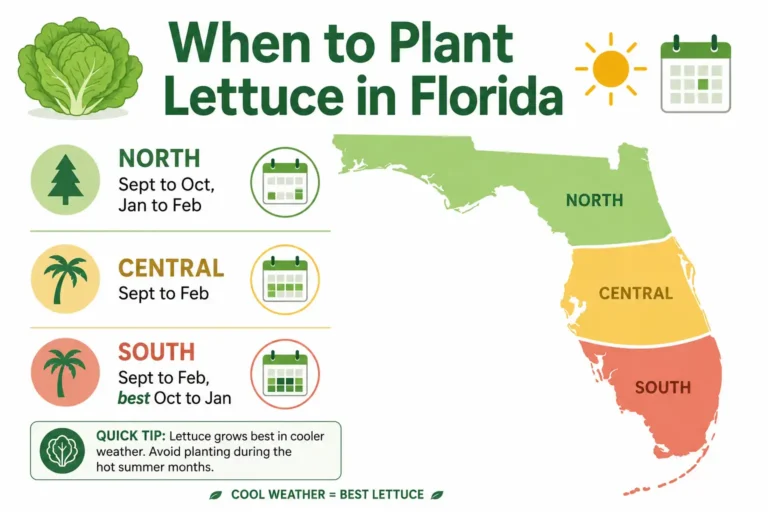
Plant lettuce in a raised bed when soil temperature sits between 40°F and 75°F. Lettuce is a cool-season crop, so the first round typically goes in 4 to 6 weeks before the last spring frost and a second round about 8 weeks before the first fall frost.
In USDA hardiness zone 6, that means mid-March for spring lettuce and mid-August for fall lettuce. Raised beds warm up 1 to 2 weeks ahead of in-ground rows, allowing the spring date to be pushed earlier than flat beds allow.
Skip mid-summer plantings unless you have shade. Once daytime highs cross 80°F for a stretch, lettuce bolts, turns bitter, and stops forming tight heads. For a closer look at germination behavior, see our notes on how long lettuce seeds take to sprout under different conditions.
Best Soil Temperature for Lettuce Seeds
Lettuce seeds germinate best at 60°F to 70°F. They struggle above 80°F because of thermo-dormancy, where the seed simply refuses to sprout. In hot spells, chilling seeds in the fridge for 24 hours before sowing helps break that dormancy.
Best Lettuce Varieties for Raised Beds
The right variety decides half your success in a raised bed. Grow a mix every season.
- Butterhead (Buttercrunch, Tom Thumb): compact, slow to bolt, perfect for the tight footprint of a raised bed.
- Loose-leaf (Black Seeded Simpson, Red Sails): fast, ready in 30 to 45 days, ideal for cut-and-come-again harvest.
- Romaine (Parris Island Cos, Little Gem): upright growth saves space, holds up better in heat.
- Crisphead (Iceberg, Summertime): longer season, needs cooler weather and the most spacing.
Plant at least two types every cycle. Loose-leaf fills the bed fast while butterhead and romaine take their time. That staggered maturity gives me lettuce on the table for weeks instead of all at once.
How to Prepare the Soil
Lettuce wants loose, fertile, well-drained soil with a pH between 6.0 and 6.8. Fill new raised beds with a mix of:
- 50% high-quality topsoil
- 30% finished compost
- 20% coarse sand or perlite
Before planting, work in 2 inches of fresh compost across the surface and rake it into the top 4 to 6 inches. That gives the seedlings instant nitrogen and improves moisture retention without making the bed soggy.
If you have not tested your bed yet, do it. A short soil testing routine for small farms and gardens saves you a wasted season. Lettuce in low-pH soil turns yellow and stalls. Above 7.0, calcium and magnesium uptake suffers, and you will see tip burn on outer leaves.
Adding Organic Matter Without Burning Seedlings
Use only fully finished compost. Fresh manure or hot compost burns lettuce roots fast because the seedlings sit in the top inch of soil. If your compost still smells like ammonia, let it cure another month before using it on lettuce beds.
How to Plant Lettuce in a Raised Bed Step by Step
Follow these steps the same way every season and you will get consistent stands.
- Level and rake the surface so the top inch is fine-textured. Lettuce seeds are tiny and need contact with smooth soil to germinate evenly.
- Mark rows or grid spots based on variety. Use 6 inches for loose-leaf, 8 inches for butterhead, and 10 to 12 inches for romaine and crisphead.
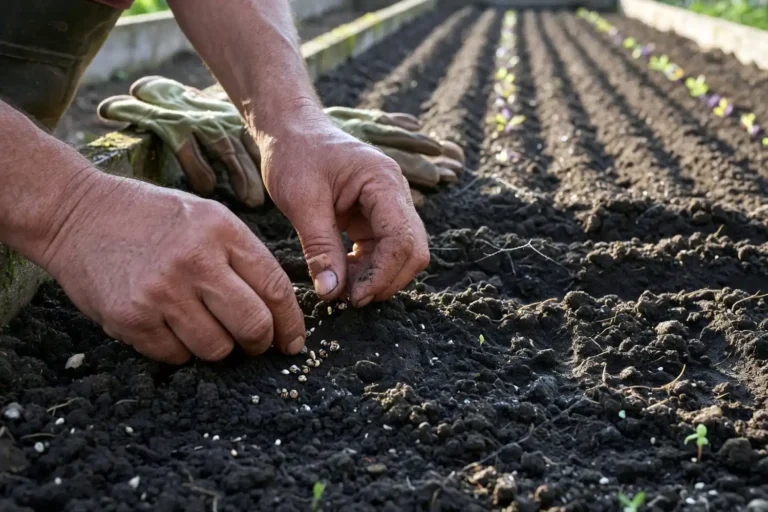
- Sow seeds a quarter inch deep. Any deeper and germination drops sharply. Drop 2 to 3 seeds per spot to insure against gaps.
- Press, do not bury. Light pressure with your palm or a small board gives the seed-to-soil contact lettuce needs. Then sprinkle a thin dusting of fine compost on top.
- Water with a fine mist. A heavy stream washes the seeds out of place. Use a watering can with a rose head or a low-pressure mister.
- Mark each row so you remember varieties and planting dates. This matters more than you think once succession planting kicks in.
- Thin to one plant per spot once seedlings have two true leaves. Snip extras at the soil line with scissors. Pulling damages the keeper’s roots.
For broader sowing technique that applies to most small seeds, our breakdown on the direct sowing versus transplant trade-off covers the call in more depth.
Direct Sow or Transplants
Direct sowing works best for loose-leaf and butterhead. The seeds germinate fast, and the seedlings dislike root disturbance. For crisphead and romaine in short-season setups, start transplants indoors 4 weeks early and set them out at the 4-leaf stage. Hardening off for 5 to 7 days is non-negotiable.
Spacing and Depth That Actually Work
Spacing decides whether you get tight heads or floppy loose-leaf. Lettuce planted too close shades itself, traps moisture, and invites mildew.
| Lettuce Type | Spacing | Sowing Depth |
|---|---|---|
| Loose-leaf | 6 inches | 1/4 inch |
| Butterhead | 8 inches | 1/4 inch |
| Romaine | 10 inches | 1/4 inch |
| Crisphead | 12 inches | 1/4 inch |
Use a square-foot layout on a 4×8 raised bed. That gives me 32 grid squares, which to plant in staggered batches. Every 10 to 14 days, another section typically gets sown. The result is rolling harvest from April through June, then again September through November.
You can dig deeper into row-by-row crop spacing principles for small plots if you want to plan a full layout.
Watering and Feeding Through the Season
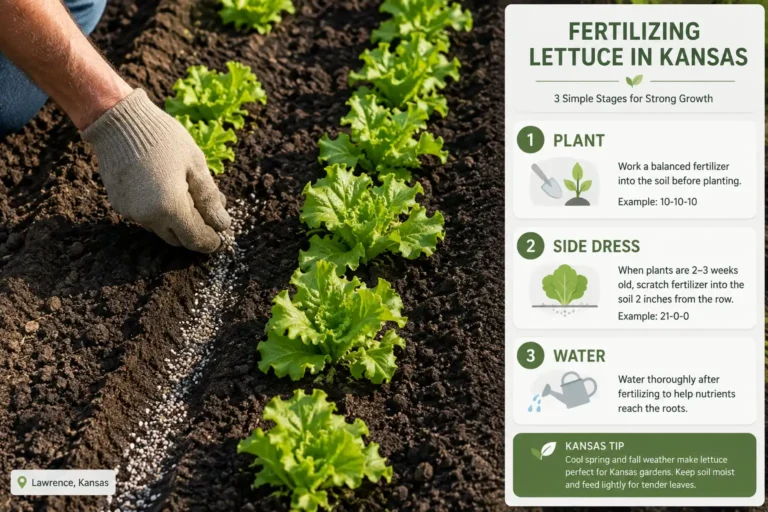
Lettuce roots stay in the top 6 inches, so the soil surface must stay consistently moist but never waterlogged. Water early morning, deep enough to wet the root zone, then let the surface dry slightly between waterings. In peak Kansas heat, that means once daily for shallow seedlings and every other day for mature heads.
Drip irrigation is the cleanest method for raised bed lettuce. It keeps the leaves dry, prevents soil splash, and cuts disease pressure. For choosing a system, this side-by-side look at different irrigation methods for small beds covers what works.
Fertilizer Schedule
Feed lettuce light and often. Nitrogen drives leaf growth, which is the entire crop in lettuce. Side-dress with diluted fish emulsion (1 tablespoon per gallon) or a balanced organic fertilizer every 2 weeks after the first true leaves appear. Skip the heavy NPK spikes. Lettuce overfed on nitrogen grows soft, watery leaves that wilt fast after harvest.
For a detailed look at nitrogen rates and bed-level fertility for cool-season greens, Penn State Extension’s lettuce production guide lines up with what to see in the beds.
Common Problems and How to Handle Them
Bolting
Bolting happens when lettuce shifts from leaf production to flowering. Heat and long days trigger it. Once a plant bolts, the leaves turn bitter within days. Plant heat-tolerant varieties like Jericho romaine, mulch heavily with straw to keep roots cool, and harvest before the plant elongates.
Tip Burn
Tip burn is a calcium uptake problem, not a calcium shortage. The plant grows faster than it can move calcium to the leaf margins. Even watering, mulch, and avoiding nitrogen overload prevent it.
Slugs and Aphids
Slugs love wet, sheltered raised beds. Trap them with shallow dishes of beer set flush with the soil and hand-pick at dusk. Aphids respond to a strong water spray every 3 days and beneficial insects like lacewings.
Damping Off
Damping off kills seedlings at the soil line. It is a fungal issue caused by overwatering, poor drainage, or fresh manure. Our notes on protecting seedlings from damping-off cover the prevention steps in full.
Harvesting for the Longest Yield
Lettuce gives you two harvest options, and the right one depends on the variety.
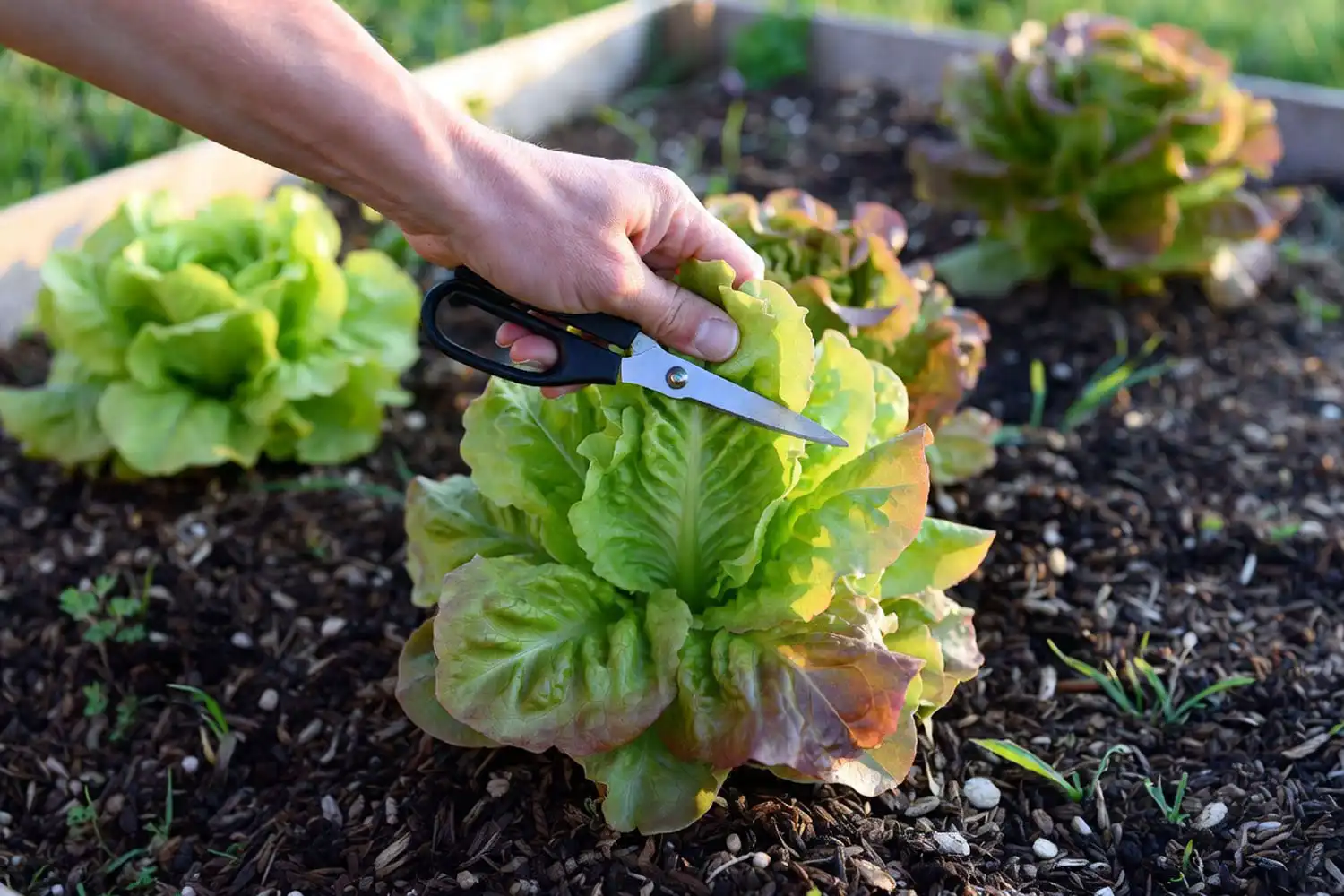
Cut-and-come-again works for loose-leaf and most butterhead. Snip outer leaves about an inch above the soil. The plant keeps producing from the center for 3 to 5 more harvests over 6 weeks.
Whole-head harvest is for crisphead, mature romaine, and any butterhead you let fully form. Cut at the base in the early morning when the leaves hold the most water. Move heads to the fridge within an hour to lock in crispness.
Stop harvesting once stems elongate or leaves taste bitter. That signals bolting. Pull the plant, compost it, and replace with a fresh sowing if temperatures still allow.
For extending leafy green production through cooler months, our piece on growing lettuce through winter conditions explains the cold-frame approach.
What This Looks Like in the Bed
A 4×8 raised bed planted right gives me roughly 30 to 40 heads per cycle, with three cycles a year (spring, fall, and early winter under cover). The system runs on shallow watering, fresh compost twice a season, and rotating varieties to dodge bolting. Get the soil right, sow shallow, space honestly, and harvest before the plant tells you it is done. That is the whole job.