How to Hand Pollinate Zucchini: 4 Easy Steps for More Fruit
Zucchini plants full of flowers but short on fruit usually have a pollination problem. Learning how to hand pollinate zucchini fixes it in minutes each morning. This guide covers flower identification, timing, two transfer methods, and what to check when fruit still fails.
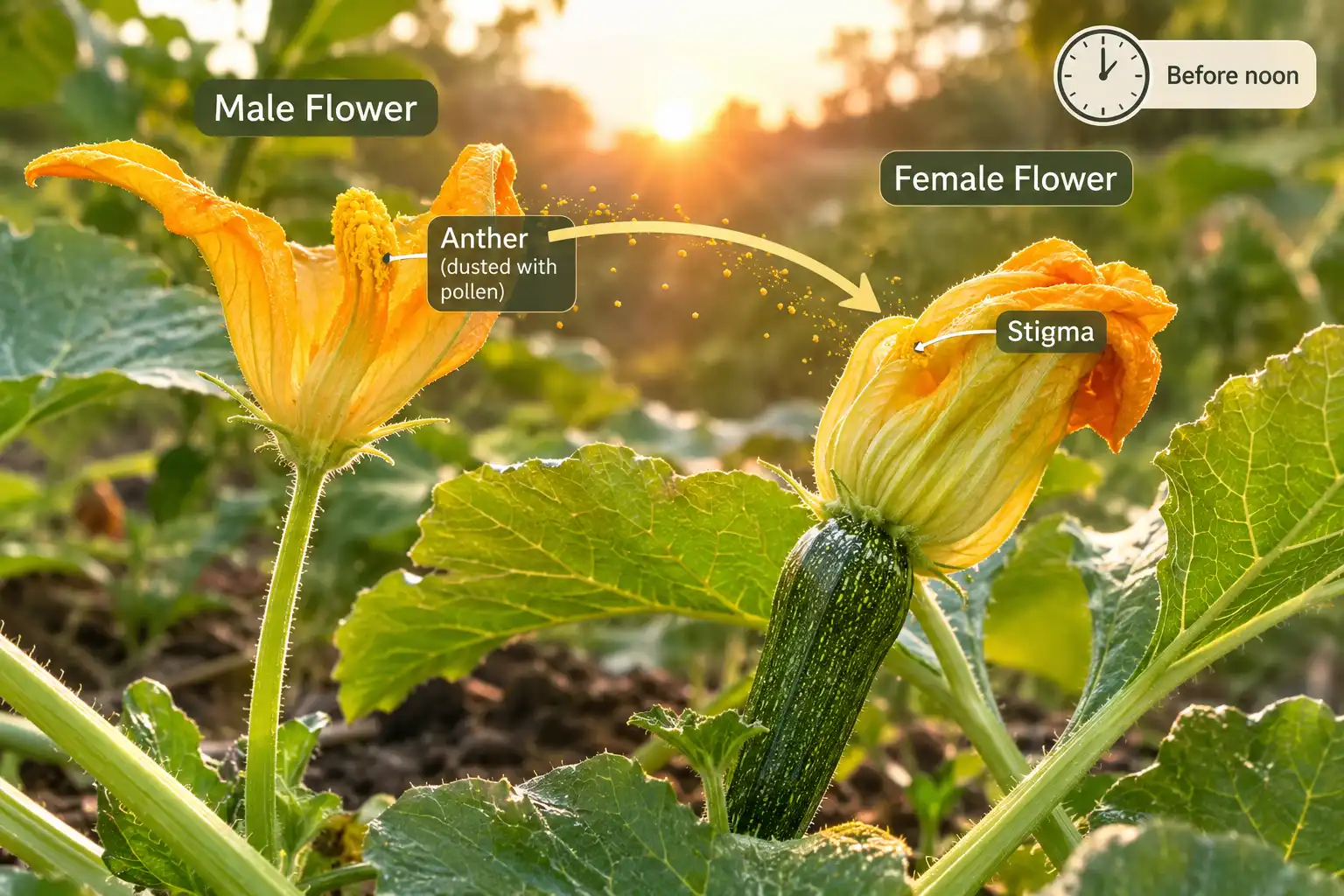
Hand pollinate zucchini early each morning, while flowers are fresh. Pick an open male flower and peel off its petals. Then rub its pollen-covered anther onto the stigma of a female flower, which has a tiny zucchini at its base.
Why Zucchini Flowers Need Pollination
Zucchini (Cucurbita pepo) grows separate male and female flowers on the same plant. Only the female flowers turn into fruit. First, though, pollen has to travel from the male anther to the female stigma.
According to UF/IFAS Extension, squash pollen is heavy and sticky, and the flowers are deep. As a result, wind moves almost none of it. Bees do this job in most gardens. When they miss a flower, you step in with a fingertip or a brush.
The time limit is tight. Each flower opens once and usually closes around noon, per UF/IFAS. After that, the chance for that flower is gone. A female flower that gets no pollen drops its baby fruit within days. Meanwhile, one that gets too little pollen often grows into a lopsided, misshapen zucchini.
Also know: Plant After Zucchini
How to Tell Male and Female Zucchini Flowers Apart
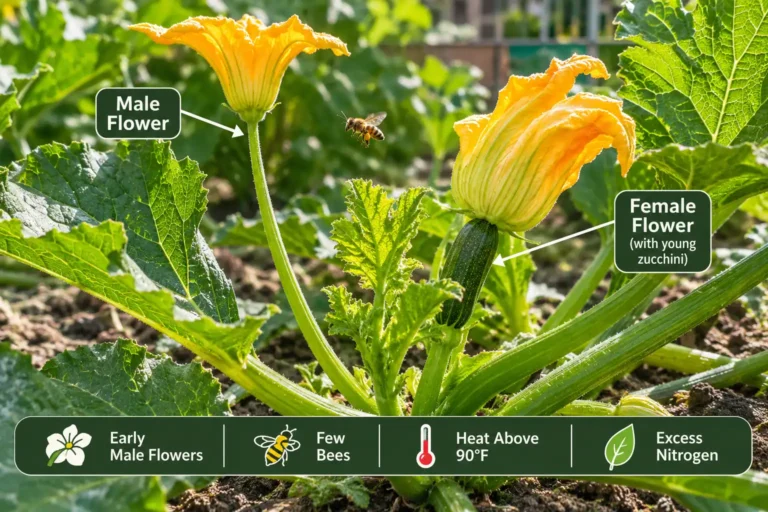
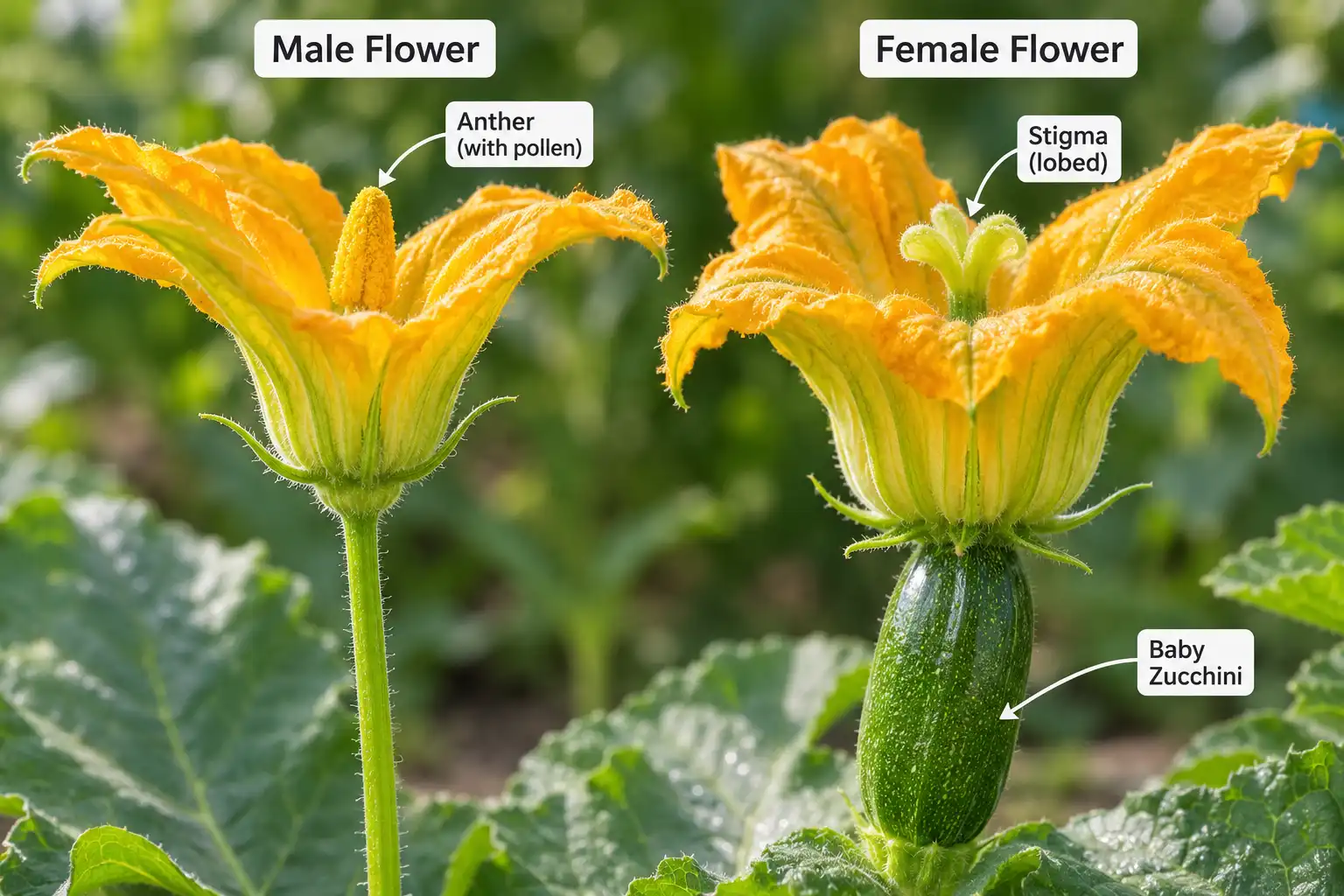
Look just below the petals. A female flower sits on top of a tiny zucchini, while a male flower sits on a long, thin, plain stem.
The center of the flower confirms it. UF/IFAS Extension describes the open female stigma as a cluster of sticky, shiny lobes. In contrast, the male anther is a single stalk that looks dusty once it starts shedding pollen.
| Feature | Male flower | Female flower |
|---|---|---|
| Base of the flower | Long, thin, plain stem | Swollen baby zucchini (the ovary) |
| Center of the flower | One anther, dusty with yellow pollen | Stigma with several sticky, shiny lobes |
| Position on the plant | Raised on long stalks | Short stem, close to the main stem |
| When it appears | First, about a week ahead of females | Later, often in smaller numbers at first |
| After it opens | Wilts and drops within a day | Grows into a zucchini if pollinated |
Timing helps, too. University of Minnesota Extension notes that male flowers usually open about a week before the first females. So a young plant covered in blooms but no fruit is normal. Mississippi State University Extension adds that some hybrids do the reverse. They open a few female flowers before any males appear, and those early fruits fail without outside pollen.
When to Hand Pollinate Zucchini
Hand pollinate early in the morning, soon after the flowers open, and finish well before noon. Pollen is freshest then, and the stigma is most receptive.
UF/IFAS Extension recommends morning work because higher humidity helps activate the pollen. Similarly, UC Agriculture and Natural Resources (UC ANR) advises using only freshly opened flowers, since each one stays receptive for a single day.
| Time of day | Flower condition | What to do |
|---|---|---|
| Soon after sunrise | Petals wide open, pollen fresh and loose | Best window for hand pollinating |
| Mid to late morning | Petals still open, heat building | Work fast and start with female flowers |
| Around noon and later | Petals folding shut | Too late for that day’s flowers |
Situations That Call for Hand Pollination
Bees usually handle pollination on their own. Even so, step in when:
- The first female flowers of the season open
- Cold, cloudy, or rainy mornings keep bees grounded
- Days reach the 90s°F or nights stay in the 70s°F, which University of Minnesota Extension links to flower and small fruit loss
- Plants grow under row covers, in a greenhouse, or in a high tunnel
- The garden sits on a balcony, rooftop, or city lot with few bees
- Recent insecticide sprays have cut bee activity
Also, University of Minnesota Extension suggests splitting sowings about three weeks apart for a longer, steadier harvest. Check your local zucchini planting dates to time that first sowing.
How to Hand Pollinate Zucchini Step by Step
Hand pollination takes only a few minutes each morning. Both methods below work, so choose the one that suits your garden.
Method 1: Use the Male Flower Directly
- Find a female flower that opened this morning. Its petals sit wide open, and the stigma looks moist.
- Pick a fresh male flower from the same plant or a neighboring zucchini.
- Peel or tear off the male petals to expose the anther. Ripe pollen rubs off on your fingertip.
- Roll the anther gently over every lobe of the stigma. Aim for a visible yellow coat.
- Move on to the next female flower. UF/IFAS Extension confirms one male flower pollinates several females.
Plants trained to grow vertically on a stake hold their flowers higher, so daily checks get easier on your back.
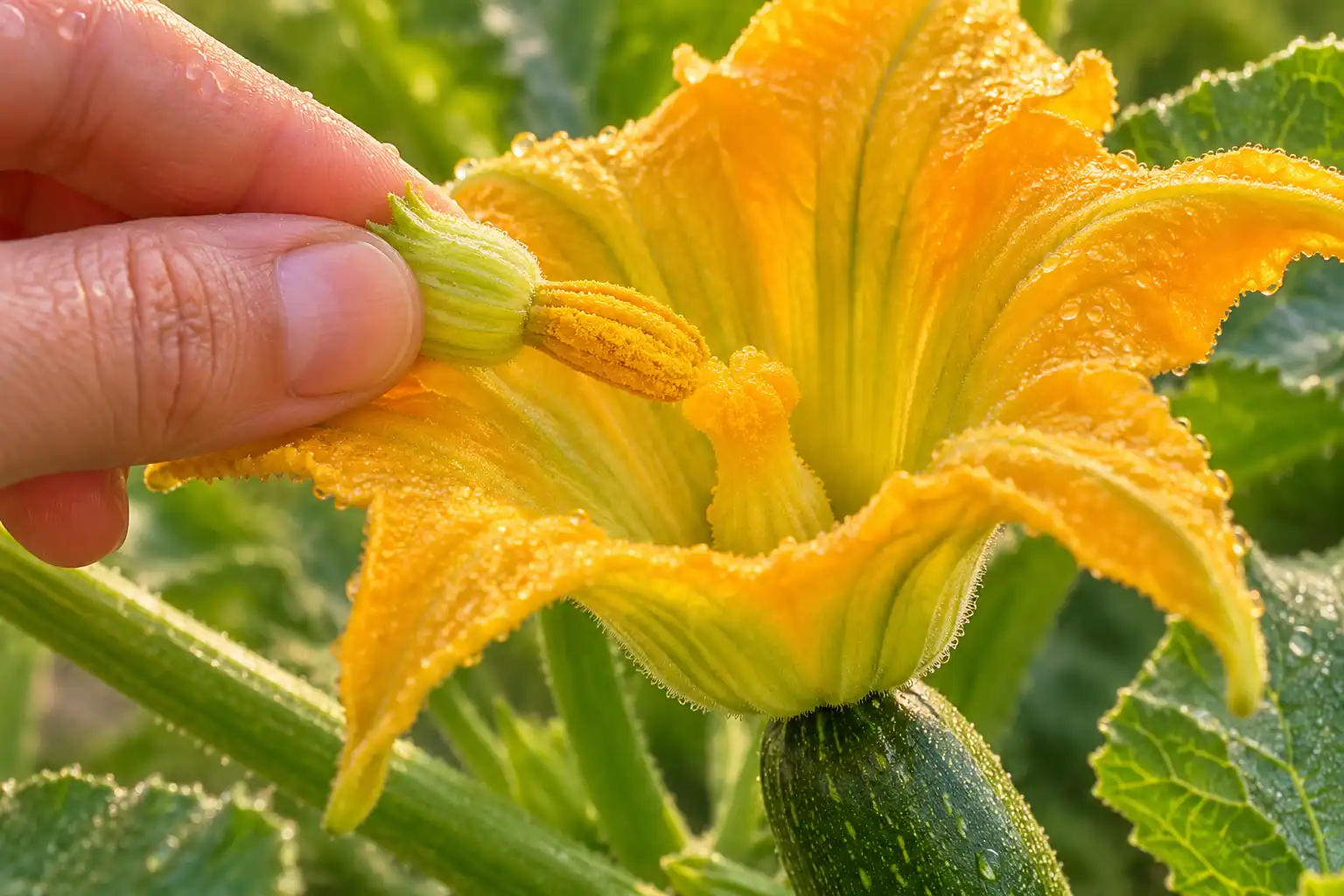
Method 2: Use a Small Brush or Cotton Swab
A soft artist’s brush or cotton swab keeps male flowers on the plant for bees. Swirl the brush over the anther until the bristles turn yellow. Then paint the pollen onto each lobe of the stigma.
Load pollen from two or three male flowers for each female when you have them. More pollen generally means a bigger, better-shaped fruit. In fact, UF/IFAS Extension cites research where female flowers that got five squash bee visits set significantly bigger fruit than flowers with one visit. A heavy, even coat of pollen does the same job as those repeat visits.
Storing Male Flowers When None Are Open
Some mornings bring open female flowers with no males in sight. For those days, plan ahead. UF/IFAS Extension suggests cutting male flowers and standing them in a glass of water overnight for use the next morning.
For longer storage, remove the petals and lay the male flowers on a moist paper towel inside a container. Then keep them in the refrigerator for three to four days. Just keep the pollen itself from touching the wet towel.
How to Tell If Hand Pollination Worked
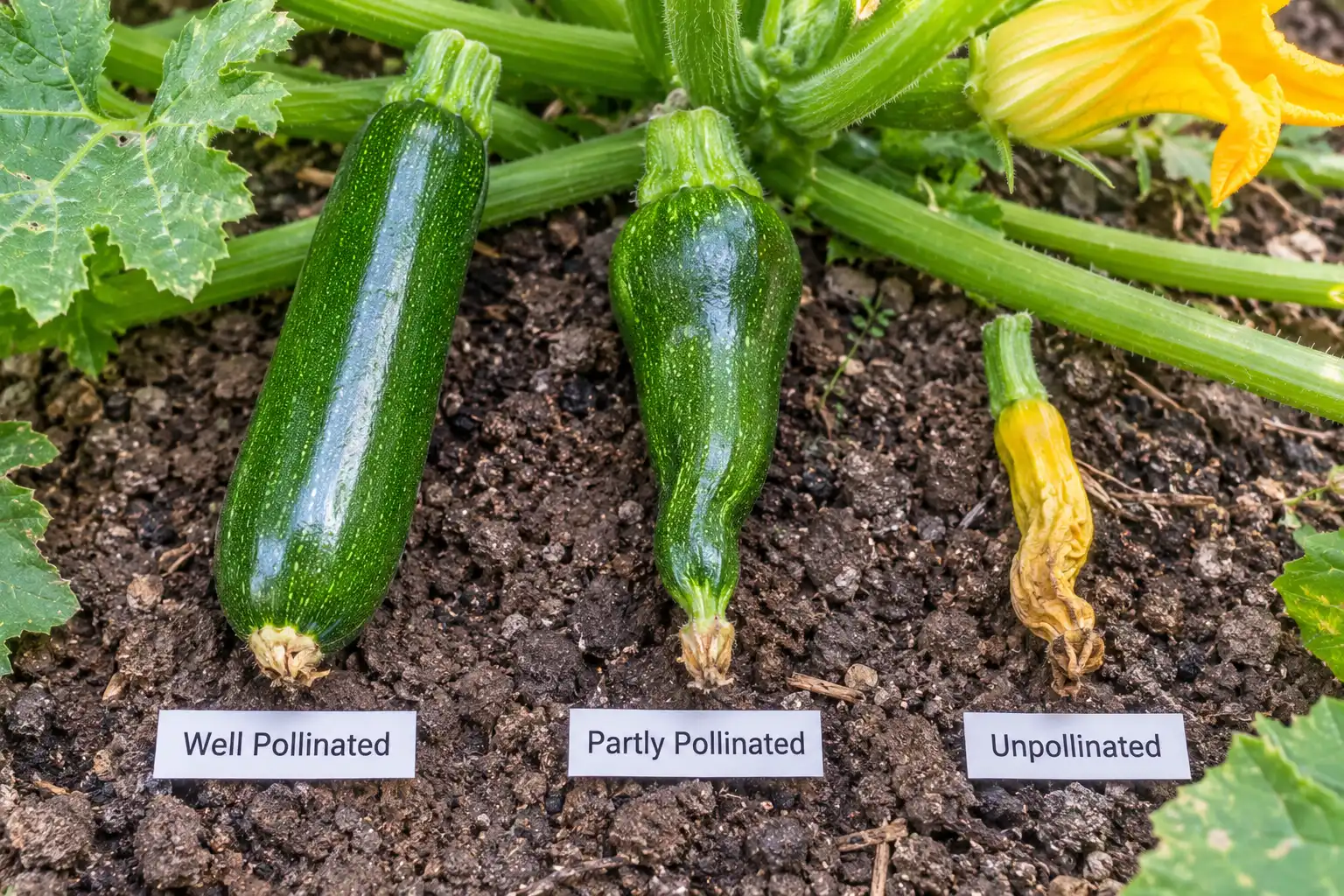
A well-pollinated zucchini keeps growing right away and stays firm and glossy. According to Mississippi State University Extension, summer squash usually reaches harvest size 4 to 6 days after the flower blooms.
The petals wither either way, so judge the fruit, not the flower. Over the next few days, watch for one of these outcomes:
- Good pollination: the fruit lengthens evenly and stays deep green.
- Partial pollination: the fruit swells at the stem end but stays narrow or pinched at the tip.
- No pollination: the baby fruit turns yellow, softens, shrivels, and drops.
University of Minnesota Extension notes that rotting small squash often traces back to poor pollination, especially on the first round of fruit. However, a different problem looks similar. Fluffy, purplish-black growth on a soft blossom end points to choanephora rot, a fungal disease that follows wet weather. In that case, remove the infected fruit right away, as University of Minnesota Extension advises.
Can Zucchini Self Pollinate?
No single zucchini flower pollinates itself, because each flower is either male or female. However, zucchini is self-compatible. Pollen from a male flower fertilizes female flowers on the same plant, so one plant sets fruit on its own once pollen moves.
UF/IFAS Extension notes that squash does not need cross-pollination between varieties to set fruit. Still, two or more plants raise the odds that a male and a female flower open on the same morning. That overlap matters most early in the season, when the ratio of male to female flowers swings widely.
Parthenocarpic Zucchini Varieties
Some zucchini varieties set fruit with no pollination at all. Growers call this trait parthenocarpy. According to Purdue Extension, green zucchini types carry it more often, with Partenon and Dunja as examples. The yellow summer squash Golden Glory also sets fruit without pollen.
Purdue Extension points out that these varieties suit greenhouses and high tunnels. They also work under insect netting, which stays on through bloom instead of coming off for bees. For the same reason, the trait helps zucchini grown in containers on balconies and patios where bees rarely visit.
Do Zucchini Plants Need Bees?
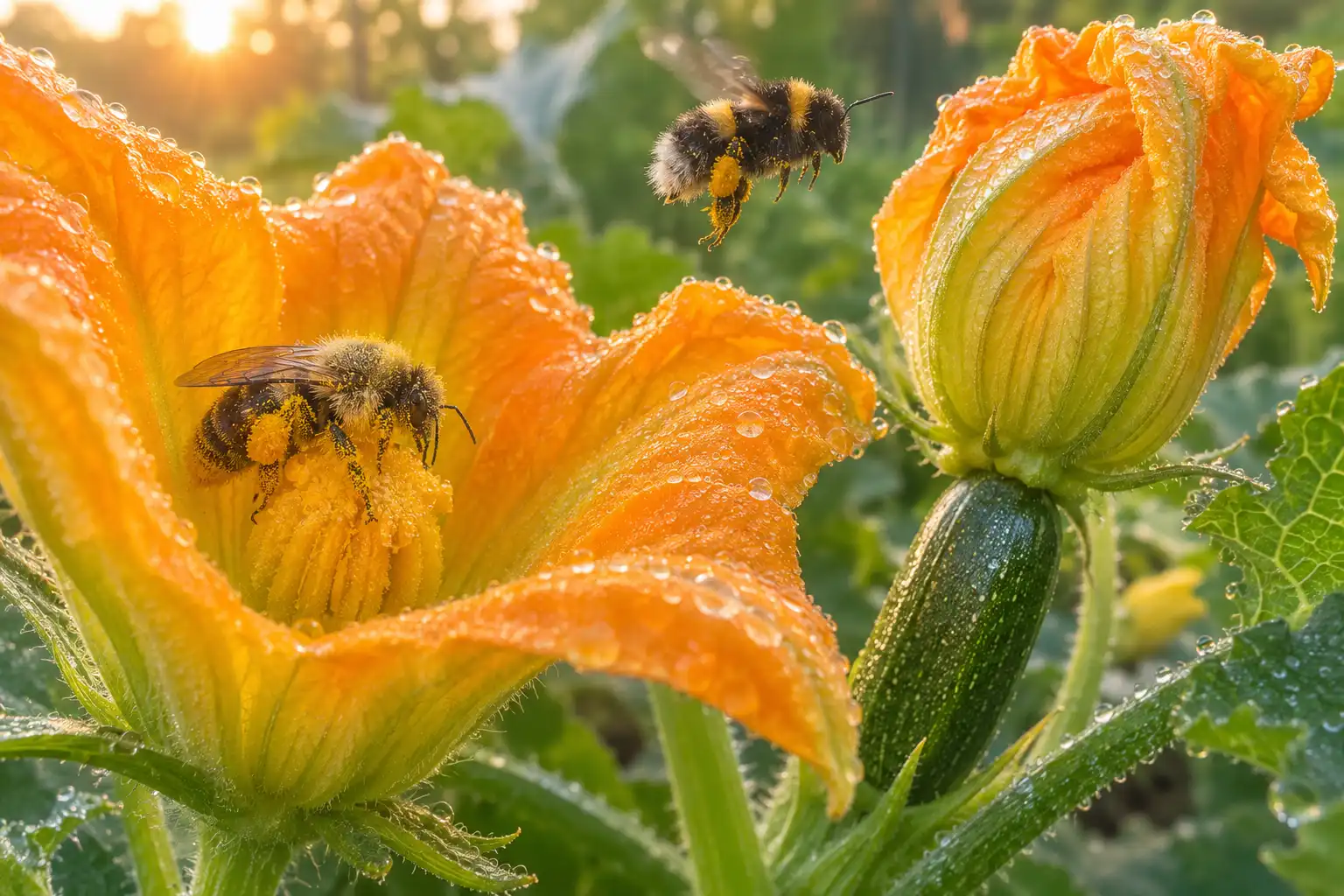
Yes. Standard zucchini varieties need bees, or a person, to move pollen from male to female flowers. Wind carries almost none of the heavy, sticky pollen, according to UF/IFAS Extension.
Three groups do most of the work. First, squash bees (Peponapis pruinosa) specialize in squash family flowers. Next come bumblebees. University of Minnesota Extension rates these two as the best squash pollinators because both forage in the morning, when flowers are open. Honey bees help too, though UF/IFAS Extension reports they collect pollen less often and favor female flowers.
Region changes the cast. In Florida, UF/IFAS Extension notes that Peponapis squash bees are absent. Native Xenoglossa squash bees show up only in north Florida during spring. As a result, fall squash there leans on honey bees and sweat bees, and hand pollination often fills the gap.
How to Protect Squash Bees and Bumblebees
Squash bees nest in the soil 5 to 10 inches deep, per University of Minnesota Extension. So limit deep tillage in beds where you grow squash.
Pesticides are the other big risk. Time any insecticide for cucumber beetles or squash bugs outside of bloom hours, as University of Minnesota Extension advises. If plants are flowering, UF/IFAS Extension recommends spraying late in the day and choosing products with low bee toxicity. Also, an integrated pest management plan cuts down on unnecessary sprays in the first place.
Troubleshooting Poor Zucchini Fruit Set
Poor pollination is the most common reason for flowers without fruit, but not the only one. University of Minnesota Extension also lists heat, water stress, and excess nitrogen as causes of flower and small fruit loss. Use this table to match the symptom to the fix.
| Problem | Likely cause | What to do |
|---|---|---|
| Plenty of flowers but no baby fruit | Only male flowers have opened so far | Wait about a week for female flowers |
| Female flowers open, but fruit yellows and drops | Few bees, or cold, rainy, cloudy mornings | Hand pollinate every morning |
| Flowers and small fruit drop in midsummer | Days in the 90s°F or nights in the 70s°F | Pollinate early, water deeply, mulch the soil |
| Big, leafy plants with few female flowers | Too much nitrogen | Stop high-nitrogen feeding during bloom |
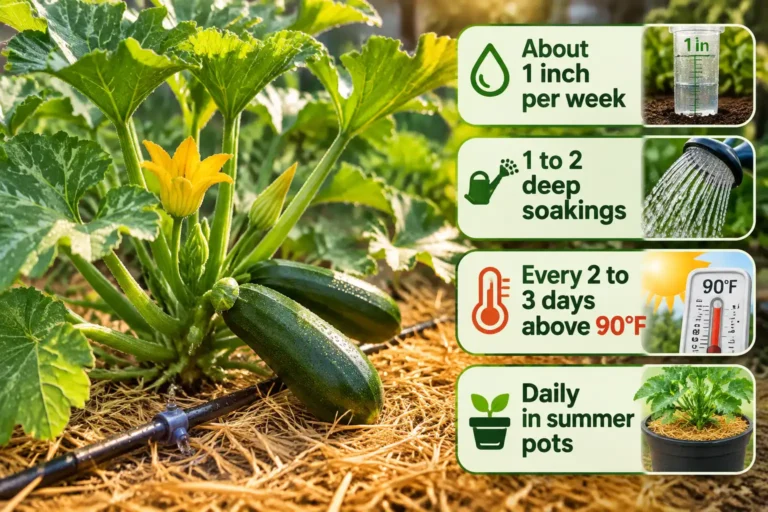
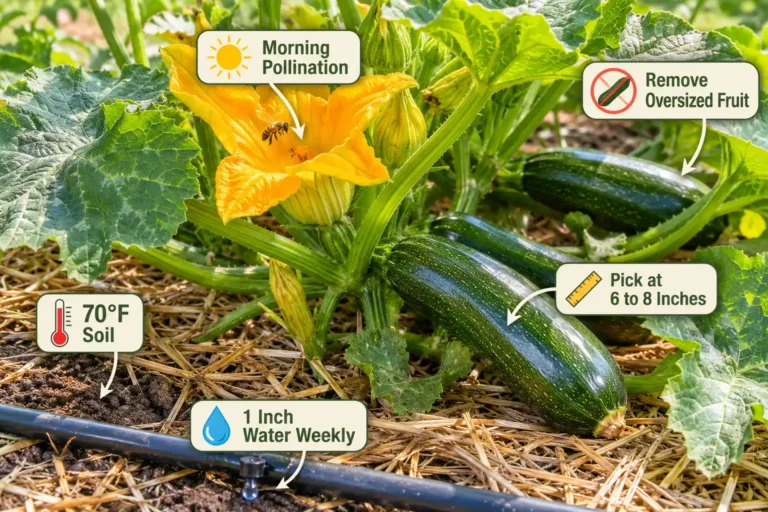
| Few female flowers in dry spells | Drought stress skewing the flower ratio | Give about 1 inch of water per week |
| Soft tip with fuzzy, purplish-black mold | Choanephora rot after wet weather | Remove infected fruit and improve airflow |
The 1 inch weekly figure comes from University of Minnesota Extension guidance for vine crops. Beyond that, steady care keeps female flowers coming all summer. The full guide to growing zucchini plants walks through soil prep, spacing, and feeding.
FAQs on Hand Pollinating Zucchini
How many female flowers can one male zucchini flower pollinate?
One fresh male flower usually pollinates two or more female flowers. UF/IFAS Extension confirms a single male works on several females, so switch to a second male once the anther looks bare.
Can you hand pollinate zucchini in the afternoon?
Afternoon hand pollination rarely works, because zucchini flowers close by around midday. Each flower opens only once, so start early the next morning and pollinate the new female flowers before the day heats up.
Do you need two zucchini plants to get fruit?
No, one zucchini plant sets fruit using pollen from its own male flowers. Two or more plants still help, because they raise the chance that a male and a female flower open on the same morning.
How long after pollination is zucchini ready to pick?
Zucchini usually reaches harvest size 4 to 6 days after the flower blooms, according to Mississippi State University Extension. Check plants daily once fruit starts swelling, since zucchini grows fast and turns tough when left too long.
Does pollen from yellow squash or pumpkins change zucchini fruit?
No, cross-pollinated zucchini looks and tastes normal this season. The cross only affects saved seed, which UF/IFAS Extension warns will not grow true to type, so use pollen from the same variety when saving seed.
Putting This Into Practice
Check your zucchini early each morning once the first female flowers open. Spot the baby fruit under the petals, then move a heavy coat of fresh pollen onto the stigma before noon. Store spare male flowers for mornings when none open. For greenhouses, row covers, or balconies, a parthenocarpic variety such as Partenon skips the step entirely. Everywhere else, protecting squash bees and bumblebees keeps most of the work off your hands.