Does Lettuce Grow Back After Cutting? Yes, and Here’s How
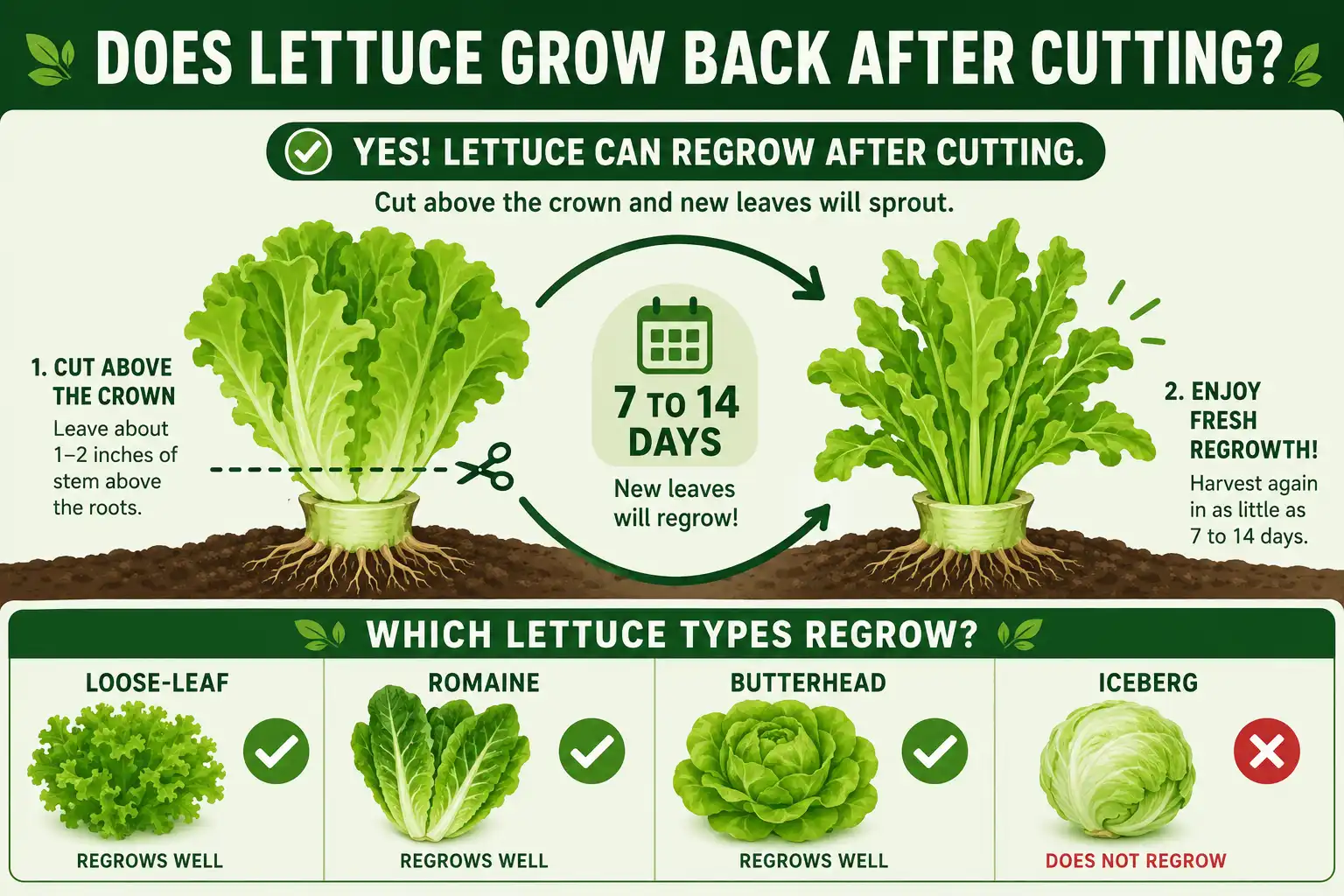
Cut your lettuce, leave the plant in the ground, and you can harvest it again and again. Does lettuce grow back after cutting? In most cases, yes. The secret sits in one small part of the plant: the crown.
Yes. Lettuce does grow back after cutting, as long as you leave the crown intact. New leaves push from the center in 7 to 14 days. Loose-leaf, romaine, and butterhead regrow best. Iceberg will not reform a head.
Why Does Lettuce Grow Back After You Cut It?
Lettuce grows back because new leaves form at the crown, a small growing point at the base of the plant. As long as that crown stays alive, the plant keeps pushing fresh leaves.
Lettuce (Lactuca sativa) grows from the center outward. The oldest leaves sit on the outside. The youngest sit in the middle, right above the crown. So when you remove outer leaves and leave the center alone, the plant simply keeps working.
Cut too low and you slice through the crown. Then the plant has nothing left to grow from, and it dies. That single point is the whole reason regrowth works.
Which Types of Lettuce Grow Back Best?
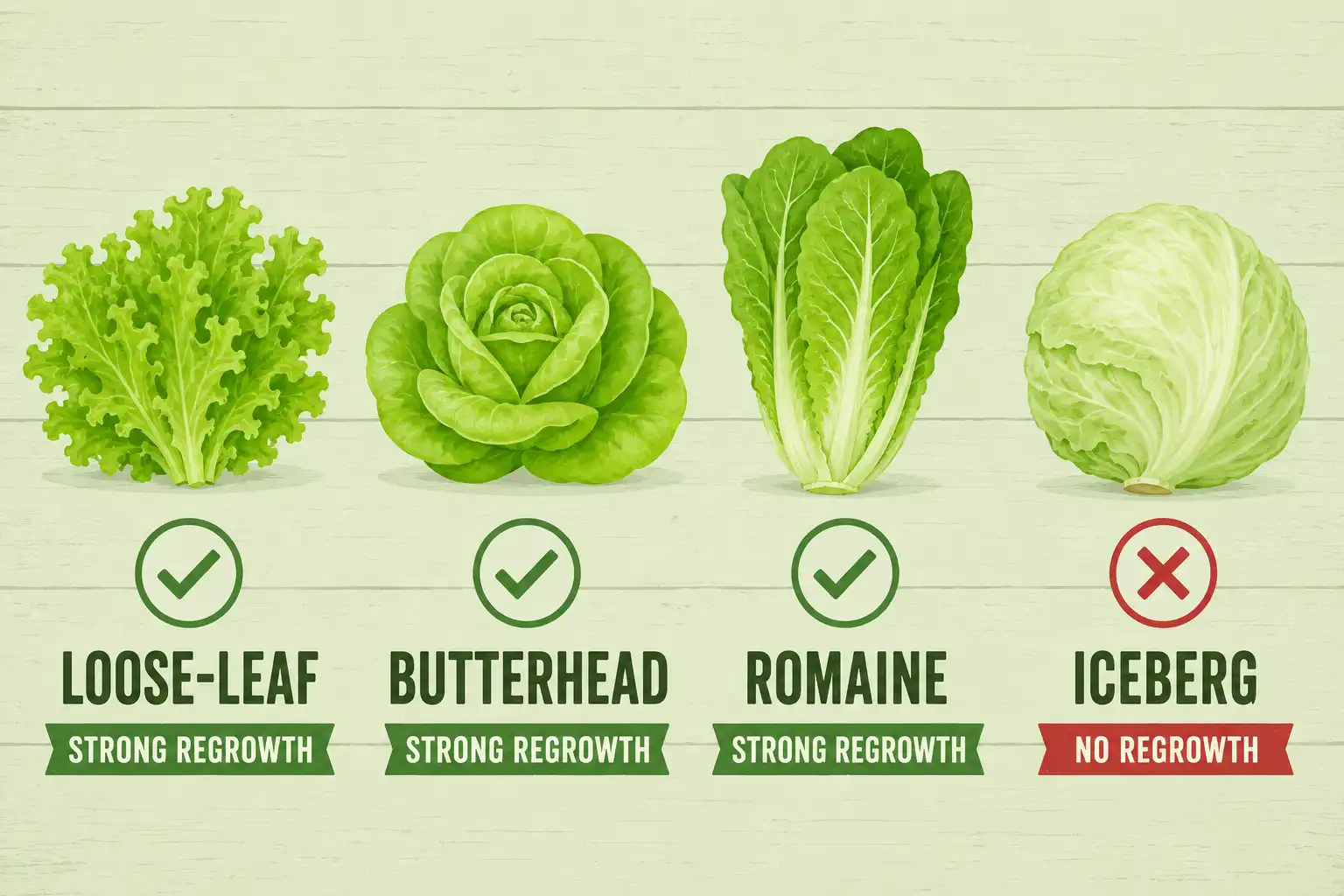
Loose-leaf lettuce grows back best, while iceberg barely grows back at all. The difference comes down to how each type forms its leaves.
Loose-leaf types like Black Seeded Simpson and Salad Bowl never build a tight head. Instead, they grow as an open rosette, so the crown stays exposed and ready to push new leaves. These give you the most repeat cuts.
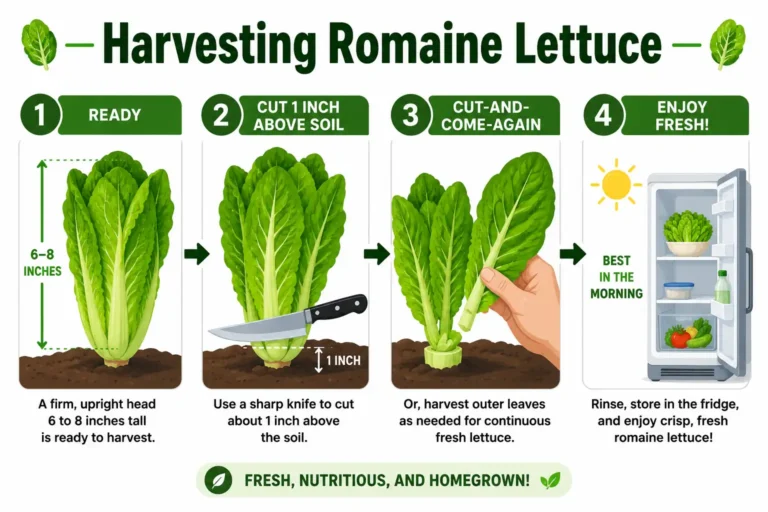
Romaine and butterhead (also called Bibb) sit in the middle. Both regrow well if you cut above the crown and leave the base in the soil. University of Maryland Extension notes butterhead is mature once the leaves cup inward. Romaine is ready once the leaves overlap into a loose head. Take the outer leaves first, and both keep producing for weeks.
Iceberg and other crisphead types are the holdouts. They pour their energy into one dense head. Once you cut that head, the plant will not build another. You get a single harvest, and that is it.
So if you want the longest run of cuttings, plant loose-leaf and butterhead. Save iceberg for one clean head.
How Do You Cut Lettuce So It Grows Back?
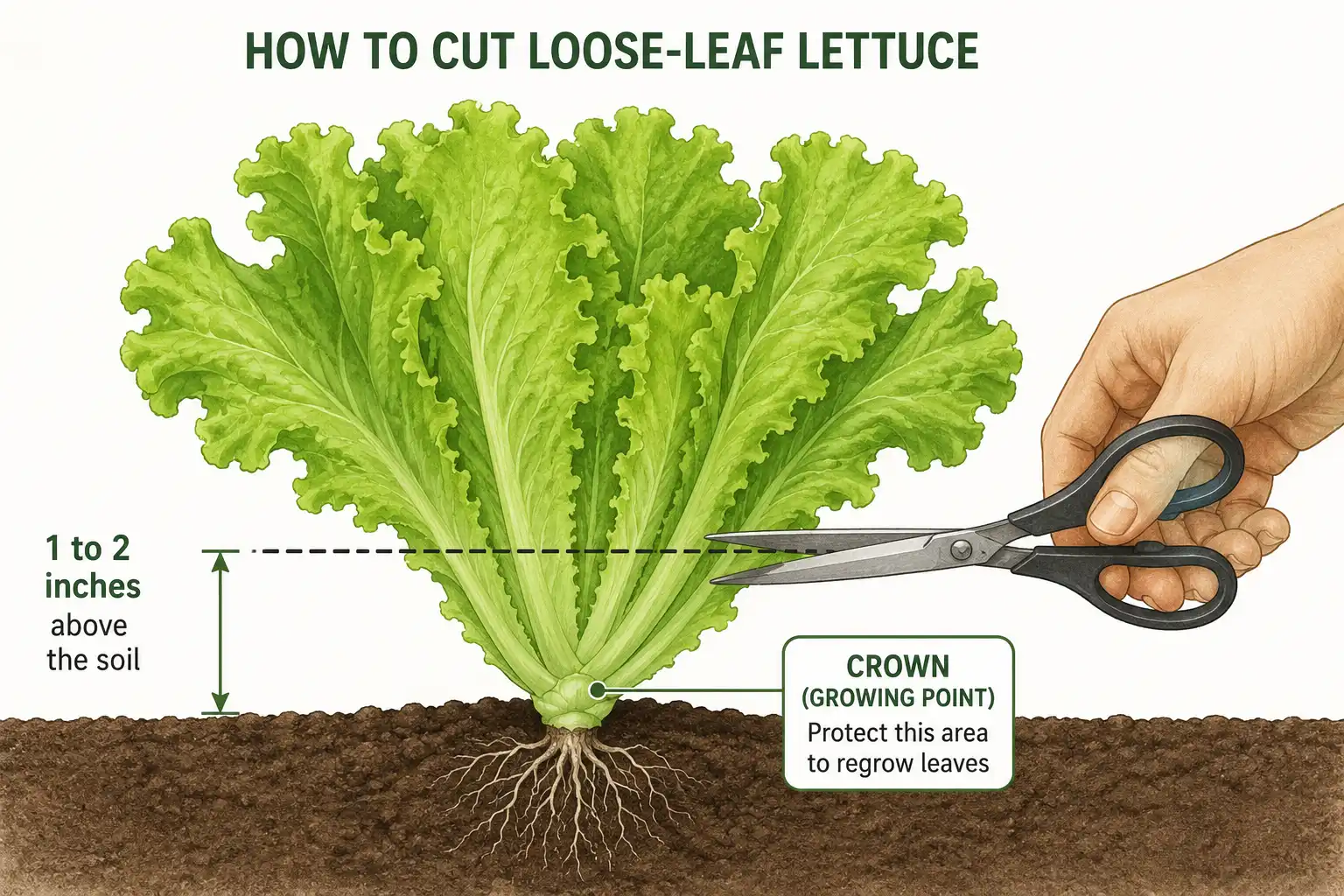
Cut about 1 to 2 inches above the crown using sharp, clean scissors or a knife. That height protects the growing point and gives the plant a base to rebuild from. Here is the routine on the own beds.
First, harvest in the morning. Leaves stay crisp and full of water before the Kansas sun heats up. Next, take only the outer, older leaves on each plant. Or cut the whole top across at the 1 to 2 inch line. Either way, leave the center untouched.
Stick to the one-third rule. Never strip more than a third at once. The remaining leaves keep feeding the roots through photosynthesis. Also wipe your blade between plants if disease has been around. A dull or dirty cut bruises the stem and invites rot.
Wait until leaf lettuce reaches 5 to 6 inches before the first cut. Timing that first harvest right sets up every cut after it. After you cut, water well and feed lightly. Lettuce runs on nitrogen, so a mild liquid feed between cuts keeps regrowth fast. full routine for cutting lettuce for repeat harvests covers blade height and spacing in more detail.
How Many Times Does Lettuce Grow Back After Cutting?
Most loose-leaf plants grow back three to five times before quality drops off. Some gardeners push past that in a cool season, but the trend stays the same. Each cut returns slightly smaller, slower leaves.
The reason is simple. Lettuce is an annual. It is built to flower and set seed, not to feed you forever. After a few rounds, the leaves turn narrow and bitter, and growth slows to a crawl. That is the plant telling you it is nearly done.
Cool weather stretches the number of cuts you get. Heat shortens it fast. So in spring and fall, in USDA hardiness zone 6a, the most repeat harvests come. In a hot July, the same planting taps out quickly. The cut-and-come-again approach for leaf lettuce works best while the weather stays mild.
How Long Does Lettuce Take to Grow Back?
New leaves usually appear within 7 to 14 days, depending on temperature and daylight. In warm, bright weather, you might see fresh growth in under a week. In cool spring conditions, it can take closer to two weeks.
Three things speed it up. Steady moisture, a light nitrogen feed, and an undamaged crown all push faster regrowth. Skip the water or nick the crown, and the plant stalls. Once new leaves reach 3 to 4 inches, you can cut again using the same method.
What Makes Lettuce Stop Growing Back?
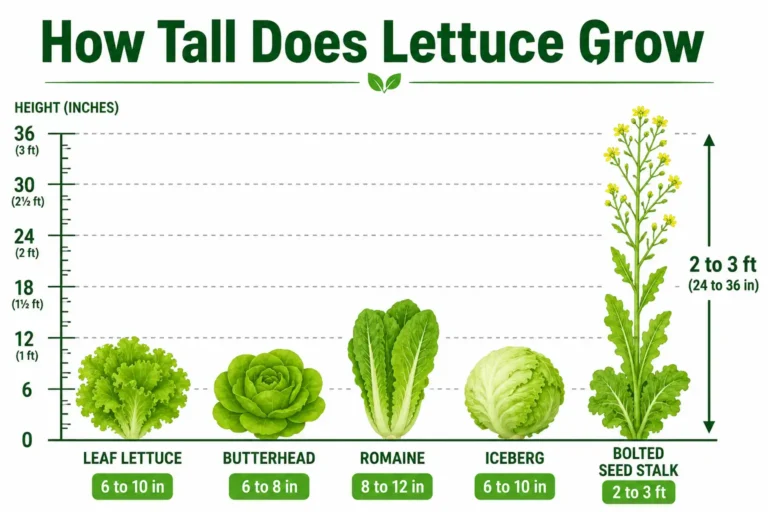
Bolting is the main thing that stops lettuce from growing back. When days lengthen and temperatures climb, the plant sends up a tall seed stalk and quits making tender leaves. University of Minnesota Extension puts it plainly: bolting ends the harvest.
You can spot it early. The plant stretches upward instead of filling out, the leaves space apart, and a center stalk shoots up. UC Cooperative Extension ties bolting to days over roughly 14 hours and temperatures consistently above 75°F. Once that stalk appears, the leaves turn bitter, since the plant has switched fully to making seed.
A damaged crown ends regrowth too. Cut below the growing point, and nothing is left to regrow. Pull the roots, and the same thing happens. Beyond that, slow-bolting varieties and afternoon shade help me keep plants going through summer heat far longer.
Does Store-Bought Lettuce Grow Back From the Stump?
Yes, a store-bought romaine or leaf-lettuce base will regrow a small flush from the stump, though never a full head. Set the bottom inch in shallow water, or pot it in soil. Keep it in bright light, and tiny leaves appear within days.
This trick is fun, but it is limited. You get a handful of small leaves, not a second harvest worth bagging. For real volume, soil and seed beat a kitchen stump every time. Still, for those wanting to try it, regrow lettuce from a grocery-store head is covered elsewhere.
How to Keep Lettuce Coming Back
Lettuce grows back when you protect the crown and cut high. That is the heart of it. Plant loose-leaf and butterhead for repeat cuts, take the outer leaves first, and feed lightly between harvests. In Kansas, spring and fall give the longest runs, since cool weather holds off bolting. Cut clean, water steady, and leave the center alone, and one planting feeds you for weeks.