Are Cotton Candy Grapes Unhealthy? Sugar, Calories, and Facts
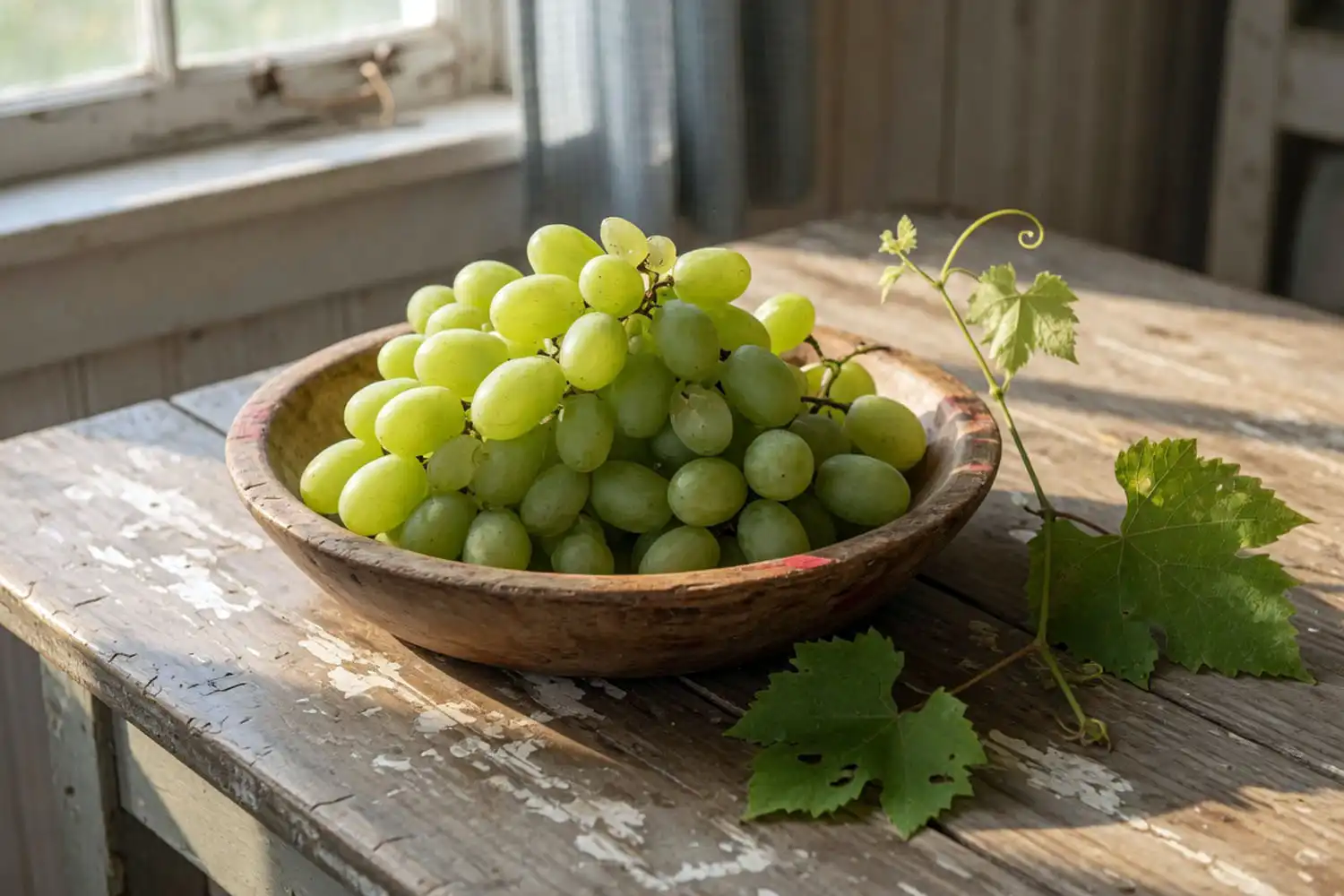
Every August, cotton candy grapes show up at roadside farm stands across the Midwest. They taste like spun sugar and look like ordinary green table grapes. So are cotton candy grapes unhealthy? The short answer is no. Here is the honest breakdown.
Cotton candy grapes are not unhealthy. They are a natural hybrid with about 18 Brix sugar, only slightly sweeter than regular table grapes, and they deliver the same vitamin K, vitamin C, fiber, and resveratrol antioxidants in a one-cup serving.
What Are Cotton Candy Grapes?
Cotton candy grapes are a trademarked variety of green table grape bred by International Fruit Genetics (IFG) in California. Horticulturist David Cain crossed two parent vines using traditional, hand-pollinated crossbreeding. The result is a Vitis vinifera grape with a flavor that mimics carnival cotton candy. No flavor is added, sprayed, injected, or coated on. The sweetness comes from the grape’s natural sugar and ester profile, locked in during ripening on the vine.
The same questions come up about every new fruit cultivar that hits the supermarket. People assume new equals altered. It is the same conversation that comes up when folks ask about hybrid versus heirloom seeds in the corn rows. Crossbreeding is older than modern agriculture.

Are Cotton Candy Grapes GMO?
Cotton candy grapes are not GMO. They were developed through conventional crossbreeding, where pollen from one grape variety fertilizes the flower of another. No genes were inserted in a lab. The USDA does not classify cotton candy grapes as a bioengineered food, and they carry no GMO disclosure on their packaging. This is the same way most modern apples, sweet corn, and stone fruits have been improved for over a century.
How Much Sugar Is in Cotton Candy Grapes?
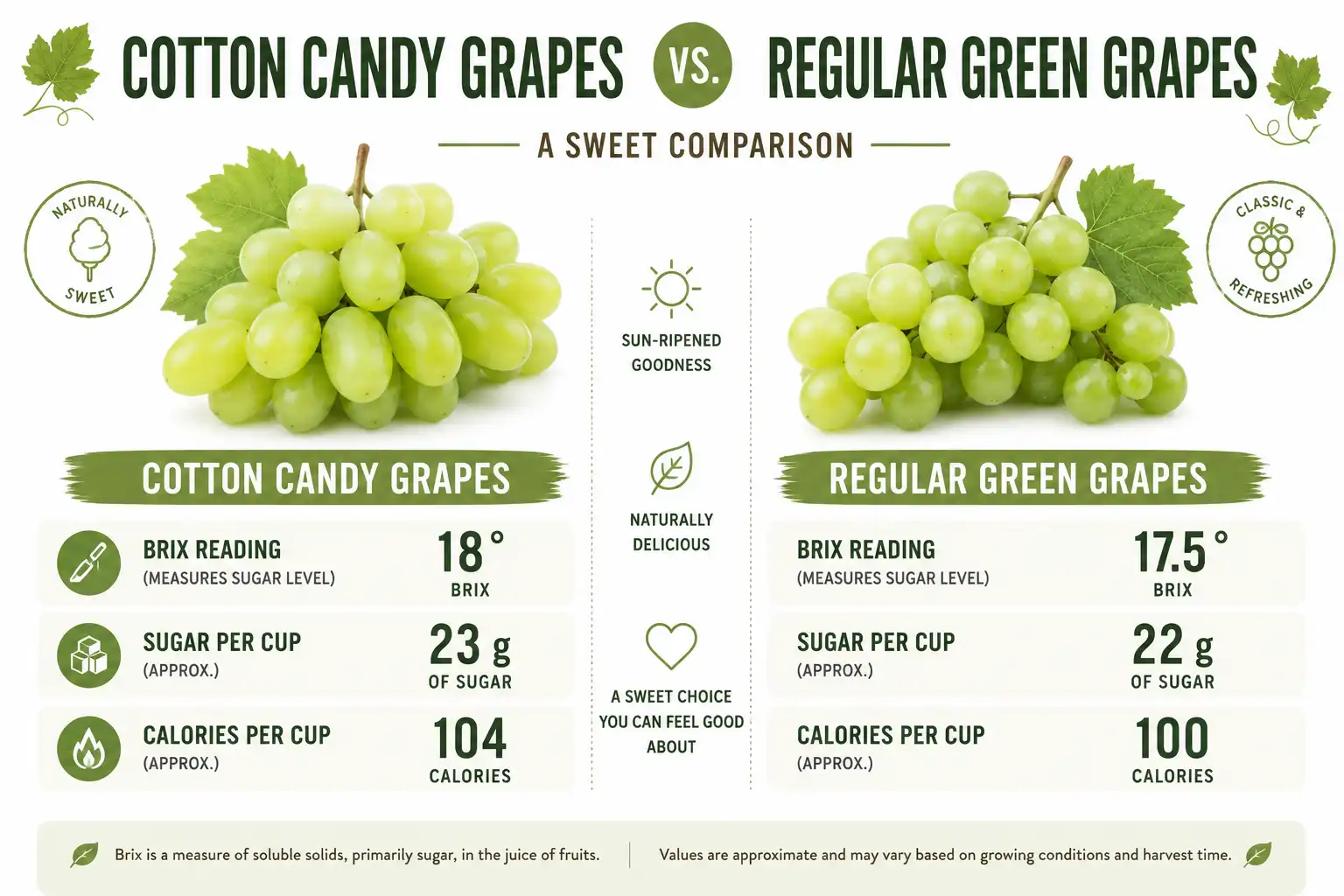
Cotton candy grapes register about 18 degrees Brix, while standard green table grapes typically run 16 to 17.5 Brix. Brix is the standard sugar measurement vineyards use at harvest. That difference is small. One cup of cotton candy grapes has roughly 23 grams of sugar and about 104 calories, only a hair higher than a regular Thompson seedless grape. The intense flavor tricks the brain into thinking it is much sweeter than it really is.
Cotton Candy Grapes Nutrition Facts
A one-cup serving of cotton candy grapes provides meaningful amounts of vitamin K, vitamin C, copper, and potassium. They also carry about 1.4 grams of fiber and natural plant polyphenols, including resveratrol. According to USDA FoodData Central, green table grapes contribute steady micronutrient value without significant fat or sodium. Cotton candy grapes track that same nutrition profile because the parent stock is conventional green grape.
Health Benefits Worth Knowing
Cotton candy grapes share the heart-friendly profile of other table grape varieties. The resveratrol and flavonoids in the skin support healthy circulation and antioxidant defense. The water content sits near 80 percent, which helps with hydration during hot Great Plains afternoons. Fiber slows the rate at which the sugar enters the bloodstream, which is why a piece of fruit acts very differently from a candy bar in your body.
When Cotton Candy Grapes Could Be a Concern
There are two situations where slowing down on cotton candy grapes makes sense. People managing diabetes or blood-sugar conditions should treat them like any other fruit with a moderate glycemic load. A reasonable portion is one cup. The second case is mindless snacking. The cotton candy flavor makes it easy to eat half a bag in front of the TV. That is not the grape’s fault. That is portion control. The same rule applies to any sweet whole food, including raisins or dates.
Where Cotton Candy Grapes Grow in 2026
Cotton candy grapes are grown almost entirely in California’s San Joaquin Valley, with most acres around Bakersfield and Arvin. Licensed growers contract with IFG to produce the trademarked variety. The harvest window is short, roughly mid-August through late September. Demand has pushed acreage into Mexico and parts of South America to extend availability, but the bulk of the US supply still comes from California’s table-grape districts.

How to Compare Them to Other Sweet Foods
People worry about sugar in modern produce the same way they worry about flavor additives in processed snacks. The two are not the same. Cotton candy grapes deliver their sweetness inside a whole food matrix with fiber, water, and antioxidants. That is a different metabolic story than a soda or a packaged dessert. This works the same way as other foods that get an unfair reputation, like when readers ask whether sun-dried tomatoes are actually healthy. Context matters more than the headline.
FAQs
Do cotton candy grapes have artificial flavor?
Are cotton candy grapes safe for kids?
Can diabetics eat cotton candy grapes?
Are cotton candy grapes organic?
How long do cotton candy grapes last?
Bottom Lines
Cotton candy grapes are a clean example of what plant breeding can do without a lab gene gun. They taste like a treat, but they eat like fruit. If you are watching sugar closely, stick to a one-cup portion and enjoy the flavor for what it is. They are not a candy. They are a grape that happens to taste like one.