How to Make Raisins From Grapes: A Easy Home Method
Making raisins from grapes comes down to one thing: drying ripe, sweet grapes slowly until the water leaves and the sugar stays. You can do it in a dehydrator, an oven, or the sun.
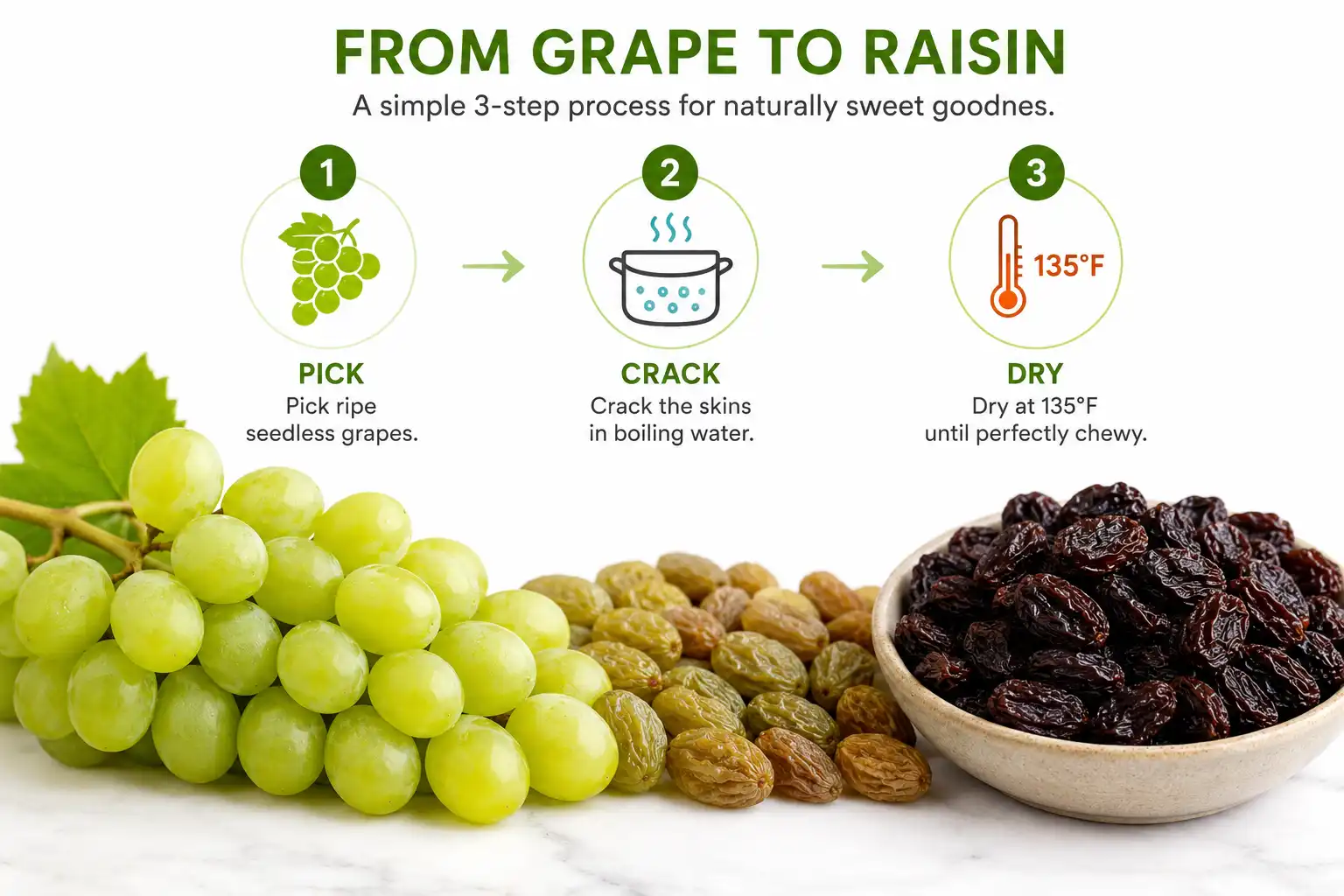
To make raisins from grapes, pick fully ripe seedless grapes, crack the skins in briskly boiling water for 30 to 60 seconds, then dry them at 135°F for 18 to 48 hours until they turn leathery with no wet center.
What Grapes Make the Best Raisins?
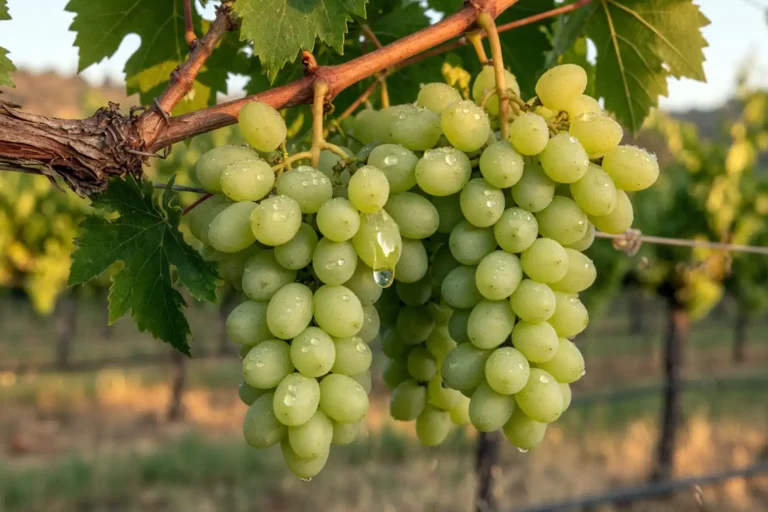
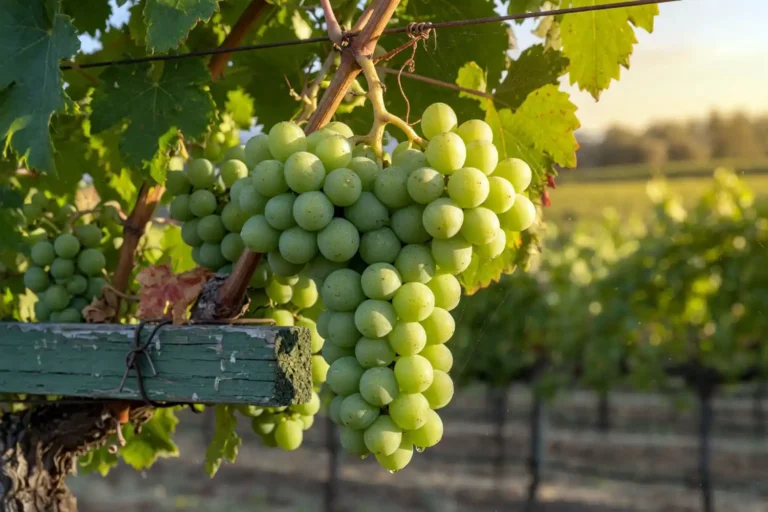
Seedless grapes make the best raisins. The classic pick is Thompson Seedless, the green grape behind most store-bought raisins. Green grapes dry into lighter, amber raisins. Red and purple grapes dry into darker ones. Flame, Crimson, Moon Drops, and Cotton Candy grapes all work too. In fact, Cotton Candy grapes are seedless, so they dry cleanly without any seed trouble, as covered in our notes on whether Cotton Candy grapes are seedless.
If you only have grapes with seeds, you can still dry them. The seeds just make the texture gritty and the prep slower. Either way, pick a grape you already like eating fresh. Flavor concentrates as the water leaves, so a flat grape gives you a flat raisin.
Why Ripeness and Sugar Decide Raisin Quality
A raisin is concentrated grape sugar, so ripe, sweet fruit is everything. The water evaporates during drying, but the sugar stays put. Commercial raisin grapes get picked at high sugar, often in the 20 to 24 Brix range. Brix simply measures the soluble solids, mostly sugar, in the juice.
If you grow your own, a quick refractometer reading on the juice tells you when the sugar is high enough. The sweeter the grape going in, the denser and sweeter the raisin coming out.
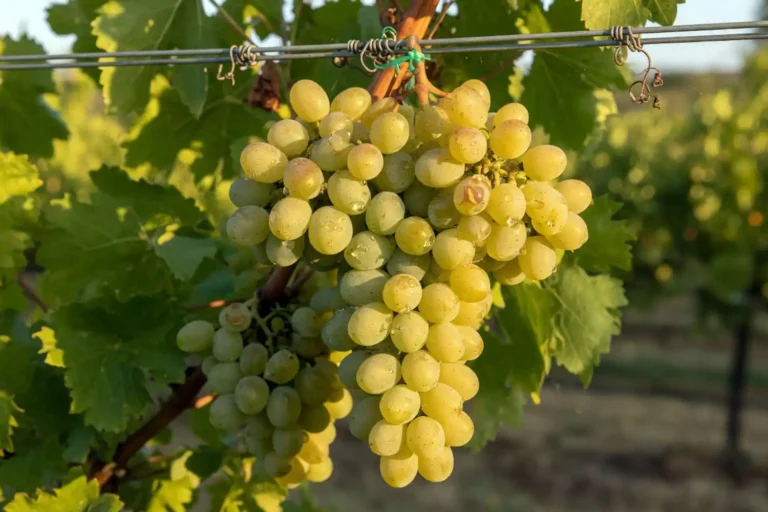
Taste before you harvest. When the fruit is fully colored, soft, and sugary, it is ready. For help with timing, here is how to judge when grapes are ready to pick.
How Do You Prep Grapes Before Drying?
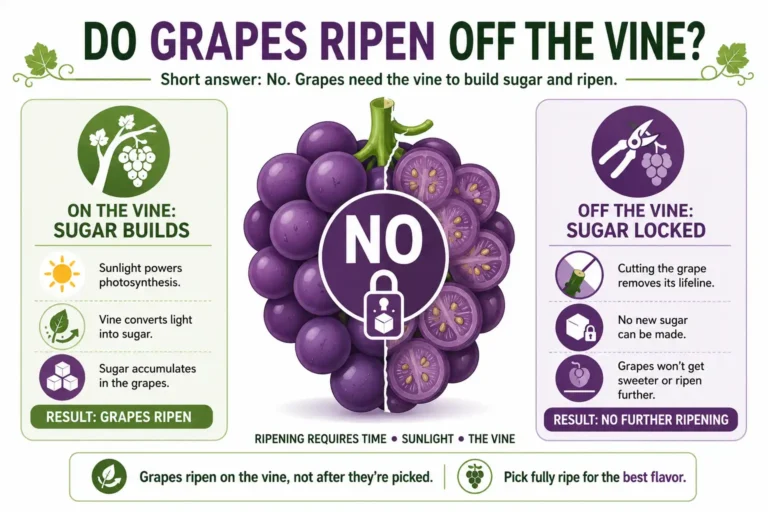
Wash the grapes, pull them off the stems, and toss any that are soft or moldy. Rinse them under cool water in a colander first. Remove every stem next. Sort out the mushy or split berries, because one bad grape can spoil a whole tray. Also toss any underripe ones, since grapes don’t keep ripening once they leave the vine. Pat the good grapes dry with a towel.
Then comes the one step that makes or breaks the batch. You have to crack the skins.
Why Crack the Skins First?
Grape skin has a waxy coating that traps moisture inside. If you dry a whole grape with the skin intact, the outside hardens into a shell while the center stays wet. That problem is called case hardening, and it leads to mold down the line. Cracking the skin lets the water escape evenly instead.
How to Crack Grape Skins
Dip whole grapes in briskly boiling water for 30 to 60 seconds, then plunge them straight into ice water. The hot dip splits the skins. The cold shock stops them from cooking. Drain them well before drying. This “checking” step is the same one California raisin growers have used for generations.
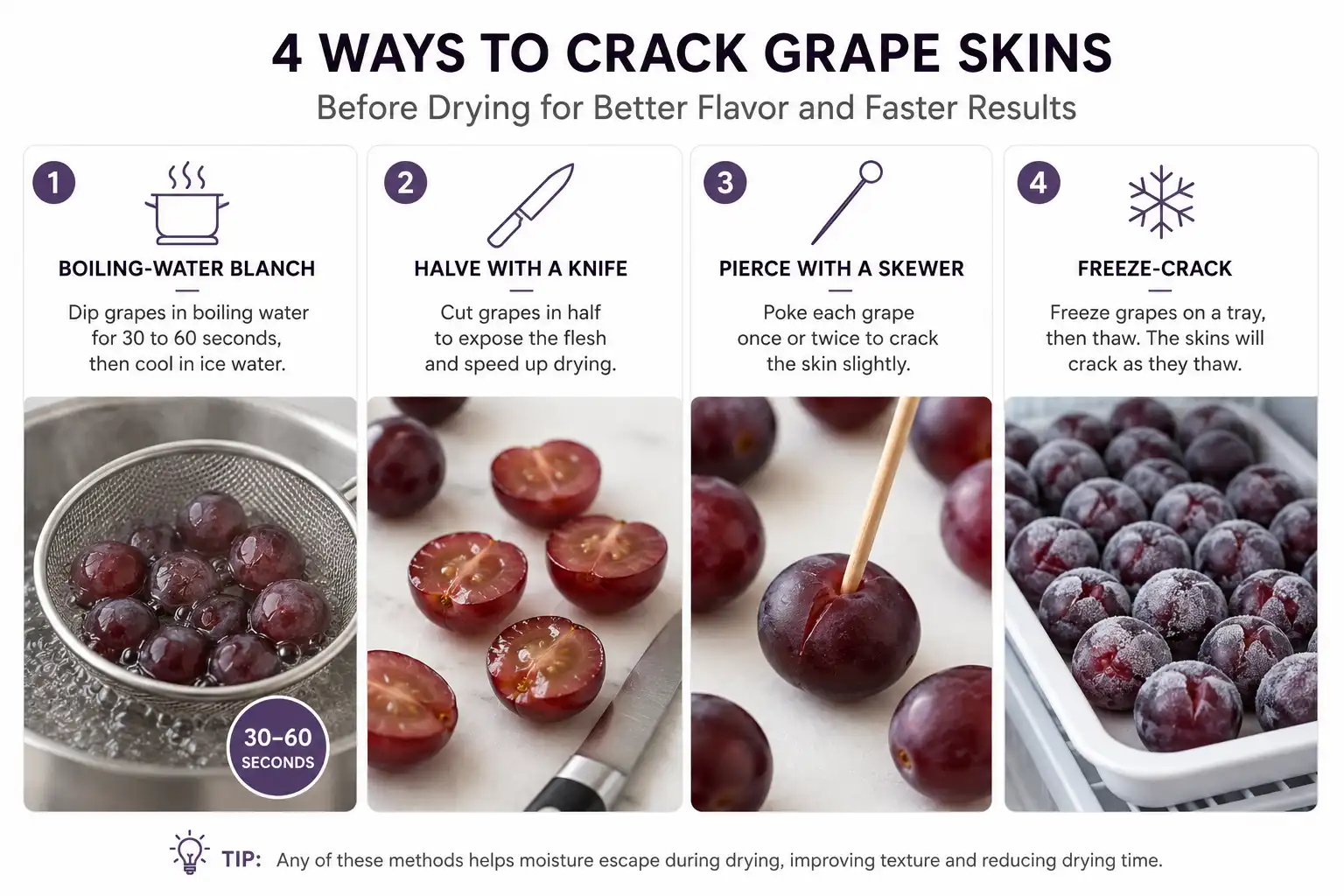
You have other options too. You can cut large grapes in half. You can prick each one with a skewer or fork. Or you can freeze the grapes solid first, then dry them, because the ice crystals rupture the skins on their own. Halving is fastest and dries quickest, though you lose the whole-raisin look. For halved grapes, a short soak in an ascorbic acid solution keeps them from browning.
How to Make Raisins in a Dehydrator
Spread the prepped grapes in a single layer on the trays and dry them at 135°F until leathery. Keep them in one layer so air moves around each grape. Set cut grapes skin side down. Most extension guides run fruit somewhere between 135 and 140°F.
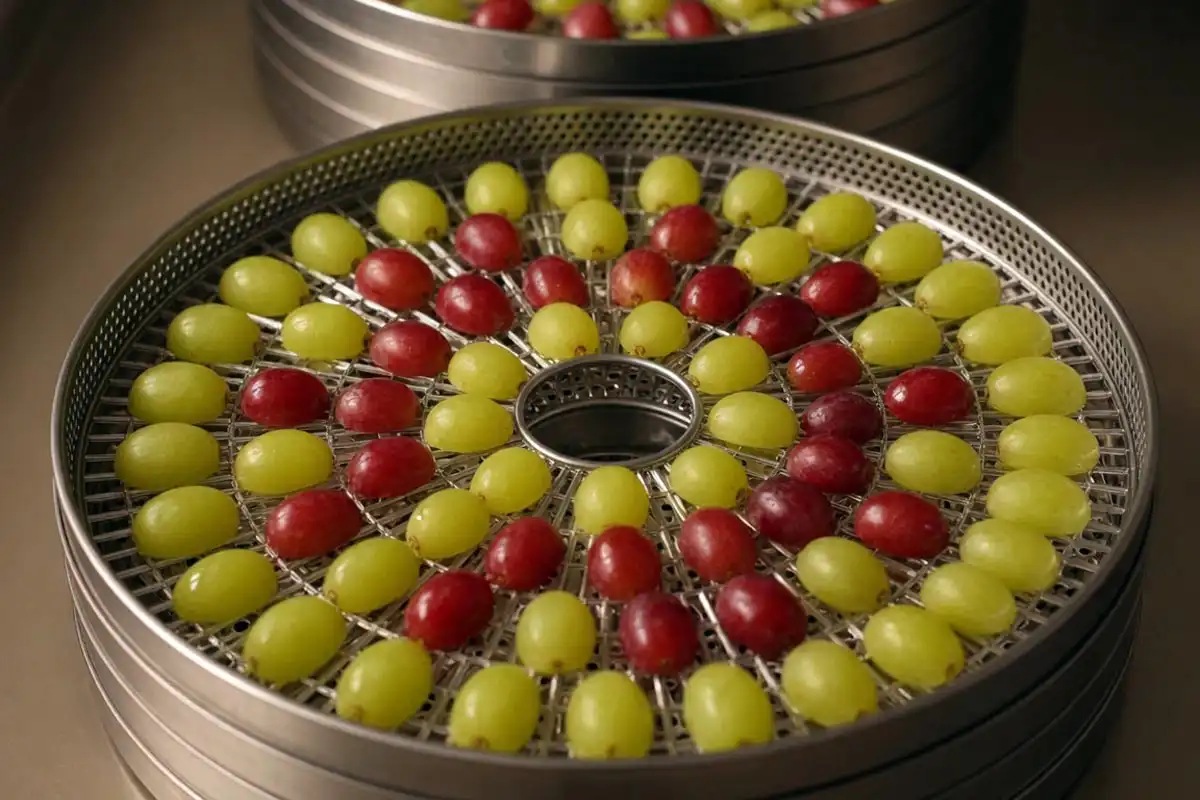
Whole grapes take 18 to 48 hours. Halved grapes finish faster, often 6 to 15 hours. Rotate the trays every 8 hours so they dry evenly, especially if your unit has a hot corner. Check the early trays and pull any grapes that finish ahead of the rest.
Plan on roughly 4 pounds of fresh grapes for every 1 pound of raisins. They shrink a lot once the water leaves.
How to Make Raisins in the Oven
Set your oven to its lowest setting and prop the door open a few inches for airflow. Many ovens bottom out near 170°F, which still works if you watch them. Use the convection fan if you have one. Spread the grapes on a wire rack over a baking sheet in a single layer.
Oven drying takes longer than a dehydrator, sometimes more than a day. Stir or turn the grapes every few hours so they dry evenly. Watch them closely near the end, because fruit scorches fast once most of the water is gone.
How to Sun-Dry Grapes Into Raisins
Lay cracked grapes on screens in full sun and let them dry over several days to a few weeks. This is the old method that built the raisin trade in California’s San Joaquin Valley. You need hot, dry weather with a steady breeze, at least 85°F and low humidity. The high sugar and acid in grapes make them safe to dry outdoors.
Cover the trays with cheesecloth to keep insects out. Bring the trays inside at night so dew does not undo your progress. You will also want to keep birds off the drying grapes, or they will help themselves all day long.
In Kansas, sun-drying is rarely the method used. Great Plains summers swing humid, and damp air stalls outdoor drying while inviting mold. A dehydrator gives me steady results no matter the weather. If you live somewhere hot and dry, though, sun-drying is worth doing.
How Do You Know When Raisins Are Done?
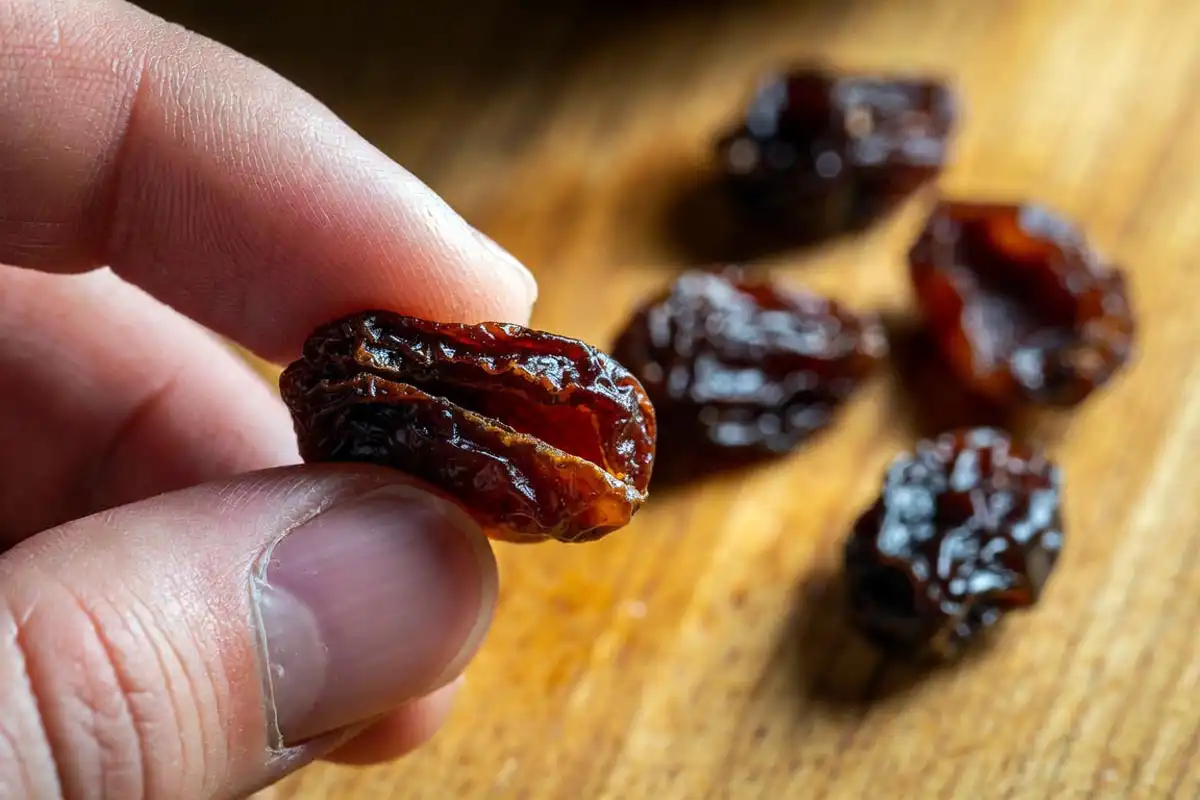
Done raisins are leathery and pliable with no wet center. Pull a few off the tray and let them cool for about ten minutes. Then squeeze one. It should feel like a store raisin, maybe a touch firmer, with no moisture oozing out. Drop one on a plate, and it should give a light click instead of a dull thud. Cut one open to confirm there are no glossy wet pockets inside.
How to Condition and Store Homemade Raisins
Conditioning evens out the moisture so your raisins store without molding. After the raisins cool, pack them loosely into jars about two-thirds full. Put the lids on and set the jars in a dry spot for 4 to 10 days. Shake them once a day to separate the pieces and spread the moisture. If you spot condensation on the glass, the raisins are still too wet, so dry them again and recondition.
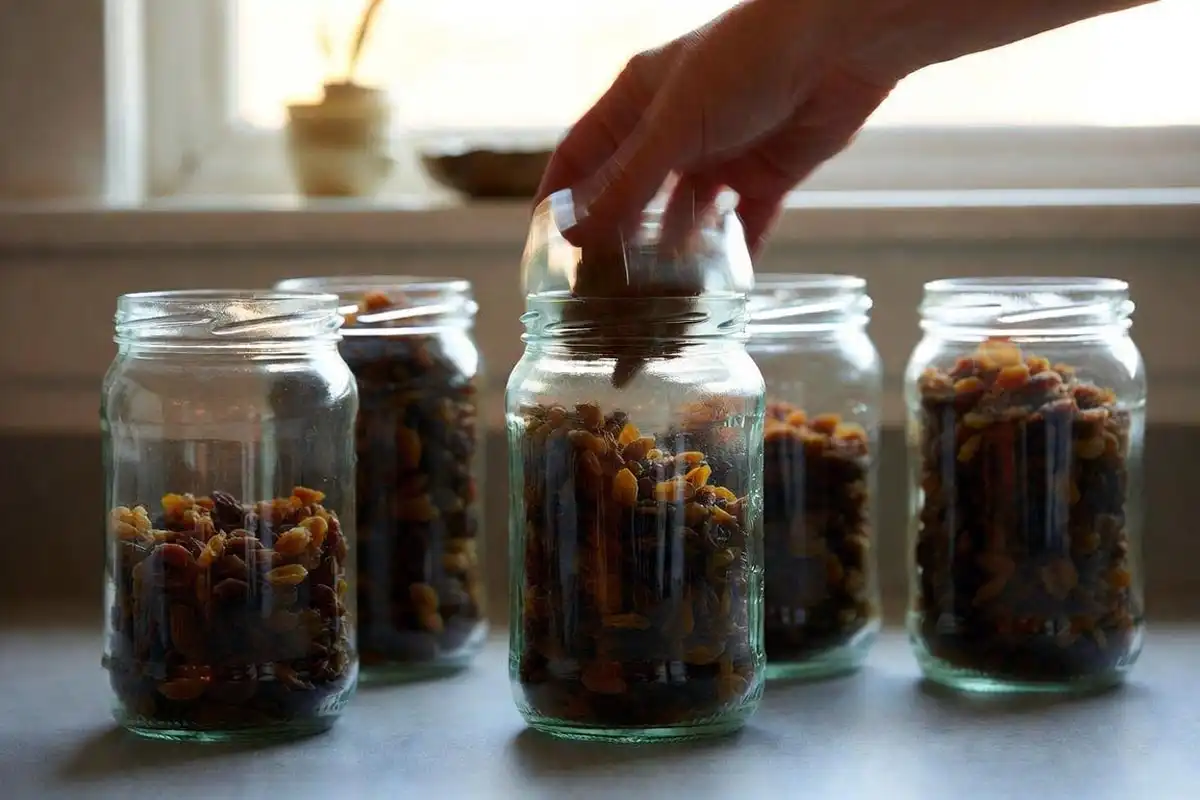
For storage, keep them airtight in a cool, dark place that stays dry. Properly conditioned raisins last 6 to 12 months in the pantry. The fridge or freezer stretches that out much longer. Freezing works well and also kills off any insect eggs, a smart move with sun-dried fruit especially. An oxygen absorber tucked in the jar helps for long storage.
Golden Raisins vs Dark Raisins
Both start as the same green seedless grapes, so the only difference is how they dry. Dark raisins are sun-dried, and the sun browns them over several days. Golden raisins are dried in a dehydrator and treated with sulfur dioxide, which holds their light color. At home, without sulfur, your dehydrator raisins come out amber to brown rather than bright gold. That is normal, and it changes nothing about the flavor.
Why Did Your Raisins Turn Out Hard or Moldy?
Hard raisins usually mean the skins never cracked or the heat ran too high, which causes case hardening. Over-drying does it too. Moldy raisins point to leftover moisture, either from skipping the conditioning step or storing them before they fully dried. So crack the skins, hold the heat near 135°F, dry until leathery, and always condition. That sequence fixes both problems.
Bottom Lines
Making raisins from grapes is mostly patience. Start with ripe, sweet seedless grapes. Crack the skins so the water can leave. Dry them low and slow at 135°F, condition for a week, then store them airtight. Do that, and your homemade raisins will beat anything in a box. Every fall, extra table grapes dried this way carry through well into winter.