How to Fertilize Tomato Plants Naturally: A Full Season Plan
Tomatoes pull heavy nutrition from soil, so organic growers have to time every application right. Knowing how to fertilize tomato plants naturally comes down to matching slow release material to the plant’s real demand curve. Cold soil, mineralization lag, and nitrogen timing decide your results.
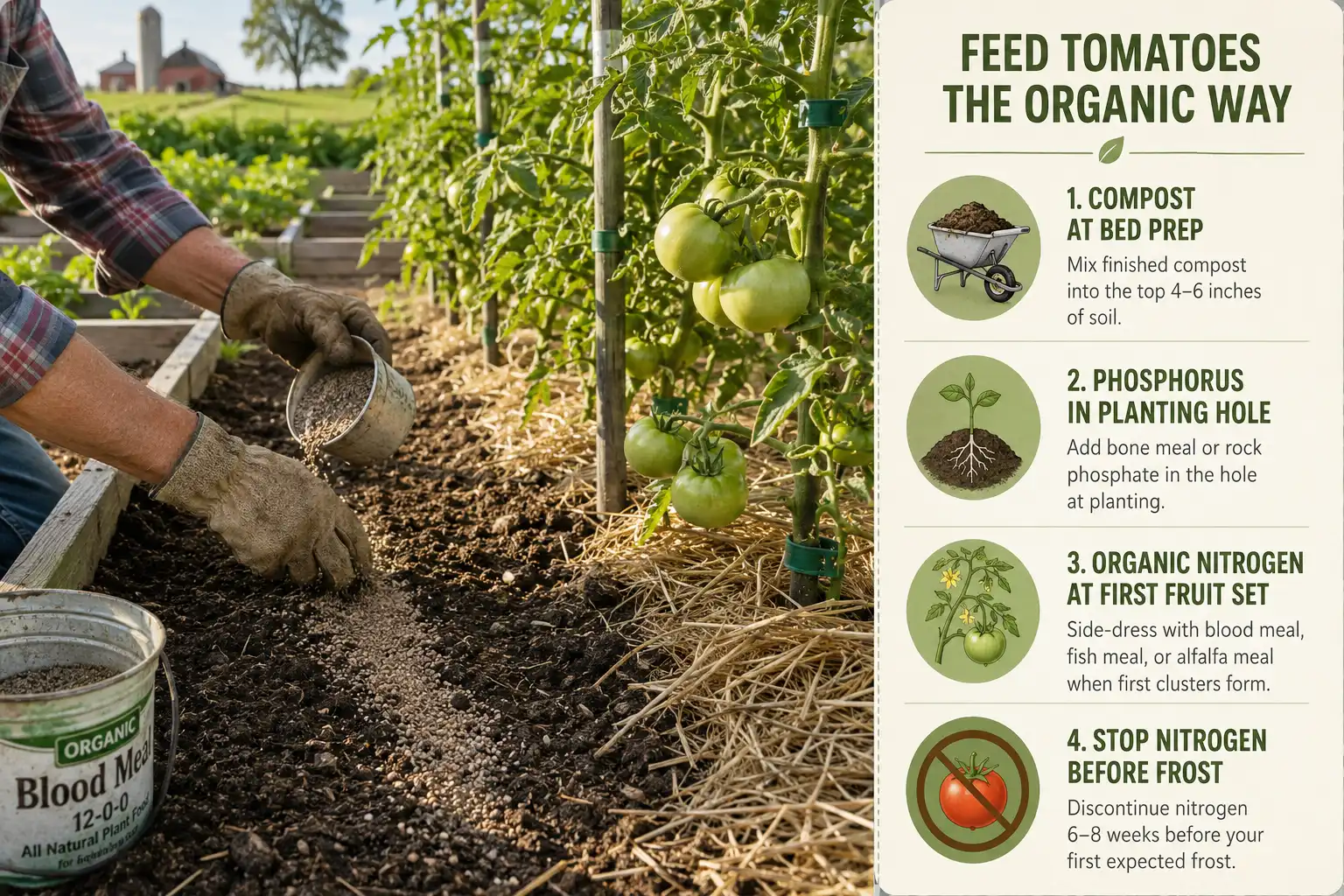
Fertilize tomato plants naturally with compost at bed prep and a phosphorus source in the planting hole. Then side-dress organic nitrogen once the first fruits reach one-third size. Stop nitrogen before frost.
What Do Tomatoes Need From a Natural Feeding Program?
Tomatoes need moderate nitrogen, high phosphorus, and medium to high potassium, plus steady calcium delivery. University of Missouri Extension points growers toward low nitrogen, high phosphorus grades at bed prep for exactly that reason. Early nitrogen builds leaves instead of fruit.
So the natural program has to hit the same shape as a synthetic one. You front-load phosphorus and potassium before planting. Then you hold nitrogen back until fruit already sits on the vine.
Three things separate natural feeding from bagged grades:
- Release speed. Microbes must break material down first. Nothing works the day you apply it.
- Low analysis. Compost runs near 1 percent nitrogen. You move volume, not ounces.
- Multiple nutrients at once. Manure compost adds phosphorus and potassium whether the soil needs them or not.
That last point matters more than most growers expect. Want the number-by-number version too? Our guide to fertilizing tomatoes through the season covers the synthetic side.
Why Test Soil Before Adding Anything Natural?
A soil test tells you which nutrient your beds actually lack. Organic amendments work too slowly to correct a guess mid-season. Tomatoes want pH between 6.2 and 6.8. Inside that window phosphorus and calcium stay available.
Ask your state lab for pH, phosphorus, potassium, calcium, and organic matter. K-State Research and Extension runs one, and most land grant labs charge only a small fee. The same sampling and testing your soil routine on field ground works fine at bed scale.
Older garden ground usually tests high in phosphorus already. Compost and manure keep pushing that number up. Once phosphorus sits in the high range, more bone meal does nothing useful. It just runs off with the next hard rain.
East beds have grown vegetables for eleven seasons. They test high in phosphorus every year. So those beds get compost for organic matter and a separate nitrogen source, never a complete organic blend.
How Much Compost Do Tomato Beds Actually Need?
Compost belongs at 1 inch per year, worked 6 to 8 inches deep. That is the ceiling Colorado State University Extension sets for garden ground. That works out near 25 to 100 pounds per 100 square feet depending on moisture and bulk density.
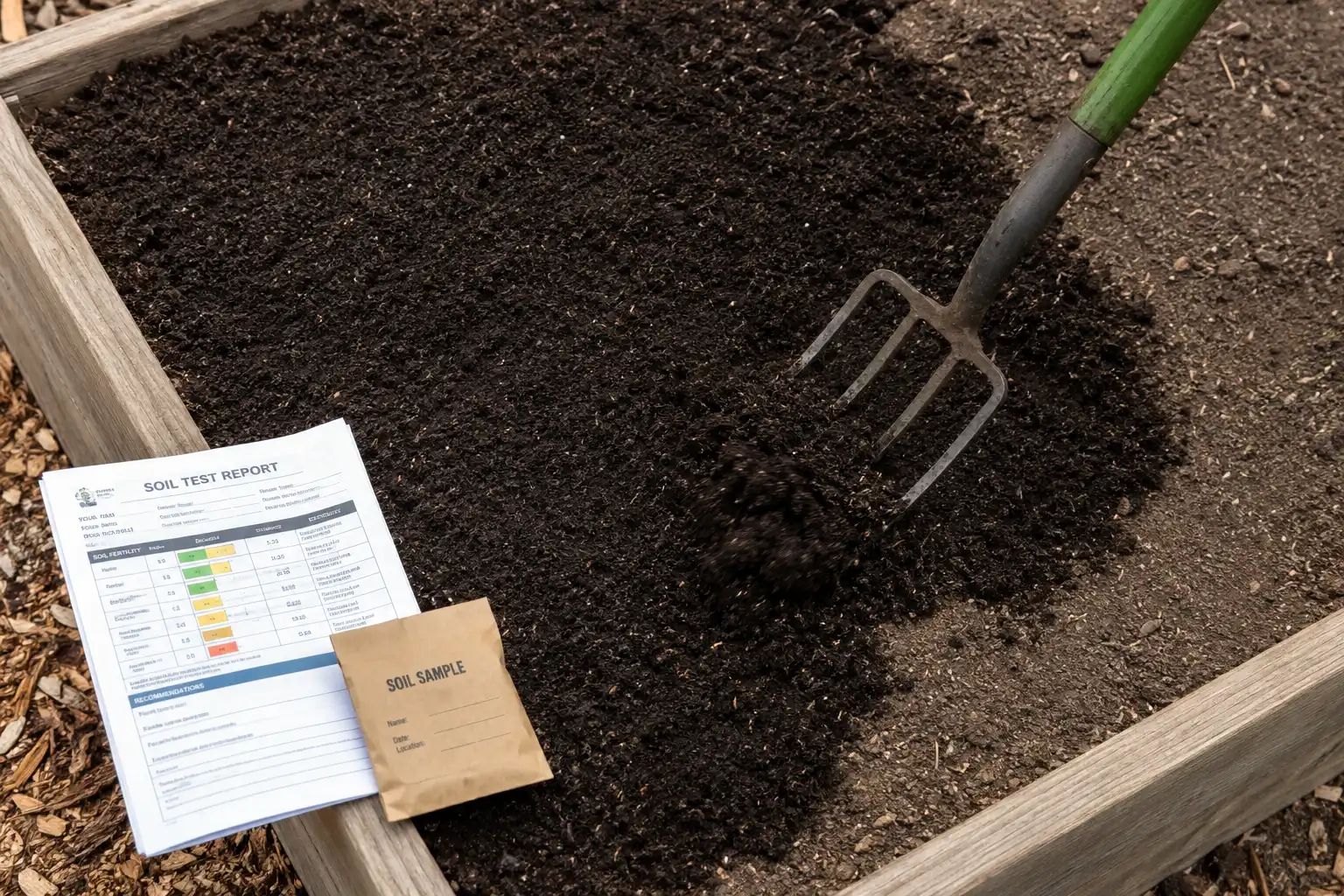
Here is the part growers miss. USDA guidance on organic systems puts it plainly. Only 10 to 25 percent of compost nitrogen becomes plant-available the first season. Phosphorus and potassium release faster, in the 40 to 60 percent range.
So compost applied at a rate high enough to meet the nitrogen demand almost always over-applies phosphorus. Penn State Extension now recommends sizing compost rates to phosphorus needs instead, then covering nitrogen separately.
Compost still earns its place. It holds moisture, feeds microbes, and steadies the soil temperature swings that drive blossom end rot. Compost applied at bed prep goes down at bed prep, not as a mid-season feed.
Which Natural Fertilizers Work Best for Tomatoes?
Blood meal, feather meal, and fish products carry the nitrogen. Bone meal or rock phosphate cover phosphorus. Langbeinite and greensand cover potassium. Release speed separates them more than analysis does.
| Source | Typical analysis | Release speed | Best use on tomatoes |
|---|---|---|---|
| Finished compost | 1-1-1 | Very slow, years | Bed prep, organic matter |
| Blood meal | 12-0-0 to 13-0-0 | Fast, 6 to 8 weeks | Side-dress at fruit set |
| Feather meal | 12-0-0 | Slow, 3 to 4 months | Bed prep for season-long nitrogen |
| Soybean meal | 7-1-2 | Moderate | Bed prep or early side-dress |
| Alfalfa meal | 2.5-0.5-2 | Slow, low rate | Soil building, poor side-dress |
| Fish emulsion | 5-1-1 | Days | Rescue feed for pale plants |
| Bone meal | 3-15-0 | 1 to 4 months | Planting hole, pH below 7.0 only |
| Langbeinite | 0-0-22 | Moderate | Potassium plus magnesium and sulfur |
| Wood ash | 0-1-5 | Fast | Potassium on acid soils only |
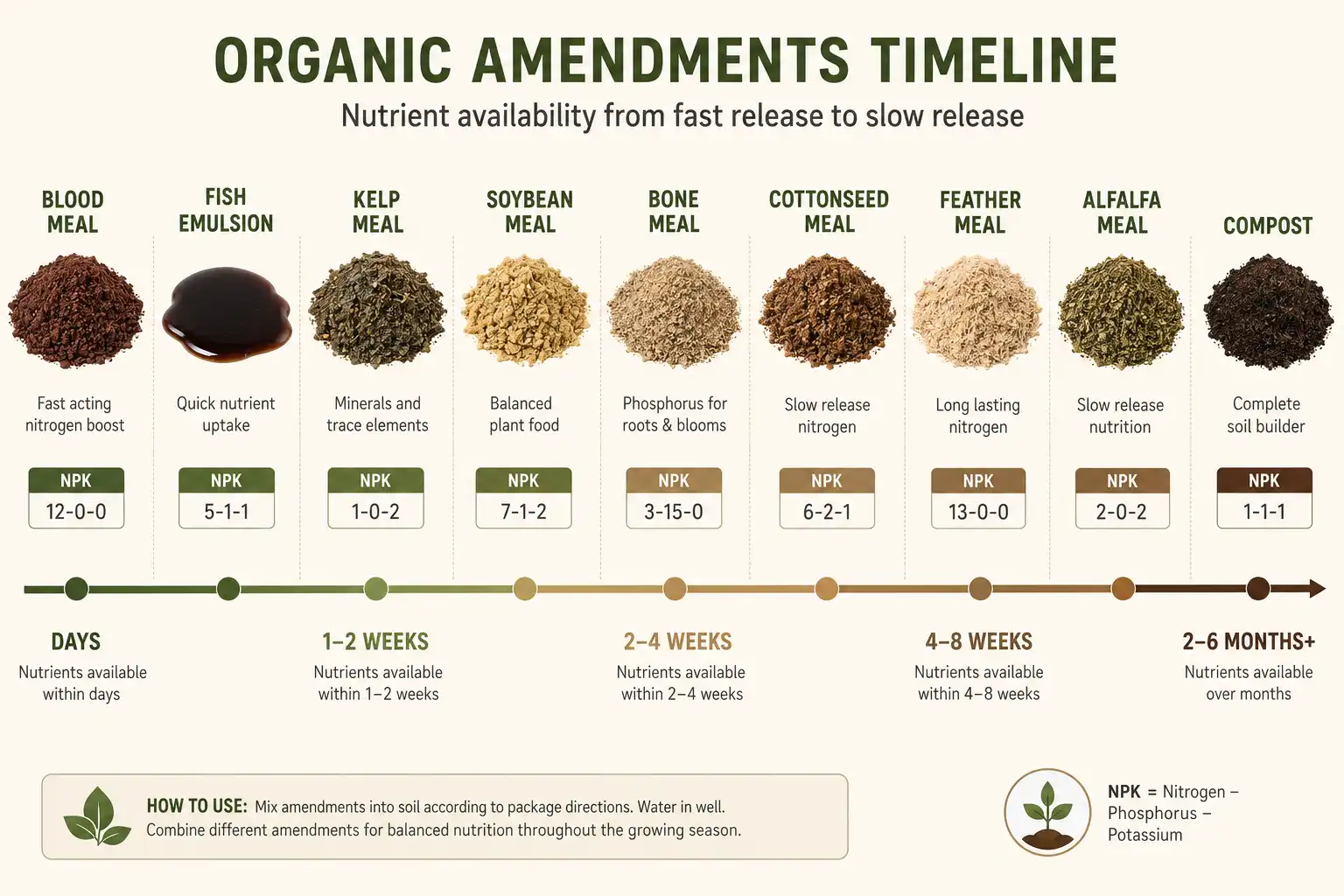
Oregon State University Extension incubations found roughly 60 percent of blood meal nitrogen released within four weeks at 72°F. Feather meal spreads the same 12 percent nitrogen across three to four months instead. Use blood meal to correct, feather meal to sustain.
Two cautions carry real weight. Colorado State University research shows bone meal phosphorus only becomes available below pH 7.0, so alkaline beds waste it entirely. Wood ash raises pH, and Purdue Extension notes that above 7.0 phosphorus, iron, and zinc start tying up.
Certified growers should check for OMRI listing before buying. Would you rather compare finished blends than mix single meals? Our article on organic feeds for vegetable beds cover what earns shelf space.
How to Fertilize Tomato Plants Naturally, Step by Step
Work bulk amendments in at bed prep. Place phosphorus below the root ball at transplant. Then side-dress nitrogen after fruit sets. Follow that order and the timing takes care of itself.
Three to four weeks before transplant:
- Spread 1 inch of finished compost across the bed.
- Add phosphorus and potassium only if your soil test calls for them. Bone meal goes on at 10 pounds per 100 square feet for a confirmed shortage.
- Broadcast feather meal at 4 to 5 pounds per 100 square feet for slow season-long nitrogen.
- Turn everything 6 to 8 inches deep, then water the bed.
At transplant:
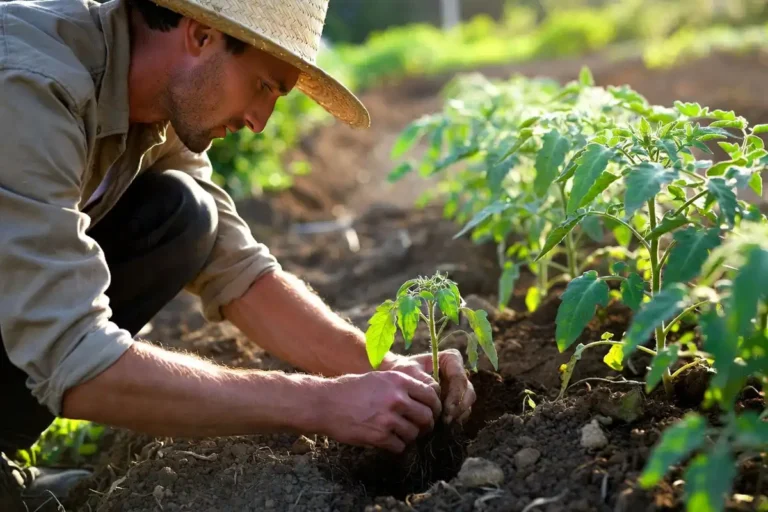
- Dig the hole deeper than the root ball.
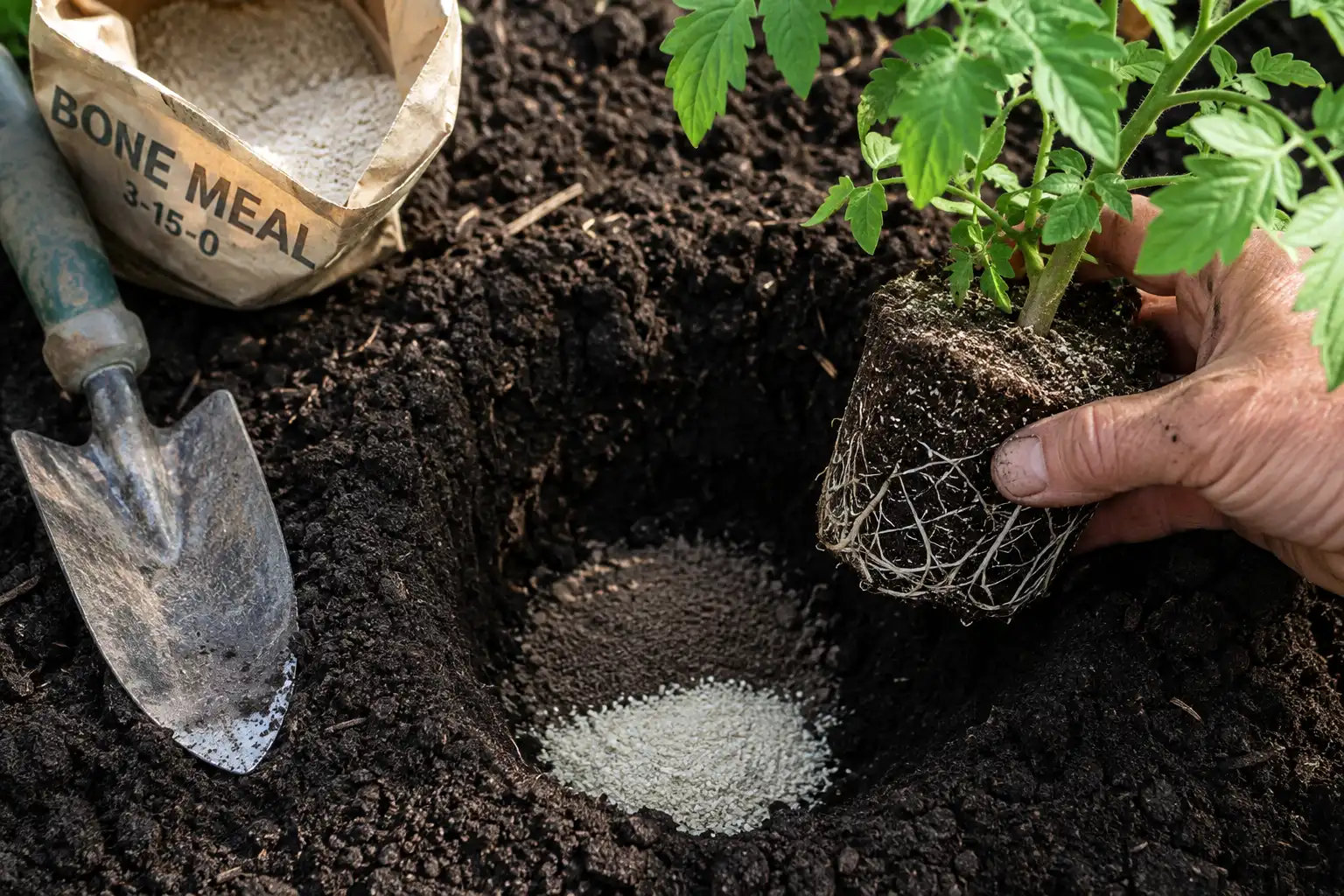
- Mix 1 tablespoon of bone meal into the soil at the bottom, then cap it with an inch of plain soil.
- Set the plant, firm the soil, and water in with diluted fish emulsion at label rate.
- Skip dry nitrogen in the hole. Roots contact it before they can handle it.
Two to three weeks after transplant: Add nothing. Plants are building roots, and extra nitrogen now costs you early fruit set.
That gap trips up new growers every year. Dark, lush vines look healthy. Then flowers drop and the first cluster never fills.
When Should You Side-Dress Tomatoes With Organic Nitrogen?
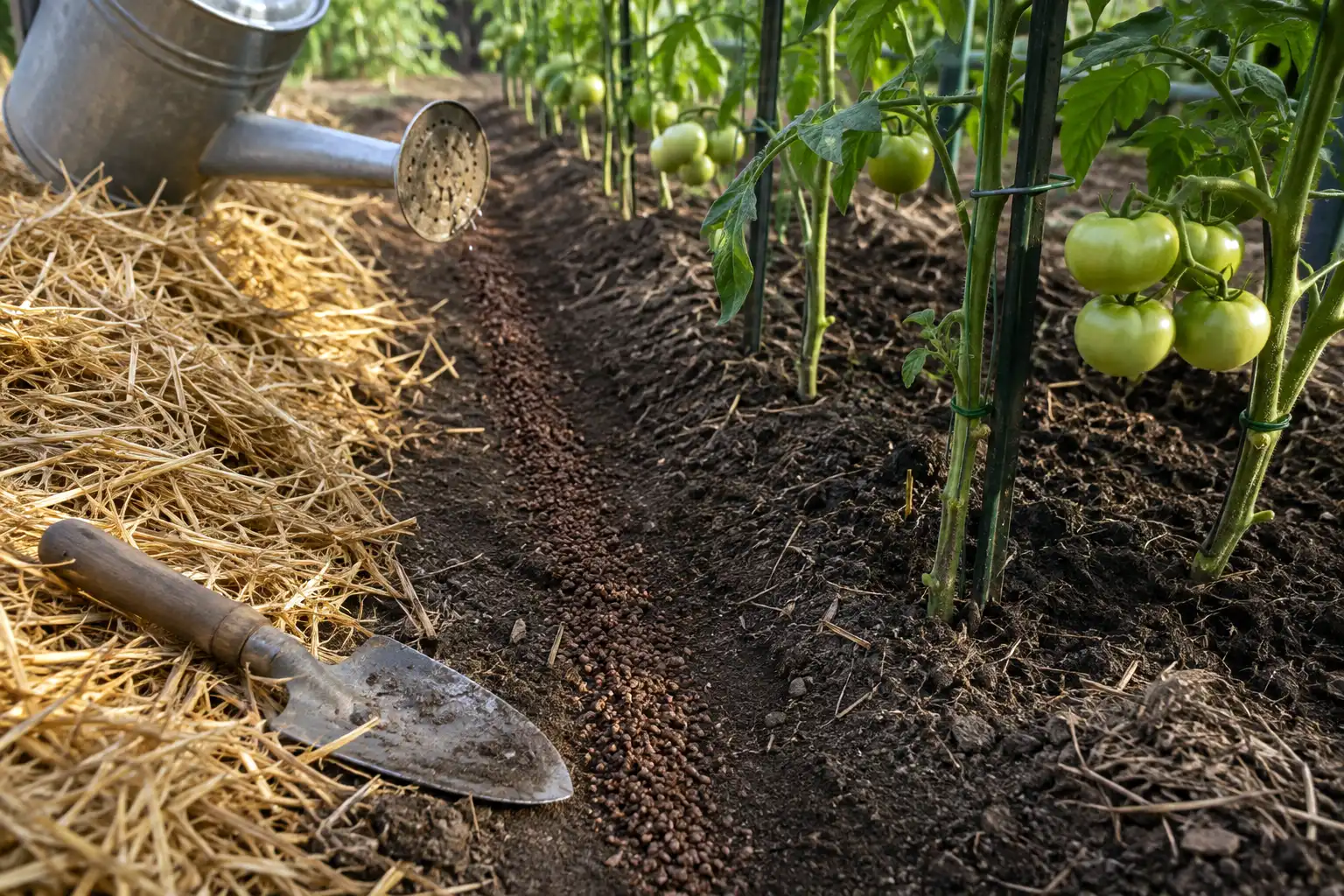
Side-dress the first time when the earliest fruits reach about one-third of full size. That trigger comes from University of Missouri Extension. Apply again two weeks after you pick the first ripe tomato, then once more a month later.
Missouri sets the tomato target at 0.5 pound of actual nitrogen per 100 feet of row. Run the math on organic sources and the rates fall out:
- Blood meal (13 percent N): about 4 pounds per 100 feet of row
- Soybean meal (7 percent N): about 7 pounds per 100 feet of row
- Cottonseed meal (5 percent N): about 10 pounds per 100 feet of row
Missouri also publishes a lighter organic side-dress of 2 pounds blood meal or 3 pounds cottonseed meal per 100 feet of row. Start there on beds already carrying compost, then step up if leaf color fades.
Method matters as much as rate. Keep the band at least 6 inches out from the stem. Pull mulch back, scratch the material into the top inch of soil, replace the mulch, then water it in.
Organic nitrogen needs lead time. Because release takes weeks, apply roughly two weeks earlier than a synthetic schedule would call for.
How Does Cold Soil Change Every Natural Fertilizer?
Cold soil stalls the microbes that convert organic material into nutrients plants can use. University of Maine soil lab work measured the effect. Mineralization roughly doubles with each 18°F rise in soil temperature.
Their trials ran at 60°F soil. Even then, release did not peak until eight weeks after application.
In USDA hardiness zone 6a, April soil sits near 50 to 55°F. So compost and meals applied in April deliver very little nitrogen before late May. Plan around that lag instead of fighting it.
Two adjustments handle it:
- Apply slow sources three to four weeks ahead of transplant rather than at planting.
- Keep a fast source on hand. Fish emulsion moves within days and rescues a pale plant while dry material is still waiting on warmth.
Checking soil temperature at 4 inches beats guessing by the calendar. Take a reading before every amendment pass in spring.
Is Manure Safe to Use on Tomato Plants?
Raw manure needs 90 days between application and harvest for tomatoes, since the fruit never touches soil. That interval comes from USDA National Organic Program standards. Soil-contact crops need 120 days.
Federal produce safety rules under FSMA also prohibit applying raw manure on top of growing vegetable crops. Untreated manure teas fall under the same restriction. Never side-dress a living tomato plant with raw manure.
Follow these rules and manure earns a place in the rotation:
- Apply raw manure in fall after harvest, incorporate it, then plant a cover crop.
- Use only properly composted manure once tomatoes are in the ground. The NOP composting standard runs 131°F for 15 days with documented turnings.
- Never use cat, dog, or pig manure on food ground.
- Cure finished compost two to four months before it touches a bed.
Fresh manure also carries salt and ammonia. Both damage young transplant roots, so incorporation and time do real work here.
How Do You Check Compost or Manure for Herbicide Carryover?
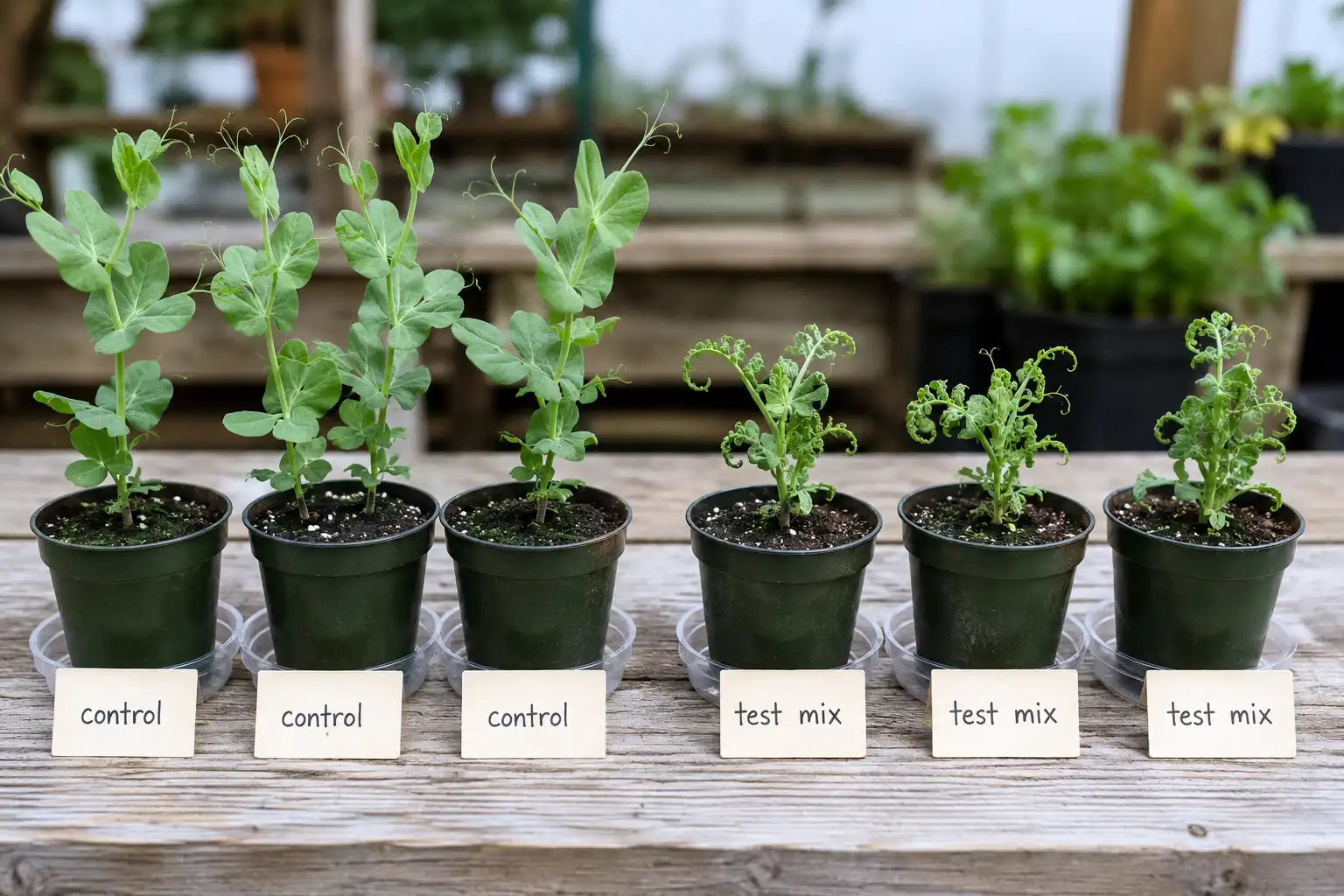
Run a pot bioassay with peas or beans before that material touches your tomato beds. Aminopyralid, clopyralid, and picloram survive composting and injure tomatoes at 1 to 3 parts per billion.
These herbicides pass through livestock intact. They persist in manure, hay, and finished compost. NC State Extension reports a soil half-life measured in months to years. Tomatoes, potatoes, peppers, and beans rank among the most sensitive crops.
The test takes four weeks and costs almost nothing:
- Pull several shovelfuls from deep inside the pile and mix them.
- Fill three pots with clean potting mix as controls. Fill three more with a blend of two parts mix to one part suspect material.
- Set each pot in its own saucer so water cannot cross over.
- Plant three pea or bean seeds per pot, then water.
- Watch for four weeks. Cupped leaves, twisted stems, or fern-like new growth point to residue.
Ask the supplier what got sprayed before you buy. Hay with broadleaf weeds mixed in is a reasonable sign nothing persistent went on it.
How Do You Feed Container Tomatoes Naturally?
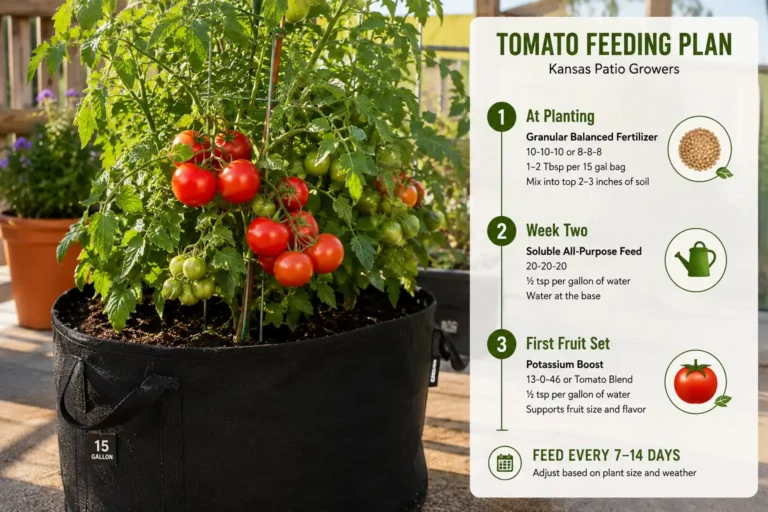
Container tomatoes need liquid organic feeds on a tighter schedule, because every watering flushes nutrients out the bottom. Dry meals alone cannot keep pace in a pot.
Build the mix with slow material, then feed with fast material:
- Blend compost at roughly 25 percent of total volume when you fill the container.
- Mix in 1 tablespoon of bone meal and 1 tablespoon of feather meal per 5 gallons of medium.
- Feed diluted fish emulsion weekly in 5 gallon containers, every other week in 20 gallon containers.
- Top-dress a half inch of fresh compost at first fruit set.
Watch the pH in soilless mixes. Peat-based media drift acidic, which actually helps bone meal work, but it can drop calcium availability over a long season.
Size drives everything else. Our notes on container grown tomatoes cover why a 5 gallon bag dries and starves faster than a half barrel.
Can Cover Crops Feed Your Tomatoes?
Cover crops supply meaningful nitrogen to tomatoes, and legumes do most of that work. Hairy vetch ahead of tomatoes is one of the better documented systems in vegetable research. USDA-ARS trials at Beltsville built much of that case.
Plant hairy vetch in fall. Terminate it at bloom in spring, then transplant into the residue. Nitrogen releases as the residue breaks down, which lines up reasonably well with tomato demand.
Crimson clover, field peas, and winter rye all fit different roles. Rye adds no nitrogen but scavenges what is left over and adds organic matter. Pair rye with a legume rather than running it alone before a heavy feeder.
One caution applies. Terminating a legume too late leaves tough residue and ties nitrogen up temporarily. Two to three weeks between termination and transplant handles it in Kansas.
Which Natural Tomato Feeding Ideas Do Not Work?
Epsom salt, eggshells, and coffee grounds all fail as tomato fertilizer. University of Minnesota Extension has addressed each one directly. They persist because the reasoning sounds right.
Epsom salt. It contains magnesium sulfate and zero calcium. NDSU Extension notes that excess magnesium competes with calcium at the root. So Epsom salt can worsen blossom end rot rather than prevent it. Apply it only when a soil test shows magnesium low.
Eggshells. Shells hold calcium as insoluble calcium carbonate. Roots cannot take up shell fragments, and breakdown takes years. Put them in the compost pile instead.
Coffee grounds. Modest amounts feed soil organisms. They do not lower pH in any useful way.
Manure tea. Federal produce rules restrict untreated manure teas on growing crops, and the food safety risk outweighs the thin nutritional return.
Blossom end rot traces back to calcium movement, not calcium supply. Most soils hold plenty. Steady moisture and mulch carry it into fruit. So watering tomatoes on a consistent schedule beats every amendment sold for the problem.
How Do You Read Tomato Leaves Before Feeding Again?
Leaf symptoms show which nutrient is short, and that beats adding more of everything. Confirm the shortage first, then match the organic source to it.
| Symptom | Likely shortage | Natural correction |
|---|---|---|
| Pale lower leaves, thin upright plant | Nitrogen | Fish emulsion now, blood meal side-dress |
| Purple tint under older leaves, stunted | Phosphorus | Bone meal, only below pH 7.0 |
| Scorched leaf margins, yellow fruit shoulders | Potassium | Langbeinite or greensand |
| Yellowing between veins on older leaves, veins green | Magnesium | Langbeinite per soil test |
| Mottled yellowing on new growth | Iron or manganese | Correct pH, add compost |
| Dark lush vines, thick stems, few flowers | Excess nitrogen | Stop nitrogen entirely |
That last row shows up most often in beds getting annual manure compost. The plant looks excellent. Then fruit set drops off and ripening drags.
So walk the row before you reach for anything. A pale plant and a lush plant need opposite decisions.
When Should You Stop Feeding Tomatoes Naturally?
Stop nitrogen three to four weeks before your average first frost, and push that earlier with slow organic sources. In zone 6a, the frost date lands in mid October, so the last nitrogen application goes down in early September.
Slow release material changes the math. Feather meal applied in August still feeds into October. Because of that lag, plan the final application by release window rather than by calendar date.
Late nitrogen pushes shoots the plant cannot ripen. Fruit splits, ripening slows, and disease pressure climbs in humid Great Plains falls.
Determinate types finish earlier. Two side-dresses usually cover them. Indeterminate vines keep setting fruit, so they earn the full schedule.
FAQs on Natural Tomato Feeding
Can compost alone feed a tomato crop?
Will fish emulsion burn tomato leaves?
How fast does natural fertilizer show a response?
Do bagged organic tomato fertilizers beat mixing your own meals?
Bottom Line
Compost goes down in early April, an inch worked deep, sized off a soil test rather than habit. Feather meal joins it for slow nitrogen. Bone meal goes only in the planting hole, and only in beds that test low.
Then wait. First side-dress of blood meal comes when green fruit hits golf ball size, not before. Fish emulsion stays on the shelf for pale plants.
Every load of outside compost gets a pea bioassay first. One contaminated batch costs a whole season of tomatoes, and four weeks of waiting is cheap insurance.