Can You Plant Tomatoes and Zucchini Together? Here Is the Truth
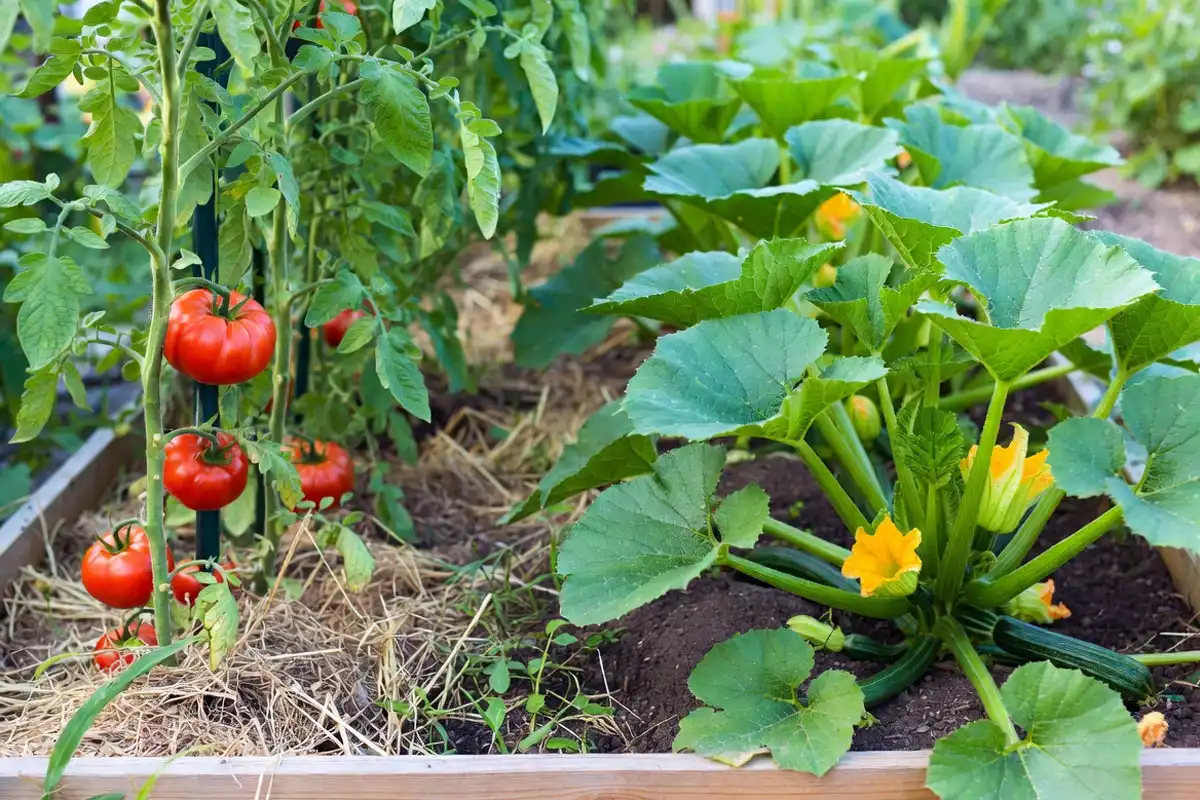
Yes, tomatoes and zucchini plant well together in the same garden bed. Both crops thrive in full sun, warm soil, and consistent moisture, which makes them naturally compatible. This guide covers spacing, planting timing, bed layout, watering, and the common mistakes that cause these two crops to compete instead of coexist. Whether you farm in rows, raised beds, or open ground, the details here help you set up this pairing for a productive season.
To plant tomatoes and zucchini together, space tomatoes 18 to 24 inches apart and zucchini 36 to 48 inches apart. Keep at least 3 feet between each crop’s row. Both need full sun (6 to 8 hours daily) and 1 to 1.5 inches of water per week. Stake or cage your tomatoes so they grow upright, and the two crops will share the bed without blocking each other’s light or airflow.
Do Tomatoes and Zucchini Actually Benefit Each Other?
Tomatoes and zucchini do not fix nitrogen or repel each other’s primary pests the way classic companion pairs do. Their benefit is structural and environmental.
Zucchini produces wide, flat leaves that shade the soil surface. That canopy reduces soil moisture loss, cools the root zone, and slows weed germination near tomato roots. Tomatoes grow vertically when staked or caged, so they occupy the space above the zucchini canopy without blocking its light.
Neither crop releases chemicals that harm the other. That neutral relationship, combined with shared growing requirements, makes this pairing low-risk and reliable.
Learn more: Plant Squash and Tomatoes Together? What Farmers Know
What Growing Conditions Do Both Crops Share?
Tomatoes and zucchini require nearly identical conditions, which simplifies management when you grow them together.
Both crops need full sun for at least 6 to 8 hours per day. Both perform well in well-drained soil with a pH between 6.0 and 6.8. Both need soil temperatures above 60°F at planting and consistent moisture through the growing season.
These shared requirements mean one watering schedule, one fertilizer program, and one soil preparation routine covers both crops.
Also know: How to plant Eggplant and Tomatoes Together
When Should You Plant Tomatoes and Zucchini Together?
Plant both crops after your last frost date when soil temperature reaches 60°F consistently. In Kansas, that window typically opens between late April and mid-May.
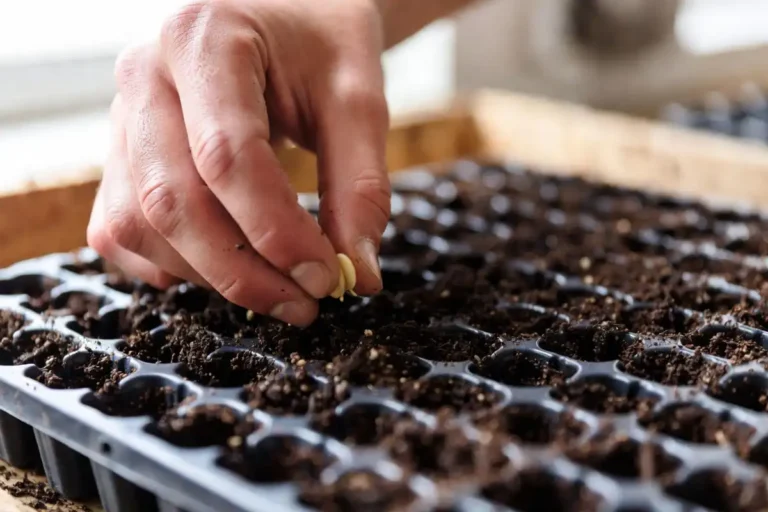
Zucchini germinates faster than tomatoes. Direct-sow zucchini seeds outdoors at transplant time, or start them indoors 2 to 3 weeks before your target date. Start tomato transplants indoors 6 to 8 weeks before that same target date. That stagger brings both crops to transplant-ready size at the same time.
How Far Apart Should You Space Tomatoes and Zucchini?
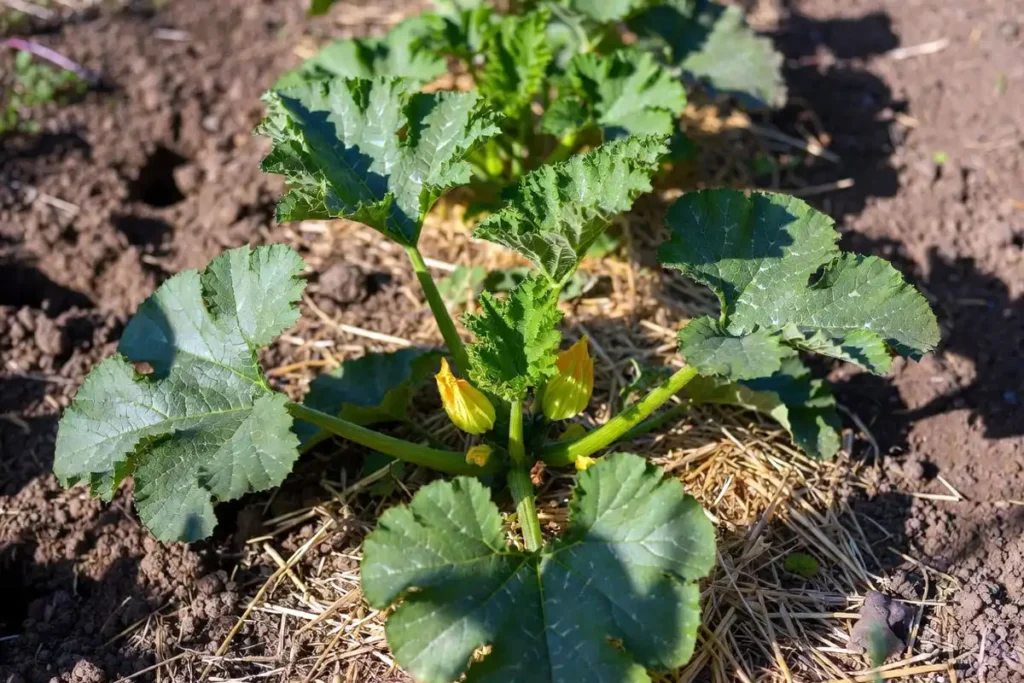
Spacing determines whether this pairing succeeds or fails. Correct plant spacing for both crops prevents competition for light, water, and nutrients.
Zucchini plants spread 3 to 4 feet in diameter. Crowded zucchini blocks airflow and accelerates powdery mildew. Space zucchini plants 36 to 48 inches apart within their row.
Space tomato transplants 18 to 24 inches apart within their row. Leave at least 3 feet between the tomato row and the zucchini row.
For raised beds, plant one zucchini per 9 square feet and one tomato per 4 square feet. Do not reduce these minimums to fit more plants.
How Should You Lay Out the Bed?
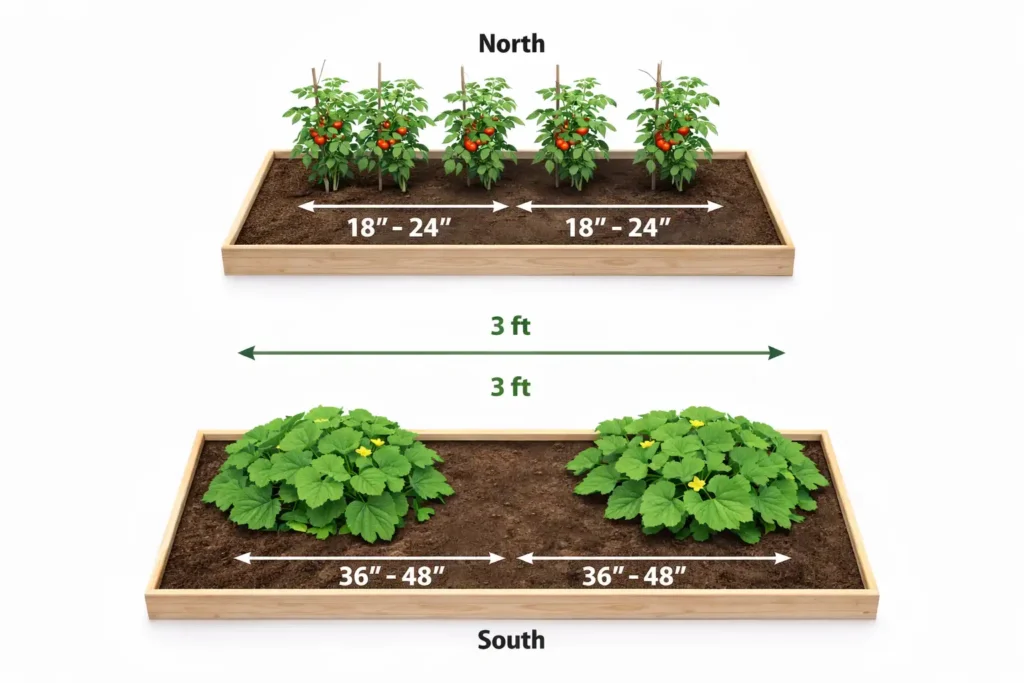
Row orientation affects how much sun each crop receives.
Place the tomato row on the north side of the bed. Tomatoes grow tall, and this position keeps them from casting afternoon shade onto the lower-growing zucchini. Plant zucchini on the south side so it receives full sun without interference.
For square raised beds, run the taller tomato plants along the back (north-facing) edge. Place zucchini toward the front. This layout lets both crops reach their light requirements simultaneously.
Does Zucchini Attract Pests That Harm Tomatoes?
Zucchini attracts squash vine borers, cucumber beetles, and squash bugs. Tomatoes attract hornworms, aphids, and whiteflies. These pests generally do not cross between the two crops.
However, a large pest population on zucchini can make it harder to monitor the tomato section of the bed. Inspect both crops at least twice per week during the growing season.
For early-stage infestations, natural pest control methods including hand removal and row covers work on both crops without chemical overlap. You can also plant pest-deterring companions near your tomatoes to reduce pest pressure on that side of the bed.
How Do You Water Both Crops Together?
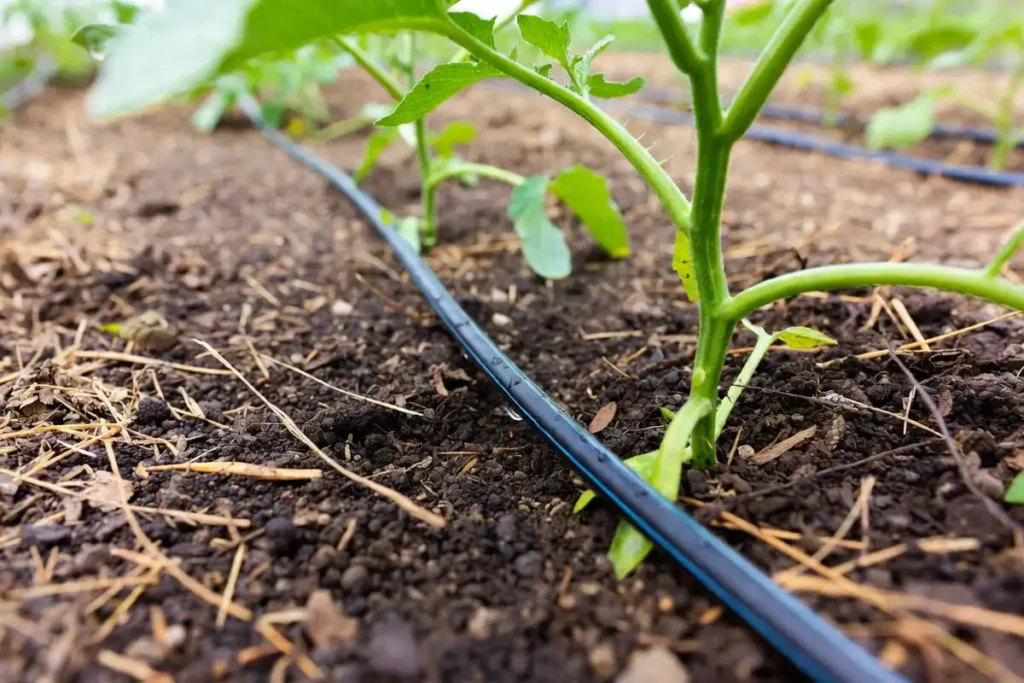
Both tomatoes and zucchini need 1 to 1.5 inches of water per week. Understanding how much water tomatoes need and when helps you build one schedule that covers both crops.
Drip irrigation works best for this pairing. It delivers water directly to the root zone without wetting foliage. Wet foliage on zucchini accelerates powdery mildew. Wet tomato foliage increases the risk of early blight and septoria leaf spot.
If you use overhead irrigation, water early in the morning. Leaves dry before evening, which reduces fungal risk on both crops.
Should You Mulch Between Tomatoes and Zucchini?

Yes. Apply 2 to 3 inches of straw or wood chip mulch between the two crops. Mulch retains soil moisture, reduces weed pressure, and stabilizes soil temperature during summer heat.
Both tomatoes and zucchini develop more productive root systems in mulched soil compared to bare soil. Mulch also reduces the soil splash that carries fungal spores onto lower leaves.
Keep mulch 2 inches away from plant stems to prevent rot at the base.
What Mistakes Should You Avoid?
Planting too close. The 3-foot minimum between rows is not negotiable. Crowded plants compete for light and trap humid air, which accelerates disease on both crops.
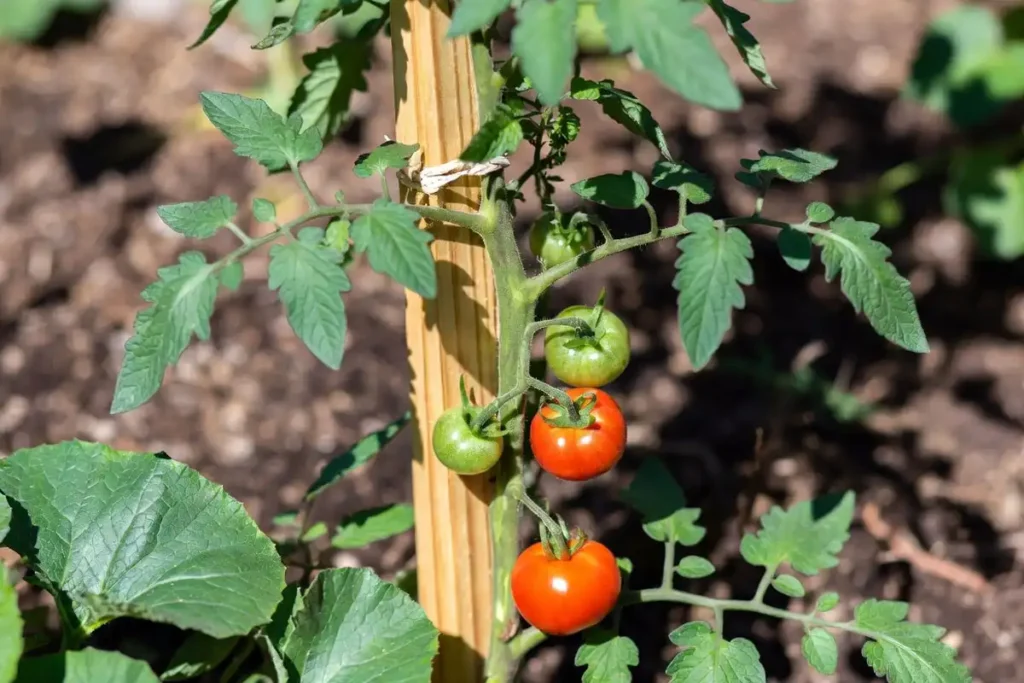
Skipping tomato support. Unstaked tomato vines sprawl into zucchini and reduce airflow for both plants. Stake, trellis, or cage your tomatoes at transplant time before they need it.
Watering in the evening. Evening irrigation leaves foliage wet overnight, which is the primary condition that drives powdery mildew and blight.
Leaving lower zucchini leaves in place. Dense ground-level canopy traps moisture and fungal spores. Remove the lowest 2 to 3 leaves once plants establish, especially in humid conditions.
Skipping mulch. Bare soil dries faster and allows weeds to compete directly with both crops’ root systems.
Conclusion
Tomatoes and zucchini make a reliable garden pairing when you manage spacing, plant support, and airflow from the start. Both crops share the same sun, soil, and water requirements, which makes management straightforward.
Follow the spacing minimums, stake your tomatoes before they need it, mulch the bed, and inspect both crops regularly. That routine keeps both plants producing from transplant through final harvest without interference.