How to Dry Corn for Seed So It Still Sprouts Next Spring
Drying corn for seed is not the same as drying it for feed or grinding. Seed has to stay alive. Too much heat kills the embryo, even when the kernel still looks perfect.
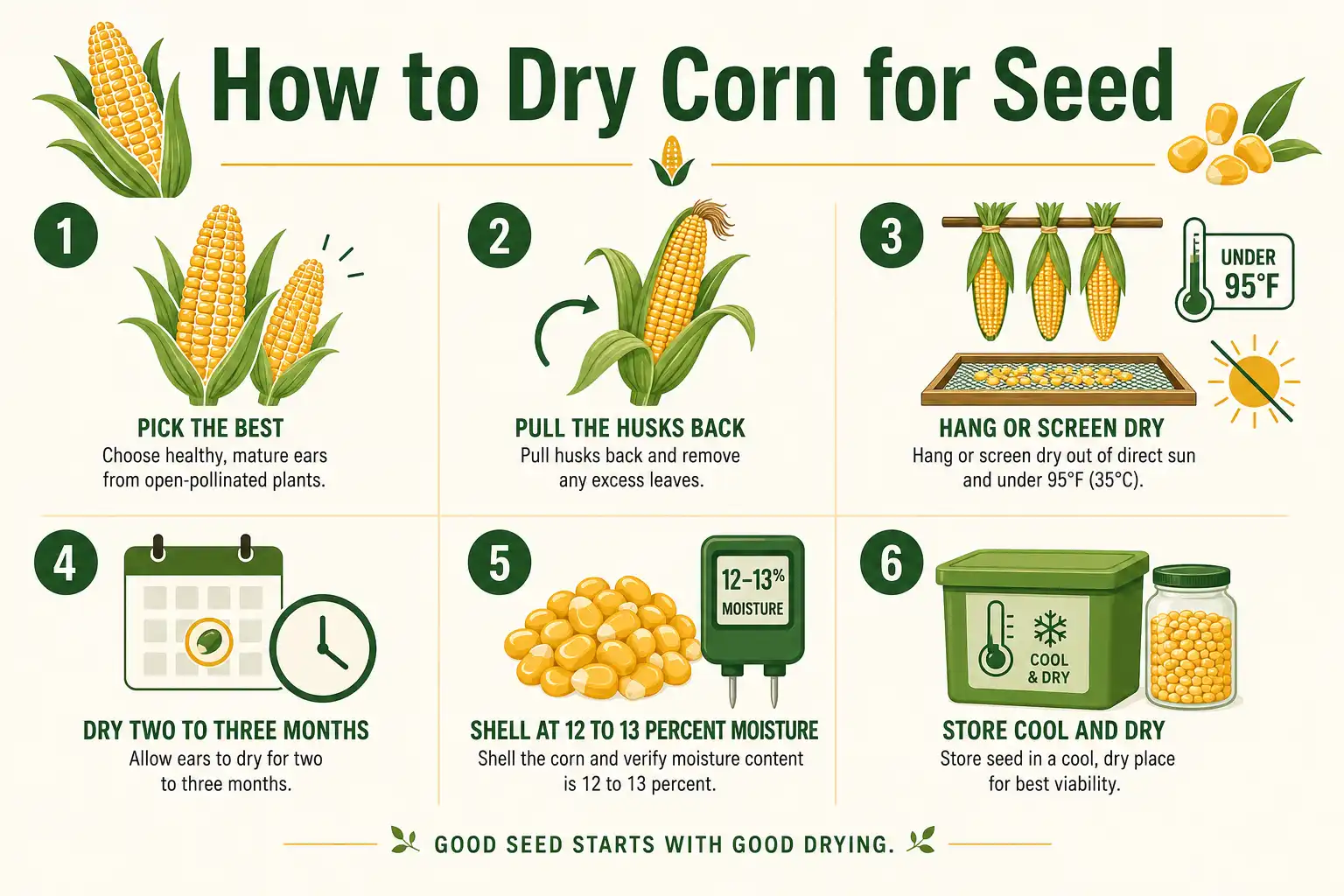
To dry corn for seed, work slowly in a cool, airy spot out of direct sun, never above 95°F. Pull the husks back, hang or screen the ears two to three months, then shell at 12 to 13 percent moisture.
Why Drying Corn for Seed Is Different From Drying It for Feed
Heat is the whole difference. Feed corn and grinding corn only need to keep their starch and protein. A hot grain dryer can run warm and still do the job. Seed corn is alive, though. The embryo inside each kernel is a tiny plant in waiting, and real heat cooks it.
That is why a kernel can look bone dry and perfect yet never sprout. The damage hides inside the seed. So for seed corn, you dry low and slow. You trade a little speed for a live embryo every time.
Can You Save Seed From Any Corn?
No, you cannot. You can only save true seed from open-pollinated or heirloom corn. Hybrid corn does not come back true. Save seed off a hybrid and the next crop scatters into odd heights, odd colors, and weak ears. The seed company crossed two parent lines to make that hybrid, and that cross does not repeat itself.
Open-pollinated corn is the kind that breeds true year after year. All heirlooms are open-pollinated. If you want the same corn next season, that is the seed to save. The split between heirloom and hybrid seed matters more with corn than almost any other garden crop.
Corn also cross-pollinates on the wind. Pollen drifts from one patch to another and mixes varieties fast. Sweet corn near field corn or popcorn will pick up those genes, and your saved seed carries the cross. Planting corn in blocks instead of single rows helps every ear fill out and keeps your own variety pollinating itself.
How Far Apart Should Corn Varieties Be?
For home seed saving, keep different corn varieties at least 600 feet apart. That distance cuts most cross-pollination for your own use. For pure seed you can share or sell, growers stretch that to half a mile or even a full mile. Corn pollen travels a quarter mile or more on a good Kansas wind, so distance alone is never a sure thing.
When you cannot get that spacing, hand-pollinate instead. Bag the ear shoots before the silks show. Bag a tassel, shake its pollen into the bag, then dust it onto the silks and re-cover the ear. It takes time, but it locks your variety in clean.
When Should You Harvest Corn for Seed?
Leave the ears on the stalk as long as you can, until the husks turn brown and papery. Seed corn needs to reach full maturity on the plant, well past the eating stage. The kernels dent and harden, and the plant forms a black layer at the base of each kernel. That black layer means the kernel has stopped filling and reached physiological maturity.
Harvest on a dry day, before a hard frost hits. Watch the forecast close in October. If wet or freezing weather rolls in early, snap the best ears off and finish drying them under cover.
Pick your seed from your best plants, not just your best ears. Tall, healthy stalks that yielded well pass those traits on. Pull a few extra ears too, since some seed always fails the germination test later.
How to Dry Corn for Seed Step by Step
Here is the short version. Pull the husks back, give the ears steady airflow, and keep them cool and shaded. Let them dry for two to three months. Now the details.
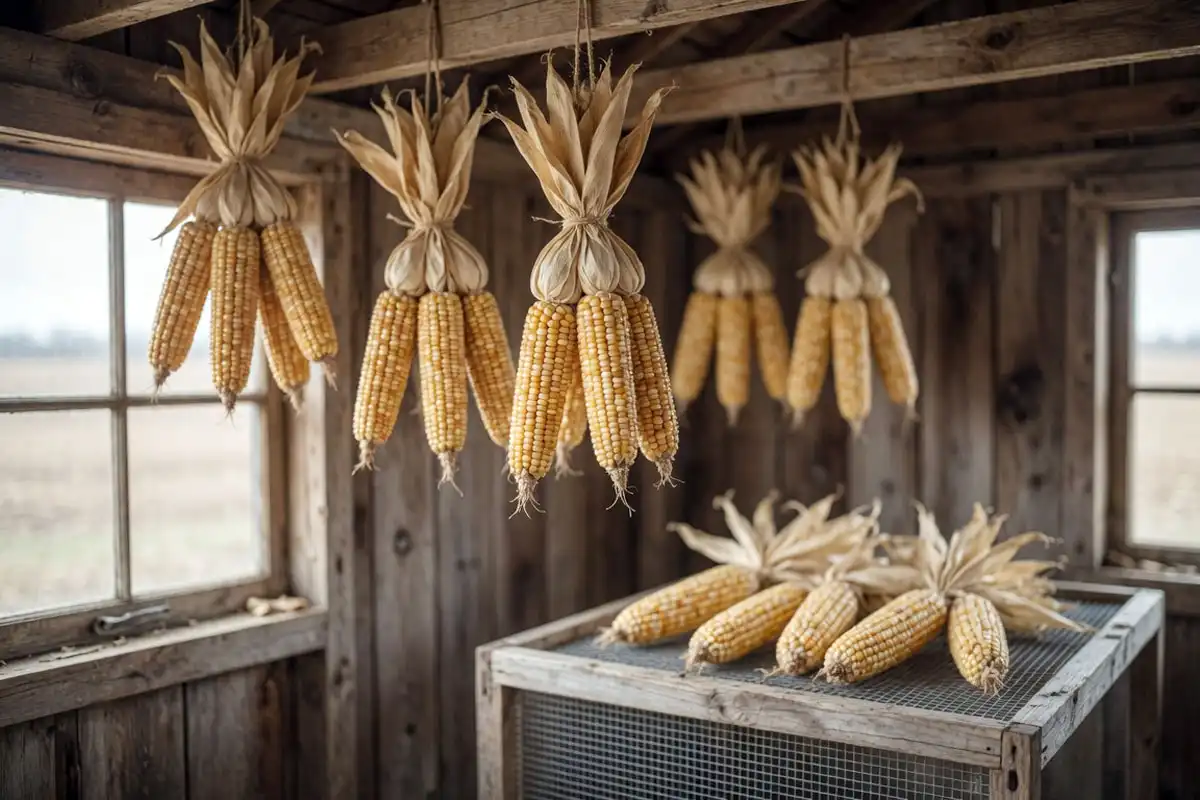
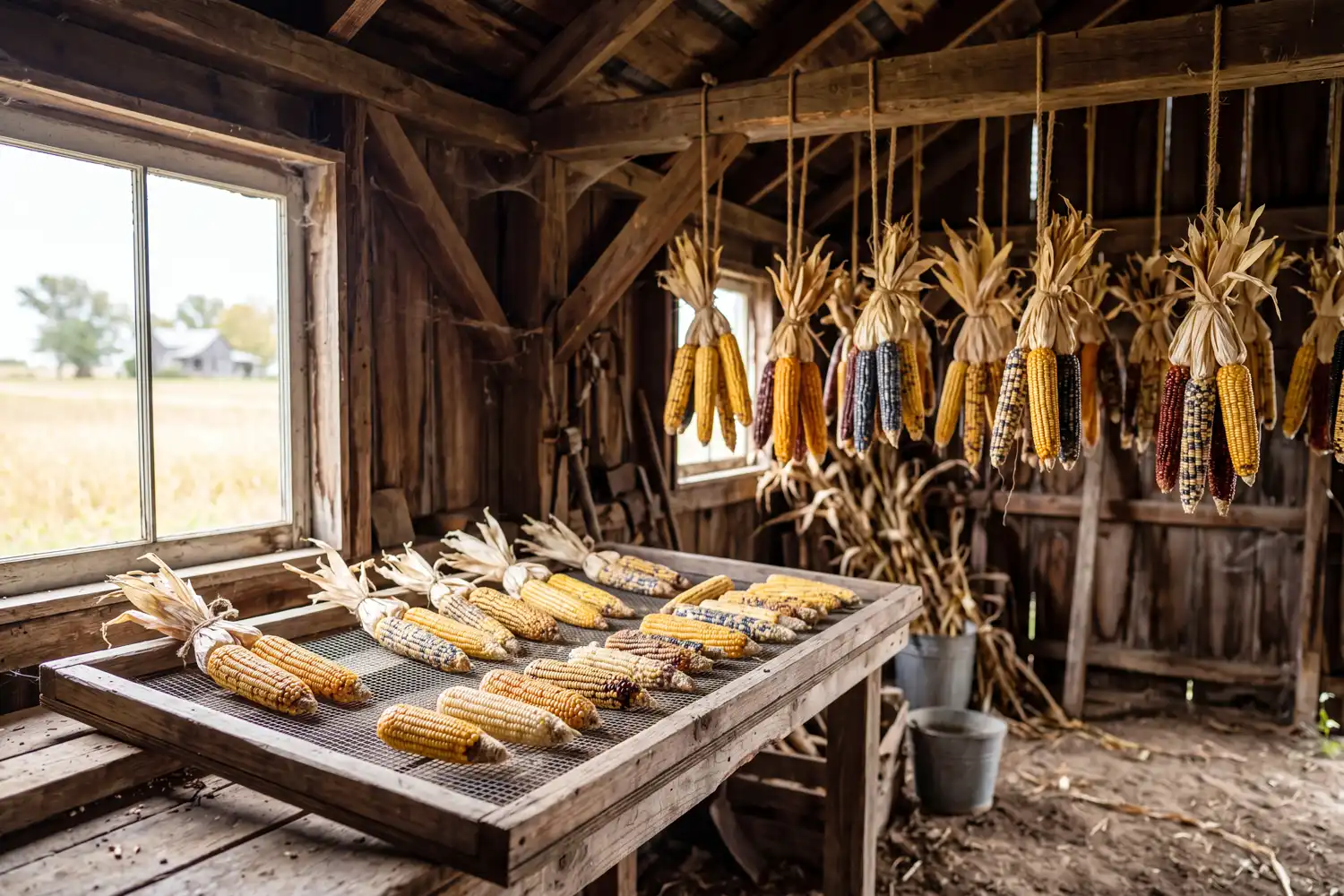
First, pick your best mature ears and toss any that are moldy or damaged. Next, deal with the husks. You have two good options. Pull the husks back without tearing them off, then braid or tie the ears in bunches and hang them up. Or strip the husks fully and drop the ears into mesh bags or onto a screen. Either way, the goal is air moving over every kernel.
Then hang the bunches or set the screens in a dry, shaded, airy spot. A garage, shed, or covered porch works well. Keep the ears out of direct sun, because sun heat spikes the temperature and harms the seed. Shake the bags or turn the ears every few days so they dry evenly and no damp spot starts molding.
Give it two to three months. Corn dries slowly on the cob, and slow is exactly what seed wants. The same setup works whether you are drying corn on the cob for seed or for grinding. For seed, though, you never rush it with added heat.
What Temperature Is Safe for Drying Seed Corn?
Keep the drying air under 95°F at all times. Above that, germination starts dropping, and the hotter it gets, the more seed you lose. Seed corn tests show the best sprouting near 90°F, with a clear drop as heat climbs past 100°F.
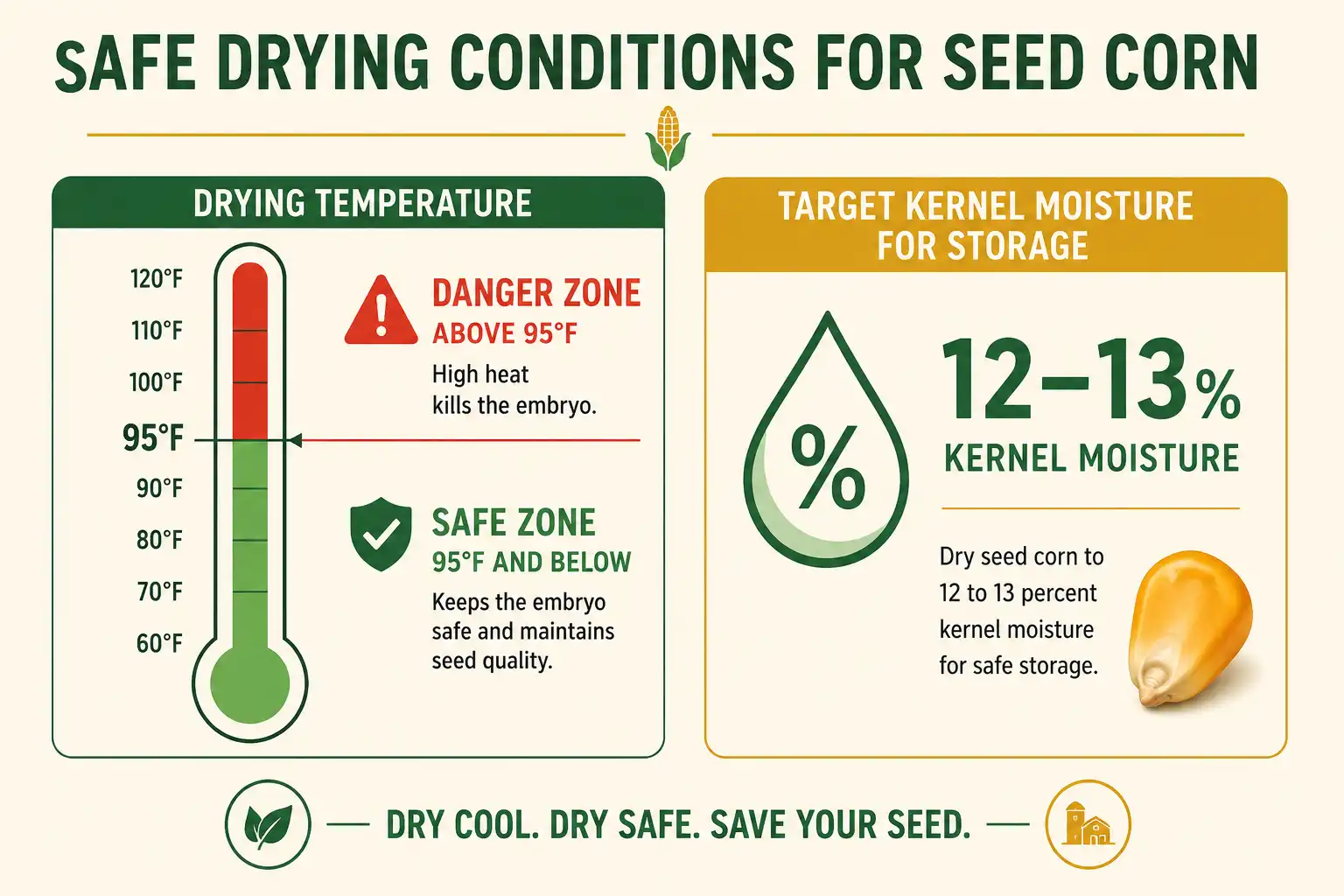
Never use an oven, a hot box, or a high-heat grain dryer on seed corn. Those run far too hot and kill the embryo. If you want to speed things up, add airflow, not heat. A fan in the room moves moisture out without raising the temperature. Wet seed straight off the stalk is the most fragile, so go easy on any heat early on.
What Moisture Level Should Seed Corn Be?
Dry seed corn down to 12 to 13 percent moisture before storage. Most extension seed labs land on that same range, because it keeps mold and rot out while protecting the embryo. Corn comes off the stalk anywhere from 25 to 40 percent moisture. So it has a long way to go before storage.
You do not need fancy gear to check it. Press a thumbnail into a kernel. Dry seed will not dent, and the kernels shatter or crack instead of mashing. Twist a dried ear in your hands; the kernels should pop off clean. For an exact number, a grain moisture tester takes out the guesswork. That helps most when you save a lot of seed.
How to Shell and Test Corn Seed Before Storing
Shell the ears only after they are fully dry. Twist two ears against each other, or rub the kernels off by hand. For seed, keep the plump kernels from the middle of the ear. The small kernels at the tip and the butt sprout less reliably, so set those aside for the chickens.
Before you trust that seed, run a germination test. This one step saves you from a thin, patchy stand next spring.
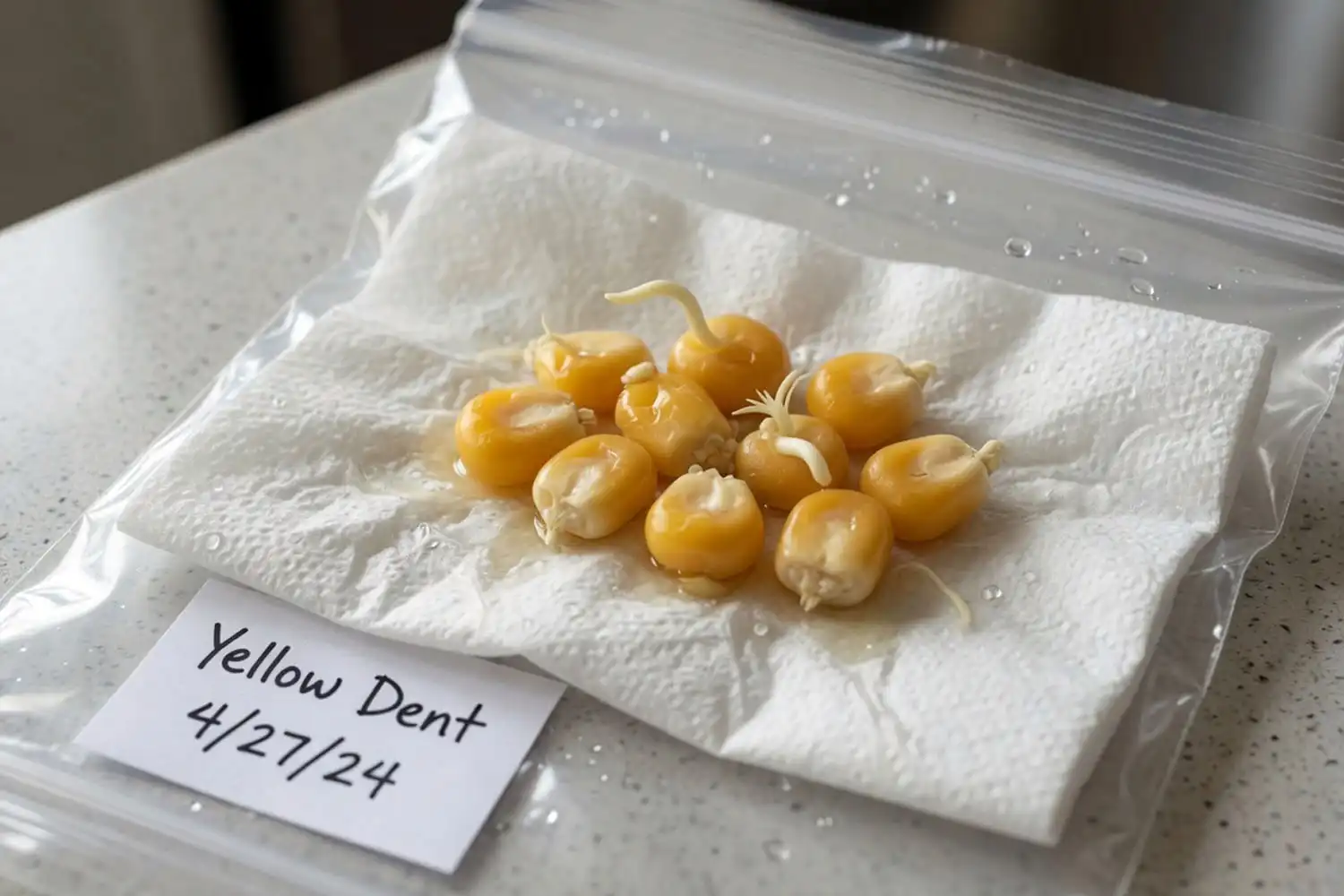
Lay 10 kernels on a damp paper towel, fold it over, and slip it into a labeled plastic bag. Set it somewhere warm, around 70°F, like the top of the fridge. Check it after 7 to 10 days and count how many sprouted. You can also float-test corn in a bowl of water; the sinkers are sound, and the floaters are duds.
What Germination Rate Is Good Enough to Plant?
A germination rate above 70 percent is good enough to plant. If 7 or more of your 10 kernels sprout, that seed will carry a field. Between 70 and 90 percent, sow a little thicker to make up for the gaps. Below 70 percent, buy fresh seed instead, because a weak stand costs you more than new seed does. Weak, old seed also sits in cold soil longer and tends to rot before it sprouts.
How to Store Dried Seed Corn So It Stays Viable
Store shelled, fully dry seed in an airtight, mouse-proof container in a cool, dark, dry place. A glass jar with a tight lid or a metal canister both work. Toss in a packet of silica gel to soak up any stray moisture. Mice love stored corn, so a chewable bag is not enough.
Temperature and humidity set how long your seed lasts. A simple rule helps. Add the storage temperature in degrees Fahrenheit to the relative humidity percentage. Keep that total under 100. So 50°F at 40 percent humidity is solid, while warm and damp is not. A spot below 45°F is even better, and a refrigerator fits the bill. The cool, dry rules that good crop storage always comes down to apply straight to seed corn.
Label every jar with the variety and the year. Corn seed stays viable about 1 to 4 years stored well, sometimes up to 5. Even so, retest any carryover seed with a quick germination check before you plant it.
How to Bring Seed Corn Through to Spring
Saving your own corn seed comes down to patience. Dry it low, dry it slow, and keep it cool and dark. Pick open-pollinated ears off your best plants, dry them on the cob under 95°F, and shell at 12 to 13 percent moisture. Run a germination test before you ever count on that seed.
Come spring, that saved seed plants just like any other. Some growers get a faster, more even stand by soaking corn seed before planting. That is worth a try with your own batch. Treat the drying right, and you will have seed worth planting for years.