
How Much Does an Ear of Corn Weigh? 7 Key Facts Farmers Should Know
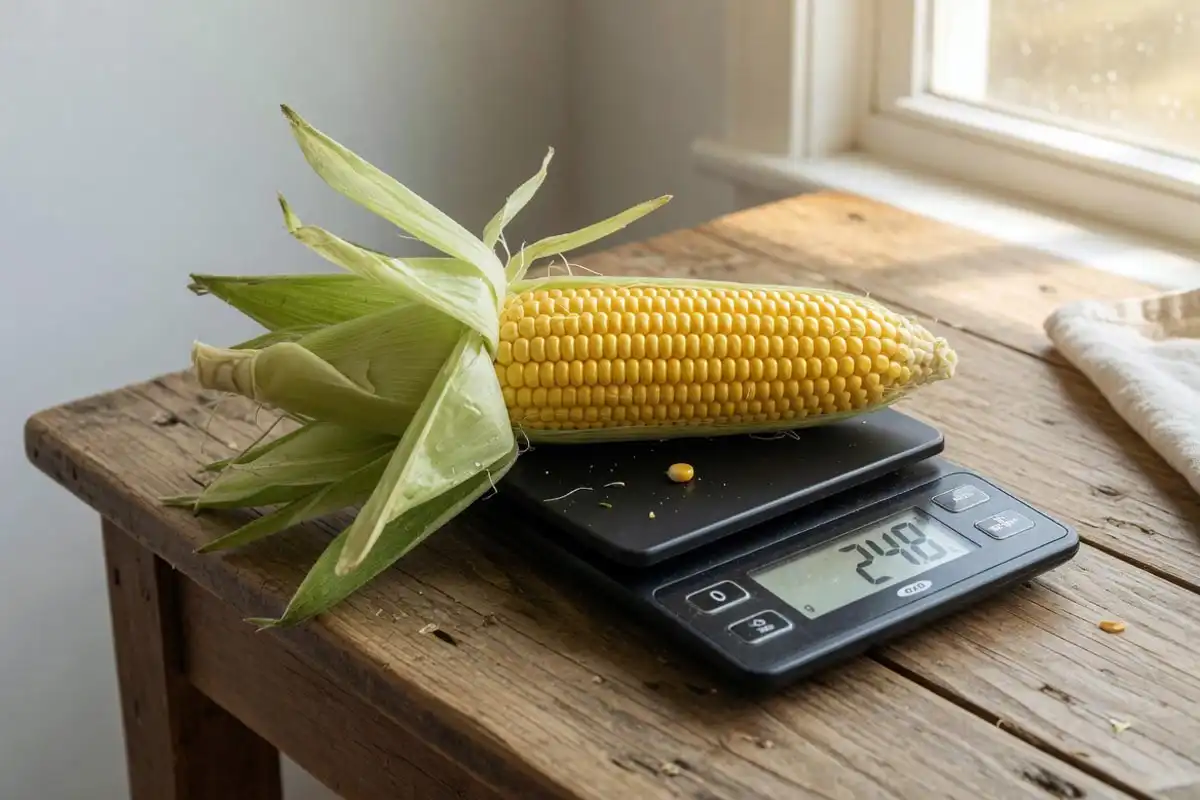
An average ear of corn can weigh between 0.5 and 0.9 pound, depending on the variety, moisture level, and whether the husk is still on. Sweet corn runs lighter. Field corn runs heavier at harvest. This guide covers typical weights, moisture effects, and how to measure ears on your own farm.
A typical ear of corn weighs 0.5 to 0.9 lb (8 to 14 oz). A shucked sweet corn ear averages about 0.5 lb. A field corn ear at 15.5% moisture runs 0.6 to 0.75 lb. Weight drops as corn dries down.
What is an ear of corn?
An ear of corn is the seed-bearing part of a corn plant. It holds kernels arranged in rows on a woody cob, wrapped in a leafy husk. A single ear carries 600 to 800 kernels across 14 to 18 rows in most dent and sweet varieties.
How much does an ear of corn weigh on average?
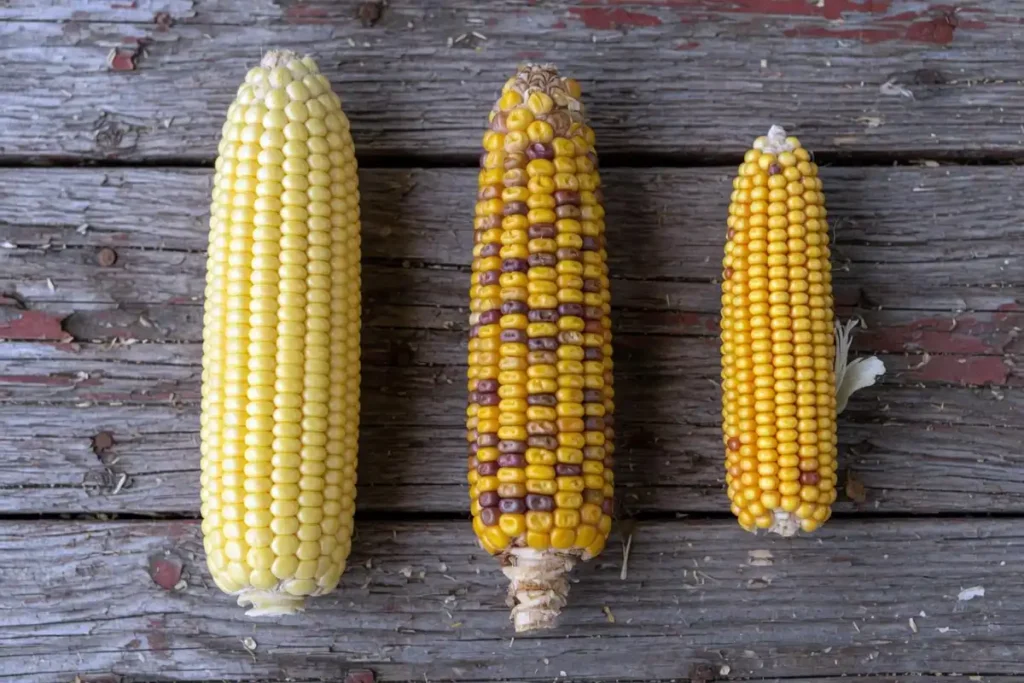
An average ear of corn weighs between 0.5 and 0.9 pound (227 to 408 grams). Sweet corn sold at markets averages about 0.5 lb per shucked ear. Field corn ears at harvest moisture run 0.6 to 0.75 lb. Larger show varieties can top 1 lb.
Sweet corn (with husk, market-ready)
A fresh sweet corn ear with husk weighs 0.7 to 1.0 lb. The husk alone adds 2 to 4 oz. Once shucked, the edible ear drops to 0.4 to 0.6 lb.
Field (dent) corn at harvest
Dent corn ears at typical combine moisture of 20 to 25 percent weigh 0.6 to 0.85 lb. After drying to 15 percent moisture, ears shrink to 0.5 to 0.7 lb.
Popcorn
Popcorn ears run smaller than sweet or dent. Most range from 0.25 to 0.45 lb per ear.
Know more: Ears of Corn to a Stalk
What affects ear of corn weight?
Several factors shift the number:
- Variety: Sweet, dent, flint, and popcorn grow different ear sizes.
- Moisture content: Wet kernels weigh more. A 25% moisture ear is heavier than the same ear at 15%.
- Pollination: Poor silking leaves gaps. Every missing kernel cuts weight.
- Row count and ear length: An 18-row, 8-inch ear outweighs a 14-row, 6-inch ear.
- Husk on or off: Husk adds 2 to 4 oz per ear.
- Soil fertility and water: Stressed plants produce smaller ears.
How does moisture change ear weight?
Moisture changes ear weight in a direct line. A 0.75 lb ear at 25% moisture weighs about 0.66 lb at 15%. The USDA bushel standard for shelled corn sits at 56 lb at 15.5% moisture, which is the number grain elevators price on.
You can check moisture at home with a grain moisture tester. That reading matters for storage, pricing, and yield estimates.
How much does an ear of corn weigh without the cob?
A shelled ear (kernels only) weighs about 75 to 82 percent of the whole ear. For a 0.75 lb field corn ear, the kernels weigh roughly 0.56 to 0.60 lb. The cob alone makes up 15 to 20 percent of the total ear weight.
This ratio explains why one bushel of ear corn (70 lb) yields about one bushel of shelled corn (56 lb). The relationship between corn weight and bushel measurement is explained in the related guide on pounds of corn per bushel.
How to weigh an ear of corn at home
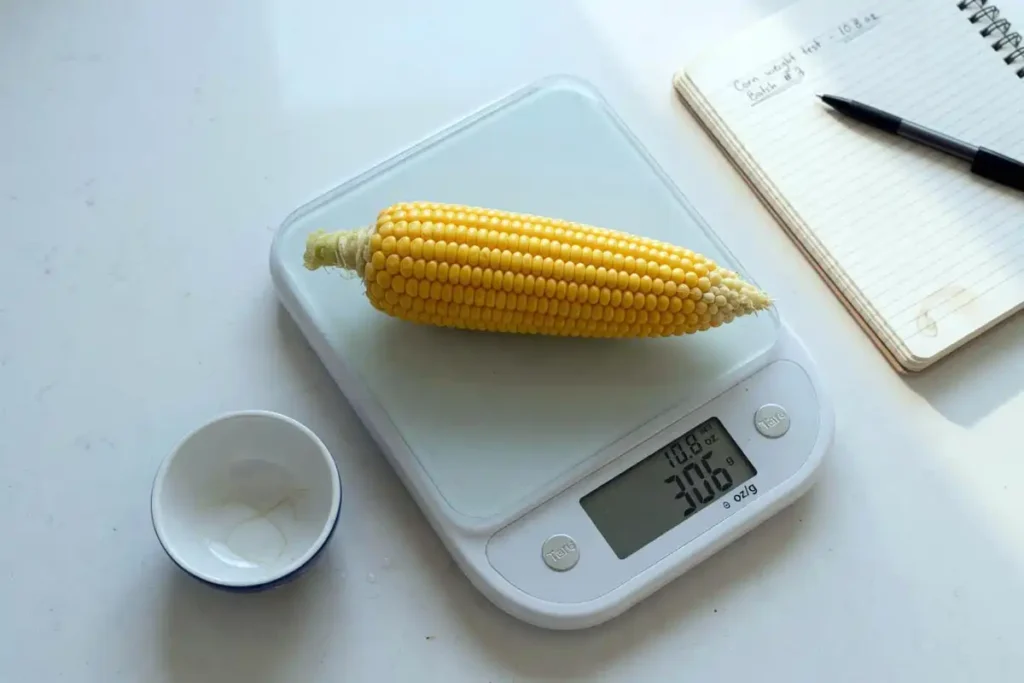
Follow these steps for a clean reading:
- Pick a kitchen or postal scale. Any scale that reads in grams or ounces works.
- Decide the state: husk-on, husk-off, or shelled. Record it.
- Tare the scale with an empty bowl or plate.
- Place one ear on the scale and read the weight.
- Repeat with 5 ears and average the readings. A single ear can mislead.
- Log the variety and moisture next to the weight for future reference.
For bulk estimates, weigh 10 ears, average them, then multiply by your ear count.
Why ear weight matters
Ear weight drives three practical decisions on the farm:
- Yield estimation: ear count × average ear weight = field yield.
- Storage planning: wetter ears take more bin space per pound of dry grain.
- Market pricing: buyers pay on shelled weight at 15.5% moisture.
If you haul grain, ear weight ties into bigger volume math. That in posts on bushels in a semi load and the weight of a 5 gallon bucket of corn. University extension services like UNL CropWatch publish ear-weight tables for corn yield checks too.
Mistakes to avoid when measuring ear weight
- Weighing only one ear. Single ears swing wide. Use an average.
- Ignoring moisture. Wet corn inflates weight. Dry it or adjust for moisture.
- Mixing husk-on and husk-off ears in the same average.
- Using a worn spring scale. Old scales drift. Digital reads steadier.
- Sampling from the field edge only. Edge rows skew high from extra light and water.
Troubleshooting low ear weights
Small, light ears point to a growing-season issue. Common causes:
- Drought during silking. Poor pollination means fewer kernels.
- Nitrogen shortage. Pale plants with small ears often need more N next season.
- Compacted soil. Roots cannot pull water or nutrients.
- Insect or disease pressure. Earworms, rootworms, and common smut all cut weight.
Walk the field, note the pattern, and plan for next year’s rotation and fertility. Proper harvest timing can also help protect crop weight, as discussed in the guide on when to harvest crops.
FAQs about Ear of Corn Weigh
How much does a shucked ear of corn weigh?
How many ears of corn make a pound?
How much does one ear of corn weigh in grams?
How many kernels are on one ear of corn?
Does husk weight count in ear of corn weight?
Conclusion
An ear of corn weighs 0.5 to 0.9 pound in most cases, with sweet corn at the lower end and mature field corn at the upper end. Moisture, husk, variety, and pollination all shift the number. Weigh several ears, record your conditions, and the math lines up for cooking, storage, or yield checks.