How Long Does Corn Seed Last? Shelf Life and Storage Guide
Leftover corn seed from last spring sits in plenty of sheds and garages. Before you plant it, you want to know how long does corn seed last and whether it will still come up. In short, corn seed has a definite shelf life, and storage decides everything.
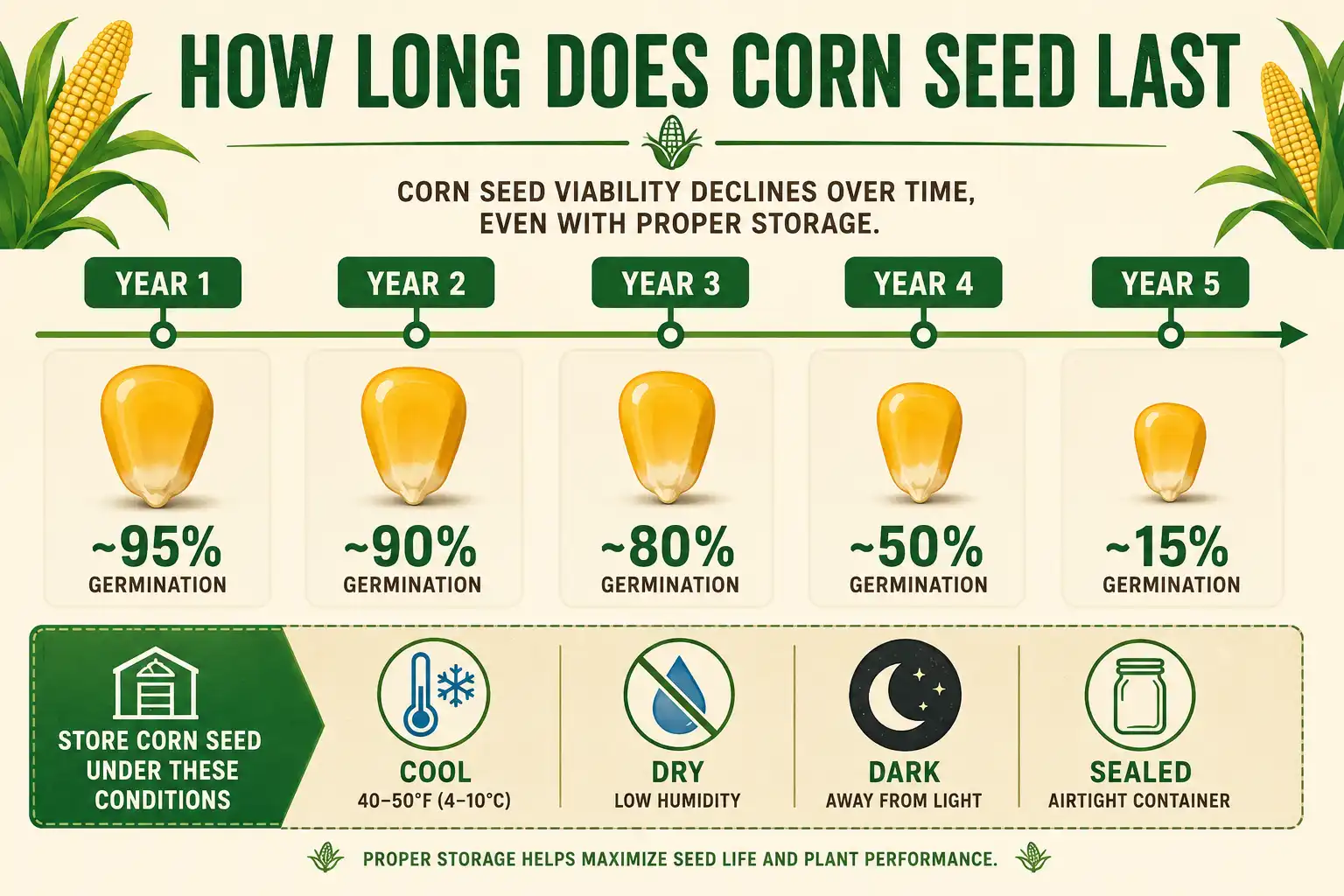
How long does corn seed last? Most corn seed stays viable for 2 to 3 years when stored cool, dry, and dark. Germination drops after year three, and sweet corn fades faster, so test older seed first.
How Long Does Corn Seed Last in Storage?
Corn seed lasts 2 to 3 years for strong germination, and up to about 5 years when stored cold and dry. After the first year, the germination rate begins a slow slide. By year three, you will see thinner stands and slower emergence in the field.
Fresh seed always plants best. University trials and seed company testing both confirm it. In one extension demonstration, four-year-old corn seed stored through wide temperature swings sprouted at only about one in seven. One-year-old seed from the same batch came up best of all.
Still, well-stored seed can hold up better than you expect. Properly dried kernels kept in a steady, cool spot keep most of their vigor through year two. The trouble starts when seed rides out hot summers and damp winters in a shed. Heat and moisture age seed fast.
What Affects How Long Corn Seed Stays Viable?
Four things decide how long corn seed stays viable: moisture, temperature, the type of corn, and the seed’s starting quality. Get the first two right, and you stretch the life of any seed lot.
Moisture Is the Biggest Threat
Moisture ages seed faster than anything else. Damp seed breathes more, burns through stored energy, and invites mold. Dry kernels sit dormant and stable. For storage, corn seed should hold around 8 percent moisture or lower. The drier it stays, the longer it keeps.
Humidity in the storage room matters just as much. A simple rule helps here. Add the storage temperature in degrees Fahrenheit to the relative humidity percentage. Keep that total under 100. A 50°F room at 40 percent humidity (a total of 90) treats seed well. A hot, muggy garage blows right past that line.
Temperature and Light
Cool and dark beats warm and bright every time. Each 10°F drop in storage temperature roughly doubles how long seed stays viable. A refrigerator at about 40°F is excellent for small lots. A freezer works too, but only for seed dried to a safe moisture level first. Light speeds aging, so keep seed in opaque containers or a dark cabinet.
Corn Type and Starting Quality
Seed that starts weak never stores well. Bargain seed, or kernels saved from a poor drying year, will not last like quality seed. The type of corn matters too, which brings up sweet corn.
Does Sweet Corn Seed Last as Long as Field Corn?
No, sweet corn seed does not last as long as field corn or dent corn. Sweet corn stores less starch and more sugar in the kernel, so it has less stored energy to draw on. That shorter fuse shows up as lower vigor and a shorter shelf life.
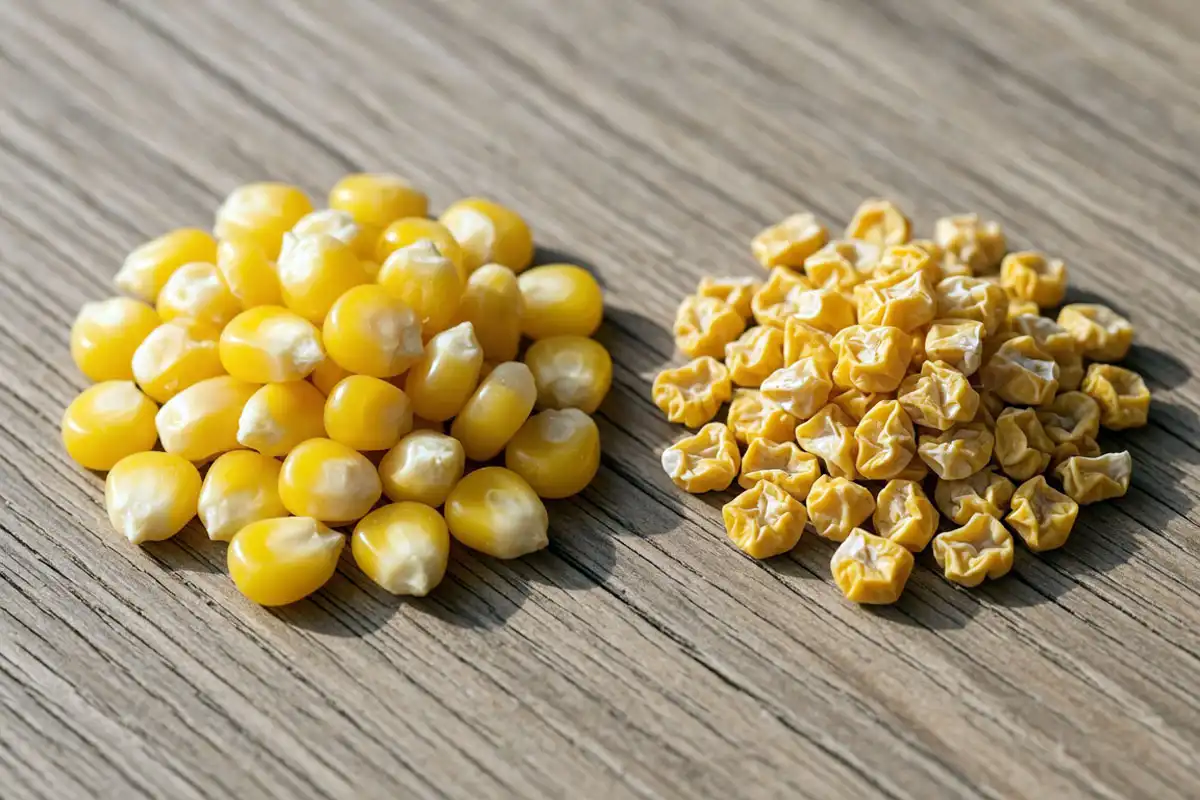
Among sweet corn, the supersweet types fade fastest. Breeders rank sweet corn vigor strongest to weakest like this: sugary (su), then sugary enhanced (se), then supersweet (sh2). The shrunken, shriveled kernels of supersweet (sh2) corn carry the least reserves. They germinate poorly in cold soil and lose punch in storage sooner than other types.
What this means in practice: buy sweet corn seed fresh each year when you can. Supersweet especially. If you must hold sweet corn seed over, store it carefully and test it before spring. K-State Research and Extension and Iowa State Extension both note the same thing. Shrunken sweet corn seed needs warm soil and strong vigor to come up well.
How to Store Corn Seed So It Lasts
Store corn seed cool, dry, dark, and sealed. That combination protects the kernel and slows aging. Here is the routine for leftover seed.
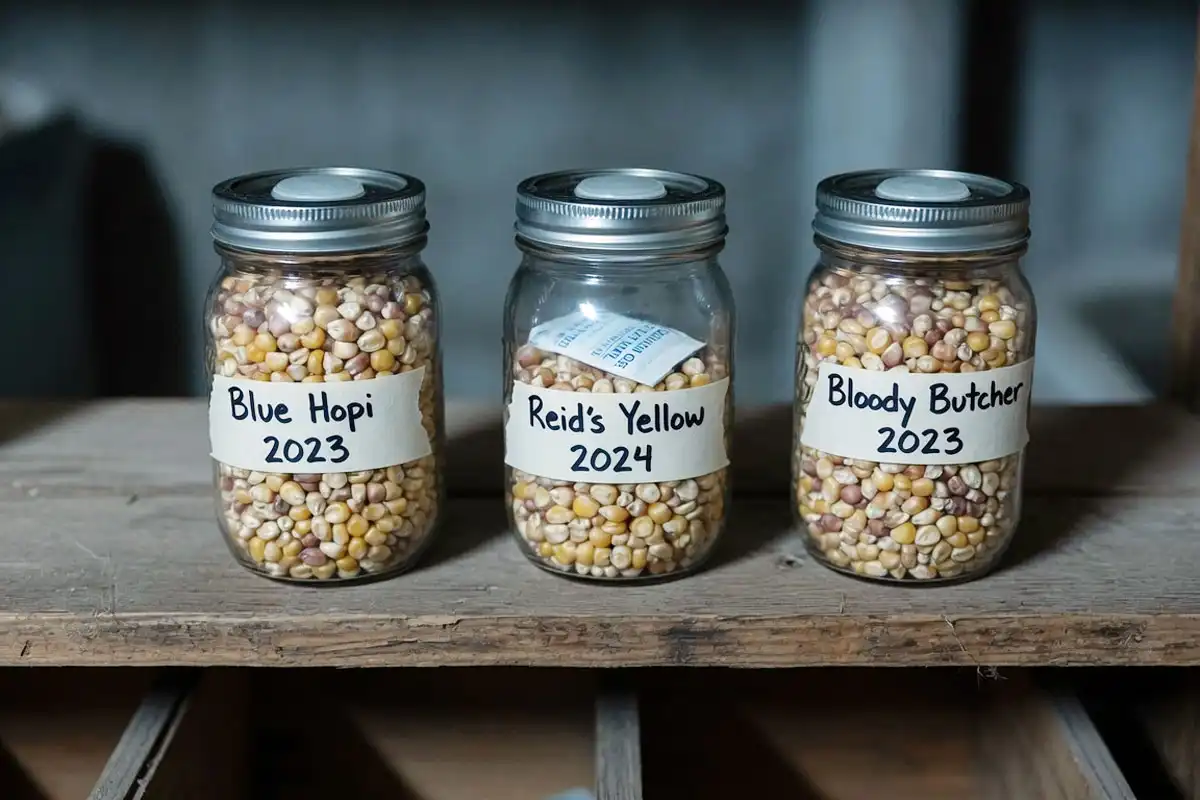
First, make sure the seed is dry. If you saved your own ears, the rules for drying corn on the cob apply here too. Seed must be fully dry before it goes into a sealed jar. Damp seed in a sealed container will mold.
Next, seal it. Use clean glass jars with tight lids, or zip bags pressed flat to push out air. Less oxygen means slower aging. Toss in a silica gel packet, or a tablespoon of powdered milk wrapped in tissue, to pull stray moisture.
Then keep it cold and dark. A basement, a cellar, or a spare refrigerator all work. The same cool, dry approach for general crop storage works for seed, just on a smaller scale. Label every jar with the variety and the year. You will thank yourself next spring.
If you carry over a lot of seed, a grain moisture tester takes out the guesswork. It tells you how dry the kernels really are before storage.
How Do You Test Old Corn Seed Before Planting?
Run a simple germination test. It takes ten minutes to set up and tells you exactly what your seed will do. Test every batch older than a year before it goes in the ground.
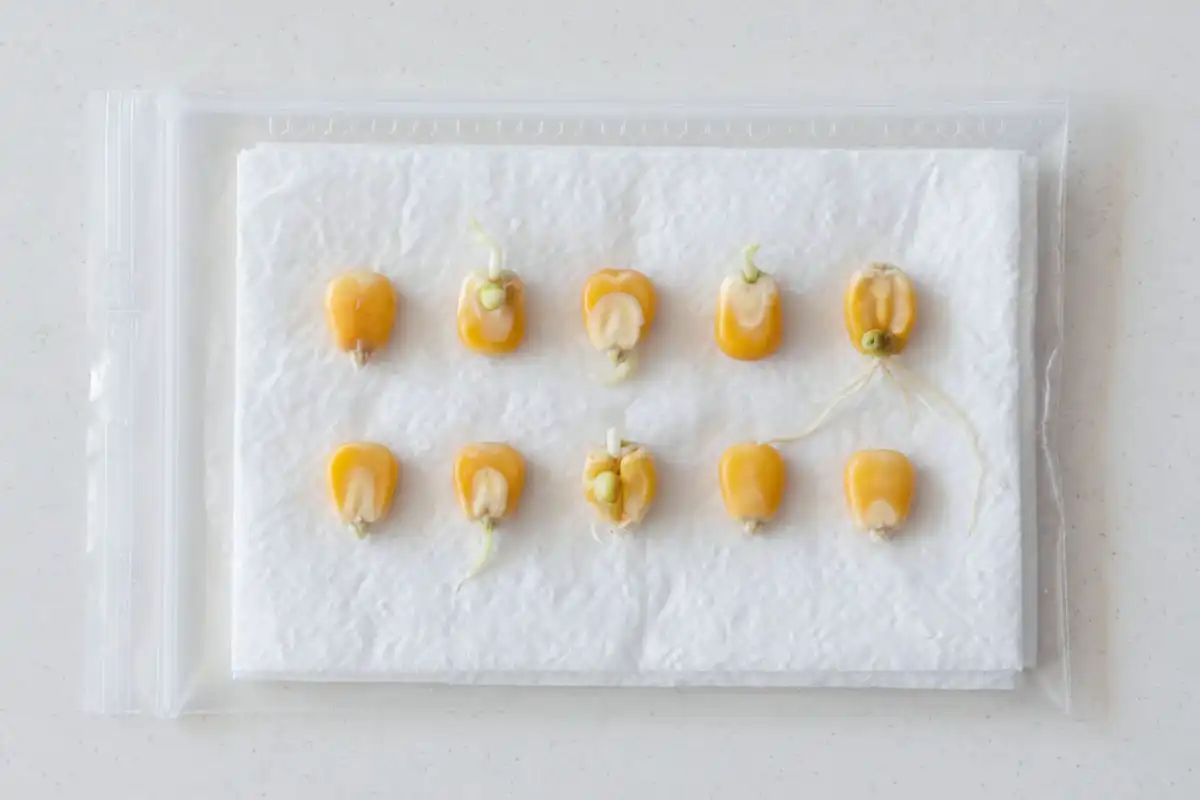
Here is the method:
- Count out 10 or 20 seeds from the lot.
- Lay them on a damp paper towel, then fold it over.
- Slip the towel into a zip bag or covered dish.
- Keep it warm, around 70°F to 80°F.
- Check daily and keep the towel moist, not soaked.
- After 7 to 10 days, count the sprouts.
The math is easy. Sprouted seeds divided by total seeds, times 100, gives your germination percentage. Ten of twenty sprouts is 50 percent.
Read the result like this. Above 90 percent, plant as normal. Between 60 and 90 percent, plant a little heavier to make up for the gaps. Below 60 percent, buy fresh seed. Old seed sometimes needs a nudge. Soaking corn seeds before planting can help slow, low-vigor lots get going once you know they will sprout.
Can You Plant Year-Old or Older Corn Seed?
Yes, you can plant year-old corn seed, and it usually performs nearly as well as fresh seed. Two-year-old seed stored well is often fine too. The drop gets serious at three years and beyond, especially for sweet corn.
Keep one thing in mind beyond germination: vigor. Seed can still sprout yet produce a weaker seedling that lags all season. Vigor fades before the germination rate does. That is why a 70 percent test on old seed may not plant like 70 percent on fresh seed. When in doubt, lean on fresh seed for your main planting and save older seed for a backup row.
For commercial growers, the seed tag tells part of the story. Under seed laws in most states, the germination percentage on a corn seed tag stays valid for 12 months. After that, retest carryover seed before it goes to the field.
Should You Save Your Own Corn Seed?
Save your own corn seed only from open-pollinated or heirloom varieties, never from hybrids. Saved hybrid seed will sprout, but the plants come out a mixed, unpredictable bag the next year. That comes down to how hybrid and heirloom seed differ at the genetic level.
Open-pollinated corn breeds true, so saved seed grows the same crop. To save it right, let the ears dry fully on the stalk. Then shell the best kernels, dry them down further, and store them sealed and cool. Corn cross-pollinates easily on the wind. So isolate your seed corn from other corn by distance or by timing the planting. That keeps the variety pure.
What to Do With Leftover Corn Seed
Here is the rule of thumb in Kansas. Plant fresh corn seed for the main crop every year, sweet corn especially. Leftover seed under two years old goes to backup rows or a second planting. Anything older gets a paper towel test first. If it limps in below 60 percent, it goes in the compost, not the planter. Store it cool and dry, test what you doubt, and you will rarely waste good ground on weak seed.