When Is Corn Harvest in Kansas? Timing, Signs, and Moisture
Corn harvest in Kansas depends on planting date, hybrid maturity, and fall weather. On fields, most grain corn comes off in September and October.
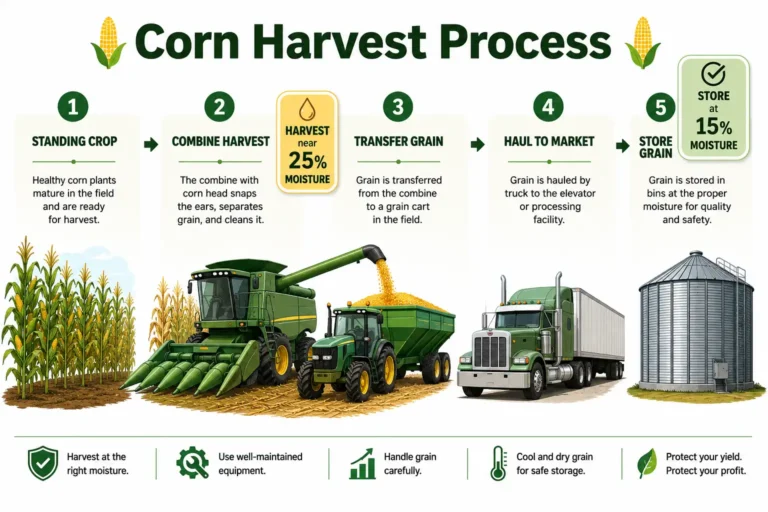
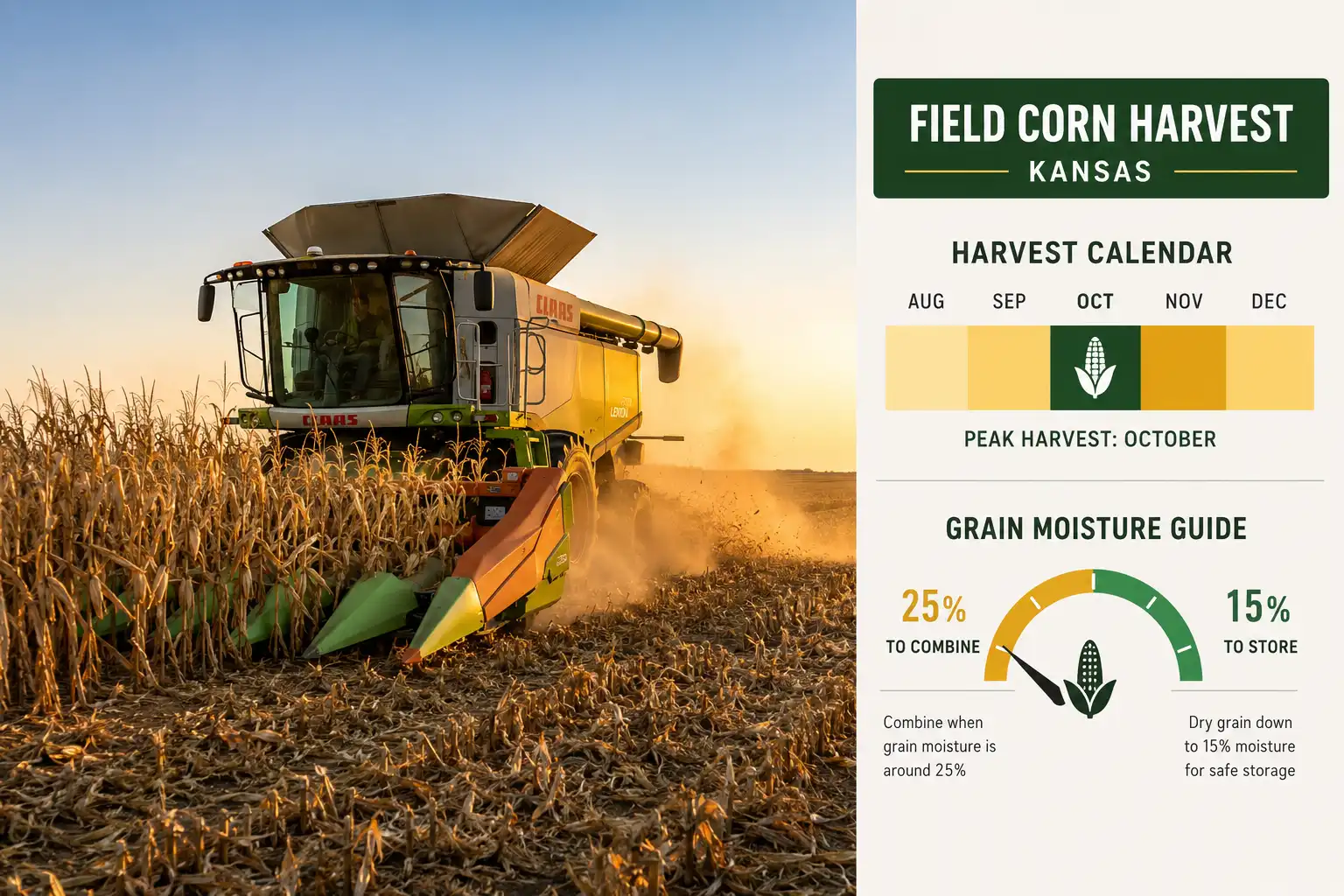
Kansas corn harvest usually runs from late September through October, and most fields finish by early November. Southeast Kansas starts first, often in August. Field corn is ready near 25% moisture, then dries to 15% for safe storage.
When Is Corn Harvest in Kansas?
Corn harvest in Kansas runs from the end of July to mid-November. Most fields come off in September and October. That window is for grain corn, which is what most Kansas acres grow.
K-State Research and Extension and USDA-NASS put the busiest statewide stretch between September 13 and October 18. Timing shifts each year with planting date and fall weather. Treat the table below as a typical season, not a fixed schedule.
| Kansas region | Harvest usually starts | Peak | Usually wrapped up by |
|---|---|---|---|
| Southeast | Early to mid August | Late August into September | Late September |
| South-central and central | Early to mid September | Late September into October | Mid to late October |
| Northeast and north-central | Mid to late September | October | Late October |
| West and northwest | Late September | October | Late October into early November |
Grain corn generally needs about 100 to 120 days from planting to harvest. For the full timeline, here is how long corn takes to grow from seed in a single season.
What Month Is Peak Corn Harvest in Kansas?
October is the peak month for corn harvest in Kansas. Combines run hardest in the first two weeks of October across most of the state. By early November, the bulk of the crop sits in the bin.
How Does Region Change Kansas Corn Harvest Timing?
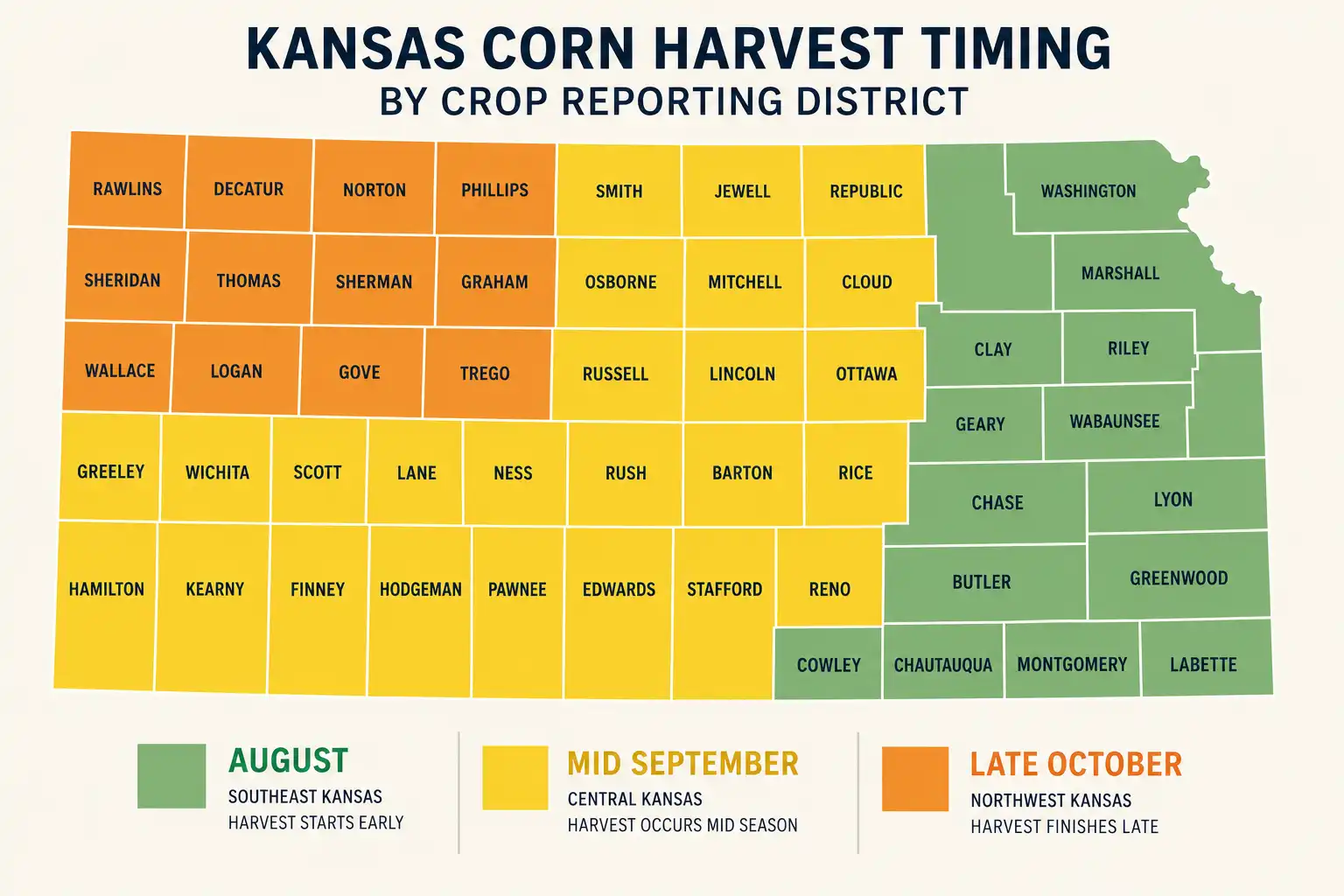
Southeast Kansas harvests first, and the northwest finishes last. Growers in the southeast plant earlier and sit in a warmer zone, so their corn matures sooner. Central Kansas rolls through mid to late September. Out west and northwest, cooler falls stretch harvest into late October. USDA splits the state into nine crop reporting districts, and each one tracks its own dates.
What Makes Field Corn Ready to Harvest?
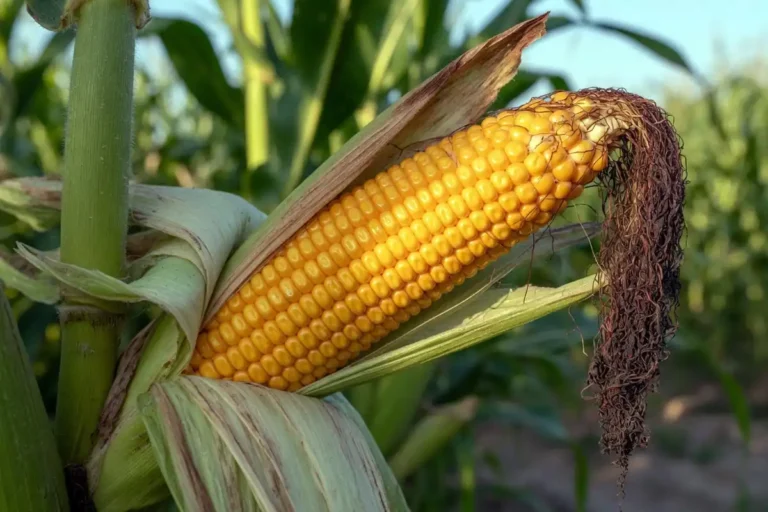
Field corn is ready once it reaches black layer and the grain dries toward 25% moisture. Black layer is physiological maturity, and it shows up about 55 to 65 days after silking. At that point, the plant stops moving sugar into the kernel, so grain fill ends. From there, the crop dries in the field until you combine it.
Here are the signs before starting a field:
- A dark black layer at the base of the kernel, which marks physiological maturity
- Kernels fully dented with the milk line gone
- Husks and stalks turning brown and drying down
- A moisture tester reading near or below 25%
- Roughly 55 to 65 days past silking, or close to 2,670 growing degree units since planting
How Do You Read the Milk Line and Black Layer?
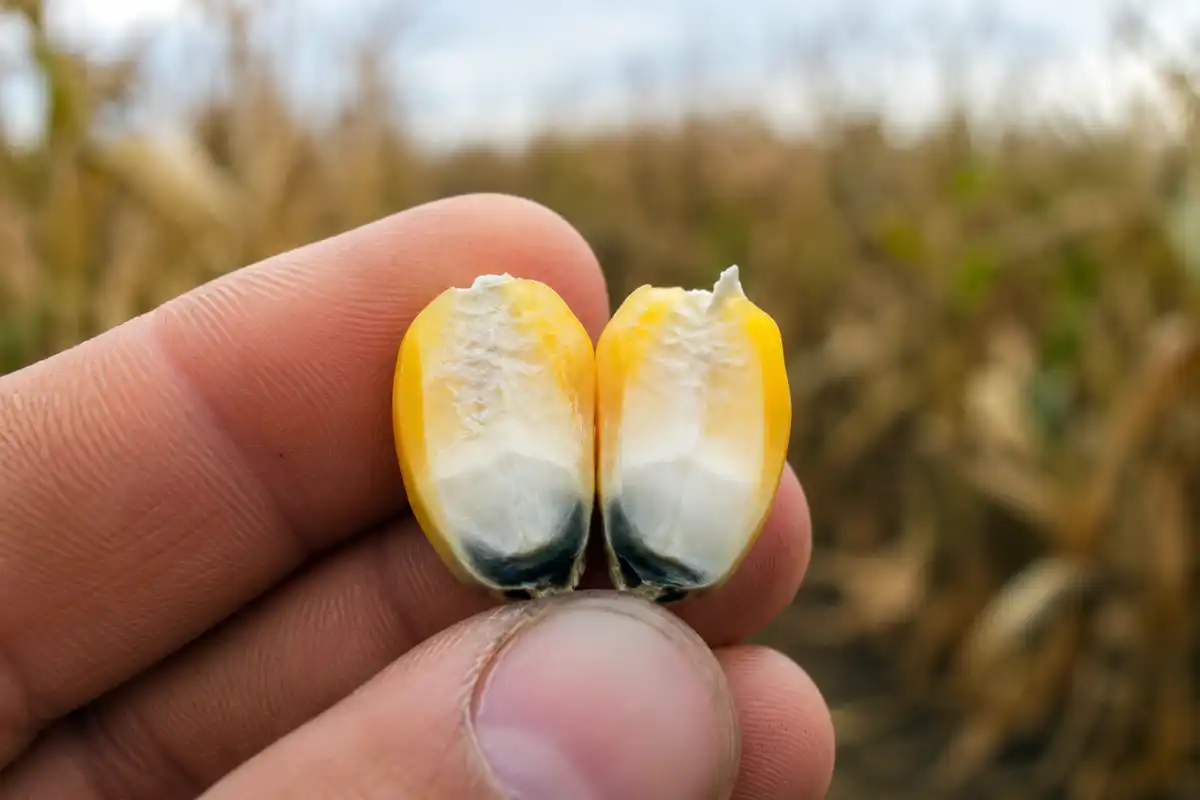
Split a few kernels and watch the starch line move toward the cob. That line tells you how close the ear is to maturity. Here is the quick check in the field:
- Pull an ear and split a few kernels lengthwise.
- Find the milk line, the divide between the soft top and the hard base of the kernel.
- Track it sliding toward the cob as the grain hardens, about 20 days from early dent to black layer.
- Check the kernel base. A dark black layer means the ear is mature.
What Grain Moisture Should Corn Be at Harvest?
Start combining grain corn a little above 25% moisture, then dry it down to 15% for storage. At 25%, mechanical loss and kernel damage stay low. Push these targets to match your dryer and your bin plan:
- About 25%: start combining, since field and mechanical losses stay low here
- 15 to 15.5%: market moisture for No. 2 yellow corn and short storage
- 13 to 14%: safe for long-term storage on the farm
- Wetter than 15%: dry it before it goes in the bin
Test weight also climbs as the grain dries, and graders measure it at 15.5%. That ties into how many pounds in a bushel of corn you actually load out.
How Fast Does Corn Dry Down in the Field?
Corn dries fastest in warm early-fall weather, then slows as temperatures drop. Plan your start date around these rough rates:
- Warm September: about 1 point of moisture a day
- Mid-October: about half a point a day
- Late October into November: a quarter point a day or less
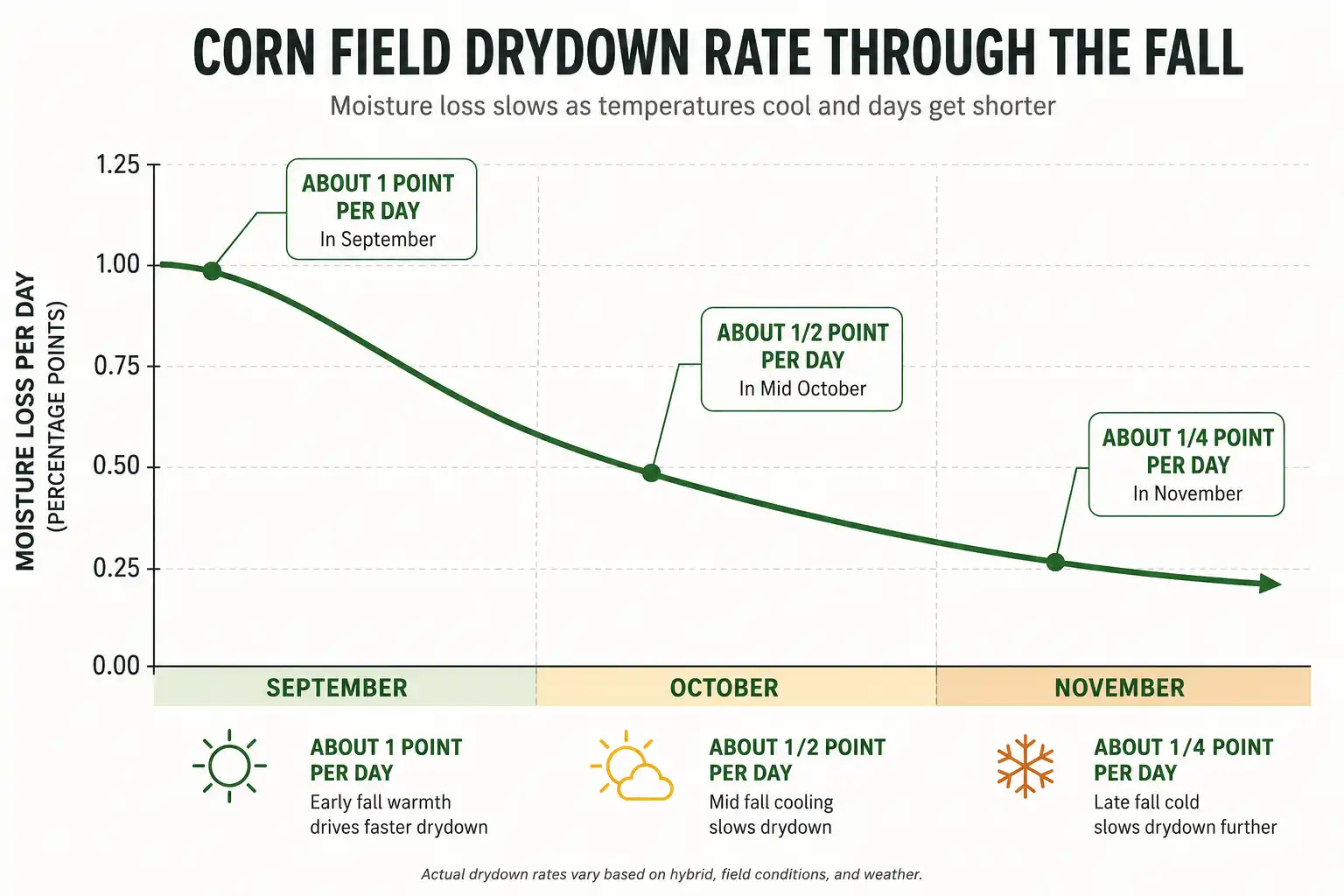
So waiting for field drydown saves on propane, but it opens the door to lodging and ear loss. Because of that, weigh drying cost against field risk on every field.
When Should You Start Harvest to Avoid Losses?
Start harvest close to maturity, because losses climb about 1 to 2% for every week you wait. A standing crop past maturity runs into trouble fast:
- Stalk rots like Fusarium and Gibberella weaken standability
- Weak stalks lodge in fall wind
- Ears drop, and the header runs right past them
- A wet fall can lock you out of the field for days
Scout for stalk rot first, then harvest the weakest, most drought-stressed fields ahead of the rest.
When Is Sweet Corn Harvest in Kansas?
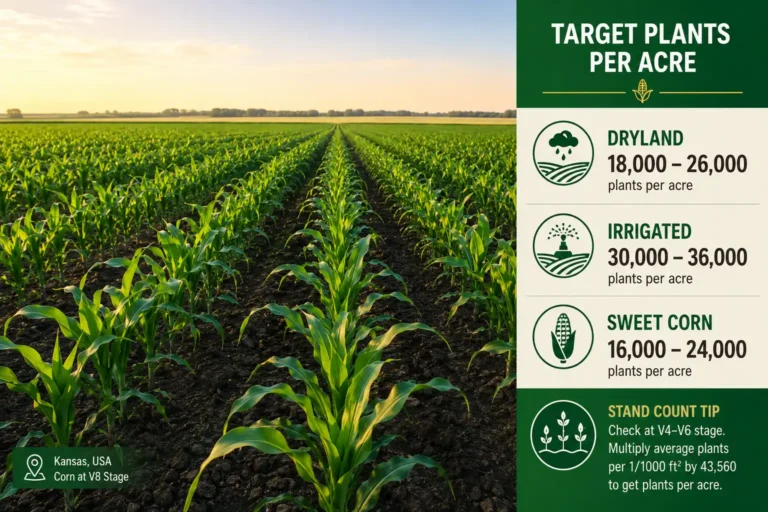
Sweet corn harvest in Kansas runs mostly from July into August. Gardeners plant it from mid to late April, once the soil warms. Most varieties mature in 65 to 75 days, though some run longer. You pick at the milk stage, about 18 to 21 days after the silks show. For timing help, here is how soon sweet corn is ready after the tassel appears.
An ear is ready to pick when:
- Silks are brown and dry past the husk
- The ear feels filled out to the tip
- A thumbnail-punctured kernel leaks milky juice, not clear and not doughy
- It has been about 18 to 21 days since the silks showed
This window lasts only a few days in heat, so check often and pick in the cool morning. For more cues, this covers how to tell when sweet corn is ready in your patch. Stagger your plantings, and you can stretch fresh ears into September. Leave a few ears on the stalk to dry fully for cornmeal or seed. Then run them through a corn sheller to strip the kernels off the cob.
Bottom Lines
On ground, the crop and the moisture tester set the date, not the calendar. Check for black layer, then watch grain moisture fall toward 25%. Run the weak, drought-stressed fields first, ahead of stalk rot and lodging. For sweet corn, test the milk stage and pick in the cool morning. Watch your fields, keep a moisture tester close, and let the corn tell you when it is ready.