How Often to Use Fish Fertilizer on Tomatoes (2026 Schedule)
Fish emulsion works fast and fades fast. That short window makes timing the whole job. Growers ask how often to use fish fertilizer on tomatoes for one reason. The label gives one interval and every forum gives another.
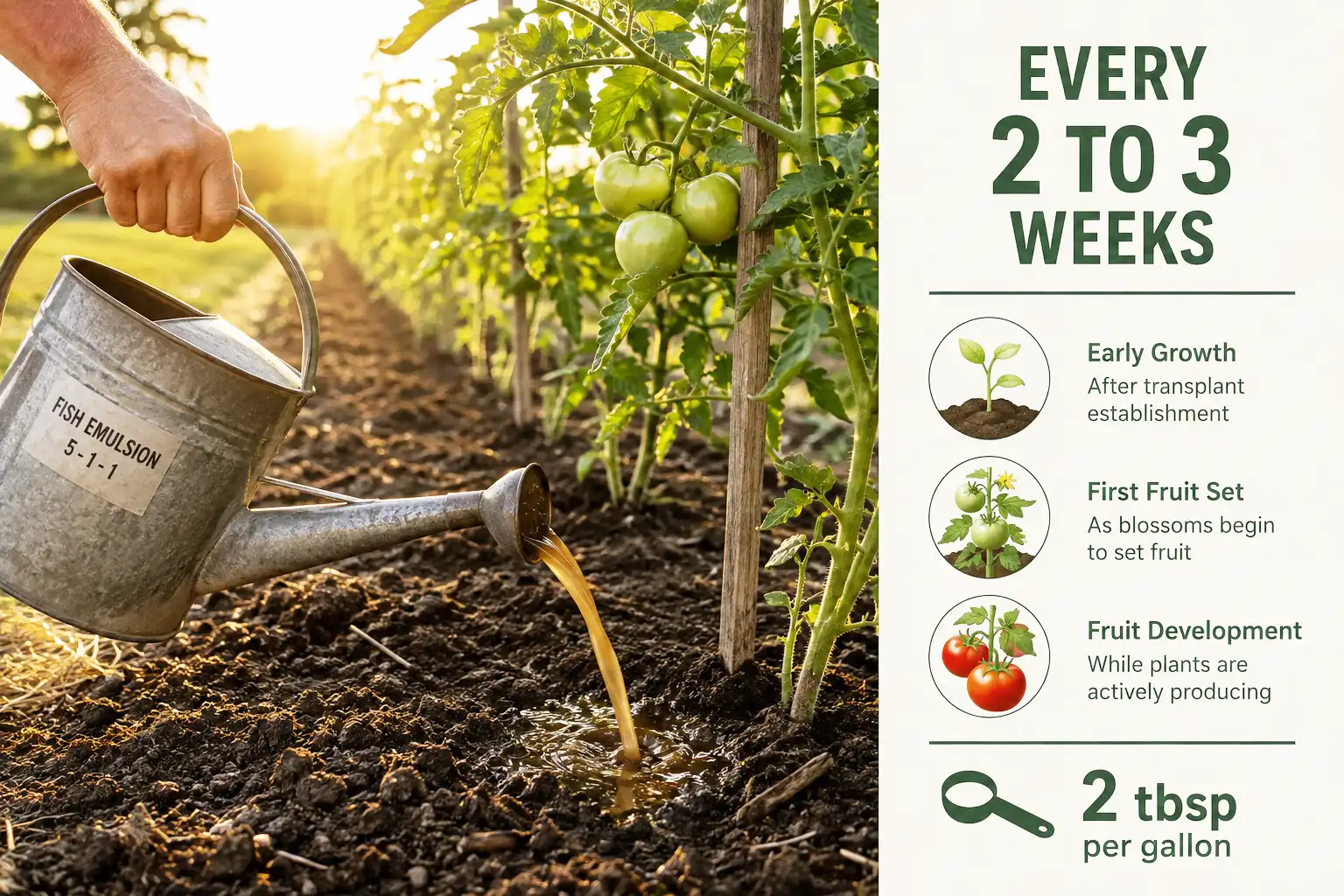
Use fish fertilizer on tomatoes every 2 to 3 weeks, starting two weeks after transplant and running through fruit fill. Mix 2 tablespoons of liquid emulsion per gallon of water. Skip a round when vines outgrow their fruit.
How Often to Use Fish Fertilizer on Tomatoes Through a Full Season
Every 2 to 3 weeks. First drench lands about two weeks after transplant. The last one goes down when the top cluster sets fruit.
That interval comes straight from how the product releases. Fish emulsion carries mostly water soluble nitrogen. Soil microbes finish the rest in days, not months. So one drench feeds hard for roughly a week, then tapers off.
Labels agree. Alaska Fish Fertilizer 5-1-1 tells growers to reapply every three weeks during the growing season. Most fish hydrolysate labels list every 1 to 3 weeks. Two-week intervals work while plants are building leaf area, then stretch to three weeks once flowers open.
K-State Research and Extension puts most Kansas tomato transplanting in late April through mid May. So the first feed usually falls in the second week of May. That interval sits inside the wider schedule for fertilizing tomatoes across a season.
Why Two Weeks Is the Practical Floor
Two weeks is the shortest interval worth running on garden soil. Anything tighter stacks nitrogen faster than tomato roots turn it into fruit.
Look at the nitrogen breakdown. Alaska’s 5-1-1 label splits its 5% total nitrogen three ways. That is 0.5% ammoniacal, 3.75% other water soluble, and 0.75% water insoluble. Nearly all of it reaches the plant inside two weeks at May and June soil temperatures.
Feed weekly and the vines answer the way they always do. Leaves get big and dark. Trusses get thin. University of Missouri Extension warns against heavy early nitrogen on tomatoes. The result is lush vegetative growth and poor fruit set.
Greenhouse and high tunnel growers do run weekly at half strength. That works because they control water, temperature, and drainage. Out in an open field, rainfall does not cooperate.
Fish Fertilizer Schedule by Tomato Growth Stage
Frequency shifts with the stage, and so does the rate. Here is the program on in-ground plants.
| Stage | Timing | Interval | Rate per gallon | What to watch |
|---|---|---|---|---|
| Transplant day | Setting out | One dose | 1 teaspoon | Root contact, no leaf splash |
| Establishment | 2 to 4 weeks after transplant | Every 2 weeks | 1 to 2 tablespoons | Steady new leaf pairs |
| Pre bloom | 4 to 6 weeks after transplant | Every 2 weeks | 2 tablespoons | Stem thickness at the growing tip |
| First flowers to first set | Bloom through green fruit | Every 3 weeks | 1 to 2 tablespoons | Flower drop, vine stretch |
| Fruit fill to last pick | Green fruit through color break | Every 3 weeks | 1 to 2 tablespoons | Leaf color low on the plant |
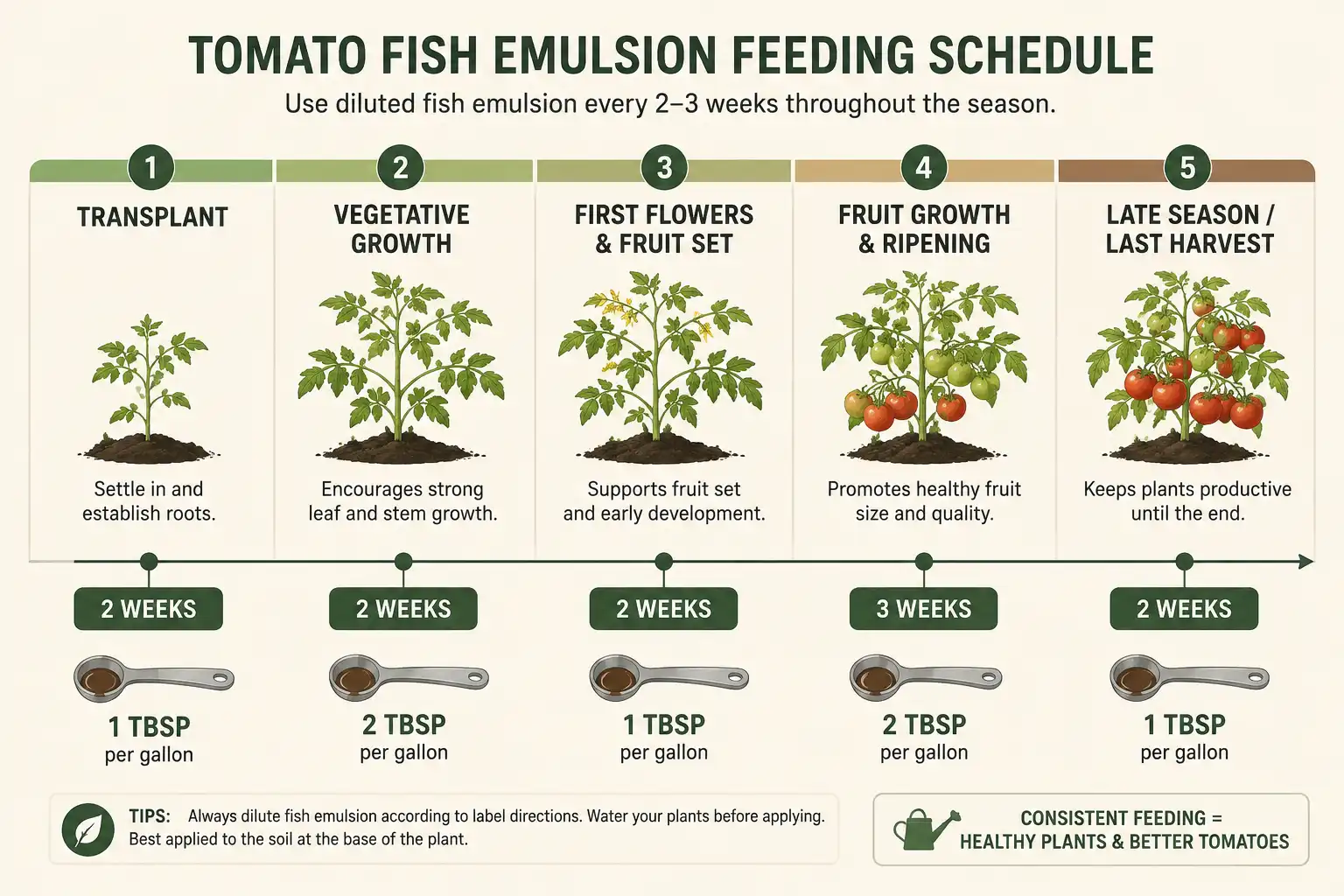
The rate drops at bloom on purpose. A 5-1-1 emulsion is almost pure nitrogen, and nitrogen past bloom pushes vine instead of fruit. Then feeding stops entirely once the top cluster sets. Anything after that point feeds leaves that get pulled in October.
Seedlings still in trays run a lighter program than this. Cover feeding tomato seedlings on its own, since cell trays flush out much faster than field soil.
How Much Fish Emulsion Per Gallon of Water?
Two tablespoons per gallon covers most in-ground garden tomatoes. That matches the garden rate Alaska lists for its 5-1-1 concentrate.
Adjust by situation:
- 1 teaspoon per gallon on transplant day and for anything still in a cell tray
- 1 tablespoon per gallon for container plants and fabric grow bags
- 2 tablespoons per gallon for in-ground plants before bloom
- 1 to 2 tablespoons per gallon after fruit set
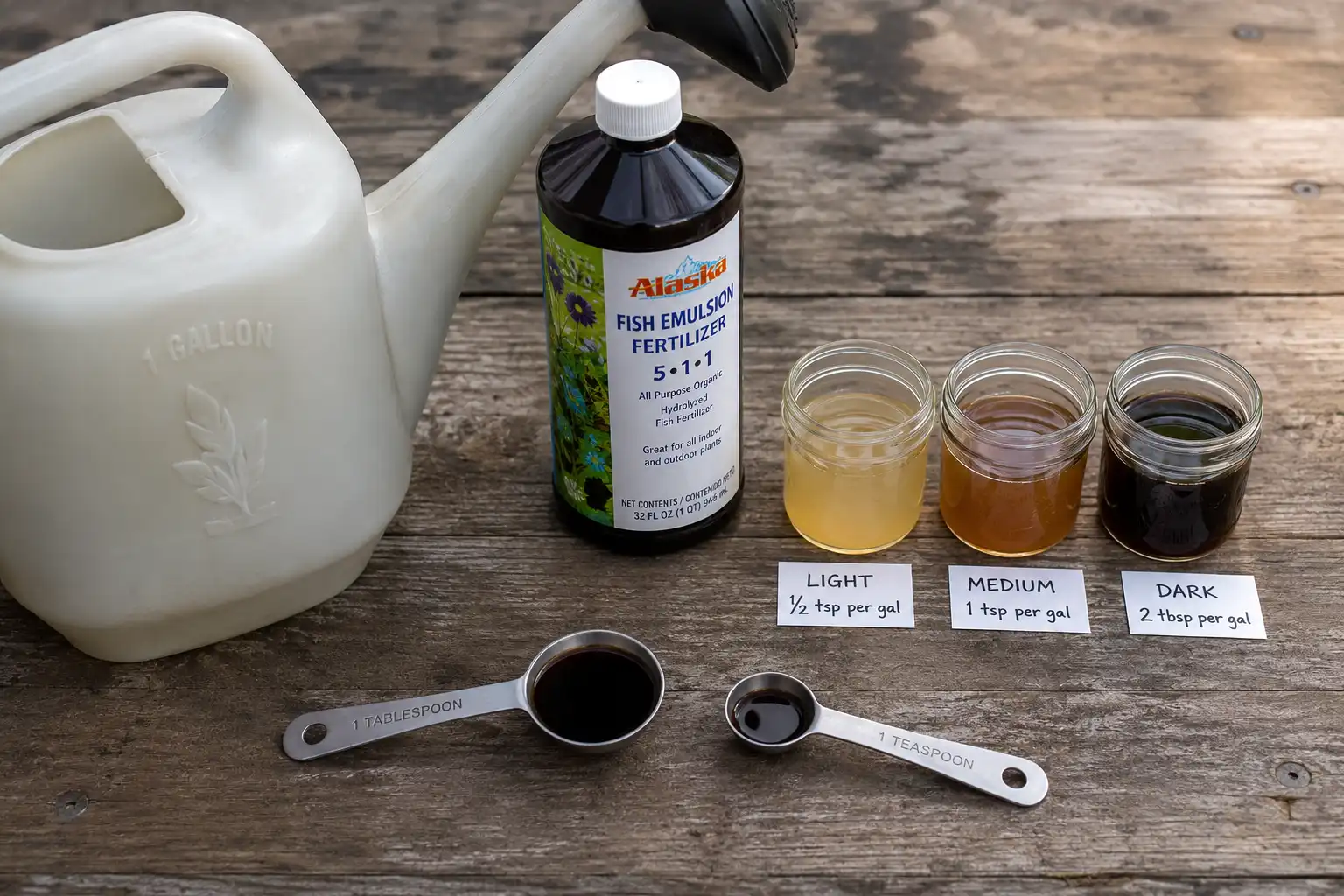
Pour about a half gallon of finished solution around each mature plant. Aim to wet the top 4 to 6 inches of soil, where most feeder roots sit.
Water the row first if the soil is dry. Dry roots pull solution in too fast, and dissolved salts concentrate right at the root surface. NC State Extension makes the same point about watering liquid organic feeds into moist ground.
Soil Drench or Foliar Spray on Tomatoes?
Soil drench wins for routine feeding. Roots absorb nitrogen far more efficiently than leaf surfaces do. A drench also feeds the microbes that finish breaking the product down.
Foliar spray still earns a place twice a season. Use it on plants that look pale after a cold snap. Soil biology has slowed by then, and roots are barely pulling. Cut the rate in half for foliar work.
Three rules to follow when spraying:
- Strain the mix. Fish solids clog nozzles fast. Filter through cheesecloth, then load a small pump sprayer with a fine tip.
- Spray at dusk or first light. Midday sun on wet leaves scorches tissue.
- Rinse the tank. Fish residue sours inside a sprayer within a day and gums the seals.
One more limit worth respecting. Skip foliar fish inside two weeks of picking fruit you plan to sell fresh, because the smell can carry.
Can You Use Fish Fertilizer on Tomatoes Too Often?
Yes, and the plants show it before a soil test does. Weekly drenches on garden soil push nitrogen past what the crop can turn into fruit.
Signs of over feeding:
- Very dark blue green leaves with a leathery feel
- Thick stems and long gaps between fruit clusters
- Heavy bloom drop, or flowers that open and never set
- Aphids and hornworms concentrating on soft new growth
- Ripening that runs a week or more behind schedule
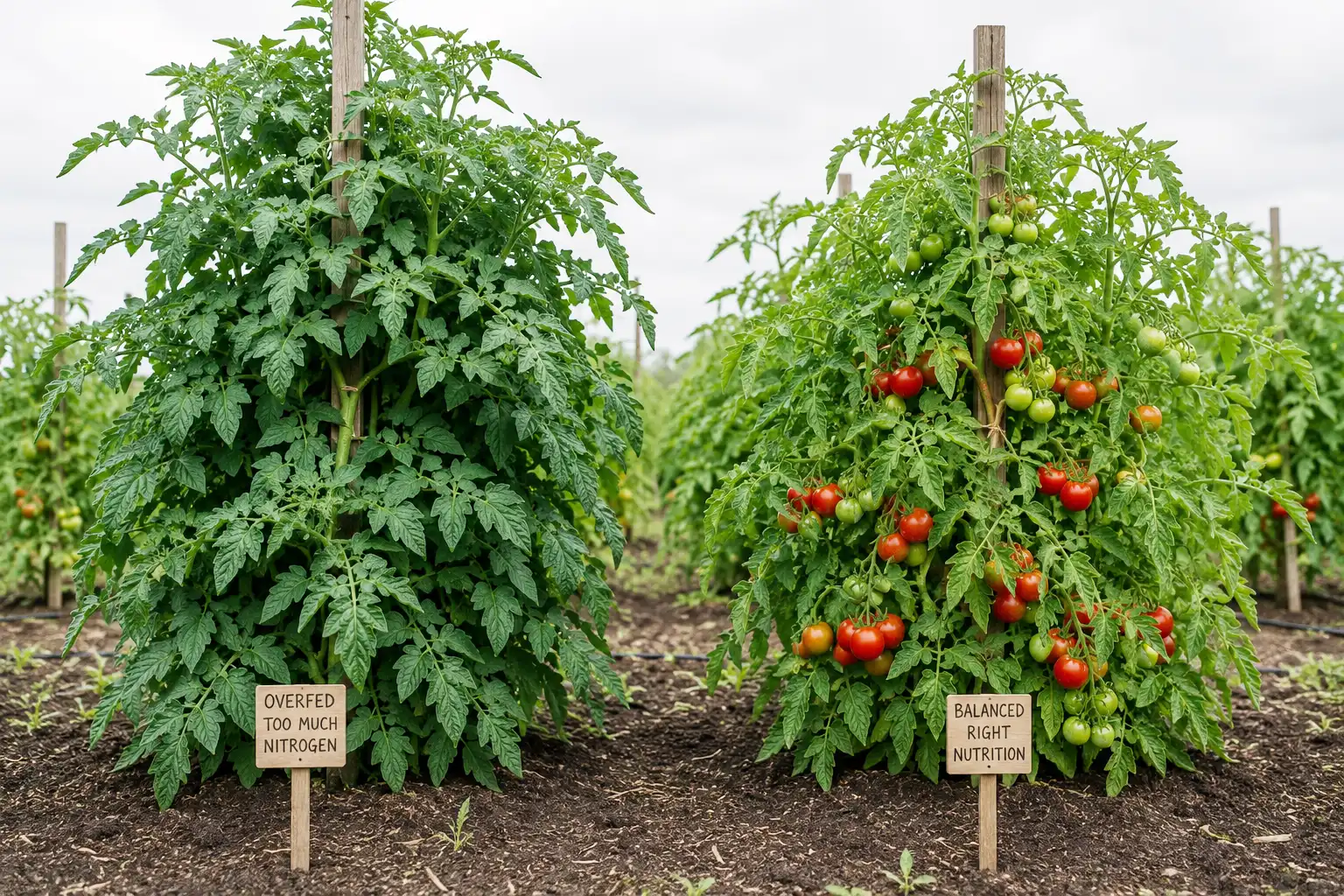
UC IPM notes that nitrogen applied beyond crop demand drives excessive vine growth and raises fruit mold problems. The same thing happens on ten plants in a raised bed.
If you see it, stop feeding. Water normally instead. Once the growing tip slows, restart at three week intervals and half the previous rate.
What Fish Fertilizer Will Not Do for Your Tomatoes
Fish fertilizer will not carry a tomato crop on its own. A 5-1-1 emulsion supplies just 1% potash, and tomatoes pull heavy potassium during fruit fill.
Run the rough math. Two tablespoons of 5-1-1 in a gallon of water carries roughly a twentieth of an ounce of actual nitrogen. Potash comes in near a hundredth of an ounce. Split across two plants, the potassium contribution rounds to nothing.
Treat fish emulsion as one leg of a three part program:
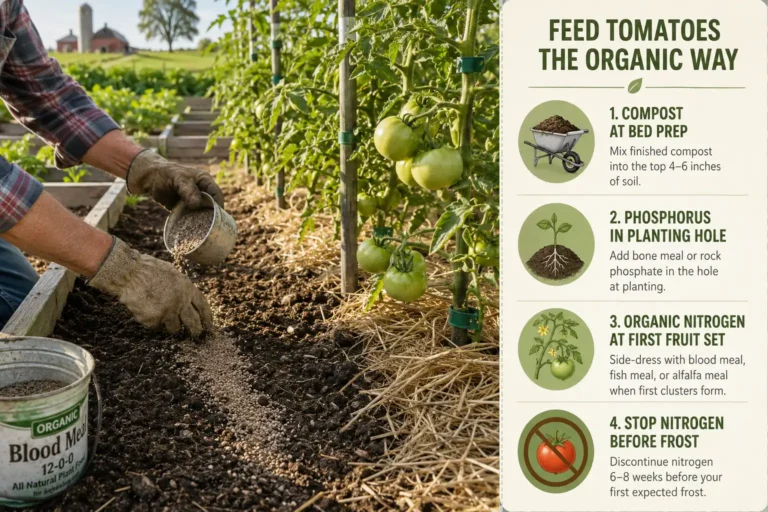
- Compost plus a balanced dry fertilizer worked in before planting
- Fish emulsion every 2 to 3 weeks for in season nitrogen
- A potassium source at first fruit set, usually sulfate of potash or a 3-4-6 type dry blend
Two other limits are worth stating plainly. Fish fertilizer does not cure blossom end rot, which tracks calcium movement and uneven watering rather than soil calcium levels. It also does not correct low pH, and nitrogen uptake falls off below about 6.0.
How Often Should You Feed Container Tomatoes?
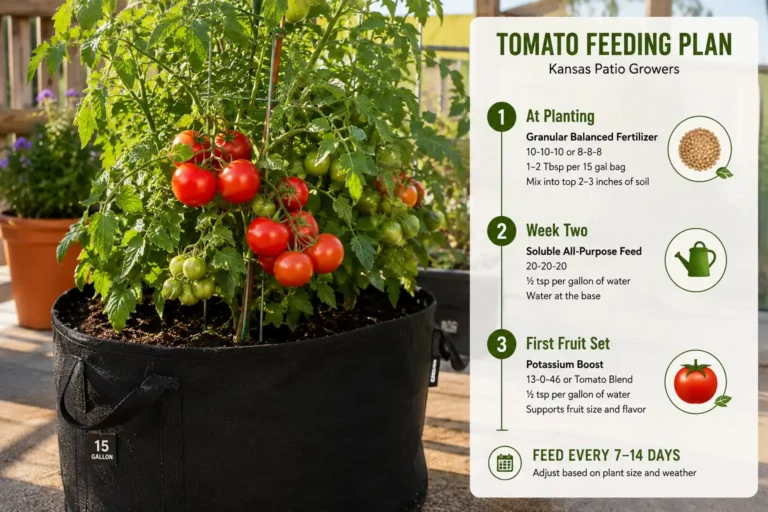
Every 10 to 14 days, at half the in-ground rate. Potting mix holds a fraction of what field soil holds, and every watering flushes some nutrition out the bottom.
Most potting mixes carry roughly two weeks of starter charge. After that, container plants live on what you add. Run 1 tablespoon per gallon every 10 days on 15-gallon fabric bags. Once fruit starts coloring, take the interval out to two weeks.
Watch for the bypass problem. If water runs through the bag in seconds, the mix has shrunk away from the sides. Your feed then misses the roots. Soak slowly first, then drench. Rates and timing for feeding tomatoes in pots shift again in hot weather, when daily watering strips nutrition faster.
Fish Emulsion or Fish Hydrolysate: Does the Interval Change?
The interval barely changes, but the rate does. Fish emulsion is heat processed and usually runs 5-1-1 or 4-1-1. Fish hydrolysate is cold processed and usually runs closer to 2-3-1, 2-4-1, or 2-5-0.2.
So hydrolysate carries under half the nitrogen per ounce. Labels typically call for 2 to 4 tablespoons per gallon rather than 2, applied every 1 to 3 weeks. It also smells milder and keeps more amino acids intact, which is why it costs more per gallon.
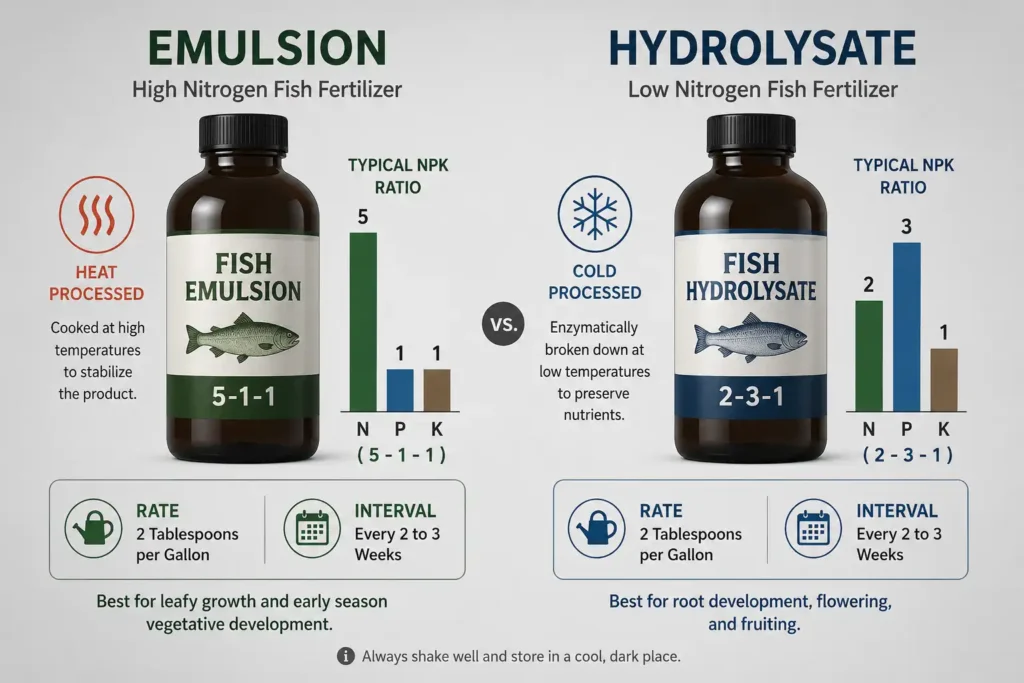
Common brands of both types carry OMRI Listing, which matters if you sell under a certified organic plan. Check the guaranteed analysis panel before you assume a tablespoon means the same thing between two bottles.
Mistakes That Waste Fish Fertilizer on Tomatoes
Most wasted fish emulsion traces back to five habits.
- Feeding dry soil. Water the row, wait an hour, then drench.
- Guessing the rate. Products range from 2-3-1 to 5-1-1, so a tablespoon is not a fixed dose. Read the analysis panel every time you switch bottles.
- Mixing more than you use. Diluted fish emulsion turns anaerobic within a day, and Alaska’s label says plainly not to store mixed solution.
- Feeding the calendar instead of the plant. Skip a round when growth is already racing.
- Never testing. A soil test tells you whether nitrogen is even the limiting nutrient in that bed.
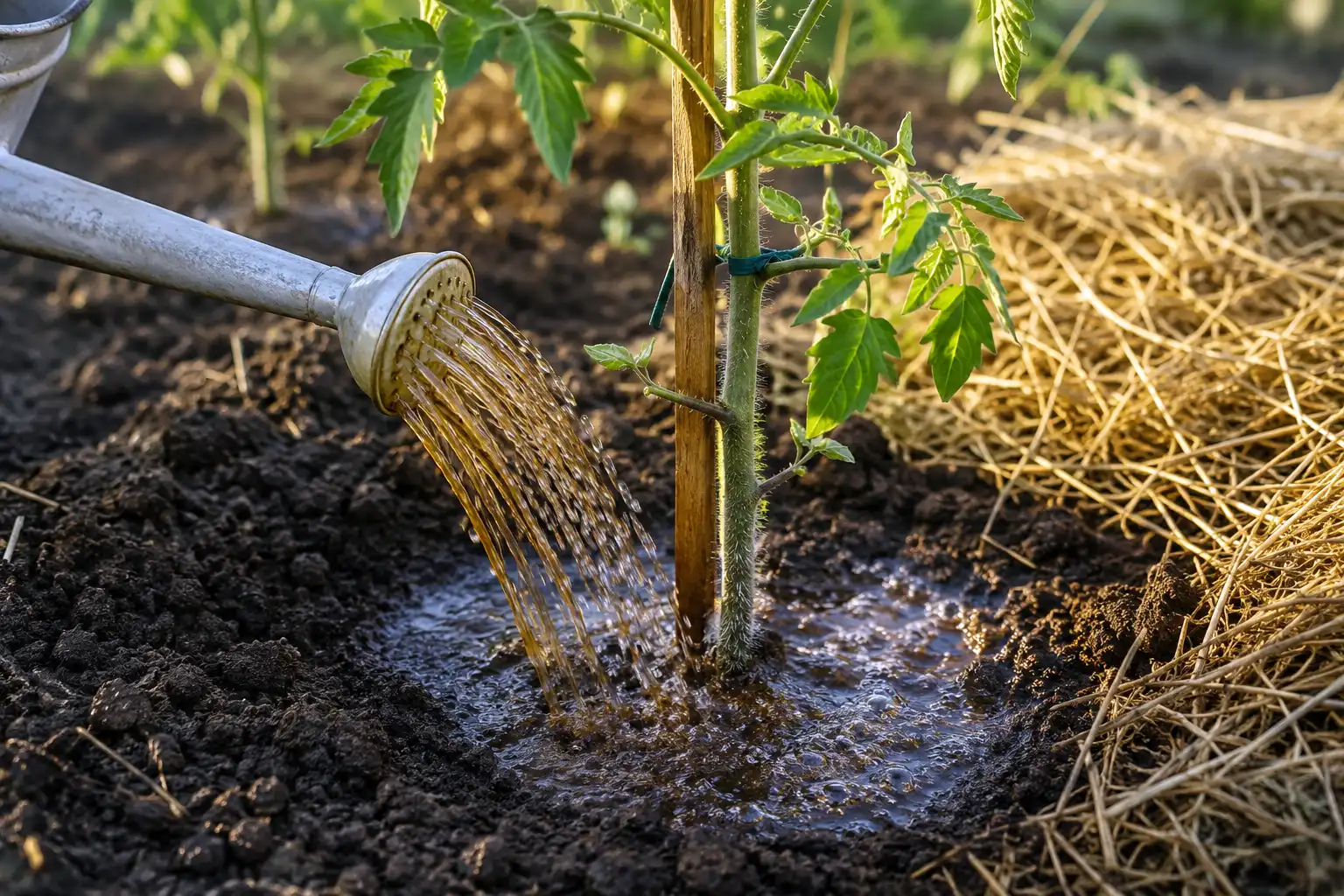
One more habit worth breaking. Do not leave fish residue sitting on the soil surface where raccoons, skunks, or dogs work at night. Water it in until the surface smells like dirt again.
How to Run Fish Emulsion in Tomato Rows
Two weeks apart until first flowers, then three weeks apart through harvest. Two tablespoons per gallon on in-ground plants, one tablespoon in fabric bags. Feeding stops once the top cluster sets, letting the crop finish on what is already in the ground.
Treat this as the nitrogen leg of your program, not the whole thing. Pair it with a potassium source at fruit set. These tomato fertilizer picks cover what to keep on the shelf alongside it.