What Size Grow Bag for Tomatoes Produces the Best Yield
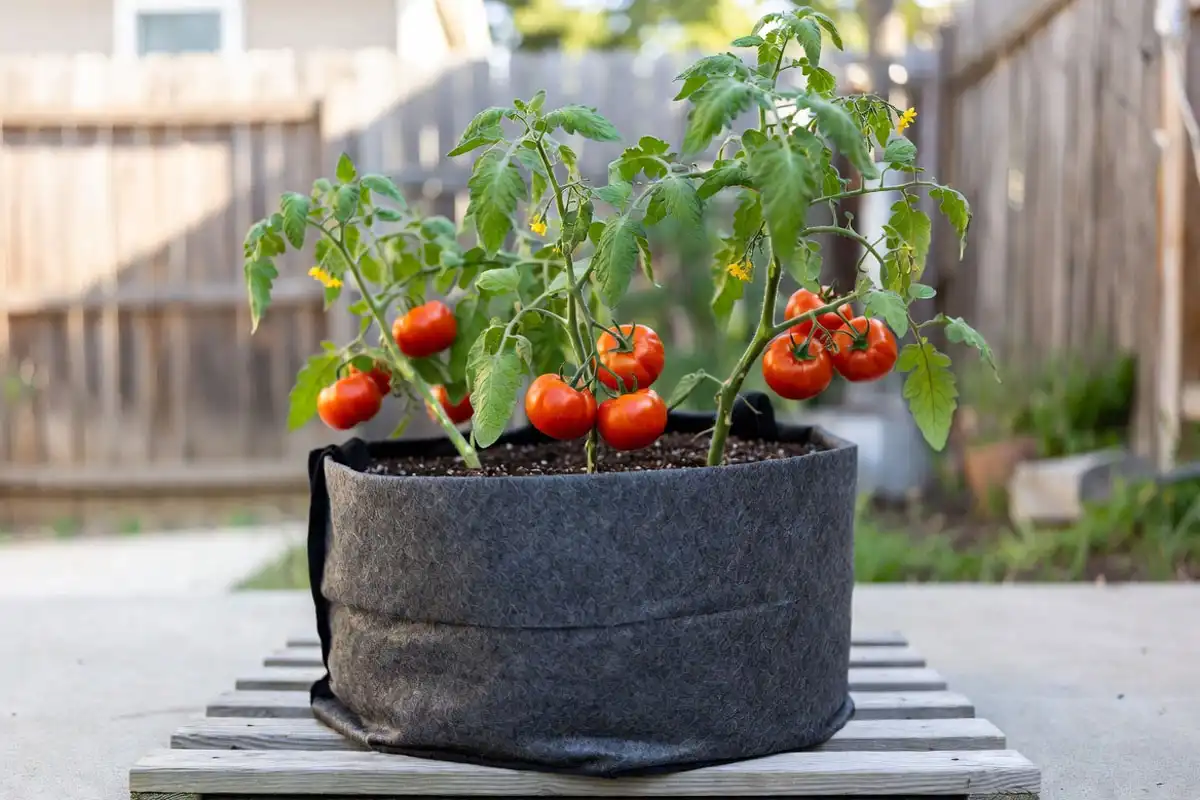
The best grow bag size for tomatoes varies by the variety you plant. Cherry and patio types grow well in 5-gallon bags, determinate varieties need 7 to 10 gallons, and indeterminate types such as beefsteak and heirloom tomatoes require 15 to 20 gallons. This guide covers how variety, root depth, and plant height determine the right bag, what to look for when selecting a fabric container, and the setup steps that help tomatoes produce well from transplant through harvest.
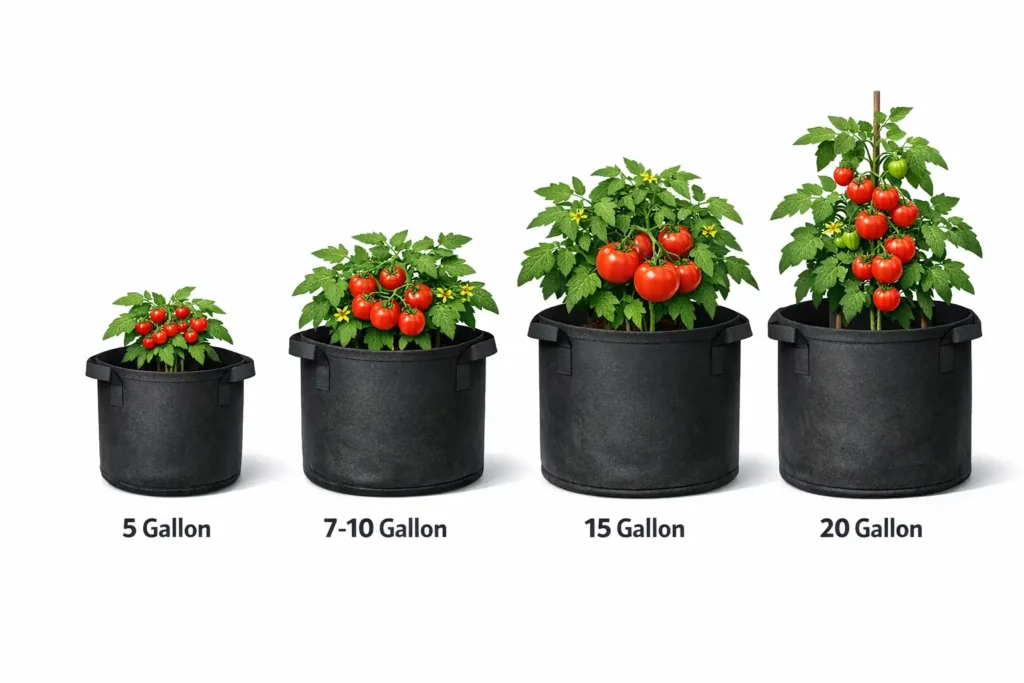
What Size Grow Bag for Tomatoes?
| Tomato Type | Minimum Bag Size |
|---|---|
| Cherry / patio tomatoes | 5 gallons |
| Determinate (bush) tomatoes | 7 to 10 gallons |
| Indeterminate (vining) tomatoes | 15 gallons |
| Large heirloom / beefsteak tomatoes | 20 gallons |
One plant per bag. Bigger bags reduce watering frequency and support a stronger root system throughout the season.
Also read: Best Pots Size for Plant Tomatoes
Why Grow Bag Size Matters for Tomatoes
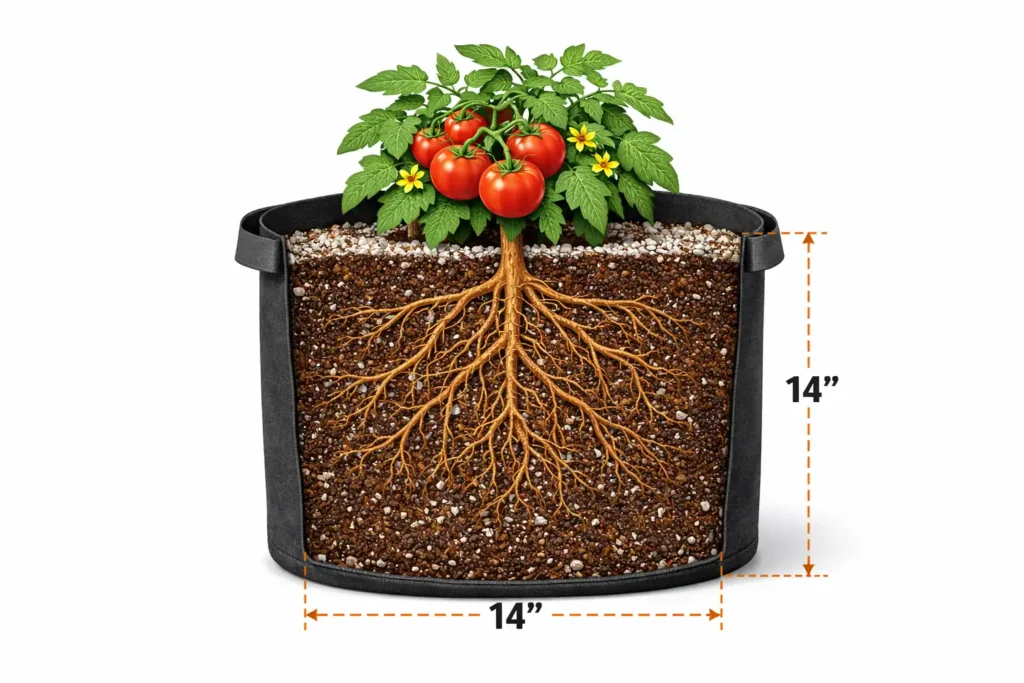
Tomato roots spread wide and grow deep. A root system without enough space produces fewer fruits and wilts faster between waterings.
Fabric grow bags allow air pruning, which stops roots from circling the container. This produces a denser, more branched root zone than plastic pots of the same volume.
Undersized bags dry out within 24 hours in warm weather. They also restrict nutrient uptake because the root zone fills completely and leaves no room for fresh growing medium to absorb water and fertilizer.
Learn more: Water Tomatoes Correctly: Amount, Timing, and Method
What Size Grow Bag Do Tomatoes Need by Variety?
The variety determines how much root space the plant requires.
Cherry and patio tomatoes grow in 5-gallon bags. These include varieties such as Sweet 100, Tumbling Tom, and Tiny Tim. They stay compact and produce fruit within a limited root zone.
Determinate tomatoes grow in 7 to 10-gallon bags. These include Roma, Celebrity, and Rutgers. Determinate plants stop growing at a fixed height, so their root system stays proportionate to the bag.
Indeterminate tomatoes need a minimum of 15 gallons. These include Sungold, Cherokee Purple, and Brandywine. Indeterminate plants continue growing through the season and require a large root zone to sustain that growth.
Beefsteak and large heirloom tomatoes perform best in 20-gallon bags. Their fruit size and vine length place high demand on the root system and water-holding capacity of the growing medium.
How to Choose the Right Grow Bag
Three factors determine which bag to select: variety size, bag material, and bag depth.
Variety size sets the minimum gallon requirement. Match the bag to the full-grown plant, not the transplant size at purchase.
Bag material affects drainage and durability. Nonwoven polypropylene fabric bags drain well, allow air exchange, and last 3 to 5 seasons. Woven jute bags biodegrade within one season and suit single-use planting only.
Bag depth supports root development. Tomatoes send roots 12 to 18 inches deep. A bag shallower than 12 inches restricts root growth even if the gallon volume appears sufficient on the label.
For container tomato growing, 15-gallon fabric bags deliver the best balance of root space, drainage, and portability for most home growers.
How Many Tomato Plants Per Grow Bag?
Plant one tomato per grow bag, regardless of bag size. Two plants in one bag compete for water, nutrients, and root space. The result is reduced yield from both plants by mid-season.
The only exception applies to very compact patio varieties in a 10-gallon bag or larger. In that case, two plants spaced 10 inches apart produce acceptable results, though a separate bag remains the better option.
Knowing how many tomatoes one plant produces per season helps set realistic expectations before deciding how many bags to set up.
How to Set Up a Grow Bag for Tomatoes
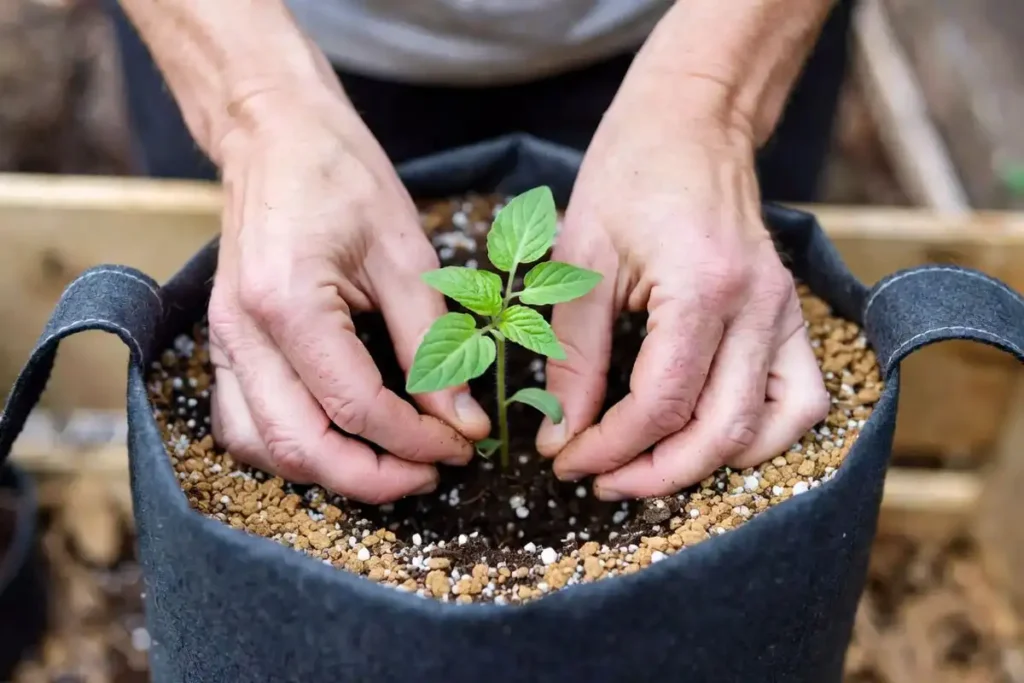
Follow these steps in order. Each step affects root development and fruit production.
1. Choose a growing medium. Fill the bag with a mix of 60% peat or coco coir, 30% perlite, and 10% compost. Garden soil compacts in fabric bags and blocks drainage.
2. Fill to 3 inches below the rim. This leaves space for watering without overflow or washout.
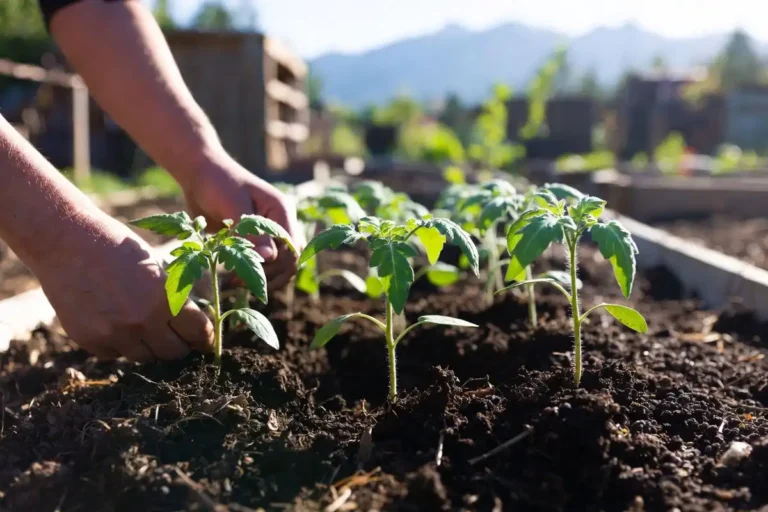
3. Transplant at the right depth. Set the transplant deep enough to bury the bottom 2 to 3 inches of stem. Tomatoes develop roots along buried stems, which strengthens the plant base. Time the move correctly by reviewing when to transplant tomatoes for your region.
4. Water immediately after transplanting. Apply water until it flows from the bottom of the bag. This settles the medium around the roots and removes air pockets.
5. Place the bag in full sun. Tomatoes need 6 to 8 hours of direct sunlight daily. Position the bag where it receives unobstructed morning and afternoon light.
6. Add support before the plant grows tall. Insert a stake or cage at transplanting, not after. Late insertion damages roots. See how staking, trellising, and caging options compare for container-grown plants.
How Often to Water Tomatoes in Grow Bags
Fabric bags lose moisture faster than plastic pots. In temperatures above 80°F, a 5-gallon bag dries out in 12 to 18 hours. A 15-gallon bag holds moisture for 24 to 36 hours under the same conditions.
Check soil moisture by inserting a finger 2 inches into the growing medium. Water when the medium feels dry at that depth.
Tomatoes need the most water during fruit set and while fruit develops. Inconsistent watering at that stage causes blossom end rot and fruit cracking.
Common Mistakes to Avoid
Using too small a bag. A 5-gallon bag for an indeterminate tomato stunts root growth and reduces yield by mid-season. Start with the correct size for the variety.
Using garden soil. Garden soil compacts inside fabric bags, blocks drainage, and introduces soil-borne pathogens. Use a purpose-blended container mix.
Skipping support. Indeterminate tomatoes in grow bags tip over once fruit loads the vine. Install stakes or cages at planting, not after the plant leans.
Placing bags directly on impermeable surfaces. Grow bags sitting flat on concrete or pavers restrict drainage through the bottom. Elevate bags on a rack or wooden slats to allow full drainage.
Skipping pruning. Unpruned indeterminate tomatoes in grow bags direct energy into foliage rather than fruit. Pruning tomatoes in containers improves the fruit-to-foliage ratio and reduces disease pressure.
Troubleshooting Grow Bag Problems
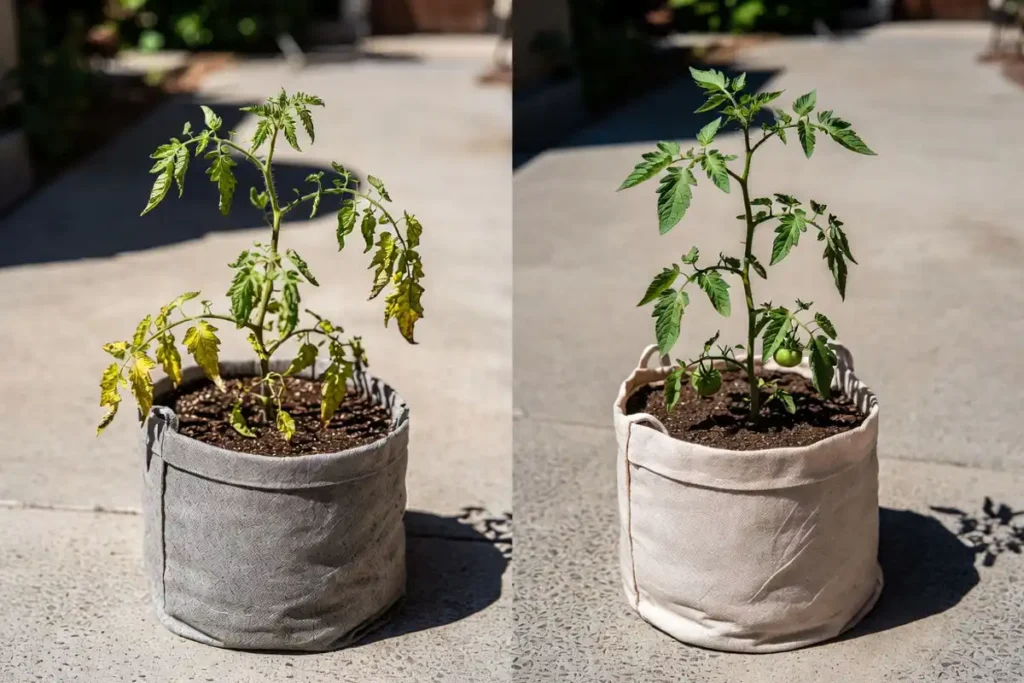
Plant wilts despite regular watering. The growing medium hydrophobizes when it dries completely. Water runs around the dried medium instead of through it. Set the bag in a tray of water for 30 minutes to re-saturate the medium from the bottom up.
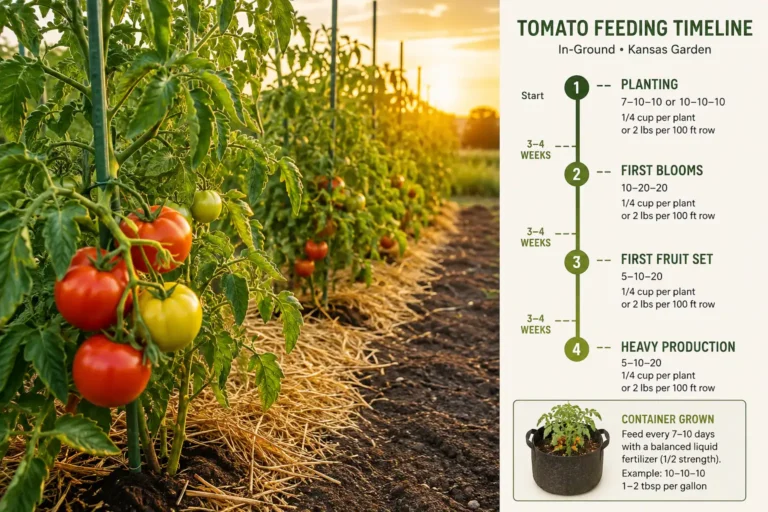
Yellow lower leaves. Nitrogen deficiency develops quickly in fabric bags because nutrients leach with each watering. Apply a balanced liquid fertilizer every 7 to 10 days once fruit sets.
Roots growing through the bag exterior. This indicates the plant has outgrown the bag. Transplant into a larger bag or accept reduced yield for the remainder of the season.
Flowers drop before fruit sets. Temperatures above 95°F or below 55°F cause flower drop. Mist flowers early in the morning on days above 90°F to support pollination. Shade cloth rated at 30% reduces heat stress without reducing light below the 6-hour minimum.
Conclusion
The right grow bag size sets the foundation for a productive tomato plant. Cherry and patio tomatoes grow well in 5-gallon bags. Determinate varieties need 7 to 10 gallons. Indeterminate and large heirloom types produce best in 15 to 20-gallon bags.
Match the bag to the variety, use a well-draining container mix, provide support from day one, and water consistently. Those four steps cover most of what separates a healthy grow bag tomato from one that underperforms.