How to Fertilize Tomatoes in Pots and Grow Bags
Potting mix carries almost no nutrient reserve, and every watering flushes more of it out the drain holes. So knowing how to fertilize tomatoes in pots matters more than the variety you picked.
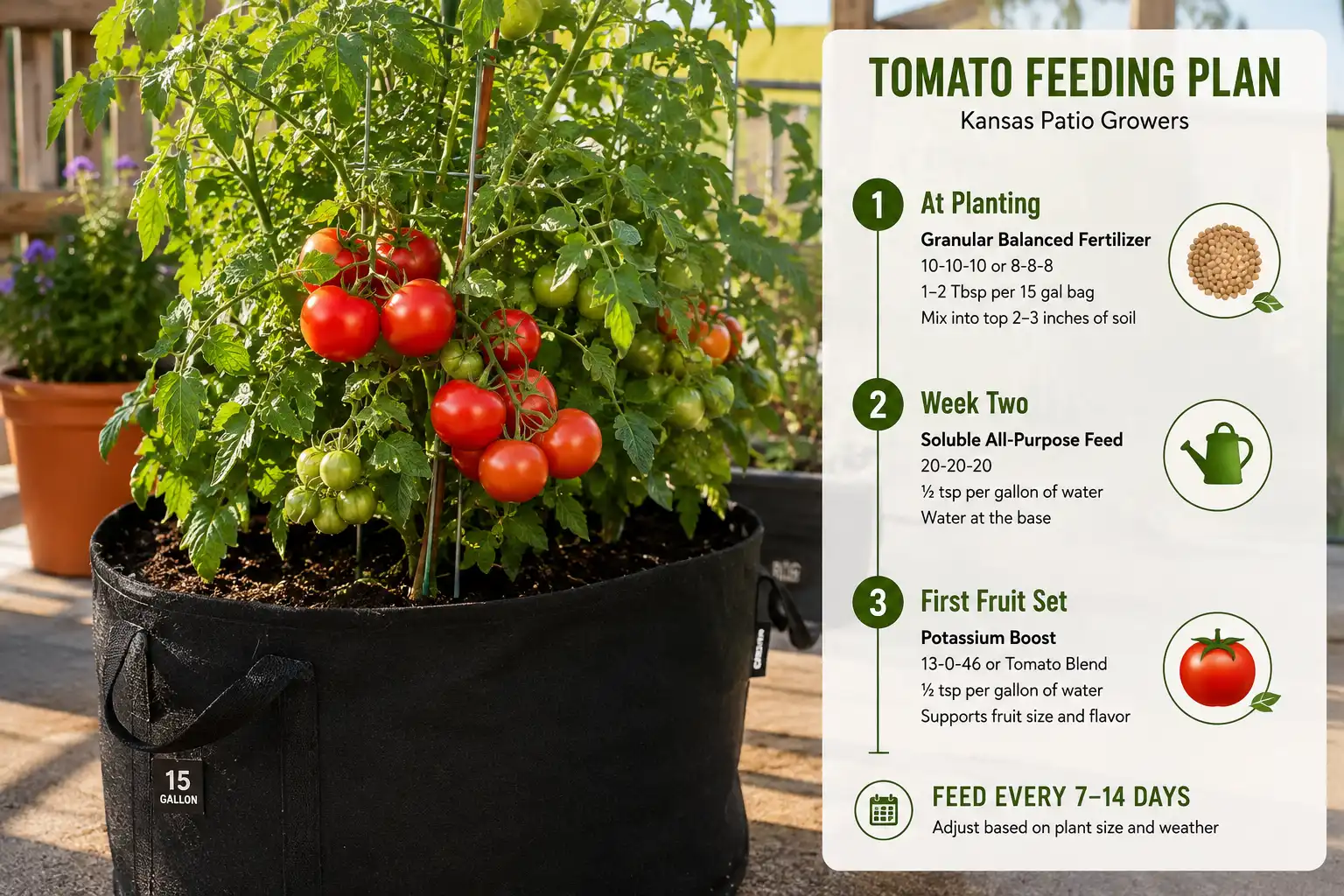
To fertilize tomatoes in pots, blend controlled release granules into the mix at planting. Start soluble feed two weeks later. Then feed every 7 to 14 days, switching to higher potassium at first fruit set.
Learn more: How often to fertilize tomato plants
Why Potted Tomatoes Run Out of Food Faster Than Field Plants
A pot holds a small fixed volume of mix that cannot store and resupply nutrients the way field soil does. Garden soil works like a bank. Clay particles and organic matter hold nutrients on exchange sites, then release them slowly as roots pull.
A peat and perlite mix has very little of that holding capacity. So nutrients sit in the water film, and the moment water drains, they leave with it.
Watering rate makes it worse. A mature tomato in a 10 gallon pot can drink a gallon a day during a Kansas July. Every one of those waterings pushes nitrogen and potassium out the bottom. Field plants get rain and hold reserves, while potted plants get only what you hand them.
Most bagged mixes carry a starter charge of fertilizer. That charge runs about two weeks, or roughly two to three thorough waterings. After that, growth slows unless you step in. Getting the container tomato setup right first makes the feeding part far easier.
How to Fertilize Tomatoes in Pots From Transplant to Last Harvest
Feed in three stages. Coated granules go in at planting. Soluble feed starts at week two. A potassium forward blend takes over once fruit sets. Each stage matches what the plant is building.
Step 1: Mix Controlled Release Granules Into the Potting Mix
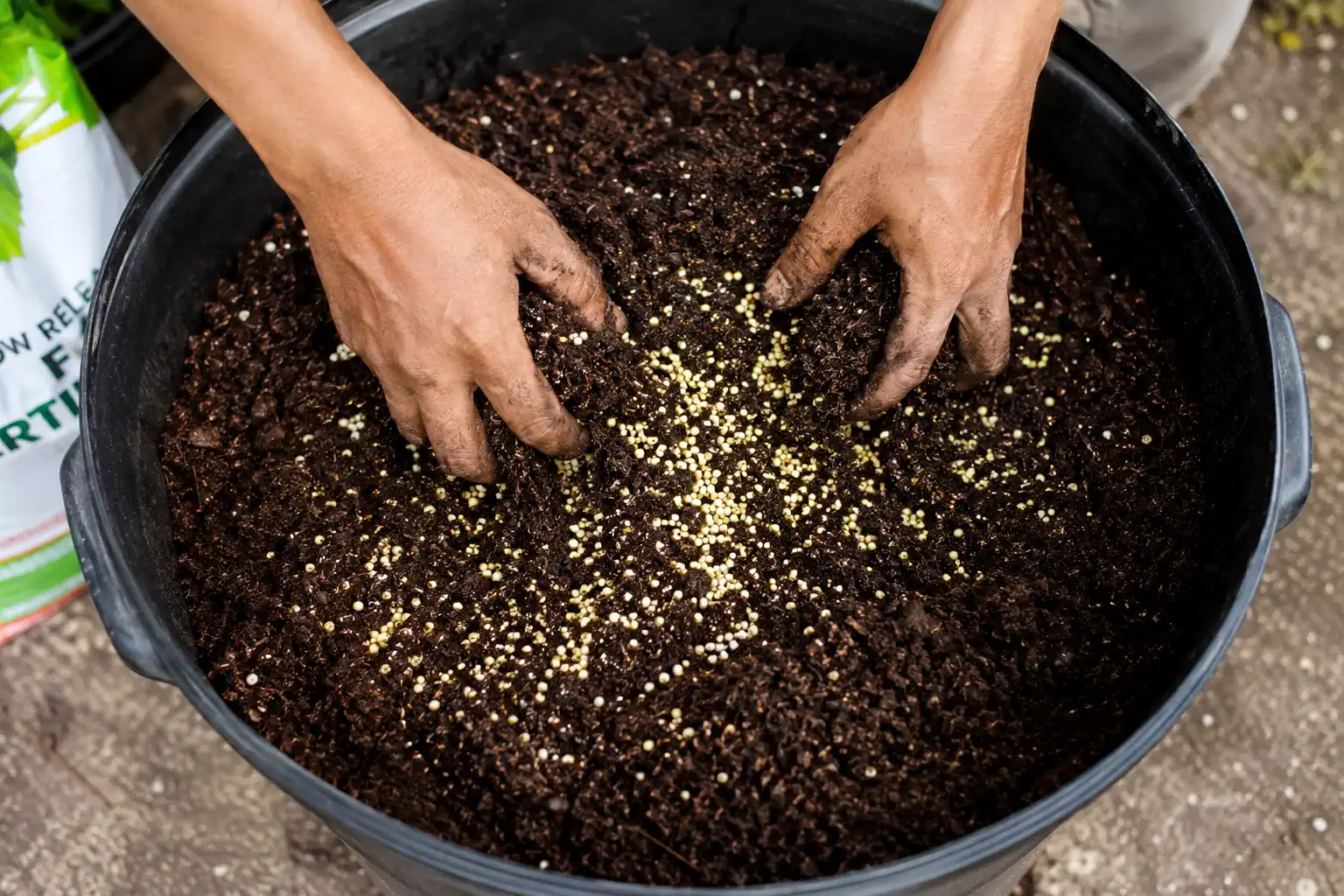
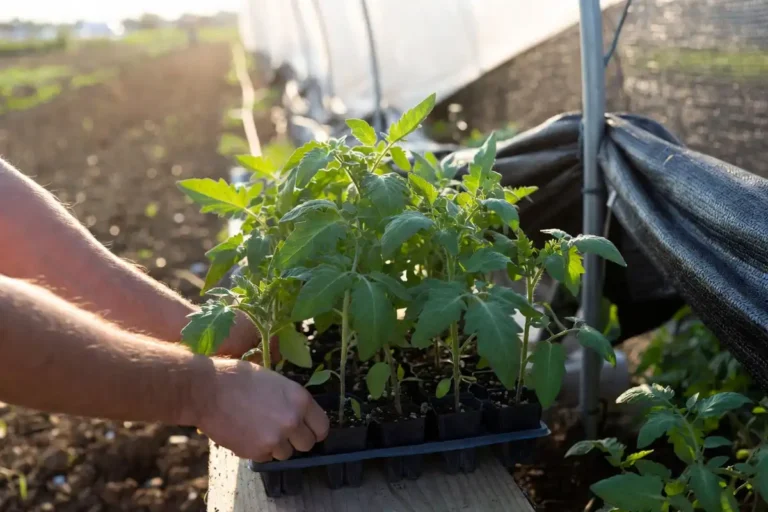
Blend controlled release granules through the whole volume of mix before you set the transplant. Follow the label rate for your pot size, since coated products differ in release speed. Anything rated for three to four months covers most of a Great Plains season.
Never dump granules into the planting hole against the root ball. That concentrates salts exactly where new roots go, and young roots burn easily.
Step 2: Start Soluble Feed About Two Weeks After Planting
Begin soluble feeding roughly two weeks after transplanting, once the starter charge in the mix runs down. Mix a water soluble fertilizer into your can, then apply it in place of one plain watering.
Iowa State University Extension recommends a soluble product such as 20-20-20 or 15-30-15 every week or two for container tomatoes. The weekly end suits hot stretches better, since watering increases and more nutrients get lost.
Step 3: Switch to Potassium Once the First Fruit Sets
Move to a blend carrying more potassium than nitrogen once the first fruit reaches about quarter size. Potassium drives fruit fill, color, and firmness.
Too much nitrogen at that point pushes leaves and suckers instead of tomatoes. The mistake shows up as thick dark foliage, curled growing tips, and thin blossom clusters.
How Often to Fertilize Tomatoes in Pots by Container Size
Feed every 7 days in pots under 10 gallons. Larger pots of 15 gallons or more stretch to 10 to 14 days. Pot volume sets the interval, because volume decides how much nutrient the mix holds.
| Container size | Feed interval | Soluble rate |
|---|---|---|
| 5 gallons | Every 5 to 7 days | Half label strength |
| 7 to 10 gallons | Every 7 days | Half to full label strength |
| 15 gallons | Every 10 to 14 days | Full label strength |
| 20 gallons or larger | Every 14 days | Full label strength |
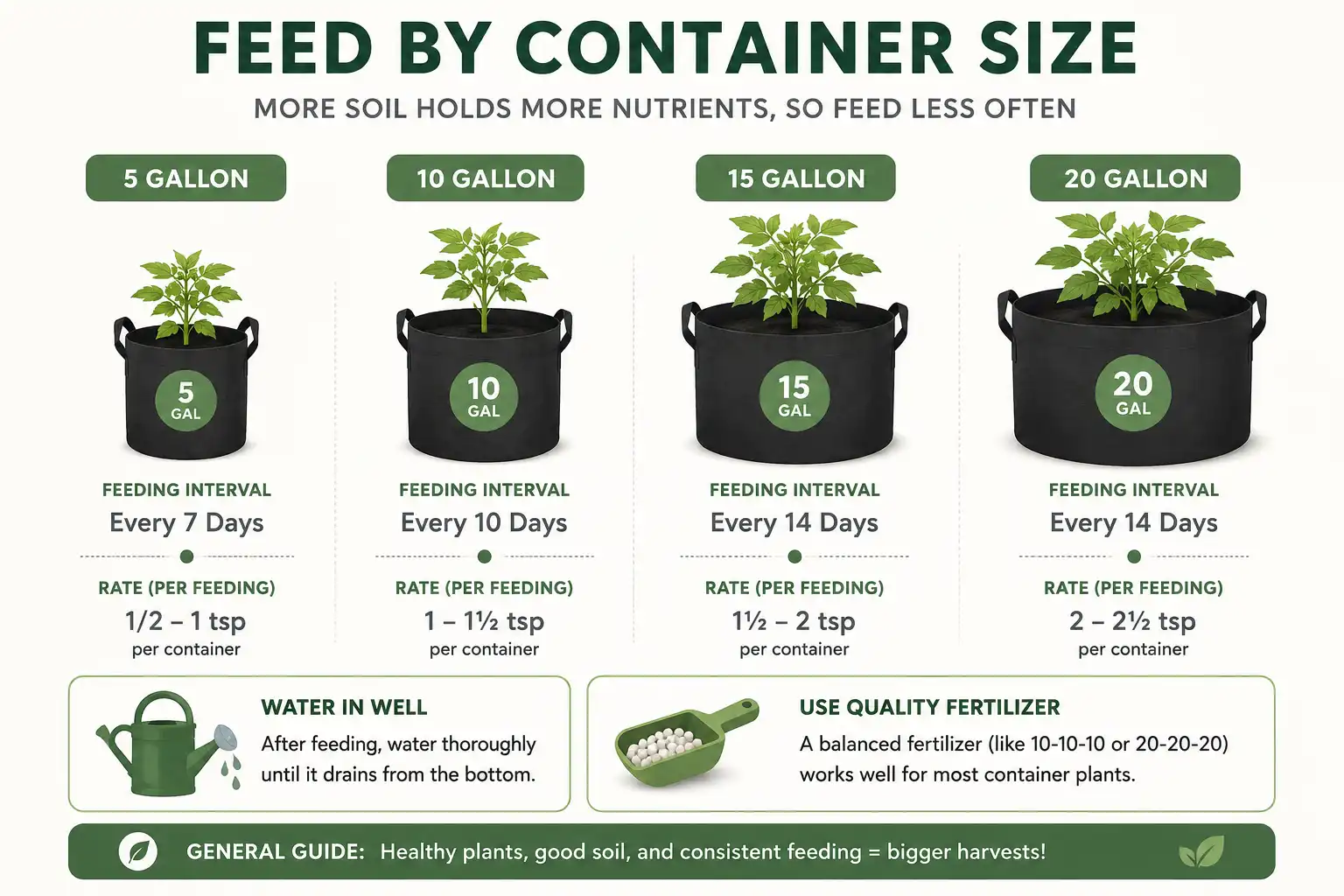
University of Minnesota Extension makes a point worth repeating. Frequent feeding at a lower rate beats occasional heavy doses. If the label calls for one scoop every two weeks, use half a scoop weekly instead. Salt levels stay lower, and the plant never coasts.
Five gallons is too tight for an indeterminate tomato. Ten gallons is the floor, while 15 gives better results. If you are still choosing, our notes on sizing a tomato pot walk through the trade offs.
How Often to Fertilize Tomatoes in Grow Bags
Grow bags usually need feeding every 5 to 7 days, a step up from rigid pots of the same volume. Fabric breathes on every surface, not just the top. So the mix dries faster and you water more often.
More waterings mean more leaching, which shortens the feed interval.
Two habits keep grow bags on track:
- Water until it runs out the bottom, then feed at half strength more often rather than full strength occasionally.
- Mulch the surface with straw or grass clippings to slow evaporation.
Bag volume still drives the schedule, so grow bag capacity for tomato plants deserves the same attention as pot choice.
What NPK Numbers Work Best for Container Tomatoes
Start with a balanced 1-1-1 ratio through early growth. Once fruit sets, move to a blend where potassium exceeds nitrogen. Balanced grades such as 20-20-20 or an all purpose 24-8-16 handle the vegetative stage well.
For fruit fill, look at grades like 8-16-24, 9-15-30, or any blend labeled for tomatoes where the third number leads.
Watch the ammonium content. High ammonium nitrogen competes with calcium uptake. Illinois Extension notes that heavy ammonium, potassium, and magnesium all interfere with calcium reaching the fruit. Calcium nitrate covers part of the nitrogen need without that problem.
Skip lawn fertilizer entirely. Weed and feed products carry herbicide, while high nitrogen lawn grades give you vines and no crop. The tomato fertilizer options on hand cover both stages without much guesswork.
How Much Fertilizer to Use Per Pot
Follow the label rate per gallon of water, then cut it in half if you plan to feed weekly. Concrete starting points:
- Soluble powder or crystals: usually 1 tablespoon per gallon of water at full strength. Use 1/2 tablespoon weekly instead.
- Volume applied: enough solution to wet the entire root zone until it drips from the drain holes. A 10 gallon pot takes roughly 1 to 1.5 gallons.
- Controlled release granules: typically 1 to 2 tablespoons per 5 gallons of mix, though labels vary.
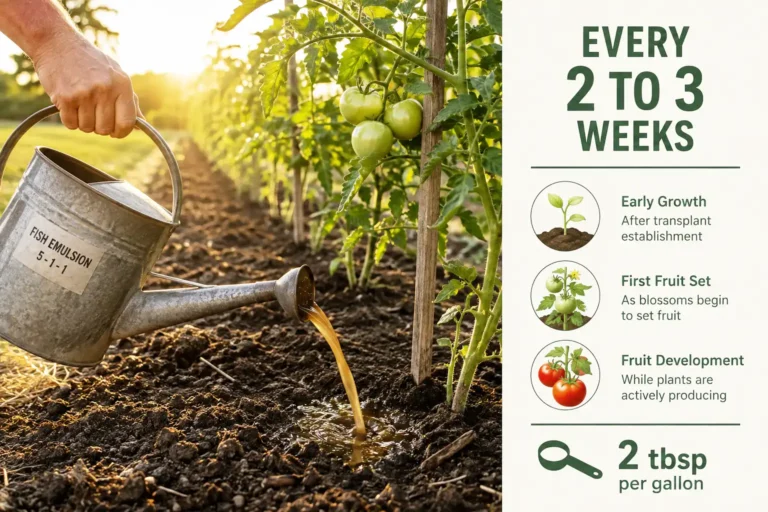
- Fish emulsion: 1 to 2 tablespoons per gallon of water every 10 to 14 days.
Never feed a bone dry pot. Water first, wait an hour, then feed. Dry mix plus concentrated solution burns roots fast.
How to Fertilize Indoor Tomato Plants
Feed indoor tomatoes every 10 to 14 days at half strength, then flush the pot with plain water monthly. Indoor plants grow slower than outdoor plants on the same feed, because light limits them rather than nutrients. So a full outdoor rate builds salts instead of fruit.
Run it this way:
- Pick a dwarf or determinate variety and give it at least 5 gallons.
- Provide 14 to 16 hours under a full spectrum LED.
- Feed at half label strength every 10 to 14 days.
- Flush with plain water monthly, since no rain ever does it for you.
- Shake flower clusters daily, because indoor plants get no wind or bees.
Indoor pots usually sit in saucers. Empty the saucer after every watering. Standing water pulls dissolved salts back up into the mix by capillary action. Colorado State Extension flags that as a common cause of surface crust.
How to Flush Salt Buildup From Tomato Pots
Scrape off any crust, then water heavily twice in a row. Run two to three pot volumes through the mix. Salt buildup is the most common feeding mistake in containers.
Watch for these signs:
- White or tan crust on the mix surface or the pot rim
- Brown crispy leaf margins and tips
- Lower leaves dropping early
- Wilting even though the mix feels damp
Then flush like this:
- Remove the crust plus no more than the top inch of mix.
- Water slowly until it drains freely.
- Wait five to ten minutes.
- Water again with the same volume.
- Empty the saucer or drip tray.
- Skip the next scheduled feed, then resume at half strength.
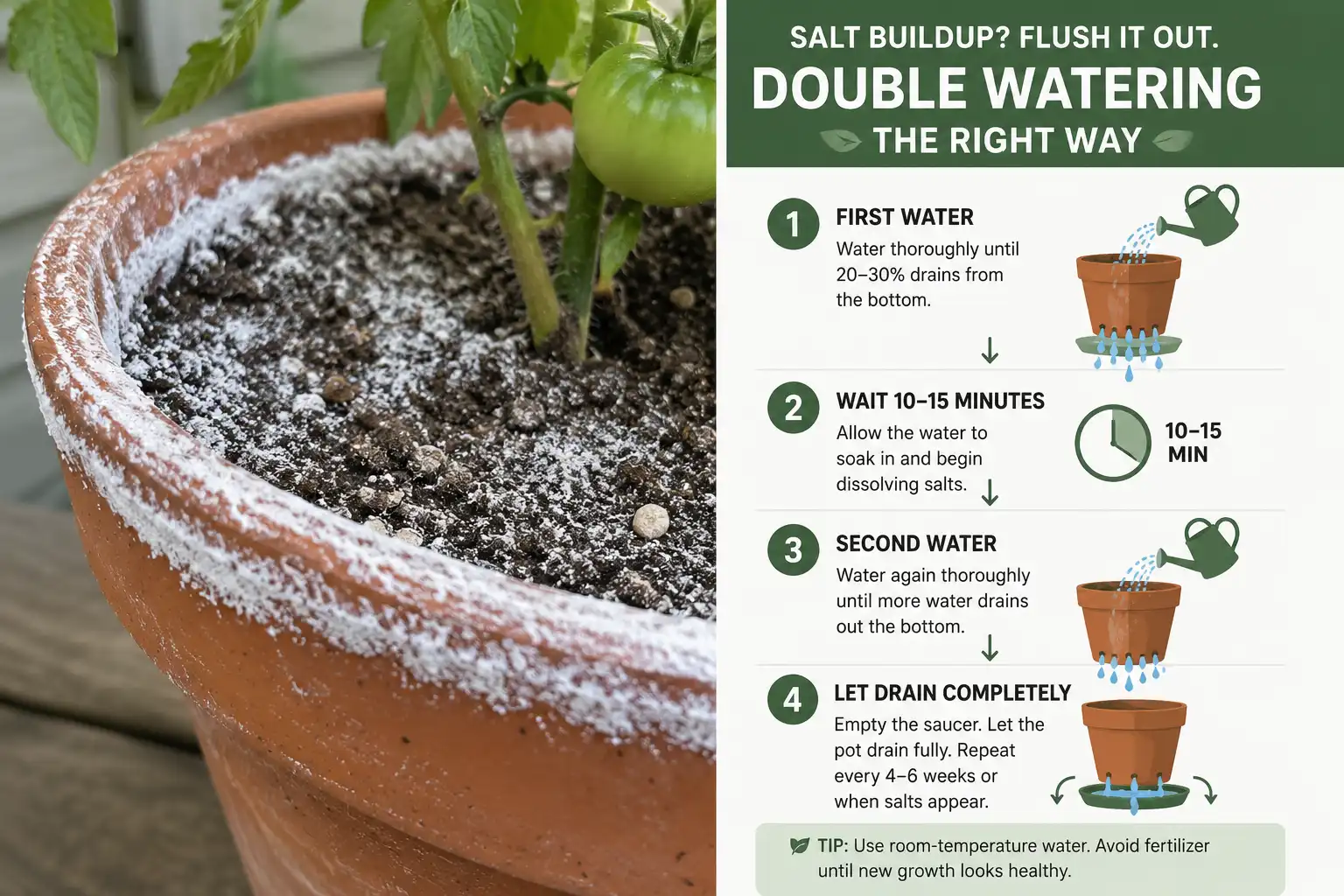
Every patio pot should be flushed once in midsummer whether it shows crust or not. Hard water makes buildup worse, and plenty of Kansas well water runs hard.
Why Blossom End Rot in Pots Is Not a Calcium Shortage
Blossom end rot in containers comes from interrupted water uptake, not from missing calcium in the mix. Calcium travels with water through the xylem, and the plant cannot move it again once it sets it down. So developing fruit needs a steady water stream every day.
When a pot swings from soaked to bone dry, calcium delivery stops and the blossom end collapses.
Clemson Extension is direct about this. Blossom end rot appears even when calcium levels test adequate. Foliar calcium sprays absorb poorly, so they rarely fix it.
What actually works in pots:
- Water on a fixed schedule, twice daily in peak heat if the pot demands it.
- Mulch the mix surface.
- Ease off high nitrogen during early fruit set.
- Size up the container so moisture swings less.
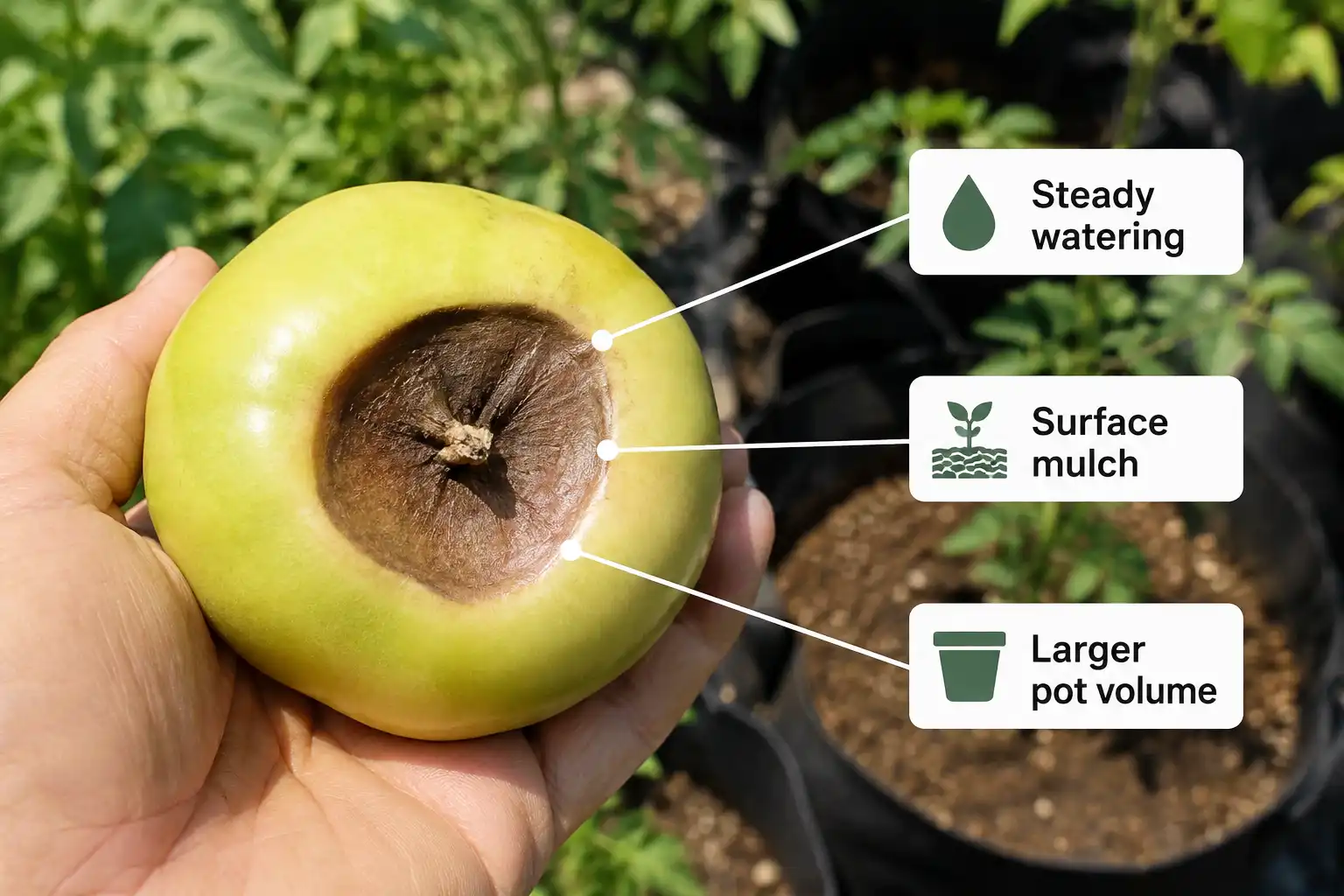
Steady tomato watering matters far more here than any product on the shelf.
Reading Container Tomatoes Before You Feed Again
Check leaf color, growth rate, and blossom clusters before you mix the next batch. The plant tells you whether to hold, push, or flush.
| What you see | Likely cause | What to do |
|---|---|---|
| Pale lower leaves, slow growth | Nitrogen short, mix flushed | Feed at full strength now, then weekly |
| Thick dark leaves, few blossoms | Too much nitrogen | Skip one feed, then switch to a potassium blend |
| Yellow shoulders, uneven ripening | Potassium short | Move to a fruit fill grade |
| Crispy leaf margins, white crust | Salt buildup | Flush, then resume at half strength |
| Purple cast on young leaves in cool spring weather | Cold mix slowing phosphorus uptake | Wait for warmth, do not add more |
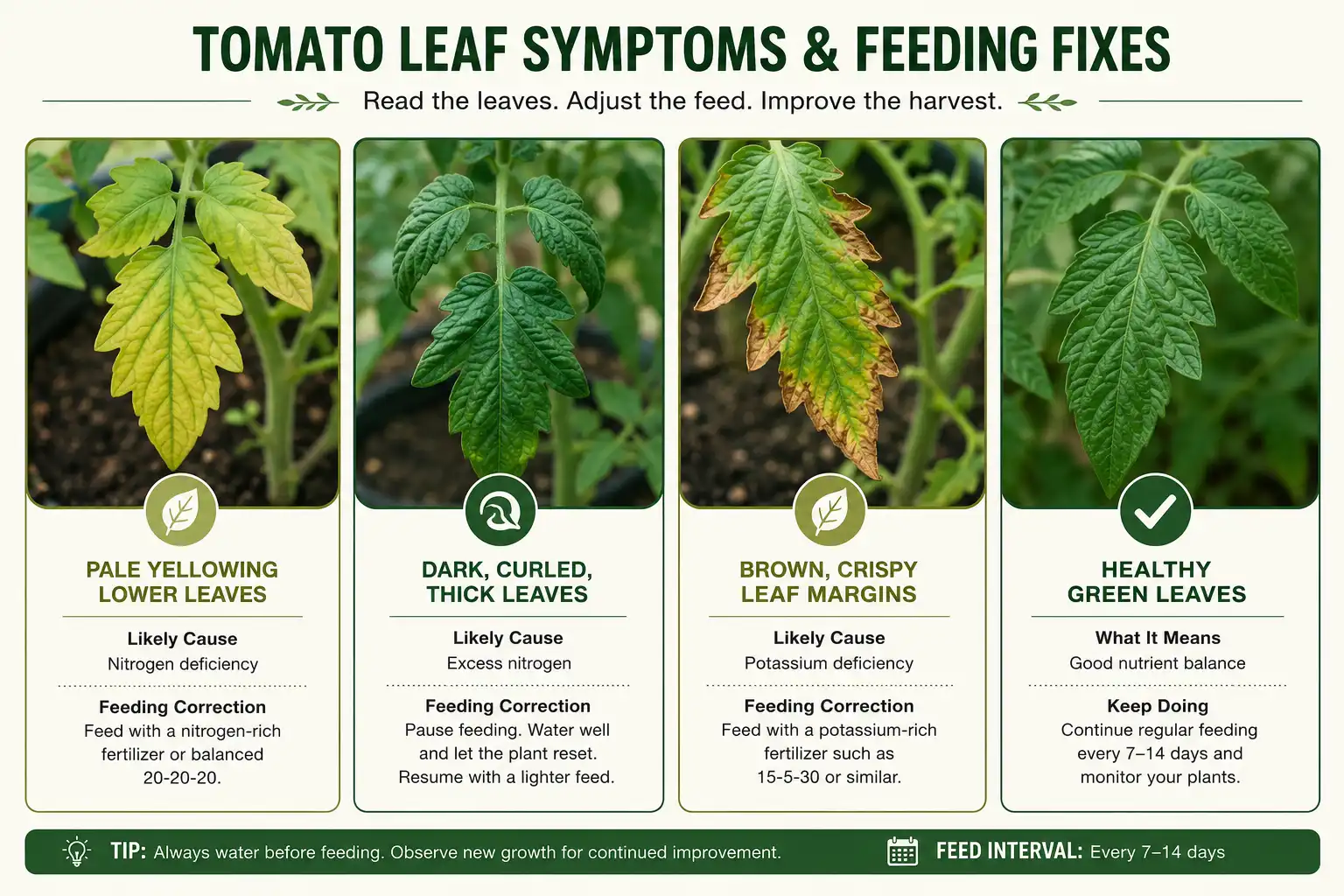
That last row trips up a lot of growers. Cold mix slows phosphorus uptake even when phosphorus sits at adequate levels, so adding more accomplishes nothing.
When to Stop Feeding Potted Tomatoes
Stop feeding determinate types once the last fruit reaches full size. Keep feeding indeterminate types until frost ends the run. Determinate plants set one main flush, so extra nitrogen afterward goes nowhere.
Indeterminate plants keep flowering, which means they keep needing feed. Feed the patio plants until the first hard frost warning. In USDA hardiness zone 6a that usually lands in late October.
Indoor plants under lights run on their own clock. Feed while they flower, then taper once production drops off.
FAQs About Feeding Tomatoes in Containers
How often to fertilize potted tomatoes if the mix already contains fertilizer?
Can I use 10-10-10 on container tomatoes?
Should I fertilize container tomatoes every time I water?
Do Epsom salts help potted tomatoes?
Can compost replace fertilizer in pots?
How often to fertilize tomato plants in containers during a heat wave?
Bottom Line
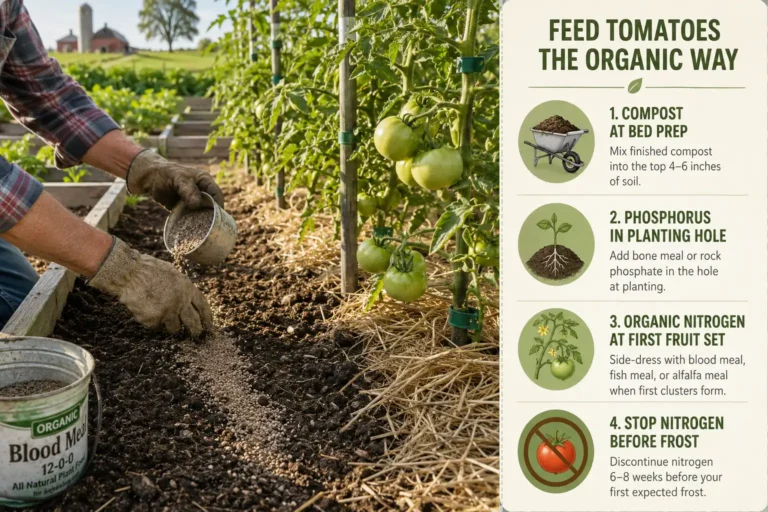
Pick a container of 10 gallons or more. Blend controlled release granules through the mix at planting. Start soluble feed at two weeks, weekly at half strength. Switch to a potassium forward grade when the first fruit hits quarter size. Flush once in midsummer, and water on a schedule so calcium keeps moving.
That routine carries more weight than any single product on the shelf. This step by step guide on fertilizing tomatoes grown in the ground covers rates for soil grown plants.