How to Replant Tomatoes Right Way: 7 Steps Every Grower Needs
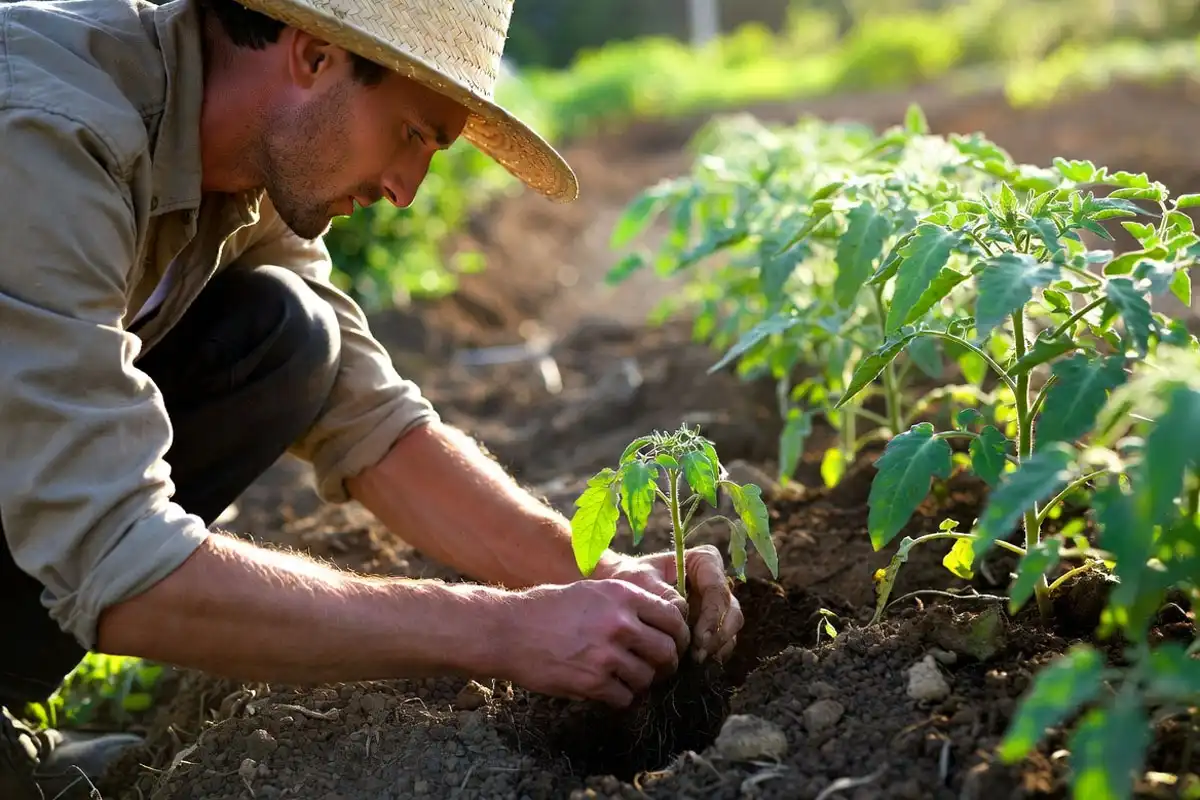
Replant tomatoes works best when you move the plant quickly, protect the root ball, and reset it into warm, well-drained soil. This guide covers every step from timing and site preparation to planting depth, post-transplant watering, and recovering plants from transplant shock. Whether you are moving indoor-started seedlings outdoors or relocating plants already in the ground, each section gives you a clear decision and a practical action to follow.
To replant tomatoes, water the plant thoroughly 1 hour before moving it. Dig a hole deep enough to bury the stem up to the lowest set of leaves. Set the plant in place, firm the soil around the roots, and water slowly at the base until moisture reaches 6 to 8 inches deep. Replant in the early morning or on a cloudy day. Avoid midday heat and never replant a dry plant.
When Should You Replant Tomatoes?
Replanting tomatoes works best when soil temperature reaches at least 60°F (15°C). Soil below this temperature slows root development and increases transplant shock.
The safe window for most regions falls between late spring and early summer, after the last frost date has passed. For indoor-started seedlings, transplant 6 to 8 weeks after germination, once the plant carries 2 to 3 sets of true leaves.
Avoid replanting during a heat wave or when daytime temperatures exceed 90°F (32°C). Extreme heat causes wilting before roots establish contact with the surrounding soil.
If you need to relocate a plant already growing in the garden, move it before it sets fruit. Plants moved mid-season drop flowers and produce less fruit. For detailed timing by region, the guide on the best time to transplant tomatoes outdoors covers frost dates and soil readiness by location.
Learn more: Planting Tomatoes in Washington State for a Full Harvest
Where Should You Replant Tomatoes?
Tomatoes perform best in full sun, receiving at least 6 to 8 hours of direct sunlight per day. Choose a location with well-drained soil and enough space for air to move between plants.
Target soil conditions for replanting:
- pH between 6.0 and 6.8
- Loose, loamy texture that drains within 1 hour after rain
- No standing water after irrigation
Avoid spots where tomatoes, peppers, or potatoes grew in the previous 2 to 3 seasons. These crops share pathogens including early blight and Fusarium wilt. Rotating to a fresh bed reduces soilborne disease carryover.
Before digging, test the soil before replanting to confirm pH and nutrient levels. One test prevents most early-season deficiency and drainage problems.
Also know: Ripen Unripe Tomatoes at Home Without Losing Flavor
How to Prepare the Planting Site
Loosen soil to a depth of 12 inches using a fork or spade. Break up compacted layers and remove rocks, debris, and weed roots.
Mix in 2 to 3 inches of compost to increase organic matter and improve drainage. Work it into the top 8 to 10 inches of soil.
If the soil pH reads below 6.0, add agricultural lime to raise it. If it reads above 6.8, add elemental sulfur to lower it. Follow package rates based on your soil test result.
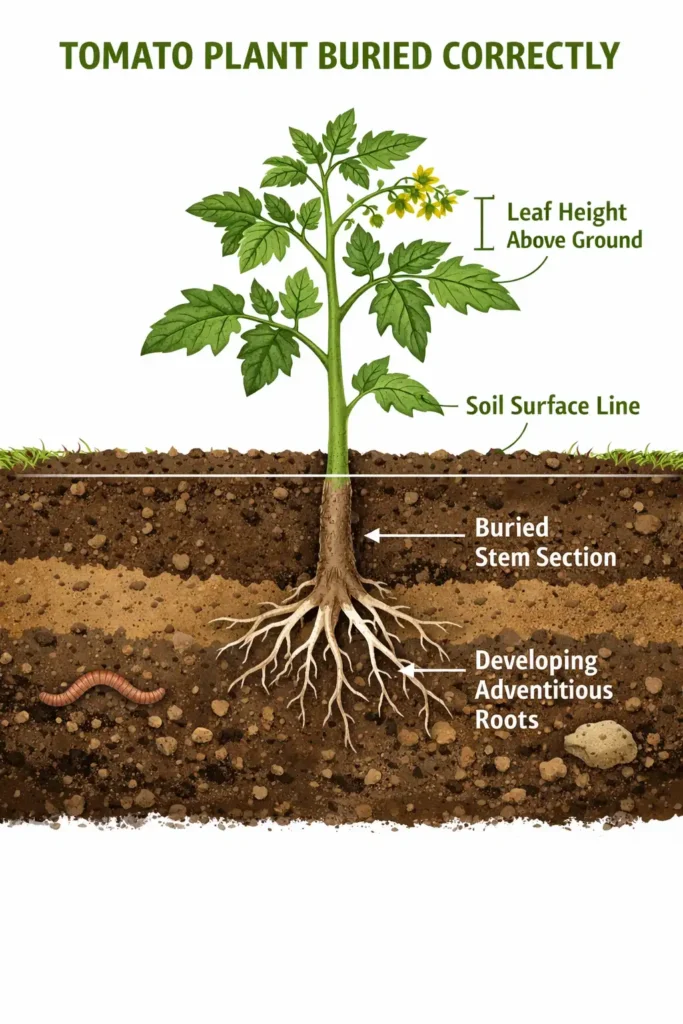
Dig the planting hole 6 to 8 inches deeper than the root ball. Tomatoes develop roots from buried stem tissue, so a deeper hole produces a stronger, wider root system.
How to Replant Tomatoes: Step-by-Step
Step 1: Water the Plant Before Moving It
Water the tomato plant thoroughly 1 hour before replanting. Moist soil holds the root ball together during removal and reduces root tearing during the lift.
Step 2: Remove the Plant Carefully
For container plants, tip the pot sideways and slide the root ball out gently. For plants growing in the ground, insert a spade 6 to 8 inches from the base and lift slowly.
Keep the root ball intact. Broken roots delay establishment and extend wilting. Work slowly around the perimeter before lifting.
Step 3: Set the Correct Planting Depth
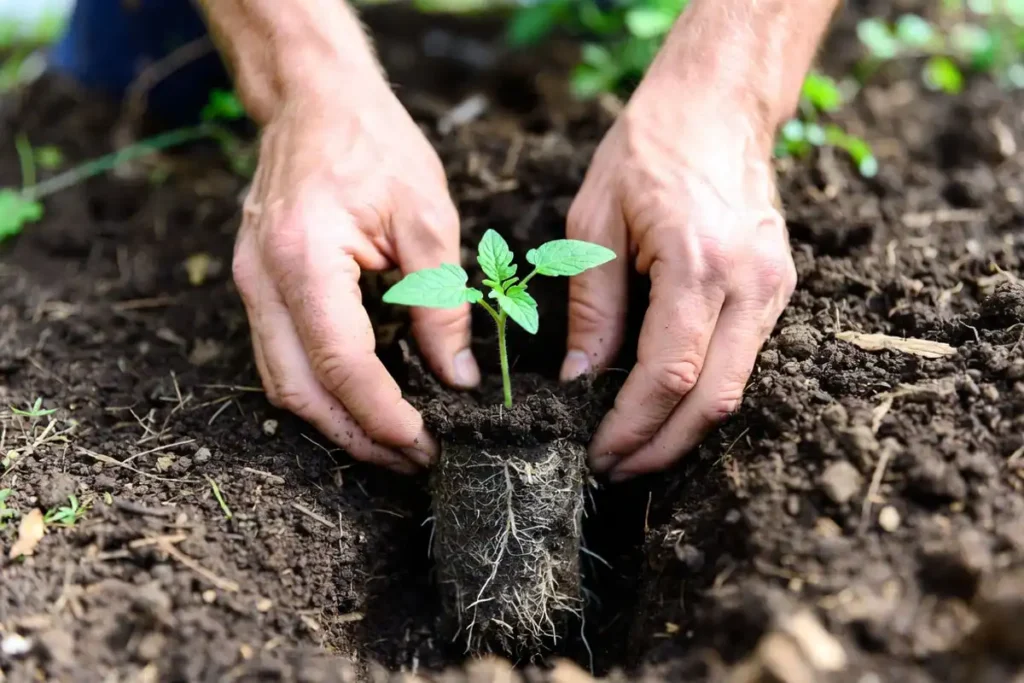
Place the tomato in the hole so the soil line sits directly below the lowest set of leaves. Bury the bare stem up to that point.
Tomatoes produce roots along buried stem sections. Deeper planting develops a wider root system and anchors the plant more firmly.
Step 4: Fill and Firm the Soil
Fill the hole with the removed soil mixed with compost. Press the soil firmly around the roots to close air pockets.
Avoid packing the surface too hard. Dense, compacted soil restricts root expansion and limits water absorption after planting.
Step 5: Water Deeply at the Base
Water slowly at the base until soil is moist 6 to 8 inches deep. This settles the soil around the roots and removes remaining air gaps.
Use a watering can or drip line. Wet foliage on a freshly replanted tomato increases fungal disease risk during the establishment period.
Step 6: Apply Mulch Around the Plant
Spread 2 to 3 inches of straw or shredded wood chip mulch around the base. Keep mulch 2 inches clear of the stem to prevent rot.
Mulch holds soil moisture, steadies soil temperature, and suppresses weed competition. Each of these factors speeds root establishment. The guide on mulching techniques in crop farming covers material choices and application rates.
Do Tomatoes Need Hardening Off Before Replanting Outdoors?
Indoor-started seedlings need hardening off before going into the ground. Skipping this step causes sun scald, leaf curl, and a setback of 1 to 2 weeks.
Hardening off exposes the plant to outdoor conditions gradually over 7 to 10 days. Start with 2 hours of indirect light on day one. Increase outdoor exposure by 1 to 2 hours each day.
By day 7 to 10, the plant tolerates full sun and outdoor wind. At that point it is ready to replant without transplant shock.
Plants moved directly from a greenhouse or windowsill to full outdoor sun show significant stress within 24 hours. The full daily schedule for hardening off tomato transplants before field planting walks through weather adjustments and timing.
What Spacing Does a Replanted Tomato Need?
Determinate tomato varieties need 18 to 24 inches between plants. Indeterminate varieties need 24 to 36 inches to accommodate continued vertical and lateral growth.
Row spacing of 36 to 48 inches allows equipment movement and improves air circulation. Tight spacing increases humidity between plants and raises fungal disease risk.
Poor spacing reduces fruit yield, complicates pruning, and limits sunlight to lower leaves. The guide on plant spacing for field crops covers row and in-row calculations for multi-variety plantings.
How to Support Tomatoes Right After Replanting
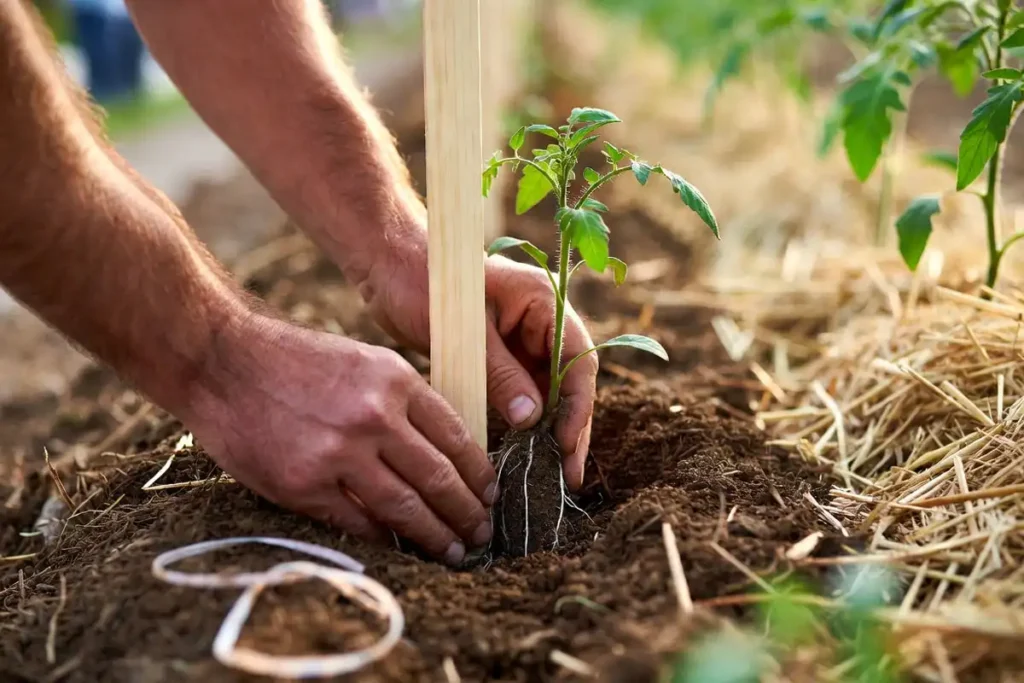
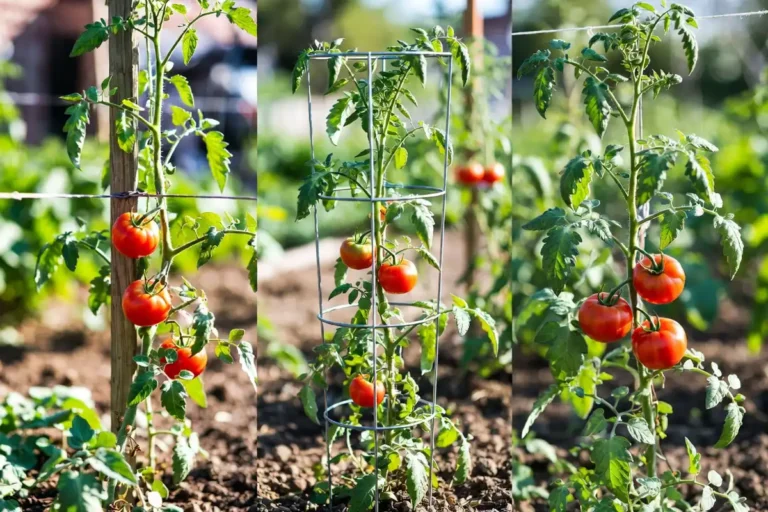
Install a stake, cage, or trellis at replanting time rather than after the plant grows. Installing supports later damages established roots.
For indeterminate varieties, drive a 5 to 6 foot stake 8 to 10 inches into the ground at planting. Tie the stem loosely using soft garden ties every 8 to 10 inches as the plant grows.
Cages suit determinate varieties well. A wire cage with 6-inch openings provides good air movement and allows access to fruit at harvest.
The guide on staking, trellising, and caging tomatoes for stronger plants compares each support method by variety type and plant size.
What Are the Signs of Transplant Shock?
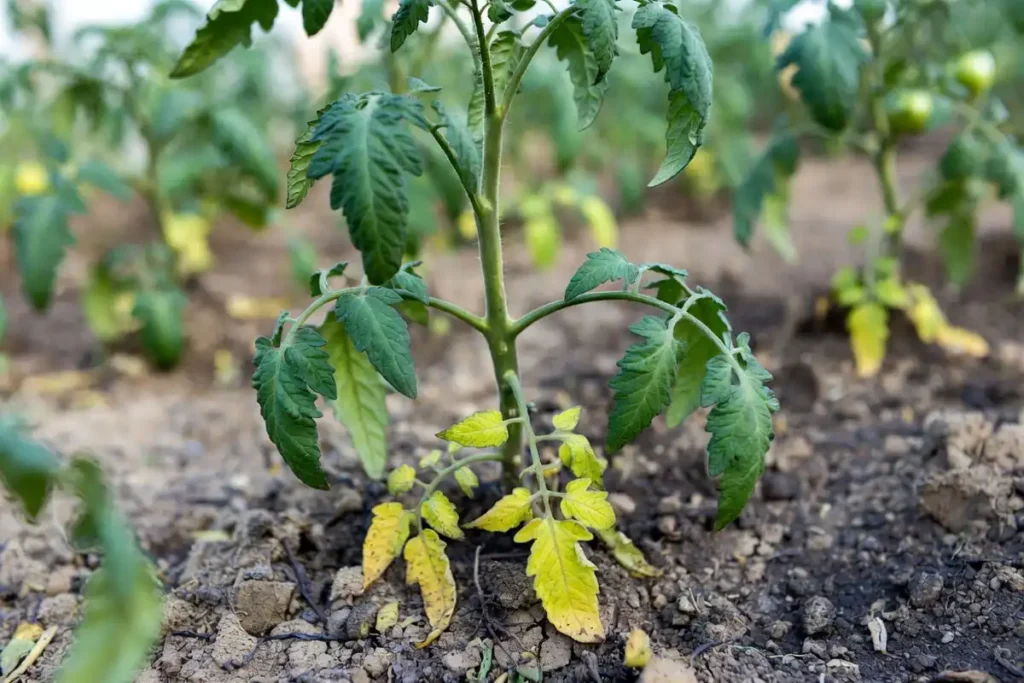
Transplant shock appears within 24 to 72 hours of replanting. Common signs include wilting, yellowing of lower leaves, and a limp stem despite moist soil.
Mild wilting in the first 2 days is normal in warm weather. The plant recovers once roots re-establish contact with surrounding soil.
Persistent wilting after 5 days, combined with yellowing leaves, signals a deeper problem. Check for:
- Root damage during removal
- Dry soil at root depth
- Planting in direct midday sun without any shade cover
Water deeply a second time and apply mulch if none is present. If roots appear brown and mushy at the crown, the plant has developed root rot from overwatering or poor drainage.
Remove and dispose of a plant with full crown rot. Do not compost diseased tomato material.
Common Mistakes to Avoid When Replanting Tomatoes
Replanting at midday. Midday heat and UV intensity stress a freshly moved plant before roots settle. Replant in early morning or late afternoon.
Not burying the stem deep enough. Shallow planting limits root development. Bury the stem to directly below the lowest leaves.
Skipping pre-move watering. A dry root ball falls apart during removal. Water 1 hour before digging.
Overwatering immediately after replanting. Waterlogged soil cuts off oxygen to roots and promotes rot. Water deeply once, then wait until the top 1 inch of soil dries before watering again.
Planting in partial shade. Tomatoes grown in shade produce less fruit and show more foliar disease. Choose full sun locations only.
Reusing the same bed each season. Soilborne pathogens accumulate in beds replanted with the same crop. Rotate tomatoes to a new area each year.
Safety Notes for Replanting Tomatoes
Wear gloves when handling tomato plants. Tomato foliage contains compounds that irritate skin in sensitive individuals.
Wash hands after handling plants, particularly before eating or touching your eyes.
If you apply granular fertilizer at planting time, keep it 3 to 4 inches from the root ball. Direct contact with concentrated fertilizer burns young roots and delays establishment.
Store any unused transplants in a shaded location with moist roots. A wilted plant left dry in a pot for several hours declines rapidly and may not recover after replanting.
Conclusion
Replanting tomatoes produces strong results when you get the timing right, prepare the soil properly, and bury the stem at the correct depth. Water before and after the move, mulch the base, and give the plant full sun access from day one. Watch for transplant shock in the first 5 days.
If wilting continues past that point, water deeply and rule out root damage or poor drainage. Install support at planting time, rotate beds each season, and the plant establishes quickly and yields well through the growing season.