Handheld Pump Sprayer: 10 Top Picks & Buying Guide (2026)
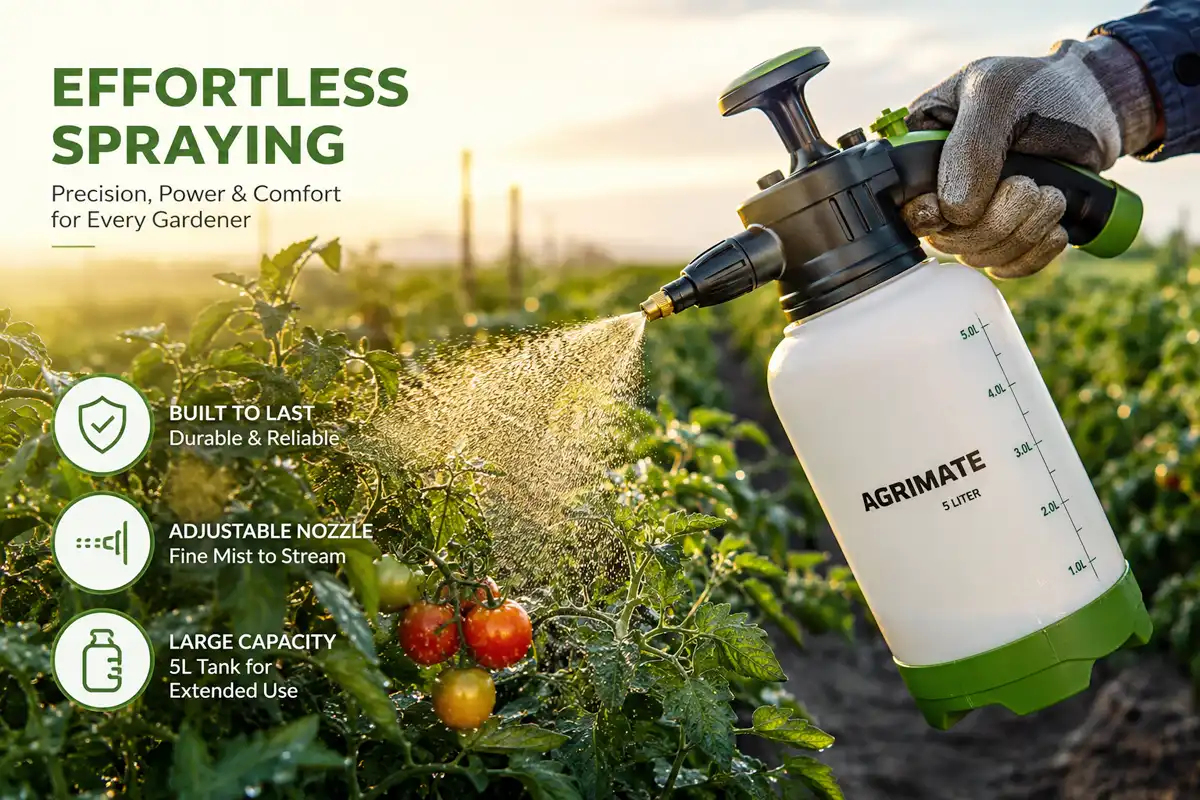
A handheld pump sprayer tackles weeds, pests, feeding, and light cleaning on a small plot. It does all that without the cost or bulk of powered gear. Below are the top ten picks, plus how to choose a good hand pump garden sprayer that lasts.
The best handheld pump sprayer is the Chapin 1002, an affordable, versatile all-rounder. For delicate misting, pick the Solo 418. For professional, large-area work, the Matabi Berry 7 leads with its pressure regulator.
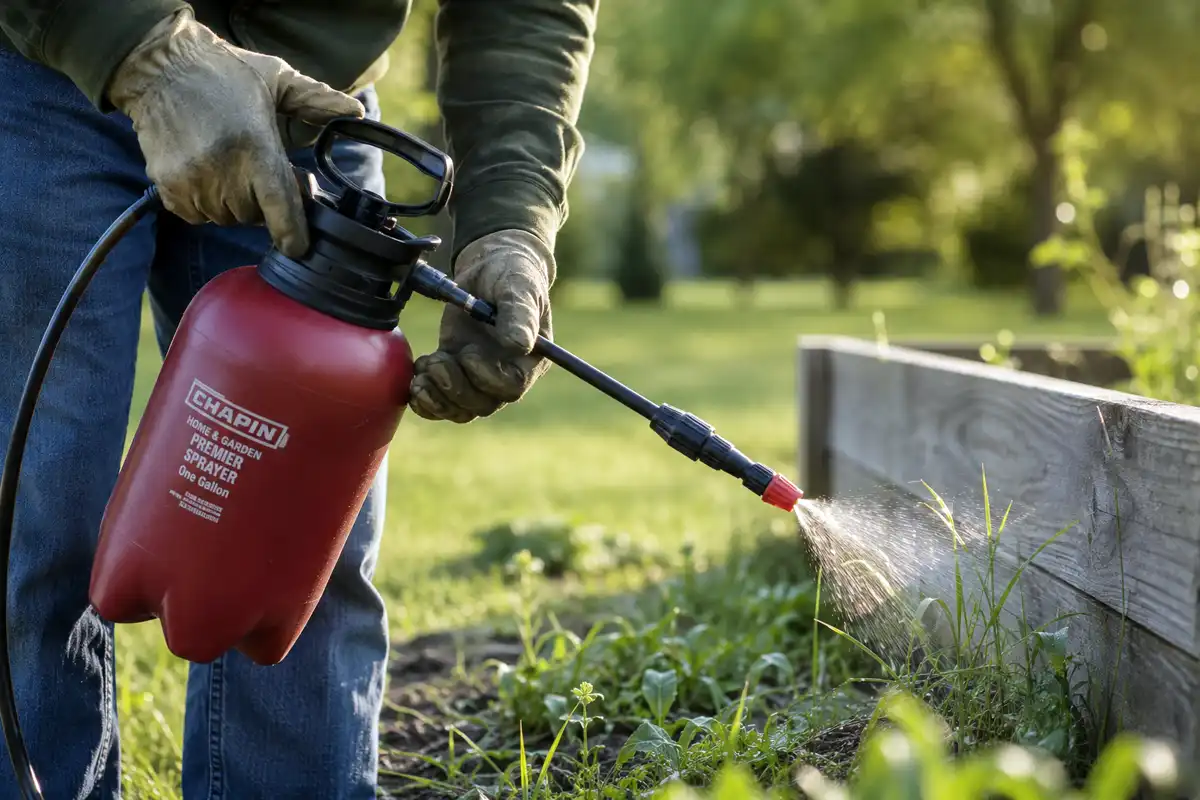
Best Handheld Pump Sprayer — Top 10 Picks at a Glance
| Product | Tank | Type | Nozzle | Seals | Best use |
|---|---|---|---|---|---|
| Chapin 1002 | 48 oz | Manual | Adjustable cone | Chemical-rated | Light lawn and garden |
| Chapin 20004 | 1 gal | Manual | Adjustable cone | Standard, replaceable | Budget 1-gallon jobs |
| PetraTools HD101 | 1 gal | Manual | Cone plus fan | Standard O-rings | Reach and two nozzles |
| Solo 418 | 1 L (0.26 gal) | Manual | Multi-directional | Viton | Seedlings, one-hand misting |
| Smith Performance Multi-Use 1 GL | 1 gal | Manual | Six (fan, jet, foam) | Viton | Chemical jobs, nozzle variety |
| Matabi Berry 7 | 1.3 gal | Manual, regulated | Adjustable | Viton | Pro-grade, large areas |
| TABOR TOOLS 1.3 | 1.3 gal | Manual | Adjustable brass | Viton | Standing reach, gardens |
| YSMN 1.5 Gallon | 1.5 gal | Manual | Adjustable brass | Standard, stainless body | Stainless durability |
| Happybuy 1 Gallon | 1 gal | Manual | Adjustable brass | Rubber, no corrosives | Budget stainless |
| VIVOSUN 50oz | 50 oz | Manual | Adjustable brass | Standard | Light indoor use |
What is a Handheld Pump Sprayer and How It Works
A handheld pump sprayer is a small tank you pressurize by hand to push liquid out as a spray. It bundles five pump sprayer parts into one tool. The tank, or reservoir, holds your water and chemical mix. A built-in pump then builds air pressure inside that sealed tank. A short hose carries the pressurized liquid up to the handle. The wand gives you reach and control. Finally, the spray tip shapes the output.
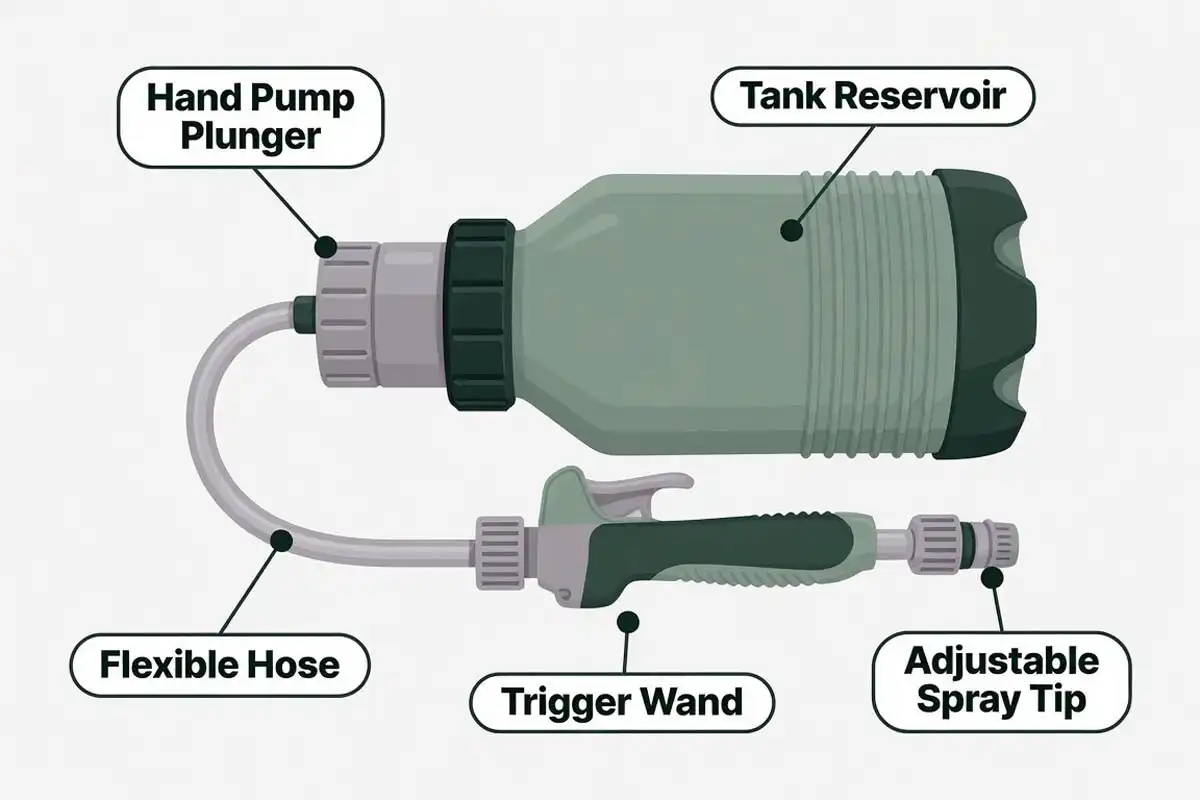
The physics stays simple. Each pump stroke forces air in above the liquid. That trapped air then pushes fluid up the tube and out the tip. As the liquid exits under pressure spray, the tip breaks it into fine droplets, or atomizes it. A tight tip throws a fine mist for leaves. Open it up and you get a cone, a wider fan, or a solid stream aimed at weeds. So a pressure pump sprayer works with no motor at all.
How to Choose the Right Handheld Pump Sprayer
Picking the best handheld pump sprayer comes down to four things. You weigh how much you spray, the pattern you need, the seals inside, and what goes in the tank. A good garden pump sprayer should fit your hand and your workload.
Tank Capacity
Match tank size to the job. A half-gallon unit makes the best garden sprayer for indoor plants, seed trays, and quick spot work. A 1 gallon pump sprayer covers most small gardens, raised beds, and light pump sprayer for lawn touch-ups. Step up to a 2 gallon pump sprayer for longer rows or a bigger yard. That size saves you from stopping to refill. Remember, a gallon of water weighs about eight pounds, so more tank means more to carry.
Nozzle Type
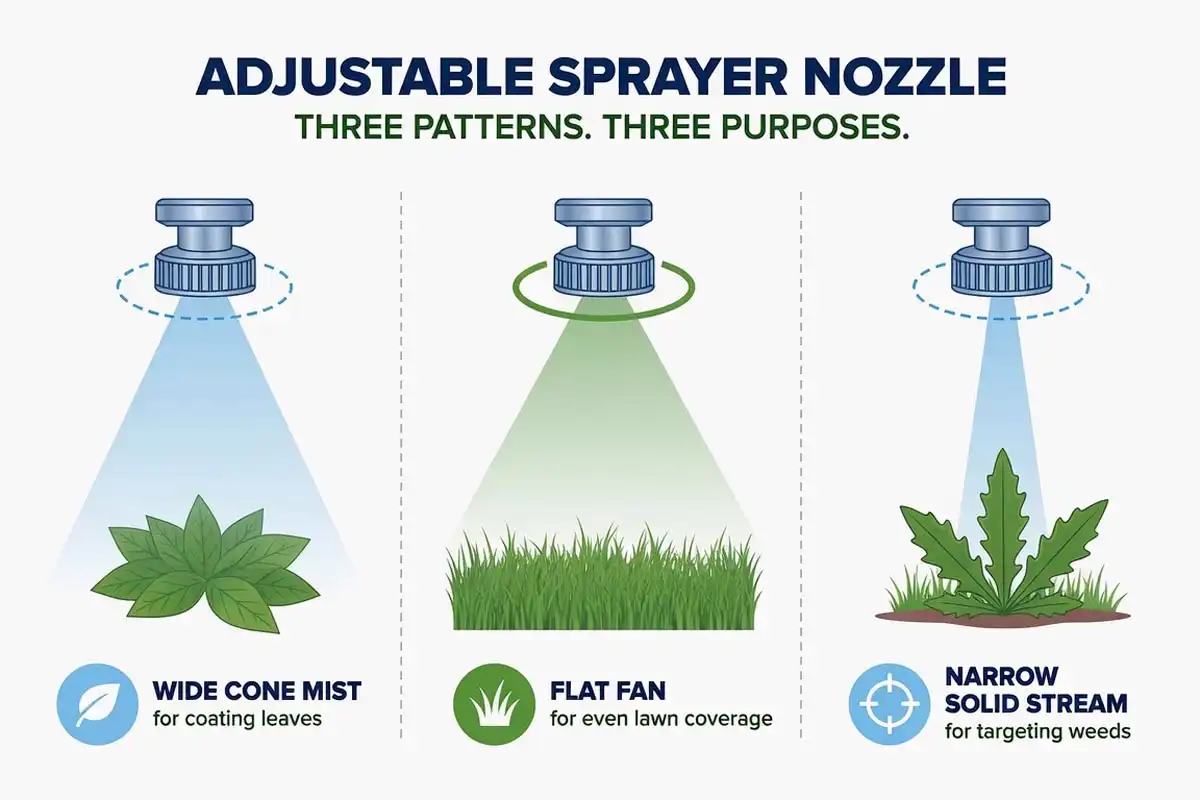
The nozzle decides where your spray lands. For most gardeners, the best handheld sprayer has an adjustable nozzle sprayer head. It twists from a fine cone to a straight stream. A cone or mist pattern coats leaves evenly. That suits foliage feeding and folds right into your natural pest control routine. A narrow stream then drives product down onto weeds with less drift onto nearby plants. A quality pump sprayer nozzle holds its pattern without dribbling once you set it.
Seals and Build Material
Seal material is the biggest factor in how long a sprayer lasts for chemical users. So the best pump sprayer for that work comes down to seal quality. Viton seals resist oils, petroleum-based products, and harsh solvents, so they handle the widest range of chemicals. EPDM seals take water-based herbicides and fertilizers well, yet they break down fast in oil-based products. Most tanks use tough poly plastic, while better wands add a brass nozzle for durability. The O-rings are wear items, so pick a model with replacements you can actually find.
What You’ll Be Spraying
Match the sprayer to the chemical before you fill it. A pump sprayer for weeds running glyphosate needs seals rated for that herbicide. It also fits your broader weed control plan. A pump sprayer for herbicide should never later hold a mix meant for tender plants. Fertilizer solutions stay easy on most units. Still, for feeding a larger area, a hose-end sprayer setup often beats a hand tank. Oil-based products such as neem oil favor Viton seals, while bleach for cleaning will chew through the wrong rubber fast. Keep any pump sprayer for pesticide duty dedicated to that role, so you dodge cross-contamination.
The 10 Best Handheld Pump Sprayers (Reviewed and Ranked)
Small handheld sprayers are run on this plot most weeks, offering firsthand insight into what holds up. Here are ten worth a look, sorted by where each one fits best.
1. Chapin 1002 48 oz Multi-Purpose Sprayer for Light Garden Work
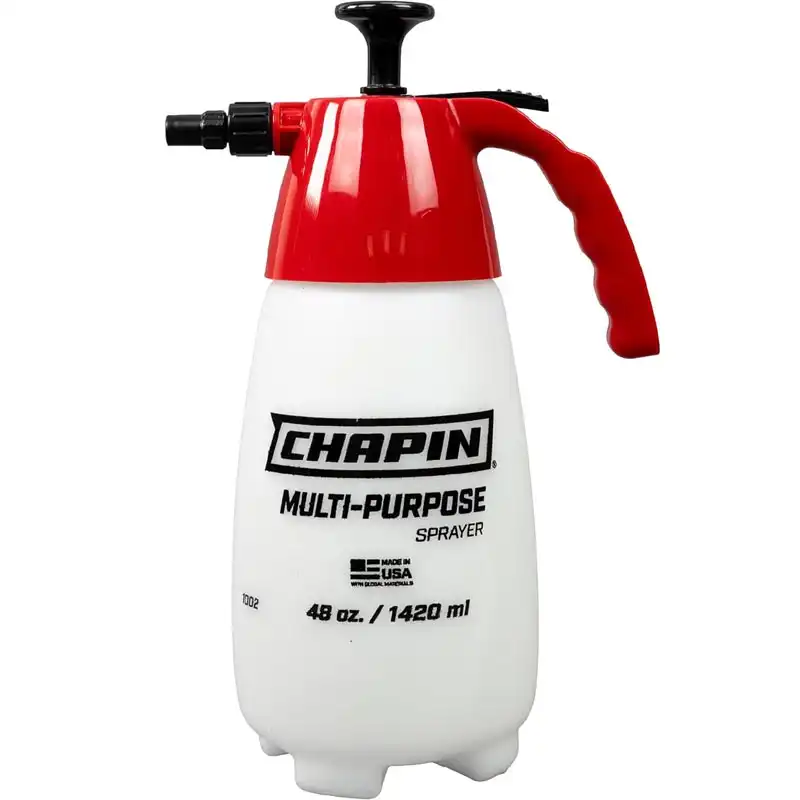
Chapin International builds this one in Batavia, New York, and it is the pick for most small yards. The 48-ounce poly tank and adjustable cone nozzle make quick work of weeds, feeding, and cleaning. Best for occasional hands.
PROS
- Wide-mouth tank fills fast
- Adjusts from mist to stream
- In-tank anti-clog filter
- Comfortable thumb shut-off
CONS
- Trigger mechanism frequently breaks
Specifications:
- 48-ounce translucent poly tank
- 40 to 60 PSI range
- Seals rated for common chemicals
- 1-year limited warranty
2. Chapin 20004 1-Gallon Lawn and Garden Pump Sprayer
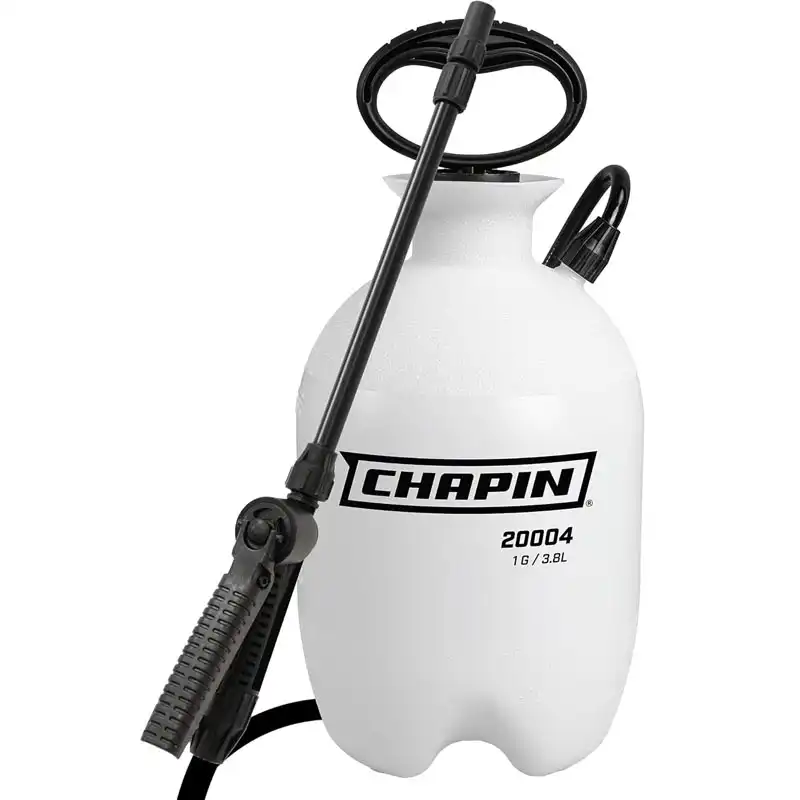
Another Chapin, also made in New York, this 1-gallon sprayer covers more ground for very little. Pump it 8 to 10 times and you get steady spray for lawns, weeds, and pest work. Owners rate it high for versatility.
PROS
- Big 1-gallon capacity
- Builds up to 60 PSI
- SureSpray in-tank filter
- Very light, 2 pounds
CONS
- Pressure Retention Problems
Specifications:
- 1-gallon polyethylene tank
- 34-inch hose plus wand
- Auto and manual relief valve
- Rust-free poly construction
3. PetraTools HD101 1-Gallon Pump Sprayer
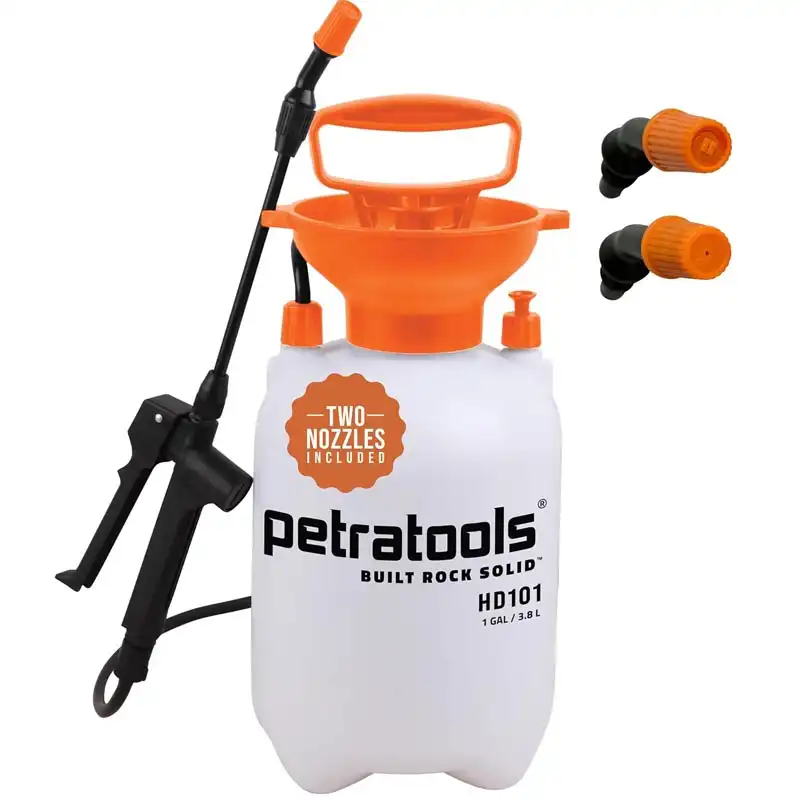
PetraTools is an American family shop running since 2019, and their orange HD101 shines when you need reach. The 52-inch hose and 16-inch wand get under leaves and into corners. Two nozzles, a cone and a fan, cover most jobs.
PROS
- Long 52-inch hose
- Two nozzles included
- Built-in anti-clog filters
- Pressure release valve fitted
CONS
- Pump handle not durable
Specifications:
- 1-gallon translucent tank
- 30 PSI maximum pressure
- Cone plus fan nozzle
- Heavy-duty plastic build
4. Solo 418: Best One-Hand Pump Sprayer for Delicate Work
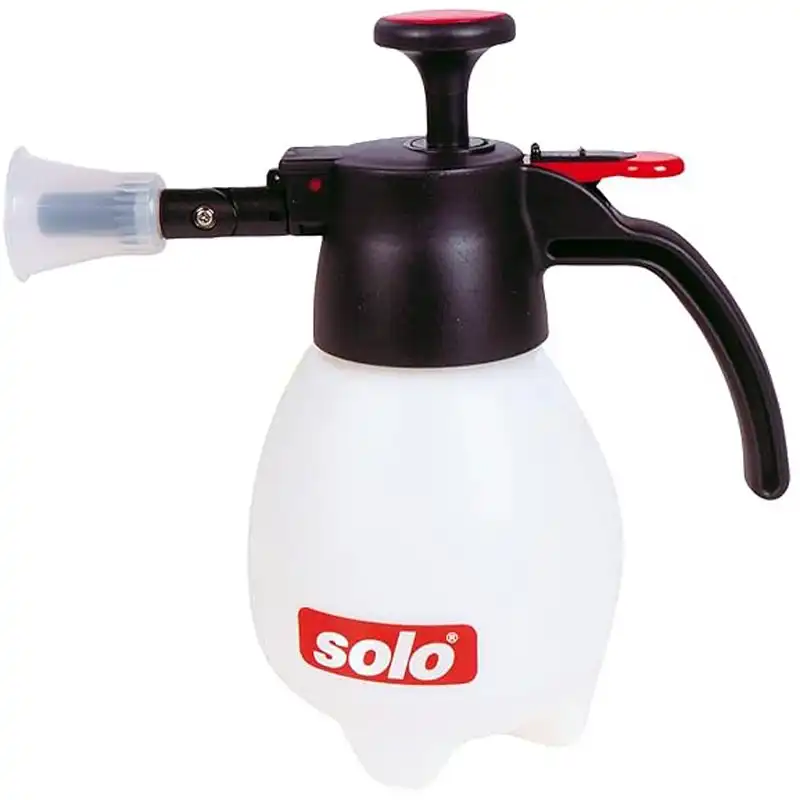
Solo has built sprayers since 1948, and the 418 is a strong pick for seedlings and microgreens. It runs one-handed with a lock-on trigger, so your hand does not cramp. Viton seals let it hold up to harsh chemicals too.
PROS
- True one-hand operation
- Viton seals resist chemicals
- Fine mist for seedlings
- Very light and compact
CONS
- Small 1-liter tank
Specifications:
- 1-liter HDPE tank
- 40 PSI maximum pressure
- Viton gaskets and O-rings
- Drift and drip guard
5. Smith Performance Sprayers Multi-Use 1-Gallon Sprayer
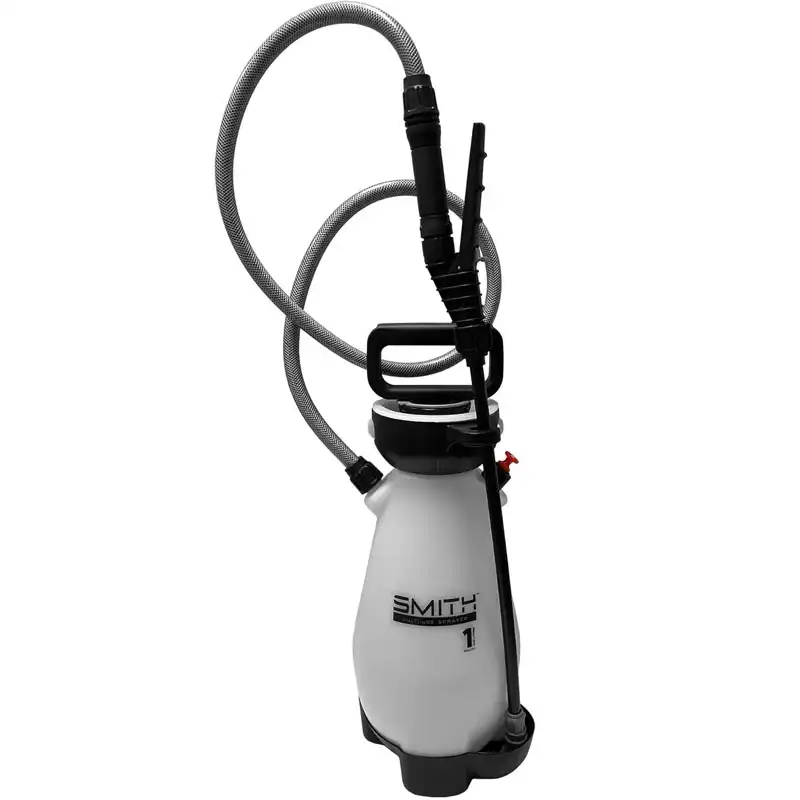
Smith Performance Sprayers built this 1-gallon unit for tougher chemical work. It ships with six nozzles, including fan tips, a jet stream, and a foaming tip for spot marking. Viton seals run throughout, so harsh products do not eat it up.
PROS
- Six nozzles included
- Viton seals throughout
- Kink-resistant 5-foot hose
- Foaming tip for marking
CONS
- Frequent re-pumping needed
Specifications:
- 1-gallon tank capacity
- Six-nozzle set included
- In-line filter for cleaning
- Brass parts resist clogs
6. Matabi Berry 7 1.3-Gallon Pump Sprayer
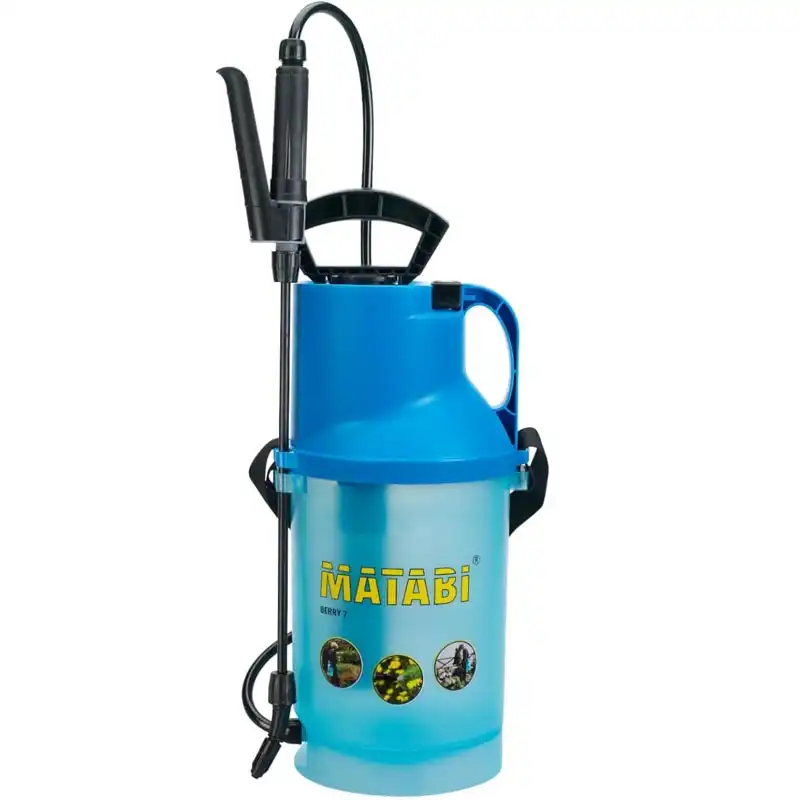
Matabi has made sprayers in Spain for over 50 years, trusted in more than 110 countries. The Berry 7 carries a real pressure regulator, so your spray stays even from full tank to empty. The fiberglass wand stays light all day.
PROS
- Pressure regulator keeps spray even
- Viton seals throughout
- Lightweight fiberglass wand
- Five-year manufacturer warranty
CONS
- Priced above budget models
Specifications:
- 1.3-gallon translucent tank
- Built-in pressure regulator
- Fiberglass lance, 24-inch hose
- Viton gaskets, rustproof spring
7. TABOR TOOLS 1.3 Gallon Lawn and Garden Pump Sprayer
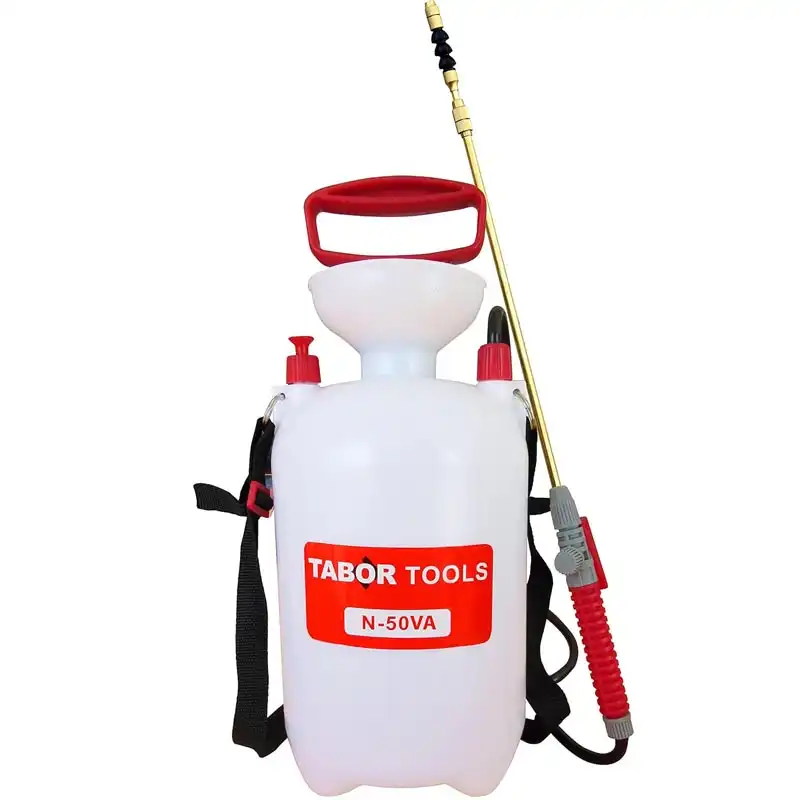
TABOR TOOLS made this 1.3-gallon sprayer for folks who hate bending over. The brass wand extends from 23.5 to 34.5 inches, so you spray standing up straight. Viton seals widen what liquids it handles, and a shoulder strap saves your back.
PROS
- Telescoping brass wand extends
- Viton seals resist chemicals
- Shoulder strap included
- Long 50-inch hose
CONS
- NOT suitable for acidic solutions
Specifications:
- 1.3-gallon translucent tank
- Telescopic 23.5 to 34.5-inch wand
- Viton seals for compatibility
- Spray filter prevents clogs
8. YSMN 1.5 Gallon Hand Pump Sprayer
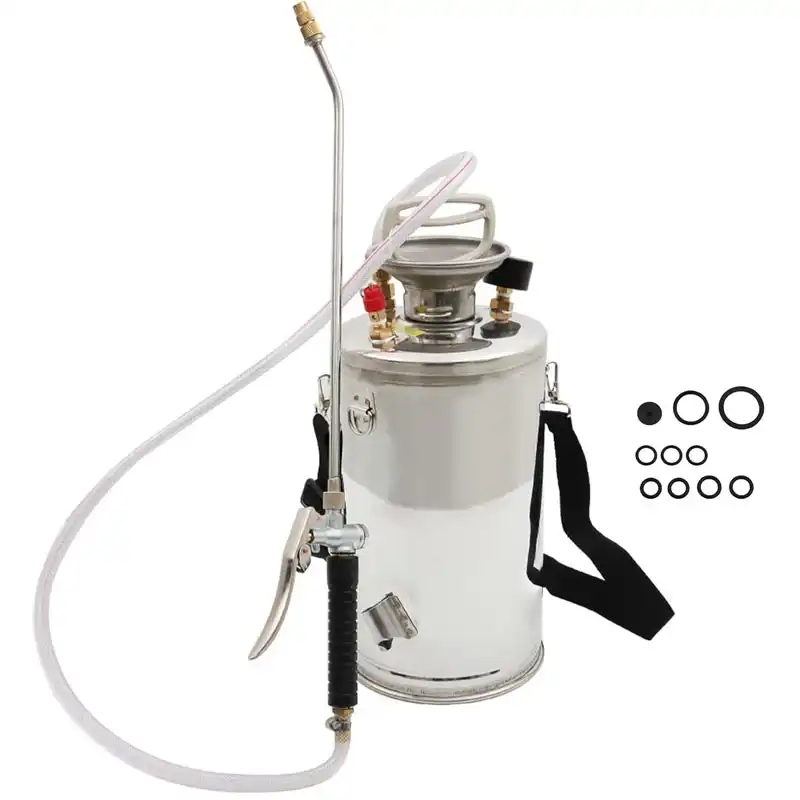
YSMN builds this 1.5-gallon sprayer from stainless steel top to bottom, so rust is not a worry. Owners say it holds pressure overnight, which is high praise for a hand pump. A pressure gauge and relief valve keep it safe.
PROS
- All stainless steel body
- Holds pressure overnight
- Pressure gauge built in
- Auto pressure relief valve
CONS
- Heavier at 6 pounds
Specifications:
- 1.5-gallon stainless tank
- 1.5 to 4.0 bar range
- 16-inch stainless steel wand
- Brass adjustable nozzle
9. Happybuy 1 Gallon Stainless Steel Pump Sprayer
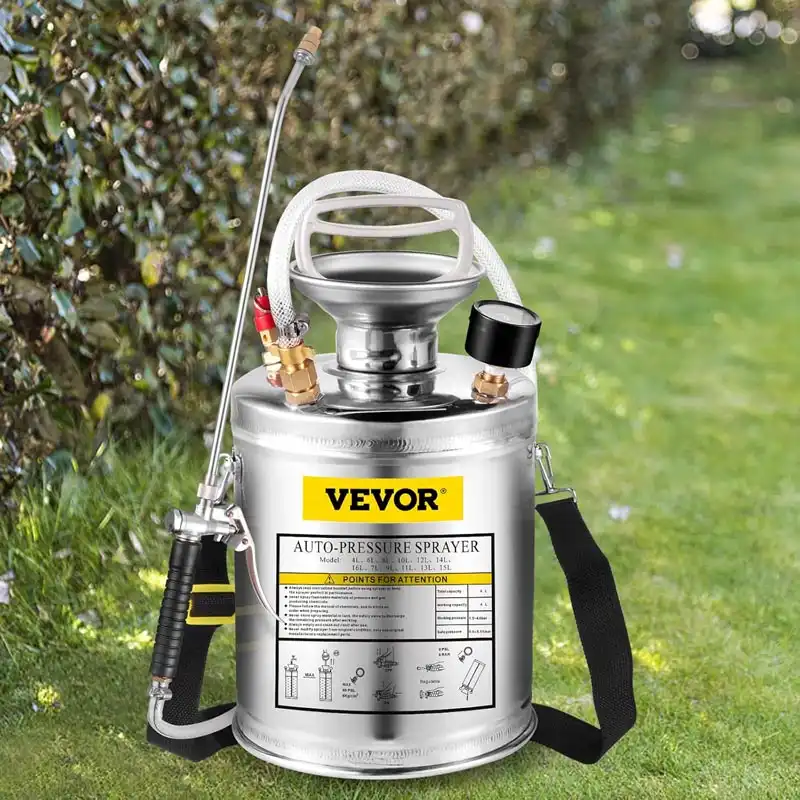
Happybuy makes an all-stainless steel 1-gallon sprayer with a pressure gauge and safety valve. It sprays well with good pressure and reaches 13 to 16 feet. The bowl-shaped inlet fills easy. Solid metal beats cheap plastic for many buyers.
PROS
- All-metal stainless body
- Pressure gauge and valve
- Reaches 13 to 16 feet
- Easy bowl-shaped fill inlet
CONS
- Not for corrosive chemicals
Specifications:
- 1-gallon stainless steel tank
- 1.5 to 4.0 bar pressure
- 12-inch stainless steel wand
- Brass adjustable nozzle
10. VIVOSUN 50oz Pump Sprayer
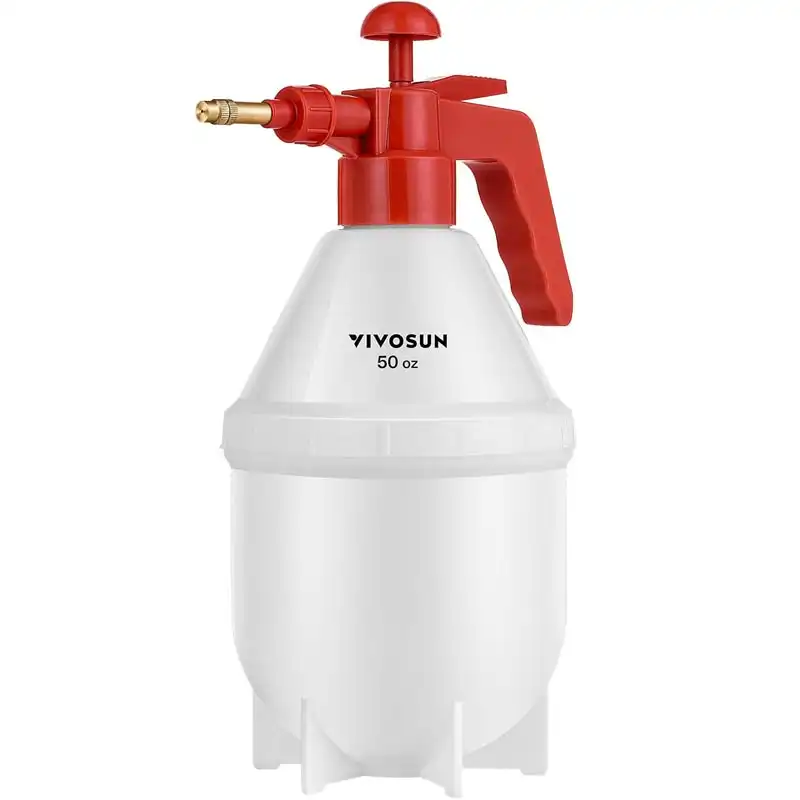
VIVOSUN makes this 50-ounce sprayer for indoor plants and light cleaning, and it is partly made from recycled plastic. A brass nozzle and pressure release valve come standard. Keep this one to water and gentle jobs, not chemicals.
PROS
- Clear tank shows level
- Adjustable brass nozzle
- Pressure release valve included
- Made from recycled plastic
CONS
- No pressure relief valve
Specifications:
- 50-ounce translucent tank
- Adjustable brass nozzle
- Pressure release safety valve
- Rated safe to 131°F
Manual vs Battery-Powered Handheld Sprayers
The choice comes down to how often you spray and how much ground you cover. A manual pump sprayer suits occasional, small-area jobs. A battery-powered sprayer suits frequent use over larger areas.
Choose manual if you:
- Spray a few times a season
- Want to spend less upfront
- Prefer fewer parts to fail
- Like near-zero maintenance
Choose battery if you:
- Spray often or over large areas
- Get wrist or back strain
- Want steady pressure every pass
- Value speed on big jobs
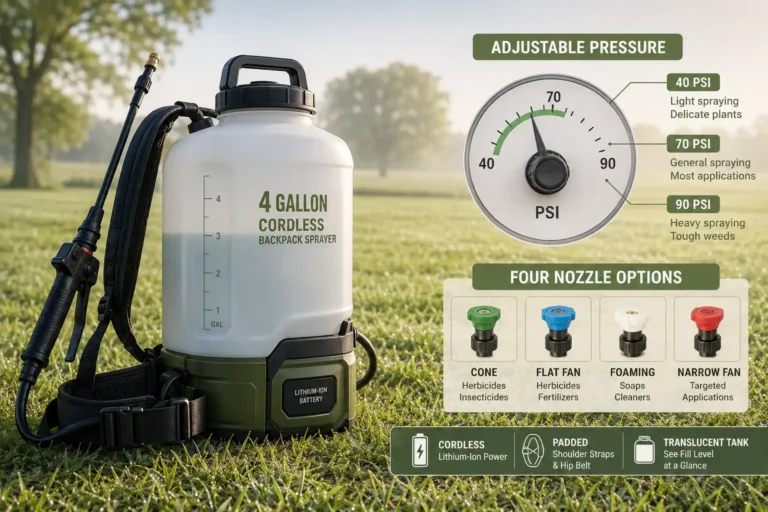
Battery units hold even pressure from the first squeeze to the last, which a hand pump cannot match. Brands like Scotts sell popular lithium-ion models. For bigger jobs, many growers step up to a battery-powered backpack sprayer instead. So if you spray a few times a season, stick with a hand pump. Pump often, and a battery pays you back in comfort.
How to Use and Maintain a Handheld Pump Sprayer
Using a hand sprayer takes about a minute once you know the steps. Keeping it working takes a little care after each use.
How to Use a Pump Sprayer
Here is how to use a pump sprayer the right way, step by step.
- Fill the tank with your mix, leaving headspace for air.
- Seal the lid, then pump the handle until it feels firm to build pressure.
- Aim the wand and squeeze the trigger, about a foot off the target.
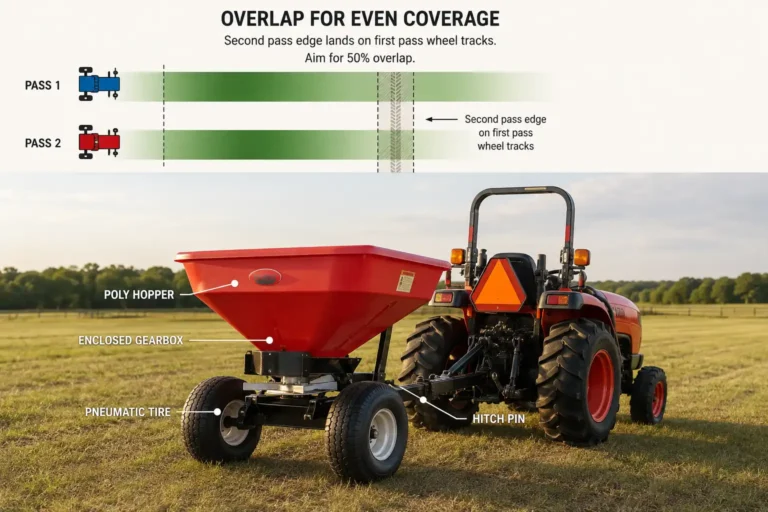
- Keep the tip moving in even, overlapping passes.
- When you finish, open the release valve to depressurize before you unscrew the lid.
For accurate dosing, check the calibration by timing the output into a measuring cup.
Cleaning and Storage
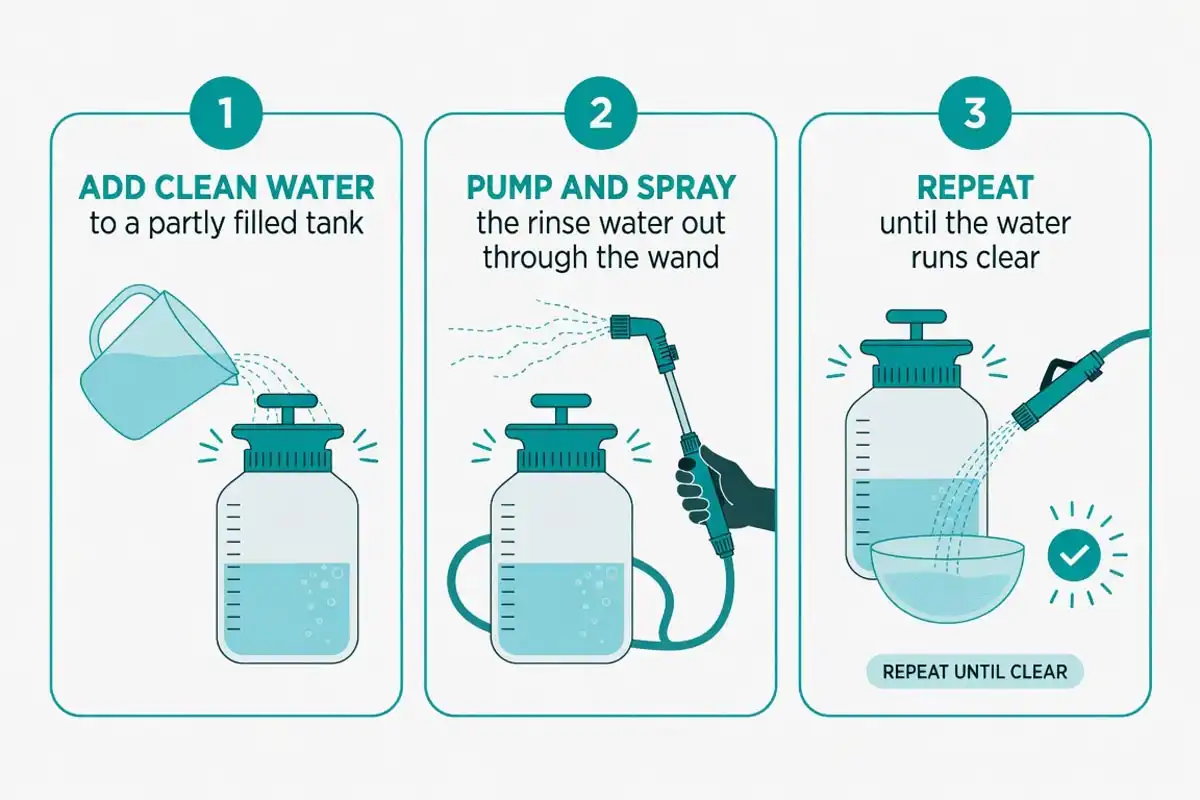
Flush the sprayer after every use. Extension programs at Oregon State and Purdue back a triple-rinse routine, and it works. First, fill the tank about a tenth full with clean water. Pump it up, then spray that water out through the wand and tip. Next, repeat until it runs clear. After that, pull the tip and screen and rinse them separately. That is where residue hides and causes a clog. Never store chemicals in the tank between jobs. Also replace worn O-rings as they show up. Best of all, keep one sprayer for herbicides and another for everything else. That way a stray drop of weed killer never lands on your tomatoes.
Safety and PPE
Wear gloves and goggles every time you spray chemicals. Spray downwind so mist blows away from your face. Keep kids and pets clear of the area until it dries. Always read the chemical label first, since it lists the right rate, protective gear, and any wait time before reentry. When you plan bigger applications, brushing up on when pesticides are worth using saves both money and trouble. Then store the sprayer empty and out of the sun. Keep it away from anywhere someone might mistake it for a drink.
FAQs about Garden Sprayer
What is a handheld pump sprayer used for?
What size handheld sprayer do I need for my yard?
Are handheld pump sprayers safe, and what precautions should I take?
How long does a handheld pump sprayer last?
Manual or battery-powered, which is better?
Can I use one sprayer for both weed killer and fertilizer?
Why won't my pump sprayer hold pressure or stop leaking?
How much does a good handheld pump sprayer cost?
Last Words on Pump Sprayer
Want one tool that covers weeds, pests, and feeding around a small place? A good handheld pump sprayer earns its keep fast. The Chapin 1002 is where it helps to start most folks. Above all, buy for the seals. Match the seal material to what you spray, and keep it flushed. A simple hand sprayer will then serve you well for many seasons.
Good luck and enjoy reviewing.